


Key Findings
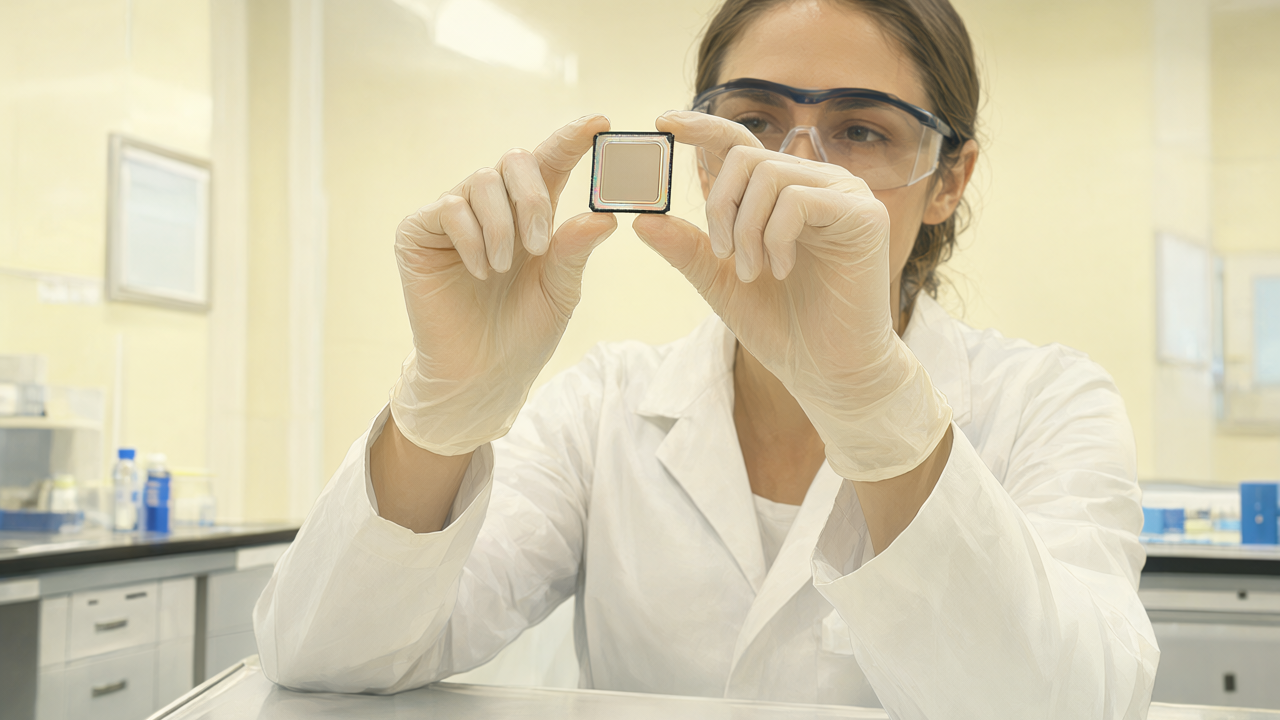
A research team at the University of Texas at San Antonio (UTSA) has unveiled “Genesis,” a pioneering AI chip with the remarkable ability to learn new information without forgetting existing knowledge. This innovative neuromorphic accelerator chip fundamentally resolves the long-standing “catastrophic forgetting” problem in AI, enabling continuous learning directly on-device. Furthermore, Genesis achieves an astounding 30 to 100 times greater energy efficiency compared to conventional AI systems.
Technical / Clinical Details
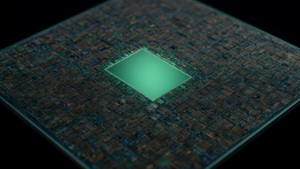
The Genesis chip employs a neuromorphic architecture inspired by the human brain’s learning mechanisms. Its key technical features include:
- Resolution of Catastrophic Forgetting: Traditional neural networks often suffer from “catastrophic forgetting,” where learning new tasks dramatically degrades performance on previously learned tasks. Genesis overcomes this by combining specialized memory management and learning algorithms, allowing it to retain old knowledge while continuously acquiring new information. This enables AI models to evolve perpetually on-device without needing retraining.
- On-Device Continual Learning: Genesis can perform continuous learning and adaptation directly on the device without requiring cloud connectivity. This is critically important for edge AI applications (e.g., autonomous vehicles, smart sensors, wearable devices) where privacy is paramount and real-time processing is essential.
- High Energy Efficiency: The chip leverages optimized analog computations and sparse activations to achieve comparable performance with 30 to 100 times less energy than traditional digital AI accelerators. This significantly extends battery life for battery-powered edge devices and reduces operational costs.
- Compact Footprint: The neuromorphic design allows for the implementation of advanced AI functionalities using significantly less silicon area than traditional CPU or GPU-based AI systems.
This technology enables AI systems to adapt to real-world changes in real-time and consistently operate in an optimal state.
Background & Context
Catastrophic forgetting has been a persistent challenge in the lifecycle management of AI models. Particularly for edge AI devices, the ability to continually adapt to new data over long periods, with limited computational resources and power, is crucial. Chips like Genesis pave the way for devices to evolve on their own, without reliance on large-scale cloud retraining. This breakthrough is significant for accelerating AI adoption in areas with stringent data privacy regulations and in IoT and automation sectors where real-time performance is critical. Research institutions and companies worldwide are investing in neuromorphic computing, and UTSA’s achievement stands at the forefront of this field.
Future Outlook
The Genesis chip has the potential to redefine edge AI capabilities and dramatically enhance autonomy. If commercialized, applications could include:
- Autonomous Vehicles: Continually learning new driving scenarios and road conditions to improve safety.
- Smart Cities / Industrial IoT: Real-time adaptation to environmental changes or equipment status for efficient monitoring and predictive maintenance.
- Personal Devices: Learning user behavior and preferences over time to provide more personalized assistant functions.
“Unforgettable” AI chips like Genesis will serve as a crucial foundation for building truly intelligent and adaptive systems, allowing AI to deeply permeate every aspect of our daily lives and industries. UTSA’s achievement marks a major step forward in the future of AI hardware.
Source: https://news.utsa.edu/2026/09/meet-genesis-the-ai-chip-that-doesnt-forget/
Get our weekly technology intelligence — free
Receive an infographic that lets you judge at a glance whether each field’s analysis report is worth reading.
Subscribe Free — Weekly Tech Intelligence
By subscribing, you’ll receive Troy-Technical’s weekly technology intelligence newsletter.
- Your email and selected fields are used only to deliver the newsletter.
- We never share your information with third parties.
- You can unsubscribe anytime via the link in each email.
See our Privacy Policy for details.
Takes about a minute · Unsubscribe anytime