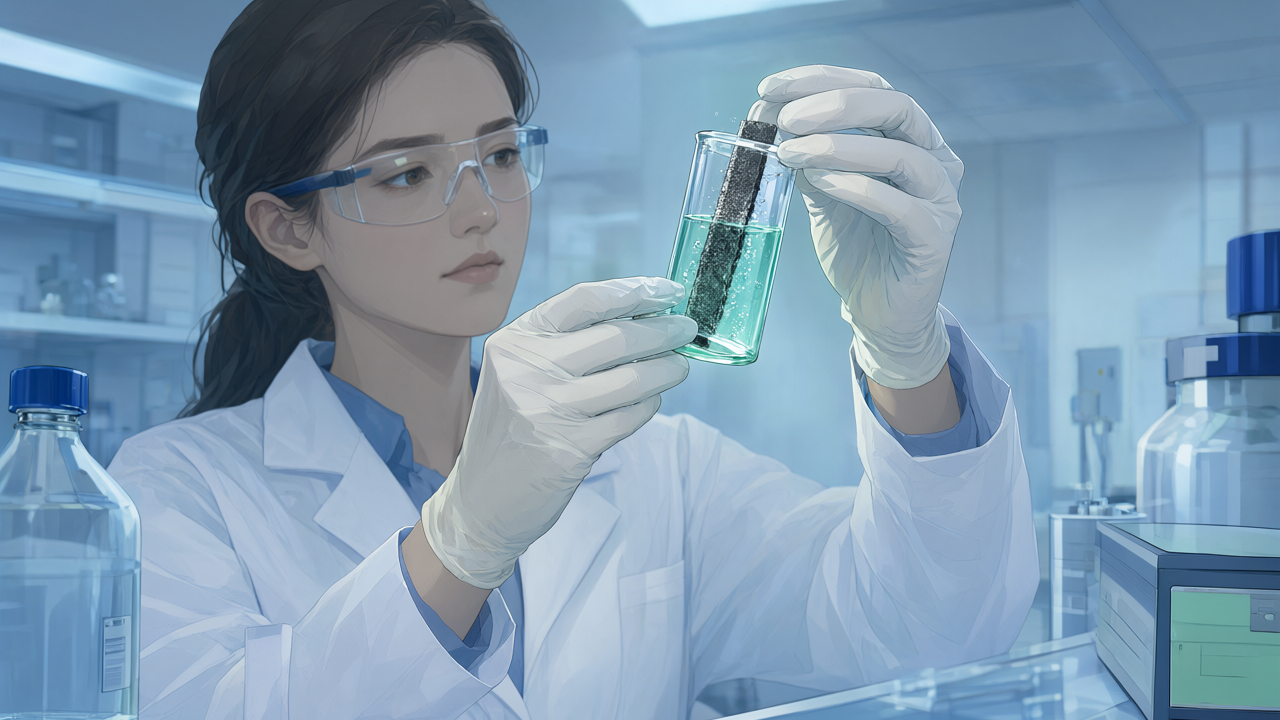
A preprint paper published on arXiv details an AI-guided, human-supervised closed-loop platform that enabled the high-throughput discovery of iridium- and ruthenium-free palladium-oxide catalysts. This groundbreaking achievement opens the way for sustainable and highly durable materials, particularly for the acidic oxygen evolution reaction (OER), replacing expensive noble metal catalysts.
Technical & Process Details
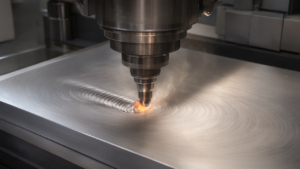
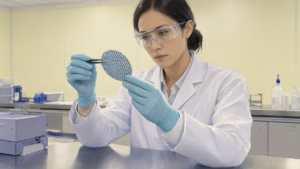
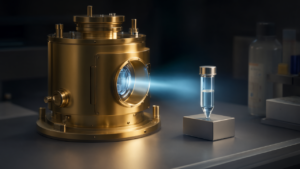
This AI-guided platform fundamentally accelerates the discovery process in materials science. The system proposes catalyst candidates based on existing data and machine learning models, which are then subjected to automated synthesis and characterization processes. The acquired data is fed back into the model for refinement in a closed-loop fashion. This iterative approach allowed researchers to evaluate 2,942 catalysts, leading to the identification of complex oxides like InMnPdOx and NiTaPdOx, which would have been difficult to predict with traditional material design methods. Specifically, InMnPdOx demonstrated remarkable operational stability, maintaining an overpotential below 0.5 V for over 1,000 hours. This superior performance suggests durability comparable to or even surpassing existing iridium-based catalysts for OER in acidic environments.
Background & Industry Context
Acidic OER is one of the rate-limiting steps in green hydrogen production via water electrolysis, and its efficiency and cost are heavily dependent on expensive and scarce iridium and ruthenium catalysts. Reducing or replacing the use of these noble metals is critical for improving the economics and sustainability of green hydrogen production. AI and automated material discovery platforms are powerful tools for overcoming such bottlenecks in complex catalyst development. Traditional trial-and-error approaches require vast time and resources, whereas AI can efficiently navigate extensive search spaces and discover non-intuitive material compositions.
Strategic Significance & Outlook
This AI-guided high-throughput discovery platform holds significant potential to contribute to the cost reduction and widespread adoption of green hydrogen production. The discovery of durable, iridium- and ruthenium-free OER catalysts will bring substantial flexibility to electrolyzer design and operation, enabling broader industrial applications. Moreover, this approach is applicable not only to catalyst science but also to the development of new materials for other energy conversion and storage technologies, such as battery materials, fuel cells, and CO2 reduction catalysts. The continued evolution of AI and autonomous labs is expected to dramatically accelerate the pace of scientific discovery and technological innovation for a sustainable society.
Source: https://arxiv.org/abs/2609.30133
Get our weekly technology intelligence — free
Receive an infographic that lets you judge at a glance whether each field’s analysis report is worth reading.
Subscribe Free — Weekly Tech Intelligence
By subscribing, you’ll receive Troy-Technical’s weekly technology intelligence newsletter.
- Your email and selected fields are used only to deliver the newsletter.
- We never share your information with third parties.
- You can unsubscribe anytime via the link in each email.
See our Privacy Policy for details.
Takes about a minute · Unsubscribe anytime