TECHNOLOGY EXPLAINER
Ammonia as a Hydrogen Carrier
— a way to move hydrogen, and also a fuel in its own right
About 17.8% of ammonia (NH3) by mass is hydrogen. It becomes a liquid at −33 °C at ambient pressure, or at about 0.86 MPa at 20 °C, a very different world from the roughly −253 °C needed to liquefy hydrogen. But getting the hydrogen out means either cracking the molecule or burning it as is, and each route brings its own difficulties: toxicity, nitrogen oxides and materials. This article walks through density, production, cracking, combustion, shipping, safety rules and the Japanese and EU policy picture, from a materials engineer's point of view.
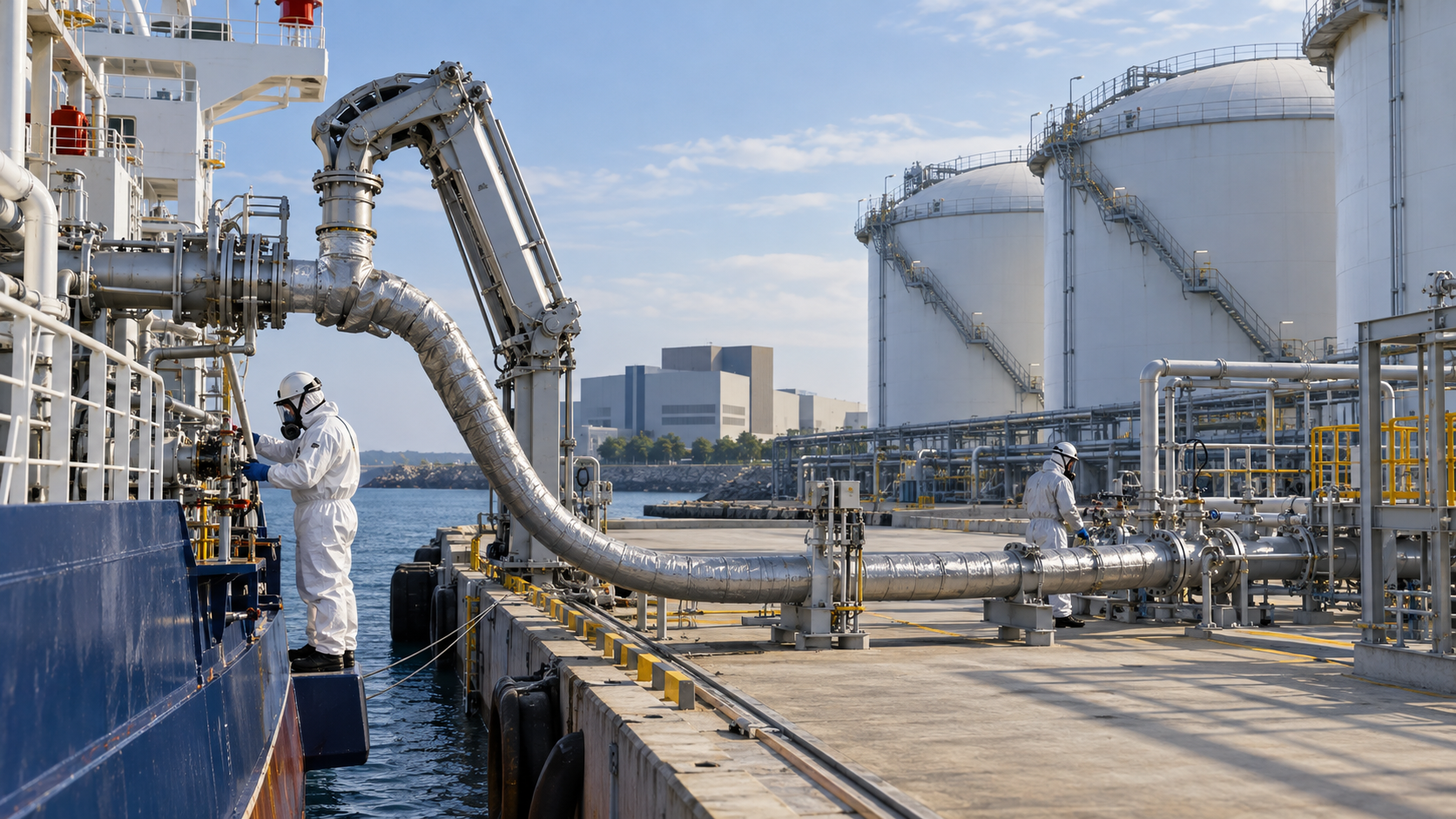
- What ammonia is, in three lines
- As a hydrogen container: density and liquefaction conditions
- Making it: the Haber-Bosch process and green ammonia
- A materials engineer's view 1: the same "amount of hydrogen" cannot be compared across different conditions
- Getting hydrogen back: cracking and catalysts
- Burning it directly: co-firing, dedicated firing and nitrogen oxides
- As a ship fuel: IMO guidelines and demonstrations
- A materials engineer's view 2: tank, pipe and seal materials, and stress corrosion cracking
- Toxicity and safety regulation
- Japan and the EU: reading proposal, adoption and entry into application separately
- Open issues, and what this article could not confirm
- Glossary / References / Claim-to-source audit
Sourced = stated in a public body's, standards body's, peer-reviewed or company's published material (source linked)
Our calculation = a value this article derived from explicitly stated assumptions
Not yet confirmed = plans, targets or outlooks for which no result has been confirmed
Readings of structure or materials design are marked separately as Commentary.
Performance figures are given together with their conditions (temperature, pressure, scale) and origin (standard, public-body report, peer-reviewed paper, company publication). This article explains materials, principles, evaluation and policy. It is not advice on handling or operating ammonia or hydrogen.
1. What ammonia is, in three lines
- What it is: a compound of one nitrogen and three hydrogen atoms (NH3). Long used for fertiliser and chemical feedstock, about 185 million tonnes were produced worldwide in 2020, of which around 20 million tonnes were traded internationally, according to the IEA Sourced [Ref. 4].
- Why it appears in hydrogen discussions: it contains no carbon, is about 17.8% hydrogen by mass, and has a boiling point and condensation pressure close to propane, which makes it a candidate chemical form for moving and storing hydrogen Sourced [Ref. 7].
- What is difficult: it is toxic, it can produce nitrogen oxides (NOx) and nitrous oxide (N2O) when burned, and converting it back into hydrogen takes energy and a catalyst Sourced [Ref. 4, 7, 15].
Ammonia is valuable both as a way to carry hydrogen and as a fuel used as it is, but the two uses need quite different technology and quite different ways of evaluation. If you convert it back to hydrogen, cracking efficiency and catalysts matter; if you burn it, NOx and flame stability matter; if you use it on a ship, toxicity and materials matter (Commentary).
It helps to read ammonia alongside other articles in this series. How to align conditions when comparing other carriers (liquid hydrogen, MCH) is covered in our explainer on energy carriers; liquefaction and insulation of hydrogen in our explainer on liquid hydrogen; and water electrolysis, which makes the hydrogen itself, in our explainers on PEM and alkaline electrolysis. This article sticks to what is specific to ammonia.
2. As a hydrogen container: density and liquefaction conditions
Here is how much hydrogen ammonia can hold, checked against NIST property data. According to the NIST Chemistry WebBook, the normal boiling point of ammonia is 239.83 K (about −33.3 °C); the density of the boiling liquid at ambient pressure is 681.64 kg/m3; the saturation pressure at 20 °C (293.15 K) is 0.857 MPa, and the liquid density there is 610.39 kg/m3 Sourced [Ref. 1]. For hydrogen, the same data collection gives a normal boiling point of 20.369 K (about −252.8 °C) and a boiling-liquid density of 70.848 kg/m3 Sourced [Ref. 2].
Hydrogen mass fraction and hydrogen per unit volume
The molar mass of ammonia is 17.031 g/mol (N 14.007, H 1.008); the three hydrogen atoms contribute 3.024, so the mass fraction is 3.024 / 17.031 = 0.1776, that is about 17.8% Our calculation (the review by Kobayashi et al. also states 17.8% by mass [Ref. 7]). Multiplying by the liquid density gives the mass of hydrogen in each cubic metre of liquid.
Our calculation gives about 121 kg of hydrogen per cubic metre of liquid ammonia at the ambient-pressure boiling point (−33.3 °C) and about 108 kg at the 20 °C saturation condition Our calculation. That is more than liquid hydrogen (70.8 kg/m3) and roughly three times a 70 MPa, 15 °C gas (40.2 kg/m3) Our calculation (the gas density is NIST's real-gas value [Ref. 2]).
This compares the density of the fluid itself, not the amount of hydrogen you can actually deliver. To obtain hydrogen from ammonia you have to crack it (chapter 5), which takes energy and equipment. Liquid hydrogen, conversely, costs a great deal of energy to liquefy (see our explainer on liquid hydrogen), and high-pressure gas adds the weight of the vessel. How to align conditions in a fair comparison is covered in our explainer on energy carriers.
Liquefaction conditions: you can cool it or pressurise it
Kobayashi et al. note that the boiling point and condensation pressure of ammonia are similar to those of propane, which makes it attractive as a hydrogen and energy carrier Sourced [Ref. 7]. The IEA likewise lists, as ammonia's key advantage over pure hydrogen, a higher volumetric energy density and a higher liquefaction temperature, which make transport and storage much easier, and notes that almost 200 harbours already have ammonia terminals handling around 20 million tonnes of international trade a year Sourced [Ref. 4]. The IEA also gives liquid ammonia as 18.6 GJ/t and 12.7 GJ/m3 on a lower-heating-value basis, about 40% of the energy density of gasoline Sourced [Ref. 4].
For materials, what matters is that −33 °C at ambient pressure (refrigerated storage) or about 0.86 MPa at 20 °C (pressurised storage) is an enormously gentler condition than the roughly 20 K needed for hydrogen. The demands on insulation, on low-temperature steel selection and on vacuum-jacketed construction are far less severe than for liquid hydrogen (Commentary).
3. Making it: the Haber-Bosch process and green ammonia
Ammonia is synthesised by passing nitrogen and hydrogen over a catalyst at high temperature and pressure (the Haber-Bosch process). The IEA explains that the synthesis reaction is exothermic, that a high temperature (typically 400-650 °C) and pressure (typically 100-400 bar) together with a catalyst are needed to make it run at an economic rate, and that only part of the hydrogen is converted per pass, so unreacted gas is recycled Sourced [Ref. 4]. It adds that the synthesis step works the same way whatever the source of the hydrogen Sourced [Ref. 4].
Energy and CO2: the conventional route in numbers
The IEA estimates that in 2020 the global average to make one tonne of ammonia was 46 GJ gross and 41 GJ net (after crediting excess steam). Best available technology (BAT) is 32 GJ/t gross and 28 GJ/t net on natural gas, 36 GJ/t net on coal, with a theoretical minimum (from methane) of 20.9 GJ/t gross and 18.6 GJ/t net Sourced [Ref. 4]. Steam methane reforming (SMR) at BAT emits about 1.8 tonnes of CO2 per tonne of ammonia, and more than 60% of the natural gas input is used as feedstock Sourced [Ref. 4].
The idea of green ammonia
Smith et al. frame it this way: the future of green ammonia as long-term energy storage depends on replacing the CO2-intensive, methane-fed Haber-Bosch process with distributed and agile ones aligned to geographically isolated and intermittent renewable energy Sourced [Ref. 5].
Assumptions: hydrogen is made by electrolysis. With a hydrogen mass fraction of 0.1776, one tonne of ammonia needs 177.6 kg of hydrogen (stoichiometric, no losses). The electrolyser-system electricity consumption is taken as an illustrative 45, 50 and 55 kWh/kg-H2 (real values vary with technology, load and scale, and this article makes no claim about these values). Electricity for air separation, compression and synthesis is not included.
| Electrolyser consumption (assumed) | Electricity for hydrogen (MWh per t-NH3) | Same (GJ per t-NH3) | Ratio to ammonia's lower heating value of 18.6 GJ/t |
|---|---|---|---|
| 45 kWh/kg-H2 | 8.0 | 28.8 | about 1.5x |
| 50 kWh/kg-H2 | 8.9 | 32.0 | about 1.7x |
| 55 kWh/kg-H2 | 9.8 | 35.2 | about 1.9x |
Our calculation 177.6 kg times the consumption. Ammonia's lower heating value is the IEA's 18.6 GJ/t [Ref. 4]. The takeaway: the electricity for the hydrogen alone is 1.5 to 1.9 times the energy of the ammonia product. It cannot be set against the IEA's 28 GJ/t BAT net figure for gas, because the input there is fuel rather than electricity and the bases differ.
According to the IEA, the natural-gas route finishes its hydrogen stage with a methanation step that removes residual CO and CO2, because they degrade the Haber-Bosch synthesis catalyst Sourced [Ref. 4]. Hydrogen from water electrolysis has no carbon in its feedstock, so this kind of poisoning could be less of a concern (Inference; the effect of trace impurities in electrolytic hydrogen was not confirmed in primary sources for this article). On the other hand, because hydrogen from renewable electricity fluctuates, a design question is how to run a synthesis reactor that stays hot and under high pressure through load changes and start-ups (this is the sense of the "agile" process of Smith et al. [Ref. 5]; the effect of thermal cycling on the materials was not quantified in the sources checked).
Whose definition of "green" or "low-carbon"?
The Japanese ministerial ordinance under the Hydrogen Society Promotion Act sets the requirement for ammonia to count as "low-carbon hydrogen and similar" at 0.87 kg or less of CO2 emitted per kg of ammonia produced Sourced [Ref. 20]. For hydrogen it is 3.4 kg or less per kg of hydrogen, and ammonia and synthetic fuels have their own thresholds (chapter 10) Sourced [Ref. 20]. Setting the IEA's roughly 1.8 t-CO2/t-NH3 for gas-based BAT [Ref. 4] beside the ordinance's 0.87 kg/kg shows a threshold at about half that level, but the system boundaries (upstream methane leakage, treatment of captured CO2, etc.) are not necessarily the same, so a direct comparison should be avoided (Commentary; the ordinance's calculation method was not examined in detail here).
4. A materials engineer's view 1: the same "amount of hydrogen" cannot be compared across different conditions
- The amount of what? Hydrogen content of the fluid (Fig. 2), or hydrogen actually recoverable? The latter depends on cracking efficiency.
- Under which conditions? Ammonia is a liquid both at −33.3 °C at ambient pressure and at 20 °C and 0.86 MPa, and the hydrogen content differs by about 10% between them (Fig. 2).
- What is included? Whether you include the volume and mass of tank and insulation, the energy for cooling, and the heat for cracking changes the conclusion.
- Whose number? Public-body reports, peer-reviewed papers and company statements deserve different degrees of trust, so always check the origin.
Niermann et al. compared the energy consumption and cost of LOHCs and other options for international transport and reported that how the dehydrogenation heat is supplied governs the cost performance, and that no transport option is superior under all circumstances Sourced [Ref. 28] (covered in more detail in our explainer on energy carriers). The same issue arises for ammonia: what supplies the cracking heat (next chapter) (Commentary).
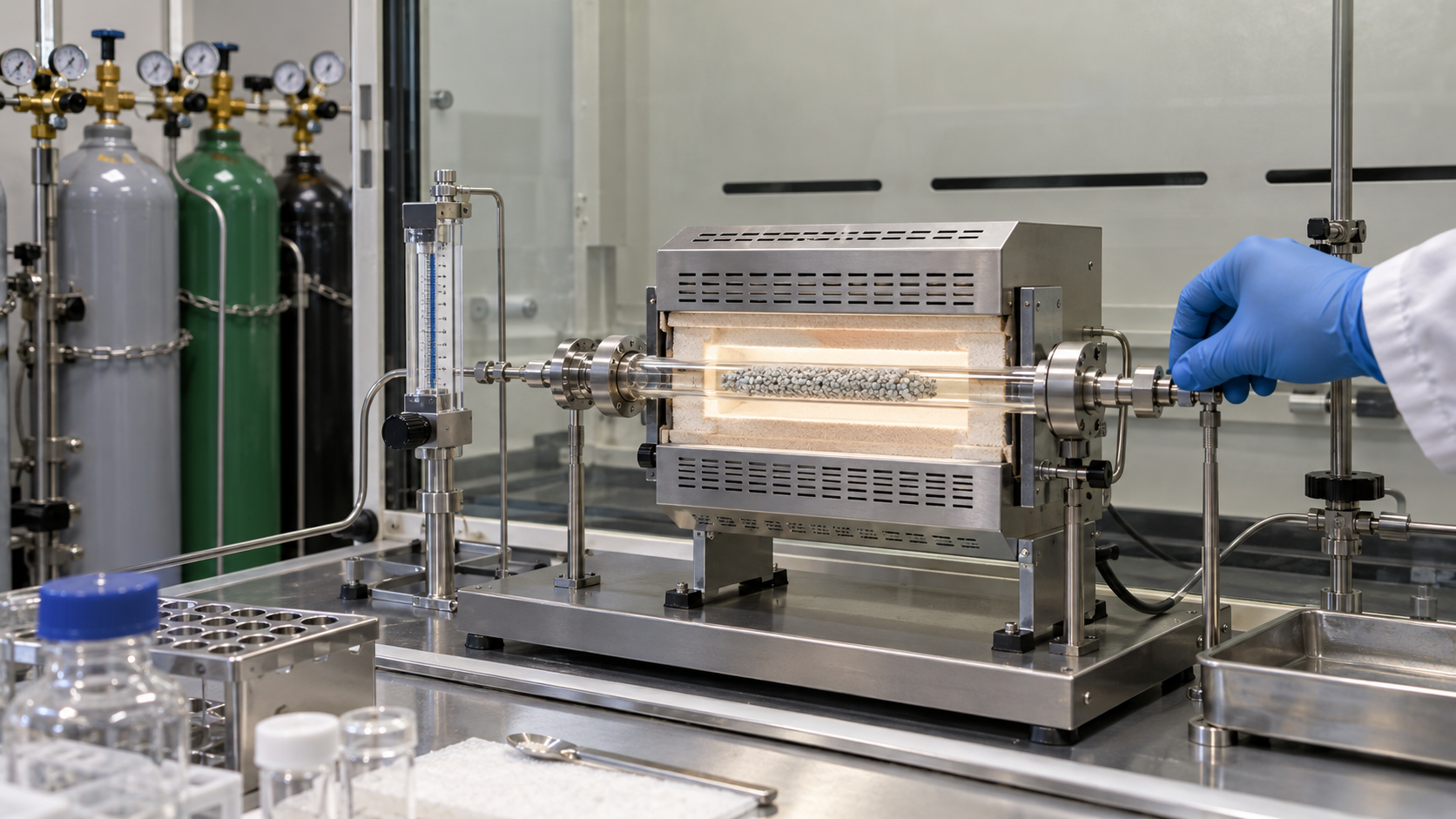
5. Getting hydrogen back: cracking and catalysts
Converting ammonia back to hydrogen is an endothermic reaction: NH3 → ½N2 + 3/2 H2. The standard enthalpy of formation of gaseous ammonia at 25 °C is −45.94 ± 0.35 kJ/mol (NIST, CODATA review value) Sourced [Ref. 3], so the standard heat of cracking is +45.94 kJ/mol-NH3.
Assumptions: standard-state (25 °C) heat of reaction only. In practice the sensible heat to bring the gas to several hundred °C, removal of unconverted ammonia and heat losses are added, so this is a lower-bound guide. The lower heating value of hydrogen is taken as 241.83 kJ/mol from the enthalpy of formation of water vapour, −241.826 kJ/mol (NIST [Ref. 3]).
Per mole of hydrogen, the heat of reaction is 45.94 / 1.5 = 30.6 kJ/mol-H2. Relative to the lower heating value of hydrogen, 30.6 / 241.83 = about 12.7%. Per unit mass, 30.6 kJ/mol / 2.016 g/mol = 15.2 MJ/kg-H2 (about 4.2 kWh/kg-H2). Our calculation
Whether this heat comes from burning hydrogen or undecomposed ammonia, or from external waste heat, changes the efficiency of the whole system (Commentary; the same structure as the Niermann et al. point that the heat supply method decides the result).
Catalysts: noble and non-noble metals
The 2021 review by Lucentini et al. sorts ammonia-decomposition catalysts into noble-metal and non-noble-metal catalysts, plus novel materials such as alkali-metal amides and imides, and covers the effect of supports and promoters, the kinetics (mechanism, rate-determining step, apparent activation energy), structured reactors, and the possibility of catalytic membrane reactors that produce and separate hydrogen at the same time Sourced [Ref. 6].
A 2019 paper by the same group studied ammonia decomposition over Ni, Ru and Ni-Ru supported on CeO2 (from the title; the abstract was not checked) [Ref. 29]. Ruthenium is a platinum group metal and is subject to resource and price constraints; that topic is covered in our explainer on platinum group metals and catalysts. Specific numerical comparisons of which catalyst gives what conversion at what temperature mean little unless temperature, pressure, space velocity and catalyst loading are aligned, so none are given here.
6. Burning it directly: co-firing, dedicated firing and nitrogen oxides
Ammonia contains no carbon, so burning it produces no CO2. But it does not burn as readily as hydrogen or methane. The review by Kobayashi et al. names low flammability, high NOx emissions and low radiation intensity as the challenges of ammonia combustion, and covers applications in gas turbines, co-firing with pulverised coal and industrial furnaces carried out under Japan's Cross-ministerial Strategic Innovation Promotion Program (SIP) "Energy Carriers", along with NOx formation and reduction and large-eddy simulation of a gas-turbine-like swirl burner Sourced [Ref. 7]. The 2018 review by Valera-Medina et al. likewise covers cycles, fuel cells, reciprocating engines, gas turbines and propulsion, and the fundamentals of combustion of ammonia blends Sourced [Ref. 8].
Demonstration at a large coal-fired unit: 20% by heat
NEDO, JERA and IHI began, on 1 April 2024 at Unit 4 of the JERA Hekinan Thermal Power Station (Aichi Prefecture), a large-scale demonstration of ammonia fuel conversion (20% by heat) at a large commercial coal-fired unit, which NEDO calls the world's first Sourced [Ref. 9]. The items to be checked included NOx emissions of the whole plant, effects on the boiler and ancillary equipment, and operability Sourced [Ref. 9]. A later NEDO announcement says the test ran from 1 April to 26 June 2024, reached 20% conversion at an output of 1,000 MW, and gave good results for combustion state and exhaust gas Sourced [Ref. 10]. IHI says it will work on high-ratio combustion of 50% ammonia or more and on a 100% combustion burner, using what it learns here Not yet confirmed [Ref. 9].
What could not be confirmed: the published material does not give the actual NOx emission figures, the configuration of the flue-gas treatment equipment or the capacity factor for this demonstration, so they are not covered here.
Assumptions: an output of 1,000 MW (NEDO [Ref. 10]); a generating efficiency of 40% assumed (an illustration by this article, not a figure for the actual unit); ammonia lower heating value of 18.6 GJ/t (IEA [Ref. 4]); continuous operation at full output.
Fuel heat input = 1,000 / 0.40 = 2,500 MW. Twenty percent of that is 500 MW. 500 MJ/s / 18.6 GJ/t = 0.0269 t/s = about 97 t per hour, or about 2,300 tonnes a day. Our calculation
This is the order of magnitude: even 20% co-firing at a single unit implies receiving thousands of tonnes a day by ship and tank (Commentary). It is a calculation to show scale, separate from the amounts actually used or the operating conditions in the demonstration.
NOx and N2O: "no CO2" alone is not an evaluation
Fuels that contain nitrogen can convert fuel-bound nitrogen into NOx when burned (a pathway known as fuel NOx; Commentary), so controlling emissions is an issue (Kobayashi et al. treat the formation and reduction of NOx in ammonia combustion as a main topic [Ref. 7]). A 2025 paper that evaluated nitrogen-compound emissions, including nitrous oxide (N2O, with a global warming potential 273 times that of CO2), across the marine value chain found that in a low-emissions scenario the CO2-equivalent intensity of e-ammonia is 68-80% lower than fuel oil, but in a high-emissions scenario the benefit shrinks to 11-23%, and at 5-10% indirect conversion of nitrogen to N2O it exceeds fuel oil by more than 24% Sourced [Ref. 15]. This is a modelled result, not a measurement. The authors conclude that minimising NH3, NOx and N2O is crucial to maximising the climate benefit [Ref. 15].
7. As a ship fuel: IMO guidelines and demonstrations
The International Maritime Organization's Maritime Safety Committee (MSC), at its 109th session (2-6 December 2024), approved the Interim Guidelines for the Safety of Ships Using Ammonia as Fuel (MSC.1/Circ.1687) Sourced [Ref. 12]. They are "interim". This article could not obtain the text of the guidelines, so it has not checked their requirements (toxicity measures, zoning, ventilation and so on).
The tugboat Sakigake demonstration
Nippon Yusen Kabushiki Kaisha (NYK), IHI Power Systems (IPS) and Nippon Kaiji Kyokai (ClassNK) completed the ammonia-fuelled vessel Sakigake on 23 August 2024 as part of a Green Innovation Fund project under NEDO, and ran a three-month demonstration voyage on tugboat duty in Tokyo Bay. NEDO describes it as the world's first commercial-use ammonia-fuelled vessel Sourced [Ref. 11]. Results by engine load were as follows.
NEDO states that the ammonia co-firing rate consistently exceeded 90% in every load range and reached about 95% Sourced [Ref. 11]. The next stage of the same project, an ammonia-fuelled ammonia gas carrier, is scheduled for delivery in November 2026 Not yet confirmed [Ref. 11] (this is as of the March 2025 announcement; whether the plan has since changed was not checked).
Moves in international rules
- IMO Net-Zero Framework: approved at MEPC 83 in April 2025, the IMO said it would be a new Chapter 5 of MARPOL Annex VI, with a global fuel standard and emissions pricing, and was to be adopted in October 2025 and enter into force in 2027 Sourced [Ref. 13]. The extraordinary session in October 2025, however, adjourned adoption for one year, to reconvene after 12 months Sourced [Ref. 14]. The preview for MEPC 84 (27 April to 1 May 2026) lists the way forward on the adjourned discussion as an agenda item [Ref. 27], but the conclusions of MEPC 84 and of the reconvened session could not be confirmed from official IMO material for this article (it is not treated as an adopted regime).
- EU FuelEU Maritime (Regulation (EU) 2023/1805): from 1 January 2025 it limits the greenhouse gas intensity of the energy used on board ships, applying reductions from a reference value of 91.16 gCO2e/MJ of 2% (2025), 6% (2030), 14.5% (2035), 31% (2040), 62% (2045) and 80% (2050) Sourced [Ref. 25]. In the default emission factor table of Annex II no row for ammonia could be found (e-methanol, e-hydrogen and others are listed) [Ref. 25].
8. A materials engineer's view 2: tank, pipe and seal materials, and stress corrosion cracking
Ludwigsen and Arup (1976, Corrosion) studied stress corrosion cracking (SCC) of mild steel in saturated ammonia vapour above liquid ammonia by slow straining of a hollow specimen. SCC was effectively prevented if the specimen was heated 1 to 2 °C above the temperature of the liquid, but SCC did occur on the cooled specimen, where condensation took place. Water inhibition of the liquid ammonia (0.2% water) did not prevent SCC in vapour at a strongly cooled specimen, where condensation was rapid Sourced [Ref. 16].
Commentary: the result suggests that, beyond the material itself, which surface gets cold and condenses (an insulation defect, the top of a tank, a cold spot on a pipe) can be where SCC starts, so material choice, post-weld heat treatment and insulation have to be evaluated together with operational temperature control (includes Inference; statistics on actual field cases were not checked).
The compatibility of ammonia with copper- and zinc-based alloys and with elastomers and plastics (seals, gaskets, hoses), and the materials provisions for ships in the text of the IMO interim guidelines, could not be checked against the primary text, so they are not described here. Anyone using this for design or selection needs to consult the latest material from standards bodies, classification societies and manufacturers.
9. Toxicity and safety regulation
Ammonia is an irritant, toxic gas and also a flammable gas. What follows is a summary of what public bodies and statutes say, and is not advice on handling or operation.
| Item | What was confirmed | Source |
|---|---|---|
| Exposure limits and IDLH | NIOSH recommended exposure limit (REL): 25 ppm time-weighted average, 35 ppm short-term. OSHA permissible exposure limit (PEL): 50 ppm (time-weighted average). Immediately dangerous to life or health (IDLH): 300 ppm | NIOSH Pocket Guide to Chemical Hazards (last reviewed 30 October 2019) [Ref. 17] |
| Flammable range | Lower explosive limit 15%, upper 28% in air | Same [Ref. 17] |
| Japan's high-pressure gas classification | In the definitions of Article 2 of the General High Pressure Gas Safety Regulations, ammonia is listed both as a flammable gas and as a toxic gas | e-Gov statute database [Ref. 18] |
| An example of treatment in the text | Among the technical standards for stationary production facilities, a provision requires that electrical equipment of high-pressure gas facilities for flammable gas (excluding ammonia and bromomethane) have explosion-proof construction, so ammonia is excluded from that explosion-proof provision. The reason was not checked here | e-Gov statute database [Ref. 18] |
All Sourced. The NIOSH figures are US limits, separate from Japanese occupational exposure limits. The Japanese limits were not checked here.
For ships, the IMO guidelines are the framework that deals with toxicity, but this article has not checked their text (chapter 7).
10. Japan and the EU: reading proposal, adoption and entry into application separately
Policy documents mean different things at different stages: proposal, adoption, entry into force or application, and approval of an individual project. Here is what could be confirmed, with stage and date (checked 5 October 2026; for anything subject to amendment or postponement, consult the latest official gazette or document).
| Measure | Stage | Date | What was confirmed |
|---|---|---|---|
| Basic Hydrogen Strategy (Japan, revised June 2023) | Government strategy (targets) | Revised June 2023 | Sets annual hydrogen introduction targets of up to 3 million tonnes in 2030, 12 million tonnes in 2040 and about 20 million tonnes in 2050. NEDO's material notes that the figures also include, in hydrogen equivalent, ammonia and other fuels burned directly rather than as hydrogen Not yet confirmed [Ref. 22] |
| Act on Promotion of Supply and Use of Low-Carbon Hydrogen and Its Derivatives for a Smooth Transition to a Decarbonised, Growth-Oriented Economic Structure (the Hydrogen Society Promotion Act; Act No. 37 of Reiwa 6) | In force | Promulgated 24 May 2024 / in force 23 October 2024 | Defines "low-carbon hydrogen and similar" as hydrogen and compounds designated by ministerial ordinance whose production emits CO2 at or below a set value, among other requirements Sourced [Ref. 19] |
| Enforcement Regulations of the Act (METI Ordinance No. 69 of Reiwa 6) | In force | 23 October 2024 | Names ammonia, liquids synthesised from hydrogen with CO or CO2 (such as methanol) and synthetic methane as hydrogen compounds. Requirements: 3.4 kg-CO2 or less per kg of hydrogen, 0.87 kg-CO2 or less per kg of ammonia, and 39.9 g-CO2 or less per MJ for synthetic fuels Sourced [Ref. 20] |
| Approval under the price-gap support scheme (an example of one project) | Approval of an individual project | 19 December 2025 | Hokkaido Electric Power, Mitsui & Co., UBE Mitsubishi Cement and Tosoh announced approval by the Minister of Economy, Trade and Industry and the Minister of Land, Infrastructure, Transport and Tourism. The scheme supports the price gap between conventional fuel and low-carbon hydrogen and similar for 15 years; the plan is to supply a total of 280,000 tonnes a year from a US low-carbon ammonia project to users, building the supply chain by FY2030 Sourced (the approval) Not yet confirmed (delivery) [Ref. 21] |
| EU Directive (EU) 2024/1788 (internal markets for renewable gas, natural gas and hydrogen) | Adopted, in force | Adopted 13 June 2024 / published 15 July 2024 / transposition deadline for the listed articles 5 August 2026 | Defines a hydrogen terminal as an installation for offloading and converting liquid hydrogen or liquid ammonia. Defines "low-carbon fuels" as those meeting a 70% greenhouse-gas-reduction threshold against the fossil comparator for renewable fuels of non-biological origin (RFNBO), among other requirements Sourced [Ref. 23] |
| EU Delegated Regulation (EU) 2025/2359 (methodology for GHG savings from low-carbon fuels) | Adopted, published, in force | Adopted 8 July 2025 / published 21 November 2025 | Sets the methodology for calculating GHG savings of low-carbon fuels. The text provides for entry into force on the twentieth day after publication, which by our calculation is 11 December 2025 Sourced [Ref. 24] |
| EU Delegated Regulation (EU) 2023/1184 (RFNBO detailed rules) | Adopted, in force | Adopted 10 February 2023 / published 20 June 2023 | Sets additionality (renewable generation capacity must have started operating no more than 36 months before the fuel installation, among other points) and temporal correlation (calendar-month matching until the end of 2029, one-hour matching from 1 January 2030). Installations starting before 1 January 2028 are exempt from some conditions until 1 January 2038. The Commission is to report on impacts by 1 July 2028 Sourced [Ref. 26] |
| EU FuelEU Maritime (Regulation (EU) 2023/1805) | Adopted, applying | Adopted 13 September 2023 / published 22 September 2023 / applying from 1 January 2025 | As in chapter 7. No row for ammonia was found in Annex II Sourced [Ref. 25] |
| IMO Net-Zero Framework (draft new Chapter 5 of MARPOL Annex VI) | Approved (adoption adjourned) | Approved April 2025 / adoption adjourned one year in October 2025 | As in chapter 7. Not treated as an adopted regime Sourced [Ref. 13, 14] |
The English summaries are the article's own. EU publication dates follow the Official Journal of each act. EUR-Lex texts were checked through the Publications Office's distribution service (CELLAR).
The act itself leaves "hydrogen and similar" to a ministerial ordinance, and the ordinance names ammonia explicitly [Ref. 19, 20]. In other words, ammonia sits inside the same framework as hydrogen but with its own CO2 threshold (0.87 kg/kg). In the EU, by contrast, the same ammonia is handled under separate instruments: terminal rules as a hydrogen carrier (Directive 2024/1788), RFNBO calculation rules, and FuelEU for ship fuel (with no ammonia factor listed) (the article's own summary).
11. Open issues, and what this article could not confirm
- Real cracking efficiency: the standard-state heat of reaction (about 12.7% of hydrogen's energy) is a lower-bound guide; system efficiency is set by catalyst, temperature, heat source and removal of residual ammonia. Numbers need to be compared under aligned conditions.
- NOx in co-firing and dedicated firing: specific NOx emission figures for the Hekinan demonstration could not be confirmed from published material. Evaluation of nitrogen compounds including N2O swings widely with model assumptions.
- Ship safety requirements: the text of the IMO interim guidelines (MSC.1/Circ.1687) could not be obtained, and their requirements are not checked.
- IMO Net-Zero Framework: conclusions after MEPC 84 (April to May 2026) could not be confirmed from official IMO material.
- Materials: compatibility with copper and zinc alloys and with elastomer and plastic seals was not checked. The stress corrosion cracking result is from a 1976 test and is separate from current design standards.
- Haber-Bosch catalyst composition: the composition of synthesis catalysts, and their lifetime under variable operation, are not described because the primary text could not be checked.
- Japanese exposure limits and treatment under the Poisonous and Deleterious Substances Control Act: not checked.
12. Glossary
- Haber-Bosch process
- The industrial process that synthesises ammonia by passing nitrogen and hydrogen over a catalyst at high temperature and pressure.
- Green ammonia
- A colloquial term for ammonia made from electrolytic hydrogen and renewable electricity. Official definitions differ by scheme (chapters 3 and 10).
- Low-carbon hydrogen and similar
- A term in Japan's Hydrogen Society Promotion Act: hydrogen and its compounds (such as ammonia) whose production emits CO2 below a set threshold.
- Cracking (decomposition)
- The endothermic reaction that converts ammonia back into nitrogen and hydrogen. It needs a catalyst.
- Co-firing / dedicated firing
- Co-firing burns ammonia together with, for example, coal; dedicated firing burns ammonia alone.
- Heat ratio
- The share of fuel heat that comes from ammonia. "20%" is a share of heat, not of mass.
- NOx / N2O
- Nitrogen oxides and nitrous oxide. The latter has a global warming potential 273 times that of CO2 (as stated in the cited paper).
- Stress corrosion cracking (SCC)
- Cracking of a metal caused by the combination of stress and a corrosive environment.
- BAT
- Best available technology; the IEA's benchmark for energy intensity.
- IDLH
- Immediately dangerous to life or health; a US NIOSH concentration indicator.
- RFNBO
- Renewable fuels of non-biological origin; a term in the EU Renewable Energy Directive.
- MSC.1/Circ.
- A circular issued by the IMO Maritime Safety Committee; used in the number of the interim guidelines.
13. References
- NIST NIST Chemistry WebBook, Thermophysical Properties of Fluid Systems: Ammonia (saturation properties) — webbook.nist.gov
- NIST NIST Chemistry WebBook, Thermophysical Properties of Fluid Systems: Hydrogen (saturation and isothermal properties) — webbook.nist.gov
- NIST NIST Chemistry WebBook: Ammonia (enthalpy of formation) and Water (same) — webbook.nist.gov
- IEA Ammonia Technology Roadmap: Towards more sustainable nitrogen fertiliser production (2021) — iea.org
- Smith et al. Current and future role of Haber-Bosch ammonia in a carbon-free energy landscape, Energy Environ. Sci. 13, 331-344 (2020) — doi.org/10.1039/C9EE02873K
- Lucentini et al. Review of the Decomposition of Ammonia to Generate Hydrogen, Ind. Eng. Chem. Res. 60, 18560-18611 (2021) — doi.org/10.1021/acs.iecr.1c00843
- Kobayashi et al. Science and technology of ammonia combustion, Proc. Combust. Inst. 37, 109-133 (2019) — doi.org/10.1016/j.proci.2018.09.029
- Valera-Medina et al. Ammonia for power, Prog. Energy Combust. Sci. 69, 63-102 (2018) — doi.org/10.1016/j.pecs.2018.07.001
- NEDO, JERA, IHI Start of fuel ammonia conversion demonstration at JERA Hekinan Thermal Power Station (1 April 2024; in Japanese) — nedo.go.jp
- NEDO Vice Minister of Economy, Trade and Industry inspects the coal-fired ammonia conversion demonstration site (19 August 2024; in Japanese) — nedo.go.jp
- NEDO, NYK, IHI Power Systems, ClassNK World's First Commercial-Use Ammonia-Fueled Tugboat Completes Three-Month Demonstration Voyage (28 March 2025) — nedo.go.jp
- IMO Maritime Safety Committee, 109th session (MSC 109), 2-6 December 2024 — imo.org
- IMO IMO approves net-zero regulations for global shipping — imo.org
- IMO IMO net-zero shipping talks to resume in 2026 — imo.org
- Esquivel-Elizondo et al. Climate Impact of Direct and Indirect N2O Emissions from the Ammonia Marine Fuel Value Chain, Environ. Sci. Technol. 59, 9037-9048 (2025) — doi.org/10.1021/acs.est.4c13135
- Ludwigsen and Arup Stress Corrosion Cracking of Mild Steel in Ammonia Vapor Above Liquid Ammonia, Corrosion 32, 430-432 (1976) — doi.org/10.5006/0010-9312-32.11.430
- US CDC/NIOSH NIOSH Pocket Guide to Chemical Hazards: Ammonia — cdc.gov
- Japan (e-Gov Law Search) General High Pressure Gas Safety Regulations (Ministry of International Trade and Industry Ordinance No. 53 of 1966; in Japanese) — laws.e-gov.go.jp
- Japan (e-Gov Law Search) Act on Promotion of Supply and Use of Low-Carbon Hydrogen and Its Derivatives for a Smooth Transition to a Decarbonised, Growth-Oriented Economic Structure (Act No. 37 of Reiwa 6; in Japanese) — laws.e-gov.go.jp
- Japan (e-Gov Law Search) Enforcement Regulations of the same Act (METI Ordinance No. 69 of Reiwa 6; in Japanese) — laws.e-gov.go.jp
- Hokkaido Electric Power Approval under the price-gap support scheme for a US low-carbon ammonia project (19 December 2025; in Japanese) — hepco.co.jp
- NEDO Explanation of the programme (public version), "Technology development for building a competitive hydrogen supply chain" (interim evaluation), Document 3 (26 June 2025; in Japanese) — nedo.go.jp
- European Union Directive (EU) 2024/1788 on common rules for the internal markets for renewable gas, natural gas and hydrogen, EUR-Lex — eur-lex.europa.eu
- European Union Commission Delegated Regulation (EU) 2025/2359 on a methodology for assessing GHG emissions savings from low-carbon fuels, EUR-Lex — eur-lex.europa.eu
- European Union Regulation (EU) 2023/1805 (FuelEU Maritime), EUR-Lex — eur-lex.europa.eu
- European Union Commission Delegated Regulation (EU) 2023/1184 (RFNBO), EUR-Lex — eur-lex.europa.eu
- IMO PREVIEW: Marine Environment Protection Committee (MEPC 84), 27 April to 1 May 2026 — imo.org
- Niermann et al. Liquid Organic Hydrogen Carriers and alternatives for international transport of renewable hydrogen, Renew. Sustain. Energy Rev. 135, 110171 (2021) — doi.org/10.1016/j.rser.2020.110171
- Lucentini et al. Catalytic ammonia decomposition for hydrogen production on Ni, Ru and Ni Ru supported on CeO2, Int. J. Hydrogen Energy 44, 12693-12707 (2019) — doi.org/10.1016/j.ijhydene.2019.01.154
14. Claim-to-source audit
| Claim in the text | Basis | Type |
|---|---|---|
| Normal boiling point of ammonia 239.83 K; density of the boiling liquid at ambient pressure 681.64 kg/m3; saturation pressure at 20 °C 0.857 MPa and liquid density 610.39 kg/m3 | NISTReference 1 https://webbook.nist.gov/cgi/fluid.cgi?ID=C7664417&Action=Page | Sourced |
| Normal boiling point of hydrogen 20.369 K; liquid density 70.848 kg/m3; density 40.2 kg/m3 at 70 MPa and 15 °C (isothermal properties) | NISTReference 2 https://webbook.nist.gov/cgi/fluid.cgi?ID=C1333740&Action=Page | Sourced |
| Ammonia is about 17.8% hydrogen by mass and has a boiling point and condensation pressure close to propane | Abstract of Kobayashi et al. (2019)Reference 7 https://doi.org/10.1016/j.proci.2018.09.029 | Sourced |
| World production 185 Mt and trade about 20 Mt in 2020, almost 200 harbours with terminals, lower heating value 18.6 GJ/t and 12.7 GJ/m3 (about 40% of gasoline), advantage of the higher liquefaction temperature | IEA Ammonia Technology RoadmapReference 4 https://www.iea.org/reports/ammonia-technology-roadmap | Sourced |
| Synthesis is exothermic and needs about 400-650 °C, 100-400 bar and a catalyst; unreacted gas is recycled; the synthesis step is the same whatever the hydrogen source | IEAReference 4 https://www.iea.org/reports/ammonia-technology-roadmap | Sourced |
| 2020 average 46 GJ/t (gross) and 41 GJ/t (net); BAT 32 / 28 GJ/t on gas and 36 GJ/t net on coal; theoretical minimum 20.9 / 18.6 GJ/t; about 1.8 tCO2/t for SMR at BAT; CO and CO2 degrade catalysts so are removed by methanation | IEAReference 4 https://www.iea.org/reports/ammonia-technology-roadmap | Sourced |
| Green ammonia presupposes replacing conventional processes with distributed, agile ones aligned to isolated, intermittent renewables | Abstract of Smith et al. (2020)Reference 5 https://doi.org/10.1039/C9EE02873K | Sourced |
| Classification of ammonia-decomposition catalysts (noble, non-noble, amides and imides), effects of supports and promoters, kinetics, structured reactors, catalytic membrane reactors | Abstract of Lucentini et al. (2021)Reference 6 https://doi.org/10.1021/acs.iecr.1c00843 | Sourced |
| Existence of studies of ammonia decomposition over Ni, Ru and Ni-Ru on CeO2 (title and journal) | Lucentini et al. (2019)Reference 29 https://doi.org/10.1016/j.ijhydene.2019.01.154 | Sourced |
| Enthalpy of formation of NH3 (gas) −45.94 ± 0.35 kJ/mol and of water (gas) −241.826 kJ/mol | NIST Chemistry WebBookReference 3 https://webbook.nist.gov/cgi/cbook.cgi?ID=C7664417 | Sourced |
| Challenges of ammonia combustion (low flammability, high NOx, low radiation), SIP applications to gas turbines, coal co-firing and furnaces, NOx formation and reduction | Abstract of Kobayashi et al. (2019)Reference 7 https://doi.org/10.1016/j.proci.2018.09.029 | Sourced |
| Review of ammonia in cycles, fuel cells, reciprocating engines, gas turbines and propulsion | Abstract of Valera-Medina et al. (2018)Reference 8 https://doi.org/10.1016/j.pecs.2018.07.001 | Sourced |
| Start (1 April 2024) of the first demonstration of ammonia conversion (20% by heat) at a large commercial coal-fired unit at Hekinan Unit 4, the items to be checked, and IHI's work on 50%+ and 100% firing | NEDO, JERA and IHI announcementReference 9 https://www.nedo.go.jp/news/press/AA5_101733.html | Sourced |
| Test run 1 April to 26 June 2024, 20% conversion reached at 1,000 MW, good combustion state and exhaust gas | NEDO topicsReference 10 https://www.nedo.go.jp/ugoki/ZZ_101315.html | Sourced |
| MSC 109 (2-6 December 2024) approved the MSC circular on interim guidelines for ships using ammonia as fuel | IMO meeting summaryReference 12 https://www.imo.org/en/MediaCentre/MeetingSummaries/Pages/MSC-109th-session.aspx | Sourced |
| Sakigake completed 23 August 2024, three-month demonstration voyage, co-firing rate 91.1-95.2% and GHG reduction 90.3-94.4% (vs. heavy fuel oil) by load, ammonia gas carrier due November 2026 | NEDO English announcementReference 11 https://www.nedo.go.jp/english/news/AA5en_100472.html | Sourced / plan |
| Approval of the IMO Net-Zero Framework (MEPC 83, April 2025), new Chapter 5 of MARPOL Annex VI, plan to adopt and enter into force in 2027 | IMO announcementReference 13 https://www.imo.org/en/mediacentre/pressbriefings/pages/imo-approves-netzero-regulations.aspx | Sourced / plan |
| The October 2025 extraordinary session adjourned adoption for one year, to reconvene after 12 months | IMO announcementReference 14 https://www.imo.org/en/mediacentre/pressbriefings/pages/imo-net-zero-shipping-talks-to-resume-in-2026.aspx | Sourced |
| MEPC 84 (27 April to 1 May 2026) lists the way forward on the adjourned discussion as an agenda item | IMO MEPC 84 previewReference 27 https://www.imo.org/en/mediacentre/meetingsummaries/pages/preview-mepc-84.aspx | Sourced |
| FuelEU Maritime: reference value 91.16 gCO2e/MJ and reductions (2% in 2025 to 80% in 2050), application from 1 January 2025, no ammonia row in Annex II | EUR-Lex Regulation (EU) 2023/1805Reference 25 https://eur-lex.europa.eu/eli/reg/2023/1805/oj | Sourced |
| CO2-equivalent intensity of e-ammonia 68-80% below fuel oil in a low-emissions scenario, 11-23% in a high-emissions scenario, more than 24% above fuel oil at 5-10% indirect N2O conversion (modelled) | Abstract of Esquivel-Elizondo et al. (2025)Reference 15 https://doi.org/10.1021/acs.est.4c13135 | Sourced |
| SCC of mild steel in vapour above liquid ammonia: prevented on a heated specimen, occurred on a cooled specimen where condensation took place, not prevented by 0.2% water | Abstract of Ludwigsen and Arup (1976)Reference 16 https://doi.org/10.5006/0010-9312-32.11.430 | Sourced |
| NIOSH REL, OSHA PEL, IDLH 300 ppm, explosive limits 15-28% | NIOSH Pocket GuideReference 17 https://www.cdc.gov/niosh/npg/npgd0028.html | Sourced |
| In the General High Pressure Gas Safety Regulations ammonia is listed as both flammable and toxic gas, and is excluded from the explosion-proof electrical equipment provision for stationary production facilities | e-Gov General High Pressure Gas Safety RegulationsReference 18 https://laws.e-gov.go.jp/law/341M50000400053 | Sourced |
| Hydrogen Society Promotion Act (Act No. 37 of Reiwa 6; promulgated 24 May 2024, in force 23 October 2024) and the definition of "low-carbon hydrogen and similar" | e-Gov Hydrogen Society Promotion ActReference 19 https://laws.e-gov.go.jp/law/506AC0000000037 | Sourced |
| Enforcement Regulations: range of compounds including ammonia, 3.4 kg-CO2/kg-H2, 0.87 kg-CO2/kg-NH3, 39.9 g-CO2/MJ for synthetic fuels | e-Gov Enforcement RegulationsReference 20 https://laws.e-gov.go.jp/law/506M60000400069 | Sourced |
| Price-gap support approval on 19 December 2025 (Hokkaido Electric Power and others), 15-year support, plan to supply 280,000 t a year, supply chain by FY2030 | Hokkaido Electric Power announcementReference 21 https://www.hepco.co.jp/info/2025/1252972_2068.html | Sourced / plan |
| Basic Hydrogen Strategy (revised June 2023) targets (up to 3 Mt in 2030, 12 Mt in 2040, about 20 Mt in 2050) and the note that directly burned ammonia is included in hydrogen equivalent | NEDO programme explanationReference 22 https://www.nedo.go.jp/content/800029213.pdf | Sourced / plan |
| Directive 2024/1788: definition of hydrogen terminal (including liquid ammonia), 70% threshold for low-carbon fuels, publication date, transposition deadline | EUR-Lex Directive (EU) 2024/1788Reference 23 https://eur-lex.europa.eu/eli/dir/2024/1788/oj | Sourced |
| Delegated Regulation 2025/2359 adopted 8 July 2025 and published 21 November 2025 | EUR-LexReference 24 https://eur-lex.europa.eu/eli/reg_del/2025/2359/oj/eng | Sourced |
| Delegated Regulation 2023/1184: additionality, temporal correlation (monthly to hourly), transitional period to 2038, report by 1 July 2028 | EUR-LexReference 26 https://eur-lex.europa.eu/eli/reg_del/2023/1184/oj | Sourced |
| In the LOHC comparison, the heat supply for dehydrogenation drives cost performance and no transport option is superior under all circumstances | Abstract of Niermann et al. (2021)Reference 28 https://doi.org/10.1016/j.rser.2020.110171 | Sourced |
| Hydrogen mass fraction 0.1776, the two ammonia bars in Fig. 2 (121.0 and 108.4 kg-H2/m3), 177.6 kg of hydrogen per tonne of NH3, electricity of 8.0 / 8.9 / 9.8 MWh/t, heat of cracking of 30.6 kJ/mol-H2 (12.7%), about 97 t/h for 20% co-firing | Our calculation (assumptions stated in each place); reference values from NIST [Ref. 1, 3] and the IEA [Ref. 4] | Our calculation |
| The reading of SCC for design, resource constraints on catalysts, the four questions for aligned comparison, and the contrast between the Japanese and EU frameworks | Commentary of this article (readings based on facts confirmed in primary sources) | Commentary |
| Requirements of the IMO interim guidelines, specific NOx figures, materials compatibility, Haber-Bosch catalyst composition, conclusions after MEPC 84 | This article could not confirm them in the primary sources within its scope (not stated) | Commentary |
| Figs. 1 and 5 are AI-generated images, and Figs. 2, 3, 4 and 6 are explanatory drawings | Note by this article | Commentary |
Last updated 5 October 2026. Sources are limited to primary material (NIST, the IEA, NEDO, the IMO, Japanese statute databases, EUR-Lex, peer-reviewed papers and company announcements). The requirements of the IMO interim guidelines, NOx figures for the Hekinan demonstration, materials compatibility and the conclusions after MEPC 84 could not be confirmed in published primary sources and so are not stated. Figs. 2, 3, 4 and 6 are vector drawings and Figs. 1 and 5 are AI-generated images; none of them shows a real facility or plant. This article explains materials, principles, evaluation and policy; it is not advice on handling or operating ammonia or hydrogen.