COMPANY PROFILE / HYDROGEN ENERGY
Asahi Kasei
Taking five decades of chlor-alkali cell expertise into alkaline water electrolysis, a hydrogen business that entered its commercialization phase in fiscal 2025
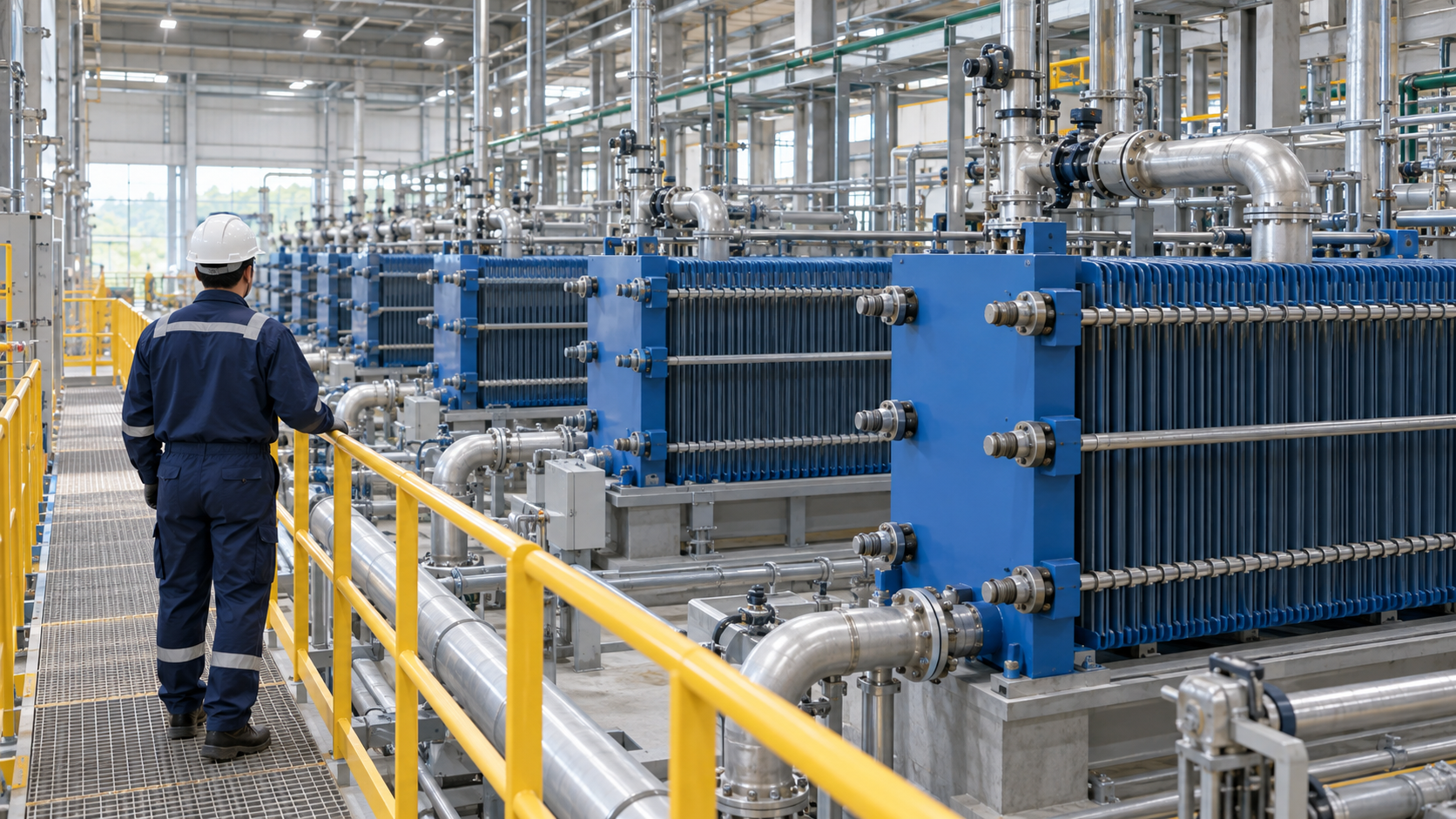
Asahi Kasei is part of the hydrogen story because it is a company that has supplied membranes, electrolyzers, electrodes, operating know-how and monitoring for ion-exchange-membrane chlor-alkali electrolysis, and is now applying the same electrochemical principle to splitting water. At the Fukushima Hydrogen Energy Research Field (FH2R) it has run a 10 MW-class alkaline water electrolyzer since March 2020, and at its Kawasaki Works a pilot plant of four 0.8 MW modules is used to test how several modules are controlled together. In July 2025 it won an order for a 1 MW-class containerized unit from Finland, which the company describes as its first order since commercialization. This profile covers the hydrogen business only, not Asahi Kasei as a whole, and sets out from primary sources what the company has committed, with whom it works and how much it discloses.
- Asahi Kasei in 30 seconds, and where it stands in hydrogen energy
- The logo and how the name is written
- Where the company sits in the field
- Scale
- Resources committed to hydrogen energy
- What it has done so far
- What comes next
- What the company is aiming for in hydrogen energy
- Map of partnerships in hydrogen energy
- Technologies, products and services
- The risks this company carries
- Glossary, references and claim-to-source audit
1. Asahi Kasei in 30 seconds, and where it stands in hydrogen energy
securities code 3407As stated in the results for the year to March 2026
Materials & components (secondary)Alkaline method; also makes cell frames and membranes for chlor-alkali
Aqualyzer-C³Large systems, and a 1 MW-class containerized unit
(FH2R)Plus a 0.8 MW x 4-module pilot plant in Kawasaki
Finland (1 MW-class)The company calls it its first order since commercialization
Asahi Kasei's hydrogen business is neither "a company that sells hydrogen" nor "a company that only sells electrolyzers". It is a company that has handled membranes, cells, electrodes, operation and monitoring for chlor-alkali plants, and is extending the same kind of electrolysis equipment to water electrolysis Sourced. The new Kawasaki plant approved in October 2025 is planned to make cell frames and membranes for both water electrolysis and chlor-alkali on the same lines, and the company says it will run chlor-alkali and water electrolysis as twin pillars Sourced. Sales, profit and headcount for the hydrogen business alone are not disclosed, and the only order we could confirm from primary sources is one 1 MW-class unit Not yet confirmed. The 100 MW-plus business the company talks about is still ahead of it.
2. The logo and how the name is written

A note on names: the legal entity is Asahi Kasei Corporation (Asahi Kasei Kabushiki Kaisha in Japanese). This profile covers the hydrogen business only, and is written afresh from a hydrogen perspective, separately from the Asahi Kasei profile in this series' polymers and resins field. Aqualyzer and Aqualyzer-C³ are Asahi Kasei product names, not legal entities. Cefmof (Central Finland Mobility Foundation) in Finland is the customer, not an Asahi Kasei subsidiary. The logo is the white version published on Asahi Kasei's official Aqualyzer website, shown on a dark background.
Official site: https://www.asahi-kasei.com/3. Where the company sits in the field
4. Scale
Asahi Kasei is a diversified chemicals group with three sectors: Healthcare, Homes and Material. The hydrogen business belongs to the Energy & Infrastructure business inside Material, and its sales and profit are not reported separately. Only the company-wide figures and those of the segment it belongs to are shown here Sourced.
| Indicator (¥ million) | Year to March 2025 | Year to March 2026 |
|---|---|---|
| Net sales (consolidated) | 3,037,312 | 3,074,505 |
| Operating profit (consolidated) | 211,921 | 231,200 |
| R&D expenses (whole group) | 110,641 | 110,537 |
| Material segment net sales | n/a | about ¥1,306.2 billion (operating profit about ¥68.3 billion) |
| Capital expenditure (tangible and intangible, excluding goodwill, acceptance basis) | n/a | 222,324 |
Consolidated employees number 47,895 (as of 31 March 2026) and paid-in capital is ¥103,389 million. In the Securities Report, the Material segment accounted for the largest capital expenditure in the year to March 2026 (¥164.8 billion), but the main items listed are higher coating capacity for lithium-ion battery separators and the refurbishment of hydroelectric plants; water electrolysis facilities are not listed.
The figures above are for the whole company or the whole Material segment and do not show the size of the hydrogen business. The Securities Report does not break out sales, profit, R&D spending or headcount for hydrogen. This article does not estimate them Not yet confirmed. A 2021 business strategy vision submitted to NEDO contains a sales plan for water electrolysis (¥29.0 billion in fiscal 2030 and ¥58.8 billion in fiscal 2035), but that is a plan made when the project began, not a result.
5. Resources committed to hydrogen energy
Most figures for money and people are not disclosed for hydrogen alone. What could and could not be confirmed is set out below.
| Resource | What primary sources confirm | Category |
|---|---|---|
| People | The hydrogen work is attributed to the Green Solution Project (by the company's account, mainly element technologies such as efficiency and degradation control in alkaline electrolysis) and to Corporate Production Technology (system development such as scale-up and response to fluctuating input). Six engineers from these two units (three each) received a technical award from the Electrochemical Society of Japan in March 2026. The headcount for hydrogen is not disclosed | Sourced / not disclosed |
| Money (R&D) | Group R&D spending was ¥110.5 billion (year to March 2026). The hydrogen share is not disclosed | Sourced / not disclosed |
| Money (capital expenditure) | New Kawasaki plant for cell frames and membranes: the December 2024 announcement put total investment at about ¥35 billion (with a subsidy of up to ¥11.4 billion expected); the October 2025 decision gives about ¥31 billion (of which up to one third is a subsidy under the GX Supply Chain Development program). The company states it is still refining the design and that the figure may change | Sourced (plan) |
| Investments and partnerships | Decision to take a stake in Ionomr Innovations of Canada (anion exchange membranes for water electrolysis), December 2023. MOU with De Nora of Italy on developing and selling containerized systems (September 2024). Joint proposal with JGC Holdings to the Green Innovation Fund. MOU with Gentari on a Malaysian project (November 2023). Acquisitions, joint ventures or divestments in hydrogen: none confirmed | Sourced / none confirmed |
| Public funding and research bodies | NEDO commissioned project (FH2R, from 2020); NEDO Green Innovation Fund (a subsidy for building and running the Kawasaki pilot plant); METI's GX Supply Chain Development program (selected December 2024). No named university collaborations could be confirmed | Sourced / none confirmed |
| Industry bodies | Joined the Hydrogen Council as a steering member (October 2022) and the Japan Hydrogen Forum in the U.S. (July 2023) | Sourced |
Status of main projects
| Project | Location | Scale | Stage | Dates and notes |
|---|---|---|---|---|
| FH2R (Fukushima Hydrogen Energy Research Field) | Namie, Fukushima, Japan | 10 MW-class (about 200 cells) | Operating demonstration | Started March 2020; the company said in May 2024 it had run it for over four years. NEDO commissioned project |
| Kawasaki pilot plant | Kawasaki Works, Kanagawa, Japan | 0.8 MW x 4 modules | Demonstration under way | Construction announced November 2022; trial run completed March 2024; opening ceremony 13 May 2024. Supported by the NEDO Green Innovation Fund |
| Cefmof hydrogen station | Jyväskylä, Finland | 1 MW-class; about 400 kg/day at full output | Installation under way (Not yet confirmed) | Ordered July 2025; installation began March 2026. Hydrogen production is planned from around July 2026, with steady operation within the year. We could not confirm that production has started |
| Green ammonia demonstration (JGC Holdings) | Namie, Fukushima, Japan | Uses hydrogen from the FH2R electrolyzer | Described by the company as under construction (November 2023) | NEDO noted in July 2025 that delivery of some equipment was delayed |
| 60 MW-class project (Gentari, JGC Holdings) | Malaysia | 60 MW-class; 8,000 tonnes/year of green hydrogen | MOU to move to front-end engineering design (FEED), November 2023 | The company aimed for demonstration operation in 2027. NEDO noted in July 2025 that the Green Innovation Fund's "Phase 2" had its overseas demonstration site under review (it does not name Malaysia, but Asahi Kasei treats this project as Phase 2). We could not confirm what has happened since |
| European demonstrations (ALIGN-CCUS, TAKE-OFF) | Germany | Mid-sized electrolyzer | Demonstration (from 2020) | The company says the hydrogen is used with CO₂ from a power plant to synthesize sustainable aviation fuel (SAF) |
The 2021 business strategy vision submitted to NEDO sets, as a target for water electrolysis element technology, "consumable-part life of four years or more (fiscal 2023)", and gives as its basis the service life of consumables in chlor-alkali electrolyzers Sourced (a plan from the start of the project, not a report of achievement). An electrolyzer keeps its performance by replacing consumable parts such as diaphragms, electrodes and gaskets. A company that has long managed membrane and electrode life in chlor-alkali plants is carrying that yardstick over to water electrolysis. There is a difference, however: chlor-alkali plants run on steady power, whereas electrolyzers fed by renewable energy see fluctuating output and more stops and starts. Whether the same life target can be met under fluctuating input is what the multi-module tests in Kawasaki are checking Not yet confirmed.
6. What it has done so far
| When | What happened | Why it matters |
|---|---|---|
| 1923 | Began producing hydrogen by water electrolysis with hydroelectric power in Nobeoka, Miyazaki, as a feedstock for ammonia | Origin of the company's electrolysis business (per the brochure) |
| 1975 | Commercialized ion-exchange-membrane chlor-alkali electrolysis systems | The technical foundation for water electrolysis. Cumulative scale is the company's own description (below) |
| 2010 | Began developing alkaline water electrolysis systems | The company says it has kept testing with scale-up and mass production in mind since then |
| 2020 | Joined the European project ALIGN-CCUS (moving to its successor TAKE-OFF from 2021). In March, started the 10 MW-class unit at FH2R | A mid-sized European demonstration alongside a large domestic one |
| October-November 2022 | Joined the Hydrogen Council (28 October). Announced construction of the Kawasaki pilot plant (7 November) | International network, and the start of multi-module testing |
| July-December 2023 | Joined the Japan Hydrogen Forum. In November, MOU with Gentari and JGC Holdings on a 60 MW-class project. In December, decided to take a stake in Ionomr (AEM membranes) | Links to the U.S. and Southeast Asia, and an investment in next-generation membranes |
| March-May 2024 | Completed a trial run with hydrogen production at the Kawasaki pilot plant (March). Opening ceremony on 13 May | Multi-module control tests begin in earnest |
| September 2024 | MOU with De Nora on developing and selling containerized systems | A compact, distributed line alongside the large Aqualyzer |
| December 2024 | Selected for METI's GX Supply Chain Development program | Towards mass-production facilities for cell frames and membranes |
| July 2025 | Cefmof ordered a 1 MW-class Aqualyzer-C³ | The company calls it its first order since commercialization and says its hydrogen business has moved fully into the commercialization phase |
| October 2025 | Formally decided to build the new Kawasaki plant (cell frames and membranes, over 2 GW each; start-up planned in fiscal 2028) | Investment announced as about ¥31 billion (may change) |
| March 2026 | Installation began in Finland (12 March). Won the Electrochemical Society of Japan's 2026 Technology Award, the Tanahashi Prize (ceremony 18 March, announced 19 March) | Awarded for the development and long-term demonstration of a 10 MW-class large alkaline water electrolyzer |
7. What comes next
All of these are company plans and targets, not things that have happened Not yet confirmed. The timing has shifted a little with each announcement.
| When announced | What the company said (how timing and numbers have changed) |
|---|---|
| October 2022 | To bring to market by 2025 a large unit made of several 10 MW modules, based on FH2R results |
| May 2024 | Start taking orders for alkaline water electrolyzers in 2025 (the Japanese release; the English release says it plans to start commercial activity in 2025). Aims for sales of about ¥100 billion around 2030 |
| December 2024 | To win a 20% share of the world's major electrolyzer markets around 2030 (the Japanese release says mainly Europe, North America and Asia; the English release names Europe, North America and India). The Japanese release also says that few projects in the world are actually operating stably |
| July 2025 | First order for a 1 MW-class containerized unit (an entry model), described as a way into larger systems |
| October 2025 | Says it moved to the full commercialization phase from fiscal 2025 |
None of the following appears in the primary sources we checked Not yet confirmed.
Sales, profit and headcount for hydrogen alone; specific orders for 100 MW-plus systems; the current status and site of the Malaysian project (Green Innovation Fund Phase 2); evidence that the Finnish unit has started producing hydrogen (only the plan for around July 2026 is stated); and the individual amount of the NEDO subsidy Asahi Kasei receives. The company's releases also cite forecasts of installed electrolyzer capacity from outside bodies; those are market estimates and this article does not use them.
8. What the company is aiming for in hydrogen energy
We separate what the company says from what we read into it. Inference marks our own interpretation of primary sources.
| What can be read | Primary evidence | Category |
|---|---|---|
| It aims to be a leading supplier of water electrolysis, that is, of equipment and components | The company wrote in December 2024 and again in October 2025 that it intends to become a leading supplier in water electrolysis and a core player in the GX supply chain | Sourced (company target) |
| It splits products by use: atmospheric-pressure alkaline for large units, pressurized containerized for small and distributed ones | The September 2024 release says Aqualyzer suits mass, low-cost production with large atmospheric-pressure electrolyzers, while containerized units cost less, need less space and arrive sooner | Sourced |
| It supports chlor-alkali and water electrolysis with one production base, spreading the investment risk | The new plant can make frames and membranes for both; the company says this lets it keep and expand its earnings base while making advance investment in hydrogen (Japanese release) | Sourced / Inference (the intent to spread risk) |
| In the near term, sales may start from small units, components and service rather than large systems | The only disclosed order is one 1 MW-class unit, and the company says it will keep supporting maintenance and operation after delivery. No large order has been disclosed | Inference |
| It is also preparing for the next-generation AEM method | Stake in Ionomr (December 2023). The Securities Report describes AEM as a next-generation membrane from which large improvements in both performance and cost are expected | Sourced / Inference (the intent to prepare) |
Our reading that the company is spreading investment risk between chlor-alkali and water electrolysis rests on how the new plant is designed. In its December 2024 release the company admitted that it remains unclear when a hydrogen society will become a reality, yet it said the new facilities will be able to make frames and membranes for chlor-alkali as well, so that it can respond to both the uncertain expansion of the hydrogen market and growing chlor-alkali demand Sourced. That reads as a design that keeps a use for the plant even if water electrolysis demand arrives later than expected. The company does not say "to spread risk", so this is our interpretation Not yet confirmed.
9. Map of partnerships in hydrogen energy
10. Technologies, products and services
The company has two product lines. Both are alkaline water electrolysis, and performance figures are the manufacturer's stated values (the brochure's "expected values") that vary with operating conditions.
| Product | What official materials say | Note |
|---|---|---|
| Aqualyzer (large) | Built from 10 MW basic units (modules) combined for large scale. Electrolyzer, membrane, electrodes and control system supplied together. The company says its large atmospheric-pressure electrolyzers suit mass, low-cost hydrogen production | 10 MW-class demonstrated at FH2R, 0.8 MW modules in Kawasaki |
| Specifications of the 100 MW Aqualyzer system (brochure, expected values) | H₂ production rate 20,000 Nm³/h; 10 modules; production ratio (operating range) 15-100%; power consumption 4.4 kWh/Nm³ (DC); H₂ pressure at stack discharge 0.5 barG; deionized water consumption 0.9 L/Nm³; H₂ purity up to 99.999% (with purification) | The brochure notes the figures are "expected values" that may vary with operating conditions. Not compared with other makers' values |
| Aqualyzer-C³ (containerized) | 1 MW-class. An entry model with the equipment needed for hydrogen production housed in a container. The Finnish unit produces about 400 kg/day, enough to refill about three fuel cell vehicles per hour | The July 2025 release links to the September 2024 MOU with De Nora, which covers pressurized small units of 1 to 7.5 MW |
| Operation and maintenance services | Remote monitoring from operating data, predictive maintenance and operating advice. The company says it will keep supporting maintenance and operation after delivery | Applies the data-use experience from chlor-alkali |
| Components (cell frames and membranes) | A new Kawasaki plant (fiscal 2028) is planned to make frames and membranes for both water electrolysis and chlor-alkali | Component supply as well as equipment sales |
The brochure illustrates the Aqualyzer cell as anode, cathode, diaphragm, cell gasket, mattress and current collector, and lists its development focus as "optimizing diaphragms, electrodes and cell structure for water electrolysis" and "improving internal circulation and uniformity of the electrolyte" Sourced. In alkaline water electrolysis the diaphragm separates the gases while passing ions and the electrodes carry out the reactions, so these two materials, and a structure that distributes the electrolyte evenly, shape cell voltage (efficiency) and life (see our explainers on alkaline water electrolysis and on electrolyzer stacks and materials). A filter-press structure that makes diaphragms and electrodes easy to replace assumes that consumable parts are changed over a long service life, and the company says it aims to reduce downtime. The specific materials and compositions of the membranes and electrodes, and measured lifetimes, could not be confirmed from official materials Not yet confirmed.
For the next-generation AEM method, the company says the absence of precious metals gives it potential on cost. That is an expression of expectation about its investee's (Ionomr's) technology, not a demonstrated result for performance or durability.
11. The risks this company carries
| Risk | Detail | Category |
|---|---|---|
| The hydrogen market's timing is hard to read | The company itself says it remains unclear when a hydrogen society will become a reality and, in the Japanese release, that few projects in the world are actually operating stably | Sourced |
| Few orders so far | The only order we could confirm is one 1 MW-class unit. There is a wide gap to the 100 MW-plus systems and the 20% share target the company sets for around 2030 | Sourced / Inference (the size of the gap) |
| Delays and project reviews | In July 2025 NEDO recorded that delivery of some equipment for the Namie ammonia demonstration (Phase 1) was delayed and that Phase 2 had its overseas demonstration site reviewed (it also said the schedule could be recovered). Asahi Kasei treats the Malaysian project as Phase 2 | Sourced (NEDO's record) |
| Plans keep changing | From "bring to market by 2025" (October 2022), to "start taking orders in 2025" (May 2024), to a smaller unit being ordered first (July 2025). The new plant's investment moved from about ¥35 billion to about ¥31 billion | Sourced |
| Reliance on public support | The Kawasaki pilot plant relies on a Green Innovation Fund subsidy and the new plant on a GX Supply Chain Development subsidy (up to one third) | Sourced / Inference (the degree of reliance) |
| Competition | The 2021 business strategy vision names thyssenkrupp and Nel, among others, as competitors. The company targets a 20% share around 2030; this article does not assess whether it will be reached | Sourced (the company's own listing) |
| Hard to verify from outside | Sales, profit, headcount and R&D spending for hydrogen are not disclosed, so progress cannot be checked from the financial statements | Not yet confirmed |
12. Glossary
- Alkaline water electrolysis
- Splitting water into hydrogen and oxygen in an alkaline electrolyte, with a diaphragm keeping the gases apart. It has a long record at large scale.
- Ion-exchange-membrane chlor-alkali electrolysis
- An industrial process that electrolyzes brine to make chlorine, caustic soda and hydrogen. Asahi Kasei commercialized it in 1975.
- Module
- A building block made of the electrolyzer itself and minimal peripheral equipment. Asahi Kasei uses a 10 MW-class unit as the base and combines several for large scale.
- FH2R
- Fukushima Hydrogen Energy Research Field, a NEDO-sponsored hydrogen production facility in Namie, Fukushima.
- GI Fund
- NEDO's Green Innovation Fund, which supports R&D and demonstration in priority fields toward carbon neutrality by 2050.
- GX Supply Chain Development program
- A METI program that supports building domestic manufacturing supply chains in green transformation (GX) fields.
- FEED
- Front-end engineering design, the design stage that follows a feasibility study.
- AEM
- Anion exchange membrane. A membrane that passes hydroxide ions; electrolysis using it is called AEM water electrolysis.
- Nm³
- A gas volume converted to standard conditions (0 °C, 1 atmosphere), used for hydrogen output.
- Securities Report
- The annual report that Japanese listed companies must file under the Financial Instruments and Exchange Act (yuka shoken hokokusho).
13. References
- Asahi Kasei 135th Securities Report, April 2025 to March 2026 (in Japanese). Sales, R&D, capital expenditure, segment results, hydrogen business, AEM membranes and the corporate venture investment framework. https://www.asahi-kasei.com/content/dam/asahi-kasei/jp/ja/ir/library/financial-report/pdf/135j-0624.pdf
- Asahi Kasei (Tokyo Stock Exchange disclosure) Consolidated Financial Results for the Year Ended March 2026, Japanese GAAP (12 May 2026) (in Japanese). Consolidated sales, operating profit and listing venue. https://www2.jpx.co.jp/disc/34070/081220260511523883_tse-acedjpsm-34070-20260512334070-ixbrl.htm
- Asahi Kasei Corporate profile (in Japanese): company name, founding, establishment, head office, paid-in capital, consolidated employees as of 31 March 2026. https://www.asahi-kasei.com/jp/company/profile/
- Asahi Kasei Aqualyzer official website: features, chlor-alkali track record, history and participating projects. https://ak-green-solution.com/en/
- Asahi Kasei Aqualyzer brochure (English): cell structure, 10 MW module, specifications of the 100 MW system (expected values) and history. https://ak-green-solution.com/assets/pdf/brochure_en.pdf
- Asahi Kasei Asahi Kasei starts construction of alkaline water electrolysis pilot test plant for hydrogen production (7 November 2022). https://www.asahi-kasei.com/news/2022/e221107
- Asahi Kasei Asahi Kasei, Gentari, and JGC signed MOU on FEED study for 60 MW class alkaline water electrolyser to produce green hydrogen in Malaysia (15 November 2023). https://www.asahi-kasei.com/news/2023/e231115
- Asahi Kasei Asahi Kasei invests in Canadian manufacturer of anion exchange membranes (6 December 2023). https://www.asahi-kasei.com/news/2023/e231206
- Asahi Kasei Asahi Kasei starts operation of multi-module hydrogen pilot plant in Kawasaki (14 May 2024). FH2R, Kawasaki and Malaysia activities and the outlook. https://www.asahi-kasei.com/news/2024/e240514
- Asahi Kasei Asahi Kasei enters collaboration with De Nora for development and sale of small-scale containerized electrolyzers for hydrogen production (11 September 2024). https://www.asahi-kasei.com/news/2024/e240911
- Asahi Kasei Asahi Kasei receives governmental support to expand manufacturing capacity for green hydrogen production equipment in Japan (18 December 2024). Initial investment of about ¥35 billion and the 20% share target. https://www.asahi-kasei.com/news/2024/e241218
- Asahi Kasei Asahi Kasei to supply 1 MW-class alkaline-water electrolyzer to hydrogen project in Finland (30 July 2025). https://www.asahi-kasei.com/news/2025/e250730
- Asahi Kasei Press release on the Finnish order (30 July 2025) (in Japanese). The first order since commercialization, the entry-model positioning and the move to the commercialization phase. https://www.asahi-kasei.com/jp/news/2025/ze250730
- Asahi Kasei Asahi Kasei expanding capacity to manufacture system components for clean hydrogen (23 October 2025). https://www.asahi-kasei.com/news/2025/e251023
- Asahi Kasei Press release on the new Kawasaki plant (23 October 2025) (in Japanese). Plant outline, investment of about ¥31 billion and the 2028 start-up plan. https://www.asahi-kasei.com/jp/news/2025/ze251023
- Asahi Kasei Asahi Kasei Begins Installation of Containerized Alkaline-Water Electrolyzer at Finland's First Commercial Hydrogen Refueling Station (12 March 2026). https://www.asahi-kasei.com/news/2026/e260312
- Asahi Kasei Tanahashi Prize recognizes the robust long-term operation of the 10MW alkaline-water electrolysis system by Asahi Kasei (19 March 2026). https://www.asahi-kasei.com/news/2026/e260319
- Asahi Kasei Asahi Kasei joins the Hydrogen Council (28 October 2022). https://www.asahi-kasei.com/news/2022/e221028
- Asahi Kasei Asahi Kasei joins the Japan Hydrogen Forum to support decarbonization in the U.S. (13 July 2023). https://www.asahi-kasei.com/news/2023/e230713
- NEDO FH2R, one of the world's largest renewable-energy hydrogen production facilities, completed (7 March 2020) (in Japanese). Scale of FH2R: 10 MW, 1,200 Nm³ per hour at rated output, 20 MW of solar power. https://www.nedo.go.jp/news/press/AA5_101293.html
- NEDO Green Innovation Fund Asahi Kasei business strategy vision, Large-scale Alkaline Water Electrolysis System Development and Green Chemical Plant Demonstration (at project start) (in Japanese). Sales plan, KPIs (consumable life, equipment cost) and the company's list of competitors. https://green-innovation.nedo.go.jp/resources/pdf/hydrogen-production-water-electrolysis-utilizing/item-001/vision-asahikasei-001.pdf
- NEDO Green Innovation Fund Hydrogen production through water electrolysis using power from renewables: project progress, summary as of July 2025 (in Japanese). https://green-innovation.nedo.go.jp/project/hydrogen-production-water-electrolysis-utilizing/progress/
- Asahi Kasei Press release on GX Supply Chain Development program selection (18 December 2024) (in Japanese). The executives' comments on the uncertain start of the hydrogen market and the 20% share target. https://www.asahi-kasei.com/jp/news/2024/ze241218_2.html
- Asahi Kasei Press release on the Kawasaki pilot plant (14 May 2024) (in Japanese). Details of FH2R (about 200 cells, over four years of operation) and the 2030 sales ambition. https://www.asahi-kasei.com/jp/news/2024/ze240514.html
14. Claim-to-source audit
| Claim in the article | Category | Source |
|---|---|---|
| Legal name, head office, founding, paid-in capital, 47,895 consolidated employees (31 March 2026) | Sourced | Reference 3 https://www.asahi-kasei.com/jp/company/profile/ |
| Listing venue (Tokyo Stock Exchange) and consolidated net sales of ¥3,074,505 million and operating profit of ¥231,200 million (year to March 2026) | Sourced | Reference 2 https://www2.jpx.co.jp/disc/34070/081220260511523883_tse-acedjpsm-34070-20260512334070-ixbrl.htm |
| R&D expenses of ¥110,537 million, capital expenditure of ¥222,324 million and the main Material-segment investments, Material segment sales of about ¥1,306.2 billion | Sourced | Reference 1 https://www.asahi-kasei.com/content/dam/asahi-kasei/jp/ja/ir/library/financial-report/pdf/135j-0624.pdf |
| The hydrogen business is ranked as a strategic cultivation business and sits within Energy & Infrastructure | Sourced | References 1 and 15 https://www.asahi-kasei.com/content/dam/asahi-kasei/jp/ja/ir/library/financial-report/pdf/135j-0624.pdf https://www.asahi-kasei.com/jp/news/2025/ze251023 |
| Chlor-alkali commercialized in 1975; membranes, electrolyzers, electrodes, operating technology and monitoring supplied together | Sourced | References 12, 15 and 5 https://www.asahi-kasei.com/news/2025/e250730 https://www.asahi-kasei.com/jp/news/2025/ze251023 https://ak-green-solution.com/assets/pdf/brochure_en.pdf |
| Hydrogen from water electrolysis in 1923, development begun in 2010, ALIGN-CCUS and TAKE-OFF participation from 2020 | Sourced | Reference 5 https://ak-green-solution.com/assets/pdf/brochure_en.pdf |
| A 10 MW-class unit (about 200 cells) at FH2R since March 2020, with over four years of operation | Sourced | References 24 and 9 https://www.asahi-kasei.com/jp/news/2024/ze240514.html https://www.asahi-kasei.com/news/2024/e240514 |
| Scale of FH2R (10 MW, 1,200 Nm³ per hour at rated output, 20 MW of solar power) | Sourced | Reference 20 https://www.nedo.go.jp/news/press/AA5_101293.html |
| Kawasaki pilot plant (0.8 MW x 4 modules): construction, trial run and opening ceremony dates | Sourced | References 6 and 9 https://www.asahi-kasei.com/news/2022/e221107 https://www.asahi-kasei.com/news/2024/e240514 |
| MOU with Gentari and JGC Holdings on a 60 MW-class project (8,000 tonnes/year) and the 2027 demonstration target | Sourced | Reference 7 https://www.asahi-kasei.com/news/2023/e231115 |
| NEDO's July 2025 record of delayed delivery of some equipment in Namie (Phase 1) and the review of the Phase 2 overseas site (Asahi Kasei treats the Malaysian project as Phase 2) | Sourced | Reference 22 https://green-innovation.nedo.go.jp/project/hydrogen-production-water-electrolysis-utilizing/progress/ |
| Current status and site of the Malaysian project (Green Innovation Fund Phase 2) | Not yet confirmed | Not stated in the primary sources we checked. https://green-innovation.nedo.go.jp/project/hydrogen-production-water-electrolysis-utilizing/progress/ |
| Stake in Ionomr Innovations (AEM membranes, December 2023) and the company's description of AEM | Sourced | References 8 and 1 https://www.asahi-kasei.com/news/2023/e231206 https://www.asahi-kasei.com/content/dam/asahi-kasei/jp/ja/ir/library/financial-report/pdf/135j-0624.pdf |
| MOU with De Nora on containerized systems (September 2024) and the 1 to 7.5 MW pressurized small electrolyzers it covers | Sourced | Reference 10 https://www.asahi-kasei.com/news/2024/e240911 |
| Selection for the GX Supply Chain Development program (December 2024), the initial investment of about ¥35 billion, a subsidy of up to ¥11.4 billion, and the 20% share target around 2030 | Sourced | References 11 and 23 https://www.asahi-kasei.com/news/2024/e241218 https://www.asahi-kasei.com/jp/news/2024/ze241218_2.html |
| Outline of the new plant (over 2 GW each, start-up planned in fiscal 2028, about ¥31 billion, up to one third subsidized) and the company's note that the figure may change | Sourced | Reference 15 https://www.asahi-kasei.com/jp/news/2025/ze251023 |
| Order of a 1 MW-class unit by Cefmof (July 2025), the first order since commercialization and the move to the commercialization phase | Sourced | References 12 and 13 https://www.asahi-kasei.com/news/2025/e250730 https://www.asahi-kasei.com/jp/news/2025/ze250730 |
| Start of installation in Finland (March 2026), the plan to begin hydrogen production around July 2026, about 400 kg/day | Not yet confirmed | Reference 16 https://www.asahi-kasei.com/news/2026/e260312 |
| Evidence that the Finnish unit has started producing hydrogen | Not yet confirmed | Not stated in the primary sources we checked. https://www.asahi-kasei.com/news/2026/e260312 |
| The 2026 Tanahashi Prize and the units of the six recipients (Green Solution Project and Corporate Production Technology) | Sourced | Reference 17 https://www.asahi-kasei.com/news/2026/e260319 |
| Joining the Hydrogen Council (October 2022) and the Japan Hydrogen Forum (July 2023) | Sourced | References 18 and 19 https://www.asahi-kasei.com/news/2022/e221028 https://www.asahi-kasei.com/news/2023/e230713 |
| “Bring to market by 2025” (October 2022), and “start taking orders in 2025; sales of about ¥100 billion around 2030” (May 2024) | Sourced | References 18 and 9 https://www.asahi-kasei.com/news/2022/e221028 https://www.asahi-kasei.com/news/2024/e240514 |
| Sales plan in the 2021 business strategy vision (¥29.0 billion in fiscal 2030, ¥58.8 billion in fiscal 2035), the consumable-life KPI of four years or more, and the competitor list | Sourced | Reference 21 https://green-innovation.nedo.go.jp/resources/pdf/hydrogen-production-water-electrolysis-utilizing/item-001/vision-asahikasei-001.pdf |
| Aqualyzer 100 MW system specifications (20,000 Nm³/h, 4.4 kWh/Nm³ (DC) and others, expected values), cell structure, filter-press design and services | Sourced | Reference 5 https://ak-green-solution.com/assets/pdf/brochure_en.pdf |
| Features of the containerized unit (Aqualyzer-C³) and the split between large atmospheric-pressure and small pressurized units | Sourced | References 13 and 10 https://www.asahi-kasei.com/jp/news/2025/ze250730 https://www.asahi-kasei.com/news/2024/e240911 |
| Sales, profit, headcount and R&D spending for hydrogen alone, orders for 100 MW-plus systems, and the individual NEDO subsidy amount | Not yet confirmed | Not stated in the primary sources we checked; this article does not estimate them. https://www.asahi-kasei.com/content/dam/asahi-kasei/jp/ja/ir/library/financial-report/pdf/135j-0624.pdf |
| The four-type classification of hydrogen companies (electrolyzers primary, materials & components secondary) | Our calculation | Our own classification. Company names are examples from this series |
| The new plant as a way of spreading investment risk | Inference | Our own interpretation. The company says it can “respond to both” markets |
| Near-term sales may start from small units, components and service | Inference | Our own interpretation, based on the only disclosed order being a 1 MW-class unit |
| Preparing for the next-generation AEM method | Inference | Our own interpretation of the stake in Ionomr |
Last updated October 2026 / Troy Technical
Figures in this article come from Asahi Kasei's Securities Report, financial results, official releases and the Aqualyzer brochure, and from NEDO public documents. No research-firm market estimates have been used. Product performance values are the manufacturer's stated (expected) values, and values measured under different conditions or scales are not set against one another. Company plans and targets are not yet confirmed and are not things that have happened. Passages marked "Inference" are this article's interpretation of primary sources. This article is not advice on handling hydrogen.