TECHNOLOGY EXPLAINER
Nanomaterial Definitions and Regulation
— The Line Called “Nano” Is Drawn Separately by Each Jurisdiction and Each Law
“1 to 100 nm” is the shared starting point. But the European Commission’s recommendation adds “50% or more by particle number”, the U.S. TSCA reporting rule adds “a solid, made to exploit size-dependent properties”, and a Japanese Ministry of Health, Labour and Welfare (MHLW) notice says “a solid material of about 1 to 100 nm”. Different conditions are attached to the same numbers. And when it comes to safety, official assessments turn less on whether something is “nano” than on shape, size, surface and solubility.
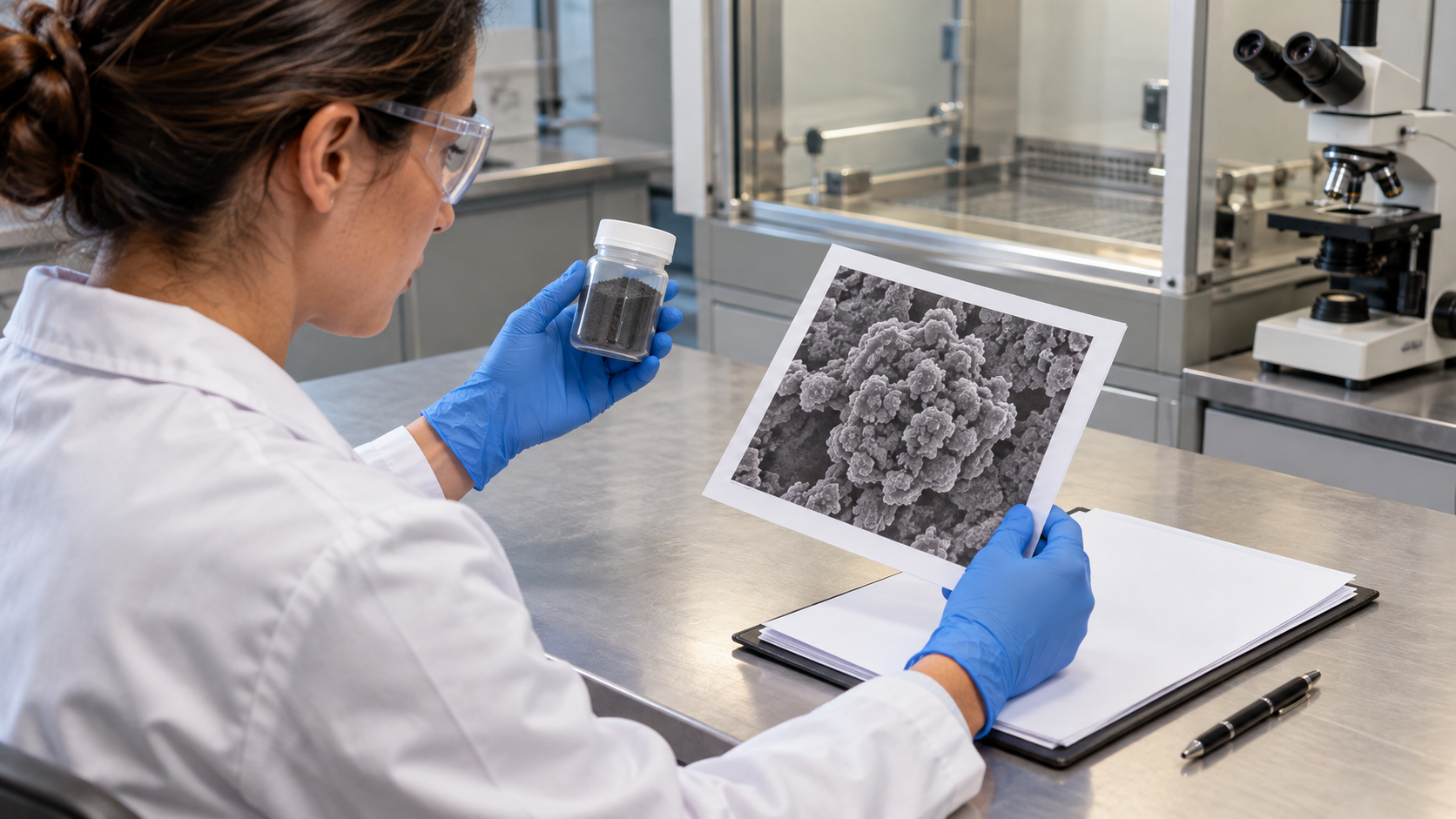
- What a “nano” definition is (the short version)
- A map of definitions — the same “1 to 100 nm” with different conditions attached
- EU Recommendation 2022/C 229/01 — 50% by number, and an exclusion by surface area
- Our calculation: by number versus by mass, one powder becomes two different materials
- A materials engineer’s view (1): can the number-based criterion actually be measured?
- REACH nanoforms — registration is done form by form
- Cosmetics and food — each regulation uses its own definition
- United States — the TSCA reporting rule and the FDA approach
- Japan — what runs on notices and guidelines
- OECD and ISO — the foundation of test methods and terminology
- Reading proposal, adoption and application as separate stages
- “Nano” does not mean dangerous or safe — examples decided by form
- A materials engineer’s view (2): regulation changes how specifications are written
- What is still open, and what we could not confirm
- Glossary / Primary sources / Claim-to-source audit
Sourced = content stated in published material (link given)
Our calculation = a figure this article derived, with the assumptions spelled out
Not yet confirmed = a proposal or draft whose adoption and application we could not confirm
Readings and interpretations are marked separately as Commentary.
This article is an explanation of how to read regulation. It is not legal advice, and it does not determine which regulation a particular product falls under. It also does not rank any material, company or country, and it does not generalise that nano means dangerous or that nano means safe. For actual decisions, check the text of each law and the latest documents of the competent authority.
1. What a “nano” definition is (the short version)
- A common vocabulary: ISO 80004-1:2023 (published July 2023) defines the nanoscale as the “length range approximately from 1 nm to 100 nm” and a nanomaterial as a “material with any external dimension in the nanoscale or having internal structure or surface structure in the nanoscale”Sourced. The standard itself says the definition is a general descriptor that facilitates communication.
- The language of regulation: within the EU alone, the recommendation (2022), the REACH nanoform, the cosmetics regulation and the food regulations each carry a different definition. The U.S. sets its own definition in the TSCA reporting rule, while the FDA sets no definition and gives “points to consider” insteadSourced.
- Safety: IARC classified only MWCNT-7 as Group 2B (possibly carcinogenic to humans) among multiwalled carbon nanotubes; other multiwalled CNTs and single-walled CNTs are not classifiable (Group 3)Sourced. Even within “carbon nanotubes”, the assessment splits by form.
The EU recommendation states, in its own words, that its definition does not affect the scope of any instrument of Union legislation Sourced (recital 23). So whether something is a “nanomaterial” is not a single answer, but one that appears only when asked “under which law, and with which definition at which date?” (Commentary).
2. A map of definitions — the same “1 to 100 nm” with different conditions attached
Lined up by size range, the definitions look like the figure below. The ranges are almost identical, but what is counted and what is excluded differ.
| Document | Nature | Size | Threshold / condition | Shape, solubility, other |
|---|---|---|---|---|
| ISO 80004-1:2023 | International standard (terminology) | Nanoscale = approx. 1 to 100 nm | No threshold (a terminology definition) | A nanomaterial has an external dimension, internal structure or surface structure in the nanoscale |
| EU Recommendation 2022/C 229/01 | Recommendation (10 June 2022) | One or more external dimensions of 1 to 100 nm | 50% or more of the number-based size distribution | Solid particles only. A single molecule is not a particle. A material with a volume-specific surface area below 6 m²/cm³ is excluded |
| REACH nanoform | Commission regulation (2018/1881) | One or more external dimensions of 1 to 100 nm | 50% or more of the number size distribution | By derogation, fullerenes, graphene flakes and single-wall CNTs (dimensions below 1 nm) are included |
| EU cosmetics regulation | Regulation (EC) 1223/2009 | External dimensions or internal structure of 1 to 100 nm | No numerical threshold stated | Insoluble or biopersistent and intentionally manufactured |
| EU novel foods regulation | Regulation (EU) 2015/2283 | One or more dimensions of the order of 100 nm or less | No numerical threshold stated | Intentionally produced. Includes aggregates above 100 nm that retain properties characteristic of the nanoscale |
| US TSCA 704.20 | EPA reporting rule | At least one dimension of particles (including aggregates) of 1 to 100 nm | Excluded if less than 1% by weight | Solid at 25 °C. Manufactured or processed to exhibit “unique and novel properties” because of size |
| US FDA | Non-binding guidance | External dimension, internal or surface structure of approx. 1 to 100 nm | No definition is set | If dimension-dependent properties are intended, consider sizes up to about 1 µm |
| Japan MHLW notice | Notice (31 March 2009) | At least one dimension of approx. 1 to 100 nm | No threshold stated | Solid materials. Nanostructured materials (including aggregates) are also covered |
All Sourced (Sources 1 to 5, 7, 11, 14 and 18). The condensing and ordering of the table are ours.
3. EU Recommendation 2022/C 229/01 — 50% by number, and an exclusion by surface area
On 10 June 2022 the European Commission adopted a recommendation on the definition of nanomaterial (published in the Official Journal on 14 June 2022). It updates the 2011 recommendation (2011/696/EU), and the definition reads as followsSourced.
The changes from the 2011 recommendation are explained, with reasons, in the recitalsSourced.
- The flexibility of the 50% threshold is removed: the 2011 recommendation left room to change the 50% threshold in specific cases. The 2022 recommendation deletes that room so that treatment does not diverge between regulations (recital 13).
- The option of using specific surface area to qualify a material as nano is removed: a high specific surface area can come from internal nanostructure rather than from many small particles (recital 19).
- In its place, a criterion for exclusion is added: based on the NanoDefine project, a material with a volume-specific surface area below 6 m²/cm³ is not considered a nanomaterial (recital 20, point 1 of the text).
- Liquid particles are excluded: particles whose external dimensions keep changing, such as micelles and emulsion droplets, are hard to use with external dimension as the defining axis (recital 10).
- Particles with a dimension below 1 nm are generalised: the 2011 recommendation named fullerenes, graphene flakes and single-wall CNTs. The 2022 text generalises this into rod-like and plate-like shape conditions (recital 17, point 1(b) and (c)).
The recommendation also states that large solid products and components (coatings, some ceramics, nanoporous materials, nanocomposites and the like) are not covered, even if they have internal or surface structure at the nanoscale (recital 11). So it is a narrower definition than the ISO “nanomaterial”, which allows internal or surface structure in the nanoscaleSourced.
Recital 23 says the definition neither affects nor reflects the scope of application of any instrument of Union legislation. Point 3 of the text recommends that the Commission, Member States and economic operators use this definition when preparing policies and legislationSourced. Under the EU treaty framework, a recommendation is not itself binding (Commentary). The actual obligations are set by the text of each law.
4. Our calculation: by number versus by mass, one powder becomes two different materials
A simple example shows what “number-based” meansOur calculation. Assumption: a powder consists of only two kinds of spherical particles, 80 nm in diameter (80% by number) and 400 nm in diameter (20% by number), with the same density. These are two monodisperse populations, chosen purely for illustration.
- Number basis: particles of 100 nm or less make up 80.0%. This meets the recommendation’s “50% or more”.
- Surface-area basis (proportional to d²): 80 nm side = 0.8 × 80² = 5,120; 400 nm side = 0.2 × 400² = 32,000. The 80 nm share is 5,120 ÷ 37,120 = 13.8%.
- Volume (mass) basis (proportional to d³): 80 nm side = 0.8 × 80³ = 409,600; 400 nm side = 0.2 × 400³ = 12,800,000. The 80 nm share is 409,600 ÷ 13,209,600 = 3.1%.
- Volume-specific surface area (smooth, monodisperse sphere with no internal pores): VSSA = 6/d. At d = 100 nm this is 60 m²/cm³; at d = 1 µm it is 6 m²/cm³.
- Conversion from mass-specific surface area: OECD TG 124 calculates VSSA as mass-specific surface area (m²/g) × skeletal density (g/cm³)Sourced. Assuming a density of 4.0 g/cm³, 6 m²/cm³ = 1.5 m²/g.
Assumptions and limits: real powders have a spread of sizes and are not spheres. A porous particle can have a large surface area without any small particles. The figures above only show that the conclusion changes with what you count. OECD TG 125 likewise says that, depending on the measurement principle, sizes tend to follow d0 < d2 < d3, and that converting from one weighting to another is possible only under special conditionsSourced.
5. A materials engineer’s view (1): can the number-based criterion actually be measured?
A number-based size distribution cannot be obtained directly except by methods that count particles one by one (electron microscopy, atomic force microscopy and the like). In the OECD TG 125 table, the methods that give a number-based distribution directly are AFM, DMAS, PTA and electron microscopy (and sp-ICP-MS, which the same TG could not sufficiently validate in its interlaboratory comparison and so places in an appendix); DLS, SAXS and centrifugal sedimentation do notSourced. The same table says that for telling individual particles apart from the constituents of agglomerates, electron microscopy is “yes”, AFM and DMAS are “case dependent”, and DLS and PTA are “no”.
The recommendation counts the “identifiable constituent particles” inside aggregates and agglomerates too, and recital 14 itself acknowledges how hard identification can beSourced. In a February 2026 position paper on MWCNTs, NBCI (the Nanotechnology Business Creation Initiative, a Japanese industry body) says that OECD TG 125 calls for “extremely labor-intensive measurements” and that no realistic method has been established to measure trace inclusion at the 0.1 wt% threshold used for classifying mixturesSourced (this is an industry body’s opinion, not the view of a regulator).
What this shows is that the wording of a definition becomes a quality-control specification as it stands. Whether “50% or more is 1 to 100 nm” is met depends on how many particles you counted, how you dispersed them and with which instrument. How values change with the measurement method is covered in this series’ explainer on nanometrology (Commentary).
6. REACH nanoforms — registration is done form by form
The EU chemicals regulation REACH (Regulation (EC) No 1907/2006) was amended by Commission Regulation (EU) 2018/1881 to deal with nanoforms. It was adopted on 3 December 2018, published in the Official Journal on 4 December, and applies from 1 January 2020 (registrants could comply earlier)Sourced.
The amended Annex VI defines a nanoform as followsSourced: a form of a natural or manufactured substance containing particles, in an unbound state or as an aggregate or agglomerate, where for 50% or more of the particles in the number size distribution one or more external dimensions is in the size range 1 nm to 100 nm, including by derogation fullerenes, graphene flakes and single-wall carbon nanotubes with one or more external dimensions below 1 nm. This definition is written into the 2018 regulation itself and does not automatically follow the 2022 recommendation (the recommendation says it does not affect the scope of any legislation). We could not confirm whether there is a plan to align the two.
The recitals of the same regulation say the following about nanoformsSourced.
- Particle size, shape and surface can affect toxicity and behaviour in the environment, so minimum characterisation information is to be given at the substance-identification stage (recitals).
- In addition to water solubility, the dissolution rate in water and in biological and environmental media is always to be considered. The octanol-water partition coefficient often cannot be applied; in that case, dispersion stability is to be considered.
- For inhalable nanoforms, information on dustiness is to be provided. For the lowest tonnage band, inhalation rather than oral exposure is considered the more appropriate route for acute toxicity (unless human exposure is unlikely).
- Molecular structural similarity alone cannot justify read-across or grouping.
- Because a use may change one nanoform into another, downstream users pass that information up the supply chain.
The materials engineer’s reading
The characterisation items for a nanoform (size distribution, surface treatment agent, shape, surface area) almost coincide with what a powder maker already controls lot by lot. The difference is that they now become the basis of identity in registration. Change the surface treatment agent, and under the regulation you may have a different nanoform, or fall outside the boundary of the “set” you defined (Commentary).
The recitals also state plainly that “a use may modify the nanoforms of the substance, potentially changing one nanoform into another form or generating a new nanoform”Sourced. Materials engineers know well that mixing, dispersing, coating and firing can change the agglomeration state and the surface. What the supply chain now expects is that a downstream user can explain whether the form changes in their own process.
7. Cosmetics and food — each regulation uses its own definition
(1) Cosmetics: definition, prior notification, labelling, and substance-specific rules
Article 2(1)(k) of the original text of the Cosmetics Regulation (EC) 1223/2009 defines nanomaterial as “an insoluble or biopersistent and intentionally manufactured material with one or more external dimensions, or an internal structure, on the scale from 1 to 100 nm”. It states no numerical threshold such as 50%Sourced. Article 2(3) provides that the Commission adjusts this definition in line with technical and scientific progress and with definitions agreed at international level. Within the scope of our research, we could not confirm that this definition has been amended to follow the 2022 recommendation.
- Prior notification (Article 16): cosmetic products containing nanomaterials are notified to the Commission by the responsible person six months before being placed on the market (except those meeting the requirements of Annex III, among others). The notification includes the chemical name, a specification including particle size, the estimated annual quantity, the toxicological profile and safety data.
- Where there are concerns (paragraph 4): the Commission asks the Scientific Committee on Consumer Safety (SCCS) for its opinion, which is normally delivered within six months.
- Labelling (Article 19(1)(g)): ingredients present in the form of nanomaterials are indicated in the list of ingredients, with the word “nano” in brackets after the name.
All of the above is Sourced (Source 5). For individual substances, Commission Regulation (EU) 2024/858 amended the annexes (adopted 14 March 2024, published 15 March).
| Item | What Regulation 2024/858 says | Dates |
|---|---|---|
| Nano substances added to Annex II (prohibited) | Styrene/acrylates copolymer (nano) and its sodium salt, copper (nano) and colloidal copper, colloidal silver (nano), gold (nano), colloidal gold and related, platinum (nano), colloidal platinum and related | Not to be placed on the market from 1 Feb 2025 / not to be made available from 1 Nov 2025 |
| Added to Annex III (restricted): hydroxyapatite (nano) | Up to 10% in toothpaste and 0.465% in mouthwash. Not for uses that may lead to exposure of the lungs by inhalation. Rod-shaped, with at least 95.8% by number having an aspect ratio below 3 (the rest not above 4.9), uncoated and not surface-modified | Same dates (for products not complying with the restrictions) |
All Sourced (Commission Regulation (EU) 2024/858, Source 6).
Taking the SCCS opinions and advice into account, the recitals of Regulation 2024/858 conclude that for the prohibited substances “there is insufficient data to assess the safety” and, therefore, “a potential risk to human health”Sourced. For hydroxyapatite (nano), by contrast, the SCCS concluded it is safe up to 10% in toothpaste and 0.465% in mouthwash, while noting that this applies only to rod-shaped particles. So even among “nano” materials, treatment splits by whether data exist, and by shape (Commentary).
(2) Food: prior authorisation as a novel food, and labelling
Regulation (EU) 2015/2283 (adopted 25 November 2015, applying from 1 January 2018) defines an “engineered nanomaterial” as an intentionally produced material with one or more dimensions of the order of 100 nm or less, or composed of discrete functional parts, many of which are of the order of 100 nm or less, and including aggregates or agglomerates above 100 nm that retain properties characteristic of the nanoscale. Food consisting of engineered nanomaterials is a novel food and needs an authorisation procedure before being placed on the marketSourced. Article 18(3) of the Food Information to Consumers Regulation (EU) 1169/2011 (original text) requires ingredients present in the form of engineered nanomaterials to be shown in the list of ingredients, with the word “nano” in brackets after the name.
(3) Titanium dioxide (E 171): the European Food Safety Authority (EFSA) assessment and withdrawal as a food additive
Commission Regulation (EU) 2022/63 (adopted 14 January 2022) withdrew the authorisation of titanium dioxide (E 171) as a food additive. It entered into force on 7 February 2022, and food produced under the previous rules could be placed on the market until 7 August 2022. According to its recitals, EFSA’s 2016 re-evaluation found the margins of safety “not of concern” but recommended further testing, and also recommended adding particle-size distribution and the nanoscale fraction to the specifications. In 2019 it gave an opinion on additional particle-size parameters for the specifications, and in its opinion of 6 May 2021 it concluded that a concern for genotoxicity could not be ruled out and, given many uncertainties, that E 171 can no longer be considered safe as a food additiveSourced.
The regulation does not draw its line by particle size. It withdraws authorisation of the additive E 171 itself. For medicinal products, authorisation for use as a colour remains provisionally while alternatives are developed (recitals 15 to 18)Sourced. The Commission was to review within three years of entry into force whether to keep E 171 for medicines, but we could not confirm the outcome within the scope of our research.
8. United States — the TSCA reporting rule and the FDA approach
(1) EPA: a rule for collecting information, not for judging hazard
The U.S. Environmental Protection Agency (EPA) rule (40 CFR 704.20, “Chemical substances manufactured or processed at the nanoscale”) neither determines hazard nor bans use. It is a one-time reporting and recordkeeping obligation under TSCA section 8(a). The EPA page states plainly that this information collection is “not intended to conclude” that nanoscale materials will cause harmSourced.
| Item | What the rule says (summary) |
|---|---|
| What is reportable | A chemical substance that is a solid at 25 °C and standard atmospheric pressure, manufactured or processed in a form where particles (including aggregates and agglomerates) are in the size range of 1 to 100 nm in at least one dimension, and manufactured or processed to exhibit “unique and novel properties” because of size. Excluded if less than 1% by weight of the particles is in the 1 to 100 nm range |
| “Unique and novel properties” | Size-dependent properties that differ from those of other forms or sizes of the same substance and are a reason the substance is manufactured or processed in that form or size |
| “Discrete form” | Mean particle size varying by more than 7 times the standard deviation together with a change of more than 7 standard deviations in zeta potential, specific surface area, dispersion stability or surface reactivity; or a different morphology; or a different coating substance |
| Not required to report | Substances formed at the nanoscale as part of a film on a surface; DNA, RNA, proteins, enzymes, lipids, carbohydrates, peptides, liposomes, antibodies, viruses, microorganisms; substances that dissociate completely into ions smaller than 1 nm; small manufacturers and processors (annual sales below US$11 million); and others |
| What is reported | Identity; particle size, morphology and surface modification; physical and chemical properties; impurities; production volume; uses; manufacturing and processing methods; exposure; release; risk-management practices; existing environmental and health effects information |
All Sourced (40 CFR 704.20, Source 11). The summary is ours.
The sequence was as followsSourced. EPA published the proposed rule on 6 April 2015 and the final rule on 12 January 2017 (82 FR 3641). The rule was due to take effect on 12 May 2017, but EPA postponed the effective date to 14 August 2017. The rule requires reporting on existing substances “within one year after the final effective date”, so the deadline works out to 14 August 2018Our calculation (effective date of 14 August 2017 plus one year).
The criterion “mean particle size changes by more than seven standard deviations” uses measurement scatter as the yardstick for judging whether forms differ. Lot-to-lot differences of the same process count as the “same form”; if the process or coating is changed and the value moves far beyond the measurement uncertainty, it is a “different form” (Commentary). That is why fixing the measurement method and its repeatability is a precondition for reporting. Measurement scatter is covered in this series’ explainer on nanometrology.
(2) FDA: product by product, with no definition
The FDA guidance “Considering Whether an FDA-Regulated Product Involves the Application of Nanotechnology” (June 2014, final) states that FDA has not established regulatory definitions of “nanotechnology”, “nanomaterial”, “nanoscale” or related terms, and gives two points to consider in deciding whether a product involves the application of nanotechnologySourced.
- Whether a material or end product is engineered to have at least one external dimension, or an internal or surface structure, in the nanoscale range (approximately 1 nm to 100 nm).
- Whether it is engineered to exhibit properties or phenomena, including physical or chemical properties or biological effects, attributable to its dimensions, even if those dimensions fall outside the nanoscale range, up to one micrometre (1,000 nm).
FDA issues guidance by product type. The guidance on human drug products, including biological products, that contain nanomaterials is final (April 2022), as is the guidance on the safety of nanomaterials in cosmetic products (June 2014). For cosmetics, FDA states that the FD&C Act does not subject cosmetics or cosmetic ingredients (other than color additives) to FDA premarket approval, and that manufacturers and distributors are responsible for obtaining the data to substantiate the safety of their productsSourced. FDA guidance consists of non-binding recommendations.
9. Japan — what runs on notices and guidelines
Within the scope of our research, we could not confirm any Japanese statute that defines nanomaterials across the board and requires registration or notification. What we could confirm are notices and guidelines in two areas: the workplace and the environment.
(1) Ministry of Health, Labour and Welfare (MHLW): preventing exposure in the workplace (Notice Kihatsu No. 0331013, 31 March 2009)
The notice opens by saying that sufficient knowledge about the effects of nanomaterials on living bodies has not been obtained, but that some research reports show effects on mice and other animals under certain conditions, so it sets out exposure-prevention measures based on a precautionary approachSourced. It repeals the earlier notice Kihatsu No. 0207004 of 7 February 2008 and gives more specific management methods.
- Scope: solid materials manufactured from elements and similar raw materials, namely nano-objects with at least one of three dimensions of approx. 1 to 100 nm, and nanostructured materials made of nano-objects (including aggregated bodies).
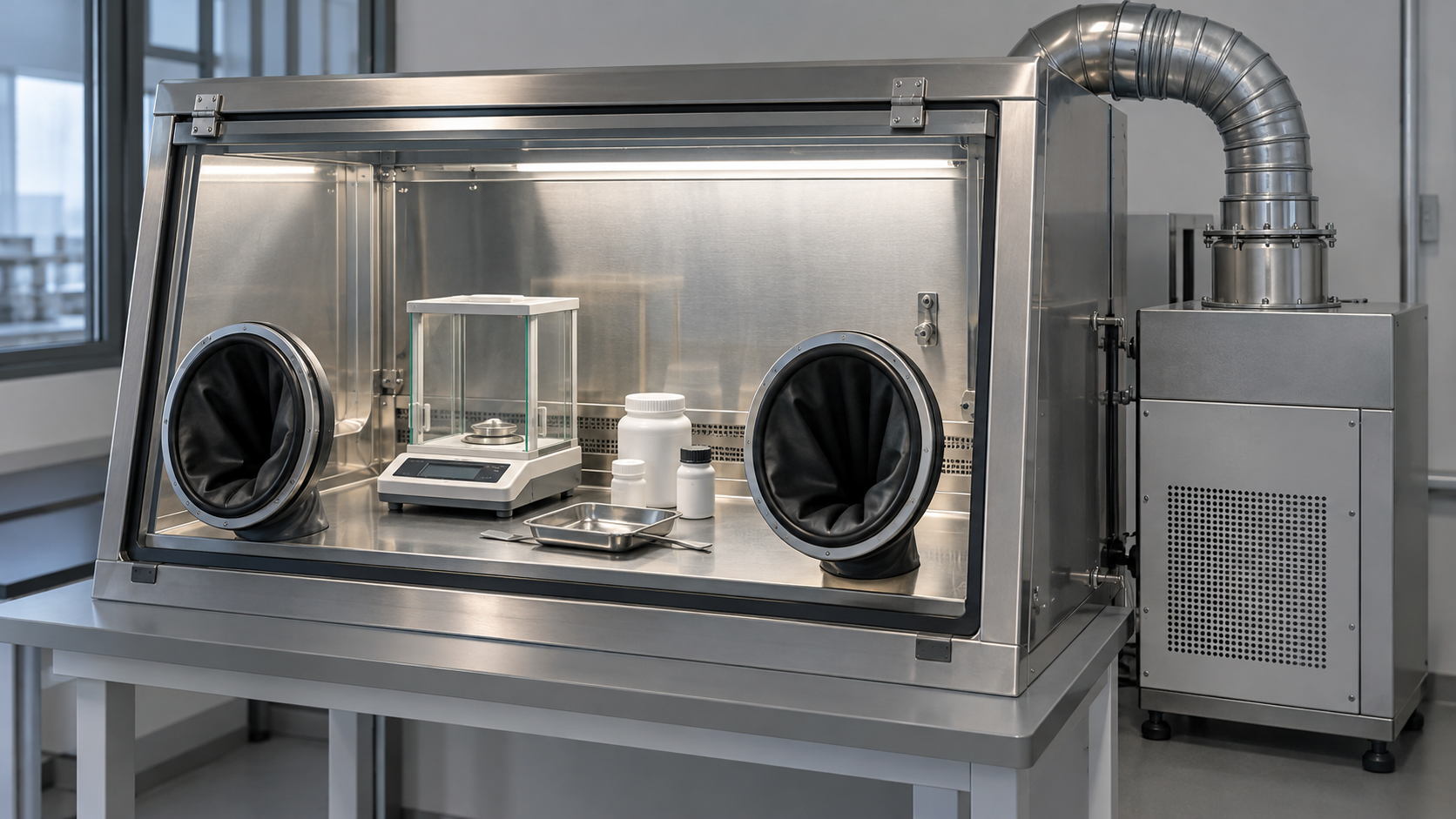
- Work-environment control: unless there is no risk of worker exposure, manufacturing and handling equipment is to be enclosed in principle. Weighing, charging, recovery and transfer are in principle to be enclosed, unmanned or automated. Mixing powder into liquids or resins carries a high exposure risk and is to be enclosed or done inside a glove box.
- Local exhaust and dust removal: processes that cannot be enclosed get local exhaust ventilation. The exhaust passes through a dust collector with filters able to capture the nanomaterial. If particle size and agglomeration state have not been investigated, a HEPA filter or better is to be used.
- Concentration monitoring: employers are to try to determine concentrations in the work environment. Where instruments for nanosized particles cannot be used, an ordinary dust meter may be used; where they can, a scanning mobility particle sizer, a condensation particle counter or a particle surface-area monitor is to be used.
- Respiratory protection: where enclosure or local exhaust is difficult, among other cases, workers are to use effective respiratory protection such as a dust mask with particle collection efficiency of 99.9% or higher. The notice also covers work rules, cleaning, waste disposal, access restriction, health management and safety and health education.
(2) Ministry of the Environment: guidelines to prevent release into the environment
In fiscal 2008 the Ministry of the Environment set up an expert panel on the basic survey of environmental effects of nanomaterials and, in March 2009, compiled the “Guideline for the Prevention of Environmental Impact of Industrial Nanomaterials” (title in English as translated here), as information for businesses choosing appropriate environmental management measuresSourced. It has continued collecting information since, and in March 2025 (Reiwa 7) its review committee published an interim summary on the effects of nanomaterials on aquatic organismsSourced.
Both Japanese documents were issued not because hazard had been established but as precautionary responses at a stage when knowledge was insufficient (the opening of the MHLW notice). The set-up differs from a system such as REACH that requires registration substance by substance. Whether individual statutes such as Japan’s Chemical Substances Control Law contain nano-specific provisions is something we could not confirm within the scope of our research (Commentary).
10. OECD and ISO — the foundation of test methods and terminology
- OECD Working Party on Manufactured Nanomaterials (WPMN): OECD TG 125 says the WPMN has worked to develop test guidelines and guidance documents for the safe use of manufactured nanomaterialsSourced. The OECD Council Recommendation of 19 September 2013 concluded that approaches for testing and assessing traditional chemicals are in general appropriate, but may have to be adapted to the specificities of nanomaterials (as cited in the recitals of Regulation (EU) 2015/2283)Sourced.
- OECD TG 124 and 125: both were adopted on 30 June 2022 (TG 125 was corrected on 4 July 2023). TG 124 determines the volume-specific surface area (VSSA) of powders from the BET specific surface area and the skeletal density by gas pycnometry; TG 125 covers 1 to 1,000 nm particle size and size distributionSourced. The procedures for measuring the quantities used in regulatory definitions are now in guideline form (Commentary).
- ISO 80004-1:2023: the first edition, published in July 2023, merged and replaced ISO/TS 80004-1:2015, -2:2015, -4:2011 and -11:2017. It was prepared jointly by ISO/TC 229 and IEC/TC 113Sourced.
11. Reading proposal, adoption and application as separate stages
Here are the documents so far, laid out by stage. Even for one document, proposal, adoption and application fall on different dates, and when reading you must always check which stage is being discussed.
| Document | Stage | Date |
|---|---|---|
| EU Recommendation 2011/696/EU | Recommendation (updated by the 2022 recommendation) | 18 October 2011 |
| EU novel foods regulation 2015/2283 | Adopted / applies | 25 November 2015 / 1 January 2018 |
| US TSCA nanoscale reporting rule | Proposed rule → final rule → effective | 6 April 2015 → 12 January 2017 → 14 August 2017 (after postponement) |
| EU REACH amendment 2018/1881 | Adopted / published / applies | 3 December 2018 / 4 December / 1 January 2020 |
| EU E 171 withdrawal 2022/63 | Adopted / in force / end of transition | 14 January 2022 / 7 February 2022 / 7 August 2022 |
| EU Recommendation 2022/C 229/01 | Recommendation (adopted / published) | 10 June 2022 / 14 June 2022 |
| OECD TG 124 and 125 | Adopted | 30 June 2022 (TG 125 corrected 4 July 2023) |
| ISO 80004-1:2023 | Published (first edition) | July 2023 |
| EU cosmetics 2024/858 | Adopted / published / applies | 14 March 2024 / 15 March / 1 February 2025 (placing on market) and 1 November 2025 (making available) |
| EU CLP delegated regulation 2024/2564 | Adopted / published / applies | 19 June 2024 / 30 September / 1 May 2026 (earlier application allowed from entry into force) |
| EU REACH Annex XVII amendment proposal (including MWCNT) | Draft, consultation | NBCI submitted comments on 6 February 2026 (we could not confirm the date the draft was published) |
Except for the last row, all Sourced (Sources 1 to 11, 13, 20 and 21). The last row is at the draft stage; adoption and application are Not yet confirmed.
According to NBCI’s position paper and a statement by Zeon Corporation, the European Commission put forward a proposal to amend REACH Annex XVII so as to restrict multi-walled carbon nanotubes (Index No 006-104-00-2) as a substance that is carcinogenic, mutagenic or toxic for reproduction, and NBCI submitted comments on 6 February 2026Sourced (this description rests on documents from an industry body and a company). We have not directly checked the Commission’s draft text. Whether it is adopted, and when it would apply, is Not yet confirmed.
12. “Nano” does not mean dangerous or safe — examples decided by form
Lining up the assessments and classifications of public bodies shows that few of them lump everything together as “nano”; they split by size, shape, coating and solubilitySourced. Here are the examples we could confirm.
- Carbon nanotubes (IARC, Monograph 111): the Working Group met in Lyon from 30 September to 7 October 2014, and the evaluation was published in 2017. Evidence in humans was inadequate; on the basis of animal studies, MWCNT-7 is “possibly carcinogenic to humans” (Group 2B), while multiwalled carbon nanotubes other than MWCNT-7 and single-walled carbon nanotubes are “not classifiable” (Group 3). Animal evidence was sufficient for MWCNT-7, limited for two types with dimensions similar to MWCNT-7, and inadequate for the others.
- Multi-walled carbon tubes (EU CLP, delegated regulation 2024/2564): the harmonised classification covers multi-walled carbon tubes (including MWC(N)T) with a diameter of 30 nm or more and less than 3 µm, a length of 5 µm or more and an aspect ratio above 3:1. It is carcinogenicity category 1B (inhalation, H350i) and specific target organ toxicity (repeated exposure) category 1 (lung, inhalation, H372). It applies from 1 May 2026, and earlier application is allowed from entry into force.
- Silver (EU CLP, same delegated regulation): silver is harmonised in three forms split by particle size: massive (diameter 1 mm or more), powder (above 100 nm to below 1 mm) and nano (above 1 nm to 100 nm or less). Reproductive toxicity category 2 and specific target organ toxicity category 2 are common to all three, while the aquatic hazard differs: no aquatic classification for massive, M-factor 10 for powder and M-factor 1,000 for nano.
- Titanium dioxide (NIOSH, CIB 63, April 2011): for the same substance NIOSH set separate recommended exposure limits, 2.4 mg/m³ for fine particles and 0.3 mg/m³ for ultrafine particles (including engineered nanoscale), as time-weighted averages. NIOSH treats ultrafine titanium dioxide as a “potential occupational carcinogen”.
- Cosmetics (EU): hydroxyapatite (nano) is allowed with conditions (rod-shaped, uncoated, specified uses and concentrations), while gold, platinum, copper and other nano forms were prohibited for lack of data (Section 7).
- “Group 3 (not classifiable)” is not a guarantee of safety. It means the evidence was inadequate to classify (Commentary).
- The 8-fold difference in recommended exposure limits is a difference in limit values, not a ratio of the size of effects on people.
- These are assessments issued on separate bases for worker inhalation exposure, for the environment and for consumers. Safety of consumer products or food cannot be generalised from them.
13. A materials engineer’s view (2): regulation changes how specifications are written
What the examples in Section 12 share is that the same chemical composition is split into categories by particle size, shape (rod or fibre), coating and solubility. A specification that gives only a material name (“titanium dioxide”, “silver powder”) does not settle which regulatory category applies. The items needed in practice are these (the following is Commentary).
- Number-based size distribution: by which method, how many particles were counted, and how they were dispersed. (Annex VI of REACH asks that the description of the analytical methods be sufficient to reproduce them.)
- Shape and aspect ratio: whether rod- or fibre-like (the CLP classification of CNTs is defined by diameter, length and aspect ratio).
- Surface treatment and coating: the name of the agent. Changing it may make a different nanoform or a different “form” (REACH, and TSCA’s “discrete form”).
- Specific surface area and skeletal density: used for the EU exclusion criterion (VSSA below 6 m²/cm³) and for REACH characterisation.
- Change control: whether a change of process or coating moves the form beyond measurement uncertainty.
The definitions also target “a material consisting of solid particles”, and the recommendation does not cover large solid products or components even if they have internal or surface nanostructure. How nanomaterials contained in products or mixtures are handled is set by other provisions (for example, the classification thresholds for mixtures). What NBCI raises is precisely this difficulty of measurement at the mixture threshold.
14. What is still open, and what we could not confirm
- In Japan, any statute defining nanomaterials across the board and requiring registration or notification, or nano-specific provisions in individual laws such as the Chemical Substances Control Law (not confirmed within the scope of our research).
- Whether, and when, the definition in the Cosmetics Regulation (EC) 1223/2009 was amended to follow the 2022 recommendation.
- Whether there is a plan to align the REACH nanoform definition with the 2022 recommendation.
- The Commission’s draft text of the proposed REACH Annex XVII amendment (including multi-walled CNTs), and its later adoption and application dates (we confirmed only the existence of the proposal and the date of the comments, from a Japanese industry body and a company).
- The result of the review of E 171 use in medicinal products (Article 3 of Regulation 2022/63).
- The results of TSCA reporting and any further action EPA has taken since.
- The content and dates of FDA’s food-related guidance (we confirmed only the title in the list).
- The regimes of countries and regions outside this article’s scope, such as Korea, China, Canada and Australia.
- ISO’s “nano” is a terminology definition. It gives a range of roughly 1 to 100 nm, while noting it is a “general descriptor”Sourced
- The 2022 EU recommendation says “50% or more by number”. A material with a volume-specific surface area below 6 m²/cm³ is excluded. The recommendation does not set the scope of any lawSourced
- The same powder changes with how you count. In our example, 80% (by number) became 3.1% (by volume)Our calculation
- REACH registers by “nanoform”. It has applied since 1 January 2020Sourced
- Cosmetics, food, TSCA, FDA and Japan each have their own definition and nature. TSCA collects information, FDA sets no definition, and Japan relies on precautionary notices and guidelinesSourced
- Proposal, adoption and application are separate dates. The proposed REACH Annex XVII amendment is unconfirmedNot yet confirmed
- Safety splits by form. Only MWCNT-7 is 2B, NIOSH limits are 2.4 and 0.3 mg/m³, and silver has M-factors of 10 and 1,000Sourced
15. Glossary
- Nanoscale
- In ISO 80004-1, the length range approximately from 1 nm to 100 nm.
- Nanomaterial
- A material with any external dimension, internal structure or surface structure in the nanoscale (ISO). Regulations use other definitions.
- Nanoform
- In REACH, a form of a substance in which 50% or more of particles by number have a dimension of 1 to 100 nm.
- Set of similar nanoforms
- A group of nanoforms with explicit boundaries that may be assessed jointly.
- Number basis / mass basis
- A distribution counted by particles / one weighted by mass (volume). The same powder gives different results.
- Volume-specific surface area (VSSA)
- Surface area per unit volume (m²/cm³). Mass-specific surface area times skeletal density (OECD TG 124).
- Aggregate / agglomerate
- Strongly bound or fused particles / a collection of weakly bound particles or aggregates.
- Recommendation
- An EU legal instrument that is not binding in itself (Article 288 TFEU).
- CLP
- The EU Regulation (EC) 1272/2008 on classification, labelling and packaging of substances and mixtures.
- SCCS
- The EU Scientific Committee on Consumer Safety, which gives opinions on the safety of cosmetics.
- EFSA
- The European Food Safety Authority, which assesses food additives and novel foods.
- TSCA
- The U.S. Toxic Substances Control Act. Section 8(a) requires reporting and recordkeeping.
- Discrete form
- In TSCA 704.20, a reporting unit distinguished by mean particle size, properties, morphology or coating.
- Precautionary approach
- Taking measures on the possibility of effects when knowledge is insufficient.
- WPMN
- The OECD Working Party on Manufactured Nanomaterials, which develops test guidelines and related documents.
- IARC Group 2B / 3
- Possibly carcinogenic to humans / not classifiable as to carcinogenicity to humans.
- M-factor
- In CLP, a multiplier that raises the weight of a substance with high aquatic hazard in classifying mixtures.
16. Primary sources
- ISO ISO 80004-1:2023 "Nanotechnologies — Vocabulary — Part 1: Core vocabulary" (first edition, July 2023) — iso.org
- ISO / VDE Verlag ISO 80004-1:2023 preview (foreword, introduction and terms 3.1.1 to 3.1.5) — vde-verlag.de
- European Commission Commission Recommendation of 10 June 2022 on the definition of nanomaterial (2022/C 229/01) — eur-lex.europa.eu
- European Commission Commission Regulation (EU) 2018/1881 of 3 December 2018 (amendment of the REACH annexes as regards nanoforms) — eur-lex.europa.eu
- European Parliament and Council Regulation (EC) No 1223/2009 on cosmetic products — eur-lex.europa.eu
- European Commission Commission Regulation (EU) 2024/858 of 14 March 2024 (amendment of Annexes II and III to the Cosmetics Regulation) — eur-lex.europa.eu
- European Parliament and Council Regulation (EU) 2015/2283 on novel foods — eur-lex.europa.eu
- European Parliament and Council Regulation (EU) No 1169/2011 on the provision of food information to consumers — eur-lex.europa.eu
- European Commission Commission Regulation (EU) 2022/63 of 14 January 2022 (food additive titanium dioxide, E 171) — eur-lex.europa.eu
- European Commission Commission Delegated Regulation (EU) 2024/2564 of 19 June 2024 (amendment of CLP Annex VI harmonised classifications) — eur-lex.europa.eu
- U.S. Code of Federal Regulations 40 CFR 704.20 "Chemical substances manufactured or processed at the nanoscale" — ecfr.gov
- U.S. Environmental Protection Agency "Control of Nanoscale Materials under the Toxic Substances Control Act" — epa.gov
- U.S. Federal Register "Chemical Substances When Manufactured or Processed as Nanoscale Materials; TSCA Reporting and Recordkeeping Requirements", 12 January 2017 (82 FR 3641) — federalregister.gov
- U.S. Food and Drug Administration (FDA) "Considering Whether an FDA-Regulated Product Involves the Application of Nanotechnology", Guidance for Industry, June 2014 — fda.gov
- U.S. Food and Drug Administration (FDA) "Drug Products, Including Biological Products, that Contain Nanomaterials", Guidance for Industry, April 2022 — fda.gov
- U.S. Food and Drug Administration (FDA) "Safety of Nanomaterials in Cosmetic Products", Guidance for Industry, June 2014 — fda.gov
- U.S. Food and Drug Administration (FDA) "Nanotechnology Guidance Documents" (list of guidance) — fda.gov
- Ministry of Health, Labour and Welfare (MHLW), Japan Notice Kihatsu No. 0331013, "Precautionary measures to prevent exposure to nanomaterials", 31 March 2009 (PDF, in Japanese) — mhlw.go.jp
- Ministry of the Environment, Japan "Environmental effects of nanomaterials" (including the Guideline for the Prevention of Environmental Impact of Industrial Nanomaterials; webpage in Japanese) — env.go.jp
- OECD Test Guideline No. 125 "Nanomaterial Particle Size and Size Distribution of Nanomaterials", adopted 30 June 2022, corrected 4 July 2023 (PDF) — oecd.org
- OECD Test Guideline No. 124 "Determination of the Volume Specific Surface Area of Manufactured Nanomaterials", 30 June 2022 — oecd.org
- IARC "Some Nanomaterials and Some Fibres", IARC Monographs Volume 111, 2017 — publications.iarc.who.int
- IARC IARC Monographs Volume 111, chapter "Carbon nanotubes" (PDF) — publications.iarc.who.int
- U.S. NIOSH "Current Intelligence Bulletin 63: Occupational Exposure to Titanium Dioxide", DHHS (NIOSH) Publication No. 2011-160, April 2011 — stacks.cdc.gov
- NBCI (Nanotechnology Business Creation Initiative) "NBCI Feedback on Chemicals – new rules on carcinogenic, mutagenic or reproductive toxic substances subject to restrictions", 6 February 2026 (PDF) — nbci.jp
- Zeon Corporation Press release on its support for the position paper issued by NBCI on the proposed amendment of REACH Annex XVII, 19 March 2026 (PDF, in Japanese) — zeon.co.jp
- U.S. Federal Register "Chemical Substances When Manufactured or Processed as Nanoscale Materials; TSCA Reporting and Recordkeeping Requirements" (proposed rule), 6 April 2015 — federalregister.gov
17. Claim-to-source audit
| Claim in the text | Basis | Label |
|---|---|---|
| Nanoscale is the “length range approximately from 1 nm to 100 nm”, and a nanomaterial has any external dimension in the nanoscale or internal or surface structure in the nanoscale. ISO 80004-1:2023 is a first edition (July 2023) that merged and replaced ISO/TS 80004-1:2015, -2:2015, -4:2011 and -11:2017. The definition is a “general descriptor serving to facilitate communication” | ISO 80004-1:2023[Source 1] https://www.iso.org/standard/79525.html[Source 2] https://www.vde-verlag.de/iec-normen/preview-pdf/info_iso80004-1%7Bed1.0%7Den.pdf | Sourced |
| Definition in EU Recommendation 2022/C 229/01 (solid particles; 50% or more by number; 1 to 100 nm; rod-like and plate-like particles below 1 nm; particles above 100 µm disregarded; volume-specific surface area below 6 m²/cm³ excluded). Adopted 10 June 2022, published 14 June 2022. Changes from the 2011 recommendation (flexibility of the threshold removed, surface-area option removed, liquid particles excluded, sub-1 nm generalised). It does not affect the scope of legislation, it does not cover large solid products, and it acknowledges the difficulty of “identifiable constituent particles” | Commission Recommendation 2022/C 229/01 (recitals 10, 11, 13, 14, 17, 19, 20, 23; points 1 to 3)[Source 3] https://eur-lex.europa.eu/legal-content/EN/TXT/?uri=CELEX:32022H0614(01) | Sourced |
| For a powder of 80 nm and 400 nm spheres (80% : 20% by number), the share of particles of 100 nm or less is 80.0% by number, 13.8% by surface area and 3.1% by volume. VSSA = 6/d, giving 60 m²/cm³ at 100 nm and 6 m²/cm³ at 1 µm. For a material of density 4.0 g/cm³, 6 m²/cm³ = 1.5 m²/g | Our calculation. The assumptions of spheres, one density, two monodisperse populations and no pores are ours. Calculating VSSA as mass-specific surface area times skeletal density is from OECD TG 124[Source 21] https://www.oecd.org/en/publications/test-no-124-determination-of-the-volume-specific-surface-area-of-manufactured-nanomaterials_abb72f8f-en.html | Our calculation |
| Sizes tend to follow d0 < d2 < d3 by measurement principle, and conversion is possible only under special conditions. The table of methods that give a number-based distribution directly (AFM, DMAS, PTA, electron microscopy) and the degree to which constituents of agglomerates can be told apart. sp-ICP-MS could not be sufficiently validated in the interlaboratory comparison. TG 124 and 125 adopted 30 June 2022, TG 125 corrected 4 July 2023, range 1 to 1,000 nm | OECD TG 125 (paragraphs 4, 22, 23; Tables 1 and 2)[Source 20] https://www.oecd.org/content/dam/oecd/en/publications/reports/2023/07/test-no-125-nanomaterial-particle-size-and-size-distribution-of-nanomaterials_4e91976f/af5f9bda-en.pdf. TG 124: [Source 21] https://www.oecd.org/en/publications/test-no-124-determination-of-the-volume-specific-surface-area-of-manufactured-nanomaterials_abb72f8f-en.html | Sourced |
| NBCI stated that OECD TG 125 calls for extremely labor-intensive measurements and that no realistic method has been established to measure trace inclusion at the 0.1 wt% threshold for mixture classification (6 February 2026, about MWCNTs) | NBCI position paper (an industry body’s opinion)[Source 25] https://www.nbci.jp/topics/public/doc/20260206_260206_NBCIFeedbacktopublicconsultationCMRV01.pdf | Sourced |
| REACH nanoform definition (50% or more of the number size distribution at 1 to 100 nm; exceptions for fullerenes, graphene flakes and single-wall CNTs), characterisation items (Annex VI 2.4), set of similar nanoforms, adopted 3 December 2018, published 4 December, applies from 1 January 2020 (earlier compliance allowed). The recitals on dissolution rate, dispersion stability, dustiness, inhalation route for acute toxicity, limits on read-across, and changes of nanoform by use | Commission Regulation (EU) 2018/1881[Source 4] https://eur-lex.europa.eu/legal-content/EN/TXT/?uri=CELEX:32018R1881 | Sourced |
| Cosmetics Regulation definition (Article 2(1)(k): insoluble or biopersistent, intentionally manufactured, 1 to 100 nm), Article 2(3) (adjustment of the definition), Article 16 (notification six months before, SCCS opinion, notification contents), Article 19(1)(g) (“nano” in the ingredients list) | Regulation (EC) 1223/2009 (original text)[Source 5] https://eur-lex.europa.eu/legal-content/EN/TXT/?uri=CELEX:32009R1223 | Sourced |
| Regulation 2024/858: adopted 14 March 2024 (published 15 March). Nano substances added to Annex II; the recitals’ reasoning that insufficient data to assess safety implies a potential risk; limits on hydroxyapatite (nano) (toothpaste 10%, mouthwash 0.465%, no inhalation uses, rod-shaped, uncoated); dates of 1 February 2025 (placing on the market) and 1 November 2025 (making available) | Commission Regulation (EU) 2024/858[Source 6] https://eur-lex.europa.eu/legal-content/EN/TXT/?uri=CELEX:32024R0858 | Sourced |
| Definition of engineered nanomaterial, the classification of such food as novel food, adopted 25 November 2015 and applying from 1 January 2018, and the OECD Council Recommendation (19 September 2013) conclusion as cited. Article 18(3) of the Food Information Regulation (“nano” in the ingredients list) | Regulation (EU) 2015/2283[Source 7] https://eur-lex.europa.eu/legal-content/EN/TXT/?uri=CELEX:32015R2283 Regulation (EU) 1169/2011 (original text)[Source 8] https://eur-lex.europa.eu/legal-content/EN/TXT/?uri=CELEX:32011R1169 | Sourced |
| Withdrawal of the authorisation of titanium dioxide (E 171): adopted 14 January 2022, in force 7 February 2022, transition to 7 August 2022. EFSA’s 2016 re-evaluation, its 2019 and 2021 opinions (6 May 2021: genotoxicity concern cannot be ruled out), provisional authorisation for medicines and the review within three years | Commission Regulation (EU) 2022/63[Source 9] https://eur-lex.europa.eu/legal-content/EN/TXT/?uri=CELEX:32022R0063 | Sourced |
| TSCA 704.20 definition (solid; 1 to 100 nm; excluded below 1% by weight; unique and novel properties), the “discrete form” criterion (7 standard deviations), exemptions, reported items, small manufacturers (annual sales below US$11 million), and the reporting deadline (within one year after the final effective date) | 40 CFR 704.20[Source 11] https://www.ecfr.gov/current/title-40/section-704.20 | Sourced |
| Proposed rule 6 April 2015, final rule 12 January 2017 (82 FR 3641), and the postponement of the effective date to 14 August 2017. EPA’s explanation that the information collection is not intended to conclude that harm will occur | Federal Register[Source 27] https://www.federalregister.gov/documents/2015/04/06/2015-07497/chemical-substances-when-manufactured-or-processed-as-nanoscale-materials-tsca-reporting-and[Source 13] https://www.federalregister.gov/documents/2017/01/12/2017-00052/chemical-substances-when-manufactured-or-processed-as-nanoscale-materials-tsca-reporting-and EPA[Source 12] https://www.epa.gov/reviewing-new-chemicals-under-toxic-substances-control-act-tsca/control-nanoscale-materials-under | Sourced |
| The TSCA reporting deadline works out to 14 August 2018 (effective date of 14 August 2017 plus one year) | Our calculation. It combines 704.20(f)(1), “within one year after the final effective date”, with EPA’s explanation of the postponed effective date. We did not find EPA or another source stating 14 August 2018 explicitly | Our calculation |
| FDA guidance (June 2014): no regulatory definitions; two points to consider (approx. 1 to 100 nm; up to 1 µm). The guidance on nanomaterials in drug products (April 2022, final), on the safety of nanomaterials in cosmetic products (June 2014, final), and that cosmetics are not subject to premarket approval | Three FDA guidance documents and the guidance list[Source 14] https://www.fda.gov/regulatory-information/search-fda-guidance-documents/considering-whether-fda-regulated-product-involves-application-nanotechnology[Source 15] https://www.fda.gov/regulatory-information/search-fda-guidance-documents/drug-products-including-biological-products-contain-nanomaterials-guidance-industry[Source 16] https://www.fda.gov/regulatory-information/search-fda-guidance-documents/guidance-industry-safety-nanomaterials-cosmetic-products[Source 17] https://www.fda.gov/science-research/nanotechnology-programs-fda/nanotechnology-guidance-documents | Sourced |
| MHLW notice Kihatsu No. 0331013 (31 March 2009): precautionary approach, repeal of the 7 February 2008 notice, definition of scope, enclosure, glove box, local exhaust, HEPA filter, concentration monitoring, respiratory protection (collection efficiency 99.9% or higher) | MHLW notice[Source 18] https://www.mhlw.go.jp/content/11201000/001566879.pdf | Sourced |
| The Ministry of the Environment’s Guideline for the Prevention of Environmental Impact of Industrial Nanomaterials (March 2009) and its March 2025 interim summary on effects on aquatic organisms | Ministry of the Environment webpage[Source 19] https://www.env.go.jp/chemi/nanomaterial/eibs.html | Sourced |
| Delegated Regulation 2024/2564: carcinogenicity category 1B (H350i) and STOT RE 1 (H372) for multi-walled carbon tubes (diameter 30 nm or more and below 3 µm, length 5 µm or more, aspect ratio above 3:1); the three forms of silver (massive, powder, nano) and M-factors; adopted 19 June 2024, published 30 September, applies from 1 May 2026 | Commission Delegated Regulation (EU) 2024/2564[Source 10] https://eur-lex.europa.eu/legal-content/EN/TXT/?uri=CELEX:32024R2564 | Sourced |
| IARC: MWCNT-7 is Group 2B; multiwalled CNTs other than MWCNT-7 and single-walled CNTs are Group 3. Evidence in humans inadequate. Working Group 30 September to 7 October 2014, published 2017 | IARC Monograph 111[Source 22] https://publications.iarc.who.int/Book-And-Report-Series/Iarc-Monographs-On-The-Identification-Of-Carcinogenic-Hazards-To-Humans/Some-Nanomaterials-And-Some-Fibres-2017[Source 23] https://publications.iarc.who.int/download/mono111-01.pdf | Sourced |
| NIOSH CIB 63 (April 2011, publication 2011-160): 2.4 mg/m³ for fine and 0.3 mg/m³ for ultrafine titanium dioxide (including engineered nanoscale), as time-weighted averages; ultrafine treated as a potential occupational carcinogen | NIOSH CIB 63 (confirmed on the CDC repository record page; the PDF itself could not be retrieved directly)[Source 24] https://stacks.cdc.gov/view/cdc/5922 | Sourced |
| 2.4 ÷ 0.3 = 8-fold | Our calculation. A ratio of limit values, not of the size of effects | Our calculation |
| The European Commission put forward a proposed amendment of REACH Annex XVII that includes multi-walled CNTs, NBCI submitted comments on 6 February 2026, and Zeon expressed support on 19 March 2026 | NBCI position paper[Source 25] https://www.nbci.jp/topics/public/doc/20260206_260206_NBCIFeedbacktopublicconsultationCMRV01.pdf and Zeon press release[Source 26] https://www.zeon.co.jp/news/assets/pdf/260319.pdf. Adoption and application are at the planning or outlook stage, and we did not check the Commission’s draft text | Not yet confirmed |
| Any Japanese statute defining nanomaterials across the board, nano-specific provisions in the Chemical Substances Control Law, amendment of the Cosmetics Regulation definition, plans to align the REACH nanoform definition with the 2022 recommendation, the outcome of the E 171 review for medicines, the results of TSCA reporting, and the content and dates of FDA food guidance | Not stated, because we could not confirm them in public primary sources within the scope of our research | Commentary |
| That a recommendation is not binding (Article 288 TFEU). That the definition selects the measurement method. That the registration dossier acts as a specification. That the line for a “discrete form” is drawn with measurement uncertainty. That in Japan precaution in the workplace moved ahead of a cross-cutting definition. The list of specification items | Our reading and commentary on the published content. They are not views stated by any of the bodies | Commentary |
| That Figs. 1 and 6 are AI-generated images and Figs. 2 to 5, 7 and 8 are explanatory vector drawings | Our note | Commentary |
Last updated 9 October 2026. Sources are limited to primary material (legislation and official journals, standards bodies, guidance and notices of national authorities, OECD test guidelines and IARC evaluations), plus statements by an industry body and a company where this is stated. Readings and organisation are marked as Commentary and kept separate from sourced fact. We could not confirm the following in primary sources, so we do not state them as fact: a cross-cutting Japanese statutory definition, nano-specific provisions in Japan’s Chemical Substances Control Law, an amendment of the Cosmetics Regulation definition, any plan to align the REACH definition, the outcome of the E 171 review for medicines, the results of TSCA reporting, and the draft text and adoption and application dates of the proposed REACH Annex XVII amendment. This article explains how to read regulation. It is not legal advice and does not determine the conformity or safety of any particular product. All figures are explanatory concept graphics. Figs. 1 and 6 are AI-generated images, and Figs. 2 to 5, 7 and 8 are vector drawings; none of them shows a real product, instrument or facility.