INSTITUTION PROFILE / NANOTECHNOLOGY
imec
The Belgian non-profit research hub where industry develops the next chip generations together, with no regulatory power
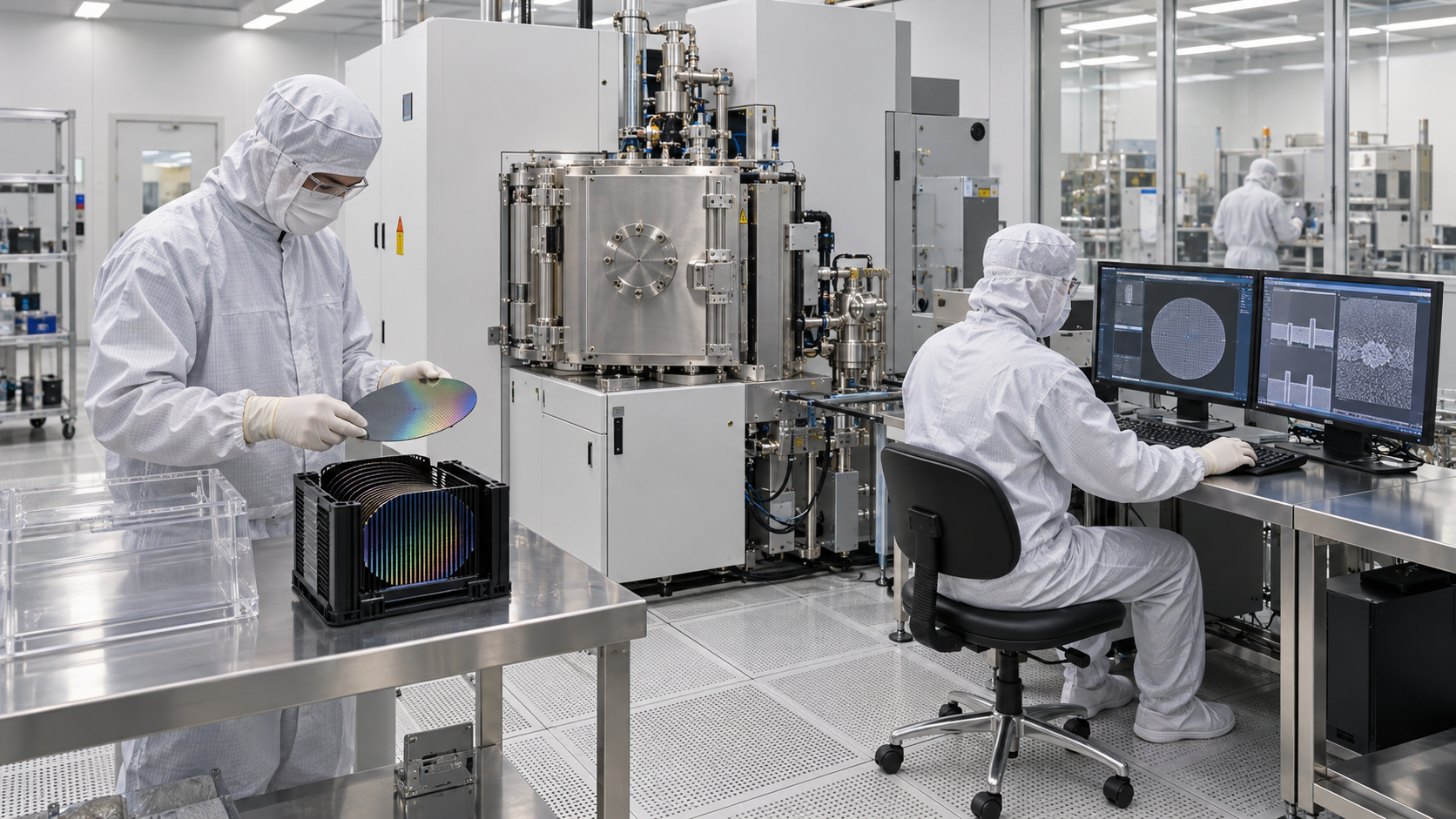
imec is a non-profit nanoelectronics research hub headquartered in Leuven, Belgium. In joint research programmes that hundreds of companies join (chipmakers, equipment and materials suppliers, universities), it works on the technology of future, ever-smaller chips before it becomes a product. More recently it has also hosted the NanoIC pilot line, part of the European Chips Act. It is not a body that sets rules or standards; it provides a place for research and prototyping. This profile looks at one question only: how much influence imec actually has over nanotechnology.
- imec in 30 seconds
- What kind of body it is: the four types of influence
- What it does for nanotechnology
- How far its influence reaches (powers and geography)
- How it is funded, and related companies and organisations
- Outlook
- Glossary, references and claim-to-source audit
1. imec in 30 seconds
imec is not a body that decides. It is a place where companies come together to test things. imec's website names three ways to collaborate: join a programme with multiple partners, enter a bilateral collaboration with imec, or take part in a government-funded project Sourced. Its history page says the bulk of its revenue comes from direct collaborations with companies and exceeds the grants from the Flemish government several times over Sourced. Public money is the base that allows more fundamental research and the building of intellectual property; the content of the research is worked out jointly with participating companies. That is the source of imec's influence: leading players across the industry try the next generation of technology in one place.
2. What kind of body it is: the four types of influence
Unlike the companies in this series, the institutions that appear in nanotechnology coverage do not sell nanomaterials or tools. What separates them is the route by which they influence the field, and that gives four types.
3. What it does for nanotechnology
| Activity | What it involves | Status |
|---|---|---|
| Joint research programmes | Began in the early 1990s as an open-innovation model in which large companies shared research costs and results, and grew into industry-wide programmes and bilateral collaborations. imec cites more than 800 partner companies (2024 report) and more than 600 industry partners gathered in its R&D programmes (2025 overview); the counts are defined differently | Sourced |
| Advanced research facilities | A 300mm wafer pilot line (described by imec as a €3.5 billion facility) and cleanrooms. In 2024 it opened, with ASML, a High NA EUV lithography lab that, according to the report, gives leading chipmakers early access to the tool before it reaches their factories | Sourced |
| The NanoIC pilot line | One of the pilot lines under the European Chips Act, for chip technology beyond the 2nm node. Hosted by imec, with CEA-Leti (France), Fraunhofer (Germany), VTT (Finland), CSSNT (Romania) and Tyndall National Institute (Ireland). On 9 February 2026 imec inaugurated a 2,000 m² cleanroom extension | Sourced |
| Prototyping and manufacturing services (IC-Link) | Offers design, foundry services, assembly, advanced packaging and testing in one place. IC-Link is described as a TSMC value chain aggregator | Sourced |
| Venturing and skills | Start-up support (imec.istart and others), an investment fund (imec.xpand) and training for semiconductor careers | Sourced |
In developing very small chips, new materials and tools must be proven in a real process line. imec's report gives examples of supplier contracts: about €20 million for the 2024 contract with Lam Research, and about €31 million for the KLA contract, extended to 2026 Sourced. In each case imec buys tools and the supplier also uses the joint results to improve its products. For a materials supplier, this can be a chance to have its material evaluated within participating companies' processes, but it is the companies, not imec, that decide which materials and tools are adopted. This connects to our explainers on lithography and EUV and on atomic layer deposition.
4. How far its influence reaches (powers and geography)
| Aspect | What imec has | What imec does not have |
|---|---|---|
| Powers | Running places for joint research; providing research facilities; operating an EU semiconductor pilot line (NanoIC); supplying process design kits (PDKs) | Regulatory or certification power (nothing in the official documents indicates any); the power to set standards; any power to make participants adopt a technology |
| Geography | The global semiconductor industry and Europe. Sites in Belgium, the Netherlands, the UK, the USA, Germany, Italy and elsewhere; an implementer of EU policy (the European Chips Act) | Legal effect on other governments; any say over participants' product sales or exports |
| Duration | Operating grants under a multi-year agreement with the Flemish Government; 2024 was the third year of the agreement | The end date or renewal of that agreement (we could not confirm it) |
| Scale | More than 6,600 people (2025); operating income of about €1.22 billion in 2025 | No breakdown of budget or staff spent on nanotechnology alone could be confirmed in published documents |
imec uses "operating income" and "turnover" as different concepts. In 2024, operating income (including grants) was €1,033.93 million, of which turnover was €753.31 million, or 72.9% of operating income Sourced. In the 2025 consolidated statements, operating income is €1,216.90 million and turnover €846.26 million Sourced. We could not find the 2025 annual report, so the amount and breakdown of 2025 grants are unconfirmed Not yet confirmed. In the 2024 statements, "other operating income" (€280.60 million) equals grants of €239.21 million plus other income of €41.42 million. The same line for 2025 is €361.94 million, but we could not confirm its breakdown Not yet confirmed. Headcount, too, differs between imec's own employees and the total including the extended workforce; the 2024 report puts own employees at 55%.
5. How it is funded, and related companies and organisations
The relationship with the Flemish Government
According to the 2024 report, 2024 was the third year of imec's covenant with the Flemish Government, and imec's grant for the year was €151.92 million: basic funding of €86.37 million and earmarked funds of €65.55 million Sourced. In 2024 the Flemish Government also contributed €187.55 million of capital to a new company for the EU pilot line (imec EU Pilot Line NV) Sourced. In return for the grant, imec accepts strategic and operational objectives, some of which correspond to key performance indicators.
Companies and organisations the official documents link to imec
| Counterpart | Relationship (as stated in the official documents) |
|---|---|
| ASML | A long-standing strategic collaboration. A new strategic partnership focused on research and sustainability was signed on 11 March 2025. In 2024 the two opened a High NA EUV lithography lab, and ASML's High NA EUV scanner is to go into the NanoIC pilot line (the February 2026 announcement said it was due to arrive in mid-March) |
| Tokyo Electron | imec's 2025 overview says the strategic partnership to develop nodes beyond 2nm was extended in June 2025. The 2024 report also records continuing research collaborations using Tokyo Electron (TEL) tools |
| TSMC | imec's service arm IC-Link is described as a TSMC value chain aggregator (imec brochure). The 2025 overview records that IC-Link expanded its collaboration with TSMC. We did not confirm any relationship in imec's research programmes |
| Lam Research / KLA | Contracts in 2024 of about €20 million (Lam Research) and about €31 million (KLA, extended to 2026) |
| European Commission / Chips JU | The acquisition and operation of the NanoIC pilot line are co-funded by the Chips Joint Undertaking through the EU's Digital Europe and Horizon Europe programmes, and by the participating states Belgium (Flanders), France, Germany, Finland, Ireland and Romania |
| CEA-Leti, Fraunhofer, VTT, CSSNT, Tyndall National Institute | Partners in the NanoIC pilot line |
We could not confirm from imec's official documents any relationship with other companies profiled in this series (such as Applied Materials, Samsung Electronics, EV Group or Canon) Not yet confirmed. Nothing here ranks equipment or materials suppliers against one another.
6. Outlook
| What can be read | Primary source | Status |
|---|---|---|
| The NanoIC pilot line is planned to add more than a hundred new tools over the next five years, and a new 4,000 m² cleanroom is planned in Leuven. Timing of installation and completion is a plan and unconfirmed | imec's announcement of 9 February 2026 | Not yet confirmed |
| ASML's next-generation High NA EUV scanner was due to arrive in mid-March 2026. We could not confirm that it has arrived | imec's announcement of 9 February 2026 | Not yet confirmed |
| The European Chips Act is due to be discussed for revision in 2026. The outcome of any revision is unconfirmed | imec's 2025 overview (a meeting with a European Commission Executive Vice-President on ideas for revising the Act in 2026) | Not yet confirmed |
| As long as EU semiconductor policy and the running of NanoIC continue, imec may grow in importance as a point of contact for European joint research, in addition to its role as a research hub | imec takes part in four of the five EU pilot lines, coordinates one, and coordinates the EU Chips Design Platform (imec's official page) | Inference |
7. Glossary
- Nanoelectronics
- Electronics that use structures a few to a few hundred nanometres in size (a nanometre is one billionth of a metre). Advanced semiconductor chips are the main example.
- High NA EUV
- The next generation of lithography tools that use extreme ultraviolet (EUV) light. A larger numerical aperture (NA) allows finer circuit patterns to be printed.
- Pilot line
- A trial production line used to test new technologies and tools before volume production.
- PDK
- Process design kit. The documents and data that let circuit designers build the conditions of a manufacturing technology into their designs.
- Chips JU
- The Chips Joint Undertaking, the EU body that carries out the research and innovation actions of the European Chips Act.
- Operating income and turnover
- Operating income is total income including grants. Turnover is the part earned in return for goods and services.
8. References
- imec About imec: founding in 1984, scale, sites and headquarters in Leuven. https://www.imec-int.com/en/about-us
- imec Annual & sustainability report 2024 (PDF): income breakdown, the agreement with the Flemish Government, collaborations with ASML, Lam, KLA and TEL, and staff numbers. https://www.imec-int.com/sites/default/files/2025-04/annual_and_sustainability_report_imec_2024.pdf
- imec 2025 Consolidated financial statements (PDF): 2025 operating income and turnover, and the legal structure of the group. https://www.imec-int.com/sites/default/files/2026-05/Geconsolideerde%20jaarrekening%202025-ENG.pdf
- imec Imec in 2025: an overview (published 24 December 2025): staff, industry partners, ASML, Tokyo Electron and others. https://www.imec-int.com/en/articles/imec-2025-overview
- imec History: launch with Flemish Government support; most revenue from collaboration with companies. https://www.imec-int.com/en/about-imec/history
- imec Research: the three routes of collaboration and government-funded research. https://www.imec-int.com/en/what-we-offer/research
- imec Corporate brochure 2025 (PDF): IC-Link, TSMC value chain aggregator, more than 800 industrial partners. https://www.imec-int.com/sites/default/files/2025-11/imec%20corporate%20brochure%20ENG%202025.pdf
- imec NanoIC pilot line: accelerating beyond-2nm innovation across Europe: overview, partners and participation in EU pilot lines. https://www.imec-int.com/en/what-we-offer/nanoic-pilot-line-accelerating-beyond-2nm-innovation-across-europe
- imec Press release: Imec inaugurates NanoIC pilot line (9 February 2026): cleanroom extension, funders and future plans. https://www.imec-int.com/en/press/imec-inaugurates-nanoic-pilot-line-accelerating-innovation-sub-2nm-systems-chip
9. Claim-to-source audit
| Claim in the text | Status | Source |
|---|---|---|
| Founded in 1984, headquartered in Leuven, sites, and scale (imec's own description as the world's largest independent research and innovation centre) | Sourced | Reference 1 https://www.imec-int.com/en/about-us |
| 2024 operating income of €1,033.93 million and its breakdown; the Flemish grant of €151.92 million; €187.55 million of capital for the EU pilot line company; relations with ASML, Lam, KLA and TEL; own employees at 55%; imec as a non-profit | Sourced | Reference 2 https://www.imec-int.com/sites/default/files/2025-04/annual_and_sustainability_report_imec_2024.pdf |
| 2025 operating income of €1,216.90 million and turnover of €846.26 million; the group's legal entities (imec International, imec vzw) | Sourced | Reference 3 https://www.imec-int.com/sites/default/files/2026-05/Geconsolideerde%20jaarrekening%202025-ENG.pdf |
| More than 6,600 staff, more than 600 industry partners, the 2025 agreement with ASML, the extension with Tokyo Electron, IC-Link's expanded collaboration with TSMC, and the discussion of revising the European Chips Act | Sourced | Reference 4 https://www.imec-int.com/en/articles/imec-2025-overview |
| Most revenue comes from collaboration with companies and exceeds the Flemish grants several times over | Sourced | Reference 5 https://www.imec-int.com/en/about-imec/history |
| The three routes of collaboration and government-funded research | Sourced | Reference 6 https://www.imec-int.com/en/what-we-offer/research |
| IC-Link as a TSMC value chain aggregator, more than 800 industrial partners, a €3.5 billion 300mm pilot line | Sourced | Reference 7 https://www.imec-int.com/sites/default/files/2025-11/imec%20corporate%20brochure%20ENG%202025.pdf |
| NanoIC partners; imec's participation in four of the five EU pilot lines and its coordination of the EU Chips Design Platform | Sourced | Reference 8 https://www.imec-int.com/en/what-we-offer/nanoic-pilot-line-accelerating-beyond-2nm-innovation-across-europe |
| The cleanroom extension inaugurated on 9 February 2026, the funders, more than a hundred new tools over five years, the 4,000 m² cleanroom and the planned arrival of the High NA EUV scanner | Sourced | Reference 9 https://www.imec-int.com/en/press/imec-inaugurates-nanoic-pilot-line-accelerating-innovation-sub-2nm-systems-chip |
| Shares of each income item; that 2024 "other operating income" equals grants plus other income; the four types of institution | Our calculation | Our own calculation and classification (from the amounts in references 2 and 3) |
| 2025 grant breakdown, the end of the Flemish agreement, arrival of the High NA EUV scanner, the outcome of the Chips Act revision, and relationships with other companies | Not yet confirmed | Not stated in references 1 to 9; this article does not estimate them |
| The last outlook item (a growing role as a point of contact for European joint research) | Inference | This article's reading of reference 8 |
Last updated 9 October 2026 / Troy Technical
Figures come from imec's website, annual report, financial statements and announcements. Items marked "Inference" are this article's reading of the primary information. Nothing here is a comparison of the merits of any company or product.