TECHNOLOGY EXPLAINER
Sodium-Ion Batteries
— what changes, and what stays the same, when sodium replaces lithium
A sodium-ion battery works on the same “rocking-chair” principle as a lithium-ion battery. The only difference is the ion that shuttles back and forth. That single change alters the design premises: the choice of cathode, the carbon that can serve as the anode, and the fact that aluminum foil can be used as the current collector. On energy density, however, the technology cannot yet be said to have reached the same footing as lithium-ion.
- What a sodium-ion battery is (the short version)
- How it works, and how it differs from a lithium-ion battery
- Our calculation: what swapping lithium for sodium does to theoretical capacity
- Three cathode families — layered oxides, Prussian blue analogues, polyanions
- A materials engineer's view (1): each family is hard for a different reason
- Electrolyte, anode and current collector — what “aluminum foil on both sides” means
- A materials engineer's view (2): moisture and drying are the entrance to mass production
- Energy density and cost in context (cell basis, with conditions)
- Where commercialization stands — company announcements versus what can be checked independently
- What is still hard (energy density, cycle life, standards)
- How to read evaluations and standards
- Glossary
- References
- Claim-to-source audit
Sourced = stated in published material (link given)
Our calculation = a figure this article derived, with the assumptions spelled out
Not yet confirmed = a plan or target with no confirmed track record
Structural readings and materials-design interpretations are marked separately as Commentary. Company announcements are treated as company claims and kept apart from independent verification.
Battery numbers cannot be compared unless the basis is the same — material, cell, pack or system — so the basis is always given in the text.
1. What a sodium-ion battery is (the short version)
A sodium-ion battery (SIB) is a rechargeable battery that is a lithium-ion battery in everything except the shuttling ion, which is sodium. Ions move back and forth between the cathode and anode, and charging and discharging proceed in the same way. The 2021 roadmap (a multi-author work led by the Faraday Institution) states that the basic principles and materials of SIBs and lithium-ion batteries (LIBs) are similar, so SIBs can reach the market easily by using existing manufacturing linesSourced.
- What is the same: ions go in and out of crystals or carbon (“insertion” chemistry). The electrolyte is a salt dissolved in organic solvent. Electrodes are made by coating active-material powder with binder and conductive additive onto metal foilSourced (roadmap [Ref. 1]).
- What is different: the sodium ion has a radius about 34% larger than lithium (1.02 Å versus 0.76 Å), so materials experience more strain. The anode carbon is mainly hard carbon, not graphiteSourced (same source).
- Where the design changes: sodium does not alloy with aluminum at low potential, so aluminum foil can be used as the current collector on the anode side tooSourced (same source, [Ref. 2]).
The position of the sodium-ion battery is neither “better than” nor “worse than” lithium-ion. Its performance sits in a different place, and so do its uses. The 2021 roadmap reports that Faradion's cells deliver energy and power between those of NMC//graphite and LFP//graphite, and also summarizes that they are less suited to some consumer electronics and to long-range EVsSourced. In 2026 CATL then announced plans for mass production and shipments of storage systems. These are company claims, and this investigation could not find independent verification data for them.
2. How it works, and how it differs from a lithium-ion battery
(1) Operating principle — the rocking chair
On discharge, sodium ions held in the anode (hard carbon) travel through the electrolyte to the cathode and enter the cathode crystal. At the same time, electrons flow through the external circuit from anode to cathode, and this is the electricity drawn from the cell. On charge the flow reverses and the sodium ions return from cathode to anode. Because the ions swing between the two ends like a rocking chair, this is called a rocking-chair cell (commentary by this article).
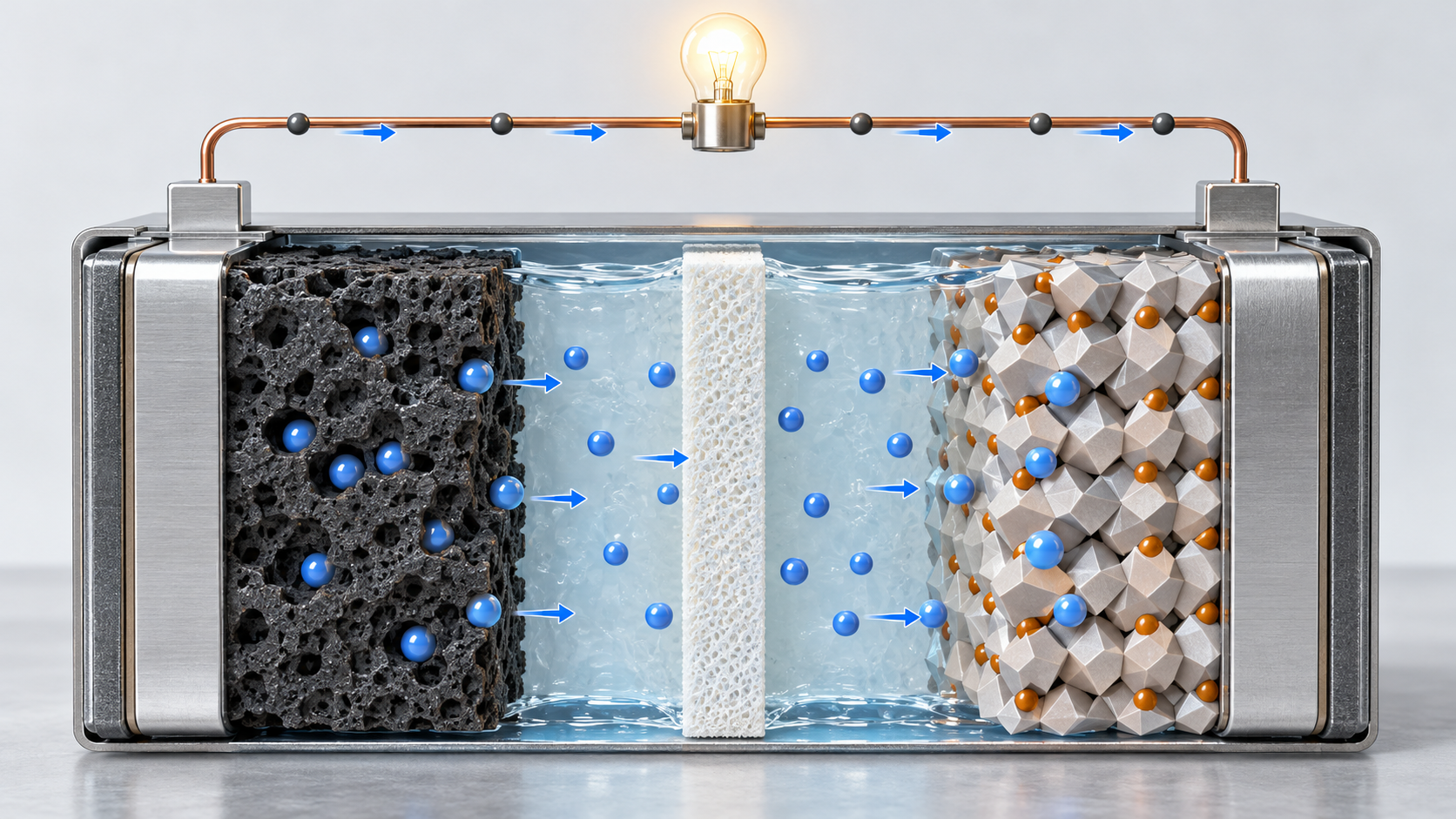
View the original SVG schematic and exact annotations
(2) How do the differences between lithium and sodium affect materials design?
| Aspect | What is known | Implication for materials design (commentary) |
|---|---|---|
| Ion size | The Na+ radius is 34% larger than Li+ (1.02 Å versus 0.76 Å)Sourced. Insertion and extraction put more strain on electrode materials, which can increase cracking and dissolution (roadmap [Ref. 1]) | Structures that tolerate strain (polyanions, P2-type and so on) and doping or coating design become important |
| Structural freedom | Na+ can occupy trigonal-prismatic as well as octahedral sites, so layered oxides come in P2 and O3 stacking variantsSourced (roadmap [Ref. 1]) | Composition and synthesis conditions can be used to make power-oriented (P2) and capacity-oriented (O3) materials |
| Anode carbon | Hard carbon is the most widely used anodeSourced (roadmap [Ref. 1]). See our explainer on hard-carbon anodes in this series | The anode's raw material and firing conditions strongly influence cell performance and cost |
| Current collector | Aluminum foil can be used on the anode side. Aluminum rather than copper collectors are cited as one reason for the low bill-of-materials cost of Faradion's cellsSourced (roadmap [Ref. 1]). The roadmap also notes that cells can be stored and shipped at 0 V (same source) | Lower collector weight and material cost |
| SEI and dissolution | Components of the sodium SEI dissolve more readily, and SEI stability is described as inferior to that of lithium-ion cellsSourced (same source) | Electrolyte and additive design, and control of transition-metal dissolution, bear directly on lifetime |
For the lithium-ion side of these topics, see our explainers on LIB fundamentals and on the SEI in this series.
3. Our calculation: what swapping lithium for sodium does to theoretical capacity
The atomic mass of sodium (22.99) is about 3.3 times that of lithium (6.94)Our calculation. If lithium is replaced by sodium in the same crystal structure, the theoretical capacity per unit weight falls even when the same number of electrons is exchanged. Here we calculate the theoretical capacity of the material, which is set by the formula mass of the active material and the number of electrons exchanged.
Assumptions: theoretical capacity = (electrons exchanged × Faraday constant ÷ 3.6) ÷ formula mass, in mAh/g (96,485 C/mol gives 26,801 mAh/mol). Atomic masses used: Li 6.94, Na 22.990, Fe 55.845, V 50.942, P 30.974, O 15.999, F 18.998, C 12.011, N 14.007. This is a material-basis value for the active material, not the cell energy density (Wh/kg). It excludes the weight of current collectors, electrolyte, anode and packaging.
| Material | Electrons per formula unit | Theoretical capacity (mAh/g) | Note |
|---|---|---|---|
| LiFePO4 | 1 | 170 | Lithium reference |
| NaFePO4 | 1 | 154 | Worked example with Li swapped for Na in the same formula. About 9% smaller |
| Na3V2(PO4)3 | 2 | 118 | The roadmap states that two Na can be exchanged reversibly, at 3.4 V [Ref. 1] |
| Na3V2(PO4)2F3 | 2 | 128 | Average 3.9 V, theoretical capacity 128 mAh/g (matches the roadmap) [Ref. 1] |
| Na4Fe3(PO4)2P2O7 | 3 | 129 | One electron per Fe atom. The original paper reports a measured 129 mAh/g at about 3.2 V versus Na [Ref. 5] |
| Na2Fe[Fe(CN)6] | 2 | 171 | Idealized-formula calculation. Real material contains vacancies and water and gives less (Chapter 4) |
Calculated values are Our calculation. The roadmap and original-paper values in the Note column are Sourced.
Two things can be read from the calculation (commentary by this article). First, with the same crystal framework, replacing lithium by sodium lowers the capacity per unit mass by roughly 10% (compare LiFePO4 and NaFePO4). Second, sodium polyanion cathodes have heavy formula units (formula mass about 420 to 620), so their theoretical capacity stays around 120 to 130 mAh/g. The roadmap also describes this trade-off: polyanions give less capacity than layered oxides because of the heavy anion partSourced. The important point is that this is a theoretical material value. The cell's gravimetric energy density is set by voltage, anode capacity, electrode density, current collectors, electrolyte and packaging, and cannot be determined from this calculation alone.
4. Three cathode families — layered oxides, Prussian blue analogues, polyanions
Sodium-ion cathodes fall into three broad families according to their framework. The roadmap notes that companies such as Faradion (UK), Tiamat (France), Altris (Sweden), HiNa (China) and Natron Energy (USA) have each chosen a different cathode, which means the industry has no consensus on a single “right answer”Sourced (description as of 2021).
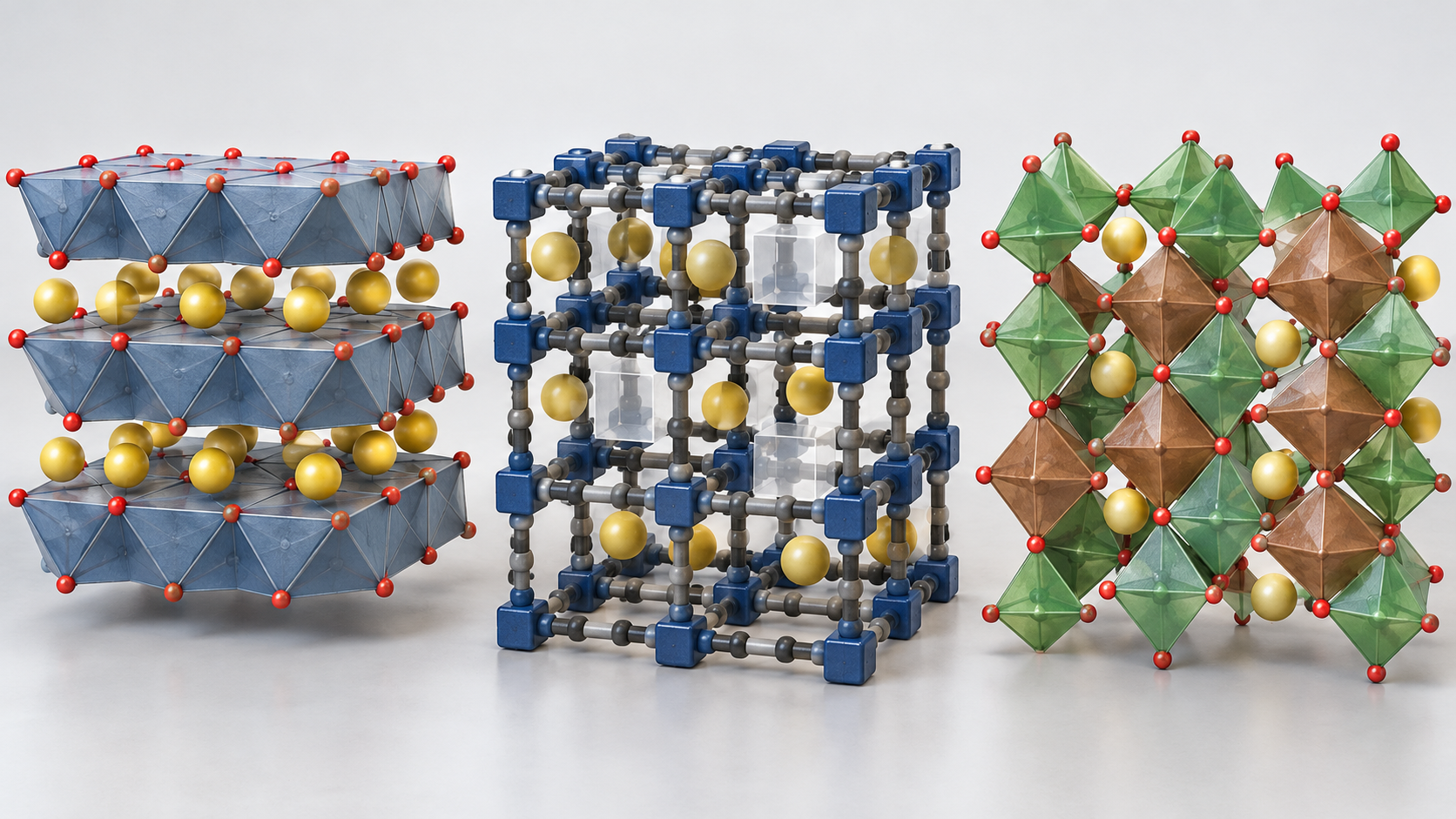
View the original SVG schematic and exact annotations
| Family | Representative examples | Reported values (with conditions) | Main challenges |
|---|---|---|---|
| Layered oxides (P2, O3) | NaFeO2, NaNi1/2Mn1/2O2 (O3) / Na2/3MnO2 (P2). Faradion is described as using a mixed O3/P2 Na-Mn-Ni-Ti-Mg oxide, and HiNa an O3-type Na-Cu-Fe-Mn oxideSourced [1] | P2-Na2/3[Fe1/2Mn1/2]O2: reversible capacity 190 mAh/g (Fe3+/Fe4+ redox, in sodium cells, 2012 paper) [3]. The paper says reversible capacities of earlier layered materials were typically limited to about 100 mAh/g | Phase changes on cycling are complex, and small compositional differences change performance greatly. Manganese dissolution (dissolution-migration-deposition) is estimated to account for up to 30% of capacity loss in manganese-oxide insertion cells (a general estimate cited by the roadmap) [1] |
| Prussian blue analogues (PBA) | NaxM[M′(CN)6]1-y·zH2O (M, M′ = Fe, Mn, Ni and so on). Altris (Sweden) is described as using them [1] | 2012 paper: close to 100 mAh/g on Na insertion, no capacity fade over 30 cycles (carbonate electrolyte) [4]. Roadmap: the best PBA so far gave 120 mAh/g over 800 cycles (0.5 C charge, 2 C discharge). Aqueous electrolytes have reached 8,000 cycles but often with only 60 to 80 mAh/g [1] | Vacancies and water. 1 mol% vacancies cut the maximum Na content by 3 to 4 mol%. Drying changes the volume by about 18%, and in air the hydrated structure re-forms within minutes [1] |
| Polyanions | Na3V2(PO4)3 (NVP), Na3V2(PO4)2F3 (NVPF), Na4Fe3(PO4)2P2O7 (NFPP). Tiamat is described as using NVPF [1] | NVP: two Na exchanged reversibly at 3.4 V. NVPF: average 3.9 V, theoretical capacity 128 mAh/g [1]. NFPP: measured 129 mAh/g at about 3.2 V versus Na, with high power, small volume change and high thermal stability reported (2012 paper) [5] | Heavy framework and low capacity. Vanadium systems raise sourcing and handling issues. Fe and Mn polyanions have either low potential or bulky anions that lower tap density and hurt volumetric energy density [1] |
Bracketed numbers [1], [3], [4], [5] are source numbers. All are Sourced (statements in the papers and roadmap). Conditions (half cell or full cell, electrolyte, cycle count) follow each source.
CATL announced in September 2025 that Naxtra had obtained certification to the national standard GB 38031-2025, and in June 2026 it announced the “TENER Sodium” storage system (Chapter 9). These announcements, however, do not say which cathode family Naxtra uses or what the cathode of TENER Sodium is. The latter release mentions that production cost of a material abbreviated “NFPP” is expected to fall, but it neither defines the abbreviation nor says that it is the TENER Sodium cathodeSourced [10 to 14]. This article therefore does not assert the type of CATL's cathode (listed as an item that could not be confirmed).
5. A materials engineer's view (1): each family is hard for a different reason
The difficulties map directly onto the chemistry of each family (commentary by this article).
- Layered oxides are a problem of structural motion. On every cycle the Na+ site (P2 versus O3) and layer stacking can change through phase transitions, and the large Na+ adds strain. The roadmap says that adding just small amounts of Mg2+ or Ti4+ changes performance greatly and that this is not yet understoodSourced [1]. The search space is wide, so reproducibility (firing conditions, compositional scatter, impurities) is at the heart of production quality.
- PBAs are a problem of defects and water. Vacancies introduced during synthesis (co-precipitation) directly cut the maximum Na content and structural stability. Water supports the structure (it limits volume change) but can also react with the electrolyte at high potential. The crystal phase depends on how the powder is dried, and even a dried powder re-hydrates within minutes in air, it is reportedSourced [1]. Process control of powder drying, storage and electrode making therefore becomes performance itself.
- Polyanions are a problem of weight and electronic conduction. The stable framework conducts electrons poorly, so fine particles and carbon coating are needed (a 2012 paper on carbon-coated NVP [9] is one example). Because capacity is low, coating and calendering conditions that make thick, dense electrodes decide the volumetric energy density.
From a materials supplier's standpoint, sodium cathodes are starting as a diverse market in which a different family is a candidate for each use, rather than as a contest over which family wins (commentary). The roadmap's statements line up as follows: polyanions as “an attractive avenue for high-power and durable” systems, PBAs as giving “the best price-to-performance ratio” as a cathode, and layered oxides as allowing capacity-oriented O3 and power-oriented P2 variants to be madeSourced [1]. How industry has actually moved since 2021 could not be confirmed from independent sources here.
6. Electrolyte, anode and current collector — what “aluminum foil on both sides” means
(1) Electrolyte: sodium salts dissolved in organic solvents
The electrolyte of a non-aqueous sodium-ion battery is, as in lithium-ion cells, basically a sodium salt dissolved in an organic solvent (carbonates such as EC, DMC and PC). Typical examples listed in the roadmap are 1 M NaPF6 in EC/DMC (1:1 by weight) and 1 M NaClO4 in EC/DECSourced [1]. On salts, the same roadmap gives the following summary.
- NaClO4: the most studied, but its strong oxidizing character rules out commercial use on safety grounds, and it is hard to dry.
- NaPF6: the most promising, but it is moisture-sensitive and hydrolyzes to HF, causing electrolyte degradation and safety concern. The quality of commercial NaPF6 is also an issue, and NaF forms.
- NaFSI and NaTFSI: low toxicity and high thermal stability, but as single salts they corrode the aluminum current collector, and they are expensive.
- Sodium salts in general: higher melting points than lithium salts, which helps drying and thermal stability.
All are Sourced (roadmap [Ref. 1]).
The components of the sodium SEI (Na2CO3, ROCO2Na and others) also dissolve more readily than their lithium counterparts, so the interface of a sodium-ion battery is described as less stable than that of a lithium-ion batterySourced [1]. For the SEI in general, see our SEI explainer in this series.
(2) Anode: hard carbon
Hard carbon is the most widely used anode. According to the roadmap, the practical capacity of hard carbon is 200 to 450 mAh/g (mostly measured in coin-cell half cells against sodium metal), with most literature values averaging about 300 mAh/g, against the 372 mAh/g theoretical value of graphite's LiC6Sourced [1]. The roadmap also expresses the view that nothing is likely to displace hard carbon as the anode for high-energy applications in the foreseeable futureSourced [1]. Structure (turbostratic domains and closed pores), the sodium storage mechanism, precursors and firing, and first-cycle efficiency are covered in our explainer on hard-carbon anodes in this series. Alloy-type materials (Sn, Sb, P and others) swell even more on sodiation than in lithium systems, which is a practical obstacleSourced [1].
(3) Current collector: aluminum foil on both electrodes
In lithium-ion batteries the anode current collector is generally copper foil. In sodium-ion batteries, because sodium does not alloy with aluminum at low potential, aluminum foil can be used on the anode side as well. A 2024 paper states that aluminum collectors are compatible with sodium at low voltage, and that although aluminum is an ideal candidate for the anode collector among SIB reports, copper is commonly usedSourced [2]. The roadmap lists the use of aluminum rather than copper collectors as one basis for the low bill-of-materials cost of Faradion's cellsSourced [1]. The 2018 cost analysis by Vaalma and co-authors (using the BatPaC model) also includes, among its subjects, the effect on cost of replacing the anode current-collector foil materialSourced [8] (from the abstract; the numerical results were not checked here).
The density of aluminum is 2.70 g/cm³ and that of copper is 8.96 g/cm³ (standard physical-property values; our assumption). For foils of the same thickness, aluminum weighs about 30% as much per unit area as copperOur calculation (2.70 ÷ 8.96 = 0.30). For an 8 µm foil, for example, copper is 71.7 g/m² and aluminum is 21.6 g/m².
This compares foils of the same thickness. Real foil thicknesses differ by product, and whether aluminum can be made as thin as copper depends on mechanical strength and coating conditions. How much this matters for the weight and cost of a whole cell depends on cell design and cannot be derived from here.
Aluminum collectors come with one more feature noted in the roadmap: sodium-ion cells can be stored and shipped at 0 VSourced [1]. The roadmap does not state the reason. As commentary, a cell with a copper collector would be hard to run this way because copper dissolves once the anode potential rises on complete discharge, but this article has not confirmed that against a primary source (inference).
7. A materials engineer's view (2): moisture and drying are the entrance to mass production
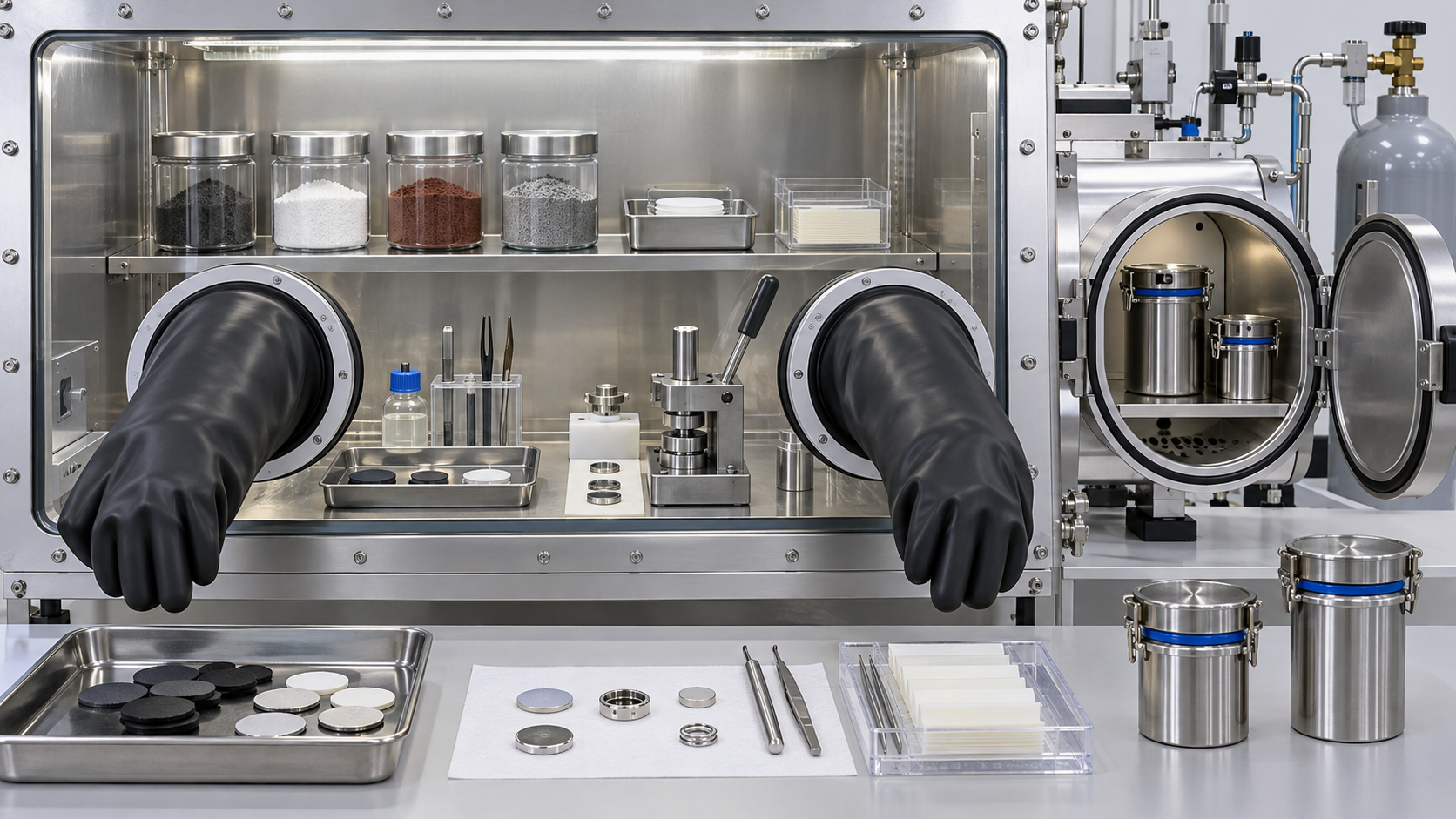
Reading the roadmap, water turns up as a factor in many places in the cellSourced [1].
- The electrolyte salt NaPF6 hydrolyzes with moisture to give HF, and the quality of commercial salt varies.
- PBA changes crystal phase depending on how dry it is, and re-hydrates within minutes once exposed to air.
- Contamination by solvent, electrolyte, moisture or CO2 can accelerate the degradation of sodium cathode host materials at a much higher rate than for their lithium counterparts.
In its April 2026 announcement, CATL named four obstacles overcome for sodium-ion mass production: “extreme water control,” “gas generation in hard carbon,” “aluminium foil adhesion,” and “self-forming anode systems”Sourced [13] (a CATL claim; the release does not describe what each item involves). That water management comes first fits the materials-side picture (commentary by this article).
From a materials supplier's position this means the moisture-content specification and the shipping and storage form of a powder can determine the battery maker's yield. For cathode powder, hard-carbon powder, binder and electrolyte salt alike, how much moisture is allowed and how to prevent pick-up in transit (moisture-proof packaging, inert-gas sealing) become key items on the specification sheet. The required level builds on control methods developed for lithium-ion materials, but it is an area where each material needs additional study (commentary; specific allowable moisture contents could not be confirmed in published sources within this investigation).
8. Energy density and cost in context (cell basis, with conditions)
The question “is the energy density of a sodium-ion battery on a par with LFP?” cannot be answered unless the basis of the numbers is aligned. The figure below places side by side the cell-level values from the roadmap, values from an independent study of commercial 18650 cells, and CATL's claim, each with its basis stated.
Three things can be read from the figure (commentary by this article).
- On gravimetric energy density, Faradion's mid-2020 cell sits inside the LFP//graphite range (140 to 175 Wh/kg) and below NMC//graphite (240 to 270 Wh/kg), which is the roadmap's summarySourced [1]. Its volumetric energy density lies within the LFP range (240 to 360 Wh/L).
- Even among “sodium-ion batteries,” the numbers differ greatly with cell design. A small 18650 retail cell used in an independent study had 97.5 Wh/kg (datasheet-derived), lower than an LFP cell of the same format (122 Wh/kg)Sourced [6]. Format, generation and electrode design all matter, so no single figure answers “how many Wh/kg is sodium-ion.”
- No basis is given for CATL's 175 Wh/kg. The February 2026 announcement says “up to 175 Wh/kg” and calls it the current benchmark for mass productionSourced [12], but whether this is a cell value, under what conditions, and whether it has been measured independently could not be confirmed. It is treated as a company claim and not compared on the same footing as the ranges above.
Where cost stands
On cost, this article does not use market-research price forecasts. What can be confirmed in public sources is limited to the following.
- The techno-economic section of the 2021 roadmap states, from cost models such as BatPaC (estimated in euros), that costs of sodium-ion cells (NaMO2/hard carbon) and LFP cells are comparable, with NMC cells lower, and that costs could fall with volume manufacturing and higher energy densitySourced [1].
- The Faradion section of the same roadmap says that the company's cell bill-of-materials (BOM) cost is 25 to 30% below that of LFP//graphite pouch cells, with a target of maintaining that gapSourced (a company's own summary and target; the year and scale behind it could not be confirmed from the text) [1]Not yet confirmed.
- Vaalma and co-authors (2018) state that the cost advantage of sodium-ion batteries is “frequently discussed” but had not been examined in detail, and analyze cell and battery material costs with BatPaCSourced [8] (from the abstract).
Even within the same roadmap there are two views built on different premises (comparable to LFP, versus lower than LFP), so this article neither asserts that sodium is cheaper nor that it is more expensive. On hard carbon, the roadmap says that graphite costs 500 to 2,000 US dollars per tonne, similar to the price of common hard-carbon precursors (cellulose, sucrose), yet the cost of hard carbon is significantly higher than that of graphiteSourced [1]. Current $/kWh market prices that could be confirmed from public-agency statistics were not found in this investigation (an item that could not be confirmed).
9. Where commercialization stands — company announcements versus what can be checked independently
The most information is available for CATL. What follows is entirely CATL's official announcements (company claims), and includes numbers given without basis or conditions. Independent verification, where found, is shown separately.
(1) Passenger vehicles (Naxtra)
| Item | What CATL announced | What could not be confirmed |
|---|---|---|
| Announcement of 21 April 2025 | CATL claims the Naxtra passenger-vehicle battery has 175 Wh/kg, a 500 km range, more than 10,000 cycles, 90% usable power at -40 °C and an operating range of -40 to +70 °C. For the 24 V heavy-truck starter battery it claims a service life of over 8 years and a 61% reduction in lifecycle cost compared with lead-acidSourced [10] | The basis of 175 Wh/kg (cell or pack). The conditions behind 10,000 cycles (depth of discharge, temperature, rate, end-of-life capacity). The vehicle and conditions behind the 500 km range |
| Announcement of 8 September 2025 | CATL announced that Naxtra obtained certification to GB 38031-2025 (safety requirements for EV traction batteries), the first for a sodium-ion battery in the world by its account. Tests were third-party tests at the NEV Testing Center of CATARC (China Automotive Technology and Research Center), with all tests passed at cell and pack level, it says. CATL states the standard takes effect on 1 July 2026Sourced [11] | Publication of the test reports. The conditions and numerical results of each test |
| Announcement of 5 February 2026 | The mass-production passenger car with Changan was unveiled, with market launch in mid-2026. Pure-electric range above 400 km. CATL claims nearly triple the discharge power of equivalent LFP at -30 °C, over 90% capacity retention at -40 °C and stable power even at -50 °C, and no smoke or fire under crushing, drilling and sawing testsSourced [12] | The specification of the “equivalent LFP.” The test conditions. The start of actual vehicle sales |
All are company announcements. [10], [11] and [12] are source numbers.
(2) Stationary storage (TENER Sodium)
On 22 June 2026 CATL unveiled the TENER Sodium energy storage system in Munich, Germany. The release states more than 30 MWh per module, support for storage durations of 1, 2, 4, 6 and 8 hours, interchangeability with the LFP version in the same footprint, cumulative shipments of 1 GWh by the end of 2026, a first delivery in China in September, and international deliveries from June 2027Sourced [14]. It also says that 40 GWh of annual capacity is being added at the Fuding base (an investment of RMB 5 billion) and that 160 GWh is planned at Jining in Shandong (the planned part is Not yet confirmed). It further states that a three-year, 60 GWh contract was signed with HyperStrong in April 2026Sourced [14] (a company announcement; the contract itself was not checked here). Another announcement in April 2026 (Ref. [13]) says the company overcame four obstacles, including “extreme water control,” and “will enter full-scale mass production by the end of 2026”Not yet confirmed.
As system-level features the release cites bidirectional DC voltage regulation to handle the wide voltage range of sodium-ion cells (a nearly 2% improvement in system round-trip efficiency), BMS state-of-charge estimation that exploits the gently sloping voltage curve, and lower auxiliary power use (from an average of 2% to 1%)Sourced [14]. All of this is company claim; no independent measurement results were found.
(3) What can be confirmed independently
Separately from company announcements, third parties have studied commercially sold sodium-ion cells. Note, however, that the subjects are not CATL products but small 18650 cells.
- Cycle life: a paper co-authored by Sandia National Laboratories and others [7] (published online in October 2025; EES Batteries volume 2, 2026) examined 150 18650 cells (NaNi1/3Fe1/3Mn1/3O2 / hard carbon) from two Chinese makers (Tycorun and Hakadi). Cell-to-cell variation within batches was comparable to lithium-ion cells, yet under 0.5 C charge-discharge, 25 °C (some at 20 °C) and 0 to 100% SOC, both makers' cells fell below 80% capacity within 350 cycles, about one tenth of what the datasheets state for the same conditionsSourced. The authors conclude that quality can vary widely between makers even for the same chemistry.
- Thermal runaway: a 2025 paper from Germany's Federal Institute for Materials Research and Testing (BAM) [6] heated a commercial 18650 sodium-ion cell in nitrogen (15 K/min) and reported mild thermal runaway even at 30% SOC, behavior at full charge similar to an LFP cell on most thermal-runaway parameters but with larger pressure rise, and a strong tendency toward jelly-roll ejectionSourced. The authors say such cells should be classified alongside lithium-ion cells.
In short, the explanation that sodium is “inherently safe” is not supported by independent tests. CATL says it removes combustion-supporting factors at the material level [10], but the numerical GB 38031-2025 test results are not public, and BAM examined a different (Ni-Fe-Mn) cell. Neither result judges the safety of any specific product. For battery fires and thermal runaway in general, see our explainer on thermal runaway and battery safety in this series.
(4) The state of standards
Among international standards, IEC TC 21 (secondary cells and batteries) is working on safety requirements for industrial sodium-ion batteries (IEC 63635) and on standards for sodium-ion cells for EV traction (IEC 63591, Part 1: performance testing; Part 2: safety requirements and test methods). On the public pages of the British Standards Institution (BSI), all three are listed as drafts for comment (DC), dated June 2025 and August 2026Sourced [15 to 17]. This investigation could not confirm any of them as a published standard on IEC's own pagesNot yet confirmed.
The two makers' cells examined in the Sandia paper [7] both have NaNi1/3Fe1/3Mn1/3O2 cathodes and hard-carbon anodes, so the chemistry “name” is the same. Even so, the paper reports that the binder (PVDF versus SBR) and the electrolyte composition differ, producing different SEI properties, that lifetime appears to be affected more by the upper voltage limit than by these construction differences, and that both makers' cells have much shorter life than their datasheets stateSourced.
As a materials reading, the composition name of cathode and anode does not decide battery quality; peripheral materials and operating conditions such as the binder, electrolyte additives and the voltage range used shape how lifetime looks (commentary by this article). As the roadmap notes, sodium SEI components dissolve readily and the effects of transition-metal dissolution differ, so experience from lithium-ion cells does not necessarily carry overSourced [1]. For a materials supplier, the ability to show evaluation conditions with binder, electrolyte and operating voltage aligned, rather than a datasheet for the material alone, can be the way in.
10. What is still hard (energy density, cycle life, standards)
(1) Energy density
Cell values differ widely with design and generation (Chapter 8). On the materials side, the heavy polyanion frameworks, the capacity of hard carbon (about 300 mAh/g on average in practice) and the cathode excess needed to offset first-cycle irreversible capacity all weigh inSourced [1]. That the roadmap's view that sodium-ion is less suited to long-range EVs and some mobile devices has since been overturned could not be confirmed from independent sources.
(2) Cycle life
As Chapter 9 showed, the conditions behind the numbers are not aligned. In an independent study, the cycle life of retail 18650 cells was about one tenth of the datasheet value [7]. Faradion states 3,000 cycles at 80% DOD (to 20% fade) and CATL claims over 10,000 cycles [1, 10]. These are values for different cells under different conditions, and one cannot decide which is “the” cycle life of a sodium-ion battery. Lifetime has to be compared with the end-of-life criterion, depth of discharge, temperature, rate and upper voltage all stated (for battery evaluation, see our explainer on cell evaluation and degradation in this series).
(3) Standards and test methods
International standards are at the draft stage, and the positioning of sodium-ion batteries in the UN dangerous-goods recommendations and the development of test methods are under discussion (mentioned in the BAM paper [6]). Because different standards apply to different uses, whether sodium-ion batteries may be handled under standards written for lithium-ion batteries has to be checked by use and region (commentary by this article; it does not judge the conformity of any individual product).
(4) Other challenges
- Material supply: vanadium-based polyanions face issues of vanadium sourcing and handling [1]. Hard carbon performance changes with precursor and firing conditions, so supply needs standardization (see our hard-carbon explainer).
- Interface stability: SEI components dissolve readily, and transition-metal dissolution affects the interface [1].
- Moisture control in manufacturing: see Chapter 7 [1, 13].
- A sodium-ion battery is a rocking-chair cell in which only the shuttling ion has been changed. Na+ has a radius 34% larger than Li+, and the design uses hard carbon at the anode and aluminum foil as the current collectorSourced
- Swapping Li for Na in the same framework lowers theoretical capacity by about 9%, and polyanion systems sit at around 120 to 130 mAh/gOur calculation
- There are three cathode families, and the kind of difficulty differs (phase change, defects and water, framework weight)Sourced
- Cell values depend strongly on design. Faradion's mid-2020 cell is 160 Wh/kg, a retail small 18650 is 97.5 Wh/kg, and CATL claims up to 175 Wh/kg (the basis differs by source)Sourced
- CATL has announced mass production and storage-system shipment plans, but all of these are company claims and plansNot yet confirmed. Independent studies report the cycle life of retail 18650 cells at about a tenth of the datasheet value, and that thermal runaway should be treated like that of lithium-ion cellsSourced
- The international standards (IEC 63635 and 63591) are at the draft stageNot yet confirmed
11. How to read evaluations and standards
Before comparing which number is larger, align the basis of comparison in the following order. This is an editorial reading checklist, not a set of test conditions or acceptance limits prescribed by a standard.
- 1. What was measured?
- cell energy density, low-temperature capacity, life and cost. Check the units and whether the result describes a material, component or complete system.
- 2. Under which conditions?
- electrode pair, temperature, C-rate, cell construction and manufacturing scale. Treat results under different conditions as separate results before comparing them.
- 3. The comparison trap
- Resource abundance and the present price of a finished cell are separate questions.
- 4. What does the standard cover?
- Check the identifier, title, edition and scope in the issuing body’s material. Distinguish test methods, safety, interoperability and management requirements. Naming a standard alone does not establish that a test, conformity assessment or certification has been completed.
Keep a comparison note containing the object, units, conditions, sample count and variation, comparator, standard edition and unresolved points. Do not invent numerical conditions or acceptance limits from a public abstract of a standard.
12. Glossary
- Sodium-ion battery (SIB)
- A rechargeable battery whose shuttling ion is sodium instead of lithium.
- Rocking-chair cell
- A battery type in which ions move back and forth between the electrodes to charge and discharge.
- P2 / O3
- Delmas notation for the Na site in layered oxides. P = trigonal prismatic, O = octahedral, the number is the stacking period.
- Prussian blue analogue (PBA)
- A compound with an open framework in which transition metals are bridged by cyanide. Vacancies and water govern its performance.
- Polyanion
- A framework in which metals are linked by polyatomic anions such as PO4. Structurally stable, but heavy.
- NVP, NVPF, NFPP
- Abbreviations for Na3V2(PO4)3, Na3V2(PO4)2F3 and Na4Fe3(PO4)2P2O7.
- Hard carbon
- Carbon that does not graphitize even at high temperature. Widely used as the anode of sodium-ion batteries.
- Current collector
- The metal foil that carries current from the electrode's active material to the outside.
- BOM
- Bill of materials. Here, the total material cost of a cell.
- DOD
- Depth of discharge: the percentage of capacity used.
- Thermal runaway
- A phenomenon in which heat generation feeds further heat generation until it can no longer be controlled.
- BatPaC
- A publicly available battery cost-and-performance model from a US national laboratory.
13. References
- Tapia-Ruiz et al. (NEXGENNA consortium of the Faraday Institution and others) "2021 roadmap for sodium-ion batteries," Journal of Physics: Energy 3, 031503 (2021) (open access) — doi.org/10.1088/2515-7655/ac01ef
- Sadan et al. "Overcoming copper-induced conversion reactions in nickel disulphide anodes for sodium-ion batteries," Nanoscale Advances 6, 2508-2515 (2024) (open access) — doi.org/10.1039/d3na00930k
- Yabuuchi et al. "P2-type Nax[Fe1/2Mn1/2]O2 made from earth-abundant elements for rechargeable Na batteries," Nature Materials 11, 512-517 (2012) — doi.org/10.1038/nmat3309
- Lu et al. (Goodenough and co-authors) "Prussian blue: a new framework of electrode materials for sodium batteries," Chemical Communications 48, 6544 (2012) — doi.org/10.1039/c2cc31777j
- Kim et al. (Kang and co-authors) "New iron-based mixed-polyanion cathodes for lithium and sodium rechargeable batteries: combined first principles calculations and experimental study," Journal of the American Chemical Society 134, 10369-10372 (2012) — doi.org/10.1021/ja3038646
- Bottcher et al. (BAM) "Sodium-ion battery research @ BAM (I): investigating the thermal runaway behaviour of commercial sodium-ion battery cells," Sustainable Energy & Fuels 9, 5832-5838 (2025) — doi.org/10.1039/d5se00687b
- Wittman et al. (Sandia National Laboratories, University of Hawaii and others) "Initial characterization and cycling of two batches of commercial hard-carbon/NaxNiyFezMn1-y-zO2 sodium ion 18650 batteries as a potential replacement for lithium-ion batteries," EES Batteries 2, 11-22 (2026) (open access) — doi.org/10.1039/d5eb00161g
- Vaalma et al. (Passerini and co-authors) "A cost and resource analysis of sodium-ion batteries," Nature Reviews Materials 3, 18013 (2018) (abstract only checked) — doi.org/10.1038/natrevmats.2018.13
- Jian et al. "Carbon coated Na3V2(PO4)3 as novel electrode material for sodium ion batteries," Electrochemistry Communications 14, 86-89 (2012) (title only checked) — doi.org/10.1016/j.elecom.2011.11.009
- CATL "Naxtra Battery Breakthrough & Dual-Power Architecture: CATL Pioneers the Multi-Power Era," 21 April 2025 — catl.com
- CATL "CATL's Naxtra Battery Passes New National Standard Certification," 8 September 2025 — catl.com
- CATL "CATL and CHANGAN Launch World's First Mass-Production Sodium-Ion Passenger Vehicle," 5 February 2026 — catl.com
- CATL "CATL Unveils Six Major Innovations: Multi-Chemistry Systems to Redefine New Energy Mobility Experience," 21 April 2026 — catl.com
- CATL "CATL Debuts World's First Field-Validated Sodium-Ion BESS, Bringing Sodium Storage to Commercial Reality," 22 June 2026 — catl.com
- British Standards Institution (BSI) 25/30512501 DC BS EN IEC 63635 "Secondary cells and batteries containing alkaline or other non-acid electrolytes. Safety requirements for secondary sodium ion cells and batteries for use in industrial applications" (draft for comment, listed 13 June 2025) — knowledge.bsigroup.com
- British Standards Institution (BSI) 26/30569472 DC BS EN IEC 63591-1 "Secondary sodium-ion cells for the propulsion of electric road vehicles - Part 1: Performance testing" (draft for comment, listed 14 August 2026) — knowledge.bsigroup.com
- British Standards Institution (BSI) 26/30569726 DC BS EN IEC 63591-2 "Secondary sodium-ion cells for the propulsion of electric road vehicles - Part 2: Safety requirements and test methods" (draft for comment, listed 21 August 2026) — knowledge.bsigroup.com
14. Claim-to-source audit
| Claim in the text | Basis | Label |
|---|---|---|
| That the Na+ radius is 34% larger than Li+ (1.02 Å versus 0.76 Å); that the basic principles and materials of SIBs and LIBs are similar and existing manufacturing lines can be used; that cells can be stored and shipped at 0 V; that companies choose different cathodes (Faradion: mixed O3/P2 Na-Mn-Ni-Ti-Mg oxide; Tiamat: Na3V2(PO4)2F3; HiNa: O3-type Na-Cu-Fe-Mn oxide; Altris: PBA; Natron: aqueous PBA); and that aluminum current collectors are cited as a basis for the low bill-of-materials cost of Faradion's cells | 2021 roadmap for sodium-ion batteriesReference 1 https://doi.org/10.1088/2515-7655/ac01ef | Sourced |
| The P2 and O3 notation and site difference, and the framing of P2 as power-oriented and O3 as capacity-oriented; that adding small amounts of Mg2+ or Ti4+ changes performance in a way not yet understood; that NVP exchanges two Na at 3.4 V and NVPF has an average of 3.9 V and a theoretical capacity of 128 mAh/g; that polyanions give less capacity than layered oxides because of the heavy anion; the general formula of PBA; that 1 mol% vacancies cut the maximum Na content by 3 to 4 mol%; that the best PBA gave 120 mAh/g over 800 cycles, that aqueous systems reached 8,000 cycles with 60 to 80 mAh/g, that dehydration changes the volume by about 18% and that the hydrated structure re-forms within minutes in air; and the estimate that the dissolution-migration-deposition process can account for up to 30% of capacity loss in manganese-oxide insertion cells | Same roadmap (Chapters 1 and 6)Reference 1 https://doi.org/10.1088/2515-7655/ac01ef | Sourced |
| Typical electrolytes (1 M NaPF6 in EC/DMC, 1 M NaClO4 in EC/DEC); that NaClO4 is strongly oxidizing and unsuited to commercial use, NaPF6 hydrolyzes to HF with moisture, NaFSI and NaTFSI corrode the aluminum collector as single salts and are expensive, and sodium salts have higher melting points; that SEI components dissolve readily and interface stability is inferior to lithium-ion; that hard carbon's measured capacity is 200 to 450 mAh/g (about 300 on average) against graphite's 372 mAh/g; the volume expansion of alloy materials; and that hard carbon costs significantly more than graphite, with graphite at 500 to 2,000 US dollars per tonne | Same roadmap (Chapters 2, 4 and 6)Reference 1 https://doi.org/10.1088/2515-7655/ac01ef | Sourced |
| That Faradion's cells deliver energy and power between NMC//graphite and LFP//graphite; the Table 2 values (NMC//graphite: 240 to 270 Wh/kg and 670 to 750 Wh/L; LFP//graphite: 140 to 175 Wh/kg and 240 to 360 Wh/L; Faradion: 160 Wh/kg, 290 Wh/L, 32 Ah pouch, cycle life 3,000 cycles to 20% fade at 80% DOD and +/-1 C); that the values include company data as of mid-2020; that the company-stated BOM cost is 25 to 30% below LFP pouch cells; that cost models give sodium-ion comparable to LFP and NMC lower; and that sodium-ion is less suited to some consumer electronics and long-range EVs | Same roadmap (Chapters 7 and 8)Reference 1 https://doi.org/10.1088/2515-7655/ac01ef | Sourced (includes company data) |
| That aluminum collectors are compatible with sodium at low voltage, and that among SIB reports aluminum is an ideal anode-collector candidate while copper is commonly used | Sadan et al. 2024Reference 2 https://doi.org/10.1039/d3na00930k | Sourced |
| That P2-Na2/3[Fe1/2Mn1/2]O2 shows a reversible capacity of 190 mAh/g (Fe3+/Fe4+) and that earlier layered materials were typically limited to about 100 mAh/g | Yabuuchi et al. 2012Reference 3 https://doi.org/10.1038/nmat3309 | Sourced |
| That Na insertion into a Prussian blue gave close to 100 mAh/g, with no capacity fade over 30 cycles in a carbonate electrolyte | Lu et al. 2012Reference 4 https://doi.org/10.1039/c2cc31777j | Sourced |
| That Na4Fe3(PO4)2(P2O7) gave a measured 129 mAh/g at about 3.2 V versus Na, with high power, small volume change and high thermal stability | Kim et al. 2012Reference 5 https://doi.org/10.1021/ja3038646 | Sourced |
| The retail 18650 sodium-ion cell (1300 mAh, 3.0 V, 40 g, 97.5 Wh/kg) and LFP cell (1600 mAh, 3.2 V, 42 g, 122 Wh/kg); NFMO111 cathode and hard-carbon-like anode; mild thermal runaway even at 30% SOC, behavior at full charge similar to LFP with larger overpressure, a tendency toward jelly-roll ejection; the conclusion that such cells should be classified alongside lithium-ion cells; and the need to include them in the UN dangerous-goods classification scheme and 38.3 tests | BAM 2025Reference 6 https://doi.org/10.1039/d5se00687b | Sourced |
| That 150 Tycorun and Hakadi 18650 cells (NaNi1/3Fe1/3Mn1/3O2 / hard carbon) showed batch-level consistency comparable to lithium-ion; that at 0.5 C and 25 °C they fell below 80% within 350 cycles, about one tenth of the datasheet; the differences in binder (PVDF versus SBR), electrolyte and SEI; and that lifetime appears more affected by the upper voltage limit | Wittman et al. 2026Reference 7 https://doi.org/10.1039/d5eb00161g | Sourced |
| That Vaalma and co-authors analyze cell and battery material costs with the BatPaC model, including the effect of replacing the anode current-collector foil material, and say the cost advantage of sodium-ion had not been examined in detail | Vaalma et al. 2018 (abstract)Reference 8 https://doi.org/10.1038/natrevmats.2018.13 | Sourced |
| That a 2012 paper on carbon-coated NVP exists (from its title) | Jian et al. 2012 (title only checked)Reference 9 https://doi.org/10.1016/j.elecom.2011.11.009 | Sourced |
| CATL's Naxtra announcement (21 April 2025): the claims of 175 Wh/kg, a 500 km range, over 10,000 cycles, 90% usable power at -40 °C, an operating range of -40 to +70 °C, and for the 24 V starter battery a service life of over 8 years and a 61% lifecycle-cost reduction | CATL, 21 April 2025Reference 10 https://www.catl.com/en/news/6401.html | Sourced (company claim) |
| That Naxtra obtained GB 38031-2025 certification (the first for a sodium-ion battery by CATL's account), the third-party tests at the CATARC NEV Testing Center, and the standard's effective date of 1 July 2026 (as stated by CATL) | CATL, 8 September 2025Reference 11 https://www.catl.com/en/news/6563.html | Sourced (company claim) |
| The announcement of the mass-production passenger car with Changan (5 February 2026); up to 175 Wh/kg; range above 400 km; nearly triple the discharge power of equivalent LFP at -30 °C; over 90% capacity retention at -40 °C; no smoke or fire in crushing, drilling and sawing tests; and the start of research in 2016 with an investment of nearly 10 billion RMB | CATL, 5 February 2026Reference 12 https://www.catl.com/en/news/6720.html | Sourced (company claim) |
| The announcement of 21 April 2026: that four obstacles to sodium-ion mass production were addressed (“extreme water control,” “gas generation in hard carbon,” “aluminium foil adhesion,” “self-forming anode systems”), and that full-scale mass production is expected by the end of 2026 | CATL, 21 April 2026Reference 13 https://www.catl.com/en/news/6811.html | Sourced (company claim) |
| TENER Sodium (22 June 2026): over 30 MWh per module, storage durations of 1 to 8 hours, interchangeability with LFP in the same footprint, a nearly 2% gain in system round-trip efficiency from bidirectional DC voltage regulation, auxiliary power from 2% to 1%, the start of research in 2016 with an investment of nearly 1.2 billion euros, 40 GWh of annual capacity added at Fuding (RMB 5 billion), a three-year 60 GWh contract with HyperStrong (April 2026), and the mention of a lower production cost for “NFPP” | CATL, 22 June 2026Reference 14 https://www.catl.com/en/news/6861.html | Sourced (company claim) |
| The first delivery in China in September 2026, cumulative shipments of 1 GWh by the end of 2026, overseas deliveries from June 2027, full mass production by the end of 2026, and the 160 GWh plan at Jining | CATL's plans, not results; no official confirmation that deliveries took place was found. This is an outlook onlyReference 14 https://www.catl.com/en/news/6861.html | Not yet confirmed |
| That IEC 63635 (industrial) and IEC 63591-1 and -2 (EV traction) are listed by BSI as drafts for comment (listed 13 June 2025, 14 August 2026 and 21 August 2026) | BSI Knowledge pagesReference 15 https://knowledge.bsigroup.com/products/bs-en-iec-63635-secondary-cells-and-batteries-containing-alkaline-or-other-non-acid-electrolytes-safety-requirements-for-secondary-sodium-ion-cells-and-batteries-for-use-in-industrial-applicationsReference 16 https://knowledge.bsigroup.com/products/bs-en-iec-63591-1-secondary-sodium-ion-cells-for-the-propulsion-of-electric-road-vehicles-part-1-performance-testingReference 17 https://knowledge.bsigroup.com/products/bs-en-iec-63591-2-secondary-sodium-ion-cells-for-the-propulsion-of-electric-road-vehicles-part-2-safety-requirements-and-test-methods | Sourced |
| Whether IEC 63635 and 63591 have been published | Could not be confirmed as published standards on IEC's own pages, so they are not described as published. The standards are in development (outlook) | Not yet confirmed |
| The theoretical-capacity calculations (LiFePO4 170, NaFePO4 154, Na3V2(PO4)3 118, Na3V2(PO4)2F3 128, Na4Fe3(PO4)2P2O7 129, Na2Fe[Fe(CN)6] 171 mAh/g); the roughly 9% reduction on swapping Li for Na; and polyanion formula masses of about 420 to 620 | Our calculation. Premises: the atomic masses listed (Li 6.94, Na 22.990, Fe 55.845, V 50.942, P 30.974, O 15.999, F 18.998, C 12.011, N 14.007) and theoretical capacity = electrons x 26,801 / formula mass (mAh/g). Material-basis values, not cell energy density | Our calculation |
| That an aluminum foil weighs about 30% as much per unit area as a copper foil of the same thickness (71.7 g/m² for copper and 21.6 g/m² for aluminum at 8 µm) | Our calculation. Aluminum 2.70 g/cm³ and copper 8.96 g/cm³ (standard physical-property values), assuming the same thickness. The effect on whole-cell weight and cost depends on design | Our calculation |
| The reading that 0 V storage and shipment is related to the use of aluminum collectors (a copper collector can dissolve on over-discharge) | Inference (commentary). The roadmap states 0 V storage and shipment is possible but gives no reason; this article did not confirm it against a primary source | Commentary |
| The type of CATL's cathode (Naxtra, TENER Sodium) | Not stated in CATL's announcements and not confirmed, so not asserted. The abbreviation “NFPP” appears but is neither defined nor linked to the TENER Sodium cathode | Commentary |
| The basis of CATL's 175 Wh/kg (cell or pack), the conditions behind 10,000 cycles, the numerical GB 38031-2025 results, independent verification, actual TENER Sodium deliveries, and current $/kWh prices | Not stated here because no published primary source within this investigation could confirm them | Commentary |
| The reason copper foil is used on the LIB anode side (lithium-aluminum alloying at low potential) | A commonly held understanding, not checked against a primary source in this article (see the note to Fig. 1) | Commentary |
| The kind of difficulty of each cathode family (structural motion, defects and water, weight and electronic conduction); the reading that moisture management is the entrance to mass production; the framing of powder moisture specifications as governing yield; the grouping in Figs. 5, 6 and 7; and the reading that binder, electrolyte and operating voltage shape how lifetime looks | This article's own organization and commentary based on published material. Not views expressed by any company or institution | Commentary |
| That Figs. 1, 2, 3, 5, 6 and 7 are explanatory drawings, not real structures, design drawings or measurement results, and that the hero image and Fig. 4 are AI-generated images | A note by this article | Commentary |
Last updated 10 October 2026. Sources are limited to primary material (peer-reviewed papers, an open-access co-authored roadmap, official company press releases and the public pages of a standards body). Company announcements are treated as company claims and kept apart from independent studies. Because the article includes structural readings and materials-design interpretations, those are marked as Commentary and kept separate from sourced fact. CATL's cathode type, the basis of 175 Wh/kg, the conditions behind 10,000 cycles, the numerical GB 38031-2025 results, TENER Sodium delivery results, the publication of IEC 63635 and 63591, and current $/kWh prices are not stated here because no published primary source could confirm them. All figures are explanatory concept graphics. Figs. 1, 2, 3, 5, 6 and 7 are vector drawings; the hero image and Fig. 4 are AI-generated images, and none of them shows a real cross-section, micrograph or physical product.