TECHNOLOGY EXPLAINER
High-Entropy Oxides and Ceramics
— reading “entropy stabilisation” through reversibility, endotherm, control experiments and local structure
Since 2015, the ideas of high-entropy alloys have been carried over to ceramics such as oxides, carbides and borides. Oxides whose cation sites are filled by five or more elements (“high-entropy oxides”) and carbides that mix five metals have been reported with interesting values for hardness, resistance to heat flow, and lithium-ion mobility. At the same time, whether a material called “high-entropy” is really stabilised by entropy has been argued repeatedly in the papers themselves. This article sets out the oxide experiment that started the field, the evidence needed to call something “entropy-stabilised”, and reports on carbides, borides, fluorite-type and pyrochlore-type oxides and battery electrodes, within what primary sources say, with composition, route and test conditions.
- The short version
- The starting point — (Mg,Co,Ni,Cu,Zn)O of Rost et al.
- The evidence needed to call it "entropy-stabilised"
- Carbides and borides — ultra-high-temperature ceramics and hardness
- Resistance to heat flow and ion conduction — fluorite-type, pyrochlore-type, perovskite-type, lithium conduction
- Battery electrodes — conversion-type oxides
- Making and measuring — milling, sintering, densification, identifying the phase
- Separating entropy from "disorder"
- Limits, and what could not be confirmed
- How to read evaluations and standards
- Glossary
- References (primary sources)
- Claim-to-source audit
Sourced = stated in published material (link given)
Our calculation = a figure this article derived, with the assumptions spelled out
Not yet confirmed = a plan or schedule whose record has not been confirmed
Materials-design interpretations are marked separately as Commentary. Inference is shown in bold. Compositions are given as cation atomic fractions (at.%) or as chemical formulae.
Figures for high-entropy ceramics are laboratory results fixed by composition, how the powder was made, sintering temperature and time, density, grain size, and the test method and conditions. Please do not read the value for one material as a property of the whole class called “high-entropy”. Words such as “excellent” or “new properties” mean something only when the comparison is with another material (single-component or binary) under the same test and conditions. This article does not rank particular materials, products or companies, and gives no safety, medical or investment advice. Market-research estimates are not used. The checking date is 10 October 2026.
1. The short version
- The starting point is an experiment on an equimolar mixture of the five oxides MgO, CoO, NiO, CuO and ZnO, which changed from a multiphase state to a single-phase rocksalt structure, absorbing heat (an endotherm), in the window of 825–875 °C. It was single-phase at 1,000 °C, returned to multiphase at 750 °C and became single-phase again at 1,000 °C; no set of four components made by removing one of the five became single-phase; and the local structure was randomSourced [Source 1]
- Whether something may be called “entropy-stabilised” depends on the kind of evidence. There are four: reversibility, endotherm, control by changing components, and local structure. For a spinel-type high-entropy oxide there is a report that cations enter their sites in a way that differs from perfect randomness [Source 3], and the questions about entropy’s role remain open [Source 2]. Among carbides, of the twelve candidate compositions nine became single-phase rocksalt [Source 6]
- Figures for hardness, resistance to heat flow and lithium-ion mobility are results for that material under those conditions. For example, the hardness of (Hf-Ta-Zr-Nb)C, 36.1 ± 1.6 GPa, is reported to be higher than 32.9 ± 1.8 GPa for binary (Hf-Ta)C and 31.5 ± 1.3 GPa for HfC [Source 5]. Whether this is “because of entropy” has to be shown by separate evidence
The name “high-entropy” is not proof of “stabilised by entropy”. Look in the paper for whether the four things, reversibility, endotherm, control by changing components, and local structure, are all present for that material. How good a property is (hardness, insulation, ion conduction) and what stabilises the phase (entropy or enthalpy) are separate matters to be checked separately (Commentary).
2. The starting point — (Mg,Co,Ni,Cu,Zn)O of Rost et al.
The paper by Rost et al. (Nature Communications, 2015) showed by experiment the idea that, by filling one sublattice (for an oxide, the cation sites) with many different cations, configurational disorder can be designed into a composition and new phases can be found. Using a five-component oxide, the paper states that it demonstrated that entropy dominates the thermodynamic landscape and drives a reversible solid-state transformation between a multiphase and a single-phase state, and that in the single-phase state the cation distribution is random and homogeneousSourced [Source 1].
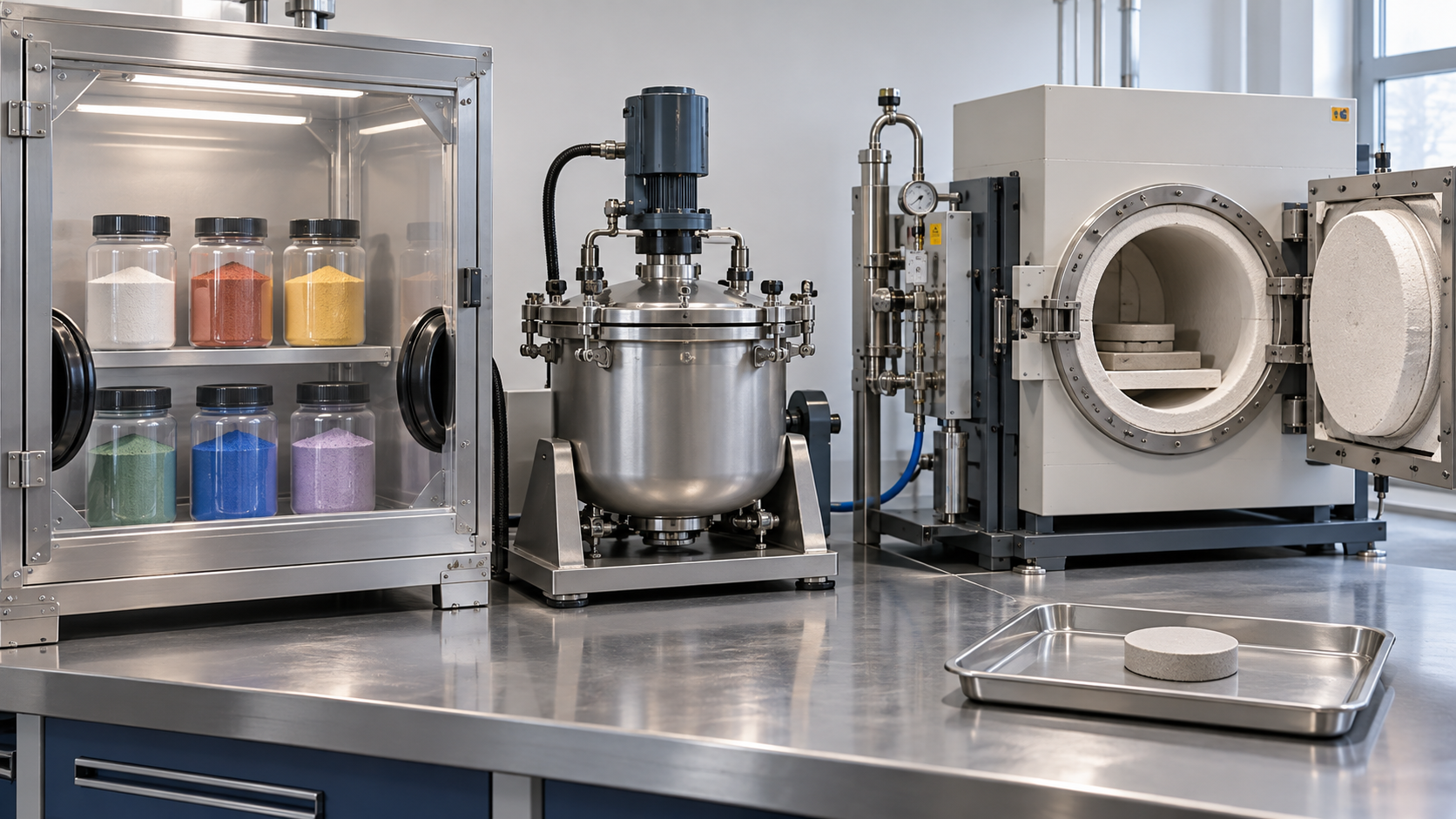
The specimen “E1” is an equimolar mixture of MgO, CoO, NiO, CuO and ZnO. The paper gives its reasons for the choice as including that the crystal structures, electronegativities and cation coordinations are not uniform and that some pairs, such as MgO-ZnO and CuO-NiO, do not dissolve extensively in each other [Source 1]. The specimens were made by mixing the powders (a shaker mill with yttria-stabilised zirconia media, at least 2 hours), pressing them into 1.27 cm pellets and heat-treating them in air [Source 1].
- Phases by temperature: pellets equilibrated at 700–1,100 °C (50 °C steps) and quenched showed two phases, rocksalt and tenorite (the CuO structure), at 700 °C, with the tenorite fraction falling as temperature rose, and converted completely to single-phase rocksalt between 850 and 900 °C [Source 1]
- Reversibility: a single-phase specimen equilibrated at 1,000 °C went back to multiphase when re-annealed at 750 °C and became single-phase again on returning to 1,000 °C. The paper says reversibility is a requirement of entropy-driven transitions [Source 1]
- Endotherm: when in situ X-ray diffraction and differential scanning calorimetry (DSC) were run at the same heating rate, the diffraction collapsed to single-phase rocksalt at 825–875 °C and a pronounced endotherm appeared in the same window. Mass fell by about 1.5%, which the paper explains by some spinel becoming rocksalt, with trivalent cations reduced to divalent and oxygen released [Source 1]
- Control by changing components: at 875 °C (the threshold temperature for complete solubility) for 12 hours, the sets of four components made by removing one from the five never became single-phase. The paper also tests the prediction that moving one component’s ratio away from equimolar reduces the number of configurations and raises the transition temperature, with experiments that change the ratios [Source 1]
- Local structure: by EXAFS (extended X-ray absorption fine structure), the nearest cation–oxygen distances were identical (within ±0.01 Å) and the local structures to about the seventh neighbour were similar, from which the paper concludes that the cation distribution is random [Source 1]
The equimolar configurational entropy of five components is ΔSconf = R ln 5 = 13.38 J/(mol·K) (1.61R). The figures below are from the paper of Rost et al. and calculations based on themOur calculation.
- The entropy term: at 875 °C (1,148 K), TΔS = 13.38 × 1,148 = about 15.4 kJ/mol; at 825 °C (1,098 K), about 14.7 kJ/mol. The paper gives about 15 kJ/mol as the ideal upper limit at 875 °C [Source 1]
- The enthalpy estimate: take the structural-transition enthalpies for ZnO (wurtzite) and CuO (tenorite) becoming rocksalt (25 and 22 kJ/mol), multiply each by the mole fraction 0.2 and add: 0.2×25 + 0.2×22 = 9.4 kJ/mol (the paper gives about 10 kJ/mol) [Source 1]
- The temperature at which TΔS = 10 kJ/mol: 10,000 / 13.38 = about 747 K (about 474 °C), about 350–400 K below the observed transition window (825–875 °C)
- The calorimetric endotherm: about 12 ± 2 kJ/mol [Source 1]. If the transition happened at equilibrium at 875 °C, this corresponds to ΔS = 12,000 / 1,148 = about 10.5 J/(mol·K) (about 1.26R; 1.05–1.47R over the 10–14 kJ/mol range), about 78% of the ideal 1.61R
Assumptions and limits: the enthalpy estimate takes only the structural-transition contribution and sets the mixing enthalpy to zero. The paper attributes the gap of about 5 kJ/mol between about 15 and about 10 kJ/mol to a finite mixing enthalpy of mixed sign, and says the calorimetric value of about 12 kJ/mol lies between the predictions and is in close agreement [Source 1]. The last conversion above is a rough conversion that ignores the transition occurring over a temperature window during heating and the release of oxygen (the mass loss); it is not a conclusion of the paper.
In this system the entropy term (about 15 kJ/mol) and the unfavourable enthalpy (about 10–12 kJ/mol) are of the same order and just balance. That is why the single-phase temperature falls within an attainable range (850–900 °C), and why removing one component, or moving off equimolar, is enough to stop it being single-phase [Source 1]. From a materials viewpoint this reads not as “a material with large entropy was made” but as a phenomenon that holds because a set with a small enthalpy penalty was chosen (here ZnO and CuO, whose structural-transition energies are about 22–25 kJ/mol, together with MgO, CoO and NiO, which are already rocksalt). Whether the same approach gives a single phase for another set has to be checked set by set (Commentary). The paper also says that the chemically uniform anion sublattice (oxygen only) may be the key to keeping the cation configurational entropy [Source 1].
3. The evidence needed to call it “entropy-stabilised”
To claim “stabilised by entropy”, the experiment of Rost et al. (Section 2) put together, for one material, four checks: reversibility, endotherm, control by changing components, and local structure [Source 1]. Using these as a yardstick lets us compare how far other reports have confirmed the same things.
- Spinel type: Sarkar et al. studied how cations enter their sites in the spinel-type high-entropy oxide (Co0.2Cr0.2Fe0.2Mn0.2Ni0.2)3O4 by soft X-ray magnetic circular dichroism, hard X-ray absorption, Mössbauer spectroscopy, neutron powder diffraction and SQUID magnetometry. The model derived, (Co0.6Fe0.4)(Cr0.3Fe0.1Mn0.3Ni0.3)2O4, deviates significantly from the long-assumed “entropy-driven distribution of cations without preference”, they report, and they argue that a competition between crystal-field stabilisation energy and configurational entropy decides site occupationSourced [Source 3]
- Open questions: the viewpoint article by Sarkar et al. (Scripta Materialia, 2020) discusses the open queries about the roles of entropy, enthalpy, individual elements and the synergy of several elements in high-entropy oxides, and what distinguishes them from conventional oxides [Source 2]
- Carbides: Sarker et al. proposed a descriptor, the entropy forming ability, based on first-principles calculation, and report that it correctly predicted by experiment how easily five-metal carbides can be synthesised as rocksalt, high-entropy homogeneous phases [Source 4]. Harrington et al. made twelve equiatomic five-metal carbides by high-energy ball milling and spark plasma sintering and report that when sintered at 2,473 K, nine of the twelve became truly single-phase rocksalt (B1), and that (V0.2Nb0.2Ta0.2Mo0.2W0.2)C is a “likely candidate” for an entropy-stabilised carbide [Source 6]
- Single-phase at high temperature does not mean stable at room temperature: Castle et al. made (Hf-Ta-Zr-Ti)C and (Hf-Ta-Zr-Nb)C, say that the mismatch in lattice parameter of the component monocarbides is a key to predicting whether a single-phase solid solution forms, and, from one sample that decomposed chemically, suggest a miscibility gap and that the system is not thermodynamically stable to room temperature [Source 5]
When the phrase appears in a paper or technical document, replace it with these questions (Commentary).
- (a) Is it reversible? Does it return to multiphase at a lower temperature and to single phase at a higher one (so it is not a metastable phase frozen by quenching)?
- (b) Is there an endotherm? Does the transition absorb heat, and does the amount roughly match the estimates from entropy and mixing enthalpy?
- (c) Is there a control? Does removing one component, or moving the ratios, stop it being single-phase?
- (d) Is the local structure random? Besides the average structure from X-ray diffraction, are there local measurements such as EXAFS? In a spinel type, a bias in cation sites has been reported [Source 3]
- (e) At what temperature and in what state? Is the temperature at which a single phase was confirmed the same as the temperature of use (room temperature included)?
If only one of these five (for example, being single-phase) is present, it cannot be called “entropy-stabilised”. It is enough to write “a single-phase material made with a high-entropy composition”.
4. Carbides and borides — ultra-high-temperature ceramics and hardness
Borides: Gild et al. made seven equimolar five-component metal diborides by high-energy ball milling and spark plasma sintering, and report that six of them (for example (Hf0.2Zr0.2Ta0.2Nb0.2Ti0.2)B2) became virtually one solid-solution phase of the hexagonal AlB2 structure. They obtained more than 92% of theoretical density, confirmed by aberration-corrected scanning transmission electron microscopy a two-dimensional layered structure in which high-entropy metal layers are separated by rigid boron nets, and say that in initial assessments both the hardness and the oxidation resistance are generally higher/better than the average of five individual diboridesSourced [Source 7].
Carbides: Sarker et al. report that some five-metal carbides have hardness up to 50% higher than rule-of-mixtures estimates [Source 4]. Harrington et al. examined seven carbides by nanoindentation and state that the hardness of the high-entropy carbides is significantly higher than the rule-of-mixtures average of the constituent binary carbides and than the highest value among them, with a correlation to the electronic structure [Source 6]. Castle et al. obtained (Hf-Ta-Zr-Nb)C as a single phase at 99% density (after optimisation) by ball milling and spark plasma sintering, and by nanoindentation found 36.1 ± 1.6 GPa. HfC, the hardest monocarbide, is 31.5 ± 1.3 GPa and binary (Hf-Ta)C is 32.9 ± 1.8 GPa [Source 5].
Ratios and differences of the values reported by Castle et al. (nanoindentation)Our calculation.
- Ratios: 36.1 / 31.5 = about 1.15 (about 15% above HfC), 36.1 / 32.9 = about 1.10 (about 10% above (Hf-Ta)C)
- Differences against the ±: the difference from HfC is 4.6 GPa. Treating the reported ± values as independent uncertainties and taking the root-sum-square, √(1.6² + 1.3²) = about 2.1 GPa, so the difference is about 2.2 times that. The difference from (Hf-Ta)C is 3.2 GPa against √(1.6² + 1.8²) = about 2.4 GPa, about 1.3 times
Assumptions and limits: the abstract does not say whether the ± is a standard deviation or a standard error, or how many points were measured. This comparison is a guide to how large the difference looks against the ±, not a test of statistical significance.
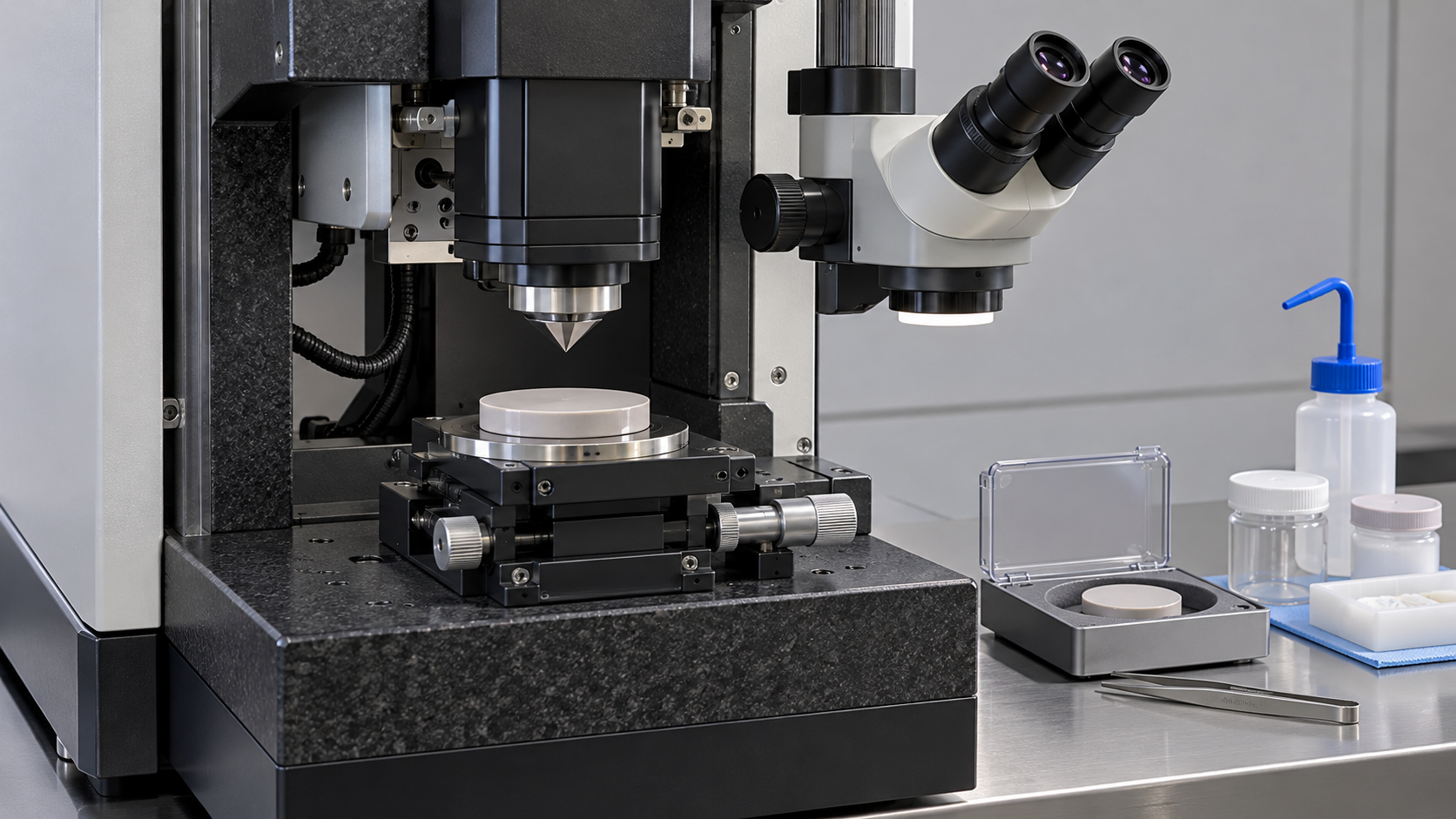
ISO 14705:2026 defines a test method for the Vickers and Knoop hardness of monolithic fine ceramics at room temperature [Source 15]. The values in the papers above, by contrast, are by nanoindentation, where load, indentation size and the way of calculation differ, so the numbers cannot be compared directly (Commentary). The comparison with the rule of mixtures (the “up to 50% higher” of Sarker et al. [Source 4]) also changes with which binary carbides, and which measured values of them, were averaged. From a materials viewpoint, higher hardness is one clue to wear resistance, but fracture toughness, oxidation resistance and resistance to thermal shock are items to be checked by other tests (Gild et al. give a preliminary assessment of oxidation resistance too [Source 7]). Because lower density lowers hardness, a reported value is read together with the density (99% for Castle et al., above 92% for Gild et al. [Sources 5, 7]).
5. Resistance to heat flow and ion conduction — fluorite-type, pyrochlore-type, perovskite-type, lithium conduction
Fluorite-type oxides: Gild et al. made eleven fluorite-type oxides with five principal cations (adding, as a starting baseline, the four-principal-cation (Hf0.25Zr0.25Ce0.25Y0.25)O2-δ) by high-energy ball milling, spark plasma sintering and annealing in air, and report that eight compositions became single-phase fluorite solid solutions. Most could be sintered to high relative density. Compared with 8 mol% Y2O3-stabilised zirconia (8YSZ), they had lower electrical conductivity, comparable hardness and lower thermal conductivity, and the authors ascribe the low thermal conductivity to strong phonon scattering by multiple cations and strained lattices (“presumably”, that is, an inference)Sourced [Source 8].
Pyrochlore-type oxides: Wright et al. made 18 medium- and high-entropy pyrochlores and measured thermal conductivity and Young’s modulus. They report reductions in thermal conductivity of up to 35% with the modulus retained. The thermal conductivity correlated well with a modified size-disorder parameter, which they propose as a useful descriptor for designing thermally insulating medium- and high-entropy ceramics. They mention potential use in thermal barrier coatingsSourced [Source 9].
Perovskite-type oxides: Jiang et al. published a paper on “a new class of high-entropy perovskite oxides” (only the title was checked here, not the content) [Source 10].
Lithium and sodium conduction: Bérardan et al. report that in high-entropy oxides of the formula (MgCoNiCuZn)1−x−yGayAxO (A = Li, Na, K), impedance spectroscopy showed “superionic” Li+ mobility (above 10−3 S/cm) at room temperature and fast Na+ mobility (5×10⁻⁶ S/cm)Sourced [Source 11]. These are impedance-spectroscopy values, not performance in a battery.
The overview by Toher et al. (MRS Bulletin, 2022) gives, as examples where disorder enhances properties, higher hardness and yield stress by solid-solution strengthening, higher thermochemical stability from chemically disordered mixtures’ preference for high-symmetry superlattices, and lower lattice thermal conductivity from force-constant disorder without loss of strength and stiffness, and extends the range of applications from wear-resistant coatings, thermal and environmental barriers, catalysts and batteries to thermoelectrics and nuclear energy management [Source 13].
What Wright et al. showed is that thermal conductivity correlates with the modified size-disorder parameter, not with the configurational entropy itself [Source 9]. Gild et al. likewise explain the low thermal conductivity by phonon scattering from multiple cations and strained lattices [Source 8]. From a materials viewpoint, the value as an insulator is closer to what the papers say when read as not “because it is high-entropy” but “because the cation sizes and masses are uneven and phonons are scattered” (Commentary). A thermal-conductivity value changes with the specimen’s density (the amount of porosity), the measurement temperature, and, when converted from thermal diffusivity, the specific heat capacity and density used. ISO 18755:2022 defines a flash method for the thermal diffusivity of homogeneous monolithic ceramics with porosity under 10%, from room temperature to at least 1,700 K [Source 19].
6. Battery electrodes — conversion-type oxides
The paper by Sarkar et al. (Nature Communications, 2018) tested (Co0.2Cu0.2Mg0.2Ni0.2Zn0.2)O (rocksalt, phase purity checked by X-ray diffraction with Rietveld refinement) as the active material of a lithium-cell electrode (63 wt% of the electrode) over a voltage range of 0.01–3 V against Li+/LiSourced [Source 12].
- How the reaction is thought to work: either insertion of Li into the rocksalt structure or a conversion reaction forming metal and Li2O is possible, and since transition-metal oxides are prone to the latter, the authors judge reversible conversion to be reasonable. They believe the capacity lies in the range of divalent-oxide conversion materials (700–1,000 mAh/g), but because the reactions are not known they also say the theoretical capacity cannot be predicted with high accuracy [Source 12]
- Capacity: after stepping the current up to 3 A/g and back to 0.1 A/g, the capacity recovered and even grew, reaching 770 mAh/g after 100 cycles. The paper explains the rise with cycling by the “activation” typical of conversion-type materials with large particles [Source 12]
- Coulombic efficiency: 99.4–99.95% in the stable region (cycles 60–400), for the heat-treated specimen [Source 12]
- Control with four-component systems: systems with four components made by removing Zn, Cu or Co from the five (medium entropy) showed different, rather unstable electrochemical behaviour. The systems without Mg and without Ni did not become single-phase even at much higher temperatures and were left out of the comparison. Without Zn, oxidation proceeds in two steps and, on Li extraction, the original rocksalt structure does not seem to be regained but to separate into different phases [Source 12]. The paper writes that the difference is “probably related to entropy stabilisation” [Source 12] (not a confirmed cause)
From the atomic masses (Co 58.933, Cu 63.546, Mg 24.305, Ni 58.693, Zn 65.38, O 15.999), the mean formula mass of the equimolar (Co,Cu,Mg,Ni,Zn)O is about 70.17 g/mol. With the Faraday constant as 26,801 mAh per mole of electrons, the capacity of the two-electron reaction MO + 2Li → M + Li2O isOur calculation:
- If all five cations are reduced with two electrons: 2 × 26,801 / 70.17 = about 764 mAh/g
- If Mg is not reduced (stays as MgO): 4/5 of that, about 611 mAh/g
- The reported value: 770 mAh/g after 100 cycles [Source 12] is almost equal to 764 mAh/g with Mg included and exceeds 611 mAh/g without Mg
Assumptions and limits: this estimate assumes the two-electron reaction goes to completion. The paper itself lists possible extra processes, such as alloying of Zn with Li and formation of intermetallic phases, and says the theoretical capacity cannot be predicted accurately [Source 12]. So the closeness of the reported value to 764 mAh/g is not evidence that Mg takes part in the reaction. What the reaction actually is has to be settled by additional measurements in the paper.
The values above are laboratory results for an electrode with 63 wt% active material, 0.01–3 V, set currents, in a half cell, not the capacity or energy density of a real battery cell [Source 12]. The paper itself explains the rise of capacity with cycling as “activation”, so read the initial capacity and the capacity after cycling separately. The comparison “the high-entropy rocksalt behaves more stably than the four-component systems” is also to be read with the fact that two of the four-component systems did not become single-phase and were left out [Source 12]. From a materials viewpoint, to speak of an “entropy effect” a control with single-phase four- and three-component systems in the same electrode design is still needed (Commentary). For battery evaluation, no ISO, IEC, IEEE or JIS standard that applies could be confirmed within this article’s survey (Section 10).
7. Making and measuring — milling, sintering, densification, identifying the phase
| Condition to check | How the result changes | Example confirmed in primary sources |
|---|---|---|
| Route (solid-state reaction, or ball milling plus sintering) | The compositions that become single-phase, and the grain size and density, change | Rost et al. mixed oxide powders, made pellets, heat-treated them in air and quenched [1]. Gild, Castle and Harrington et al. used high-energy ball milling and spark plasma sintering [5, 6, 7, 8] |
| Sintering temperature and atmosphere | Phase stability, oxygen going in or out (reduction, oxidation) | The carbides of Harrington et al. were sintered at 2,473 K [6]. The oxides of Rost et al. lost about 1.5% of mass on heating, explained as oxygen release [1] |
| Cooling (quench or slow cool) | Whether a high-temperature phase is frozen in, or stable at room temperature | Rost et al. quenched from the equilibration temperature to examine the phases [1]. Castle et al. suggest that one sample decomposed and may not be stable to room temperature [5] |
| Density | Hardness, thermal conductivity and strength change with pores | Gild et al. (diborides) above 92% of theoretical density [7]; Castle et al. 99% after optimisation [5] |
| Phase identification and homogeneity | The average structure and local disorder or segregation are different things | Harrington et al. used X-ray diffraction, EDS, EDS in scanning transmission electron microscopy, and EXAFS together [6]. Rost et al. used EXAFS and STEM-EDS [1] |
| Measurement method (hardness, thermal conductivity, electrochemistry) | Values from different methods cannot be compared directly | Nanoindentation for hardness [5, 6], method per material for thermal conductivity [8, 9], half cells for batteries [12] (each differs from paper to paper) |
The “Example confirmed in primary sources” column is Sourced (statements in each paper; numbers refer to the references). The arrangement of the table is this article’s Commentary. The method for density and porosity is defined by ISO 18754:2020 (including the Archimedes method) [Source 20].
8. Separating entropy from “disorder”
Laying the reports side by side, the explanation of an improved property falls, material by material, into two kinds: stabilisation by entropy and the effect of disorder itself.
- The question of stabilisation: why does this composition become single-phase? Entropy, enthalpy, or kinetics (quenching)? Rost et al. showed entropy’s role with four kinds of evidence [Source 1], and Sarkar et al. say the questions about the role remain open [Source 2]
- The question of properties: why is a material that has become single-phase hard, insulating, or a good ion conductor? Toher et al. say disorder raises properties through solid-solution strengthening, lower lattice thermal conductivity and so on [Source 13]. The thermal conductivity in Wright et al. correlated with the size-disorder parameter [Source 9]
These are two matters to be confirmed separately. A good property does not mean the material is “entropy-stabilised”. Conversely, even if “entropy stabilisation” is proven, it need not be the cause of a particular property’s being good. When reading a paper, look separately at what evidence explains “why it became single-phase” and what evidence explains “why the property is good” (Commentary).
9. Limits, and what could not be confirmed
- Depth of checking of primary sources: the open-access bodies of Rost et al. (2015) and Sarkar et al. (2018) were checked. Most other papers were checked only to the level of their abstracts, and Jiang et al. (2018) only by title. For Sarkar et al. (2022), the abstract on a university’s institutional-repository page was checked
- Perovskite-type, high-entropy nitrides and other systems including rare earths: the content was not checked here. Catalysis, thermoelectrics, dielectrics and magnetism are outside this article
- Oxidation resistance, high-temperature strength, thermal-shock resistance: oxidation resistance as an ultra-high-temperature ceramic (only a preliminary assessment by Gild et al.), high-temperature strength and thermal shock were not checked in numbers
- Practical products, markets and prices: could not be confirmed in primary sources. Market-research estimates are not used
- Batteries: the battery values here are active-material capacities in a half cell; the energy density, safety and life of a full cell were not checked. This article is not advice on safety, medicine or investment
- Judging “entropy stabilisation”: this article lays out the confirmed evidence within what the papers state. It does not judge whether any individual material is “entropy-stabilised”
- Standards specific to them: no ISO, IEC, IEEE or JIS standard aimed at high-entropy ceramics could be confirmed (Section 10)
10. How to read evaluations and standards
Evaluation of high-entropy ceramics uses tests of flexural strength, hardness, fracture toughness, thermal diffusivity and conductivity, density and porosity, and thermal expansion. Papers also do phase identification (X-ray diffraction), local structure (such as EXAFS) and half-cell battery tests. What standards define is the method of each test; they do not define “high-entropy” or “entropy stabilisation”, or give pass criteria for a material’s performance. No ISO, IEC, IEEE or JIS standard aimed at high-entropy ceramics could be confirmed in this article.
| Item | ISO | IEC / IEEE | JIS | ASTM | What changes the value with test conditions |
|---|---|---|---|---|---|
| Flexural strength (room temperature)Sourced | ISO 14704:2016 (flexural strength of monolithic fine ceramics at room temperature; grain size below 200 µm) | Could not be confirmed | JIS R 1601 (testing method for flexural strength of fine ceramics at room temperature) | C1161 (described in papers as the ambient-temperature flexural strength method for advanced ceramics; full title not confirmed) | Specimen size, support span, surface finish, tested volume (Weibull statistics) |
| Hardness (Vickers, Knoop)Sourced | ISO 14705:2026 (Vickers and Knoop hardness at room temperature, 4th edition, 2026-09) | Could not be confirmed | JIS R 1610 (testing method for hardness of fine ceramics) | C1327 (described in papers as Vickers hardness of advanced ceramics; full title not confirmed) | Test force, hold time, indentation size, polishing. Cannot be compared directly with nanoindentation values (Commentary) |
| Fracture toughness (room temperature)Sourced | ISO 15732:2003 (SEPB method), ISO 23146:2012 (SEVNB method; to be revised), ISO 18756:2003 (SCF method) | Could not be confirmed | JIS R 1607 (testing methods for fracture toughness of fine ceramics at room temperature) | C1421 (cited in papers for SENB, SEPB, CNB and other measurements; full title not confirmed) | The method (how the pre-crack is made). ISO 15732 states that values from other methods are not interchangeable |
| Thermal diffusivity and conductivitySourced | ISO 18755:2022 (flash method; room temperature to at least 1,700 K; porosity under 10%) | Could not be confirmed | JIS R 1611 (flash-method thermal diffusivity, specific heat capacity and thermal conductivity) | E1461 (described in papers as the standard for thermal conductivity from flash-method diffusivity; title not confirmed) | Temperature, porosity, the specific heat capacity and density used, specimen thickness and surface treatment |
| Density and porositySourced | ISO 18754:2020 (apparent solid density, bulk density, apparent porosity; Method A: Archimedes) | Could not be confirmed | JIS R 1634 (density and open porosity of sintered fine ceramics) | Could not be confirmed | Method (liquid displacement or geometric), connected porosity, the theoretical density used |
| Thermal expansionSourced | Could not be confirmed | Could not be confirmed | JIS R 1618 (thermal expansion of fine ceramics by thermomechanical analysis) | Could not be confirmed | Heating rate, atmosphere, specimen shape |
| TermsSourced | ISO 20507:2022 (vocabulary of fine ceramics) | Could not be confirmed | Could not be confirmed | Could not be confirmed | A vocabulary standard, so no measurement conditions |
| Phase identification and local structure (X-ray diffraction, EXAFS)Sourced | Could not be confirmed | Could not be confirmed | Could not be confirmed | Could not be confirmed | The measurement method, the state of the specimen (powder or sintered), the model used in analysis [1, 6] |
| Half-cell test of a battery electrodeSourced | Could not be confirmed | Could not be confirmed | Could not be confirmed | Could not be confirmed | Active-material fraction, voltage range, current, temperature [12] |
| Definition and judgement of “entropy stabilisation”Sourced | Could not be confirmed | Could not be confirmed | Could not be confirmed | Could not be confirmed | The four things (reversibility, endotherm, control, local structure) are checks shown in paper [1], not a standard’s definition |
Standard numbers and titles were checked on official ISO pages for ISO and on the JIS search of the Japanese Industrial Standards Committee (JISC) for JIS; JIS titles are our translation of the Japanese titles. For ASTM standards, the ASTM website was not opened; only the number and the stated use were checked in the body of peer-reviewed papers. The ASTM column gives no test content, conditions or acceptance criteria. The arrangement of the table is Our calculation.
Where each standard sits — international, national, trade body
- ISO is an international standard, JIS a national standard, and ASTM a trade standard issued by a US standards body. ISO 14704, JIS R 1601 and ASTM C1161 are all “flexural strength” standards, but their degree of agreement (identical, modified and so on) could not be confirmed because their texts were not checked
- ISO 14705 is current as the 2026 edition (4th edition, September 2026), and the 2016 edition is withdrawn. ISO 23146:2012 is to be revised and its use for Y-TZP is not recommended. ISO 18756 is the 2003 edition, confirmed. The same number can carry a different procedure in a different edition
- ISO standards for fracture toughness have separate numbers by method (SEPB, SEVNB, SCF). ISO 15732 states in its scope that fracture toughness values from other methods cannot be interchanged with its own and may not be interchangeable with each other [Source 16]
Cautions when reading
- A standard is a “test method” and does not guarantee a material’s performance. “A hardness to ISO 14705” is a value from that method, not a ranking of materials
- The measurement in a paper can differ from a standard. The hardness in the papers cited here is by nanoindentation [Sources 5, 6], a different method from the Vickers and Knoop hardness of ISO 14705
- There is no standard for judging “entropy stabilisation”. Read the checks a paper shows (reversibility, endotherm, control, local structure) paper by paper [Source 1]
- Evaluation of functions such as batteries, catalysis and dielectrics follows each paper’s conditions. No applicable standard could be confirmed within this article’s survey
11. Glossary
- High-entropy oxide (HEO)
- A single-phase oxide whose cation sites are filled by five or more elements. Even if it is named “high-entropy”, the cause of stabilisation has to be checked material by material.
- Entropy stabilisation
- A single-phase solid solution becoming stable through the configurational-entropy contribution. Shown by evidence such as reversibility and an endotherm [1].
- Configurational entropy
- Entropy from the disorder of arrangement of atoms (cations). For N equimolar components, R ln N.
- Rocksalt (B1) structure
- The same crystal structure as NaCl. Taken by MgO, CoO, NiO and many metal carbides.
- Tenorite
- The mineral name of CuO. A monoclinic structure, not rocksalt.
- Spinel type
- The structure of AB2O4 oxides. It has two kinds of cation site.
- Fluorite type
- The CaF2 type of structure. Taken by zirconia and others.
- Pyrochlore type
- The structure of A2B2O7 oxides. Studied as thermal-barrier materials [9].
- EXAFS
- Extended X-ray absorption fine structure. Probes the local structure (such as nearest-neighbour distances) around a chosen element.
- Ultra-high-temperature ceramics (UHTC)
- Ceramics, such as carbides and borides, with very high melting points [5, 7].
- Spark plasma sintering (SPS)
- Heating by a pulsed current to sinter in a short time.
- Nanoindentation
- Pressing in a very small indenter and finding hardness and other quantities from load and depth.
- Conversion reaction
- An electrode reaction in which the structure changes, such as MO + 2Li → M + Li2O [12].
- Size disorder
- The degree of unevenness in cation sizes. A correlation with thermal conductivity has been reported [9].
12. References (primary sources)
- Rost C. M., Sachet E., Borman T., Moballegh A. et al. “Entropy-stabilized oxides”, Nat. Commun. 6, 8485 (2015), DOI 10.1038/ncomms9485 (open access, body checked) — doi.org/10.1038/ncomms9485
- Sarkar A., Breitung B., Hahn H. “High entropy oxides: The role of entropy, enthalpy and synergy”, Scr. Mater. 187, 43–48 (2020), DOI 10.1016/j.scriptamat.2020.05.019 (abstract checked) — doi.org/10.1016/j.scriptamat.2020.05.019
- Sarkar A., Eggert B., Witte R., Lill J. et al. “Comprehensive investigation of crystallographic, spin-electronic and magnetic structure of (Co0.2Cr0.2Fe0.2Mn0.2Ni0.2)3O4: Unraveling the suppression of configuration entropy in high entropy oxides”, Acta Mater. 226, 117581 (2022), DOI 10.1016/j.actamat.2021.117581 (abstract checked on a university institutional-repository page) — doi.org/10.1016/j.actamat.2021.117581
- Sarker P., Harrington T., Toher C., Oses C. et al. “High-entropy high-hardness metal carbides discovered by entropy descriptors”, Nat. Commun. 9, 4980 (2018), DOI 10.1038/s41467-018-07160-7 (open access, abstract checked) — doi.org/10.1038/s41467-018-07160-7
- Castle E., Csanádi T., Grasso S., Dusza J. et al. “Processing and Properties of High-Entropy Ultra-High Temperature Carbides”, Sci. Rep. 8, 8609 (2018), DOI 10.1038/s41598-018-26827-1 (open access, abstract checked) — doi.org/10.1038/s41598-018-26827-1
- Harrington T. J., Gild J., Sarker P., Toher C. et al. “Phase stability and mechanical properties of novel high entropy transition metal carbides”, Acta Mater. 166, 271–280 (2019), DOI 10.1016/j.actamat.2018.12.054 (abstract checked) — doi.org/10.1016/j.actamat.2018.12.054
- Gild J., Zhang Y., Harrington T., Jiang S. et al. “High-Entropy Metal Diborides: A New Class of High-Entropy Materials and a New Type of Ultrahigh Temperature Ceramics”, Sci. Rep. 6, 37946 (2016), DOI 10.1038/srep37946 (open access, abstract checked) — doi.org/10.1038/srep37946
- Gild J., Samiee M., Braun J. L., Harrington T. et al. “High-entropy fluorite oxides”, J. Eur. Ceram. Soc. 38, 3578–3584 (2018), DOI 10.1016/j.jeurceramsoc.2018.04.010 (abstract checked) — doi.org/10.1016/j.jeurceramsoc.2018.04.010
- Wright A. J., Wang Q., Ko S.-T., Chung K. M. et al. “Size disorder as a descriptor for predicting reduced thermal conductivity in medium- and high-entropy pyrochlore oxides”, Scr. Mater. 181, 76–81 (2020), DOI 10.1016/j.scriptamat.2020.02.011 (abstract checked) — doi.org/10.1016/j.scriptamat.2020.02.011
- Jiang S., Hu T., Gild J., Zhou N. et al. “A new class of high-entropy perovskite oxides”, Scr. Mater. 142, 116–120 (2018), DOI 10.1016/j.scriptamat.2017.08.040 (only the title checked) — doi.org/10.1016/j.scriptamat.2017.08.040
- Bérardan D., Franger S., Meena A. K., Dragoe N. “Room temperature lithium superionic conductivity in high entropy oxides”, J. Mater. Chem. A 4, 9536–9541 (2016), DOI 10.1039/C6TA03249D (abstract checked) — doi.org/10.1039/c6ta03249d
- Sarkar A., Velasco L., Wang D., Wang Q. et al. “High entropy oxides for reversible energy storage”, Nat. Commun. 9, 3400 (2018), DOI 10.1038/s41467-018-05774-5 (open access, body checked) — doi.org/10.1038/s41467-018-05774-5
- Toher C., Oses C., Esters M., Hicks D. et al. “High-entropy ceramics: Propelling applications through disorder”, MRS Bull. 47, 194–202 (2022), DOI 10.1557/s43577-022-00281-x (abstract checked) — doi.org/10.1557/s43577-022-00281-x
- International Organization for Standardization (ISO) ISO 14704:2016 “Fine ceramics (advanced ceramics, advanced technical ceramics) — Test method for flexural strength of monolithic ceramics at room temperature” (applies to grain size below 200 µm) — iso.org/standard/65411
- International Organization for Standardization (ISO) ISO 14705:2026 “Fine ceramics (advanced ceramics, advanced technical ceramics) — Test method for hardness of monolithic ceramics at room temperature” (4th edition, published 2026-09; Vickers and Knoop; the previous ISO 14705:2016 is withdrawn) — iso.org/standard/85746
- International Organization for Standardization (ISO) ISO 15732:2003 “Fine ceramics (advanced ceramics, advanced technical ceramics) — Test method for fracture toughness of monolithic ceramics at room temperature by single edge precracked beam (SEPB) method” — iso.org/standard/28366
- International Organization for Standardization (ISO) ISO 23146:2012 “Fine ceramics (advanced ceramics, advanced technical ceramics) — Test methods for fracture toughness of monolithic ceramics — Single-edge V-notch beam (SEVNB) method” (to be revised; use for Y-TZP is not recommended) — iso.org/standard/62093
- International Organization for Standardization (ISO) ISO 18756:2003 “Fine ceramics (advanced ceramics, advanced technical ceramics) — Determination of fracture toughness of monolithic ceramics at room temperature by the surface crack in flexure (SCF) method” (2003-12, confirmed) — iso.org/standard/31902
- International Organization for Standardization (ISO) ISO 18755:2022 “Fine ceramics (advanced ceramics, advanced technical ceramics) — Determination of thermal diffusivity of monolithic ceramics by flash method” — iso.org/standard/81531
- International Organization for Standardization (ISO) ISO 18754:2020 “Fine ceramics (advanced ceramics, advanced technical ceramics) — Determination of density and apparent porosity” — iso.org/standard/69745
- International Organization for Standardization (ISO) ISO 20507:2022 “Fine ceramics (advanced ceramics, advanced technical ceramics) — Vocabulary” — iso.org/standard/74705
- Japanese Industrial Standards Committee (JISC) JIS search “JIS R 1601 Testing method for flexural strength (modulus of rupture) of fine ceramics at room temperature” (title translated from the Japanese) — jisc.go.jp (R1601)
- Japanese Industrial Standards Committee (JISC) JIS search “JIS R 1607 Testing methods for fracture toughness of fine ceramics at room temperature” (title translated from the Japanese) — jisc.go.jp (R1607)
- Japanese Industrial Standards Committee (JISC) JIS search “JIS R 1610 Testing method for hardness of fine ceramics” (title translated from the Japanese) — jisc.go.jp (R1610)
- Japanese Industrial Standards Committee (JISC) JIS search “JIS R 1611 Measurement methods of thermal diffusivity, specific heat capacity and thermal conductivity for fine ceramics by flash method” (title translated from the Japanese) — jisc.go.jp (R1611)
- Japanese Industrial Standards Committee (JISC) JIS search “JIS R 1634 Test methods for density and open porosity of sintered fine ceramics” (title translated from the Japanese) — jisc.go.jp (R1634)
- Japanese Industrial Standards Committee (JISC) JIS search “JIS R 1618 Measuring method of thermal expansion of fine ceramics by thermomechanical analysis” (title translated from the Japanese) — jisc.go.jp (R1618)
- Public material used to confirm ASTM numbers and the uses stated for them (the ASTM website was not consulted): C1161 in Adv. Sci. 11, 2408277 (2024), DOI 10.1002/advs.202408277 (ASTM C1161 used as the standard method for flexural strength of advanced ceramics at ambient temperature) / C1327 in Nat. Commun. 17, 7513 (2026), DOI 10.1038/s41467-026-74043-7 (Vickers hardness of advanced ceramics measured to ASTM C1327) / C1421 in Nat. Commun. 17, 7494 (2026), DOI 10.1038/s41467-026-74505-y (fracture toughness measured by the SENB method to ASTM C1421-18) / E1461 in Sci. Rep. 16, 10739 (2026), DOI 10.1038/s41598-026-44244-7 (thermal conductivity obtained to ASTM E1461 from flash-method thermal diffusivity) — doi.org/10.1002/advs.202408277 (and others)
13. Claim-to-source audit
| Claim in the text | Basis | Class |
|---|---|---|
| E1 of Rost et al. (equimolar MgO, CoO, NiO, CuO, ZnO): the reasons for choosing it, mixing, pellets and heat treatment, phases at 700–1,100 °C (rocksalt and tenorite at 700 °C, single phase between 850 and 900 °C), reversibility 1,000 to 750 to 1,000 °C, in situ XRD and DSC (endotherm at 825–875 °C, mass loss about 1.5%), four-component sets never becoming single-phase, the test of the prediction that moving off equimolar raises the transition temperature, EXAFS (identical nearest distances, random), enthalpy about 10, entropy term about 15 and endotherm about 12 ± 2 kJ/mol, and the remark on the uniform anion sublattice | Body of Rost et al. (2015), checked in the open-access full text at Europe PMC Reference 1 https://doi.org/10.1038/ncomms9485 | Sourced |
| The open questions about the roles of entropy, enthalpy, individual elements and synergy in high-entropy oxides | Abstract of Sarkar et al. (2020) Reference 2 https://doi.org/10.1016/j.scriptamat.2020.05.019 | Sourced |
| The cation occupancy in spinel (Co0.2Cr0.2Fe0.2Mn0.2Ni0.2)3O4 ((Co0.6Fe0.4)(Cr0.3Fe0.1Mn0.3Ni0.3)2O4), the methods, and the deviation from “entropy-driven distribution without preference” | Abstract of Sarkar et al. (2022) (checked on the institutional-repository page of the University of Bayreuth) Reference 3 https://doi.org/10.1016/j.actamat.2021.117581 | Sourced |
| The entropy-forming-ability descriptor, the prediction of homogeneous rocksalt phases in five-metal carbides, and hardness up to 50% above rule-of-mixtures estimates | Abstract of Sarker et al. (2018) Reference 4 https://doi.org/10.1038/s41467-018-07160-7 | Sourced |
| Ball milling and spark plasma sintering of (Hf-Ta-Zr-Ti)C and (Hf-Ta-Zr-Nb)C, the role of lattice-parameter mismatch, the decomposition of one sample and the miscibility gap, 99% density after optimisation, hardness 36.1 ± 1.6 GPa (HfC 31.5 ± 1.3, (Hf-Ta)C 32.9 ± 1.8) | Abstract of Castle et al. (2018) Reference 5 https://doi.org/10.1038/s41598-018-26827-1 | Sourced |
| Twelve five-metal carbides, sintering at 2,473 K, nine becoming single-phase rocksalt (B1), (V0.2Nb0.2Ta0.2Mo0.2W0.2)C as a likely candidate, XRD, EDS, S/TEM-EDS and EXAFS, and hardness above the rule of mixtures by nanoindentation | Abstract of Harrington et al. (2019) Reference 6 https://doi.org/10.1016/j.actamat.2018.12.054 | Sourced |
| Six of seven five-component diborides becoming single-phase of the AlB2 type, above 92% of theoretical density, a two-dimensional layered structure, and hardness and oxidation resistance higher/better than the average of individual diborides (preliminary assessment) | Abstract of Gild et al. (2016) Reference 7 https://doi.org/10.1038/srep37946 | Sourced |
| Eight of eleven fluorite-type oxides becoming single-phase, lower electrical conductivity, comparable hardness and lower thermal conductivity than 8YSZ, and the inference of phonon scattering | Abstract of Gild et al. (2018) Reference 8 https://doi.org/10.1016/j.jeurceramsoc.2018.04.010 | Sourced |
| Thermal conductivity lower by up to 35% with the modulus retained in 18 pyrochlores, and the correlation with a modified size-disorder parameter | Abstract of Wright et al. (2020) Reference 9 https://doi.org/10.1016/j.scriptamat.2020.02.011 | Sourced |
| The title of a paper on high-entropy perovskite oxides | Title of Jiang et al. (2018) only Reference 10 https://doi.org/10.1016/j.scriptamat.2017.08.040 | Sourced |
| Room-temperature Li+ mobility (above 10-3 S/cm) and Na+ (5×10⁻⁶ S/cm) in (MgCoNiCuZn)1-x-yGayAxO (A = Li, Na, K) | Abstract of Bérardan et al. (2016) Reference 11 https://doi.org/10.1039/c6ta03249d | Sourced |
| The electrode test of (Co0.2Cu0.2Mg0.2Ni0.2Zn0.2)O (0.01–3 V, 63 wt%, 770 mAh/g after 100 cycles, activation, Coulombic efficiency 99.4–99.95%), the view of the reaction and the limit on predicting theoretical capacity, and the control with four-component systems (two not single-phase and left out, two-step oxidation without Zn) | Body of Sarkar et al. (2018), checked in the open-access full text at Europe PMC Reference 12 https://doi.org/10.1038/s41467-018-05774-5 | Sourced |
| Examples where disorder enhances properties (solid-solution strengthening, thermochemical stability, lower lattice thermal conductivity) and the range of applications | Abstract of Toher et al. (2022) Reference 13 https://doi.org/10.1557/s43577-022-00281-x | Sourced |
| The number, title and scope of ISO 14704:2016 | Official ISO page Reference 14 https://www.iso.org/standard/65411.html | Sourced |
| The number, title and edition of ISO 14705:2026 (4th edition, 2026-09) | Official ISO page Reference 15 https://www.iso.org/standard/85746.html | Sourced |
| The number, title and scope of ISO 15732:2003 (values from other methods not interchangeable) | Official ISO page Reference 16 https://www.iso.org/standard/28366.html | Sourced |
| The number, title and status of ISO 23146:2012 (to be revised) | Official ISO page Reference 17 https://www.iso.org/standard/62093.html | Sourced |
| The number, title and status of ISO 18756:2003 (confirmed) | Official ISO page Reference 18 https://www.iso.org/standard/31902.html | Sourced |
| The number, title and scope of ISO 18755:2022 | Official ISO page Reference 19 https://www.iso.org/standard/81531.html | Sourced |
| The number, title and scope of ISO 18754:2020 | Official ISO page Reference 20 https://www.iso.org/standard/69745.html | Sourced |
| The number and title of ISO 20507:2022 | Official ISO page Reference 21 https://www.iso.org/standard/74705.html | Sourced |
| The number and title of JIS R 1601 (testing method for flexural strength of fine ceramics at room temperature) | JIS search of JISC Reference 22 https://www.jisc.go.jp/app/jis/general/GnrJISNumberNameSearchList?show&jisStdNo=R1601 | Sourced |
| The number and title of JIS R 1607 (testing methods for fracture toughness of fine ceramics at room temperature) | JIS search of JISC Reference 23 https://www.jisc.go.jp/app/jis/general/GnrJISNumberNameSearchList?show&jisStdNo=R1607 | Sourced |
| The number and title of JIS R 1610 (testing method for hardness of fine ceramics) | JIS search of JISC Reference 24 https://www.jisc.go.jp/app/jis/general/GnrJISNumberNameSearchList?show&jisStdNo=R1610 | Sourced |
| The number and title of JIS R 1611 (flash-method thermal diffusivity, specific heat capacity and thermal conductivity of fine ceramics) | JIS search of JISC Reference 25 https://www.jisc.go.jp/app/jis/general/GnrJISNumberNameSearchList?show&jisStdNo=R1611 | Sourced |
| The number and title of JIS R 1634 (density and open porosity of sintered fine ceramics) | JIS search of JISC Reference 26 https://www.jisc.go.jp/app/jis/general/GnrJISNumberNameSearchList?show&jisStdNo=R1634 | Sourced |
| The number and title of JIS R 1618 (thermal expansion of fine ceramics by thermomechanical analysis) | JIS search of JISC Reference 27 https://www.jisc.go.jp/app/jis/general/GnrJISNumberNameSearchList?show&jisStdNo=R1618 | Sourced |
| The numbers of ASTM C1161, C1327, C1421 and E1461 and the uses stated for them in papers (the ASTM site was not consulted; checked in the body of peer-reviewed papers; full titles could not be confirmed) | Statements in peer-reviewed open-access papers Reference 28 https://doi.org/10.1002/advs.202408277 (and others listed at the end of the references) | Sourced |
| The entropy term against the enthalpy and the conversion to a transition temperature (ΔSconf = R ln 5 = 13.38 J/(mol·K), about 15.4 kJ/mol at 875 °C, 0.2×25 + 0.2×22 = 9.4, about 747 K at TΔS = 10, and about 1.26R corresponding to an endotherm of 12 kJ/mol) | Our calculation. A simple ideal-mixing conversion using the paper’s figures (25, 22, about 10, about 12 ± 2 kJ/mol, 825–875 °C); not a conclusion of the paper | Our calculation |
| The hardness ratios (about 1.15 and about 1.10) and their comparison with the root-sum-square of the ± values (about 2.2 times and about 1.3 times) | Our calculation. A guide that treats the reported ± values as independent uncertainties; not a test of statistical significance | Our calculation |
| The mean formula mass of (Co,Cu,Mg,Ni,Zn)O (about 70.17 g/mol) and the theoretical capacity of the two-electron reaction (about 764 mAh/g, about 611 mAh/g without Mg) | Our calculation. An estimate with a Faraday constant of 26,801 mAh/mol and standard atomic masses. What the reaction is has to be settled by the paper’s measurements | Our calculation |
| The readings “five questions for evidence of entropy stabilisation”, “the entropy term is just balanced”, “read hardness with the method and the comparison”, “insulation correlates with size disorder”, “battery values are fixed by the electrode and cell”, and “separate the reason for stabilisation from the reason for properties”, and the organisation of Fig. 4 | This article’s own organisation and interpretation of published content; not the views of the authors of each paper | Commentary |
| The content of perovskite-type oxides, other systems such as high-entropy nitrides, numbers for oxidation resistance, high-temperature strength and thermal shock, practical products, prices and markets, full-cell performance, judging whether an individual material is “entropy-stabilised”, corresponding IEC and IEEE standards, standards aimed at high-entropy ceramics, and the full titles of the ASTM standards | Could not be confirmed in the primary sources accessible within this article’s survey, so not stated | Commentary |
| That Figs. 2, 3, 4 and 6 are explanatory drawings, not real observations or data, and that Figs. 1 and 5 are AI-generated images | This article’s note | Commentary |
Last updated 10 October 2026. Sources are limited to primary material (peer-reviewed papers and standards-body pages). The bodies of Rost et al. (2015) and Sarkar et al. (2018) were checked; most other papers were checked only to the extent of their abstracts. Because the article includes structural readings and materials-design interpretations, those are marked as Commentary and kept separate from sourced fact. The content of perovskite-type oxides, other systems, numbers for oxidation resistance and high-temperature strength, practical products, prices and markets, full-cell performance, the judgement of whether an individual material is “entropy-stabilised”, and standards specific to high-entropy ceramics could not be confirmed and are not stated here. The figures are laboratory results with composition, route, density and test conditions fixed, and cannot be generalised to other materials or real use. All figures are explanatory concept graphics. Figs. 2, 3, 4 and 6 are vector drawings; Figs. 1 and 5 are AI-generated images, and none of them shows a real micrograph, experimental data or physical product.