Key Findings
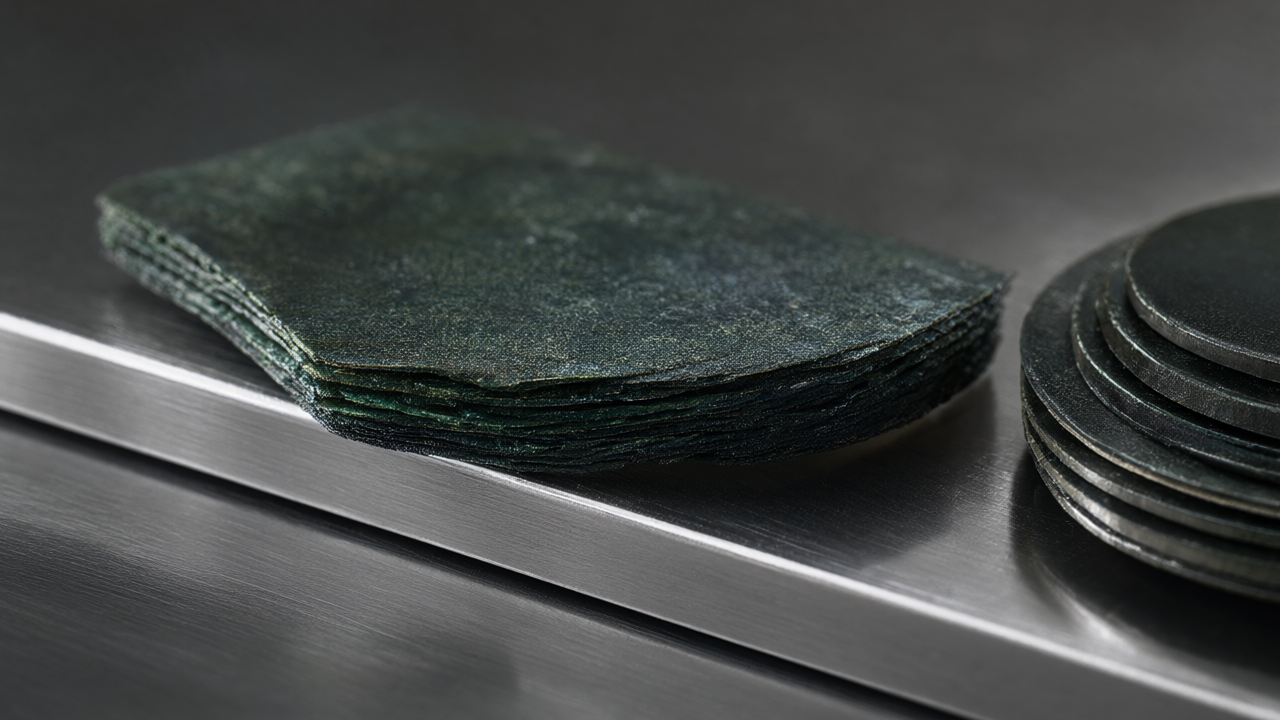
Researchers at VIT-AP University in India have successfully fabricated a highly durable supercapacitor electrode by combining MXene with the conductive polymer polyaniline and applying it onto graphite sheets using a slurry-coating method. This innovative electrode demonstrated a high specific capacitance of 406 F/g at a current density of 0.5 A/g, and remarkably, maintained 85.4% of its initial capacity after 10,000 charge-discharge cycles. This significant stability contributes greatly to extending the lifespan and enhancing the reliability of energy storage devices.
Technical / Clinical Details
The research team focused on combining the high electrical conductivity and surface area of MXene (Ti3C2Tx) nanosheets with the excellent electrochemical properties of polyaniline. By employing a simple and cost-effective slurry-coating technique, they achieved uniform dispersion of both materials and strong adhesion to the graphite substrate. The resulting MXene-polyaniline composite electrode exhibits high charge storage capability and stable cycling performance during the adsorption-desorption processes of electrolyte ions in supercapacitors. The specific capacitance of 406 F/g is superior to many existing supercapacitor electrode materials, and the 85.4% capacity retention after 10,000 cycles is a crucial indicator of practical applicability in real-world scenarios.
Background & Context
Supercapacitors are garnering attention as next-generation energy storage devices across various fields, including electric vehicles, renewable energy storage, and portable electronics, due to their rapid charge-discharge capabilities and long cycle life. However, their energy density is typically lower than batteries, necessitating performance improvements through material development. MXene, with its two-dimensional structure and metallic electrical conductivity, holds immense promise as a supercapacitor electrode material. This study marks a significant step towards practical application by not only utilizing MXene but also combining it with polyaniline and employing a straightforward slurry-coating method.
Strategic Significance & Outlook
The development of this MXene-polyaniline composite electrode significantly reduces the manufacturing cost of high-performance, durable supercapacitors, opening wide avenues for industrial application. The simple slurry-coating method is also suitable for mass production, which will accelerate commercialization. Moving forward, if supercapacitors with even higher energy and power densities can be developed based on this technology, they are expected to contribute to solving a wide range of societal challenges, such as reducing electric vehicle charging times and stabilizing power in smart grids. This research also demonstrates the potential of universities in emerging economies like India to contribute to global energy technology innovation.
Get our weekly technology intelligence — free
Receive an infographic that lets you judge at a glance whether each field’s analysis report is worth reading.
Subscribe Free — Weekly Tech Intelligence
By subscribing, you’ll receive Troy-Technical’s weekly technology intelligence newsletter.
- Your email and selected fields are used only to deliver the newsletter.
- We never share your information with third parties.
- You can unsubscribe anytime via the link in each email.
See our Privacy Policy for details.
Takes about a minute · Unsubscribe anytime