TECHNOLOGY EXPLAINER
AI in Drug Discovery and Screening
— Even when 100 million molecules can be screened by computer, the bottleneck remains synthesis and measurement
The search for drug candidates has widened from testing large numbers of compounds in the laboratory (high-throughput screening, HTS) to sifting molecules by computer at the scale of hundreds of millions. Read the papers closely, though, and candidates picked by computation still stumble once on poor solubility or fast metabolism, and the final decision is made where molecules are synthesised and measured.
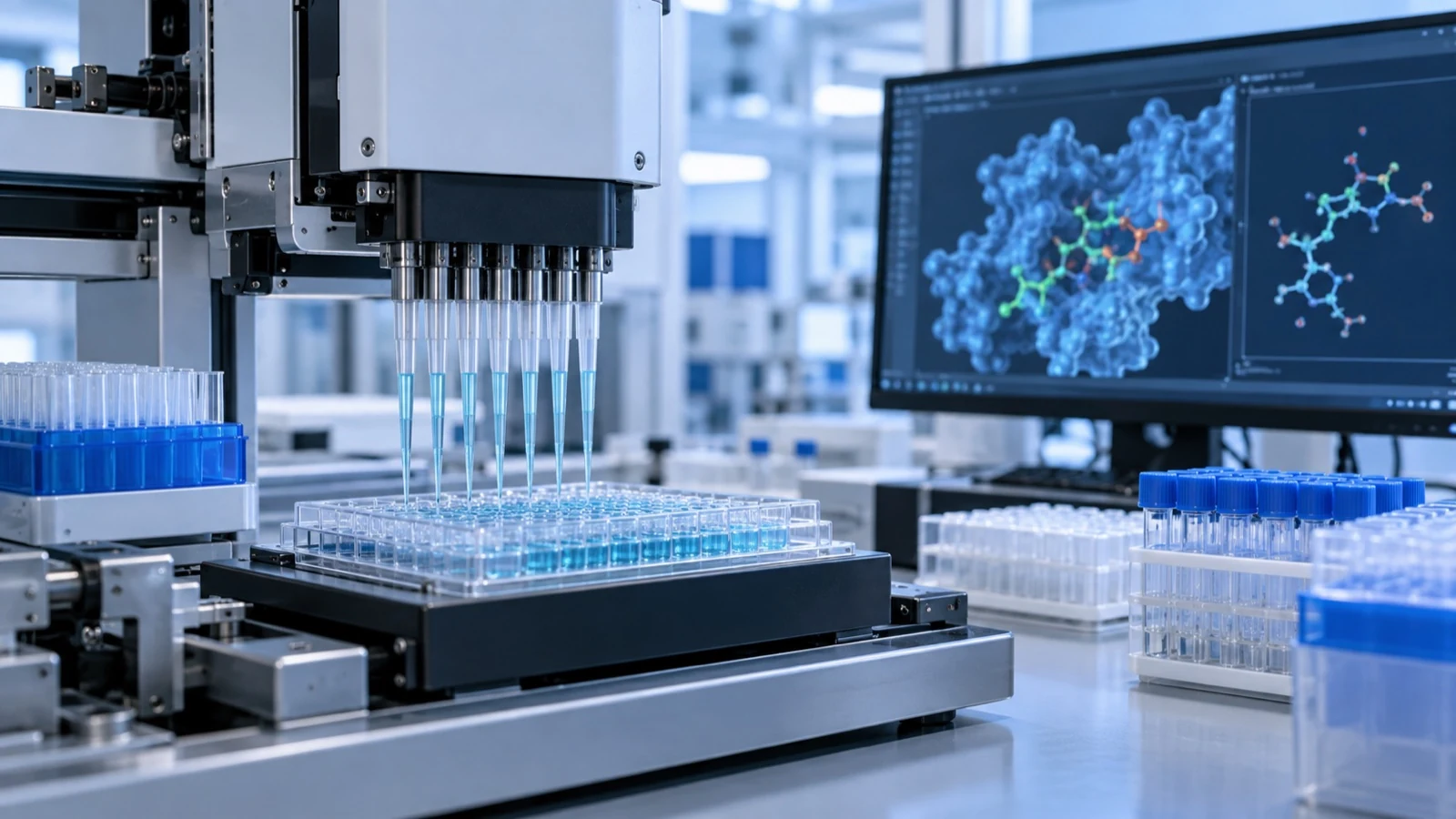
- AI in drug discovery and screening (the short version)
- Why the efficiency of the search matters
- High-throughput screening — testing large numbers in the lab
- A materials engineer's view (1): a compound library is stock material that degrades
- In silico analysis (1): docking — sifting 100 million molecules by computer
- In silico analysis (2): structure prediction — what AlphaFold changed and what it did not
- Machine learning and generative AI — the training data are far smaller than the search space
- Laboratory automation — the “robot scientist” that loops hypothesis and experiment
- Examples that reached the clinic (confirmed in primary sources)
- A materials engineer's view (2): AI-designed candidates also stall on “does not dissolve”
- How regulators treat AI
- Strengths and limits
- How to read evaluations and standards
- Glossary
- References
- Claim-to-source audit
Sourced = stated in published material (link given)
Our calculation = a figure this article derived from stated assumptions
Not yet confirmed = a plan, target or outlook whose outcome has not been confirmed
Structural readings and interpretations from a materials and process-design viewpoint are marked separately as commentary.
This article explains discovery technologies (screening, computation and automation). It does not assess the efficacy or safety of any individual drug and is not medical advice. Where clinical trials are mentioned, only the trial phase, design and primary endpoint are given, as far as they could be confirmed in primary sources (papers and ClinicalTrials.gov). Statements such as “AI shortened development time” are treated as claims made by the developing company or the authors.
1. AI in drug discovery and screening (the short version)
- What screening is: exposing many compounds to a target (an enzyme, a receptor and so on) and picking out those that look as if they work (hits). Done in the laboratory, it is high-throughput screening (HTS); done inside a computer, it is virtual screening (in silico analysis)
- Where AI has entered: predicting the three-dimensional structure of the target protein (AlphaFold and others), predicting activity (scoring candidates with a trained model), generating molecules themselves (generative AI), and automating the planning and running of experiments
- What has not changed: a candidate still has to be synthesised, measured and confirmed. The more molecules computation can select, the more weight falls on what to synthesise and how to measure it (our commentary)
AI drug-discovery papers like to say how many hundreds of millions of molecules they chose from; what you should read for is how many were made and how many really worked. One study that searched for antibacterial molecules with deep learning evaluated about 107.35 million molecules by computer, tested 23 in the laboratory, and confirmed activity in 8Sourced. Computation is a tool for narrowing candidates; the verdict is still delivered by experiment.
2. Why the efficiency of the search matters
Pharmaceutical R&D has long been criticised for yielding fewer results per unit of investment. Scannell et al. wrote in 2012 that the past 60 years had seen huge advances in the scientific, technological and managerial factors that should raise R&D efficiency Sourced.
The number of new drugs approved per billion US dollars spent on R&D “has halved roughly every 9 years since 1950, falling around 80-fold in inflation-adjusted terms”Sourced
The paper sets this decline against the improving inputs of those 60 years and asks whether the underlying problems have been correctly diagnosedSourced.
Success is also rare at the clinical stage. Wong et al. analysed 406,038 clinical-trial entries for more than 21,143 compounds between January 2000 and October 2015 and estimated that 13.8% of development programmes ultimately reach approvalSourced.
How well promising candidates can be chosen before clinical entry therefore weighs heavily on overall efficiency. Expectations for AI and screening technology converge on this one point (our commentary). Whether AI has raised clinical success rates, however, cannot yet be checked in primary sources, as Chapter 9 showsNot yet confirmed.
3. High-throughput screening — testing large numbers in the lab
HTS takes a compound library (tens of thousands to millions of compounds dissolved in DMSO and arranged in plates), uses robots to dispense it into tiny wells, and measures the reaction with the target in all wells at once. In 2006 Inglese et al. of the NIH Chemical Genomics Center (as it was then) introduced quantitative HTS (qHTS)Sourced.
Traditional HTS tests each compound at a single concentration and is “burdened by frequent false positives and false negatives and requires extensive follow-up testing”Sourced
In qHTS the library is prepared as a series of at least seven 5-fold dilutions, and concentration–response curves for every compound are obtained at once over a range of about four orders of magnitude. For most compounds the source-plate concentrations ran from 640 nM to 10 mMSourced.
In this test qHTS classified 5,480 of 60,793 compounds (9.0%) as activeSourced. The authors then looked back and compared what would have happened had the same data been judged at a single concentration of 11 µM.
| Decision rule (single point at 11 µM) | False positives | False negatives (missed) |
|---|---|---|
| Threshold set 3 SD from the mean | 30 compounds (2%) | 845 compounds (40%) |
| Threshold set 6 SD from the mean | 5 compounds (1%) | 1,602 compounds (75%) |
All Sourced (Inglese et al. 2006 [Ref. 3]). The false-negative percentage is the share of the compounds that qHTS placed in curve classes 1 and 2 (good-quality curves).
The authors point out that false positives can be caught in follow-up testing, but false negatives cannot be identified by conventional HTS and their frequency is hardly knownSourced. They also note that this enzyme assay was highly precise (Z′ = 0.87), whereas in noisier systems such as cell-based assays, false positives can reach 90%Sourced. A stricter threshold cuts false positives but increases misses: the design of the measurement decides what can be found (our commentary).
4. A materials engineer's view (1): a compound library is stock material that degrades
Discussion of HTS tends to dwell on robots and computation, but in substance it is quality control of solution materials. The primary sources yield three points.
(1) Compounds are lost in storage. Kozikowski et al. stored about 7,200 compounds as 20 mM DMSO solutions at room temperature for a year and followed them by mass spectrometry. The probability of still observing a compound was 92% after 3 months, 83% after 6 months and 52% after 1 yearSourced. A library is not an asset made once and finished; it is stock with a shelf life and storage conditions (our commentary).
(2) In water, molecules can become “particles” and give false hits. Feng and Shoichet write that “at micromolar concentrations, many small molecules self-associate into colloidal aggregates that non-specifically inhibit enzymes and other proteins”Sourced. They put the frequency at up to 19% of “drug-like” molecules at 30 µM and about 1–2% even at 5 µM, and note that this is still a large share given that many HTS campaigns aim for hit rates below 1%Sourced. The test is whether inhibition disappears when a non-ionic detergent (Triton X-100 at 0.01% vol/vol) is added. The particles span 50 to 1,000 nm and can sometimes be observed directly by dynamic light scattering (DLS)Sourced.
(3) Some structures interfere with the assay itself. Baell and Holloway reported substructures that identify compounds that keep turning up as hits in many biochemical HTS assays (PAINS, pan-assay interference compounds), and cautioned that such compounds are increasingly treated in the literature as promising starting points, whereas they may not beSourced.
“The molecule we thought was dissolved was actually a nanoparticle dispersion” is one of the most familiar phenomena to a colloid and interface engineer. The idea of the critical micelle concentration, the use of surfactants to break up dispersions, and particle sizing by DLS are tools of quality control in drug-discovery screening just as they are (our commentary). And as Chapter 7 onward shows, the training data for AI are built from such experimental results, so a false positive becomes a training error directly (our commentary).
Lipinski et al. (in a paper reprinted in 2001) record that leads obtained by HTS tend to have higher molecular weight and Log P, and lower solubility measured by turbidimetry, than leads from the pre-HTS eraSourced. The paper also gives the well-known “rule of five”, a guide to molecules likely to be poorly absorbed orally (more than 5 hydrogen-bond donors, more than 10 acceptors, molecular weight above 500, calculated Log P above 5)Sourced. Picking whatever binds strongly across many trials tends to bias the pool toward hydrophobic, poorly soluble molecules (our commentary). Absorption and solubility are covered in our explainer on pharmacokinetics and preclinical testing.
5. In silico analysis (1): docking — sifting 100 million molecules by computer
Molecular docking places a candidate molecule in a pocket (binding site) of the target protein's three-dimensional structure and scores how well it fits as its orientation and shape are varied. Unlike laboratory HTS, it can evaluate molecules that have not yet been synthesised.
How many molecules could be candidates? Ruddigkeit et al. enumerated organic molecules of up to 17 atoms of C, N, O, S and halogens and built the database GDB-17 holding 166.4 billion molecules. The paper says this size range covers many drugs and is typical for lead compoundsSourced.
In 2019 Lyu et al. reported the results of docking a part of this “vast space”Sourced.
| Item | What the paper says |
|---|---|
| Library | “Make-on-demand” compounds (synthesised only when ordered) built from 130 well-characterised reactions and 70,000 building blocks from Enamine. Fewer than 3% are commercially available from another supplier |
| Scale | Docked more than 99 million molecules against AmpC β-lactamase and more than 138 million against the dopamine D4 receptor |
| Compute | For D4, about 70 trillion complexes were sampled, taking 43,563 core-hours (about 1.2 days on 1,500 cores) |
| Synthesis and testing | For AmpC, 51 molecules were chosen and 44 (86%) were synthesised successfully, of which 5 inhibited the enzyme (hit rate 11%). For D4, 549 were synthesised and tested |
| Result | For D4, 81 new chemotypes (scaffolds) were found, 30 of them submicromolar. The hit rate rose with better docking scores, reaching 22–26% at the top, fell monotonically as scores worsened, and was 0 below a certain score |
All Sourced (Lyu et al. 2019 [Ref. 9]). The 166.4 billion molecules of GDB-17 are from Ruddigkeit et al. 2012 [Ref. 8].
The library of Lyu et al. is defined not as “every molecule that could exist” but as “the molecules that 130 reactions and 70,000 building blocks can make”Sourced. And of the 51 molecules actually chosen for AmpC, 44 (86%) were synthesised successfullySourced.
In materials terms, this is a design that searches not among “ideal compositions found by calculation” but among “compositions that can be made from the raw materials and processes at hand” (our commentary). Because the search space was defined from the process side, the computed results quickly became physical samples. For engineers who have hit the wall of “the prediction was right but we cannot make it” in materials informatics (searching for materials with data and machine learning), this is a design decision with real lessons.
Another important result is that the hit rate fell monotonically with docking scoreSourced. It can be read as an example, backed by as many as 549 tested molecules, showing that a computed score works as a tool for ranking the probability of a hit but does not guarantee any individual molecule (our commentary).
6. In silico analysis (2): structure prediction — what AlphaFold changed and what it did not
Docking needs the three-dimensional structure of the target protein. Until recently that structure could only be determined experimentally, for example by X-ray crystallography. Jumper et al. described the situation in their 2021 paperSourced.
“Through an enormous experimental effort, the structures of around 100,000 unique proteins have been determined, but this represents a small fraction of the billions of known protein sequences”Sourced
In CASP14, the international blind assessment of structure prediction, AlphaFold had a median backbone accuracy of 0.96 Å (Cα root-mean-square deviation at 95% residue coverage), against 2.8 Å for the next best methodSourced.
Half of the 2024 Nobel Prize in Chemistry went to David Baker for “computational protein design”, and the other half jointly to Demis Hassabis and John Jumper for “protein structure prediction”Sourced.
The release says AlphaFold2 has been used to predict the structure of “virtually all the 200 million proteins that researchers have identified” and has been used by more than two million people from 190 countriesSourced (as stated in the release).
AlphaFold 3, published in 2024, predicts not only proteins but the joint structure of complexes that include nucleic acids, small molecules, ions and modified residues. The paper reports far greater accuracy for protein–ligand interactions than state-of-the-art docking toolsSourced. The same paper is also explicit about limitations.
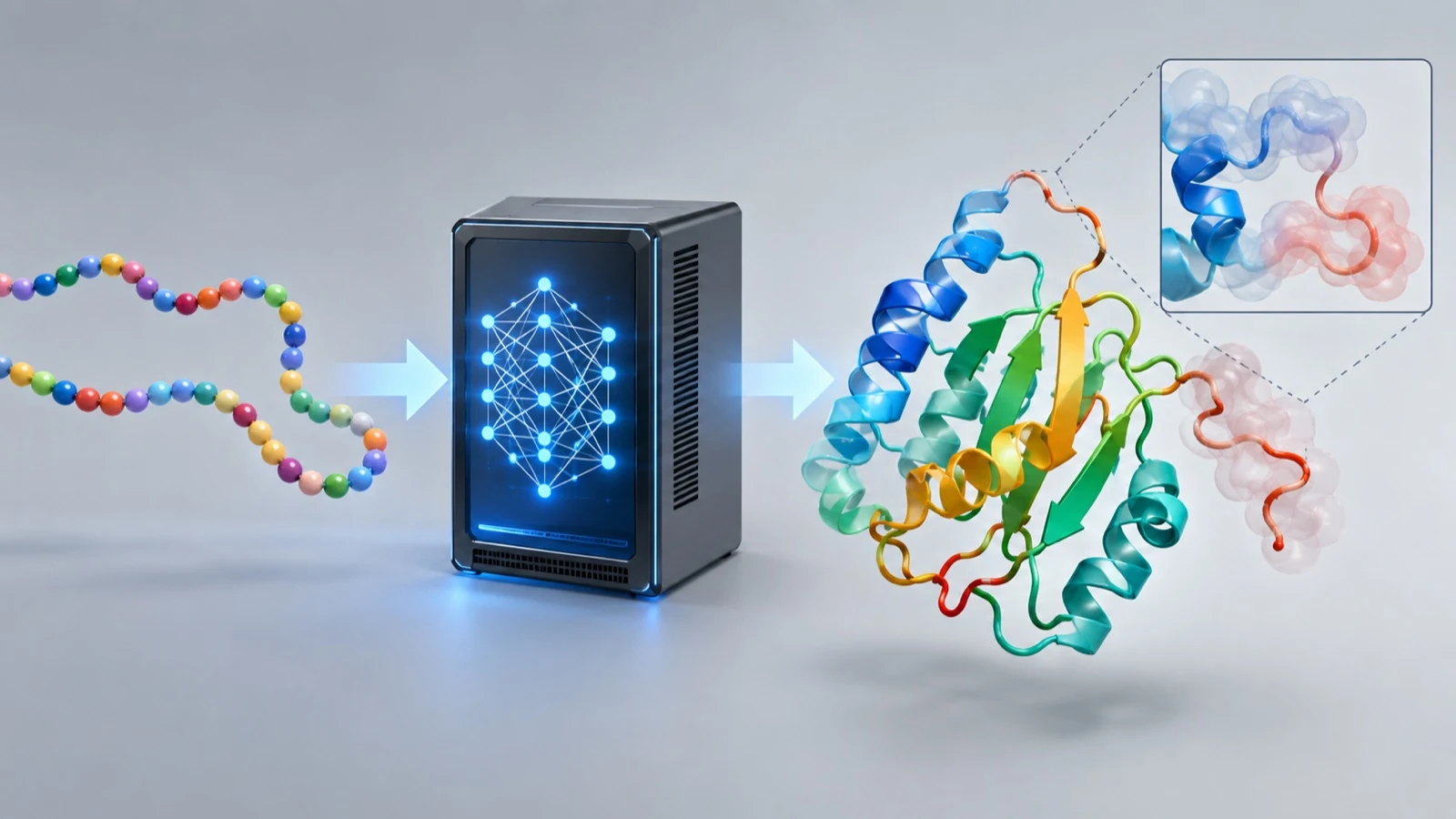
Show the original schematic with sources and numbers
Source schematic for Fig. 3 (vector drawing). Inputs, outputs and accuracy: Jumper et al. (2021) [Ref. 10]. The AlphaFold 3 scope and its three limits: the “Model limitations” discussion in Abramson et al. (2024) [Ref. 11]. The figure organises the ideas and does not show the model's internal structure.
“A key limitation of protein structure prediction models is that they typically predict static structures as seen in the PDB, not the dynamical behaviour of biomolecular systems in solution.” The paper says this limitation persists for AlphaFold 3Sourced.
On stereochemistry, the output sometimes fails to preserve chirality even when reference structures with correct chirality are given as input, and even with a penalty added to the ranking, a chirality violation rate of 4.4% was observed on the benchmarkSourced. Because the method is generative, it can also “hallucinate”, inventing plausible-looking structure even in regions with no ordered structureSourced.
What does this mean for drug discovery? Structure prediction has greatly lowered the entry barrier of “we cannot start computing because no structure exists”. But the motion and the behaviour in water that decide whether a drug works still lie outside what is predicted (our commentary).
7. Machine learning and generative AI — the training data are far smaller than the search space
(1) Ranking by a trained model, in order of “likely to work”
In 2020 Stokes et al. built a deep neural network that predicts whether a molecule inhibits the growth of E. coli and used it to look for new antibacterial moleculesSourced. The flow has three steps: (1) train on experimental data; (2) re-rank a huge library by prediction; (3) test the top of the ranking in the laboratory.
| Step | What the paper says |
|---|---|
| Training data | 2,335 molecules (after removing duplicates), combining FDA-approved drugs and others with natural products. Molecules that cut growth by 80% or more counted as hits: 120 (5.14%) |
| Prediction targets | 6,111 molecules from the Drug Repurposing Hub, 9,997 from the WuXi anti-tuberculosis library, and 107,349,233 selected from the ZINC15 database |
| Compute time | Predictions for about 107 million molecules could be run in 4 days |
| Laboratory confirmation | Of the ZINC15 predictions, 23 were tested and 8 showed antibacterial activity, structurally distant from known antibiotics |
| Example outcome | Halicin, found in the Drug Repurposing Hub, showed efficacy in mouse infection models |
All Sourced (Stokes et al. 2020 [Ref. 13]). Halicin is a research-stage compound, and this article does not assess any therapeutic value.
(2) Generative AI that produces “the molecule itself”
Rather than re-ranking, generative AI creates new structures that satisfy given conditions. In 2019 Zhavoronkov et al. used the deep generative model GENTRL, which optimises synthetic feasibility, novelty and biological activity, and reported finding inhibitors of the kinase DDR1 in 21 days. Four compounds were active in biochemical assays, two were validated in cell-based assays, and one lead candidate showed favourable pharmacokinetics in miceSourced.
The “21 days” is the design-stage period reported by the authors; it does not represent the time taken by later synthesis, evaluation and development as a whole (our commentary).
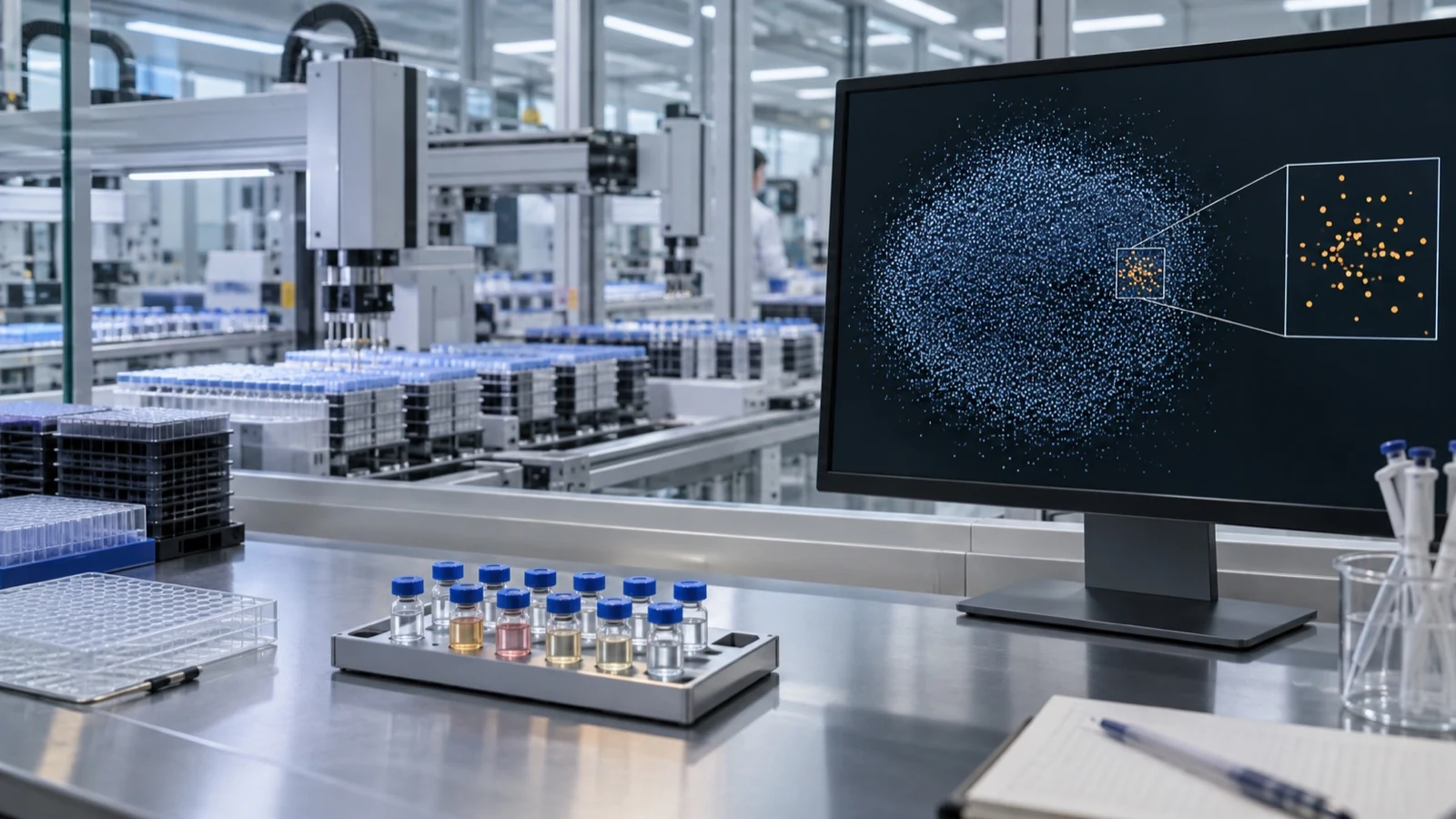
8. Laboratory automation — the “robot scientist” that loops hypothesis and experiment
Even after computation has narrowed the candidates, it is experiment that confirms them. So there are attempts to fold the planning, running and analysis of experiments into a single loop. In 2015 Williams et al. reported the robot scientist “Eve”Sourced.
The paper defines a robot scientist as “a laboratory automation system that uses artificial intelligence (AI) techniques to discover scientific knowledge through cycles of experimentation”. Eve integrates and automates library screening, hit confirmation and lead generation through cycles of quantitative structure–activity relationship (QSAR) learning and testingSourced.
The hardware is described as moderately high-throughput, at more than 10,000 compounds per day, and can be reconfigured to read out fluorescence, absorbance or cell morphology. Screening a library of about 14,400 compounds against dihydrofolate reductase (DHFR) enzymes from several parasites, the authors report that the anti-cancer compound TNP-470 is a potent inhibitor of DHFR from the malaria parasite Plasmodium vivaxSourced.
Using econometric modelling, the authors say they showed that choosing compounds with AI is more economical than standard brute-force screeningSourced (an evaluation by the authors' own model).
“More economical” here means that instead of measuring every compound, choosing which compound to measure next while learning reduces the number of measurements (our commentary). If the qHTS of Chapter 3 evolved in the direction of “measure everything carefully”, Eve evolves in the direction of “make the order of measurement smarter”. The two do not conflict; both share the point that the quality of the measurements sets the quality of the whole loop.
9. Examples that reached the clinic (confirmed in primary sources)
Announcements that “a drug found with AI” has entered clinical trials are increasing. Here we list only cases whose stage could be confirmed in peer-reviewed papers and ClinicalTrials.gov registrations.
| Candidate | Role of AI (as stated in the papers) | Clinical stage (primary sources) |
|---|---|---|
| rentosertib (formerly ISM001-055 / INS018_055) Target: TNIK | An AI target-discovery platform (PandaOmics) selected TNIK as a fibrosis target, and a generative design platform (Chemistry42) designed the inhibitor. Chemistry42 is said to run 30 generative models in parallel | Phase 1: randomised, double-blind, placebo-controlled trial in 78 healthy adults (NCT05154240, completed) Phase 2a: 71 patients with idiopathic pulmonary fibrosis, 21 sites in China, 12 weeks, placebo-controlled (NCT05938920, completed) |
All Sourced (Ren et al. 2024 [Ref. 16], Xu et al. 2025 [Ref. 17], ClinicalTrials.gov [Refs. 18 and 19]). At the time of the research for this article, no primary source showing that this compound has been approved by a regulator could be foundNot yet confirmed.
Design: adults with idiopathic pulmonary fibrosis were randomly assigned to four arms — rentosertib 30 mg once daily (18 patients), 30 mg twice daily (18), 60 mg once daily (18) or placebo (17) — and treated for 12 weeksSourced.
Primary endpoint: the percentage of patients with at least one treatment-emergent adverse event (a measure of safety and tolerability), reported as similar across armsSourced. Change in lung function (forced vital capacity) is reported as a secondary endpointSourced.
The authors' own reservations: they cite the short duration of the trial and the fact that 16 of 71 patients (22.5%) dropped out across all arms, and say that larger and longer phase 2 or phase 3 trials are neededSourced.
This article does not assess the efficacy or safety shown by this trial.
The paper by Ren et al. says that the work took “roughly 18 months” from target discovery to nomination of a preclinical candidateSourced. This is a report by researchers of the developing company itself and has not been tested against conventional development under the same conditions as a comparison (our commentary).
Jayatunga et al. also analysed the clinical pipelines of AI-native biotech companies and reported a Phase I success rate of 80–90% and a Phase II success rate of about 40% (on a limited sample) for AI-discovered moleculesSourced. The authors themselves note the small sample for Phase II, and it is not yet possible to conclude that AI has raised clinical success ratesNot yet confirmed.
10. A materials engineer's view (2): AI-designed candidates also stall on “does not dissolve”
The rentosertib paper of Chapter 9 contains a passage that is easy to overlook but important. The first lead compounds, designed with generative AI and synthesised, showed nanomolar-level binding affinity. But —
“in vitro absorption, distribution, metabolism and excretion profiling of the primary lead compounds revealed their high clearance in human and mice liver microsomes, cytochrome p450 (CYP) inhibition at a half maximal inhibitory concentration (IC50) less than 10 µM and kinetic solubility less than 2 µM”Sourced
The lead-optimisation stage therefore prioritised improving the ADME profile, and the candidate compound was what resultedSourced.
A solubility below 2 µM is of the same order as the point in Chapter 4 that “even at 5 µM, 1–2% of molecules form aggregates”Sourced. In other words, even when AI finds a shape that “binds well”, how well that molecule dissolves in water and how fast it is cleared by metabolism remain separate questions, and what answered them was measurement in liver microsomes and of solubility (our commentary).
In materials terms, the picture is “the target function (binding) can be hit by calculation, but processability and stability (dissolution and metabolism) have to be settled by measurement”. In materials informatics too, many will have felt that optimising secondary properties at the same time is harder than predicting the main function. The primary sources show the same wall in drug discovery (our commentary). ADME test methods are covered in our explainer on pharmacokinetics and preclinical testing.
11. How regulators treat AI
On 6 January 2025 the FDA published a draft guidance setting out its thinking on the use of AI in the development of drugs and biological products. The announcement says this is the agency's first guidance on the use of AI in drug and biological product development and that, since 2016, the FDA has reviewed more than 500 submissions with AI componentsSourced.
In scope: cases where an AI model is used to produce information or data that support regulatory decisions on safety, effectiveness or qualitySourced.
Out of scope: the guidance does not address the use of AI models (1) in drug discovery, or (2) for operational efficiencies that do not affect patient safety, drug quality or the reliability of the results of nonclinical or clinical studiesSourced.
Framework: a risk-based seven-step credibility assessment (1. define the question of interest; 2. define the context of use (COU); 3. assess model risk; 4. develop a plan to establish credibility; 5. execute the plan; 6. document the results; 7. determine the adequacy of the model for the COU). Model risk is described as the combination of “model influence” and “the consequence of a wrong decision”Sourced.
A manufacturing example: for injectable products in multi-dose vials, the guidance gives the use of AI-based image analysis for 100% automated visual inspection of fill volumeSourced.
On 14 January 2026 the EMA and the FDA jointly published ten principles as “guiding principles of good AI practice in drug development”. They apply to evidence generation and analysis across the nonclinical, clinical, post-marketing and manufacturing stages, and include documenting data provenance, processing and analytical decisions in a traceable way (principle 6) and handling data drift through regular monitoring and re-evaluation (principle 9)Sourced. The document also expresses hope that AI can reduce reliance on animal testing by improving predictions of toxicity and efficacy in humansSourced.
That the guidance leaves AI in the discovery stage out of scope implies, conversely, that what is used for regulatory decisions is the data obtained later, in nonclinical, clinical and manufacturing work (our commentary). A candidate chosen by AI is in the end judged by the same tests. AI at the discovery stage is therefore judged not by regulation but by whether it can put forward candidates that pass the later tests.
By contrast, as the manufacturing example of automated visual inspection of fill volume shows, where AI enters quality decisions themselves, validation scaled to the context of use and the risk is expectedSourced. For an engineer supplying inspection or measuring instruments to drug manufacturing, the idea of first defining which decision the AI is used for, and with how much weight, translates directly into how a design specification is written (our commentary). The GMP (good manufacturing practice) framework is covered in our explainer on GMP.
12. Strengths and limits
| Technology | Strengths confirmed in primary sources | Limits confirmed in primary sources |
|---|---|---|
| qHTS (laboratory) | Concentration–response curves for every compound; avoids the misses of single-concentration HTS | Library degradation; false positives from aggregates and interfering compounds |
| Docking | Evaluates unsynthesised molecules at the scale of 100 million; hit rate rises with better scores | Scores only re-rank probabilities; hit rate is 0 below a certain score |
| Structure prediction | Computation can start for targets with no experimental structure; complexes can be predicted | Only static structures; stereochemistry errors; hallucination in disordered regions |
| Learning and generative models | Can re-rank or generate in a space tens of thousands of times larger than the training data, in a short time | Training data are small and depend on the quality of experiments; ADME and solubility still have to be measured separately |
| Automation | Learning decides the order of measurement and cuts the number of measurements | Changing the readout type or the target needs flexibility on the instrument side |
Each entry rests on the primary sources cited in Chapters 3 to 10 [Refs. 3–17]Sourced. The grouping into five technologies is this article's own.
(1) Whether AI has raised clinical success rates is not yet known
As Chapter 9 showed, the clinical-stage examples that can be confirmed in peer-reviewed papers and trial registries are still few, and no case that reached approval could be confirmed at the time of the research for this article. Whether AI has improved the overall success rate or duration of development is a matter for future data to settleNot yet confirmed.
(2) We give no figures for “savings” in development cost or time
Some company announcements claim shorter timelines or lower costs, but no primary source with a comparison under the same conditions could be found, so this article does not treat them as numbers. The “roughly 18 months” of Ren et al. is cited only as a report by the authors themselves.
- qHTS measured 60,000 compounds across concentration series in 30 hours. Single-point judgement would have missed 40% of the good-quality activesSourced
- At 30 µM, up to 19% of “drug-like” molecules form colloidal aggregates. Hit quality is set by solution propertiesSourced
- Docking evaluated 138 million molecules at about 1.1 core-seconds each. Only about 1 in 250,000 was actually made and testedOur calculation
- AlphaFold lowered the “no structure” barrier, but the papers themselves list its limits: motion, stereochemistry and hallucinationSourced
- AI-designed candidates also stalled once, at solubility below 2 µM and high clearance. Measurement made the final callSourced
- The FDA draft guidance leaves discovery-stage AI out of scope and targets uses that support regulatory decisionsSourced
13. How to read evaluations and standards
Before comparing which number is larger, align the basis of comparison in the following order. This is an editorial reading checklist, not a set of test conditions or acceptance limits prescribed by a standard.
- 1. What was measured?
- prediction accuracy, experimental hit rate and candidate selectivity. Check the units and whether the result describes a material, component or complete system.
- 2. Under which conditions?
- training/test separation, assay, comparator and prospective validation. Treat results under different conditions as separate results before comparing them.
- 3. The comparison trap
- Do not equate a better computational score with clinical benefit or likelihood of approval.
- 4. What does the standard cover?
- Check the identifier, title, edition and scope in the issuing body’s material. Distinguish test methods, safety, interoperability and management requirements. Naming a standard alone does not establish that a test, conformity assessment or certification has been completed.
Keep a comparison note containing the object, units, conditions, sample count and variation, comparator, standard edition and unresolved points. Do not invent numerical conditions or acceptance limits from a public abstract of a standard.
14. Glossary
- Screening
- Exposing many compounds to a target and picking out those with activity (hits).
- HTS
- High-throughput screening. A laboratory method in which robots measure large numbers of wells at once.
- qHTS
- Quantitative HTS. Measures every compound across a concentration series to obtain concentration–response curves.
- Compound library
- A collection of many compounds, in solution and arranged in plates, for screening.
- False positive / false negative
- Wrongly calling an inactive compound a hit / missing a compound that is active.
- Colloidal aggregate
- A particle formed when small molecules self-associate in water. It inhibits proteins non-specifically.
- PAINS
- Pan-assay interference compounds: compounds with interfering substructures that keep turning up as hits in many assays.
- Rule of five
- A guide, based on molecular weight, Log P and hydrogen-bond counts, to molecules likely to be poorly absorbed orally.
- In silico
- Analysis done inside a computer, as opposed to in vitro or in vivo experiments.
- Docking
- Placing a candidate molecule in a target's binding site and scoring how well it fits.
- Make-on-demand
- A set of compounds enumerated from reactions and building blocks on the premise that each is synthesised only when ordered.
- AlphaFold
- An AI model that predicts a protein's three-dimensional structure from its amino-acid sequence and other inputs.
- Generative AI (molecule generation)
- A model that creates new molecular structures satisfying given conditions.
- QSAR
- Quantitative structure–activity relationship. A formula or model relating molecular structure to activity.
- ADME
- Absorption, distribution, metabolism and excretion: the four processes that describe how a drug moves in the body.
- Context of use (COU)
- The definition of which question an AI model is used for, and in what role and scope.
15. References
- Scannell, J.W., Blanckley, A., Boldon, H., Warrington, B. “Diagnosing the decline in pharmaceutical R&D efficiency” Nature Reviews Drug Discovery 11(3), 191–200 (2012). doi:10.1038/nrd3681 — pubmed.ncbi.nlm.nih.gov
- Wong, C.H., Siah, K.W., Lo, A.W. “Estimation of clinical trial success rates and related parameters” Biostatistics 20(2), 273–286 (2019). doi:10.1093/biostatistics/kxx069 — pmc.ncbi.nlm.nih.gov
- Inglese, J. et al. “Quantitative high-throughput screening: A titration-based approach that efficiently identifies biological activities in large chemical libraries” PNAS 103(31), 11473–11478 (2006). doi:10.1073/pnas.0604348103 — pmc.ncbi.nlm.nih.gov
- Kozikowski, B.A. et al. “The effect of room-temperature storage on the stability of compounds in DMSO” Journal of Biomolecular Screening 8(2), 205–209 (2003). doi:10.1177/1087057103252617 — pubmed.ncbi.nlm.nih.gov
- Feng, B.Y., Shoichet, B.K. “A detergent-based assay for the detection of promiscuous inhibitors” Nature Protocols 1(2), 550–553 (2006). doi:10.1038/nprot.2006.77 — pmc.ncbi.nlm.nih.gov
- Baell, J.B., Holloway, G.A. “New substructure filters for removal of pan assay interference compounds (PAINS) from screening libraries and for their exclusion in bioassays” Journal of Medicinal Chemistry 53(7), 2719–2740 (2010). doi:10.1021/jm901137j — pubmed.ncbi.nlm.nih.gov
- Lipinski, C.A., Lombardo, F., Dominy, B.W., Feeney, P.J. “Experimental and computational approaches to estimate solubility and permeability in drug discovery and development settings” Advanced Drug Delivery Reviews 46(1-3), 3–26 (2001). doi:10.1016/S0169-409X(00)00129-0 — pubmed.ncbi.nlm.nih.gov
- Ruddigkeit, L., van Deursen, R., Blum, L.C., Reymond, J.-L. “Enumeration of 166 billion organic small molecules in the chemical universe database GDB-17” Journal of Chemical Information and Modeling 52(11), 2864–2875 (2012). doi:10.1021/ci300415d — pubmed.ncbi.nlm.nih.gov
- Lyu, J. et al. “Ultra-large library docking for discovering new chemotypes” Nature 566, 224–229 (2019). doi:10.1038/s41586-019-0917-9 — pmc.ncbi.nlm.nih.gov
- Jumper, J. et al. “Highly accurate protein structure prediction with AlphaFold” Nature 596, 583–589 (2021). doi:10.1038/s41586-021-03819-2 — pmc.ncbi.nlm.nih.gov
- Abramson, J. et al. “Accurate structure prediction of biomolecular interactions with AlphaFold 3” Nature 630, 493–500 (2024). doi:10.1038/s41586-024-07487-w — pmc.ncbi.nlm.nih.gov
- The Royal Swedish Academy of Sciences “The Nobel Prize in Chemistry 2024 — Press release” 9 October 2024 — nobelprize.org
- Stokes, J.M. et al. “A deep learning approach to antibiotic discovery” Cell 180(4), 688–702 (2020). doi:10.1016/j.cell.2020.01.021 — pmc.ncbi.nlm.nih.gov
- Zhavoronkov, A. et al. “Deep learning enables rapid identification of potent DDR1 kinase inhibitors” Nature Biotechnology 37(9), 1038–1040 (2019). doi:10.1038/s41587-019-0224-x — pubmed.ncbi.nlm.nih.gov
- Williams, K. et al. “Cheaper faster drug development validated by the repositioning of drugs against neglected tropical diseases” Journal of the Royal Society Interface 12(104), 20141289 (2015). doi:10.1098/rsif.2014.1289 — pmc.ncbi.nlm.nih.gov
- Ren, F. et al. “A small-molecule TNIK inhibitor targets fibrosis in preclinical and clinical models” Nature Biotechnology 43(1), 63–75 (2025; published online March 2024). doi:10.1038/s41587-024-02143-0 — pmc.ncbi.nlm.nih.gov
- Xu, Z. et al. “A generative AI-discovered TNIK inhibitor for idiopathic pulmonary fibrosis: a randomized phase 2a trial” Nature Medicine 31(8), 2602–2610 (2025). doi:10.1038/s41591-025-03743-2 — pmc.ncbi.nlm.nih.gov
- ClinicalTrials.gov “A Phase 1, Evaluate the Safety, Tolerability, and Pharmacokinetics of INS018_055 in Healthy Subjects” NCT05154240 — clinicaltrials.gov
- ClinicalTrials.gov “Study Evaluating INS018_055 Administered Orally to Subjects With Idiopathic Pulmonary Fibrosis (IPF)” NCT05938920 — clinicaltrials.gov
- Jayatunga, M.K.P., Ayers, M., Bruens, L., Jayanth, D., Meier, C. “How successful are AI-discovered drugs in clinical trials? A first analysis and emerging lessons” Drug Discovery Today 29(6), 104009 (2024). doi:10.1016/j.drudis.2024.104009 — pubmed.ncbi.nlm.nih.gov
- FDA “FDA Proposes Framework to Advance Credibility of AI Models Used for Drug and Biological Product Submissions” 6 January 2025 — fda.gov
- FDA “Considerations for the Use of Artificial Intelligence to Support Regulatory Decision-Making for Drug and Biological Products — Draft Guidance” January 2025 (PDF) — fda.gov
- EMA and FDA “Guiding principles of good AI practice in drug development” January 2026 (PDF) — ema.europa.eu
- European Medicines Agency “EMA and FDA set common principles for AI in medicine development” 14 January 2026 — ema.europa.eu
16. Claim-to-source audit
| Claim in the text | Basis | Class |
|---|---|---|
| The number of new drugs approved per billion US dollars of R&D spending has halved roughly every 9 years since 1950 and fallen about 80-fold in inflation-adjusted terms. The paper sets this against 60 years of scientific, technological and managerial progress and questions whether the causes have been correctly diagnosed | Scannell et al. (2012), abstract Reference 1 https://pubmed.ncbi.nlm.nih.gov/22378269/ | Sourced |
| Analysis of 406,038 clinical-trial entries for more than 21,143 compounds from January 2000 to October 2015, with an estimate that 13.8% of development programmes ultimately reach approval | Wong et al. (2019) Reference 2 https://pmc.ncbi.nlm.nih.gov/articles/PMC6409418/ | Sourced |
| Conventional single-concentration HTS is burdened by frequent false positives and false negatives and needs extensive follow-up. At least seven 5-fold dilutions over about four orders of magnitude, with source concentrations of 640 nM to 10 mM for most compounds. 1,536-well plates and 23 nL pin transfer. 60,793 compounds measured on 368 plates (565,248 wells) over 30 continuous hours. 5,480 compounds (9.0%) classed as active. With a single-point judgement at 11 µM, a 3 SD threshold gives 30 false positives (2%) and 845 false negatives (40%), and a 6 SD threshold gives 5 false positives (1%) and 1,602 false negatives (75%). False negatives cannot be identified by conventional HTS and their frequency is hardly known. Z′ of 0.87, and false positives that can reach 90% in noisier assays such as cell-based ones | Inglese et al. (2006) Reference 3 https://pmc.ncbi.nlm.nih.gov/articles/PMC1518803/ | Sourced |
| About 7,200 compounds stored as 20 mM DMSO solutions at room temperature for 1 year, with the probability of observing a compound at 92% after 3 months, 83% after 6 months and 52% after 1 year | Kozikowski et al. (2003), abstract Reference 4 https://pubmed.ncbi.nlm.nih.gov/12844442/ | Sourced |
| At micromolar concentrations many small molecules self-associate into colloidal aggregates that inhibit non-specifically. Up to 19% of “drug-like” molecules at 30 µM and about 1–2% at 5 µM aggregate, a large share for HTS campaigns aiming for hit rates below 1%. Identification with 0.01% vol/vol Triton X-100, and particles of 50–1,000 nm that can be observed by DLS | Feng and Shoichet (2006) Reference 5 https://pmc.ncbi.nlm.nih.gov/articles/PMC1544377/ | Sourced |
| Reporting of substructures that identify compounds (PAINS) that repeatedly appear as hits in many biochemical HTS assays, and the caution that they are increasingly treated as promising starting points but may not be | Baell and Holloway (2010), abstract Reference 6 https://pubmed.ncbi.nlm.nih.gov/20131845/ | Sourced |
| The “rule of five” (more than 5 hydrogen-bond donors, more than 10 acceptors, molecular weight above 500, CLogP above 5, associated with poor absorption or permeation). HTS leads tend to have higher molecular weight and Log P and lower turbidimetric solubility than pre-HTS leads | Lipinski et al. (2001), abstract Reference 7 https://pubmed.ncbi.nlm.nih.gov/11259830/ | Sourced |
| GDB-17, which enumerates 166.4 billion molecules of up to 17 atoms of C, N, O, S and halogens, in a size range that covers many drugs and is typical for lead compounds | Ruddigkeit et al. (2012), abstract Reference 8 https://pubmed.ncbi.nlm.nih.gov/23088335/ | Sourced |
| A make-on-demand library from 130 reactions and 70,000 Enamine building blocks, fewer than 3% of which are commercially available elsewhere. More than 99 million molecules docked against AmpC and more than 138 million against the D4 receptor. About 70 trillion complexes sampled for D4, taking 43,563 core-hours (about 1.2 days on 1,500 cores). For AmpC, 44 of 51 molecules (86%) synthesised and 5 inhibited (hit rate 11%); 549 tested for D4. 81 new chemotypes found, 30 submicromolar. Hit rate of 22–26% at the top, falling monotonically as scores worsened and reaching 0 below a certain score | Lyu et al. (2019) Reference 9 https://pmc.ncbi.nlm.nih.gov/articles/PMC6383769/ | Sourced |
| Structures of around 100,000 unique proteins determined experimentally, a small fraction of known sequences. CASP14 median backbone accuracy of 0.96 Å, against 2.8 Å for the next best method | Jumper et al. (2021) Reference 10 https://pmc.ncbi.nlm.nih.gov/articles/PMC8371605/ | Sourced |
| AlphaFold 3 predicts complexes including proteins, nucleic acids, small molecules, ions and modified residues, handles atom coordinates directly with a diffusion module, and is reported to be far more accurate than state-of-the-art docking tools for protein–ligand interactions. The limitation that it predicts static structures and does not reproduce dynamic behaviour in solution persists; a chirality violation rate of 4.4%; hallucination in disordered regions | Abramson et al. (2024) Reference 11 https://pmc.ncbi.nlm.nih.gov/articles/PMC11168924/ | Sourced |
| Half of the 2024 Nobel Prize in Chemistry to Baker for computational protein design and half to Hassabis and Jumper for protein structure prediction, announced 9 October 2024. AlphaFold2 can predict the structure of virtually all of the 200 million proteins identified and has been used by more than two million people in 190 countries | Nobel Prize press release Reference 12 https://www.nobelprize.org/prizes/chemistry/2024/press-release/ | Sourced |
| Training data of 2,335 molecules (120, or 5.14%, were hits); prediction targets of 6,111 (Drug Repurposing Hub), 9,997 (WuXi) and 107,349,233 (selected from ZINC15); predictions run in 4 days; 23 molecules from the ZINC15 predictions tested and 8 antibacterial, structurally distant from known antibiotics; halicin effective in a mouse infection model | Stokes et al. (2020) Reference 13 https://pmc.ncbi.nlm.nih.gov/articles/PMC8349178/ | Sourced |
| GENTRL optimises synthetic feasibility, novelty and biological activity and found DDR1 inhibitors in 21 days; four compounds active in biochemical assays, two validated in cell-based assays, and one with favourable pharmacokinetics in mice | Zhavoronkov et al. (2019), abstract Reference 14 https://pubmed.ncbi.nlm.nih.gov/31477924/ | Sourced |
| The definition of a robot scientist; Eve integrates library screening, hit confirmation and lead generation and runs cycles of QSAR learning and testing; more than 10,000 compounds per day; switching of readouts; a library of about 14,400 compounds; the discovery that TNP-470 is a potent inhibitor of Plasmodium vivax DHFR; and the econometric result that AI-based selection is more economical than standard screening | Williams et al. (2015) Reference 15 https://pmc.ncbi.nlm.nih.gov/articles/PMC4345494/ | Sourced |
| PandaOmics selected TNIK as the target and Chemistry42 (30 generative models in parallel) designed the inhibitor. The first leads had nanomolar-level binding affinity but high clearance in human and mouse liver microsomes, CYP inhibition (IC50 below 10 µM) and kinetic solubility below 2 µM, and lead optimisation prioritised improving ADME. The phase 1 trial (NCT05154240) was randomised, double-blind and placebo-controlled in 78 healthy adults. The statement that target discovery to preclinical candidate nomination took roughly 18 months | Ren et al. (2024) Reference 16 https://pmc.ncbi.nlm.nih.gov/articles/PMC11738990/ | Sourced |
| The phase 2a trial was a multicentre (21 sites in China), double-blind, randomised trial in which 71 adults with idiopathic pulmonary fibrosis were assigned to 30 mg once daily (18), 30 mg twice daily (18), 60 mg once daily (18) or placebo (17) for 12 weeks. The primary endpoint, the percentage of patients with at least one treatment-emergent adverse event, was similar across arms. Change in forced vital capacity was a secondary endpoint. 16 of 71 patients (22.5%) dropped out, and larger and longer trials are said to be needed | Xu et al. (2025) Reference 17 https://pmc.ncbi.nlm.nih.gov/articles/PMC12353801/ | Sourced |
| NCT05154240 is a phase 1 trial of INS018_055 in healthy adults, with 78 enrolled (actual) and status completed | ClinicalTrials.gov Reference 18 https://clinicaltrials.gov/study/NCT05154240 | Sourced |
| NCT05938920 is a phase 2a trial in idiopathic pulmonary fibrosis, with 71 enrolled (actual) and status completed | ClinicalTrials.gov Reference 19 https://clinicaltrials.gov/study/NCT05938920 | Sourced |
| AI-discovered molecules reported with a phase 1 success rate of 80–90% and a phase 2 success rate of about 40% (on a limited sample) | Jayatunga et al. (2024), abstract Reference 20 https://pubmed.ncbi.nlm.nih.gov/38692505/ | Sourced |
| The FDA published a draft guidance on 6 January 2025, described as its first guidance on the use of AI in drug and biological product development, and has reviewed more than 500 submissions with AI components since 2016 | FDA press release Reference 21 https://www.fda.gov/news-events/press-announcements/fda-proposes-framework-advance-credibility-ai-models-used-drug-and-biological-product-submissions | Sourced |
| Scope of the guidance (AI used to produce data supporting regulatory decisions on safety, effectiveness and quality) and what is out of scope (drug discovery, operational efficiencies with no impact). The seven-step credibility assessment. Model risk as the combination of model influence and the consequence of the decision. The example of patient stratification in clinical work, and the manufacturing example of 100% automated inspection of multi-dose vial fill volume by AI image analysis. A draft dated January 2025 | FDA draft guidance (PDF) Reference 22 https://www.fda.gov/media/184830/download | Sourced |
| The EMA and FDA ten principles apply to evidence across the nonclinical, clinical, post-marketing and manufacturing stages; principle 6 (traceable documentation of data provenance, processing and analytical decisions); principle 9 (regular monitoring and re-evaluation, handling data drift); and the hope that AI can reduce reliance on animal testing by improving predictions of toxicity and efficacy | EMA and FDA guiding principles (PDF) Reference 23 https://www.ema.europa.eu/en/documents/other/guiding-principles-good-ai-practice-drug-development_en.pdf | Sourced |
| The EMA and FDA jointly published the ten principles on 14 January 2026 | EMA news item Reference 24 https://www.ema.europa.eu/en/news/ema-fda-set-common-principles-ai-medicine-development-0 | Sourced |
| 565,248 / 30 h = about 18,800 wells per hour (about 5 per second); 565,248 / 60,793 = about 9.3 wells per compound. 43,563 core-hours / 138 million = about 1.1 core-seconds per molecule; 549 / 138 million = about 1 in 250,000. 107,349,233 / 2,335 = about 46,000 times; 8 / 23 = about 35%. The bar lengths in Fig. 2 and Fig. 4 (proportional to the common logarithm of the count) | Our calculation. Simple divisions of published figures; they do not show the effective capacity of the instrument, the typical speed of such computation, or the accuracy of the model as a whole | Our calculation |
| Whether AI has improved clinical success rates or development time, and whether rentosertib has been approved | As of the research for this article (September 2026), no primary source based on a comparison under the same conditions, and none showing approval, could be found | Not yet confirmed |
| Figures for time or cost savings announced by AI drug-discovery companies, and the overall development pipelines of individual companies | Not given, because no primary source with a comparison could be found. The clinical examples are limited to those confirmed in peer-reviewed papers and ClinicalTrials.gov | Commentary |
| Reading a library as “stock material with a shelf life” and aggregates as “a colloidal dispersion”. The reading of the link between threshold and misses. Treating make-on-demand as “a search space defined from the process side”. Treating docking scores as a re-ranking of probabilities. The meaning of structure prediction. Placing Eve in the direction of “making the order of measurement smarter”. Likening solubility and ADME to simultaneous optimisation of secondary properties. The reading that regulators look at “where the AI output is used”. The grouping into five technologies in Chapter 12 | Our own arrangement and commentary based on published content. Not views expressed by the authors of each paper or by the regulators | Commentary |
| The efficacy, clinical results and safety of each candidate compound | This article explains discovery technology and does not assess therapeutic effect or safety. For the phase 2a trial only the design, primary endpoint and the authors' reservations are given | Commentary |
| That the figures combine AI-generated explanatory images (ImageGen) with vector drawings and are distinguished from real objects and measured images | A note by this article | Commentary |
Last updated 26 September 2026. Sources are limited to primary material (peer-reviewed papers, the Nobel Prize press release, ClinicalTrials.gov, and documents published by the FDA and EMA). Because the article includes readings drawn from screening and computational design, these are marked as commentary and kept separate from sourced fact. Figures for AI-driven savings in development time or cost, improvements in clinical success rates, and approval of candidate compounds are not given, because no primary source based on a comparison under the same conditions, or showing approval, could be confirmed. The FDA guidance is a draft as of January 2025. This article explains discovery technology; it does not assess the efficacy or safety of any treatment and is not medical advice. All figures are explanatory concept graphics. They combine AI-generated explanatory images (ImageGen) with vector drawings. The generated images are not photographs, micrographs or measured data of real objects. The original schematics, with numbers and sources, are shown as they are or kept in an expandable section beneath the new image.