INSTITUTION PROFILE / AI & MACHINE LEARNING
International Energy Agency (IEA)
The reference point for AI and data centre electricity numbers, not a rule-maker
The International Energy Agency (IEA) is an intergovernmental body whose members send their energy officials to its meetings. On AI, it analyses data centre electricity demand, how that demand can be met, and how the energy sector itself can use AI. It does not set rules for AI models or data centres, and it does not hand out grants. Its figures are quoted constantly in policy and investment debates, though, so using one without checking which report, which year and which case it comes from can produce mismatches. This profile sorts the IEA's AI publications by date and type, and separates what the IEA can bind from what it cannot.
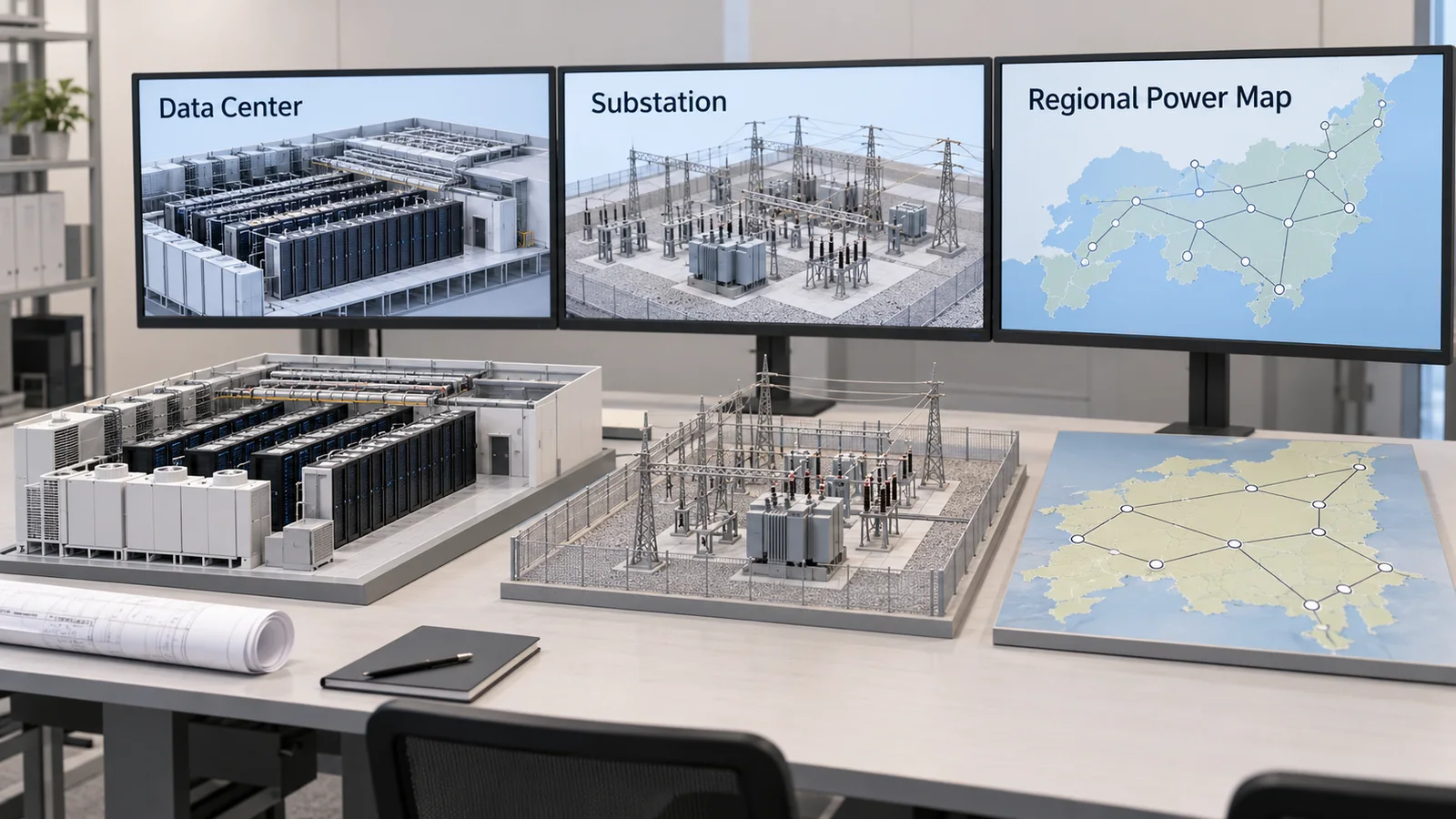
- The IEA in 30 seconds
- What kind of body it is: the four types of influence
- What it does for AI and machine learning
- How far its influence reaches (powers and geography)
- Organisations it works with
- Outlook
- Glossary, references and claim-to-source audit
1. The IEA in 30 seconds
The IEA's AI numbers differ from report to report in year, scope and assumptions. Take global data centre electricity use. A report published in April 2025 puts it at about 415 TWh in 2024 (around 1.5% of world electricity consumption) Sourced, and a report published in April 2026 puts it at 485 TWh in 2025 Sourced. Those are different years, so they do not conflict. For 2030, both editions give roughly 945 to 950 TWh Sourced. Some items do change between editions, however, including the current value of data centre CO2 emissions (chapter 3). The IEA describes AI's electricity demand as the result of three uncertain trends, efficiency gains, surging use and changing model capabilities, so its numbers mix measured values with case-by-case estimates. What legally binds member countries is a Governing Board decision, not the outlook in a report.
2. What kind of body it is: the four types of influence
Unlike the companies in this series, the institutions that appear in AI coverage build neither AI models nor chips. What separates them is the route by which they influence the industry, and that gives four types. The IEA is the Convening type: it shows the numbers from the electricity side, using statistics and models, and opens a forum where governments, the energy industry and the tech industry can talk. Its official pages show no power to set rules or distribute funding.
3. What it does for AI and machine learning
The IEA's work on AI falls into three strands: reports (current state and outlooks), published data (the Observatory) and a forum for dialogue Sourced. The IEA says it started an initiative called "Energy for AI, and AI for Energy" in 2024.
AI-related reports: date, content and type
| Report or publication | Published | What it says about AI (primary source) | Type |
|---|---|---|---|
| Energy and AI | 10 April 2025 | Data centres used about 415 TWh in 2024 (about 1.5% of the world total). By region, the US accounted for 45%, China 25% and Europe 15%. About 945 TWh by 2030 and about 1,200 TWh by 2035 in the Base Case. Consumption has grown about 12% a year since 2017, more than four times faster than total electricity consumption. Renewables and natural gas lead in supplying it | Base, Lift-Off, Headwinds and High Efficiency cases. The 2035 range across cases is 700 to 1,700 TWh |
| Energy and AI Observatory | 17 June 2025 (launch announcement) | Interactive tools for data centre electricity use and digital infrastructure by region, plus 20 case studies of AI in the energy sector. First announced at the AI Action Summit in February 2025 | Published data (not a report) |
| Key Questions on Energy and AI | 16 April 2026 | Data centre electricity demand rose 17% in 2025 to 485 TWh, and demand from AI-focused data centres rose 50%. About 950 TWh by 2030, with AI-focused demand tripling. Capital expenditure by five large technology companies exceeded USD 400 billion in 2025. Energy per AI task is falling fast, but video generation, reasoning and agents use far more | 2025 figures are actuals; 2030 is the central-case outlook |
| Powering Artificial Intelligence | 14 October 2026 | Prepared at the request of France's G7 Presidency. It surveys more than 34 policy jurisdictions covering about 90% of global data centre capacity and finds 134 policies and regulations on connecting data centres to electricity systems, nearly 40% of them announced or implemented in the past 12 months. It sets out six principles for decision makers | A survey of policies (not an outlook of demand) |
Figures are as the IEA states them; this article does not convert or add them. TWh = terawatt-hours; GW = gigawatts. The IEA says that after Energy and AI came out, new questions and new data led it to publish a follow-up report in 2026.
Watch the numbers: they change with year, edition and baseline
| Figure | Report | How to read it |
|---|---|---|
| Data centre electricity use: about 415 TWh in 2024 / 485 TWh in 2025 | Energy and AI (April 2025) / Key Questions (April 2026) | Different years. The 2025 figure is described as a 17% rise, and 415 x 1.17 is about 486 TWh, which is consistent Our calculation |
| 2030: about 945 TWh / about 950 TWh | Same two reports | Nearly the same. The 2026 edition says its central projection stays close to the 2025 report's trajectory |
| Growth of AI-focused data centres: "more than quadruple by 2030" / "triple from 2025 to 2030" | Observatory announcement (June 2025) / Key Questions (April 2026) | The base years differ (the first reads as relative to 2024, though the passage does not say so). Do not compare them on one scale |
| CO2 from data centre electricity: "180 Mt now, 300 Mt in 2035 (Base)" / "about 150 Mt now, about 350 Mt in 2035" | Energy and AI (April 2025) / Powering Artificial Intelligence (October 2026) | The 2026 edition says the 2035 figure rose because more on-site natural gas is expected. It does not explain why the current value is 180 in one and 150 in the other |
The 2024 report published by the U.S. Department of Energy (DOE) and produced by Lawrence Berkeley National Laboratory puts US data centre electricity use at 176 TWh in 2023 Sourced. The IEA's 2024 US share is 45% of a 415 TWh world total, about 187 TWh Our calculation, but the year and the definition of scope both differ, so the two cannot be treated as the same quantity (the difference in definitions is not checked here). When you use an AI electricity figure, check the edition, year and case, and also who produced the number.
Dialogue and the link to governments
| Event | When | What happened (primary source) | Type |
|---|---|---|---|
| Global Conference on Energy and AI | December 2024 | A forum hosted by the IEA for governments, the energy industry, the tech sector, researchers and civil society. The IEA calls it the largest on the topic to date | Sourced |
| Cooperation with G7 presidencies | 2025 to 2026 | The IEA worked with the Canadian and French G7 presidencies. Powering Artificial Intelligence was prepared at France's request | Sourced |
| 2026 Ministerial Meeting (297th session of the Governing Board) | 18 to 19 February 2026 | Ministers welcomed the Secretariat's analysis and the Observatory. They asked for more work on connecting data centres securely to power systems, on barriers to responsible AI adoption in energy, and on better measurement and reporting of AI's energy and resource needs. They also called on the IEA to explore a government-industry platform | Sourced |
| New government-industry platform | "Soon", per an April 2026 statement | Mentioned by Executive Director Birol in a press release. As of our check date we found no official announcement that it has started | Not yet confirmed |
The IEA's numbers are a useful yardstick for how much power and equipment data centres need. For example, Energy and AI says China supplies about 99% of refined gallium and that data centre demand could exceed 10% of today's supply by 2030 Sourced, and Key Questions says a shortage of the high-bandwidth memory used in AI chips is expected to last through at least the end of 2027 Sourced. These are statements about power, equipment and supply chains, though. They cannot be converted directly into demand for a particular material. Going from electricity figures (TWh, GW) to material quantities needs separate assumptions about equipment types and designs, and this article does not make that conversion.
4. How far its influence reaches (powers and geography)
| Aspect | What the IEA has | What it does not have |
|---|---|---|
| Legal force | A decision of the Governing Board (energy ministers or their representatives) legally binds member countries under international law. Article 52 of the Agreement on an International Energy Program says decisions are binding and recommendations are not. Membership conditions centre on oil emergency response, such as 90 days of oil stocks | The outlooks, recommendations and "six principles" in its AI reports are not Board decisions and do not bind members. We found no binding decision on AI or data centres within what we checked. The IEA's terms of use say its materials do not necessarily reflect the views or policies of the Secretariat or member countries |
| Data and analysis | Energy statistics from more than 180 countries, a global model and dataset of data centre electricity demand, satellite-based tracking of facilities, the Observatory | The IEA itself says no comprehensive statistics exist on how often and how deeply AI is used. We found no power to require full disclosure of AI companies' electricity use |
| Input to policy | Reports produced at the request of G7 presidencies and ministerial meetings. Principles offered to decision makers | Power to set rules, subsidies, siting permits or electricity tariffs (the domain of national and regional governments and regulators) |
| Geography | Global. Referred to by member and association countries, companies and investors. Its analysis is broken down by region, including the US, China and Europe | Power to change any country's law. Binding force over non-member countries |
| Scale | 2024 operating budget of EUR 77.9 million. 32 member and 14 association countries | Staff numbers and the number of people working on AI could not be confirmed |
When an IEA report says data centres will use about 950 TWh in 2030, that is neither a government policy target nor a legal obligation. A figure becomes policy only when a government or regulator adopts something. The 134 policies and regulations counted in Powering Artificial Intelligence, for instance, were set by the jurisdictions themselves, not by the IEA. A Governing Board decision does bind members, but the example the official pages give is oil emergency response, and we found no binding decision on AI Not yet confirmed.
5. Organisations it works with
The IEA's AI analysis runs from data and models it collects, to reports the Secretariat compiles, to governments and industry that refer to them. Fig. 2 shows only relationships documented in primary sources. It is not a picture of the IEA directing companies or countries.
Organisations named in the IEA's official materials (selection)
| Organisation | Relationship to the IEA (primary source) | Link to this series |
|---|---|---|
| OECD | The IEA is an autonomous body within the OECD framework. Key Questions says its analysis of AI's effect on GDP was done in cooperation with the OECD | See our OECD profile |
| G7 presidencies (Canada, France) | The IEA cooperated with them on energy and AI. Powering Artificial Intelligence was prepared at France's request | National policy context |
| Japan (Watt-Bit Collaboration) | Powering Artificial Intelligence cites Japan's "Watt-Bit Collaboration" as an example of a public-private initiative that aims to support more flexibility from compute infrastructure over time | See our METI profile |
| Google, Microsoft and others | The public page for Energy and AI carries contributions from senior executives at Schneider Electric, Google, ReNew and Microsoft, and a comment from the AI Action Summit's special envoy. We did not check the substance of any cooperation | Companies covered in this series' company profiles, where those are published |
The IEA does not endorse or certify any particular AI company or data centre operator (as far as we checked). Nor does this article recommend the organisations listed.
6. Outlook
| What can be read from the sources | Primary evidence | Type |
|---|---|---|
| The IEA is likely to keep updating its AI and data centre numbers | Key Questions says the IEA will keep updating its projections regularly, and the 2026 Ministerial asked it to produce data and analysis on AI's rapid development frequently | Inference |
| With each new edition, figures (especially CO2 and 2035 values) may be replaced | The October 2026 report says its 2035 CO2 outlook rose because of more on-site gas. April 2025 and October 2026 also gave different current CO2 values | Inference |
| Beyond 2030, the outlook has more upside | Key Questions says a higher case after 2030 is possible if bottlenecks in energy equipment and chip manufacturing ease and energy-intensive AI uses spread | Sourced (the IEA's outlook, not an observed value) |
| IEA figures will not directly become law or certification criteria | The Agreement makes only Board decisions binding and says recommendations are not. The AI reports are not Board decisions | Sourced (the Agreement's wording). How the reports are treated is our interpretation |
7. Glossary
- Base Case / Lift-Off / Headwinds / High Efficiency
- The cases in the IEA's AI report. Estimates built on different assumptions about AI uptake, energy-sector bottlenecks and efficiency gains in hardware and models. They are not observed values.
- AI-focused data centre
- A data centre designed for training and running AI (the IEA's term is "AI-focused"). One building draws far more power than a conventional one.
- Governing Board
- The IEA's decision-making body, made up of energy ministers or their representatives. Its decisions legally bind member countries under international law.
- TWh / GW
- TWh is energy used over time (for example in a year); GW is power or capacity. For a given data centre, the link between them depends on utilisation.
- Non-firm connection
- A grid connection granted sooner on condition that the user cuts demand when the grid is stressed. Powering Artificial Intelligence describes examples from several jurisdictions.
- BYOP
- Bring your own power: a requirement that a data centre arranges its own generation or supply. The IEA says some jurisdictions have adopted it.
8. References
- IEA About (members and association countries make up 80% of world energy consumption; Executive Director). https://www.iea.org/about
- IEA History of the IEA (signing on 18 November 1974, early mandate, association countries, data from over 180 countries). https://www.iea.org/about/history
- IEA Membership (32 members, 14 association countries, 6 in accession, membership criteria). https://www.iea.org/about/membership
- IEA Structure (Governing Board, legally binding decisions, 2024 operating budget of EUR 77.9 million). https://www.iea.org/about/structure
- IEA Agreement on an International Energy Program (amended 14 November 2024; Article 52: decisions bind, recommendations do not). https://iea.blob.core.windows.net/assets/0cf6bac9-7c9c-450e-bb80-4928267c1cef/IEP2024.pdf
- IEA Terms of use (IEA materials do not necessarily reflect the views of the Secretariat or member countries). https://www.iea.org/terms
- IEA Energy and AI (10 April 2025; report page and contributors). https://www.iea.org/reports/energy-and-ai
- IEA Energy and AI, Executive summary (415 TWh, 945 TWh, 1,200 TWh, the cases, CO2, gallium). https://www.iea.org/reports/energy-and-ai/executive-summary
- IEA Artificial Intelligence (AI topic page: the 2024 initiative, Global Conference, G7 cooperation, Observatory). https://www.iea.org/topics/artificial-intelligence
- IEA As energy and AI links grow, new IEA observatory provides latest data and analysis (17 June 2025). https://www.iea.org/news/as-energy-and-ai-links-grow-new-iea-observatory-provides-latest-data-and-analysis
- IEA Key Questions on Energy and AI (16 April 2026). https://www.iea.org/reports/key-questions-on-energy-and-ai
- IEA Key Questions on Energy and AI, Executive summary (485 TWh, 17% growth, 950 TWh, capital expenditure, lack of statistics, bottlenecks). https://www.iea.org/reports/key-questions-on-energy-and-ai/executive-summary
- IEA Data centre electricity use surged in 2025, even with tightening bottlenecks driving a scramble for solutions (press release of 16 April 2026; the platform remark). https://www.iea.org/news/data-centre-electricity-use-surged-in-2025-even-with-tightening-bottlenecks-driving-a-scramble-for-solutions
- IEA Powering Artificial Intelligence (14 October 2026; requested by France's G7 Presidency). https://www.iea.org/reports/powering-artificial-intelligence
- IEA Powering Artificial Intelligence, Executive summary (134 policies, 34 jurisdictions, CO2, non-firm connections, Watt-Bit Collaboration, six principles). https://www.iea.org/reports/powering-artificial-intelligence/executive-summary
- IEA 2026 IEA Ministerial Chair's Summary (18 to 19 February 2026, 297th session of the Governing Board). https://www.iea.org/news/2026-iea-ministerial-chair-s-summary
- U.S. Department of Energy DOE Releases New Report Evaluating Increase in Electricity Demand from Data Centers (20 December 2024; 176 TWh in 2023). https://www.energy.gov/articles/doe-releases-new-report-evaluating-increase-electricity-demand-data-centers
9. Claim-to-source audit
| Claim in the text | Type | Source |
|---|---|---|
| Legal name, Executive Director, members and associates account for 80% of energy consumption | Sourced | Reference 1 https://www.iea.org/about |
| Signing on 18 November 1974, original mandate, association countries, data from over 180 countries, autonomous body within the OECD | Sourced | Reference 2 https://www.iea.org/about/history |
| 32 members, 14 association countries, 6 in accession, membership criteria | Sourced | Reference 3 https://www.iea.org/about/membership |
| Board decisions bind under international law; 2024 operating budget of EUR 77.9 million | Sourced | Reference 4 https://www.iea.org/about/structure |
| Decisions bind and recommendations do not (Article 52) | Sourced | Reference 5 https://iea.blob.core.windows.net/assets/0cf6bac9-7c9c-450e-bb80-4928267c1cef/IEP2024.pdf |
| IEA materials do not necessarily reflect the views of the Secretariat or members | Sourced | Reference 6 https://www.iea.org/terms |
| Energy and AI: date, contributors, about 415 TWh in 2024, regional shares, 945 TWh in 2030, 1,200 TWh in 2035, the cases and 700 to 1,700 TWh, CO2, gallium | Sourced | Reference 7 https://www.iea.org/reports/energy-and-ai Reference 8 https://www.iea.org/reports/energy-and-ai/executive-summary |
| The 2024 initiative, the Global Conference (December 2024), G7 cooperation, the Observatory | Sourced | Reference 9 https://www.iea.org/topics/artificial-intelligence Reference 10 https://www.iea.org/news/as-energy-and-ai-links-grow-new-iea-observatory-provides-latest-data-and-analysis |
| Key Questions: date, 485 TWh in 2025, 17% growth, about 950 TWh in 2030, AI-focused tripling, capital expenditure, lack of statistics, OECD cooperation, memory shortage, upside after 2030 | Sourced | Reference 11 https://www.iea.org/reports/key-questions-on-energy-and-ai Reference 12 https://www.iea.org/reports/key-questions-on-energy-and-ai/executive-summary |
| Executive Director Birol's remark on a new platform (April 2026) | Sourced | Reference 13 https://www.iea.org/news/data-centre-electricity-use-surged-in-2025-even-with-tightening-bottlenecks-driving-a-scramble-for-solutions |
| Powering Artificial Intelligence: date, France's request, 34 jurisdictions, 134 policies, nearly 40%, CO2, non-firm connections, Watt-Bit Collaboration, six principles | Sourced | Reference 14 https://www.iea.org/reports/powering-artificial-intelligence Reference 15 https://www.iea.org/reports/powering-artificial-intelligence/executive-summary |
| 2026 Ministerial Meeting (18 to 19 February, 297th session) and what ministers asked for | Sourced | Reference 16 https://www.iea.org/news/2026-iea-ministerial-chair-s-summary |
| US data centre electricity use of 176 TWh in 2023 (produced by LBNL) | Sourced | Reference 17 https://www.energy.gov/articles/doe-releases-new-report-evaluating-increase-electricity-demand-data-centers |
| 415 x 1.17 = about 486 TWh, 415 x 45% = about 187 TWh, the four-type classification, the arrangement of Fig. 2 | Our calculation | This article's own arrangement (a calculation using the figures in references 8, 12 and 17) |
| Staff numbers, the number working on AI, binding decisions on AI or data centres, the start of the new platform, why the current CO2 value differs between 180 and 150, differences in definitions between the IEA and LBNL | Not yet confirmed | Not stated in the sources. Could not be confirmed; this article does not estimate them |
| The four items in the outlook, and figures being replaced between editions | Inference | Our reading of references 8 and 11 to 16 (inference) |
Last updated: 15 October 2026 / Troy Technical
Figures and dates in this article come from the IEA's official website and the Agreement on an International Energy Program, plus a publication of the U.S. Department of Energy. Passages marked "Inference" are our own interpretation of the primary sources.