INSTITUTION PROFILE / AI & MACHINE LEARNING
UK AI Security Institute (AISI)
A UK government research body that "measures" frontier AI. It does not regulate; it supplies evidence
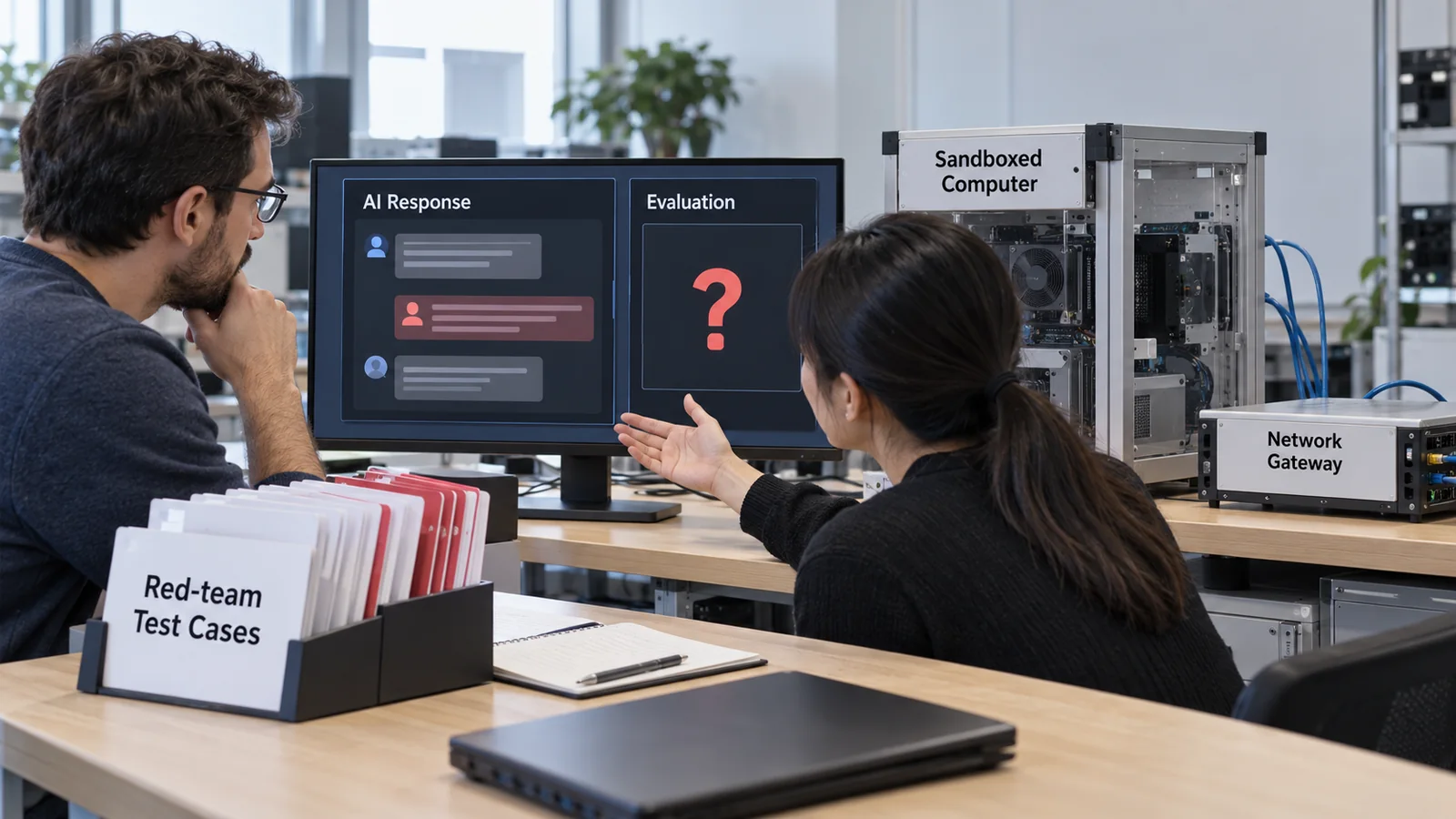
The UK AI Security Institute (AISI) is a research organisation inside the UK government. Its job is to test the most advanced AI models for what they can do and what risks they pose, and to tell governments what it finds. It tests many companies' models before release, but it is not a regulator: it can neither approve a model nor stop one, and companies take part voluntarily. This profile looks at how much influence AISI really has over AI, in terms of the kinds of power it holds and how far they reach. Its name and its parent department have both changed recently, so we give check dates.
- The UK AI Security Institute in 30 seconds
- What kind of body it is: the four types of influence
- What it does for AI and machine learning
- How far its influence reaches (powers and geography)
- Organisations it works with
- Outlook
- Glossary, references and claim-to-source audit
1. The UK AI Security Institute in 30 seconds
AISI's evaluations are neither a safety certification nor a licence to release. UK government documents say AISI is not a regulator, takes no responsibility for release decisions, and does not aim to designate any model as "safe" Sourced. AISI's own post of 12 October 2026 likewise says it is not seeking to mandate requirements for frontier developers, but to contribute expertise to an industry-wide effort on technical standards and best practice Sourced. A UK government announcement the same day says it will "legislate wherever necessary", but the concrete measures are still at the exploratory stage Not yet confirmed.
2. What kind of body it is: the four types of influence
Unlike the companies in this series, the institutions that appear in AI coverage build neither AI models nor chips. What separates them is the route by which they influence the industry, and that gives four types. AISI supplies the methods and tools for measuring AI capabilities and risks, so this article places it in the Standards type. It has no power to set a standard, though: it publishes methods and tools that others choose to use.
3. What it does for AI and machine learning
AISI's work falls into four strands: evaluation, research and published tools, grants and international work Sourced.
| Work | When | What it is (primary source) | Type |
|---|---|---|---|
| Evaluating frontier AI | From November 2023 | Tests the most advanced models before and after release, covering cyber, chemistry and biology, autonomous agents, safeguards and societal impacts. It reports 16 models in its first year (November 2024), more than 30 systems over two years (December 2025), and, in an October 2026 post, "more than 55 models" evaluated independently before release. The definition of the count differs between documents | Sourced (AISI's own account) |
| Research and published evaluation tools | Ongoing | Lists research areas such as cyber misuse, safeguards, alignment, control, autonomy, human influence and societal resilience. Publishes evaluation tools such as Inspect as open source | Sourced |
| Research grants (The Alignment Project) | 30 July 2025 | Announced a global fund of over £15 million for AI alignment research | Sourced |
| Frontier AI Trends Report | 18 December 2025 | Its first public assessment, bringing together two years of evaluations. AISI says it has evaluated frontier systems since November 2023 | Sourced |
| International work | From 2024 | Coordinates an international network (below), serves as secretariat for the international AI safety report (November 2024 post), signed an agreement with the US (2 April 2024) and an MoU with Australia (25 May 2026) | Sourced |
How to read the evaluation numbers (Frontier AI Trends Report)
| Number AISI reports | Conditions and scope | How to read it |
|---|---|---|
| Cyber: models complete apprentice-level tasks (under one year of experience) 50% of the time on average, against just over 10% in early 2024. In 2025 it tested the first model able to complete tasks needing over 10 years of human experience | AISI's cyber tasks, in four difficulty bands | Values on AISI's own tasks. Do not compare with other bodies' evaluations or other tasks |
| Success rate on self-replication evaluations: from 5% in 2023 to 60% in 2025 | AISI's "simplified self-replication" tasks | Not a measure of real-world self-replication (AISI itself says the tasks are simplified) |
| Safeguards: vulnerabilities found in every system tested. A 40-fold difference in expert effort to break two models released six months apart | AISI's attack evaluations | An example of safeguard strength varying between models |
| Gap between open-weight and closed models: about four to eight months | Based on external data, not AISI's own evaluations | A December 2025 value. It may have been updated since |
AISI says its evaluations measure model capabilities in specific safety-relevant areas, are preliminary, and are not a comprehensive assessment of a system's safety Sourced. It does not endorse any particular model's safety, and it cannot publish all its results because some contain sensitive material. The number of models it has evaluated appears under different wordings, such as "evaluated before release" and "evaluated". Do not line up the figures as if they counted the same thing.
4. How far its influence reaches (powers and geography)
| Aspect | What AISI has | What it does not have |
|---|---|---|
| Legal force | None. Evaluations rest on voluntary cooperation with companies. Its findings feed government policy decisions | Power to regulate, license or block a release. Safety certification of AI models. A basis for compelling companies to provide models (none found in what we checked) |
| Access to information | Receives pre-release access to models, and non-public tooling and safeguard details, from cooperating companies (per its post on voluntary collaborations with Anthropic and OpenAI) | Comprehensive access to every company and model (not confirmed). Full publication of results (some are sensitive) |
| Input to policy | Briefs UK policy makers and allied governments on new capabilities and risks | Power to make law (the preserve of Parliament and government). The October 2026 exploration of legislation is a government announcement, not an AISI power |
| Geography | The UK government and the countries it works with. Coordinator of an international network covering ten countries and regions | Authority over companies outside the UK. Binding force over a company's decision to release its model worldwide |
| Scale | Over 100 technical staff and £66 million a year (its own description) | Total headcount and the legal basis for its funding could not be confirmed |
5. Organisations it works with
AISI receives funding and a parent department from government, evaluates models through voluntary cooperation with companies, and passes what it learns to governments and allies. Fig. 2 shows only relationships documented in primary sources.
Organisations named in official materials (selection)
| Organisation | Relationship to UK AISI (primary source) | Link to this series |
|---|---|---|
| UK government (DSIT / Cabinet Office) | AISI long belonged to DSIT. The 22 July 2026 machinery-of-government fact sheet says responsibility for AI strategy, public sector AI adoption and AISI moves to the Cabinet Office, and a 24 July press release says responsibility for the existing AISI moves to the Office for the Prime Minister and the Cabinet (OPMC, which directly serves the Prime Minister and Cabinet). The GOV.UK organisation page (updated 9 September 2026) says AISI is part of the Cabinet Office. AISI's own About page (checked) still describes it as part of DSIT | The precise unit (Cabinet Office or OPMC) is worded differently across sources and could not be confirmed |
| Anthropic, OpenAI | AISI says it has "ongoing voluntary collaborations" with both, as well as with the corresponding US NIST body, and that each company has published insights into the work (13 September 2025). AISI received the in-depth model access its evaluations needed | See our Anthropic and OpenAI profiles, where those are published |
| Google DeepMind | On 11 December 2025 AISI announced a research MoU that expands about two years of collaboration, including shared data, joint publications and dedicated team work | See our Google profile, where one is published |
| The US NIST evaluation centre | Collaborates and evaluates jointly with AISI. NIST's official page (checked) names it the Center for Advancing Innovation and Standards for Super Intelligence (CAISSI). AISI's September 2025 post refers to the same body under an earlier name (CAISI) | See our NIST profile |
| International network (NAAIMES) | Formerly the International Network of AI Safety Institutes. Established in 2024. Members: Australia, Canada, the EU, France, Japan, Kenya, the Republic of Korea, Singapore, the UK and the US. AISI's 12 October 2026 post says it coordinates the network | Japan's AISI is covered in our METI profile |
| Australian AI Safety Institute | Signed an MoU on 25 May 2026 to share information, develop best practice in evaluation together and exchange staff | None |
UK AISI does not endorse or certify any particular company (as far as we checked). Nor does this article recommend the organisations listed.
6. Outlook
| What can be read from the sources | Primary evidence | Type |
|---|---|---|
| With the move to the Cabinet Office side, its description and official website are likely to be rewritten | The move was announced in July 2026, and the GOV.UK organisation page already says "part of the Cabinet Office". AISI's own About page has not been updated. No completion date was found | Inference |
| Legislative regulation is at the exploratory stage | The 12 October 2026 government announcement says it will consider, within the Cyber Security and Resilience Bill regime, ways to identify and report serious AI incidents and near misses. It also says it will "legislate wherever necessary", but that details will be worked out with parliamentarians and technical experts | Not yet confirmed |
| AISI will strengthen its role as a builder of voluntary technical standards and best practice | Its 12 October 2026 post says it will work with industry on best practice that could later inform formal technical standards, and that it is not seeking to mandate requirements | Sourced (a statement of AISI's approach). Whether anything becomes a standard is not yet confirmed |
| The number of models it evaluates is likely to keep growing | It has grown from 16 in the first year to "more than 55" in October 2026 (the counting rules differ between documents) | Inference |
7. Glossary
- Frontier AI
- The most capable general-purpose AI models at a given time. The main subject of AISI's evaluations.
- Pre-release evaluation
- Testing a model's capabilities and safeguards before it is released to the public. At UK AISI it happens through voluntary cooperation with companies.
- Inspect
- An open-source framework for evaluating AI that AISI has published.
- NAAIMES
- The International Network for Advanced AI Measurement, Evaluation and Science, formerly the International Network of AI Safety Institutes.
- CAISSI
- The current name, per NIST's official page, of NIST's AI evaluation centre. Earlier it was known under names such as CAISI.
- MoU
- Memorandum of understanding. An agreement setting out a framework for cooperation, not assumed to be legally binding.
8. References
- UK AI Security Institute About (status, technical staff, 66 million pounds a year, compute, grants, research areas). https://www.aisi.gov.uk/about
- UK government (DSIT) Tackling AI security risks to unleash growth and deliver Plan for Change (14 February 2025; renaming from AI Safety Institute to AI Security Institute). https://www.gov.uk/government/news/tackling-ai-security-risks-to-unleash-growth-and-deliver-plan-for-change
- UK government AI Security Institute (GOV.UK organisation page, updated 9 September 2026; "part of the Cabinet Office"). https://www.gov.uk/government/organisations/ai-security-institute
- UK government (Cabinet Office) Machinery of Government changes: Fact Sheet (22 July 2026; responsibility for AISI moves to the Cabinet Office). https://www.gov.uk/government/news/machinery-of-government-changes-fact-sheet
- UK government (Cabinet Office) AI to power change at the heart of government as Lord Vallance appointed chair of new PM AI Taskforce (24 July 2026; responsibility for the existing AISI moves to OPMC). https://www.gov.uk/government/news/ai-to-power-change-at-the-heart-of-government-as-lord-vallance-appointed-chair-of-new-pm-ai-taskforce
- UK government (DSIT) AI Safety Institute: overview, Introducing the AI Safety Institute (2 November 2023; not a regulator). https://www.gov.uk/government/publications/ai-safety-institute-overview/introducing-the-ai-safety-institute
- UK government (DSIT) AI Safety Institute approach to evaluations (9 February 2024; no "safe" designation, no responsibility for release decisions). https://www.gov.uk/government/publications/ai-safety-institute-approach-to-evaluations/ai-safety-institute-approach-to-evaluations
- UK AI Security Institute Our First Year (13 November 2024; 16 models, "not safety certificates", secretariat of the international AI safety report). https://www.aisi.gov.uk/blog/our-first-year
- UK AI Security Institute Frontier AI Trends Report (evaluation figures, more than 30 systems, since November 2023). https://www.aisi.gov.uk/frontier-ai-trends-report
- UK government (DSIT) AI Security Institute: Frontier AI Trends report factsheet (18 December 2025). https://www.gov.uk/government/publications/ai-security-institute-frontier-ai-trends-report-factsheet
- UK AI Security Institute Announcing the Alignment Project (30 July 2025; over 15 million pounds). https://www.aisi.gov.uk/blog/announcing-the-alignment-project
- UK AI Security Institute How we're working with frontier AI developers to improve model security (13 September 2025; voluntary collaborations with Anthropic and OpenAI). https://www.aisi.gov.uk/blog/how-were-working-with-frontier-ai-developers-to-improve-model-security
- UK AI Security Institute Deepening our partnership with Google DeepMind (11 December 2025; research MoU). https://www.aisi.gov.uk/blog/deepening-our-partnership-with-google-deepmind
- UK AI Security Institute Announcing the UK and US AISI partnership (2 April 2024). https://www.aisi.gov.uk/blog/announcing-the-uk-and-us-aisi-partnership
- UK government (DSIT) UK and Australia pact on fast-moving AI security risks (25 May 2026; MoU). https://www.gov.uk/government/news/uk-and-australia-pact-on-fast-moving-ai-security-risks
- UK AI Security Institute International evaluation best practice and open questions in AI measurement (23 July 2026; the network's name and members). https://www.aisi.gov.uk/blog/international-evaluation-best-practice-and-open-questions-in-ai-measurement
- UK AI Security Institute Towards technical best practice for frontier AI development (12 October 2026; no mandated requirements, more than 55 models). https://www.aisi.gov.uk/blog/towards-technical-best-practice-for-frontier-ai-development
- UK government (Cabinet Office and others) Britain steps up national defences against growing AI risks (12 October 2026; exploring legislation). https://www.gov.uk/government/news/britain-steps-up-national-defences-against-growing-ai-risks
- NIST Center for Advancing Innovation and Standards for Super Intelligence (CAISSI) (NIST's official page; the current name). https://www.nist.gov/caissi
9. Claim-to-source audit
| Claim in the text | Type | Source |
|---|---|---|
| Status, over 100 technical staff, 66 million pounds a year, priority compute access, over 15 million pounds in grants, research areas, self-description as part of DSIT | Sourced | Reference 1 https://www.aisi.gov.uk/about |
| Renaming on 14 February 2025 | Sourced | Reference 2 https://www.gov.uk/government/news/tackling-ai-security-risks-to-unleash-growth-and-deliver-plan-for-change |
| The GOV.UK organisation page says "part of the Cabinet Office" (updated 9 September 2026) | Sourced | Reference 3 https://www.gov.uk/government/organisations/ai-security-institute |
| The 22 July 2026 machinery-of-government fact sheet (AISI responsibility moves to the Cabinet Office) | Sourced | Reference 4 https://www.gov.uk/government/news/machinery-of-government-changes-fact-sheet |
| The 24 July 2026 press release (responsibility for the existing AISI moves to OPMC) | Sourced | Reference 5 https://www.gov.uk/government/news/ai-to-power-change-at-the-heart-of-government-as-lord-vallance-appointed-chair-of-new-pm-ai-taskforce |
| Not a regulator (2 November 2023) | Sourced | Reference 6 https://www.gov.uk/government/publications/ai-safety-institute-overview/introducing-the-ai-safety-institute |
| No "safe" designation, no responsibility for release decisions, evaluations are preliminary | Sourced | Reference 7 https://www.gov.uk/government/publications/ai-safety-institute-approach-to-evaluations/ai-safety-institute-approach-to-evaluations |
| 16 models in the first year, "not safety certificates", not all results can be published, secretariat of the international AI safety report | Sourced | Reference 8 https://www.aisi.gov.uk/blog/our-first-year |
| Figures in the Frontier AI Trends Report, more than 30 systems, since November 2023 | Sourced | Reference 9 https://www.aisi.gov.uk/frontier-ai-trends-report Reference 10 https://www.gov.uk/government/publications/ai-security-institute-frontier-ai-trends-report-factsheet |
| The Alignment Project (30 July 2025; over 15 million pounds) | Sourced | Reference 11 https://www.aisi.gov.uk/blog/announcing-the-alignment-project |
| Voluntary collaborations with Anthropic and OpenAI and in-depth model access (13 September 2025) | Sourced | Reference 12 https://www.aisi.gov.uk/blog/how-were-working-with-frontier-ai-developers-to-improve-model-security |
| Research MoU with Google DeepMind (11 December 2025) | Sourced | Reference 13 https://www.aisi.gov.uk/blog/deepening-our-partnership-with-google-deepmind |
| Agreement with the US (2 April 2024) | Sourced | Reference 14 https://www.aisi.gov.uk/blog/announcing-the-uk-and-us-aisi-partnership |
| MoU with Australia (25 May 2026) | Sourced | Reference 15 https://www.gov.uk/government/news/uk-and-australia-pact-on-fast-moving-ai-security-risks |
| The international network's name, former name and members (23 July 2026) | Sourced | Reference 16 https://www.aisi.gov.uk/blog/international-evaluation-best-practice-and-open-questions-in-ai-measurement |
| No mandated requirements, more than 55 models, coordination of the network (12 October 2026) | Sourced | Reference 17 https://www.aisi.gov.uk/blog/towards-technical-best-practice-for-frontier-ai-development |
| Exploration of legislation and "legislate wherever necessary" (12 October 2026) | Sourced | Reference 18 https://www.gov.uk/government/news/britain-steps-up-national-defences-against-growing-ai-risks |
| The current name of NIST's evaluation centre (CAISSI) | Sourced | Reference 19 https://www.nist.gov/caissi |
| The four-type classification and the arrangement of Fig. 2 | Our calculation | This article's own arrangement of the sources above |
| Total headcount, the legal basis of funding, the exact unit that now oversees AISI (Cabinet Office or OPMC), the total number and definition of models AISI has evaluated, concrete legislative measures | Not yet confirmed | Not stated in the sources. Could not be confirmed; this article does not estimate them |
| In the outlook, the rewriting of AISI's description and the growth in models evaluated | Inference | Our reading of references 3 to 5, 8 and 17 (inference) |
Last updated: 15 October 2026 / Troy Technical
Figures and dates in this article come from the UK AI Security Institute's website, UK government (GOV.UK) materials and NIST's official page. Passages marked "Inference" are our own interpretation of the primary sources.