TROY TECHNICAL · BEGINNER’S GUIDE
READ THIS FIRSTCell culture technology — An Introduction
Create an environment in which living cells keep doing the required job.
Japanese version →Putting cells in a container and waiting does not reliably produce the desired result. Media, oxygen, temperature, mixing and contamination control all matter. Cell culture concerns both growth and maintaining a suitable biological state. That viewpoint connects laboratory models, medicines and cell therapies.
01The purpose determines what is collected
Research cultures can model disease or drug responses. In protein manufacturing, cells produce a molecule such as an antibody that is later collected and purified. In cell therapy, cells themselves are the product, so viable state and function must survive collection and delivery.
The word culture therefore covers different endpoints. Cells are not always removed from the final product, and cultured cells are not always destined for patients. Identify the starting cells and intended output first.
Background: [1]
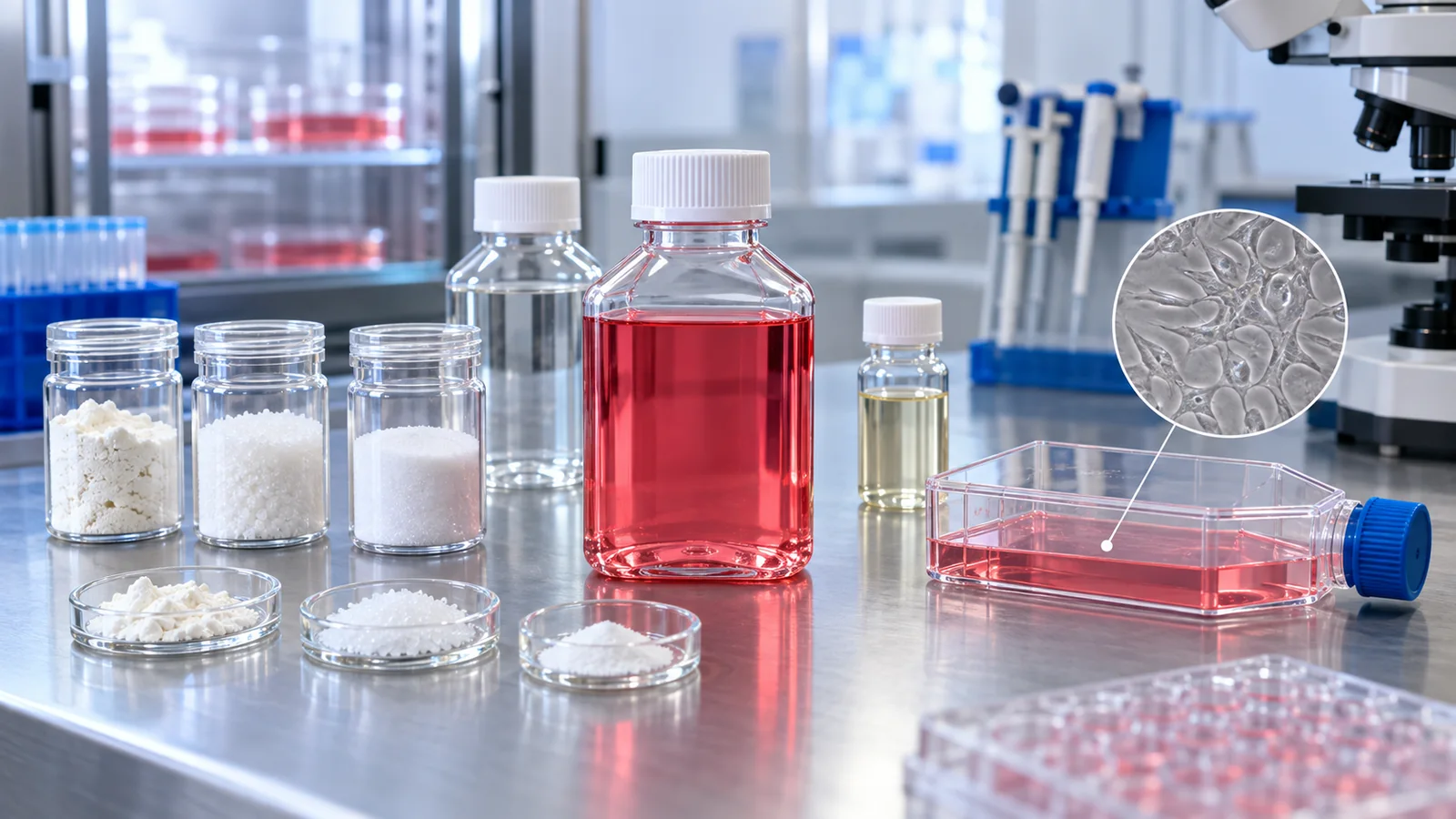
02Provide nutrients and a suitable environment
Culture medium is more than water: it provides sugars, amino acids, salts and other constituents. Requirements vary with cell type and purpose. Supplying nutrients is only part of the job; depleted components and accumulating metabolites matter too.
Temperature, oxygen and pH influence both growth and production. pH describes acidity or alkalinity. As cells grow they change their surroundings, so measurement and adjustment are needed. There is no single optimal condition for every cell type.
03A bioreactor is more than a large vessel
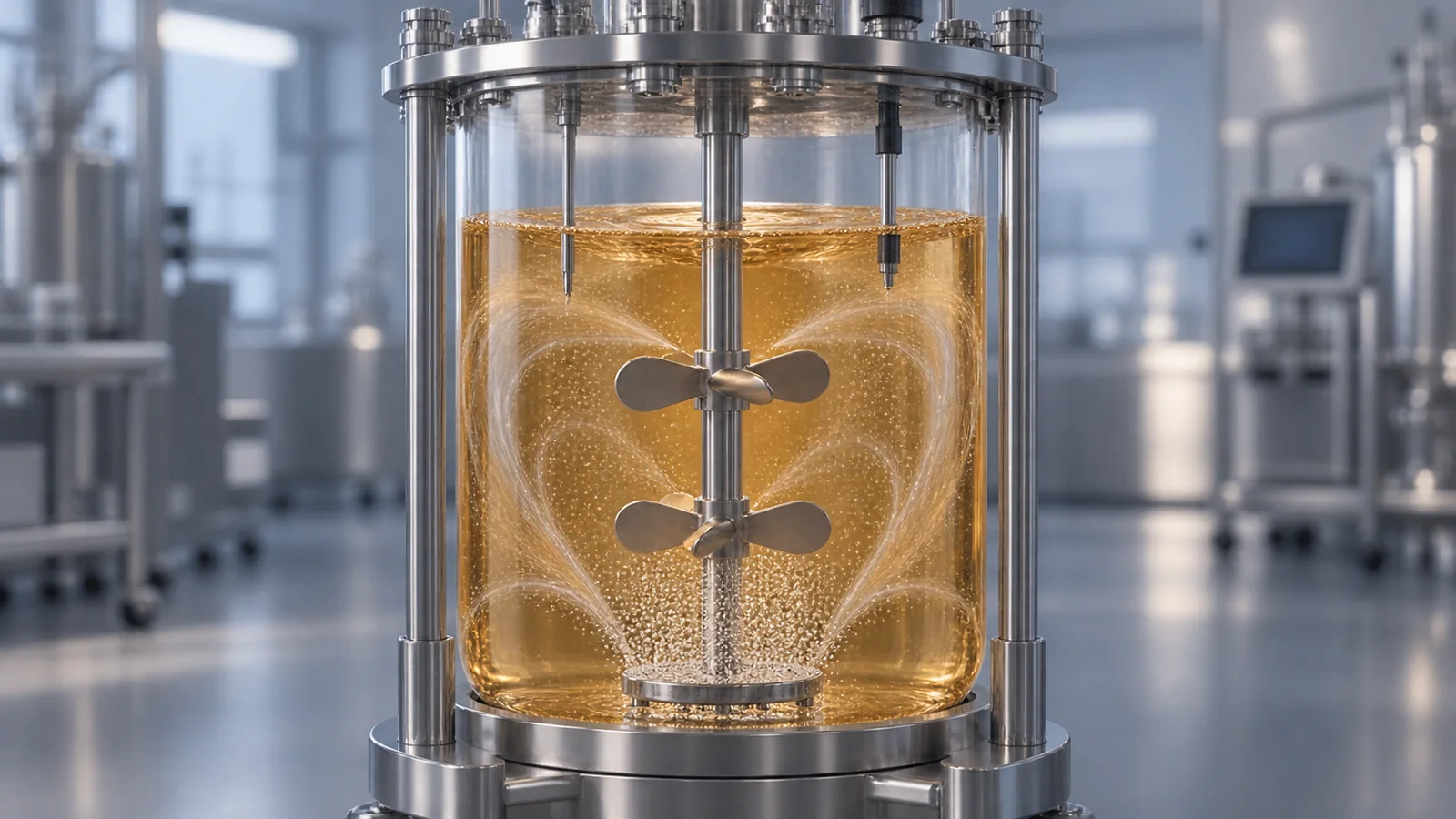
A bioreactor measures and helps control the environment around cells. Mixing distributes nutrients and oxygen, but excessive shear or bubbles can damage some cells. Suspended and surface-attached cultures also need different arrangements.
Oxygen supply, uniformity and gentle handling must be balanced. Matching an agitator’s speed in two vessels does not make the cellular environment identical.
Background: [1]
04Make a larger culture or run more units
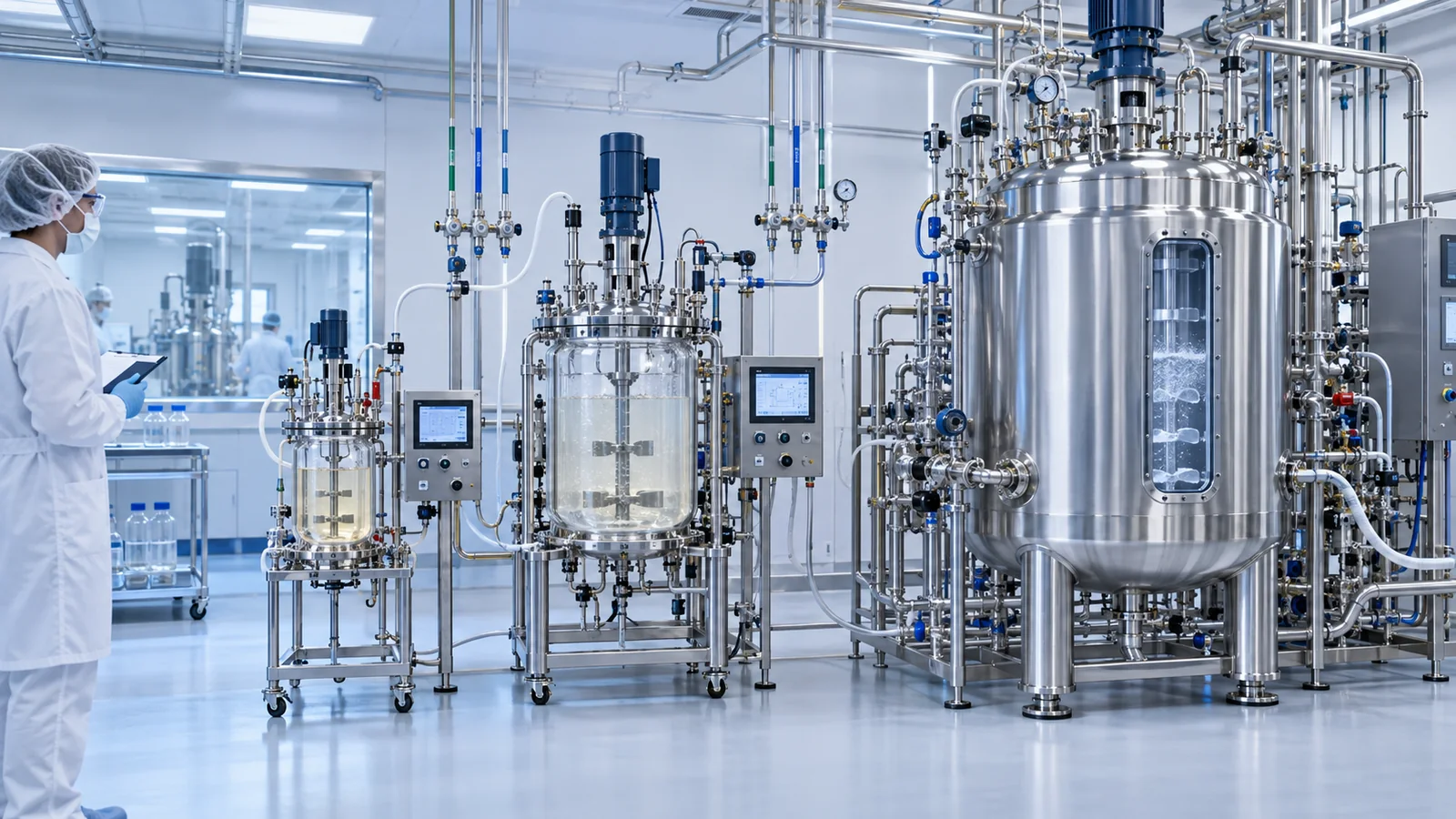
Scale-up increases the size of a culture unit; scale-out adds units. Larger vessels change mixing time, heat and oxygen transfer and sampling. Multiplying a recipe is not enough.
Batch operation begins with a defined charge; fed-batch adds nutrients; continuous or perfusion approaches exchange material during operation. Productivity, quality and control requirements differ. Choose an approach for the cells and product rather than assuming one mode is always superior.
Background: [1]
05Build consistency through process controls and records
Verified cell identity and a characterized cell bank help control the starting point. Prevent contamination, measure relevant conditions during operation and keep traceable records. Clear-looking medium is not proof that contamination is absent.
Judge a culture by viability, state, product or function and repeatability, not cell count alone. The routes begin with the environment, then address scale and quality. This is a process overview, not an experimental or clinical protocol.
Background: [3]
Connect the ideas in one situation
ILLUSTRATIVE SCENARIO — NOT A PERFORMANCE CLAIM
Suppose a small culture produces an antibody
Next ask whether cells in a larger vessel receive suitable oxygen and nutrients. One acceptable sensor reading may hide local limitations. Compare antibody quality alongside the quantity produced.
The collection and purification steps also need adequate capacity. Following the process from starting cells to final product makes scale-up more concrete than optimizing vessel output alone.
Return to the starting idea
The workflow differs when cells make a product and when the cells themselves are the product. Consistent state and quality matter alongside cell number.
You do not need to memorize every technology name. Understanding the intended improvement, the mechanism being changed and the conditions needed to demonstrate it gives you a foundation for the detailed articles. Choose one route that matches your question.
Choose your next article
Read a route from top to bottom, or select just the question you need. You do not have to read everything.
Environment and equipment
Scale and operation
Quality and purpose
Browse all technical articles in this field (18)
- CAR-T Cells
- CDMOs (contract development and manufacturing organisations)
- GMP (Good Manufacturing Practice)
- QbD and CMC
- iPS Cells
- mRNA Medicines and Lipid Nanoparticles
- Viral Vectors
- Organoids and Spheroids
- Chromatography (the purification step in biopharmaceuticals)
- Single-Use Systems
- Scale-up
- Hydrogels as Cell Scaffolds
- Bioreactors
- Batch and Continuous Culture
- Process Analytical Technology (PAT)
- Cell Culture Media
- Antibody Drugs and ADCs
- Autologous and Allogeneic
Sources and scope
This introductory synthesis connects the existing technical articles. Its grouping and design scenarios are explanatory, not standard classifications or test results. It does not catalogue current records, product availability or approvals, or forecast costs. Foundational references are below; linked articles provide more detailed technical sourcing.