Key Findings
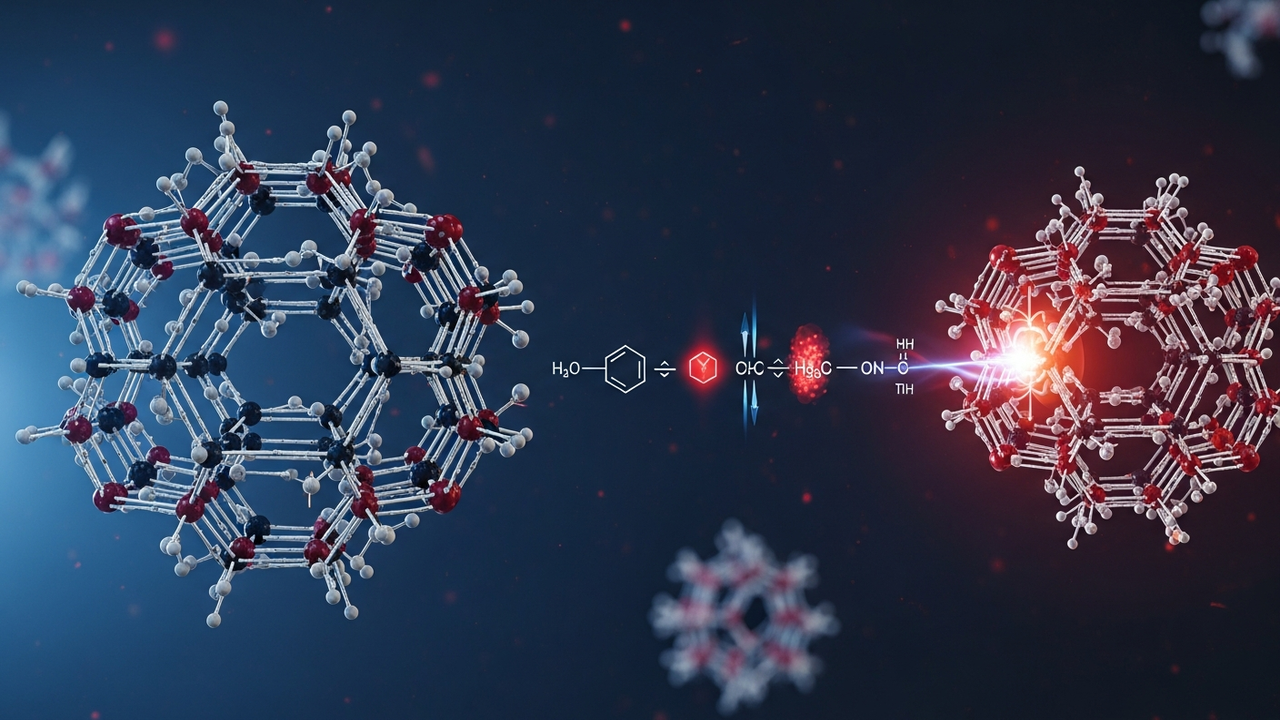
The crucial role of metal-organic framework (MOF) topology in governing the performance of asymmetric catalytic reactions has been definitively demonstrated. A specific MOF, PCN-777, achieved a groundbreaking 158% increase in catalytic turnover frequency (TOF) and a 2.7-fold improvement in enantiomeric excess (ee) in asymmetric aldol reactions. This finding emphatically highlights that optimizing the structural characteristics of MOFs, particularly their topology, is indispensable for designing highly efficient asymmetric catalysts.
Technical / Clinical Details
In this study, several MOFs with distinct topologies were synthesized and evaluated as catalysts for asymmetric aldol reactions involving acyclic amino acids. PCN-777, with its unique spn topology, proved to significantly enhance reactant accessibility to the catalytic active sites. This improved accessibility directly correlated with an accelerated reaction rate, leading to an astonishing 158% increase in TOF. Furthermore, the enantiomeric excess (ee) of the product was improved by a factor of 2.7, showcasing exceptional performance in the selective synthesis of desired optically active compounds. This strongly suggests that the pore architecture and internal environment of MOFs profoundly influence both the stereoselectivity and efficiency of catalytic reactions.
Background & Context
Asymmetric synthesis is a vital technique for producing optically active compounds critical in diverse industrial sectors, including pharmaceuticals, agrochemicals, and flavors. However, developing highly efficient and selective asymmetric catalysts remains a significant challenge. MOFs, with their tunable pore structures and high surface areas, have attracted considerable attention for catalytic applications, yet the detailed structure-performance relationship, especially concerning topology, has been underexplored. This research sheds light on the importance of MOF topology, a previously understated structural feature, in dictating catalytic performance, thereby providing new guidelines for the design of next-generation asymmetric catalysts.
Strategic Significance & Outlook
The clear correlation established between MOF topology and catalytic performance provides a robust foundation for the rational design of MOF catalysts specifically optimized for particular reactions. Leveraging this insight is expected to accelerate the development of asymmetric catalysts with enhanced selectivity, activity, and stability. This, in turn, will enable more cost-effective and environmentally friendly production of optically active compounds in the pharmaceutical and fine chemical industries, significantly impacting drug discovery and new material development. Future prospects include contributions to the total synthesis of complex natural products and the development of more sustainable chemical processes.
Source: #
Get our weekly technology intelligence — free
Receive an infographic that lets you judge at a glance whether each field’s analysis report is worth reading.
Subscribe Free — Weekly Tech Intelligence
By subscribing, you’ll receive Troy-Technical’s weekly technology intelligence newsletter.
- Your email and selected fields are used only to deliver the newsletter.
- We never share your information with third parties.
- You can unsubscribe anytime via the link in each email.
See our Privacy Policy for details.
Takes about a minute · Unsubscribe anytime