


Key Findings
The study demonstrates the successful automation of an HSPC gene knock-in protocol on a high-throughput manufacturing platform designed for clinical-scale production. The platform produced gene-edited HSPCs (geHSPCs) carrying an anti-HIV antibody transgene at the CCR5 locus. These results showed editing efficiencies comparable to small-scale processing while maintaining high purity and preserved differentiation potential.
Technical Details
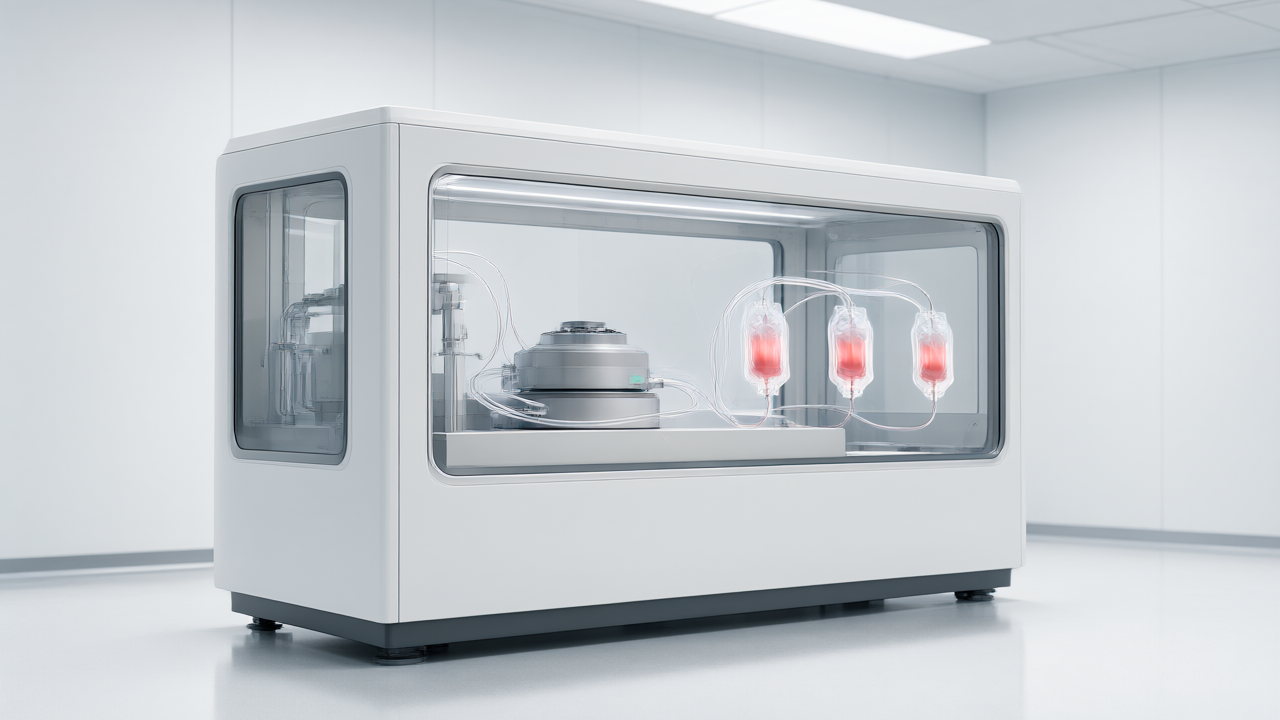
The automated platform executed the entire end-to-end manufacturing workflow, which included the following stages:
- Post-thaw HSPC inoculation
- Cas9 electroporation
- AAV6 transduction
- Harvesting of the final product
To verify the functionality of the geHSPCs, the researchers performed transplantation into mice. The results confirmed that the cells engrafted and reconstituted multiple hematopoietic lineages, proving that the repopulation capacity of the cells remained intact after the automated process.
Background and Context
Gene therapies utilizing HSPCs have the potential to cure various hematologic diseases. However, the current reliance on manual manufacturing workflows presents a significant barrier to patient access because these processes are expensive and difficult to scale.
Significance and Outlook
This work establishes that clinical-scale doses of geHSPCs meeting release criteria can be produced using an automated platform without compromising key product attributes or in vivo function. By transitioning from manual to high-throughput automated manufacturing, this approach provides a path toward more cost-effective production, potentially broadening patient access to HSPC gene therapies.
Source: https://doi.org/10.64898/2026.10.28.758978
Get our weekly technology intelligence — free
Receive an infographic that lets you judge at a glance whether each field’s analysis report is worth reading.
Subscribe Free — Weekly Tech Intelligence
By subscribing, you’ll receive Troy-Technical’s weekly technology intelligence newsletter.
- Your email and selected fields are used only to deliver the newsletter.
- We never share your information with third parties.
- You can unsubscribe anytime via the link in each email.
See our Privacy Policy for details.
Takes about a minute · Unsubscribe anytime