Key Findings
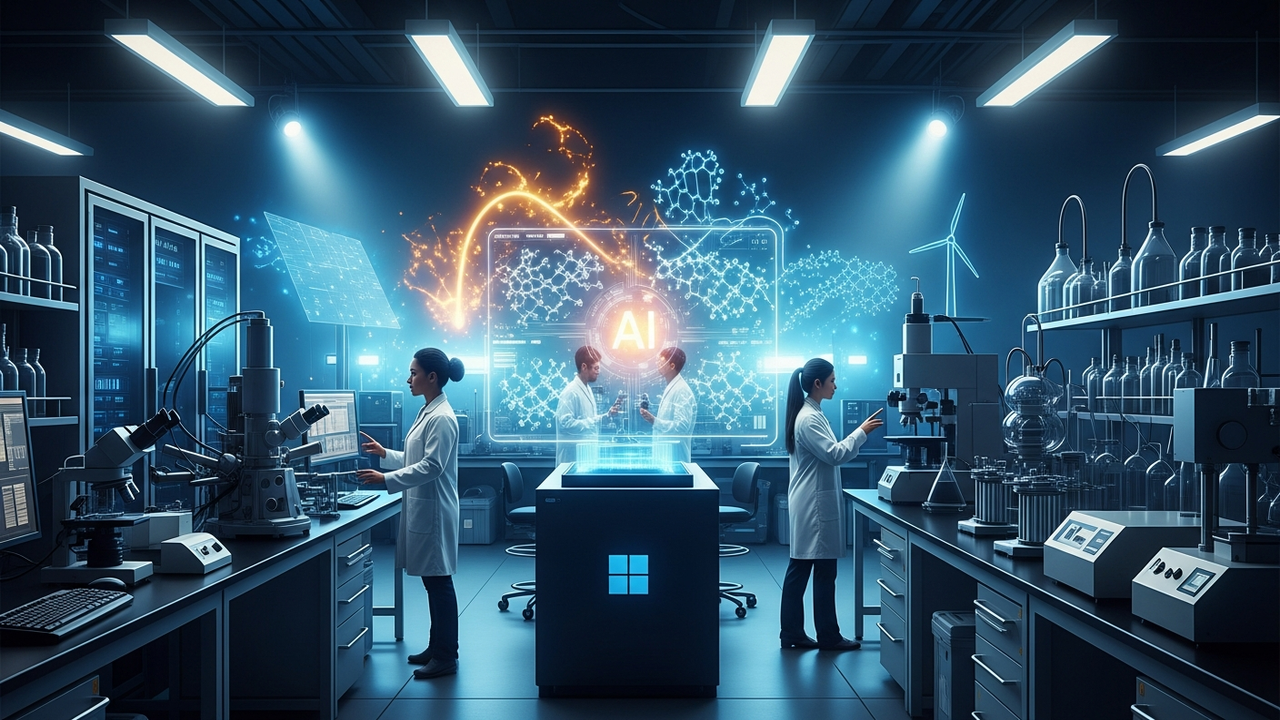
The U.S. Department of Energy (DOE), in its active pursuit of an AI innovation ecosystem, is collaborating with Microsoft to utilize foundation models for the identification of novel battery electrolyte materials. Furthermore, DOE supports the development of automated labs, such as Berkeley Lab’s A-Lab, which employ AI-guided robots to accelerate the discovery of clean energy materials, aiming for groundbreaking advancements in energy storage and sustainability.
Technical / Clinical Details
DOE’s AI innovation strategy involves the fusion of cutting-edge computational tools with experimental automation. In collaboration with Microsoft, large-scale foundation models learn from vast chemical datasets and physical laws to predict properties of new electrolyte candidates or propose previously overlooked molecular structures. This dramatically improves the efficiency of materials exploration compared to traditional trial-and-error approaches. Automated labs, exemplified by Berkeley Lab’s A-Lab, utilize AI algorithms to optimize experimental parameters in real-time, while robots autonomously perform material synthesis, characterization, and data collection. This closed-loop automation can accelerate the materials discovery cycle by several to tens of times, while minimizing human intervention.
Background & Context
The transition to clean energy is a global imperative for addressing climate change and ensuring energy security. This necessitates the development of more efficient, safe, and cost-effective energy storage materials, particularly battery electrolytes and catalyst materials. However, the discovery and optimization of these materials have historically been complex, time-consuming, and costly processes. AI and automation are expected to be powerful tools to accelerate this process and overcome bottlenecks in new materials development. DOE’s initiatives are part of a national strategy to strengthen U.S. scientific and technological competitiveness and expand the energy frontier.
Strategic Significance & Outlook
These DOE initiatives are poised to have a revolutionary impact on the discovery and development of clean energy materials. The combination of AI with Microsoft’s foundation models will accelerate the realization of next-generation batteries with higher energy density, longer cycle life, and improved safety, for example. The proliferation of automated labs will reduce R&D costs and quicken the pace of new discoveries, creating ripple effects across other clean energy sectors such as solar power, hydrogen fuels, and carbon capture technologies. In the future, AI is expected to become the ‘brain’ of the entire scientific discovery process, contributing to the solution of humanity’s most challenging scientific problems.
Source: https://www.osti.gov/pages/servlets/purl/3374402
Get our weekly technology intelligence — free
Receive an infographic that lets you judge at a glance whether each field’s analysis report is worth reading.
Subscribe Free — Weekly Tech Intelligence
By subscribing, you’ll receive Troy-Technical’s weekly technology intelligence newsletter.
- Your email and selected fields are used only to deliver the newsletter.
- We never share your information with third parties.
- You can unsubscribe anytime via the link in each email.
See our Privacy Policy for details.
Takes about a minute · Unsubscribe anytime