Key Findings
A research team at North Carolina State University has successfully developed ‘Flex-Cat,’ a self-driving chemistry lab that highly integrates robotics, high-pressure chemical reactors, automated analysis, and AI. This innovative system is expected to dramatically accelerate catalyst development for a wide range of industrial chemicals, including pharmaceuticals, plastics, and fuels, by autonomously exploring catalyst recipes and reaction conditions without human intervention. Notably, Flex-Cat has also succeeded in discovering catalysts that can switch products on demand, opening new avenues for enhancing manufacturing flexibility in the chemical industry.
Technical / Clinical Details
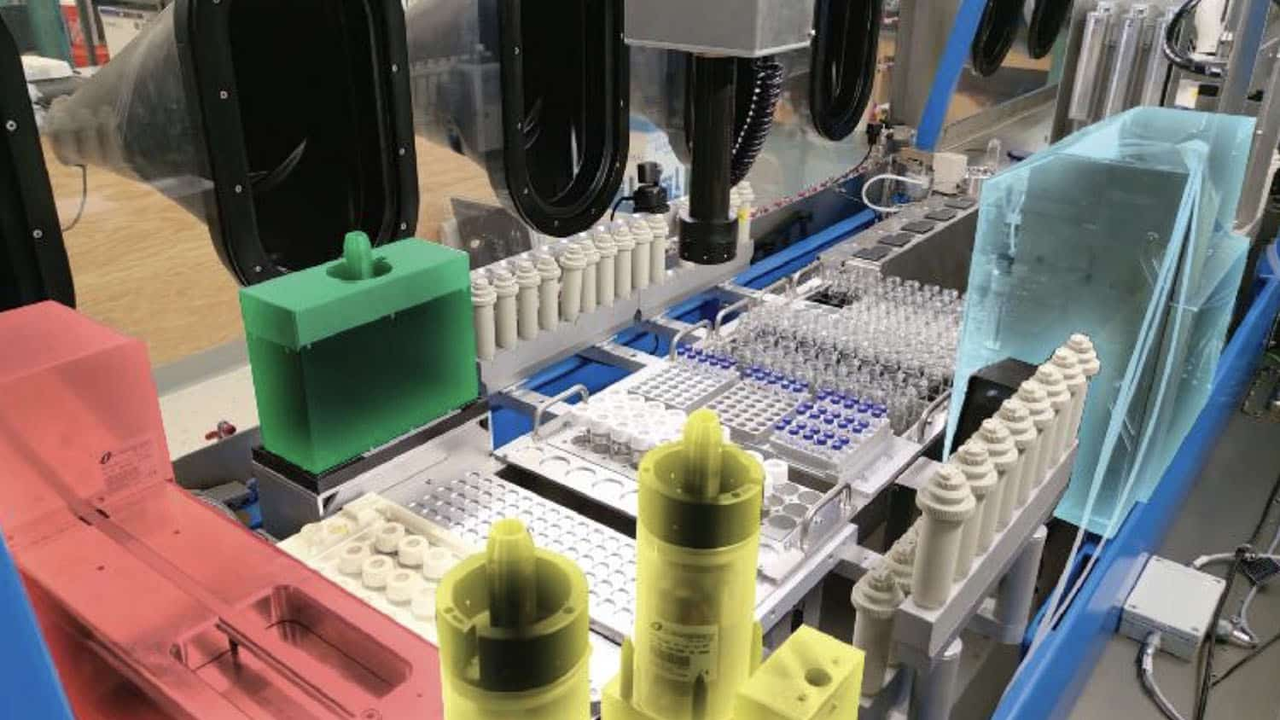
The Flex-Cat lab is designed as a closed-loop autonomous experimentation system that overcomes the limitations of traditional experimental methods. Its main technological components include:
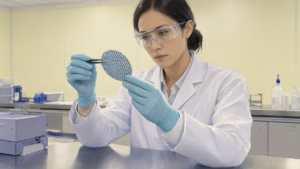
- Robotics: Robotic arms automatically perform physical tasks such as precise reagent metering, mixing, reactor charging, and sample collection. This enables continuous execution of highly reproducible experiments, eliminating human error.
- High-Pressure Chemical Reactors: The system is equipped with specialized reactors capable of simulating chemical reactions under high-pressure conditions commonly used in industrial processes. This allows for practical catalyst development that can be scaled up from lab scale.
- Automated Analytical System: Reaction products are automatically analyzed in real-time by analytical instruments such as gas chromatography (GC), mass spectrometry (MS), and NMR. This rapidly collects crucial data like reaction progress, product types, yield, and selectivity.
- AI-Driven Exploration Algorithms: The collected data is fed back into AI algorithms, including Bayesian optimization and reinforcement learning. The AI autonomously determines the next catalyst composition, concentration, reaction temperature, pressure, and reaction time to try. This enables efficient navigation of a vast exploration space, leading to rapid discovery of optimal catalysts.
- Discovery of On-Demand Product-Switching Catalysts: Flex-Cat successfully discovered ‘switching catalysts’ that can preferentially produce one product under certain reaction conditions and another under different conditions. This suggests the possibility of manufacturing multiple different chemical products with a single facility, significantly improving manufacturing process flexibility and efficiency.
This integrated system resolves bottlenecks in materials development, allowing researchers to focus on more complex chemical challenges.
Background & Context
Catalysts play a central role in the manufacturing processes of many essential chemicals for modern society, including pharmaceuticals, plastics, fuels, and fertilizers. However, the development of new catalysts is a highly complex and time-consuming process, often requiring a vast number of experiments and expert intuition. It is not uncommon for a new catalyst to take over 10 years to be commercialized. The emergence of self-driving labs like Flex-Cat has the potential to dramatically shorten this development cycle and accelerate the transition to a more sustainable and efficient chemical industry. Catalysts capable of switching products on demand are highly valuable for establishing production systems that can respond rapidly to market demand fluctuations.
Strategic Significance & Outlook
North Carolina State University’s Flex-Cat is a groundbreaking technology symbolizing the future of chemical research. Its applications are expected to expand beyond catalyst development to a wide range of chemical and materials science fields, including drug discovery, polymer synthesis, and optimization of energy storage materials. Further advancements in AI and robotics technology will enable it to handle even more complex reactions and multi-step synthesis processes. This technology will accelerate the digitalization and automation of manufacturing processes in the chemical industry, fostering the creation of new chemicals that contribute to a sustainable society. Ultimately, it is anticipated that humans and AI will collaborate to discover unprecedented breakthrough catalysts and materials more quickly and efficiently.
Source: https://news.ncsu.edu/2026/06/self-driving-catalysis-discovery/
Get our weekly technology intelligence — free
Receive an infographic that lets you judge at a glance whether each field’s analysis report is worth reading.
Subscribe Free — Weekly Tech Intelligence
By subscribing, you’ll receive Troy-Technical’s weekly technology intelligence newsletter.
- Your email and selected fields are used only to deliver the newsletter.
- We never share your information with third parties.
- You can unsubscribe anytime via the link in each email.
See our Privacy Policy for details.
Takes about a minute · Unsubscribe anytime