
Background
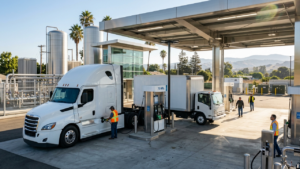
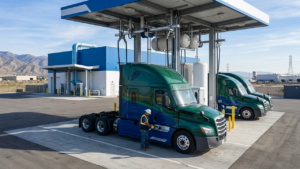
Achieving the European Union’s ambitious goal of carbon neutrality by 2050 heavily relies on the profound decarbonization of its transport sector. Within this critical transition, the heavy-duty truck segment stands out as one of the most challenging areas for emissions abatement. Hydrogen fuel cell technology has emerged as a leading contender to enable zero-emission solutions for long-haul and high-payload applications, offering a viable alternative to traditional diesel. However, the widespread adoption of hydrogen-powered heavy-duty vehicles across Europe faces a significant impediment: the persistent delays in the development of a comprehensive refueling infrastructure.
Key Findings
The H2Accelerate consortium, a collective of prominent industry players, has delivered a strong appeal to the European Commission (EC). They emphatically urged the EC to not only maintain but potentially strengthen the existing ambitious targets for hydrogen refueling station (HRS) deployment during the upcoming review of the Alternative Fuel Infrastructure Regulation (AFIR). This resolute call is underpinned by the conviction that a robust, interconnected, and pan-European hydrogen refueling network is absolutely indispensable for the successful, large-scale adoption of zero-emission heavy-duty trucks across the continent by the crucial target year of 2030.
Technical Details
- AFIR’s Foundational Role: The Alternative Fuel Infrastructure Regulation (AFIR) provides the essential legal framework governing the development of alternative fuels infrastructure across Europe. Specifically for hydrogen, AFIR mandates the installation of HRS along designated main road networks and within urban nodes. H2Accelerate’s intervention underscores that these foundational targets are paramount and should, at a minimum, be upheld and ideally enhanced to meet evolving decarbonization demands.
- De-risking Deployment Through Coordination: The consortium specifically highlighted the efficacy of public support schemes successfully implemented in the Netherlands and Germany. These programs demonstrated a proven ability to stimulate the coordinated deployment of both hydrogen-powered trucks and their corresponding refueling infrastructure. This synchronized approach is critical for overcoming the notorious “chicken-and-egg” problem, where truck operators hesitate to invest without infrastructure, and infrastructure providers are reluctant to build without sufficient vehicle demand.
Strategic Outlook
The recommendations put forth by H2Accelerate are poised to be a significant consideration for the European Commission as it undertakes the pivotal review of AFIR. Should the EC decide to maintain, and ideally reinforce, ambitious and consistent HRS deployment targets across the entirety of Europe, it is highly anticipated that this regulatory clarity will effectively de-risk investments and consequently attract substantial private capital. This, in turn, is expected to dramatically accelerate the market expansion of hydrogen heavy-duty trucks. Such a decisive move would not only solidify Europe’s burgeoning global leadership in heavy-duty transport decarbonization but also significantly hasten the continent’s transition towards a more sustainable and low-carbon future.
Get our weekly technology intelligence — free
Receive an infographic that lets you judge at a glance whether each field’s analysis report is worth reading.
Subscribe Free — Weekly Tech Intelligence
By subscribing, you’ll receive Troy-Technical’s weekly technology intelligence newsletter.
- Your email and selected fields are used only to deliver the newsletter.
- We never share your information with third parties.
- You can unsubscribe anytime via the link in each email.
See our Privacy Policy for details.
Takes about a minute · Unsubscribe anytime







Comments