TECHNOLOGY EXPLAINER
Copyright, Provenance and Deepfakes
— Separating training, generation and marking duties, from the statutes and rulings
The legal and technical questions around generative AI fall into four groups: how training data is treated, protection and infringement of outputs, marking content as AI-generated (provenance), and content that imitates real people or scenes (deepfakes). Each country starts from a different base: Japan from Article 30-4 of its Copyright Act, the EU from a text-and-data-mining exception with rights reservation and Article 50 of the AI Act, and the United States from individual court cases and Copyright Office reports. On 29 September 2026 a US court of appeals (the Third Circuit) issued a ruling on fair use over AI training data, in a case about a search service rather than generative AI. Within what statutes, rulings and official documents support, this article sets out what is settled, what is pending, and what we could not confirm. We make no guess at the outcome of pending lawsuits, we do not blame any company or individual, and nothing here is legal advice. We do not describe concrete procedures for misuse or circumvention.
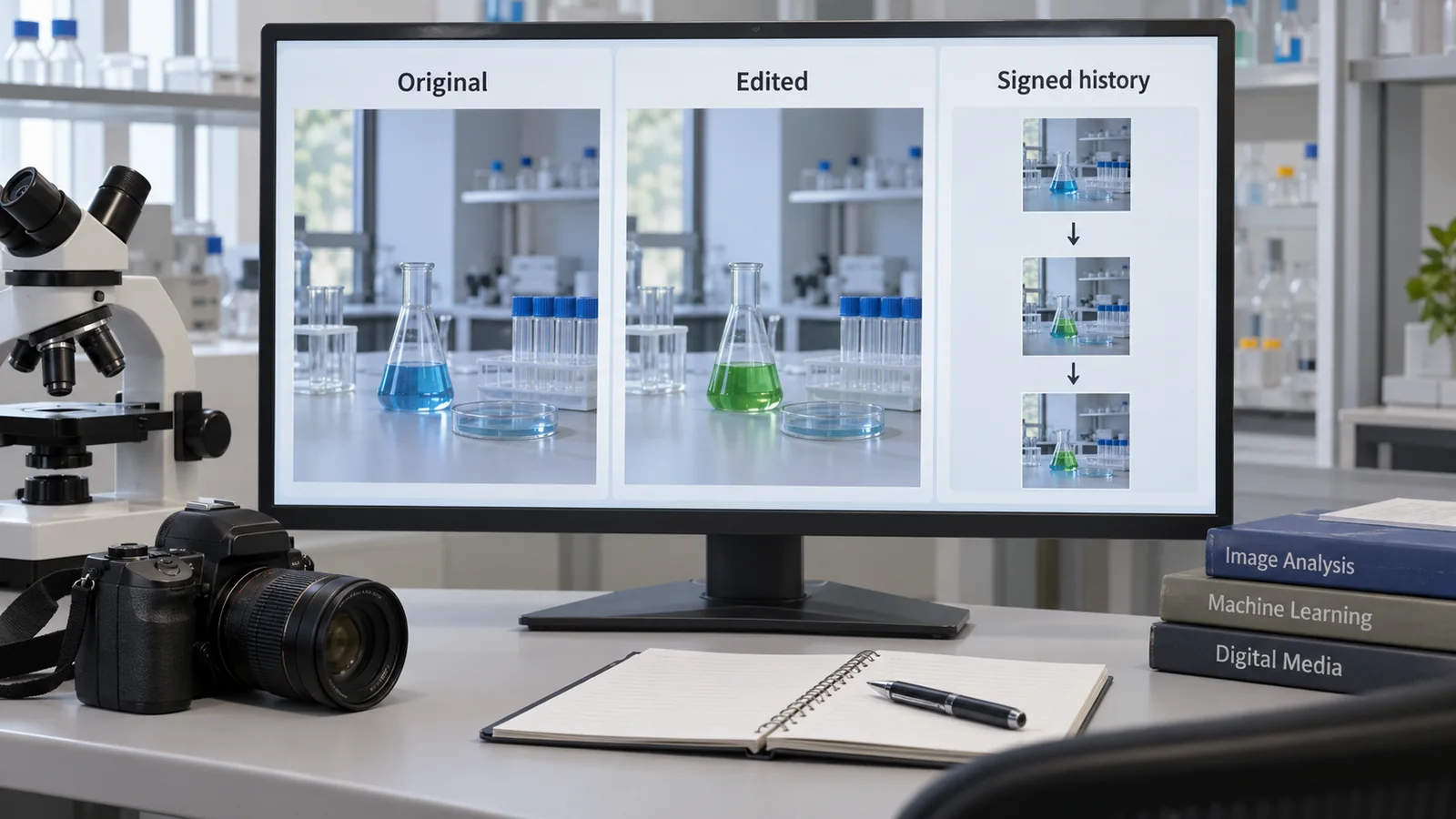
- The short version
- Training and copyright: the bases in Japan, the EU and the US
- Outputs and copyright: copyrightability, and outputs that resemble existing works
- Where the courts stand: rulings issued, and cases pending
- Provenance technology: signed metadata, watermarks, fingerprints
- Marking duties and legal regimes: the EU, China, Japan, the UK and the US
- Deepfakes: types of harm, limits of detection, our calculation
- Cautions for materials, chemicals and manufacturing
- Limits, and what we could not confirm
- How to read evaluations and standards
- Glossary
- References
- Claim-to-source audit
Sourced = stated in a statute, ruling, official document or paper (linked)
Our calculation = a value this article computed from stated assumptions
Not yet confirmed = a proposal, a pending proceeding, or something under revision; not settled
Interpretation is marked commentary. An inference is shown in bold. Because this field changes quickly, regulations, rulings and standards carry the check date (15 October 2026). We also keep proposal, adoption and entry into force apart.
We do not predict the outcome of pending lawsuits or proceedings, blame any company or individual, or give legal or investment advice. We do not describe how to make deepfakes, how to remove or evade watermarks or metadata, or how to slip past detection. We explain how to read statutes and rulings, and how an organization can prepare. For the lawfulness of a specific matter, consult a lawyer or other professional.
1. The short version
- Copyright questions fall into three layers, and each country starts from a different base. The layers are (1) use of training data, (2) whether outputs are protected as works, and (3) infringement when an output resembles an existing work. For (1), Japan relies on Article 30-4 of the Copyright Act (with a proviso), the EU on a TDM exception that rightholders can reserve by machine-readable means (DSM Directive Article 4) plus the duties in Article 53 of the AI Act, and the US not on a statutory exception but on case-by-case fair use Sourced [Ref. 1, 4, 5, 17].
- Provenance and marking are moving on both the technical and the legal side. Article 50 of the EU AI Act applies from 2 August 2026, and the EU code of practice calls for at least two layers, such as signed metadata and an imperceptible watermark, because under the current state of the art no single technique suffices. NIST likewise says no technique offers a comprehensive solution on its own Sourced [Ref. 10, 11, 39].
- What a detector's output means depends on the base rate. Even a detector with 95% sensitivity and 95% specificity gives a "positive" that is truly AI-generated only about 16% of the time if 1% of the content is AI-generated (a calculation under stated assumptions) Our calculation.
2. Training and copyright: the bases in Japan, the EU and the US
| Region | Base provisions (as far as we checked) | Key points in reading |
|---|---|---|
| Japan | Copyright Act Article 30-4: a work may be used, to the extent considered necessary and by any method, where the purpose is not to enjoy, or let others enjoy, the thoughts or sentiments expressed in the work. Examples given: testing for technology development or practical application, information analysis, and uses that involve no human perception of the expression. This does not apply where the use would unreasonably prejudice the interests of the copyright holder, in light of the type and purpose of the work and the manner of use [Ref. 1] | The dividing lines are whether the purpose is "enjoyment" and whether the interests are "unreasonably" prejudiced. The Agency for Cultural Affairs' General Understanding (15 March 2024) states that it is not legally binding and is not a definitive legal assessment of any specific generative AI [Ref. 3] |
| EU | DSM Directive (2019/790, 17 April 2019) Article 4: an exception for reproductions and extractions of lawfully accessible works for text and data mining. The condition is that rightholders have not expressly reserved the use in an appropriate manner, such as by machine-readable means for content made publicly available online [Ref. 4]. AI Act Article 53(1): providers of general-purpose AI models must (c) put in place a policy to comply with Union copyright law (including identifying and complying with a reservation under Article 4(3), using state-of-the-art technologies) and (d) publish a sufficiently detailed summary of the content used for training, using the AI Office template [Ref. 5] | Unlike Japan, rights reservation is built into the system. The GPAI Code of Practice copyright chapter shows practical means (next box) |
| US | The Copyright Act has no special exception for training; the question is decided case by case under fair use (17 U.S.C. section 107). The Copyright Office's Part 3 report (pre-publication version of 9 May 2025) says uses in training are likely to be transformative, but whether they are fair depends on what works were used, from what source, for what purpose and with what controls on outputs, and that commercial use of vast troves of works to produce competing expressive content, especially through illegal access, goes beyond established fair use boundaries. A final version is to be published in the future [Ref. 14, 17] | The report offers an analytical framework and says it does not prejudge any particular case. Court rulings are in Chapter 4 |
A summary of the provisions and documents (Sourced). The EU provisions were checked in the wording of the original text in the Official Journal (2024/1689); the change of application dates by the AI Omnibus Regulation (2026/1744) is covered in Chapter 6 [Ref. 6]. We do not say which country is more favorable.
Japan: how the Agency for Cultural Affairs' General Understanding reads Article 30-4
The Agency for Cultural Affairs' "General Understanding on AI and Copyright in Japan" was compiled by a subcommittee of the Council for Cultural Affairs in the absence of accumulated precedent. It states the following Sourced [Ref. 2, 3].
- Article 30-4 does not apply where a purpose of enjoyment coexists. If, alongside a non-enjoyment purpose such as information analysis, there is a purpose of enjoyment, the use is outside Article 30-4. As an example it gives additional training done for the purpose of making the model output the creative expression of a small set of one creator's works. On the other hand, the mere fact that some outputs resemble learned works does not by itself imply a purpose of enjoyment.
- A rightholder's expressed objection does not by itself trigger the proviso. At the same time, taking machine-readable technical measures against copying for AI training, such as robots.txt or ID-and-password authentication, is not restricted by copyright law.
- Where a database is planned for sale, the proviso may apply. Where such measures, together with a track record or plans of selling a database organized for information analysis, can be inferred, collecting data by circumventing the measures could obstruct the database's future market and so fall within the proviso and outside Article 30-4 (the document also notes dissenting views).
- Pirated copies. It says that asking collectors to judge whether something is pirated is often unrealistic, but that knowingly collecting from sites that host pirated copies should be strictly avoided, and that such a fact is one factor that raises the possibility of liability (as a normative actor) for infringement by the resulting generative AI.
- RAG (retrieval-augmented generation). Using existing works to generate answers may fall under Article 47-5 (minor use), but only for minor use, and not where providing the creative expression is the main purpose. Beyond minor use, permission is in principle needed.
Separately, Article 3, paragraph 4 of Japan's Act on the Promotion of Research and Development, and Utilization of Artificial Intelligence-Related Technologies (the AI Promotion Act) provides that, because improper purposes or methods may encourage crime, leaks of personal information, copyright infringement and the like, measures such as ensuring transparency must be taken (the Act has no chapter on penalties) [Ref. 50]. See our explainer on AI policy in the United States, China and Japan.
EU: how the GPAI Code of Practice copyright chapter addresses rights reservations
The GPAI Code of Practice, published by the European Commission on 10 July 2025, has three chapters: transparency, copyright, and safety and security. The copyright chapter is a means for providers to show that they meet Article 53(1)(c) of the AI Act, and includes the following commitments Sourced [Ref. 7, 8].
- Draw up, keep up to date and implement a copyright policy, including assigning responsibilities within the organisation.
- When crawling the web, reproduce and extract only lawfully accessible content. Do not circumvent technological protection measures such as subscription models or paywalls, and exclude from crawling websites recognised by courts or public authorities in the EU and EEA as persistently and repeatedly infringing copyright on a commercial scale.
- Identify and comply with rights reservations. Use crawlers that follow the Robots Exclusion Protocol (IETF RFC 9309), and comply with other machine-readable methods adopted by international or European standardisation bodies or that are state of the art and widely adopted [Ref. 49]. Enabling rightholders to obtain information about the crawlers is also committed.
- Mitigate the risk of copyright-infringing outputs. Implement appropriate and proportionate technical safeguards against outputs that reproduce training content in an infringing manner, and prohibit infringing uses in acceptable use policies and similar documents.
- Designate a point of contact and a complaints mechanism, and act on sufficiently precise and adequately substantiated complaints within a reasonable time.
The public summary of training content is set out in the template and explanatory notice that the AI Office published on 24 July 2025 [Ref. 9]. Signing the code is voluntary, and a provider that does not sign must show compliance by alternative adequate means (Article 53(4) and the code's page) [Ref. 5, 7]. The legal duties themselves are covered in our explainer on the EU AI Act.
3. Outputs and copyright: copyrightability, and outputs that resemble existing works
(1) Is what AI makes protected as a work?
| Region | What the documents say | Status |
|---|---|---|
| Japan | A work is "a creative expression of thoughts or sentiments", and an author is "a person who creates a work" (Copyright Act Article 2(1)(i) and (ii)). The Agency for Cultural Affairs' General Understanding reasons that AI has no legal personality and so cannot be an author; the person who created with AI is the author. If the instructions to AI stay at the level of ideas that do not amount to expression, copyrightability is not recognized. As factors it lists the volume and content of instructions and input, the number of generation attempts, and selection from multiple outputs. The number of attempts or mere selection alone does not affect creative contribution, but repeated attempts in which the person checks the output and revises the instructions may be recognized. Parts to which a person has added creative expression by adding to or modifying the output are normally recognized [Ref. 1, 3] | View (not legally binding) |
| US | Copyright Office Part 2 report (29 January 2025): using AI to assist human creativity does not affect protection of the output. Protection covers the original expression created by a human author, even if the work includes AI-generated material, but not purely AI-generated material, or material where human control over the expressive elements is insufficient. With currently available technology, prompts alone do not provide sufficient control. Human authors hold rights in their own expression perceptible in AI outputs, and in creative selection, arrangement or modification. No case was made for new protection by legislation [Ref. 16]. The D.C. Circuit held on 18 March 2025 that the Copyright Act requires a human to be the author in the first instance [Ref. 18]. The Supreme Court denied the petition for review on 2 March 2026 (Petition DENIED) [Ref. 19] | The report is a view. The appeal decision is a ruling (a denial of review does not endorse its reasoning) |
| UK | The Government's report (18 March 2026) proposes removing protection for wholly computer-generated works absent evidence of its ongoing value, while keeping protection for AI-assisted works [Ref. 31] | Not yet confirmed (a proposal) |
A summary of statutes, rulings and official documents (Sourced). Copyrightability is judged case by case, and this table gives no general conclusion (both the US and Japanese documents say so).
(2) When an output resembles an existing work
The General Understanding applies the established view, that infringement may arise where both similarity and dependence on an existing work are found, to generative AI Sourced [Ref. 3].
- The user knew of the existing work (for example, input the work itself or a specific title): dependence is recognized, and infringement by the user may be established.
- The user did not know of it, but the work was in the training data: dependence is normally inferred and infringement is possible. However, where it is technically ensured that the creative expression of learned works is not output at the generation stage (for example by filtering at the output stage), dependence may be found absent (the document notes dissenting views).
- The user did not know of it and the work was not in the training data: a coincidence, so dependence is not recognized and infringement is not established.
- The remedies for infringement (injunction, damages, criminal penalties) depend on the actor's intent or negligence. Sharing a style is not infringement as long as it remains at the level of ideas.
Commentary: This arrangement suggests that records of "what was used for training" and "what measures are taken on the output side" may matter for businesses, and records of "what was entered" for users. In a company's usage rules, it makes sense to decide what must not be entered (other people's works themselves, specification by proper names) and the steps for checking an output before publication.
4. Where the courts stand: rulings issued, and cases pending
There are many lawsuits on AI and copyright, and they differ in the AI involved, the facts and the findings. Below we list only what we could confirm in judgments and official court materials, with the gist of each decision and its status on the check date. We do not predict the outcome of pending cases.
| Court, date, case | Gist of the decision (as stated in the judgment or official material) | Status on the check date |
|---|---|---|
| US, N.D. Cal. Bartz v. Anthropic 23 June 2025 (order on fair use) | Held training use to be fair use, and the print-to-digital conversion of purchased books to be fair use for a different reason. It declined summary judgment on whether copies obtained from pirate sites and kept in a central library can be treated as training copies, and sent that matter, including damages, to trial [Ref. 20] | Term sheet signed 25 August 2025, proposed settlement 5 September, preliminary approval after the hearing of 25 September. Later steps, including final approval, are unconfirmed [Ref. 21] |
| US, N.D. Cal. Kadrey v. Meta 25 June 2025 | Granted the defendant partial summary judgment on the claims of thirteen plaintiffs. The ruling itself says it does not hold that using copyrighted works to train is lawful, but only that these plaintiffs made the wrong arguments and did not develop a record, and that, not being a class action, it does not affect other authors [Ref. 22] | Proceedings continue. A discovery order was issued on 29 September 2026 [Ref. 23] |
| US, Third Circuit Thomson Reuters v. ROSS 29 September 2026 | On an interlocutory appeal, affirmed the order granting partial summary judgment. Held Westlaw headnotes copyrightable and the use of them to build a competing legal-research service not fair use. The AI at issue is a search service that does not generate new expression, and in a footnote the court says the concerns in a case about training generative AI do not apply here [Ref. 24] | Just issued. Any further steps, such as a petition for review, are unconfirmed |
| US, S.D.N.Y. OpenAI copyright litigation (consolidated, 1:25-md-3143) | No judgment yet. A footnote in the Third Circuit's ruling records that the US Department of Justice filed a statement of interest on generative AI in this case on 1 September 2026 [Ref. 24] | Pending. Not yet confirmed |
| UK High Court Getty Images v Stability AI [2025] EWHC 2863 (Ch) 4 November 2025 | The training-and-development claim (no evidence it took place in the UK) and the output claim were abandoned near the close of the trial. The secondary-infringement claim was dismissed because the model weights do not store infringing copies and are not an infringing copy. The trade mark claim succeeded in part, limited to particular examples of generated watermarks, and was otherwise dismissed; the judgment says it is impossible to know on what scale this occurs in real life [Ref. 25] | By a ruling of 16 December 2025 ([2025] EWHC 3343 (Ch)), the claimants were granted permission to appeal on the secondary-infringement point (a pure question of law), and the defendant was refused permission on the trade mark point [Ref. 26]. The appeal outcome is unconfirmed |
| Germany, Regional Court Munich I GEMA v OpenAI (42 O 14139/24) 11 November 2025 | According to the court's press release, for the lyrics of nine authors, memorization in the model's parameters amounts to reproduction, and the chatbot's outputs also amount to reproduction and making available to the public. The TDM exception may cover preparatory copies in assembling a training corpus but not reproduction of works inside the model; no exception covers the outputs; responsibility lies with the operator and not the users. It largely granted the claims for injunction, information and damages, and dismissed the personality-rights claim [Ref. 27] | The press release states the judgment is not final. The same court gave a judgment on 31 July 2026 in another case about a music-generation AI (42 O 763/25), largely granting the claims (not final) [Ref. 28]. Outcomes in higher courts are unconfirmed |
| Court of Justice of the EU C-250/25 Like Company v Google Ireland referred 3 April 2025 | A reference for a preliminary ruling from a Hungarian court. According to the European IP Helpdesk, it asks three questions: (1) whether a generative AI chatbot displaying content partly identical to a protected press publication is communication to the public, (2) whether training an LLM is reproduction, and (3) whether the TDM exception (DSM Directive Article 4) covers these. A Grand Chamber hearing was held on 10 March 2026 [Ref. 29, 30] | No judgment. The Helpdesk article (24 April 2026) expected the Advocate General's opinion on 3 September 2026, but we could not confirm that it was delivered |
A summary of judgments, orders and official announcements (Sourced). The parties' arguments are limited to what the judgments and announcements record. This table does not show which side is right.
- They depend heavily on the facts and the record. Even for "AI training", the route of acquisition (purchase or piracy), the nature of the output (generation or search) and the proof of market effect can change the result. The Kadrey ruling itself says its outcome is limited to the plaintiffs' arguments and record.
- A district court's ruling does not bind other courts. Legal systems differ between countries, so the UK, German and US decisions cannot be compared directly.
- A ruling about non-generative AI does not necessarily carry over to generative AI. The ROSS ruling itself makes that distinction in a footnote.
- Settlements and appeals change the picture. This table covers what we could confirm as of 15 October 2026.
5. Provenance technology: signed metadata, watermarks, fingerprints
Provenance is a record of where digital content came from and how it has changed since. NIST's report says that techniques for tracking provenance data, and for detecting such data, may help establish whether content is synthetic or authentic for broad audiences, but that this does not translate directly into trustworthiness (authentic content can still be harmful or misleading), and that they may reduce some risks by providing greater transparency Sourced [Ref. 39]. The EU code of practice arranges the ways of leaving provenance into the following three [Ref. 11].
| Layer | How it works (as stated in the documents) | Weaknesses and limits (as stated in the documents) |
|---|---|---|
| Signed metadata (for example C2PA, Content Credentials) | The C2PA specification bundles "assertions" into a claim signed by the signer, and attaches it as a "manifest" bound to the content by hashes. Trust decisions rest on the identity of the signer, and the specification does not make value judgments about whether provenance data is "good" or "bad"; it addresses only whether the assertions can be validated as associated with the asset, correctly formed and free from tampering [Ref. 34] | If an asset's metadata is removed or corrupted, the asset can become separated from its manifest. The specification therefore has the notion of a "durable Content Credential", whose manifest can be found again through a fingerprint or watermark [Ref. 34] |
| Imperceptible watermark | Information is embedded in the content itself in a way people hardly notice. The EU code of practice treats it as a robust complement to metadata, and mentions embedding at generation time (model level) and applying after generation [Ref. 11]. An example for text is a paper in Nature (2024) reporting a scheme called SynthID-Text [Ref. 40] | The EU code of practice says that free-form text longer than 200 tokens still needs a watermark, but that it may be less reliable than for very long text, so access to the detector may be restricted to verified expert users [Ref. 11] |
| Fingerprint, log (optional) | Features of the output or a record are kept so that one can later check whether one's own AI generated it. Logging suits text and fingerprinting suits audio and visual content, it says [Ref. 11] | The EU code of practice says relying on fingerprinting or logging alone is not considered sufficient to meet the statutory quality requirements. It also mentions privacy, scalability and cost [Ref. 11] |
A summary of the documents (Sourced). We could not find, within this survey, a common benchmark that measures the effect of combining them. The EU code of practice itself allows documented internal testing until recognised performance evaluation methods and benchmarks emerge.
How far standardization has gone
- C2PA: the specification has gone through versions, and its version history lists version 2.3 (December 2025) and version 2.4 (April 2026). C2PA's announcement of 9 February 2026 says version 2.3 added support for live video, more file types (text, OGG Vorbis, large AVI and others), more detail in editing history and updated validation for tamper detection, and says a conformance program started in late 2025 [Ref. 34, 35]. The version history of 2.4 records, besides clarifications, a JSON representation (crJSON), a machine-readable AI disclosure assertion (
c2pa.ai-disclosure), and embedding in HTML and structured text [Ref. 34]. - IPTC: the news-industry vocabulary "Digital Source Type" has values such as "Digital capture sampled from real life" and "Created using Generative AI" (trainedAlgorithmicMedia), so whether content was captured or generated can be recorded in machine-readable form [Ref. 36].
- ISO/IEC: JPEG Trust (ISO/IEC 21617-1) is a standard for a framework for establishing trust in media (authenticity, provenance, attribution, intellectual property rights and integrity), and its second edition was published in August 2026 (the first edition of January 2025 was withdrawn) [Ref. 37]. ISO 22144 (Authenticity of information — Content credentials), based on C2PA, is on the ISO page under development (committee draft stage) on the check date [Ref. 38].
6. Marking duties and legal regimes: the EU, China, Japan, the UK and the US
| Region | What we could confirm | Stage |
|---|---|---|
| EU | AI Act Article 50: (2) providers of AI systems generating synthetic audio, image, video or text content must ensure outputs are marked in a machine-readable format and detectable as artificially generated or manipulated. Technical solutions must be effective, interoperable, robust and reliable as far as technically feasible. (4) deployers of a system that generates or manipulates deep fake content must disclose that it is artificially generated or manipulated (for evidently artistic, creative, satirical or fictional works, disclosure of existence in a way that does not hamper enjoyment of the work). Published text on matters of public interest must also be disclosed unless it has undergone human review and editorial responsibility [Ref. 5]. It applies from 2 August 2026. The AI Omnibus Regulation (2026/1744) sets 2 December 2026 as the date by which providers of generative systems placed on the market before 2 August 2026 must meet Article 50(2) [Ref. 6, 10] | Adopted and in force. Applies from 2 August 2026 (for existing systems, Article 50(2) from 2 December) |
| EU (code of practice, guidelines) | The transparency code of practice is a voluntary means covering Article 50(2), (4) and (5), in two sections (providers, deployers). The Commission (8 July 2026) and the AI Board (9 July) confirmed it adequate, and about 190 companies and organisations had signed by the end of July 2026. For providers it commits to at least two layers of machine-readable marking for image, audio and video (signed metadata plus an imperceptible watermark). For deployers it covers disclosure of deep fakes and certain text, and an EU icon was also created. Adherence is not conclusive evidence of compliance. Guidelines (20 July 2026) clarify scope, definitions and exceptions [Ref. 10-13] | Published; open for signature (voluntary) |
| China | Measures for Labeling AI-Generated Synthetic Content (a notice of the Cyberspace Administration and others, dated 7 March 2025, in force 1 September 2025): explicit labels (text, sound or graphics users can clearly perceive) and implicit labels (in the file metadata: attributes of generated content, the provider's name or code, a content number and so on). Implicit labels such as digital watermarks are "encouraged". Dissemination platforms must add notices around published content depending on the metadata check, the user's declaration and traces detected. The method of labeling is set by national standard GB 45438-2025 (we checked the text through a copy on a law firm's website, and could not confirm an official publication page) [Ref. 42, 43] | In force |
| Japan | The AI Basic Plan (Phase II, adopted by the Cabinet on 14 July 2026) refers to cases involving deepfakes and possible infringement of portrait rights, unauthorised use of voices and copyright, and lists among its measures support for developing technologies that identify AI-generated content (for example digital watermarks and technologies supporting after-the-fact authenticity checks) [Ref. 44]. We could not confirm a statute requiring marking of AI-generated content in general | A plan (results are Not yet confirmed) |
| UK | The Government's report (18 March 2026) says there are no obligations in the UK for AI-generated content to be labelled, and proposes working with industry to explore best practice [Ref. 31] | No obligation; proposal stage |
| US (federal) | The TAKE IT DOWN Act (Public Law 119-12, 19 May 2025) prohibits at federal level the intentional disclosure of nonconsensual intimate visual depictions (including digital forgeries), requires covered platforms to set up a notice-and-removal process within one year of enactment and to remove within 48 hours of a valid request, and to make reasonable efforts to remove known identical copies [Ref. 32]. We could not confirm a general marking duty for outputs. The NO FAKES bill on voice and likeness (S.4591, introduced 20 May 2026) was reported with an amendment by the Judiciary Committee on 24 June 2026 and is on the Senate calendar (Calendar No. 446) [Ref. 33]. We could not confirm its enactment | The TAKE IT DOWN Act is enacted. The NO FAKES bill is Not yet confirmed (a proposal) |
A summary of statutes and official documents (Sourced). US state laws vary and are not surveyed here. The US Copyright Office's Part 1 report (31 July 2024) concluded that a new federal law on digital replicas is needed, and recommended confining it to replicas realistic enough to be hard to tell from authentic depictions, tying liability to distribution or making available, providing a platform notice-and-removal mechanism, and not fully preempting state law [Ref. 15].
Commentary: The EU and China are alike in requiring providers to apply machine-readable marking, but the EU sets requirements (effective, interoperable, robust, reliable) without prescribing a method and shows the practical form in a code of practice, while China specifies the label format in a national standard. In neither case does the absence of a marking guarantee that content is authentic. The practical caution is that a marking, when present, is a lead, and its absence does not mean content is safe.
7. Deepfakes: types of harm, limits of detection, our calculation
The EU AI Act defines a deep fake as AI-generated or manipulated image, audio or video content that resembles existing persons, objects, places, entities or events and would falsely appear to a person to be authentic or truthful (Article 3(60)) [Ref. 5, 10]. NIST's report says much synthetic content is not inherently harmful, but some can accelerate and exacerbate existing harms such as information integrity issues, synthetic CSAM, nonconsensual intimate images (NCII) and fraud (including identity theft). It also mentions that synthetic images, voices or video may be used to fool biometric authentication systems or to mislead people into facilitating fraudulent transactions, for example through voice cloning Sourced [Ref. 39].
On 3 December 2024 the FBI's Internet Crime Complaint Center warned that criminals use generative AI text, images, audio and video to make fraud more believable. As preparation for verifying identity, it advises hanging up and calling a publicly listed contact yourself, agreeing a secret word with family, and not increasing the public availability of your image and voice more than necessary Sourced [Ref. 48].
Limits of detection
- NIST: the efficacy of many techniques for provenance tracking, detection, labeling and authentication is not yet fully examined, and no technique offers a comprehensive solution on its own. For applications that need high accuracy, a defense-in-depth approach is likely to be helpful [Ref. 39].
- Deepfake-Eval-2024: on a benchmark of in-the-wild deepfakes circulated in 2024 (45 hours of video, 56.5 hours of audio, 1,975 images, from 88 websites in 52 languages), the AUC of open-source state-of-the-art detection models fell by 50% for video, 48% for audio and 45% for images compared with previous benchmarks. Commercial models and models fine-tuned on the benchmark did better, but do not yet reach the accuracy of deepfake forensic analysts [Ref. 41].
These show that a detector's accuracy on academic data and its usefulness in real operation are different things (commentary). We do not rank individual detectors.
Let s be the detector's sensitivity (the share of AI-generated content it correctly flags), t its specificity (the share of authentic content it correctly passes), and p the share of AI-generated content in the population checked (the prevalence). The share of positives that are truly AI-generated (the positive predictive value) is
PPV = s*p / (s*p + (1 - t)*(1 - p)) Our calculation.
- With 95% sensitivity and 95% specificity, if AI-generated content is 1% of the whole, the PPV is about 16%. At 10% it is about 68%, and at 50% it is 95%.
- With 99% specificity, the PPV is about 49% at 1% and about 8.7% at 0.1%.
- In short, the fewer AI-generated items in the population checked, the more of the positives are wrong, even with the same detector.
Assumptions and limits: the sensitivity and specificity are assumed for illustration and are not the performance of any real detector. Actual values vary with content type, degree of processing and generation method, and this article gives no independently verified values. A detection result is best treated as one input, to be judged together with provenance records, verification of the sender and several means.
8. Cautions for materials, chemicals and manufacturing
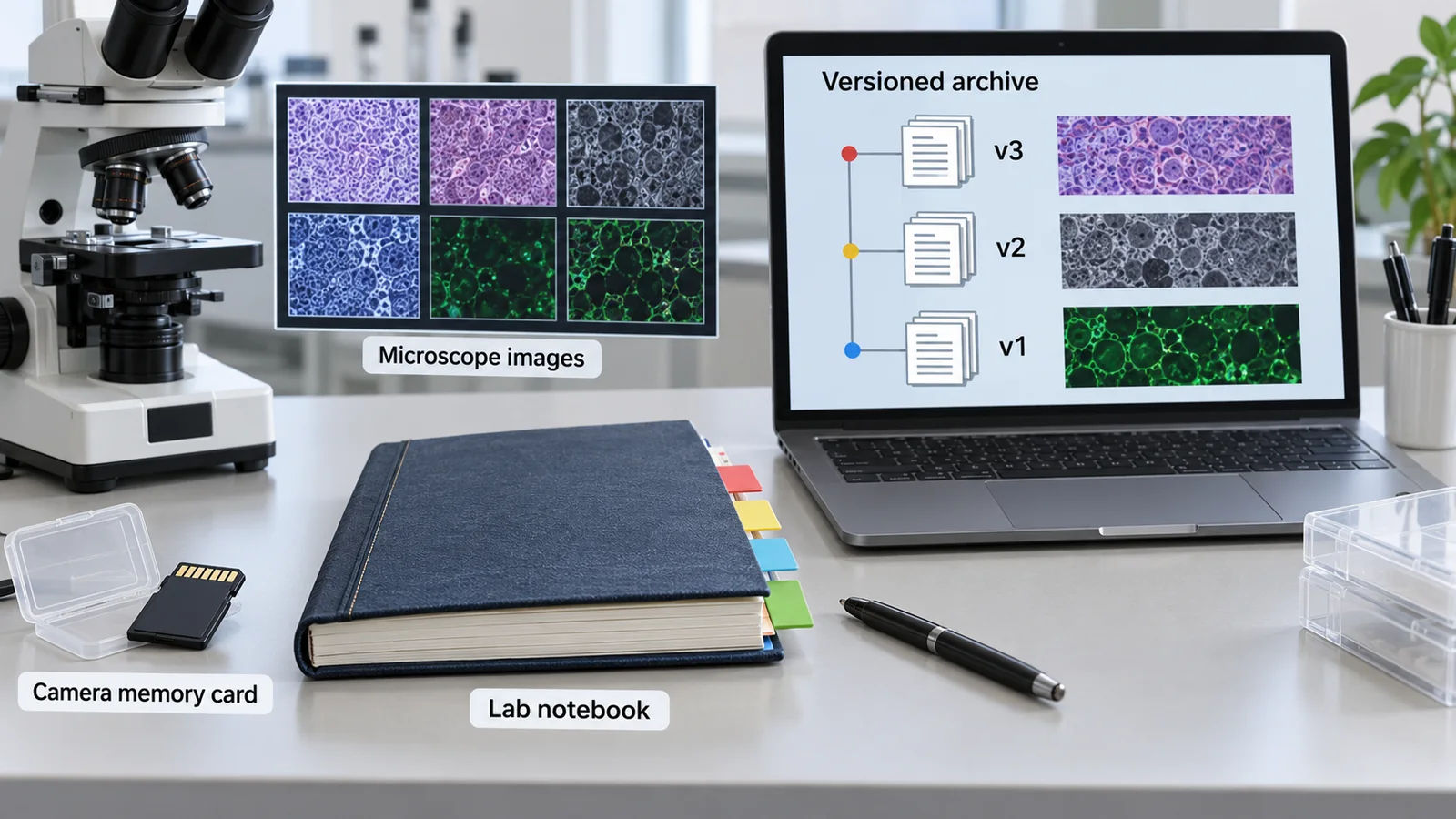
When AI is used to search for materials or propose structures, who can be said to have invented or created the result is the premise for patents and copyright. In its revised guidance of 28 November 2025 the US Patent and Trademark Office sorted this out as follows: AI systems, including generative AI, are instruments used by human inventors (like laboratory equipment, software or research databases), AI is not a person and so cannot be a joint inventor, and the same standard of inventorship applies to AI-assisted inventions (the guidance of February 2024 was rescinded) [Ref. 45]. Japan's Intellectual Property High Court likewise held on 30 January 2025 that only inventions made by a natural person as inventor can be patented, and upheld the rejection of an application naming AI as the inventor [Ref. 46]. For copyright too, both the US Copyright Office and Japan's Agency for Cultural Affairs distinguish between using AI to assist human creation and using AI output as it is [Ref. 3, 16]. Practical reading (commentary): keeping dated records, in lab notebooks or electronic records, of the human judgments that adopted, modified and evaluated AI's suggestions (which candidates were chosen, which conditions changed, what was confirmed by experiment) lays the groundwork for later explanation. For a specific filing or right, consult a patent attorney or lawyer.
The FBI warns that criminals use generative AI to make fake identity documents, images, voices and video for fraud, and advises, among other things, hanging up and calling a publicly listed contact yourself [Ref. 48]. In materials, chemicals and manufacturing, requests to change a payee, certificates of analysis and test certificates, SDSs (safety data sheets) and inspection photographs feed straight into business decisions (commentary). A realistic double check is not to judge by the received document or image alone, to confirm important changes with the original contact through a known channel, and to consider using signatures and provenance records (such as C2PA) when originals are exchanged or stored (C2PA helps detect tampering but does not judge whether content is true [Ref. 34]). For scholarly papers, Springer Nature's policy permits AI polishing of language but does not permit creating photorealistic images (deepfakes), assigning authorship to AI, or using an LLM to generate core research reasoning without disclosure, and states that accountability remains human (the page as checked) [Ref. 47]. A working rule follows: do not use AI-generated or AI-processed figures or micrographs as measured data in papers or technical documents (commentary).
When you let an in-house AI read other companies' papers as PDFs, standards, catalogues or manuals, how far that is permitted under copyright law depends on the country and on the form of use (training, RAG, or summaries in output). The Agency for Cultural Affairs' General Understanding says that use of existing works in RAG is limited to minor use under Article 47-5, and that where providing creative expression is the main purpose, or the use goes beyond minor use, permission is in principle required [Ref. 3]. Standards and databases often come with licence terms set at purchase, so first check by contract whether entering them into AI, or using an outside service, is consistent with those terms (commentary). Conversely, if you do not want your published material used for AI training: in Japan, a rightholder's expressed objection does not by itself trigger the proviso of Article 30-4, while taking machine-readable measures such as robots.txt is free to do [Ref. 3]. In the EU, machine-readable reservation of rights for content made available online is built into the condition of the TDM exception, and the GPAI code of practice has providers commit to respecting robots.txt under RFC 9309 [Ref. 4, 8, 49]. The basic approach is a combination of technical measures, terms of use and licences, and any one of them may not be enough (commentary).
9. Limits, and what we could not confirm
(1) Range of jurisdictions
We cover Japan, the EU, the US, the UK and China, and did not survey US state laws, national laws of EU Member States, or the laws of other countries such as Korea and India. For Japan too, we did not cover laws outside the Copyright Act, such as portrait rights, publicity rights and unfair competition law.
(2) Range of litigation and the latest status
We kept to what we could confirm in judgments and official court materials. The final approval of the Bartz settlement, the Getty appeal, higher-court outcomes in the GEMA case, later steps in the ROSS case, and the Advocate General's opinion and judgment in C-250/25 at the Court of Justice are unconfirmed. We make no guess at the outcome of these pending proceedings.
(3) Versions of official documents
We used the pre-publication version of the US Copyright Office's Part 3 report (a final version is said to be forthcoming). For the Article 50 guidelines of the EU we confirmed the fact and date of publication but did not read the full text. We did not confirm the full text of each version of the C2PA specification (for version 2.4, only what its version history records), ISO/IEC 21617-1:2026 (paid), or ISO 22144 (under development).
(4) Technical performance
We could not find independently verified common benchmarks for the individual performance and real-world robustness of watermarks, metadata and detectors. We do not cover methods of circumvention, because they could facilitate misuse.
(5) Marking duties in Japan
Within this survey we could not confirm a Japanese statute that requires marking of AI-generated content in general (failure to confirm is not proof that none exists).
- The bases for training differ: Japan (Article 30-4 and its proviso), the EU (a TDM exception with rights reservation, and AI Act Article 53) and the US (case-by-case fair use). The Agency for Cultural Affairs' General Understanding is not legally binding, and the Copyright Office's Part 3 is a pre-publication version Sourced
- Protection of outputs turns on human creative contribution. The Japanese and US documents distinguish using AI as an aid from AI output as such Sourced
- Rulings depend heavily on the facts, and many are pending. The Third Circuit's ruling of 29 September 2026 concerns a search service, not generative AI. We do not predict outcomes Sourced
- Think of provenance as a combination of signed metadata, an imperceptible watermark and a fingerprint. EU AI Act Article 50 applies from 2 August 2026, and the code of practice calls for at least two layers. A marking, when present, is a lead; its absence does not mean safe Sourced
- What a detector's "positive" means depends on the base rate. With 95% sensitivity and specificity (assumed) and 1% AI-generated content, the positive predictive value is about 16% Our calculation
- In materials, chemicals and manufacturing, the key points are records of human contribution, checking documents and images by another route, and sorting out in-house data and your own published material (commentary)
10. How to read evaluations and standards
In this field, benchmarks that give numbers (such as detector performance), statutes, rulings and views (legal judgments), and technical standards and specifications (the format of provenance) are mixed together. Each guarantees something different. The table below lines up the evaluation methods and standards and documents we could confirm.
| Evaluation item | Representative evaluation methods and benchmarks (name, source) | Standards, guidance, documents | Cautions in reading |
|---|---|---|---|
| Marking and verifying provenanceSourced | C2PA conformance program (started late 2025, per C2PA's announcement) [Ref. 35]. No public benchmark was found | C2PA specification version 2.4 (April 2026; the latest on the specification site on the check date) [Ref. 34]. ISO/IEC 21617-1:2026 (JPEG Trust, August 2026) [Ref. 37]. ISO/CD 22144 (under development) [Ref. 38]. IPTC Digital Source Type [Ref. 36] | A signature shows that a record is untampered and who signed it, but does not judge whether the content is true. Metadata can be removed or damaged |
| Watermarking and markingSourced | No common benchmark was found. The EU code of practice allows documented internal testing until recognised evaluation methods emerge [Ref. 11]. A research example: SynthID-Text (Nature 634, 2024; compares detectability across several LLMs, with a live experiment on nearly 20 million Gemini responses) [Ref. 40] | The four requirements of EU AI Act Article 50(2) (effective, interoperable, robust, reliable) [Ref. 5]. EU transparency code of practice [Ref. 10, 11]. GB 45438-2025 (China) [Ref. 43] | The EU code of practice asks for multiple layers because no single technique currently meets the four requirements. Watermark reliability falls for short text. The conditions of a research paper's evaluation may differ from real operation |
| Deepfake detectionSourced | Deepfake-Eval-2024 (Chandra et al., arXiv:2503.02857, March 2025): 45 hours of video, 56.5 hours of audio, 1,975 images [Ref. 41] | NIST AI 100-4, "Reducing Risks Posed by Synthetic Content" (November 2024) [Ref. 39] | Academic benchmarks and the real world differ widely in performance. AUC does not include the choice of threshold. PPV changes with the base rate (our calculation) |
| Rights reservation and copyright policy for training dataSourced | Not confirmed (not a numerical benchmark; confirmed through crawler behavior and public information) | IETF RFC 9309 (September 2022) [Ref. 49]. EU GPAI code of practice, copyright chapter [Ref. 8]. EU AI Act Article 53(1)(c) and (d) [Ref. 5]. Agency for Cultural Affairs' General Understanding (15 March 2024) [Ref. 3] | robots.txt is a technical measure, and its legal effect differs by jurisdiction (Japan: an expressed objection alone does not trigger the proviso; EU: the Article 4(3) reservation is a condition of the exception) |
| Judging copyrightability and infringementSourced | Not confirmed (case-by-case judgments; there is no benchmark) | US Copyright Office Parts 1 to 3 (July 2024 to May 2025) [Ref. 15-17]. The Agency for Cultural Affairs' General Understanding [Ref. 3]. Rulings (Chapter 4) | Depends on the case. A district court's ruling does not bind others. Views are not legally binding. A ruling on non-generative AI does not carry over directly to generative AI |
| Organizational management systemSourced | Not confirmed (confirmed through certification and audit) | ISO/IEC 42001:2023 (AI management system) [Ref. 51]. An in-house AI usage policy (what may be entered, checking outputs, keeping records) is this article's commentary | The text of the standard is paid and was not read. Certification does not guarantee the lawfulness of individual uses of AI |
Facts checked on each body's official pages, documents and papers (Sourced; checked 15 October 2026). The arrangement of the table is Our calculation (a reordering by this article), and the "Cautions in reading" column is commentary.
Cautions in reading
- A provenance standard is a standard for "records of origin", not for "truthfulness". The C2PA specification itself says it makes no value judgments.
- Detection is probabilistic. Even the same detector means something different if the share of AI-generated content in the population differs. Do not conclude from one result; combine it with provenance records and verification of the sender.
- Keep statutes, rulings and views apart. The Agency for Cultural Affairs' General Understanding and the Copyright Office's reports are views, a ruling is a judgment in a particular case, and proposals and bills are not settled until enacted. Do not generalize the "direction" of a decision; check the facts.
11. Glossary
- Provenance
- A record of where digital content came from and how it has changed since. It is a lead for judgment, not a guarantee of truth.
- Content Credentials / C2PA
- A specification for attaching provenance with a signature, and the coalition (C2PA) that develops it. Assertions and a signature are bundled in a manifest.
- Manifest
- In C2PA, a verifiable unit that bundles assertions, a claim and a signature.
- Watermark
- A technique that embeds information in the content itself in a way people hardly notice. It may survive when metadata is lost.
- Fingerprint
- Identifying information computed from the features of content, used to match later and find the original content or a record.
- Deep fake
- AI-generated or manipulated image, audio or video that resembles real people, things or events and would falsely appear authentic (the definition in the EU AI Act).
- TDM (text and data mining)
- Extracting information from large amounts of data for analysis. In the EU, the DSM Directive has exceptions for it.
- Rights reservation (opt-out)
- A rightholder's statement that use of the work for TDM is not permitted. In the EU, machine-readable means are envisaged.
- Fair use
- The US doctrine under which fair use of a work is not infringement (17 U.S.C. section 107), judged case by case on several factors.
- Similarity and dependence
- The requirements for copyright infringement: that the work resembles an existing work, and that it was made on the basis of it.
- Memorization
- A state in which the content of learned data is retained in the model's parameters and can be extracted as output.
- Creative contribution
- A person's contribution to the creative expression of an output. In both Japan and the US it is the axis of copyrightability.
- Sensitivity, specificity, PPV
- The share of AI-generated content a detector flags, the share of authentic content it passes, and the share of positives that are truly AI-generated.
- Statement of interest
- A filing in which a government that is not a party tells a US court of its interest in a case.
- Preliminary ruling
- A procedure in which the Court of Justice of the EU, on a reference from a Member State court, gives an interpretation of EU law.
12. References
- Japan (e-Gov Law Search) Copyright Act (Act No. 48 of 1970; the current version as retrieved on the check date has an latest-amendment enforcement date of 24 June 2026; see Articles 2, 30-4 and 47-5) (in Japanese) — laws.e-gov.go.jp/law/345AC0000000048
- Agency for Cultural Affairs (Japan) "AI and Copyright" (index page of related documents, including the General Understanding, its overview, and the Checklist and Guidance of 31 July 2024) (in Japanese) — www.bunka.go.jp/seisaku/chosakuken/aiandcopyright.html
- Agency for Cultural Affairs (Council for Cultural Affairs, Copyright Subdivision, Legal Subcommittee) "General Understanding on AI and Copyright in Japan" (15 March 2024) (Japanese original) — www.bunka.go.jp/seisaku/bunkashingikai/chosakuken/pdf/94037901_01.pdf
- European Parliament and Council Directive (EU) 2019/790 on copyright and related rights in the Digital Single Market (17 April 2019, OJ L 130, 17.5.2019; Articles 3 and 4) — eur-lex.europa.eu/eli/dir/2019/790/oj
- European Parliament and Council Regulation (EU) 2024/1689 (AI Act), OJ L, 2024/1689, 12.7.2024 (see Articles 3(60), 50 and 53) — eur-lex.europa.eu/eli/reg/2024/1689/oj
- European Parliament and Council Regulation (EU) 2026/1744 (AI Omnibus; of 8 July 2026, OJ L, 2026/1744, 24.7.2026; including the transitional rule for Article 50(2)) — eur-lex.europa.eu/eli/reg/2026/1744/oj
- European Commission "The General-Purpose AI Code of Practice" (published 10 July 2025; chapters on transparency, copyright, and safety and security) — digital-strategy.ec.europa.eu/en/policies/contents-code-gpai
- European Commission "Code of Practice for General-Purpose AI Models: Copyright Chapter" (English PDF) — ec.europa.eu/newsroom/dae/redirection/document/118115
- European Commission "Explanatory Notice and Template for the Public Summary of Training Content for general-purpose AI models" (24 July 2025) — digital-strategy.ec.europa.eu/en/library/explanatory-notice-and-template-public-summary-training-content-general-purpose-ai-models
- European Commission "Code of Practice on Transparency of AI-generated Content" (page; states that Article 50 obligations apply from 2 August 2026 and that about 190 signatories had signed by the end of July 2026) — digital-strategy.ec.europa.eu/en/policies/code-practice-ai-generated-content
- European Commission "Code of Practice on Transparency of AI-Generated Content" (English PDF; Section 1 for providers, Section 2 for deployers) — ec.europa.eu/newsroom/dae/redirection/document/129555
- European Commission "Commission opinion on the assessment of the Code of Practice on Transparency of AI-generated Content" (posted 9 July 2026; the Commission's conclusion of 8 July, the AI Board's adequacy assessment the next day) — digital-strategy.ec.europa.eu/en/library/commission-opinion-assessment-code-practice-transparency-ai-generated-content
- European Commission "Guidelines on transparency obligations for providers and deployers of AI systems" (20 July 2026; only the page was checked, not the full text) — digital-strategy.ec.europa.eu/en/library/guidelines-transparency-obligations-providers-and-deployers-ai-systems
- US Copyright Office "Copyright and Artificial Intelligence" (page; lists Part 1 of 31 July 2024, Part 2 of 29 January 2025, the pre-publication Part 3 of 9 May 2025, and the registration guidance at 88 Fed. Reg. 16,190) — www.copyright.gov/ai/
- US Copyright Office "Copyright and Artificial Intelligence, Part 1: Digital Replicas" (July 2024) — www.copyright.gov/ai/Copyright-and-Artificial-Intelligence-Part-1-Digital-Replicas-Report.pdf
- US Copyright Office "Copyright and Artificial Intelligence, Part 2: Copyrightability" (January 2025) — www.copyright.gov/ai/Copyright-and-Artificial-Intelligence-Part-2-Copyrightability-Report.pdf
- US Copyright Office "Copyright and Artificial Intelligence, Part 3: Generative AI Training" (pre-publication version, May 2025) — www.copyright.gov/ai/Copyright-and-Artificial-Intelligence-Part-3-Generative-AI-Training-Report-Pre-Publication-Version.pdf
- US Court of Appeals (D.C. Circuit) Thaler v. Perlmutter, No. 23-5233 (decision of 18 March 2025) — media.cadc.uscourts.gov/opinions/docs/2025/03/23-5233.pdf
- US Supreme Court Thaler v. Perlmutter, No. 25-449 (docket; 2 March 2026, Petition DENIED) — www.supremecourt.gov/docket/docketfiles/html/public/25-449.html
- US District Court (N.D. Cal.) Bartz v. Anthropic PBC, No. C 24-05417 WHA, "Order on Fair Use" (23 June 2025) — www.govinfo.gov/content/pkg/USCOURTS-cand-3_24-cv-05417/pdf/USCOURTS-cand-3_24-cv-05417-0.pdf
- US District Court (N.D. Cal.) Bartz v. Anthropic PBC, "Memorandum Opinion on Preliminary Approval of Class Action Settlement" (17 October 2025) — www.govinfo.gov/content/pkg/USCOURTS-cand-3_24-cv-05417/pdf/USCOURTS-cand-3_24-cv-05417-5.pdf
- US District Court (N.D. Cal.) Kadrey v. Meta Platforms, Inc., No. 23-cv-03417-VC, "Order Denying the Plaintiffs' Motion for Partial Summary Judgment and Granting Meta's Cross-Motion" (25 June 2025) — www.govinfo.gov/content/pkg/USCOURTS-cand-3_23-cv-03417/pdf/USCOURTS-cand-3_23-cv-03417-37.pdf
- US District Court (N.D. Cal.) Kadrey v. Meta Platforms, Inc., "Discovery Order" (29 September 2026) — www.govinfo.gov/content/pkg/USCOURTS-cand-3_23-cv-03417/pdf/USCOURTS-cand-3_23-cv-03417-51.pdf
- US Court of Appeals (Third Circuit) Thomson Reuters Enterprise Centre GmbH v. ROSS Intelligence Inc., No. 25-2153 (argued 11 June 2026; opinion of 29 September 2026) — www2.ca3.uscourts.gov/opinarch/252153p.pdf
- UK High Court (Chancery Division) Getty Images (US) Inc & Ors v Stability AI Limited [2025] EWHC 2863 (Ch) (4 November 2025) — caselaw.nationalarchives.gov.uk/ewhc/ch/2025/2863
- UK High Court (Intellectual Property List) Getty Images (US), Inc & Ors v Stability AI Ltd [2025] EWHC 3343 (Ch) (16 December 2025; ruling on permission to appeal) — caselaw.nationalarchives.gov.uk/ewhc/ch/2025/3343
- Regional Court Munich I (Germany) Press release 11 of 11.11.2025, "Judgment GEMA v Open AI" (case no. 42 O 14139/24; in German) — www.justiz.bayern.de/gerichte-und-behoerden/landgericht/muenchen-1/presse/2025/11.php
- Regional Court Munich I (Germany) Press release 16 of 31.07.2026, "Judgment GEMA v SUNO" (case no. 42 O 763/25; in German) — www.justiz.bayern.de/gerichte-und-behoerden/landgericht/muenchen-1/presse/2026/16.php
- European Union (EUR-Lex) Case C-250/25, Like Company v Google Ireland Limited: Request for a preliminary ruling from the Budapest Környéki Törvényszék lodged on 3 April 2025 (OJ C, C/2025/3039, 10.6.2025) — eur-lex.europa.eu (CELEX:62025CN0250)
- European IP Helpdesk (EISMEA) "CJEU Grand Chamber rules on music sampling and pastiche - First CJEU hearing on generative AI and copyright: Like Company v Google" (24 April 2026) — intellectual-property-helpdesk.ec.europa.eu/news-events/news/cjeu-grand-chamber-rules-music-sampling-and-pastiche-first-cjeu-hearing-generative-ai-and-copyright-2026-04-24_en
- UK Government "Report on Copyright and Artificial Intelligence" (18 March 2026; the report under section 136 of the Data (Use and Access) Act 2025) — www.gov.uk/government/publications/report-and-impact-assessment-on-copyright-and-artificial-intelligence/report-on-copyright-and-artificial-intelligence
- US Congress (GPO) Public Law 119-12, TAKE IT DOWN Act (19 May 2025) — www.govinfo.gov/content/pkg/PLAW-119publ12/html/PLAW-119publ12.htm
- US Congress (GPO) S. 4591, NO FAKES Act of 2026 (introduced 20 May 2026; reported by the Judiciary Committee with an amendment on 24 June 2026, Calendar No. 446) — www.govinfo.gov/content/pkg/BILLS-119s4591rs/html/BILLS-119s4591rs.htm
- C2PA "Content Credentials: C2PA Technical Specification" version 2.4 (version history: 2.4 in April 2026, 2.3 in December 2025) — spec.c2pa.org/specifications/specifications/2.4/specs/C2PA_Specification.html
- C2PA "The C2PA Launches Content Credentials 2.3 and Celebrates 5 Years of Impact Across the Digital Ecosystem" (9 February 2026) — c2pa.org/the-c2pa-launches-content-credentials-2-3-and-celebrates-5-years-of-impact-across-the-digital-ecosystem/
- IPTC "Digital Source Type" NewsCodes (vocabulary; digitalCapture, trainedAlgorithmicMedia and others) — cv.iptc.org/newscodes/digitalsourcetype/
- ISO/IEC "ISO/IEC 21617-1:2026" (Information technology - JPEG Trust - Part 1: Core foundation; edition 2, August 2026; edition 1 of January 2025 withdrawn) — www.iso.org/standard/91405.html
- ISO "ISO/CD 22144" (Authenticity of information - Content credentials; under development, stage 30.99) — www.iso.org/standard/90726.html
- NIST "Reducing Risks Posed by Synthetic Content: An Overview of Technical Approaches to Digital Content Transparency", NIST AI 100-4 (November 2024), DOI 10.6028/NIST.AI.100-4 — doi.org/10.6028/NIST.AI.100-4
- Dathathri S. et al. "Scalable watermarking for identifying large language model outputs", Nature 634, 818-823 (2024), DOI 10.1038/s41586-024-08025-4 — doi.org/10.1038/s41586-024-08025-4
- Chandra N. A. et al. "Deepfake-Eval-2024: A Multi-Modal In-the-Wild Benchmark of Deepfakes Circulated in 2024", arXiv:2503.02857 (March 2025) — arxiv.org/abs/2503.02857
- Cyberspace Administration of China and others Measures for Labeling AI-Generated Synthetic Content (CAC Notice [2025] No. 2, dated 7 March 2025, in force 1 September 2025; in Chinese) — www.cac.gov.cn/2025-03/14/c_1743654684782215.htm
- State Administration for Market Regulation and Standardization Administration of China GB 45438-2025, Cybersecurity technology - Labeling method for content generated by artificial intelligence (issued 28 February 2025; in force 1 September 2025). We used a copy of the standard's text posted on a law firm's website — sidley.com (copy PDF of GB 45438-2025)
- Cabinet Office (Japan) Artificial Intelligence Basic Plan, "Japan AI Transformation; A Stronger Nation. Greater Prosperity." (adopted by the Cabinet on 14 July 2026) (in Japanese) — www8.cao.go.jp/cstp/ai/ai_plan/aiplan_20260714.pdf
- US Patent and Trademark Office (Federal Register) "Revised Inventorship Guidance for AI-Assisted Inventions", 2025-21457 (28 November 2025) — www.federalregister.gov/documents/2025/11/28/2025-21457/revised-inventorship-guidance-for-ai-assisted-inventions
- Intellectual Property High Court (Japan) Judgment of 30 January 2025, Reiwa 6 (Gyo-Ko) No. 10006, appeal against a decision rejecting a patent application (in Japanese) — www.courts.go.jp/assets/hanrei/hanrei-pdf-93757.pdf
- Springer Nature "Artificial Intelligence (AI)" (editorial policy page, as checked on the check date) — www.nature.com/nature-portfolio/editorial-policies/ai
- US FBI (IC3) "Criminals Use Generative Artificial Intelligence to Facilitate Financial Fraud", Alert I-120324-PSA (3 December 2024) — www.ic3.gov/PSA/2024/PSA241203
- IETF RFC 9309, "Robots Exclusion Protocol" (September 2022) — www.rfc-editor.org/rfc/rfc9309.html
- Japan (e-Gov Law Search) Act on the Promotion of Research and Development, and Utilization of Artificial Intelligence-Related Technologies (Act No. 53 of 2025; see Article 3, paragraph 4) (in Japanese) — laws.e-gov.go.jp/law/507AC0000000053
- ISO/IEC "ISO/IEC 42001:2023" (Information technology - Artificial intelligence - Management system, edition 1, December 2023) — www.iso.org/standard/81230.html
13. Claim-to-source audit
| Claim in the text | Basis | Type |
|---|---|---|
| Wording of Copyright Act Article 30-4 (use not aimed at enjoyment, proviso), Article 47-5 (minor use), and the definitions of work and author in Article 2(1)(i) and (ii) | Reference 1 https://laws.e-gov.go.jp/law/345AC0000000048 | Sourced |
| The Agency for Cultural Affairs' General Understanding: coexistence of an enjoyment purpose, that an objection alone does not trigger the proviso, freedom to take machine-readable measures, inference from database sales and the proviso, pirated copies, RAG and Article 47-5, copyrightability (specificity of instructions, attempts, selection, additions and modifications), the arrangement of similarity and dependence, and that it is not legally binding | Reference 2 https://www.bunka.go.jp/seisaku/chosakuken/aiandcopyright.html Reference 3 https://www.bunka.go.jp/seisaku/bunkashingikai/chosakuken/pdf/94037901_01.pdf | Sourced |
| Wording and date (17 April 2019) of DSM Directive (2019/790) Articles 3 and 4 | Reference 4 https://eur-lex.europa.eu/eli/dir/2019/790/oj | Sourced |
| Wording of AI Act Articles 3(60), 50(1) to (7), and 53(1)(c), (d) and (4) | Reference 5 https://eur-lex.europa.eu/eli/reg/2024/1689/oj | Sourced |
| AI Omnibus Regulation (2026/1744): the date by which providers of generative systems placed on the market before 2 August 2026 must meet Article 50(2) is 2 December 2026 | Reference 6 https://eur-lex.europa.eu/eli/reg/2026/1744/oj | Sourced |
| The GPAI Code of Practice (10 July 2025) and its copyright chapter: documenting a policy, copying and extracting only lawfully accessible content, not bypassing paywalls, excluding infringing sites, complying with RFC 9309 and other machine-readable methods, mitigating infringing outputs, contact point and complaints; signing is voluntary | Reference 7 https://digital-strategy.ec.europa.eu/en/policies/contents-code-gpai Reference 8 https://ec.europa.eu/newsroom/dae/redirection/document/118115 Reference 49 https://www.rfc-editor.org/rfc/rfc9309.html | Sourced |
| Template and explanatory notice for the public summary of training content (24 July 2025) | Reference 9 https://digital-strategy.ec.europa.eu/en/library/explanatory-notice-and-template-public-summary-training-content-general-purpose-ai-models | Sourced |
| The EU transparency code of practice: a voluntary means covering Article 50(2), (4) and (5); the Commission's (8 July 2026) and AI Board's (9 July) adequacy findings; about 190 signatories; two or more layers of marking; fingerprinting or logging alone insufficient; watermarking text; adherence not conclusive evidence; the EU icon; application from 2 August 2026 | Reference 10 https://digital-strategy.ec.europa.eu/en/policies/code-practice-ai-generated-content Reference 11 https://ec.europa.eu/newsroom/dae/redirection/document/129555 Reference 12 https://digital-strategy.ec.europa.eu/en/library/commission-opinion-assessment-code-practice-transparency-ai-generated-content | Sourced |
| Publication and date (20 July 2026) of the Article 50 guidelines, and their stated role in clarifying scope, definitions and exceptions (full text not checked) | Reference 13 https://digital-strategy.ec.europa.eu/en/library/guidelines-transparency-obligations-providers-and-deployers-ai-systems | Sourced |
| US Copyright Office: dates of the reports (Part 1 on 31 July 2024, Part 2 on 29 January 2025, pre-publication Part 3 on 9 May 2025, final version to follow), the Part 1 recommendations, the Part 2 conclusions, and the Part 3 fair-use analysis and conclusions | Reference 14 https://www.copyright.gov/ai/ Reference 15 https://www.copyright.gov/ai/Copyright-and-Artificial-Intelligence-Part-1-Digital-Replicas-Report.pdf Reference 16 https://www.copyright.gov/ai/Copyright-and-Artificial-Intelligence-Part-2-Copyrightability-Report.pdf Reference 17 https://www.copyright.gov/ai/Copyright-and-Artificial-Intelligence-Part-3-Generative-AI-Training-Report-Pre-Publication-Version.pdf | Sourced |
| Thaler: the D.C. Circuit decision (18 March 2025; the Copyright Act requires a human as first author) and the Supreme Court's denial of review (2 March 2026) | Reference 18 https://media.cadc.uscourts.gov/opinions/docs/2025/03/23-5233.pdf Reference 19 https://www.supremecourt.gov/docket/docketfiles/html/public/25-449.html | Sourced |
| Bartz: the content of the order on fair use of 23 June 2025, signing of the proposed settlement (5 September 2025), preliminary approval (25 September) | Reference 20 https://www.govinfo.gov/content/pkg/USCOURTS-cand-3_24-cv-05417/pdf/USCOURTS-cand-3_24-cv-05417-0.pdf Reference 21 https://www.govinfo.gov/content/pkg/USCOURTS-cand-3_24-cv-05417/pdf/USCOURTS-cand-3_24-cv-05417-5.pdf | Sourced |
| Kadrey: the content and limits of the order of 25 June 2025, and the discovery order of 29 September 2026 (proceedings continuing) | Reference 22 https://www.govinfo.gov/content/pkg/USCOURTS-cand-3_23-cv-03417/pdf/USCOURTS-cand-3_23-cv-03417-37.pdf Reference 23 https://www.govinfo.gov/content/pkg/USCOURTS-cand-3_23-cv-03417/pdf/USCOURTS-cand-3_23-cv-03417-51.pdf | Sourced |
| ROSS (Third Circuit, 29 September 2026): copyrightability of headnotes, rejection of fair use, that the AI was not generative AI, the footnote distinction, and the mention of the Department of Justice's statement of interest (1 September 2026, S.D.N.Y. 1:25-md-3143) | Reference 24 https://www2.ca3.uscourts.gov/opinarch/252153p.pdf | Sourced |
| Getty (UK): the content of the judgment of 4 November 2025 (abandonment, dismissal of secondary infringement, partial success on trade marks) and the ruling of 16 December 2025 on permission to appeal | Reference 25 https://caselaw.nationalarchives.gov.uk/ewhc/ch/2025/2863 Reference 26 https://caselaw.nationalarchives.gov.uk/ewhc/ch/2025/3343 | Sourced |
| GEMA (Munich): the gist of the judgment of 11 November 2025 (press release), that it is not final, and the judgment of 31 July 2026 in another case | Reference 27 https://www.justiz.bayern.de/gerichte-und-behoerden/landgericht/muenchen-1/presse/2025/11.php Reference 28 https://www.justiz.bayern.de/gerichte-und-behoerden/landgericht/muenchen-1/presse/2026/16.php | Sourced |
| Court of Justice C-250/25: date of the reference (3 April 2025), the three questions, and the hearing of 10 March 2026 | Reference 29 https://eur-lex.europa.eu/legal-content/EN/TXT/?uri=CELEX%3A62025CN0250 Reference 30 https://intellectual-property-helpdesk.ec.europa.eu/news-events/news/cjeu-grand-chamber-rules-music-sampling-and-pastiche-first-cjeu-hearing-generative-ai-and-copyright-2026-04-24_en | Sourced |
| UK Government report (18 March 2026): a broad exception with opt-out no longer preferred, the proposal to remove protection for computer-generated works, no labelling obligation for AI-generated content, and exploring digital replicas | Reference 31 https://www.gov.uk/government/publications/report-and-impact-assessment-on-copyright-and-artificial-intelligence/report-on-copyright-and-artificial-intelligence | Not yet confirmed |
| TAKE IT DOWN Act (Public Law 119-12, 19 May 2025): prohibition on disclosing nonconsensual intimate visual depictions, notice-and-removal process (within one year of enactment), removal within 48 hours | Reference 32 https://www.govinfo.gov/content/pkg/PLAW-119publ12/html/PLAW-119publ12.htm | Sourced |
| NO FAKES bill (S.4591): date of introduction, the Judiciary Committee's report (24 June 2026), Calendar No. 446 | Reference 33 https://www.govinfo.gov/content/pkg/BILLS-119s4591rs/html/BILLS-119s4591rs.htm | Not yet confirmed |
| C2PA specification: structure of the manifest, the trust model, the principle of making no value judgments, durable Content Credentials, version history (2.3 in December 2025, 2.4 in April 2026) and additions in 2.4, the content of the 2.3 announcement (9 February 2026) and the conformance program | Reference 34 https://spec.c2pa.org/specifications/specifications/2.4/specs/C2PA_Specification.html Reference 35 https://c2pa.org/the-c2pa-launches-content-credentials-2-3-and-celebrates-5-years-of-impact-across-the-digital-ecosystem/ | Sourced |
| IPTC Digital Source Type: vocabulary such as digitalCapture and trainedAlgorithmicMedia | Reference 36 https://cv.iptc.org/newscodes/digitalsourcetype/ | Sourced |
| Status of ISO/IEC 21617-1:2026 (edition 2, August 2026) and ISO/CD 22144 (under development) | Reference 37 https://www.iso.org/standard/91405.html Reference 38 https://www.iso.org/standard/90726.html | Sourced |
| NIST AI 100-4: the role of provenance tracking and detection, authenticity versus trustworthiness, types of harm, that no technique is comprehensive alone, and that many techniques are not yet fully examined | Reference 39 https://doi.org/10.6028/NIST.AI.100-4 | Sourced |
| The SynthID-Text paper (Nature 2024): its claims on detectability, text quality and a live experiment on nearly 20 million Gemini responses | Reference 40 https://doi.org/10.1038/s41586-024-08025-4 | Sourced |
| Deepfake-Eval-2024: scale (45 hours of video, 56.5 hours of audio, 1,975 images, 88 websites, 52 languages), the AUC drops (video 50%, audio 48%, images 45%), and the position of commercial and fine-tuned models | Reference 41 https://arxiv.org/abs/2503.02857 | Sourced |
| China's labeling measures (in force 1 September 2025): explicit and implicit labels, metadata elements, encouragement of watermarks, platform duties; the issue and effective dates of GB 45438-2025 | Reference 42 https://www.cac.gov.cn/2025-03/14/c_1743654684782215.htm Reference 43 https://www.sidley.com/en/-/media/resource-pages/ai-monitor/20250314-china-standard-gb-454382025-labeling-method-for-content-generated-by-ai.pdf?la=en | Sourced |
| Japan's AI Basic Plan (14 July 2026): references to deepfakes and the like, and support for developing technologies that identify AI-generated content | Reference 44 https://www8.cao.go.jp/cstp/ai/ai_plan/aiplan_20260714.pdf | Not yet confirmed |
| AI Promotion Act Article 3, paragraph 4: responding to the risk that improper purposes or methods may encourage matters such as copyright infringement | Reference 50 https://laws.e-gov.go.jp/law/507AC0000000053 | Sourced |
| The US Patent and Trademark Office's revised guidance (28 November 2025) and the Intellectual Property High Court judgment (30 January 2025) | Reference 45 https://www.federalregister.gov/documents/2025/11/28/2025-21457/revised-inventorship-guidance-for-ai-assisted-inventions Reference 46 https://www.courts.go.jp/assets/hanrei/hanrei-pdf-93757.pdf | Sourced |
| Springer Nature's editorial policy, and the FBI warning (3 December 2024) | Reference 47 https://www.nature.com/nature-portfolio/editorial-policies/ai Reference 48 https://www.ic3.gov/PSA/2024/PSA241203 | Sourced |
| IETF RFC 9309 (Robots Exclusion Protocol, September 2022), and the title and edition of ISO/IEC 42001:2023 | Reference 49 https://www.rfc-editor.org/rfc/rfc9309.html Reference 51 https://www.iso.org/standard/81230.html | Sourced |
| The positive predictive value PPV = s*p / (s*p + (1 - t)*(1 - p)), and the values in Fig. 5 and the text (sensitivity 95%, specificity 90, 95 and 99%, prevalence 0.1%, 1%, 10% and 50%) | Our calculation. The sensitivity and specificity are assumed for illustration and are not real detector performance | Our calculation |
| The arrangement of questions in Fig. 2, the commentary readings, cautions for materials, chemicals and manufacturing, the ordering of the evaluation-and-standards table, and the cautions in reading rulings | This article's commentary arranged from published material; not views stated by any body, company or court | Commentary |
| The final approval of the Bartz settlement, the Getty appeal, higher-court outcomes in the GEMA case, the Advocate General's opinion and judgment in C-250/25, US state laws and laws of other countries, individual performance of watermarks and detectors, and any marking duty in Japan | Not confirmed from the primary sources reachable within this survey, so not described | Commentary |
| That Figures 2 to 5 are explanatory drawings, and that Figures 1 and 6 are frames for AI-generated images | Note by this article | Commentary |
Last updated: 15 October 2026 / Sources are limited to primary material (statutes, judgments and official court announcements; official documents of governments, copyright offices, the European Commission, Japan's Agency for Cultural Affairs and NIST; specification and standard pages of C2PA, IPTC and ISO; peer-reviewed papers and preprints). The full texts of standards are paid or unpublished and could not be checked. Interpretation, and readings for materials, chemicals and manufacturing, are marked as commentary or our calculation to keep them apart from sourced facts. The outcome of pending lawsuits and proceedings, the final approval of the Bartz settlement, the Getty appeal, higher-court outcomes in the GEMA case, the Advocate General's opinion and judgment in C-250/25, US state laws and laws of other countries, the individual performance of watermarks and detectors, and any marking duty in Japan could not be confirmed and are not described. No concrete procedures for making deepfakes or for circumventing watermarks or metadata are described. This article is not legal advice and does not criticize any particular company or individual. Figures 2 to 5 are vector drawings; Figures 1 and 6 are frames for AI-generated images (not yet created). None of them depicts a real facility, body, document or detection result.