TECHNOLOGY EXPLAINER
Drug Discovery Modalities
— two orders of magnitude in molecular weight, twelve in the number of particles: the "type" of a drug is also a type of material
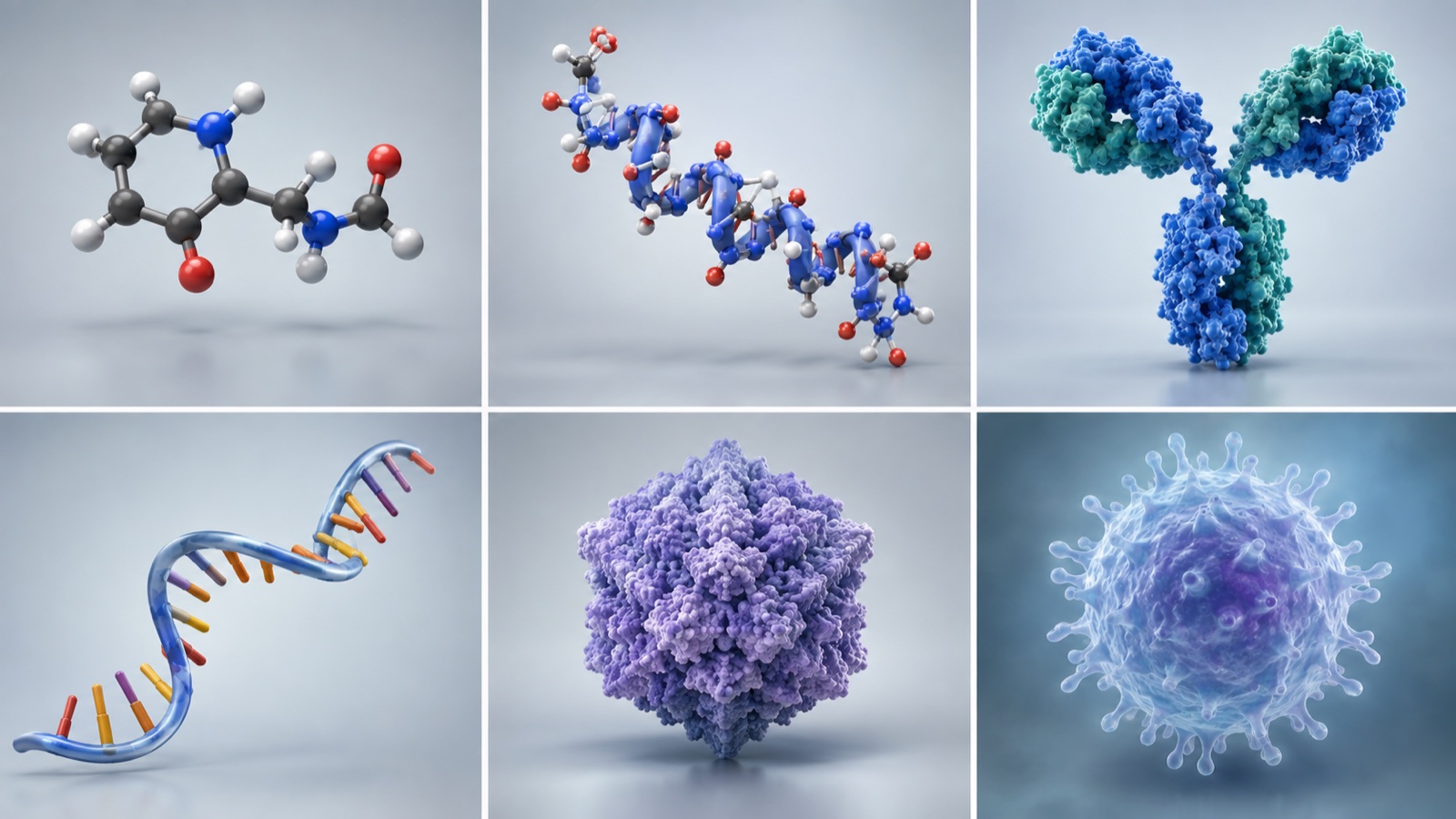
Small molecules, peptides, nucleic acids, antibodies, mRNA (messenger RNA), gene therapy, cell therapy: the "type" of a medicine is called its modality. Lined up by the figures in the prescribing information, molecular weight runs from about 590 to about 150,000, and the number of "particles" that enter the body in one dose runs from 108 to 1020. How each modality is made, how it is measured and which materials it uses are different worlds.
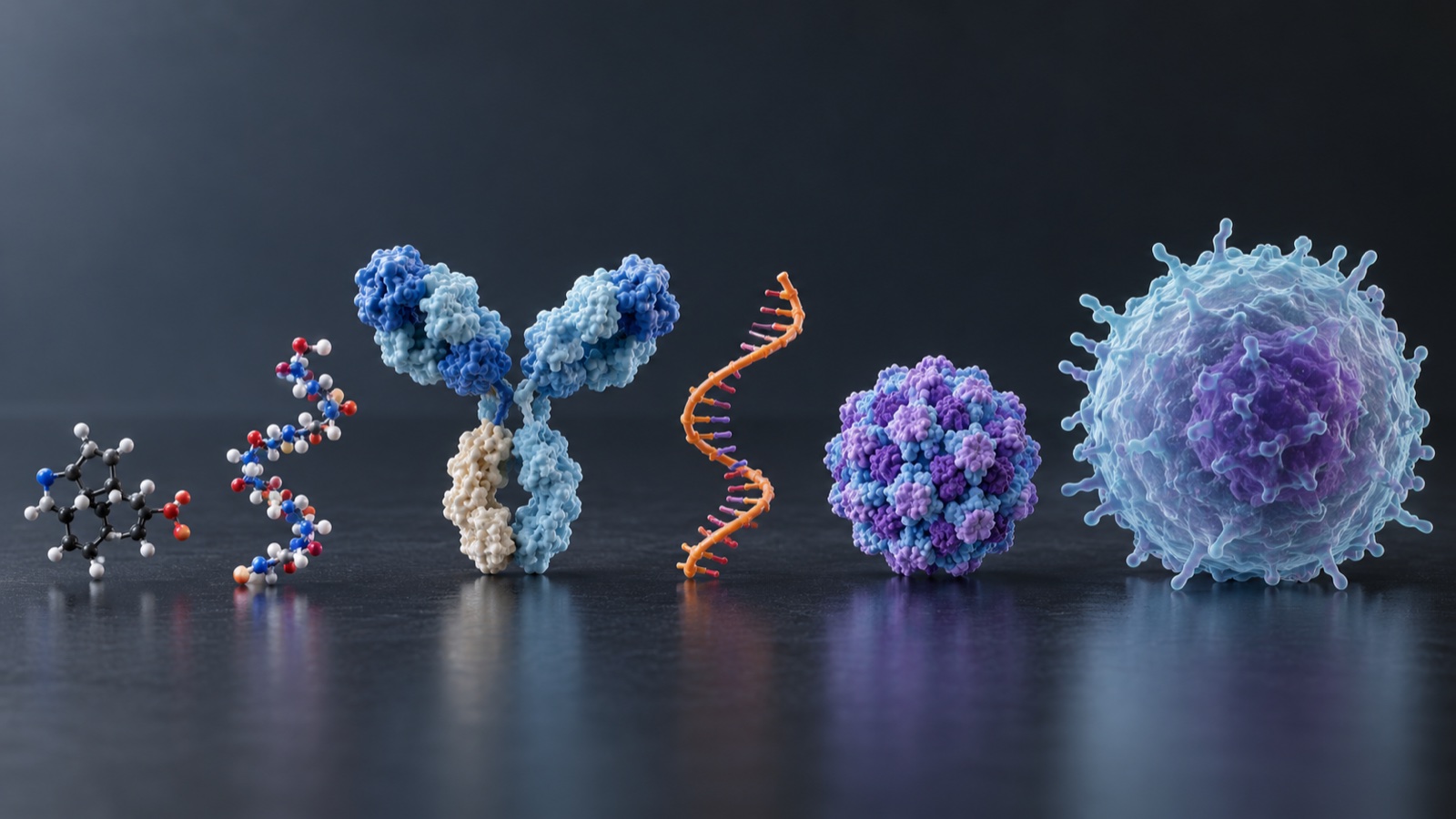 AI-generated concept
- What a drug modality is (the short version)
- The overall map — comparing the main modalities on four axes
- Lined up by molecular weight — from about 590 to about 150,000
- A materials engineer's view 1: from a "pure substance" to a "material with a distribution"
- Lined up by how they are made — organic synthesis, solid-phase synthesis, cells, and the cell itself
- The "40 amino acids" boundary — where regulation draws the line
- Routes of administration and where the target is
- Our calculation: the number of "particles" in one dose
- A materials engineer's view 2: when the unit changes, the measurement changes
- Counting the 2025 novel drugs by modality
- Open issues, and what is not yet settled
- Glossary / References / Claim-to-source audit
Sourced = stated in published material (link given)
Our calculation = a figure this article derived from stated assumptions
Not yet confirmed = a plan or target whose results have not been confirmed
Structural arrangements and readings on materials and process design are marked separately as commentary.
This article compares medicines across modalities from the viewpoint of materials and manufacturing technology. It does not evaluate or compare therapeutic effect or safety, and it is not medical advice. Product names appear only because the prescribing information is quoted for concrete examples of molecular weight, route of administration and manufacturing method; there is no intention to recommend or rank any drug or treatment. The doses are the figures printed in the prescribing information, used as raw material for converting to a number of particles. They are not instructions for use.
1. What a drug modality is (the short version)
- What it refers to: a modality is the kind of "thing" that is put into the body as a medicine. The list includes small-molecule compounds, peptides, oligonucleotides, proteins such as antibodies, mRNA, gene therapy with viral vectors, and cell therapy (this article's arrangement; the word is not a legal term)
- What differs: the mechanism of action is not the only difference. Molecular size, how the product is made, how it is given and which target locations it can reach vary greatly from one modality to the next
- Why this is a materials story: solvents and crystallization in organic synthesis, the resin in solid-phase synthesis, culture media and chromatography media in cell culture, the lipids of lipid nanoparticles, the bags that hold cells: when the modality changes, the whole combination of materials and equipment is swapped out (commentary in this article)
The differences between modalities are easier to grasp when read as differences in the hierarchy of materials. A small molecule is a single compound; peptides and oligonucleotides are oligomers with a defined sequence; an antibody is a macromolecule with a distribution of post-translational modifications; gene therapy is a viral particle; cell therapy is a living cell. The ICH quality guidelines are also split into separate documents for chemical substances (Q6A) and biotechnological/biological products (Q6B), and Q6B states that, because the biosynthetic processes organisms use to make them, proteins inherently show some degree of structural heterogeneitySourced.
2. The overall map — comparing the main modalities on four axes
Using the figures in the prescribing information of approved products, we first line up the main modalities on four axes: molecular weight, how they are made, route of administration and target. Each modality is covered in detail in the other explainers in this series (see our explainers on peptide drugs and GLP-1, nucleic acid drugs, antibody drugs and ADCs (antibody–drug conjugates), mRNA, viral vectors, CAR-T (chimeric antigen receptor T) cells, and targeted protein degradation). This article concentrates on the cross-cutting comparison.
| Modality | Example (prescribing information) | Molecular weight etc. | How it is made (as stated) | Route | Target / site of action |
|---|---|---|---|---|---|
| Small molecule | GLEEVEC (imatinib) | 589.7 g/mol (mesylate salt) | Not stated in the label (a chemically synthesized product) | Oral (tablet) | Kinase (inhibition) |
| Degrader | VEPPANU (vepdegestrant) | 723.90 Da | Not stated in the label | Oral (tablet) | Directs the estrogen receptor to degradation |
| Peptide | OZEMPIC (semaglutide) | 4113.58 g/mol | The peptide backbone is made by yeast fermentation and then chemically modified | Subcutaneous injection (an oral tablet also exists) | GLP-1 receptor (agonist) |
| Antisense oligonucleotide (ASO) | SPINRAZA (nusinersen) | 7501.0 Da (sodium salt) | Not stated in the label | Intrathecal injection | The SMN2 transcript (RNA) |
| siRNA (small interfering RNA) | ONPATTRO (patisiran) | 14304 Da (sodium salt) | Formulated as a lipid complex | Intravenous infusion | TTR mRNA (RNA) |
| Antibody | HUMIRA (adalimumab) | About 148 kDa (1330 amino acids) | Produced in a recombinant expression system in CHO (Chinese hamster ovary) cells | Subcutaneous injection | TNF (tumor necrosis factor; inhibition) |
| Gene therapy (adeno-associated virus, AAV) | ZOLGENSMA | Expressed not as molecular weight but as the number of vector genomes (vg) | Recombinant self-complementary AAV9 | Intravenous infusion | Delivers a gene encoding the SMN protein |
| Cell therapy | KYMRIAH (tisagenlecleucel) | Expressed not as molecular weight but as the number of cells | The patient's own T cells, genetically modified with a lentiviral vector | Intravenous infusion | Targets CD19 |
All Sourced (the FDA-approved prescribing information of each product [Refs. 11–19]). "Not stated in the label" means that we could not find a description of the manufacturing method in the label we consulted. mRNA is left out of the table because it is covered in our mRNA explainer.
3. Lined up by molecular weight — from about 590 to about 150,000
A rule of thumb often cited for the "size" of a small-molecule drug is Lipinski's "rule of five". The abstract of the 2001 paper says that poor absorption or permeation is more likely when there are more than 5 hydrogen-bond donors, more than 10 hydrogen-bond acceptors, a molecular weight above 500, or a calculated LogP (CLogP) above 5Sourced.
So where do approved drugs actually sit? Here are the molecular weights printed in the prescribing information, on a logarithmic scale.
Converted from the values in the prescribing informationOur calculation.
- Antibody ÷ small molecule: 148,000 ÷ 589.7 = about 251 times (about 2.4 orders of magnitude in common logarithm)
- Peptide ÷ small molecule: 4,113.58 ÷ 589.7 = about 7.0 times
- Antibody ÷ peptide: 148,000 ÷ 4,113.58 = about 36 times
- Degrader: vepdegestrant's 723.90 is about 1.4 times above the molecular weight of 500 that serves as the rule-of-five guide, yet it is approved as an oral tabletSourced
Assumptions and limits: the molecular weights for imatinib (mesylate salt) and for nusinersen and patisiran (sodium salts) are not those of the free forms. The 148 kDa for the antibody is an "about" value. This conversion is for seeing differences in orders of magnitude; it does not rank the drugs on their properties as medicines.
4. A materials engineer's view 1: from a "pure substance" to a "material with a distribution"
The ICH quality guidelines treat specifications for chemical substances (Q6A, Step 4 on 6 October 1999) and for biotechnological/biological products (Q6B, Step 4 on 10 March 1999) as separate documentsSourced.
What Q6B says will feel familiar to a polymer-materials engineer. It states that the desired product may be a mixture of expected post-translational modifications (for example, glycoforms), and that because the heterogeneity of these products defines their quality, the degree and profile of heterogeneity should be characterized and lot-to-lot consistency ensuredSourced.
In other words, for small molecules the specification is built on the view of "target compound plus impurities", whereas for antibodies and other proteins the view is that "the distribution itself is the product". From a monodisperse small-molecule compound to a polymer with a molecular-weight or compositional distribution: the philosophy of the specification switches in that way (commentary in this article).
The idea of impurities changes too. Q6B divides impurities into process-related impurities, derived from host-cell proteins, host-cell DNA, media components and the like, and product-related impurities such as precursors and degradation products that arise during manufacture or storageSourced. The materials used in culture are themselves a source of impurities, so the choice of media, resins, filters and other consumables becomes a matter of quality in its own right (commentary in this article).
What is interesting is the middle ground. Q6A says it may apply to synthetic peptides of low molecular weight but is not sufficient to describe specifications for peptides and polypeptides of higher molecular weight or for biotechnological products, and it names oligonucleotides explicitly as outside its scopeSourced. Made by chemical synthesis, yet not quite fitting the small-molecule frame: peptides and oligonucleotides are modalities that sit "in between" even in the guidelines (commentary in this article).
5. Lined up by how they are made — organic synthesis, solid-phase synthesis, cells, and the cell itself
When the modality changes, the "type" of manufacturing changes. Within what published sources let us confirm, we group them into four types.
(1) Solid-phase synthesis — the idea of linking up peptides and oligonucleotides
The 1984 Nobel Prize in Chemistry went to R. Bruce Merrifield for developing a methodology for chemical synthesis on a solid supportSourced. The announcement explains the method as one in which the first amino acid is attached to a polymer and by-products and unreacted starting material are removed after each step by filtration and washing of the polymerSourced.
It goes on to say that, among the applications of this idea, the most important is without doubt the synthesis of oligonucleotidesSourced. In other words, peptides and oligonucleotides rest on the same idea: attach the chain to a solid phase and extend it one step at a time.
(2) Made by cells — antibodies, and some peptides
The HUMIRA prescribing information says that adalimumab is produced by recombinant DNA technology in a mammalian cell (Chinese hamster ovary, CHO) expression system and purified by a process that includes specific viral inactivation and removal stepsSourced. Peptides, too, are sometimes made with cells. The OZEMPIC prescribing information states of semaglutide that the peptide backbone is produced by yeast fermentationSourced. Peptide manufacture is not fixed as "chemical synthesis". How the two are used is covered in our explainer on peptide drugs and GLP-1.
(3) The living cell or viral particle is itself the product
The KYMRIAH prescribing information describes the product as consisting of autologous T cells genetically modified with a lentiviral vectorSourced. ZOLGENSMA is a recombinant self-complementary AAV9 with a nominal concentration of 2.0 × 10¹³ vg/mLSourced. Manufacturing details are covered in our explainers on CAR-T cells and viral vectors.
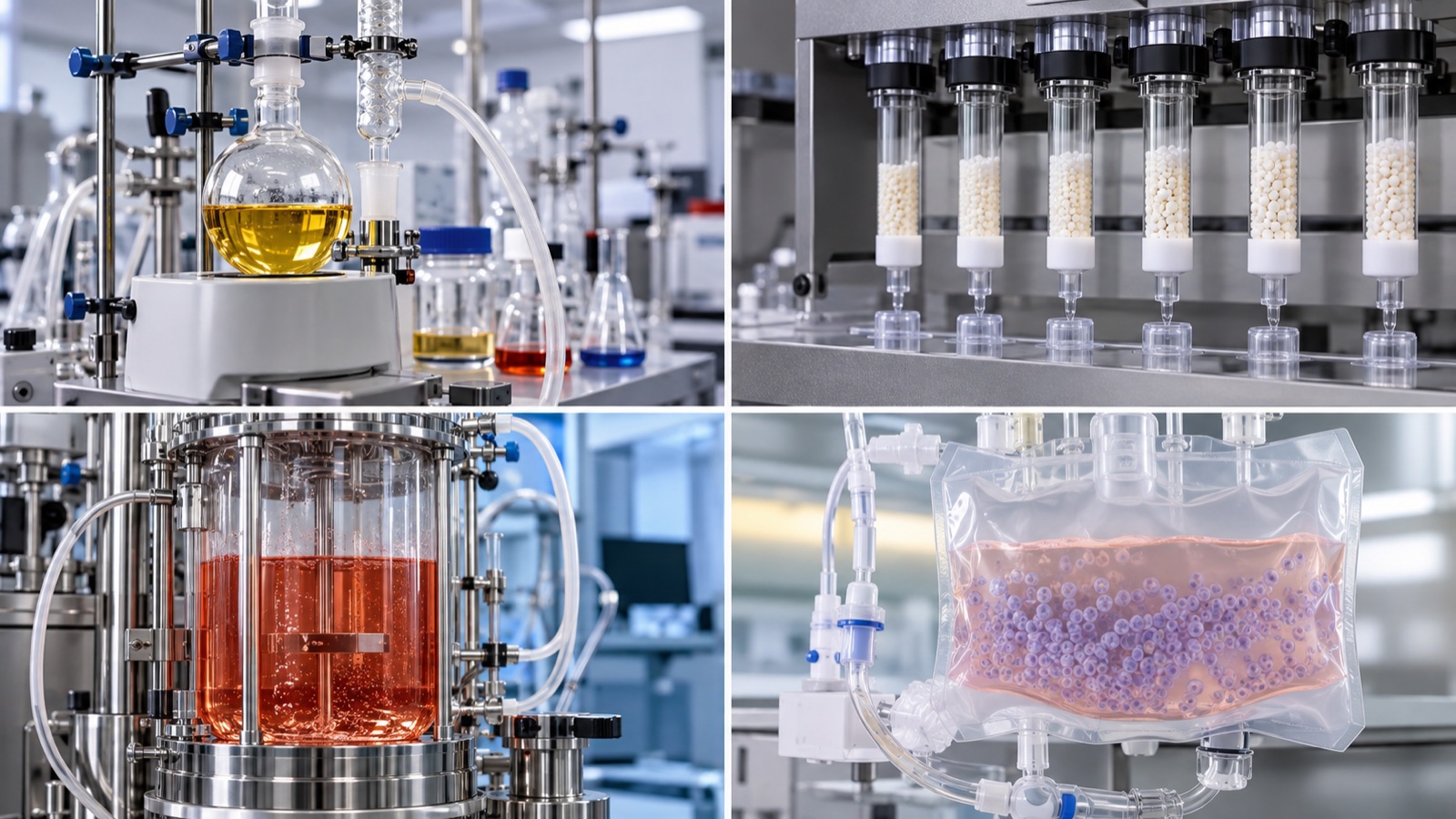
Show the original schematic with sources and numbers
Original schematic for Fig. 3 (concept diagram, vector drawing). The principle of solid-phase synthesis and its application to oligonucleotide synthesis come from the Nobel Foundation's 1984 Chemistry announcement [Ref. 20]; production in CHO cells, the yeast-fermented peptide backbone, autologous T cells and AAV9 come from the FDA labels of the products [Refs. 13, 17, 18, 19]. The grouping into four types and the examples of materials and equipment in the lower row are this article's arrangement and do not show the actual process of any product. Enzymatic synthesis of mRNA (in vitro transcription, IVT) is covered in our mRNA explainer.
6. The "40 amino acids" boundary — where regulation draws the line
Chemically, the boundary between a peptide and a protein is continuous. U.S. regulation, however, has a sharp line.
A protein is "any alpha amino acid polymer with a specific, defined sequence that is greater than 40 amino acids in size"Sourced
The regulation further provides that, when two or more chains are associated in the way found in nature, size is judged by the total number of amino acids in those chains and not by a continuous sequenceSourced.
This line has direct practical consequences. The FDA explains that, under the "deemed to be a license" provision of the BPCI Act (Biologics Price Competition and Innovation Act), on 23 March 2020 approvals of "biological products" that had been approved under section 505 of the FD&C Act (Federal Food, Drug, and Cosmetic Act) were deemed to be Biologics License Applications (BLAs)Sourced. It gives insulin and insulin analogs, human growth hormone, pancreatic enzymes and reproductive hormones among the examples affected, while stating that this change does not affect "peptides" (that is, polymers of 40 or fewer amino acids)Sourced.
| Where the line is drawn | Which side | What the source says |
|---|---|---|
| United States: definition of protein | 41 amino acids or more = protein (the biological-product framework) | 21 CFR 600.3(h)(6) |
| United States: peptide | 40 amino acids or fewer = peptide (the drug framework) | FDA page explaining the "deemed to be a license" provision |
| ICH Q6A | May apply to synthetic peptides of low molecular weight. Not sufficient for peptides and polypeptides of higher molecular weight. Oligonucleotides are outside its scope | Q6A 1.3 Scope |
| ICH Q6B | Proteins and polypeptides, their derivatives, and products of which they are components (for example, conjugates) | Q6B 1.3 Scope |
All Sourced (eCFR [Ref. 3], FDA [Ref. 4], ICH Q6A [Ref. 5], ICH Q6B [Ref. 6]). The "40 amino acids" criterion comes from U.S. regulation; this article has not confirmed whether other countries or regions use the same criterion.
Assumption: we take the average mass of one amino acid residue to be about 110 (our assumption; the actual value depends on the sequence)Our calculation.
- 40 residues × 110 = about 4,400
- The molecular weight of semaglutide, 4113.58, lies near this 40-residue guide
- Adalimumab has 1330 amino acids (prescribing information)Sourced. That is about 33 times the length of the boundary (1330 ÷ 40)
Assumptions and limits: semaglutide carries modifications such as a fatty-acid side chain, so a simple conversion from residue count does not apply to it. The regulatory category is set by the number of amino acids, not by molecular weight.
7. Routes of administration and where the target is
In choosing a modality, "which targets can it reach" and "how does it get into the body" cannot be separated.
(1) What kinds of targets have past drugs worked on?
In a 2017 paper, Santos et al. catalogued 893 biomolecules on which 1,578 FDA-approved drugs act, of which 667 are protein targets derived from the human genomeSourced. The analysis covers 1,419 small-molecule drugs and 250 biologicsSourced.
- Four "privileged" families: rhodopsin-like G protein-coupled receptors (GPCRs), ion channels, protein kinases and nuclear hormone receptors account for 44% of all human protein targets (GPCRs 12%, ion channels 19%, kinases 10%, nuclear receptors 3%)Sourced
- Contribution to small-molecule drugs: these four families underlie the therapeutic effect of 70% of small-molecule drugs (GPCRs 33%, ion channels 18%, kinases 3%, nuclear receptors 16%)Sourced
- Targets of biologics: the paper states that for biologics, secreted proteins and cell-surface antigen proteins are the most important target classesSourced
(2) Where the target is, and how to reach it
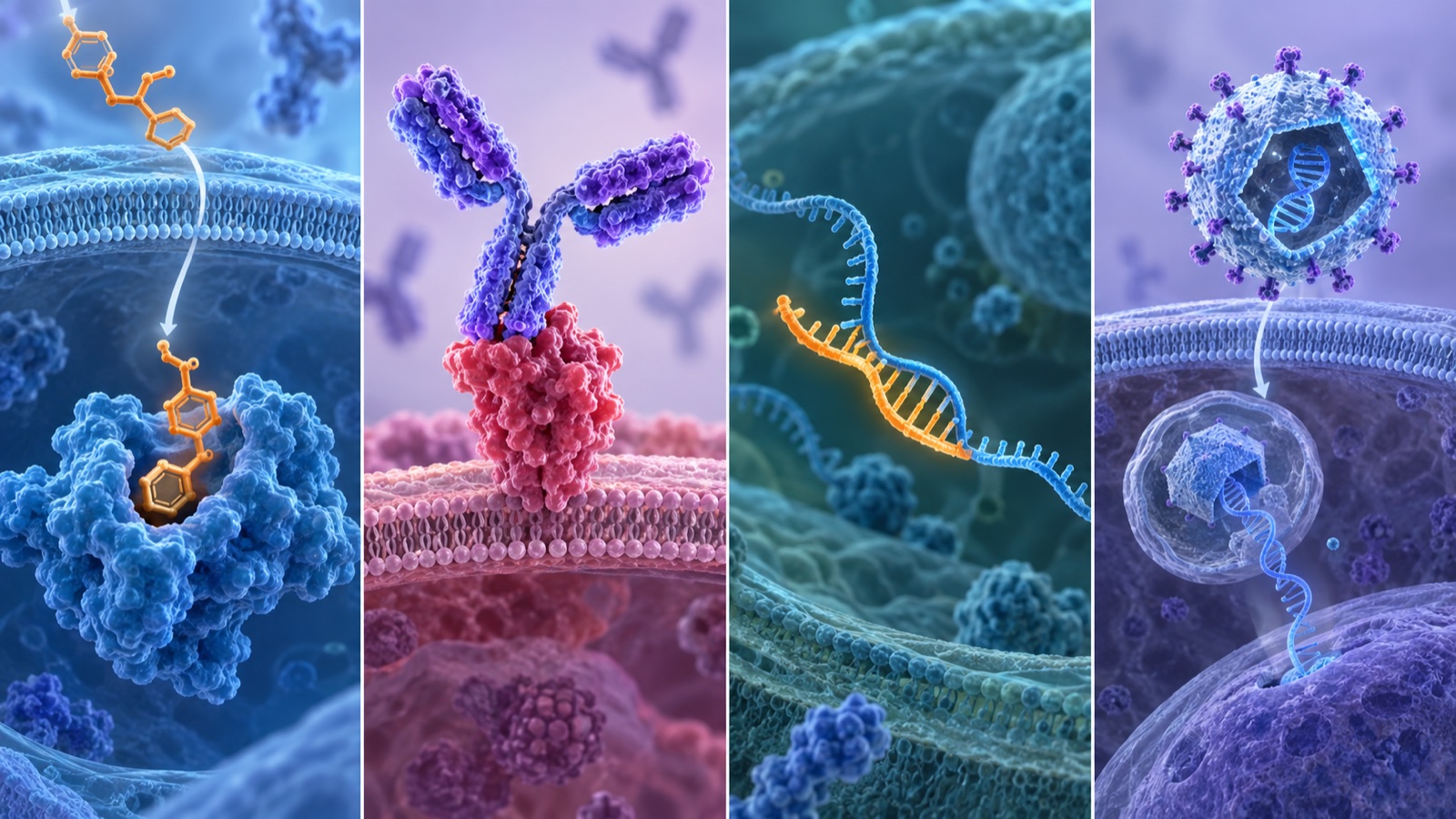
Show the original schematic with sources and numbers
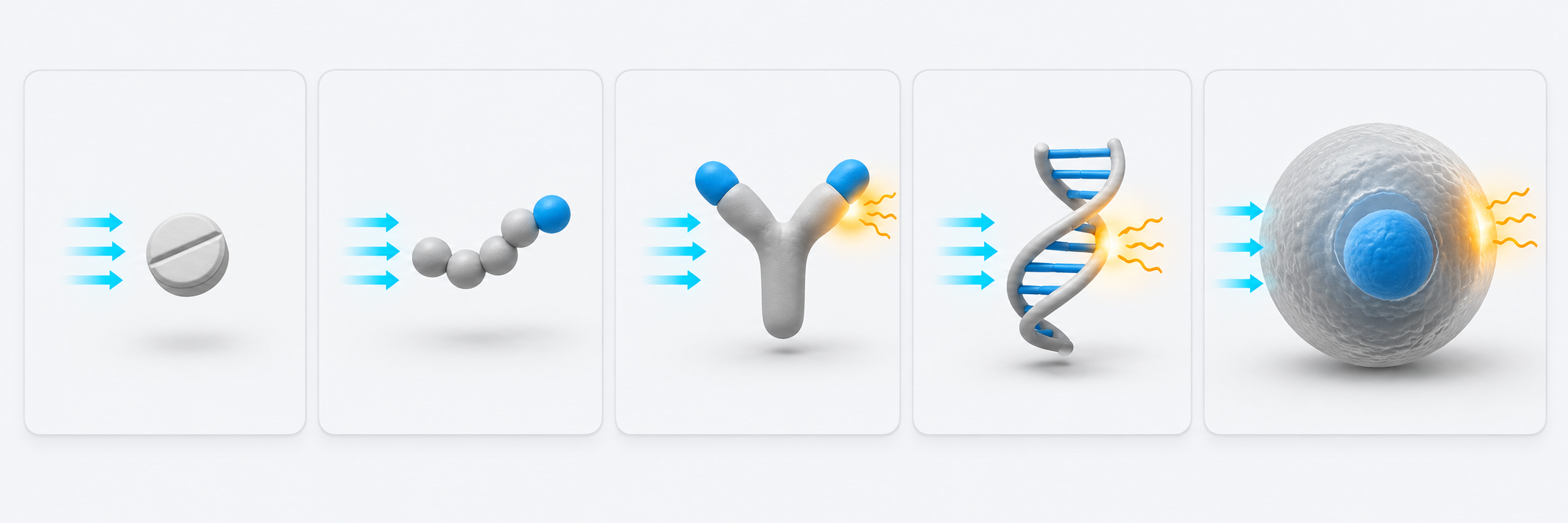
Original schematic for Fig. 4 (concept diagram, vector drawing). The classification of targets comes from Santos et al. (2017) [Ref. 1]; the example targets of each modality (kinase, estrogen receptor, the SMN2 transcript, TTR mRNA, TNF, the SMN gene) come from the FDA labels of the products [Refs. 11, 12, 15, 16, 17, 18]. The concentric layout is this article's schematic and does not show real cell structure or the exact limits of what each modality can reach. Many small molecules also act on receptors at the cell surface.
(3) The route of administration follows from the properties of the molecule
| Example | Route | What the label's description tells us |
|---|---|---|
| GLEEVEC | Oral (tablet) | The mesylate salt is soluble in aqueous buffers at pH 5.5 or below, and only very slightly soluble or insoluble at neutral to alkaline pH |
| VEPPANU | Oral (tablet) | Solubility depends on pH: readily soluble at gastric pH, slightly soluble at intestinal pH. Described as a "small molecule" in which an estrogen-receptor-binding moiety and an E3-ligase-binding moiety are joined by a linker |
| OZEMPIC (injection) | Subcutaneous injection | The main prolonging mechanism that makes once-weekly dosing possible is albumin binding, through a hydrophilic spacer and a C18 fatty diacid attached to the lysine at position 26 |
| RYBELSUS / OZEMPIC tablets | Oral (tablet) | Formulated with the absorption enhancer SNAC (salcaprozate sodium). Absorption occurs mainly in the stomach. Estimated absolute bioavailability is about 0.4–1% (RYBELSUS) |
| SPINRAZA | Intrathecal | Injected into the cerebrospinal fluid, from which it distributes to tissues of the central nervous system |
| ONPATTRO | Intravenous infusion | The siRNA is formulated as a lipid complex to deliver it to hepatocytes |
| HUMIRA | Subcutaneous injection | A solution in a glass prefilled syringe. Contains no preservative |
All Sourced (the FDA prescribing information of each product [Refs. 11–17]). This table lines up descriptions of formulation and physical properties; it is not an explanation of how to use the drugs.
Whereas oral dosing is the norm for small molecules, peptides and antibodies are basically injected, and making them oral calls for another material, an absorption enhancer. Even oral semaglutide has an estimated absolute bioavailability of only about 0.4–1%Sourced. The larger the molecule, the more the act of "getting it into the body" becomes a materials-design problem. The details are covered in our explainers on peptide drugs and GLP-1, drug delivery systems and targeting, and the blood–brain barrier (commentary in this article).
8. Our calculation: the number of "particles" in one dose
The units of dose in the prescribing information show one more way in which the modalities differ. Small molecules, peptides, nucleic acids and antibodies are written in mg (mass), AAV gene therapy in vg/kg (vector genomes per kilogram of body weight), and CAR-T in number of cellsSourced. We convert the mass-based ones into numbers of molecules to put everything on one yardstick.
- GLEEVEC: a 400 mg tablet contains 478 mg of the mesylate salt. Molecular weight of the mesylate 589.7Sourced
- OZEMPIC: one of the dose descriptions is 1 mg (once weekly). Molecular weight 4113.58Sourced
- SPINRAZA: the 12 mg/5 mL presentation contains 2.53 mg of nusinersen sodium per mL (12.65 mg in 5 mL). Molecular weight 7501.0Sourced
- HUMIRA: one of the dose descriptions is 40 mg (every other week). Molecular weight about 148 kDaSourced
- ZOLGENSMA: 1.1 × 10¹⁴ vg/kgSourced
- KYMRIAH: 0.6–6.0 × 10⁸ CAR-positive viable T cells for diffuse large B-cell lymphoma in adults and other indicationsSourced
We convert using Avogadro's number, 6.022 × 10²³ /molOur calculation.
- imatinib: 0.478 g ÷ 589.7 = 8.11 × 10⁻⁴ mol → about 4.9 × 10²⁰ molecules
- nusinersen: 0.01265 g ÷ 7501.0 = 1.69 × 10⁻⁶ mol → about 1.0 × 10¹⁸ molecules
- semaglutide: 0.001 g ÷ 4113.58 = 2.43 × 10⁻⁷ mol → about 1.5 × 10¹⁷ molecules
- adalimumab: 0.040 g ÷ 148,000 = 2.70 × 10⁻⁷ mol → about 1.6 × 10¹⁷ molecules
- ZOLGENSMA: 1.1 × 10¹⁴ vector genomes per kilogram of body weight (the label's value as it stands)
- KYMRIAH: cells in the 108 range (the label's value as it stands)
Between the largest, imatinib (about 4.9 × 10²⁰), and the smallest, KYMRIAH (0.6 × 10⁸), the difference is about 12 orders of magnitude (4.9 × 10²⁰ ÷ 0.6 × 10⁸ ≈ 8 × 10¹²).
Assumptions and limits: the doses are one example each, taken as printed from the prescribing information, and vary with dosing interval, body weight and indication. ZOLGENSMA is a per-kilogram value, so the conditions are not matched with the others. A larger or smaller amount per dose says nothing about the strength or merit of a drug. This conversion only shows that "the unit of counting changes with the modality".
9. A materials engineer's view 2: when the unit changes, the measurement changes
What the conversion in Chapter 8 shows is that there is a world that can be managed by mass and a world that has to be managed by number (commentary in this article).
- The world that can be written in mg: small molecules, peptides, nucleic acids and antibodies. Stoichiometry holds, and content can be "weighed" by chromatography or spectroscopy
- The world written in vg (vector genomes): AAV. The ZOLGENSMA prescribing information expresses concentration as "2.0 × 10¹³ vg/mL", that is, as a number of genomesSourced
- The world written in cell numbers: CAR-T. The KYMRIAH prescribing information says the dose is determined on the basis of the number of CAR-positive viable T cellsSourced. Whether the cells are alive and whether they express the CAR must be counted as well
In materials terms, this resembles a shift from managing solution concentration to counting particles and managing their size distribution (commentary in this article). For engineers who have dealt with particle counting and dispersion stability, the analysis of viral vectors and cell products may turn out to be familiar ground.
Another implication concerns containers and wetted materials. For a tablet holding 1020 molecules and a bag holding 108 cells, the weight of the "one" that sticks to the container wall or is broken against it is entirely different. The fewer the units, the more likely it is that adsorption, leaching and shear at wetted materials will affect the amount of product itself (commentary in this article). The requirements on wetted materials are covered in detail in our GMP explainer.
10. Counting the 2025 novel drugs by modality
The FDA's Center for Drug Evaluation and Research (CDER) approved 46 novel drugs in 2025Sourced. We sort this list by the stem at the end of each nonproprietary name and by whether it carries the four-letter suffix attached to biological products.
From the nonproprietary names in the FDA list [Ref. 7], this article classified them as followsOur calculation.
- Antibodies and other proteins (with a four-letter suffix): 12 drugs (about 26%): 10 drugs ending in -mab (narsoplimab, depemokimab, sibeprenlimab, linvoseltamab, garadacimab, clesrovimab, telisotuzumab vedotin, nipocalimab, penpulimab, datopotamab deruxtecan; two of these, conjugated with vedotin and deruxtecan, are ADCs), one combination of pembrolizumab with the enzyme berahyaluronidase alfa, and one drug not ending in -mab, lerodalcibep
- Oligonucleotides: 3 drugs (about 7%): plozasiran and fitusiran (ending in -siran) and donidalorsen (ending in -rsen)
- Peptides: 1 drug (about 2%): elamipretide (ending in -tide)
- Small molecules: 30 drugs (about 65%): everything else
Assumptions and limits: the classification is this article's judgment based on name endings and suffixes, not a classification given by the FDA. The list covers only CDER approvals and excludes cell and gene therapies (regulated by the Center for Biologics Evaluation and Research, CBER). It is a single year's count and does not show a trend.
On the CBER side, the FDA's list of "Approved Cellular and Gene Therapy Products" carried 54 products as of its update on 17 September 2026 (a count of the rows in the list made by this article)Our calculation. Besides CAR-T cells and gene therapies such as AAV, the list also includes hematopoietic progenitor cell products derived from cord blood and cell products cultured on a collagen membraneSourced.
The idea of a molecule that makes a target protein degrade rather than inhibiting it was reported by Sakamoto et al. in 2001 as "Protac" (proteolysis-targeting chimeric molecule). The abstract says they synthesized a chimeric compound that artificially brings a target protein to a ubiquitin ligase complex, causing ubiquitination and degradationSourced.
On 1 May 2026 the FDA approved vepdegestrant (VEPPANU) and describes it as a "heterobifunctional protein degrader"Sourced. From the report to approval is about 25 yearsOur calculation. Whether this is the "first PROTAC approval" is not stated on the FDA's approval page, so this article quotes only the FDA's wording. The details are covered in our explainer on targeted protein degradation.
11. Open issues, and what is not yet settled
(1) Specifications for the in-between modalities are still being worked out
ICH Q6A excludes oligonucleotides and says it is not sufficient for peptides of higher molecular weightSourced. How an internationally harmonized approach to specifications for such "in-between" modalities will be arranged in future could not be confirmed within the scope of this surveyNot yet confirmed.
(2) Which modality will grow is not settled by public primary sources
About 65% of the 2025 CDER novel drugs were small moleculesOur calculation, but this is a single year's count. We could not find any primary source, such as a regulator, that gives future shares by modality. Under this series' policy, market estimates from research firms are not used.Not yet confirmed
(3) The outside of the small-molecule "rules"
That a degrader with a molecular weight of 723.90 has been approved as an oral tabletSourced is one example showing that there is a domain of oral drugs outside the rule of five. But Lipinski et al.'s rule is, to begin with, a probabilistic guide that says poor absorption or permeation is more likelySourced. We could not find primary information that would let us generalize how far outside it the domain extends (commentary in this article).
- A modality is both a "type of drug" and a "hierarchy of materials". Single compound → sequence oligomer → macromolecule with a distribution → particle or cell (this article's arrangement)
- Molecular weight runs from about 590 to about 150,000. An antibody is about 250 times a small moleculeOur calculation
- The ICH quality guidelines are also split between chemical substances (Q6A) and biological products (Q6B). Q6B says heterogeneity itself defines qualitySourced
- In the United States, more than 40 amino acids makes a protein. Peptides and proteins fall under different regulatory frameworksSourced
- The number of "particles" in one dose spans about 12 orders of magnitude, from 1020 (small molecules) to 108 (cells)Our calculation
- Of the 46 CDER novel drugs of 2025, 30 were small moleculesOur calculation
12. Glossary
- Modality
- The kind of "thing" put into the body as a medicine: small molecules, peptides, nucleic acids, antibodies, cells and so on.
- Small-molecule drug
- A drug that is a compound of a few hundred in molecular weight, made by organic synthesis. Most are used orally.
- Rule of five
- Lipinski et al.'s rule of thumb for molecules that tend to be poorly absorbed or poorly permeable (molecular weight above 500 and so on).
- Peptide
- A molecule of linked amino acids. In U.S. regulation, 40 amino acids or fewer counts as a peptide.
- Oligonucleotide
- A drug made of short nucleic acids. Antisense (ASO) and siRNA types exist, and they target RNA.
- Antibody drug
- A drug that is an antibody (a protein) binding a specific partner. Molecular weight is about 150,000.
- Protein degrader
- A molecule that brings a target protein close to a ubiquitin ligase so that it is degraded.
- Gene therapy
- Treatment that delivers a gene into cells. Viral vectors such as AAV are used.
- Cell therapy
- Treatment in which living cells themselves are the product, such as CAR-T cells.
- vg (vector genome)
- The number of genomes a viral vector carries. The unit of concentration and dose for AAV products.
- BLA
- Biologics License Application in the United States. A framework separate from the NDA (New Drug Application) for chemically synthesized drugs.
- CDER / CBER
- The FDA's Center for Drug Evaluation and Research / Center for Biologics Evaluation and Research.
- ICH Q6A / Q6B
- International guidelines for setting specifications of medicines. Q6A covers chemical substances, Q6B biological products.
- Heterogeneity
- A state in which molecules with different modifications are mixed within one product. For biological products it is part of quality itself.
- Solid-phase synthesis
- A synthesis in which molecules are attached to a solid polymer and extended one step at a time. Purification is done by washing.
- Bioavailability
- The fraction of the administered amount that reaches the systemic circulation.
13. References (primary sources)
- Santos, R. et al. "A comprehensive map of molecular drug targets" Nature Reviews Drug Discovery 16(1), 19–34 (2017). doi:10.1038/nrd.2016.230 — pmc.ncbi.nlm.nih.gov
- Lipinski, C.A., Lombardo, F., Dominy, B.W., Feeney, P.J. "Experimental and computational approaches to estimate solubility and permeability in drug discovery and development settings" Advanced Drug Delivery Reviews 46(1–3), 3–26 (2001). doi:10.1016/S0169-409X(00)00129-0 — pubmed.ncbi.nlm.nih.gov
- U.S. Code of Federal Regulations (eCFR) "21 CFR 600.3 Definitions" — ecfr.gov
- FDA "'Deemed to be a License' Provision of the BPCI Act" — fda.gov
- ICH "Q6A: Specifications: Test Procedures and Acceptance Criteria for New Drug Substances and New Drug Products: Chemical Substances", Step 4, 6 October 1999 (PDF) — database.ich.org
- ICH "Q6B: Specifications: Test Procedures and Acceptance Criteria for Biotechnological/Biological Products", Step 4, 10 March 1999 (PDF) — database.ich.org
- FDA "Novel Drug Approvals for 2025" — fda.gov
- FDA "Approved Cellular and Gene Therapy Products" — fda.gov
- FDA "FDA approves vepdegestrant for ER-positive, HER2-negative, ESR1-mutated advanced or metastatic breast cancer", 1 May 2026 — fda.gov
- Sakamoto, K.M. et al. "Protacs: chimeric molecules that target proteins to the Skp1-Cullin-F box complex for ubiquitination and degradation" PNAS 98(15), 8554–8559 (2001). doi:10.1073/pnas.141230798 — pubmed.ncbi.nlm.nih.gov
- DailyMed (FDA-approved prescribing information) "GLEEVEC (imatinib mesylate) tablets" — dailymed.nlm.nih.gov
- DailyMed (FDA-approved prescribing information) "VEPPANU (vepdegestrant) tablets" — dailymed.nlm.nih.gov
- DailyMed (FDA-approved prescribing information) "OZEMPIC (semaglutide) injection" — dailymed.nlm.nih.gov
- DailyMed (FDA-approved prescribing information) "RYBELSUS / OZEMPIC (semaglutide) tablets" — dailymed.nlm.nih.gov
- DailyMed (FDA-approved prescribing information) "SPINRAZA (nusinersen) injection" — dailymed.nlm.nih.gov
- DailyMed (FDA-approved prescribing information) "ONPATTRO (patisiran) lipid complex injection" — dailymed.nlm.nih.gov
- DailyMed (FDA-approved prescribing information) "HUMIRA (adalimumab) injection" — dailymed.nlm.nih.gov
- DailyMed (FDA-approved prescribing information) "ZOLGENSMA (onasemnogene abeparvovec-xioi) suspension" — dailymed.nlm.nih.gov
- DailyMed (FDA-approved prescribing information) "KYMRIAH (tisagenlecleucel) suspension" — dailymed.nlm.nih.gov
- The Royal Swedish Academy of Sciences "The Nobel Prize in Chemistry 1984 — Press release" — nobelprize.org
14. Claim-to-source audit
| Claim in the text | Basis | Category |
|---|---|---|
| That 893 biomolecules on which 1,578 FDA-approved drugs act were catalogued, of which 667 are protein targets derived from the human genome. That the analysis covers 1,419 small-molecule drugs and 250 biologics. That GPCRs, ion channels, kinases and nuclear receptors account for 44% of human protein targets (12%, 19%, 10% and 3%) and underlie the therapeutic effect of 70% of small-molecule drugs (33%, 18%, 3% and 16%). That for biologics, secreted proteins and cell-surface antigens are the most important target classes | Santos et al. (2017) Reference 1 https://pmc.ncbi.nlm.nih.gov/articles/PMC6314433/ | Sourced |
| The "rule of five": poor absorption or permeation is more likely when there are more than 5 hydrogen-bond donors, more than 10 acceptors, a molecular weight above 500, or a CLogP above 5 | Lipinski et al. (2001), abstract Reference 2 https://pubmed.ncbi.nlm.nih.gov/11259830/ | Sourced |
| That a protein is defined as an alpha amino acid polymer with a specific, defined sequence that is greater than 40 amino acids in size, and that when several chains are associated in the way found in nature, the total number of amino acids in the chains is used | 21 CFR 600.3(h)(6) Reference 3 https://www.ecfr.gov/current/title-21/chapter-I/subchapter-F/part-600/subpart-A/section-600.3 | Sourced |
| That on 23 March 2020 approvals of biological products approved under section 505 of the FD&C Act were deemed to be BLAs. That insulin and insulin analogs, human growth hormone, pancreatic enzymes and reproductive hormones are given as examples. That this change does not affect peptides of 40 or fewer amino acids | FDA page explaining the "deemed to be a license" provision Reference 4 https://www.fda.gov/drugs/guidance-compliance-regulatory-information/deemed-be-license-provision-bpci-act | Sourced |
| That Q6A reached Step 4 on 6 October 1999. That Q6A may apply to synthetic peptides of low molecular weight but is not sufficient for peptides and polypeptides of higher molecular weight or for biological products, and excludes oligonucleotides and others | ICH Q6A Reference 5 https://database.ich.org/sites/default/files/Q6A%20Guideline.pdf | Sourced |
| That Q6B reached Step 4 on 10 March 1999. That its scope is proteins and polypeptides, their derivatives and products of which they are components (for example, conjugates). That the biosynthetic process gives proteins an inherent structural heterogeneity, that the desired product may be a mixture of post-translational modifications (for example, glycoforms), and that because heterogeneity defines quality its degree and profile should be characterized and lot-to-lot consistency ensured. The division into process-related impurities (host-cell proteins, host-cell DNA, media components and so on) and product-related impurities (precursors, degradation products and so on) | ICH Q6B Reference 6 https://database.ich.org/sites/default/files/Q6B%20Guideline.pdf | Sourced |
| That CDER approved 46 novel drugs in 2025, and the nonproprietary name of each (narsoplimab-wuug, depemokimab-ulaa, lerodalcibep-liga, sibeprenlimab-szsi, pembrolizumab and berahyaluronidase alfa-pmph, linvoseltamab-gcpt, garadacimab-gxii, clesrovimab-cfor, telisotuzumab vedotin-tllv, nipocalimab-aahu, penpulimab-kcqx, datopotamab deruxtecan-dlnk, plozasiran, fitusiran, donidalorsen, elamipretide and others) | FDA, Novel Drug Approvals for 2025 Reference 7 https://www.fda.gov/drugs/novel-drug-approvals-fda/novel-drug-approvals-2025 | Sourced |
| That the FDA's list of approved cellular and gene therapy products includes CAR-T cells, gene therapies such as AAV, hematopoietic progenitor cell products derived from cord blood and cell products cultured on a collagen membrane (updated 17 September 2026) | FDA, Approved Cellular and Gene Therapy Products Reference 8 https://www.fda.gov/vaccines-blood-biologics/cellular-gene-therapy-products/approved-cellular-and-gene-therapy-products | Sourced |
| That the FDA approved vepdegestrant (VEPPANU) on 1 May 2026 and describes it as a heterobifunctional protein degrader | FDA approval page Reference 9 https://www.fda.gov/drugs/resources-information-approved-drugs/fda-approves-vepdegestrant-er-positive-her2-negative-esr1-mutated-advanced-or-metastatic-breast | Sourced |
| That Protac-1 was synthesized as a chimeric compound that brings a target protein to the ubiquitin ligase complex SCF, causing ubiquitination and degradation (2001) | Sakamoto et al. (2001), abstract Reference 10 https://pubmed.ncbi.nlm.nih.gov/11438690/ | Sourced |
| That imatinib is a kinase inhibitor and an oral tablet, that the molecular weight of the mesylate is 589.7 g/mol, that a 400 mg tablet contains 478 mg of the mesylate, that the mesylate is soluble in aqueous buffers at pH 5.5 or below and only very slightly soluble or insoluble at neutral and alkaline pH, and that the dose descriptions include 400 mg/day | GLEEVEC prescribing information Reference 11 https://dailymed.nlm.nih.gov/dailymed/drugInfo.cfm?setid=211ef2da-2868-4a77-8055-1cb2cd78e24b | Sourced |
| That vepdegestrant is a small-molecule heterobifunctional protein degrader in which an estrogen-receptor-binding moiety and an E3-ligase-binding moiety are joined by a linker, that its molecular weight is 723.90 Da, that its solubility depends on pH (readily soluble at gastric pH, slightly soluble at intestinal pH), and that it is an oral tablet | VEPPANU prescribing information Reference 12 https://dailymed.nlm.nih.gov/dailymed/drugInfo.cfm?setid=484e21ba-8fe1-4c6d-b923-8ba4cf5b2f20 | Sourced |
| That the peptide backbone of semaglutide is made by yeast fermentation, that the main prolonging mechanism is albumin binding through a hydrophilic spacer and a C18 fatty diacid attached to lysine at position 26, that its molecular weight is 4113.58 g/mol, that it is given by subcutaneous injection, that the dose descriptions include 1 mg once weekly, and that it is a GLP-1 receptor agonist | OZEMPIC (injection) prescribing information Reference 13 https://dailymed.nlm.nih.gov/dailymed/drugInfo.cfm?setid=adec4fd2-6858-4c99-91d4-531f5f2a2d79 | Sourced |
| That oral semaglutide tablets are formulated with SNAC (salcaprozate sodium), that absorption occurs mainly in the stomach, and that estimated absolute bioavailability is about 0.4–1% for RYBELSUS | RYBELSUS / OZEMPIC tablets prescribing information Reference 14 https://dailymed.nlm.nih.gov/dailymed/drugInfo.cfm?setid=27f15fac-7d98-4114-a2ec-92494a91da98 | Sourced |
| That nusinersen is an antisense oligonucleotide targeting SMN2 and is given intrathecally, that it distributes from the cerebrospinal fluid to tissues of the central nervous system, that its molecular weight is 7501.0 Da (sodium salt), and that the 12 mg/5 mL presentation contains 2.53 mg of the sodium salt per mL | SPINRAZA prescribing information Reference 15 https://dailymed.nlm.nih.gov/dailymed/drugInfo.cfm?setid=dd70cd5f-b0fc-4ba4-a5ea-89a34778bd94 | Sourced |
| That patisiran is a double-stranded siRNA formulated as a lipid complex to deliver it to hepatocytes, that it binds to the 3′ untranslated region of TTR mRNA, that the molecular weight of the sodium salt is 14304 Da, and that it is given by intravenous infusion | ONPATTRO prescribing information Reference 16 https://dailymed.nlm.nih.gov/dailymed/drugInfo.cfm?setid=e87ec36f-b4b4-49d4-aea4-d4ffb09b0970 | Sourced |
| That adalimumab is a TNF inhibitor produced by recombinant DNA technology in a CHO cell expression system and purified by a process that includes viral inactivation and removal steps, that it has 1330 amino acids and a molecular weight of about 148 kDa, that it is a preservative-free solution for subcutaneous injection filled in a glass prefilled syringe, and that the dose descriptions include 40 mg every other week | HUMIRA prescribing information Reference 17 https://dailymed.nlm.nih.gov/dailymed/drugInfo.cfm?setid=608d4f0d-b19f-46d3-749a-7159aa5f933d | Sourced |
| That ZOLGENSMA is a recombinant self-complementary AAV9 containing a transgene encoding the SMN protein, that its nominal concentration is 2.0 × 10^13 vg/mL, that the recommended dose is 1.1 × 10^14 vg/kg, and that it is given by intravenous infusion | ZOLGENSMA prescribing information Reference 18 https://dailymed.nlm.nih.gov/dailymed/drugInfo.cfm?setid=68cd4f06-70e1-40d8-bedb-609ec0afa471 | Sourced |
| That KYMRIAH consists of autologous T cells into which an anti-CD19 CAR has been introduced with a lentiviral vector, that the dose is based on the number of CAR-positive viable T cells, that it is 0.6–6.0 × 10^8 cells for diffuse large B-cell lymphoma in adults and other indications, and that it is given by intravenous infusion | KYMRIAH prescribing information Reference 19 https://dailymed.nlm.nih.gov/dailymed/drugInfo.cfm?setid=aad3ba54-dfd3-4cb3-9e2b-c5ef89559189 | Sourced |
| That the 1984 Nobel Prize in Chemistry went to Merrifield's methodology for chemical synthesis on a solid support, that the method attaches the first amino acid to a polymer and removes by-products and the like by filtration and washing after each step, and that the most important application of this idea is the synthesis of oligonucleotides | Nobel Foundation, 1984 Chemistry press release Reference 20 https://www.nobelprize.org/prizes/chemistry/1984/press-release/ | Sourced |
| The molecular-weight ratios (about 251 times, 7.0 times and 36 times) and the log conversion, and that vepdegestrant is about 1.4 times the molecular weight of 500. 40 residues × 110 = about 4,400, and 1330 ÷ 40 = about 33 times. The number of molecules in one dose (imatinib about 4.9 × 10^20, nusinersen about 1.0 × 10^18, semaglutide about 1.5 × 10^17, adalimumab about 1.6 × 10^17) and the difference of about 12 orders of magnitude. The classification of the 46 CDER novel drugs of 2025 (small molecules 30, antibodies etc. 12, nucleic acids 3, peptide 1) and the percentages. The count of 54 products in the cellular and gene therapy list. About 25 years from the Protac report to approval | Our calculation. The average residue mass of 110, Avogadro's number of 6.022 × 10^23, the use of molecular weights of salt forms as they stand, and the use of one example from each label as the dose are assumptions set by this article. The modality classification is this article's judgment from name stems and suffixes and is not an FDA classification. The numbers do not show the strength or merit of any drug | Our calculation |
| How an internationally harmonized approach to specifications for the in-between modalities (oligonucleotides and higher-molecular-weight peptides) will be arranged in future. Future shares by modality | At the time of this article's survey (September 2026), no primary source such as a regulator showing this could be confirmed. Market estimates from research firms are not used | Not yet confirmed |
| Whether vepdegestrant is the "first PROTAC approval". Whether jurisdictions outside the United States have adopted the "40 amino acids" criterion. Whether the spread of oral drugs beyond the rule of five can be generalized | The FDA approval page does not say "first", and the other points could not be confirmed in primary sources within the scope of this survey, so they are not stated | Commentary |
| The arrangement of modalities as a "hierarchy of materials" (single compound, sequence oligomer, macromolecule, particle and cell). The reading that the philosophy of specifications switches from "pure substance" to "distribution". The placing of peptides and oligonucleotides as "in-between" modalities. The division of manufacturing into four types with example key materials. The concentric arrangement of target locations. The shift from "weighing" to "counting", and the reading that the effect of adsorption and shear at containers and wetted materials is larger for modalities with fewer units. The statement on IVT of mRNA refers to the content of our mRNA explainer | This article's arrangement and commentary based on published content. Not views stated by the authors of the papers or by regulators | Commentary |
| Indications, clinical results, safety and the relative merit of the products | This article is a cross-cutting explanation of materials and manufacturing technology and does not evaluate or compare therapeutic effect or safety. Product names are quoted from the prescribing information as examples of molecular weight, route of administration and manufacturing method | Commentary |
| That the figures combine ImageGen-generated explanatory images and vector drawings, kept distinct from real objects and measured images | Note by this article | Commentary |
Last updated 26 September 2026. Sources are limited to primary material (FDA-approved prescribing information [DailyMed], FDA publications, the U.S. Code of Federal Regulations, ICH guidelines, Nobel Foundation announcements and peer-reviewed papers). Because the article includes readings on materials and process design, those are marked as commentary and kept separate from sourced fact. Future shares by modality, the future of specifications for in-between modalities, and whether vepdegestrant is the "first PROTAC" could not be confirmed in published primary sources and are not stated here. This article is an explanation of materials and manufacturing technology, and it does not evaluate or compare therapeutic effect or safety and is not medical advice. All figures are explanatory concept diagrams. The figures combine ImageGen-generated explanatory images and vector drawings. The generated images are not photographs, micrographs or measured data of real objects. The original schematics, which include numbers and sources, are either shown as they are or kept expandable under the new images.