INSTITUTION PROFILE / FUNCTIONAL MATERIALS
National Institute for Materials Science (NIMS)
– Japan’s national research institute that opens its materials research, data and facilities to society
NIMS describes itself as the only national research and development corporation in Japan specializing in materials science research. It is neither a body that hands out grants nor one that sets standards, unlike the Ministry of Economy, Trade and Industry or NEDO. It is a research institution that carries out its own research and opens its results, materials data and test facilities to companies and universities. That is why its name comes up in stories about magnets, phosphors and materials databases. This profile focuses on how far NIMS’s influence over functional materials actually reaches.
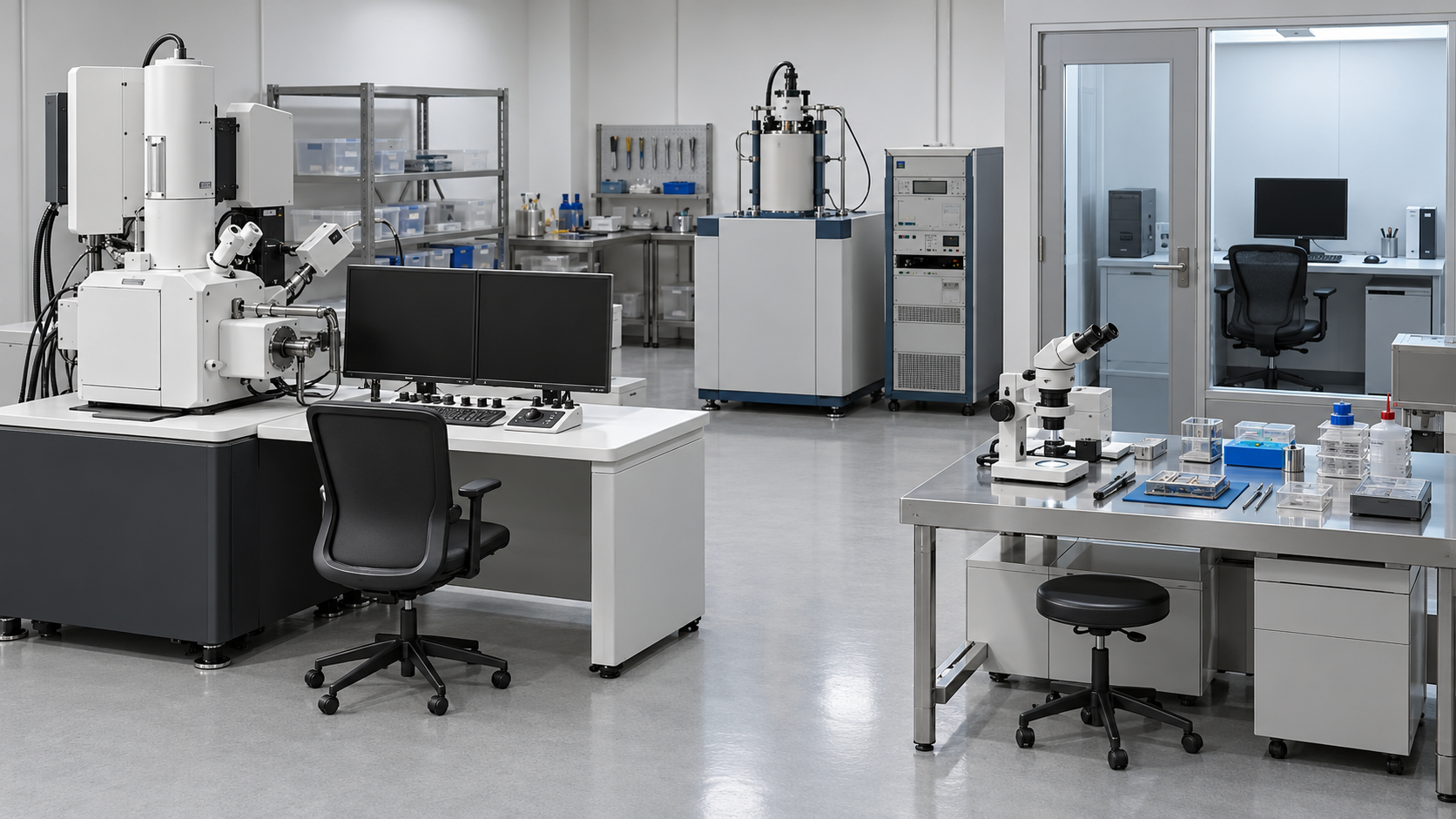
- NIMS in 30 seconds
- What kind of institution – the “type” of influence
- What NIMS does in functional materials
- Reach of influence (authority and geography)
- Companies and organizations involved
- Outlook
- Glossary / References / Claim-to-source audit
1. NIMS in 30 seconds
(a national research and development corporation)Abbreviated NIMS
NIMS’s influence comes not from authority but from substance. It opens four things to outsiders: research results, materials data, test facilities and joint research with companies Sourced. Its structural-materials data sheets on creep, fatigue and corrosion, for instance, are described by NIMS as obtained in line with test standards and used by industry for more than 40 years. But a data sheet is not a standard itself, and decisions on what to research and who gets funding are made by other bodies, such as MEXT, the Ministry of Economy, Trade and Industry and NEDO. For a materials company, NIMS can be a joint-research partner and a reference source for evaluation and data (this last point is our interpretation).
2. What kind of institution – the “type” of influence
The institutions that appear in functional-materials stories are unlike companies: they do not make products themselves. They can be sorted into four types by the channel through which they influence the industry.
3. What NIMS does in functional materials
NIMS’s involvement in functional materials falls into four strands Sourced.
| Strand | Scale and timing | What it does | Main actors |
|---|---|---|---|
| Research (nine research units) | 1,637 staff (April 2026) | Research Center for Energy and Environmental Materials (GREEN); Research Center for Electronic and Optical Materials; Research Center for Magnetic and Spintronic Materials (CMSM); Research Center for Structural Materials (RCSM); Research Center for Materials Nanoarchitectonics (MANA); Research Center for Macromolecules and Biomaterials (RCMB); Center for Basic Research on Materials (CBRM); International Center for Young Scientists (ICYS); Advanced Engineering and Services Division (AESD) | NIMS researchers and engineers |
| Materials data platform (DICE) and structural-materials data sheets | DICE is provided by NIMS’s data-core hub (MDPF) | DICE is a digital ecosystem for materials research that includes MatNavi, AtomWork-Adv (which NIMS describes as the world’s largest inorganic materials database) and the Materials Data Repository. The data sheets present creep, fatigue and corrosion data obtained in line with test standards. Six data sheets for FY2020 were issued on 31 March 2021 | NIMS. DICE is part of the “Materials DX Platform” concept of MEXT |
| Shared facilities | Ongoing | Advanced analysis and materials-creation equipment is offered through NIMS Open Facility (results not disclosed) and the Advanced Research Infrastructure for Materials and Nanotechnology (ARIM; usage reports published). A “NIMS battery platform” groups facilities for next-generation battery research | Researchers at universities, companies and public institutions in Japan and abroad |
| Collaboration with companies | Many collaboration centers and open platforms since 2006 | Joint research (under a policy that lets the company use shared patents non-exclusively at no charge); Centers of Excellence (one company, organization to organization); Materials Open Platforms (MOPs, where several companies in an industry work together on common problems) | Companies. Examples in section 5 |
NIMS’s data sheets and databases are used as reference data for design and material selection, but they do not replace a standard or a certification. To show conformity to a JIS or ISO standard, you still need testing against that standard. MatNavi also requires user registration (a DICE account, registration of the e-mail domain and an application for service use), and downloading data in bulk is prohibited by its terms of use. For a materials supplier, taking part in joint research with NIMS can be an opportunity to have your material evaluated on third-party equipment and data.
4. Reach of influence (authority and geography)
| Aspect | What NIMS has | What NIMS does not have |
|---|---|---|
| Authority | The ability to carry out its own research, to offer results, data and facilities to outsiders, and to sign joint-research agreements with companies. The four tasks set by the NIMS Act: fundamental and basic R&D, dissemination of results, shared use of facilities and equipment, and training of researchers and engineers | The power to hand out grants or research funds (the roles of MEXT, the Ministry of Economy, Trade and Industry, NEDO and others). The power to set standards, certification or regulation. The power to decide Japan’s materials policy |
| Geography | Based in Japan (Tsukuba). About 30% of its researchers are foreign nationals. Has an international joint graduate-school scheme and internationally oriented centers (MANA, ICYS) | Direct influence over other countries’ policy or regulation |
| Spillover | Likely to be widely referenced by Japanese industry through its databases and data sheets (inference). We did not verify how widely it is referenced internationally | The power to require foreign companies to use its data |
| Scale | 1,637 people (578 permanent staff). Revenue of ¥36.9 billion (FY2025 settlement) | A total budget for functional materials alone does not appear in the official documents we checked |
The 1,637 people include 1,053 fixed-term staff, graduate students and others; permanent staff number 578 Sourced. Of the ¥36.9 billion in revenue, the government operating grant of ¥16.9 billion is about 46% Our calculation. Commissioned-project revenue of ¥11.5 billion is about 31% of revenue (115 / 369) Our calculation. NIMS’s profile page gives about ¥37.4 billion as the FY2024 settlement, so the figure differs by fiscal year. NIMS also states that it ranks first in Japan for highly cited papers in materials science, citing a third-party analysis (Clarivate); this is NIMS’s own presentation and we have not verified it independently.
5. Companies and organizations involved
| Collaboration (NIMS’s name) | Established and ended (NIMS collaboration page) | Link to a company profile in this series |
|---|---|---|
| Hitachi Metals-NIMS Center of Excellence for Next-generation Materials | Established July 2016; wound up in March 2021 | Proterial: Hitachi Metals changed its name to Proterial in 2023 (Proterial’s corporate history page). The center has ended |
| Materials Open Platform for Permanent Magnet | Established April 2022; wound up in March 2025 | NIMS’s page does not list participating companies, so none is named here |
| Materials Open Platform for All Solid-State Battery | Established May 2020 (no end noted) | Related to our solid-state battery coverage. Participating companies are not named, as above |
| Materials Open Platform for Advanced Phosphor | Established April 2023 (no end noted) | Participating companies are not named, as above |
* NIMS’s collaboration page lists many other company centers (Toyota, SoftBank, L’Oreal, DENKA, Mitsubishi Materials, Taisei and others). This article names only those whose link to a company profiled in this series could be confirmed Sourced.
6. Outlook
| What can be read | Primary-source basis | Status |
|---|---|---|
| NIMS’s company collaboration is widening from single-company centers to multi-company open platforms and data infrastructure | NIMS’s list shows many company centers ending between 2016 and 2025, and open platforms being established from 2017 onward. DICE is being built under MEXT’s Materials DX Platform concept | Inference |
| Whether a successor to the Permanent Magnet open platform exists is unknown | The platform wound up in March 2025. NIMS’s collaboration page lists no successor | Not yet confirmed |
| The operation and expansion of data infrastructure such as DICE depend on continued government programs | DICE is provided by the data-core hub under MEXT’s Materials DX Platform concept. About 46% of NIMS’s revenue is the government operating grant | Inference |
7. Glossary
- Designated National Research and Development Institute
- A national R&D corporation expected to produce world-leading results under national strategy. NIMS says there are only three in Japan.
- Medium- to long-term goals
- Goals that the supervising ministry (for NIMS, MEXT) sets for a national R&D corporation, which then prepares a plan to meet them.
- DICE
- A digital ecosystem for materials research provided by NIMS’s data-core hub (MDPF), including MatNavi.
- MOP
- Materials Open Platform: a NIMS-centered scheme in which several companies in the same industry work jointly on common problems.
- ARIM
- Advanced Research Infrastructure for Materials and Nanotechnology, a MEXT program for shared use of advanced facilities with technical support.
- Center of Excellence
- NIMS’s term for a collaboration center set up under an agreement with one company, with a shared long-term roadmap.
8. References
- National Institute for Materials Science (NIMS) Corporate profile, in Japanese (mission, history, executives, research units, FY2024 budget of about ¥37.4 billion). https://www.nims.go.jp/nims/profile.html
- NIMS Summary of NIMS, English profile (English names of research units; promotion to a Designated National Research and Development Institute in October 2016). https://www.nims.go.jp/eng/nims/profile.html
- NIMS Information on the organization, in Japanese (medium- to long-term goals; 1,637 staff as of 1 April 2026 and the breakdown). https://www.nims.go.jp/nims/disclosure/organization.html
- NIMS Financial information, in Japanese (FY2025 settlement: revenue of ¥36.9 billion and its breakdown). https://www.nims.go.jp/nims/disclosure/finance.html
- NIMS NIMS: A Unique Research Institute!, in Japanese (the only national R&D corporation specializing in materials science; only three designated institutes; about 30% foreign researchers; joint graduate schools; DICE; ARIM; collaboration centers; MOPs). https://www.nims.go.jp/nims/introduction.html
- NIMS Collaborative Research (intellectual property policy; Centers of Excellence and open platforms; list of collaborations with start and end dates). https://www.nims.go.jp/eng/business/collaboration/index.html
- NIMS Use of facilities and data, in Japanese (NIMS Open Facility, ARIM, DICE, NIMS battery platform). https://www.nims.go.jp/infrastructure/index.html
- NIMS About DICE, in Japanese (data-core hub MDPF; Materials DX Platform concept). https://dice.nims.go.jp/about.html
- NIMS DICE top page, in Japanese (MatNavi; AtomWork-Adv described as the world’s largest inorganic materials database). https://dice.nims.go.jp/
- NIMS Press release, in Japanese, “Issue of NIMS Structural Materials Data Sheets” (1 April 2021; data obtained in line with test standards; used by industry for more than 40 years). https://www.nims.go.jp/press/2021/04/202104010.html
- Proterial, Ltd. Corporate History (Hitachi Metals changed its name to Proterial in 2023). https://www.proterial.com/e/corp/history.html
- NIMS NIMS Materials Database (MatNavi), in Japanese (a dozen or so databases; user registration procedure). https://mits.nims.go.jp/
- NIMS Creep Data Sheet (CDS), in Japanese (description of the structural-materials data sheets; bulk downloading prohibited). https://cds.nims.go.jp/
9. Claim-to-source audit
| Claim in the text | Status | Source |
|---|---|---|
| Legal name, history, research units, mission, FY2024 budget of about ¥37.4 billion | Sourced | Reference 1 https://www.nims.go.jp/nims/profile.html |
| English names of research units; promotion to a Designated National Research and Development Institute in October 2016 | Sourced | Reference 2 https://www.nims.go.jp/eng/nims/profile.html |
| 1,637 staff (578 permanent, 290 foreign nationals); goals set by MEXT | Sourced | Reference 3 https://www.nims.go.jp/nims/disclosure/organization.html |
| FY2025 revenue of ¥36.9 billion (operating grant ¥16.9 billion; commissioned-project revenue ¥11.5 billion) | Sourced | Reference 4 https://www.nims.go.jp/nims/disclosure/finance.html |
| The operating grant being about 46% and commissioned revenue about 31% of revenue | Our calculation | Our calculation from the values in Reference 4 (169 / 369 and 115 / 369) |
| The only national R&D corporation specializing in materials science (self-description), only three designated institutes, about 30% foreign researchers, joint graduate schools, the cited ranking | Sourced | Reference 5 https://www.nims.go.jp/nims/introduction.html |
| The joint-research IP policy, definitions of Centers of Excellence and open platforms, start and end dates of collaborations | Sourced | Reference 6 https://www.nims.go.jp/eng/business/collaboration/index.html |
| NIMS Open Facility, ARIM, the NIMS battery platform | Sourced | Reference 7 https://www.nims.go.jp/infrastructure/index.html |
| DICE, the data-core hub (MDPF) and the Materials DX Platform concept | Sourced | Reference 8 https://dice.nims.go.jp/about.html |
| MatNavi and AtomWork-Adv (NIMS’s description as the world’s largest inorganic materials database) | Sourced | Reference 9 https://dice.nims.go.jp/ |
| Contents of the structural-materials data sheets, the six sheets for FY2020, test-standard basis, use by industry for over 40 years | Sourced | Reference 10 https://www.nims.go.jp/press/2021/04/202104010.html |
| Hitachi Metals changed its name to Proterial in 2023 | Sourced | Reference 11 https://www.proterial.com/e/corp/history.html |
| MatNavi requires a DICE account, domain registration and a service application; bulk data retrieval is prohibited; MatNavi comprises about a dozen databases | Sourced | Reference 12 https://mits.nims.go.jp/ |
| The creep data sheets are part of the NIMS structural-materials data sheets and are obtained in line with test standards | Sourced | Reference 13 https://cds.nims.go.jp/ |
| The four-type classification, the collaboration examples in Fig. 2, and the reading of “no end noted” as ongoing | Our calculation | Our own classification |
| Total spending on functional materials alone; whether NIMS distributes reference materials; participating companies and any successor of the Permanent Magnet open platform | Not yet confirmed | Not in References 1 to 10. Not confirmed in this article |
| Interpretations in sections 1, 4 and 6 (a joint-research partner and reference source, wide domestic referencing, the shift in collaboration, dependence of data infrastructure on government programs) | Inference | Our own reading of References 4, 6, 8 and 10 |
Last updated 10 October 2026 / Troy Technical
Figures in this article come from NIMS’s official website and press releases. Passages marked “Inference” are our interpretation of the primary sources.