TECHNOLOGY EXPLAINER
Transthyretin Amyloidosis (ATTR)
— one protein made in the liver, stopped in four different ways
TTR, a blood protein made in the liver, misfolds and is deposited in nerves and the heart, causing disease. Over the past decade, drugs that stabilise TTR and siRNA and antisense drugs that stop its production have been approved one after another, and now a treatment that edits a gene inside the body to lower TTR with a single dose has entered phase 3 trials. At the same time, in 2025 that phase 3 trial was placed on clinical hold, and in August 2026 the antisense drug's cardiomyopathy trial did not meet its primary endpoint.
- What ATTR amyloidosis is, in three points
- From gene to amyloid: which stage to target
- Four strategies, and where the approved drugs stand
- A materials engineer's view (1): two delivery strategies, three modes of action
- Our calculation: how many doses over five years?
- How far does serum TTR fall? The pharmacodynamic marker and how to read it
- What the clinical trials show: neuropathy and cardiomyopathy
- The development stage of in vivo gene editing (nex-z)
- A materials engineer's view (2): what a one-time treatment asks of the formulation
- The area not yet reached: clearing deposited amyloid
- Open problems and unconfirmed matters
- Glossary / References / Claim-to-source audit
Sourced = stated in a paper, prescribing information, a trial registry entry, or material published by a company or public body (link given)
Our calculation = a value this article derived from assumptions it states
Not yet confirmed = in development or planned, with no confirmed approval or track record
Structural readings and design interpretations are marked separately as Commentary.
This article is an explanation of the disease and the technical course of treatment, and it does not recommend any particular drug or treatment. It does not rank drugs by efficacy and does not advise on how to choose or use them. Trial results are limited by their patient groups, comparators and assessment points. Approval status is given only where we could confirm it from regulators' information for each country or region. For diagnosis and treatment, please consult a medical institution.
1. What ATTR amyloidosis is, in three points
- What it is: transthyretin (TTR) is a protein made in the liver and carried in the blood. ATTR amyloidosis is the disease in which it misfolds and is deposited, mainly in nerves and the heartSourced. There is a hereditary form caused by mutations in the TTR gene (ATTRv) and a wild-type form without a mutation (ATTRwt). Hereditary polyneuropathy (ATTRv-PN) is inherited in an autosomal dominant patternSourced
- How treatment has changed: the former options were limited to liver transplantation and symptomatic care, but there are now drugs that target the progression of the disease itself (TTR stabilisers and RNA drugs that reduce TTR production)Sourced. In addition, in vivo gene editing with CRISPR-Cas9 has entered phase 3 trials as a way of lowering TTR with a single doseNot yet confirmed
- Where things stand: in US FDA prescribing information, the years of first approval are given as 2018 for Onpattro, 2019 for Vyndaqel / Vyndamax, 2022 for Amvuttra, 2023 for Wainua and 2024 for AttrubySourced. Gene editing is not approved, and its phase 3 trial was placed on clinical hold in October 2025
“Lowering serum TTR by 80 to 90%” is common to RNA interference drugs, antisense drugs and gene editingSourced. Yet whether lowering TTR produces a clinical result is being checked again, trial by trial. In August 2026, the phase 3 trial of the antisense drug eplontersen in ATTR-CM (CARDIO-TTRansform, 1,432 patients) did not show a significant difference from placebo on its primary endpoint (a composite of cardiovascular death and recurrent cardiovascular events) (rate ratio 0.89, 95% confidence interval 0.73 to 1.09, P = 0.28)Sourced. Meanwhile, the company has disclosed that the phase 3 trial of gene editing was placed on clinical hold in October 2025 and that the FDA lifted the hold in January and March 2026Sourced. The point to take from this field is that it cannot be said that “once the target is decided, the treatment is decided” (our commentary).
2. From gene to amyloid: which stage to target
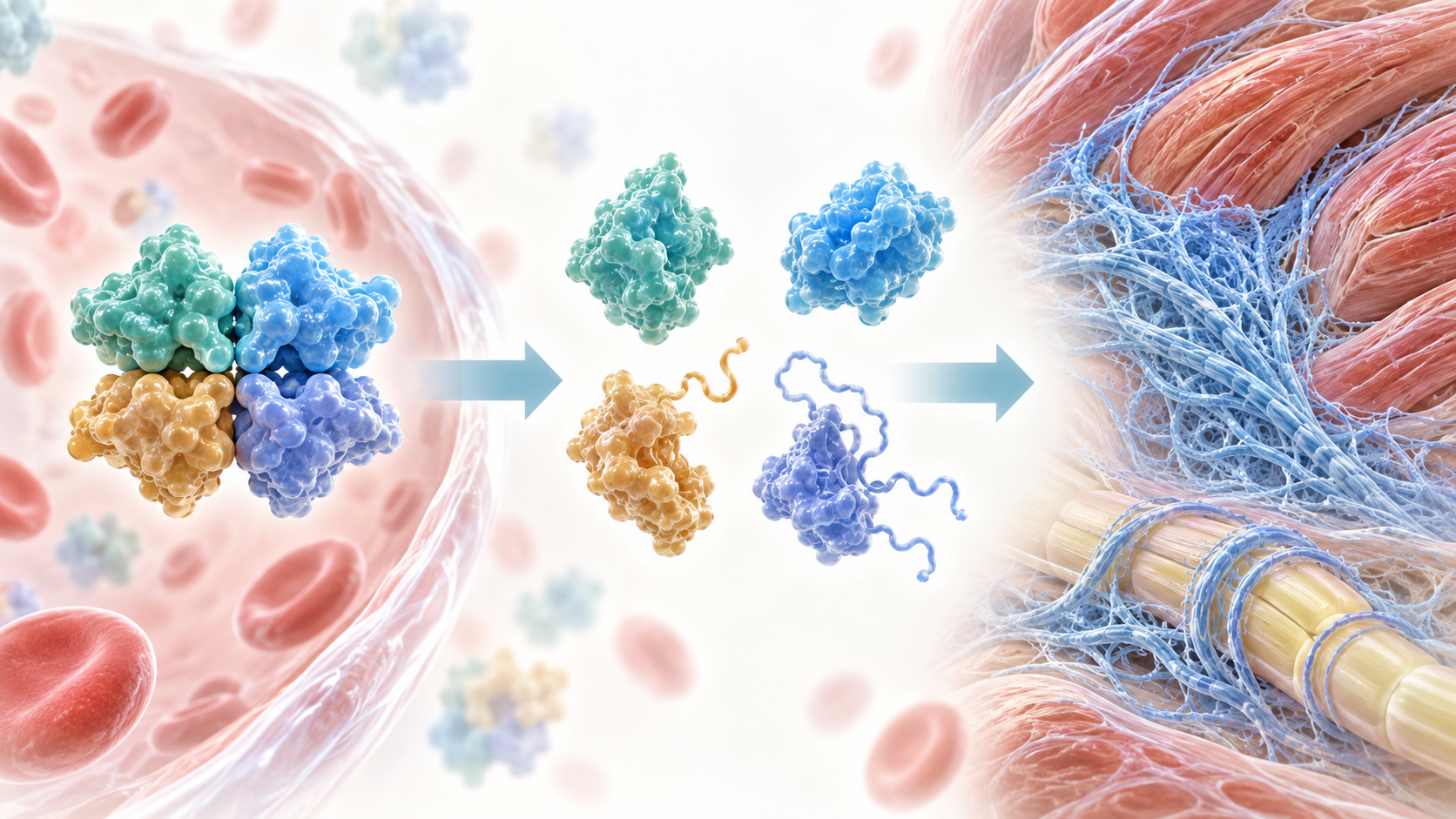
TTR is made from the mRNA copied from a gene in the liver, and in the blood it circulates as a tetramer, a set of four. The tafamidis prescribing information describes the dissociation of the TTR tetramer into monomers as “the rate-limiting step in the amyloidogenic process” and says that tafamidis binds to the thyroxine-binding sites of the tetramer and slows this dissociationSourced. The basic course of the disease is that the separated monomers misfold, form fibrils and are deposited in tissue.
Treatments fall broadly into four groups according to where in this flow they stop it.
A 2026 review (Fontana and colleagues) sorts stabilisers, drugs that suppress TTR production (gene silencers) and gene editing alike as treatments that reduce the production of amyloid, which do not help the body's own capacity to clear amyloid that has already been depositedSourced. This is why antibodies aimed at clearing deposited amyloid are being developed (Section 10).
3. Four strategies, and where the approved drugs stand
| Drug (brand name) | Type | Indication in the US prescribing information (summary) | First US approval | Approval in Japan (as far as we could confirm) |
|---|---|---|---|---|
| tafamidis (Vyndaqel / Vyndamax) | TTR stabiliser | To reduce cardiovascular mortality and cardiovascular-related hospitalisation in wild-type or hereditary ATTR-CM | 2019 | 20 September 2013: to slow progression of hereditary peripheral neuropathy. 26 March 2019: indication for cardiac amyloidosis added (PMDA) |
| acoramidis (Attruby) | TTR stabiliser | To reduce cardiovascular mortality and cardiovascular-related hospitalisation in wild-type or variant ATTR-CM | 2024 | Not confirmed in this article |
| patisiran (Onpattro) | siRNA (lipid nanoparticle) | Polyneuropathy of hereditary ATTR | 2018 | Not confirmed in this article |
| vutrisiran (Amvuttra) | siRNA (GalNAc-conjugated) | Polyneuropathy of hereditary ATTR, and wild-type or hereditary ATTR-CM | 2022 | 26 September 2022: familial amyloid polyneuropathy. 24 June 2025: indication for cardiac amyloidosis added (PMDA) |
| eplontersen (Wainua) | Antisense (GalNAc-conjugated) | Polyneuropathy of hereditary ATTR | 2023 | Not confirmed in this article |
| nexiguran ziclumeran (nex-z) | In vivo gene editing (lipid nanoparticle) | Not approved (in phase 3 trials) | - | - |
The US column follows the prescribing information of each product (DailyMed, versions posted 2025-2026) [Ref. 12-16], and the Japan column follows the PMDA's approval information pages [Ref. 17, 18]. Sourced. “Not confirmed in this article” does not mean there is no approval; it means we could not confirm official information within the scope of our survey. The indication in the US prescribing information for eplontersen (version posted April 2026) is polyneuropathy only (the results of the cardiomyopathy phase 3 trial are in Section 7). There are also other drugs, such as inotersen (Tegsedi).
This article does not deal with the judgement of which drug to use in whom. Here we look at the design of the trials that formed the basis of approval and the differences in how the drugs are delivered.
4. A materials engineer's view (1): two delivery strategies, three modes of action
The three ways of reducing TTR (siRNA, antisense and gene editing) all require delivering a nucleic acid to liver cells. There are broadly two delivery strategies: packaging the nucleic acid in a lipid nanoparticle (LNP), or conjugating it to the sugar GalNAc. Once inside hepatocytes, the approaches differ in how they act: siRNA and antisense drugs lower TTR mRNA, whereas the investigational gene-editing approach aims to disrupt the TTR gene.
Let us compare the two schools as materials, using what the prescribing information saysSourced.
- Wrapping in an LNP (Onpattro): each 1 mL contains 2 mg of patisiran, together with 6.2 mg of cholesterol, 13.0 mg of the ionisable lipid DLin-MC3-DMA, 3.3 mg of DSPC and 1.6 mg of PEG lipid (PEG2000-C-DMG). The siRNA uses 2'-O-methylated nucleotides
- Attaching GalNAc (Amvuttra, Wainua): vutrisiran is a chemically modified double-stranded siRNA with a ligand carrying three GalNAc residues covalently attached (molecular weight 17,290 Da). Eplontersen is a 2'-MOE-modified antisense oligonucleotide with a GalNAc ligand attached (molecular weight 9,046 Da). Both are solutions for subcutaneous injection
Let us calculate two figures hereOur calculation.
- The total lipid in 1 mL of Onpattro is 6.2 + 13.0 + 3.3 + 1.6 = 24.1 mg, about 12 times the 2 mg of siRNA (24.1 ÷ 2 ≈ 12). About half of the lipid (13.0 ÷ 24.1 ≈ 54%) is the ionisable lipid
- Amvuttra contains 25 mg in 0.5 mL, so it is 50 mg/mL (25 ÷ 0.5). That is a concentration 25 times the 2 mg/mL of Onpattro (50 ÷ 2)
Assumptions and limits: the lipid mass ratio is arithmetic on the contents per mL given in the prescribing information (we do not know the actual arrangement inside the particles or the amount of lipid that did not enter them). The concentration comparison is to show the difference in the form of the formulations and has nothing to do with which drug is better.
The dosage form that uses as much as 24 mg/mL of lipid is the intravenous infusion (Onpattro). To reduce infusion-related reactions, the prescribing information says to use a corticosteroid, acetaminophen and an antihistamine before administrationSourced. By contrast, the ingredients listed in the Amvuttra prescribing information, besides vutrisiran, are phosphates, sodium chloride, water and the like, with no lipids. It is a subcutaneous injection, given about every three months (Fig. 2, next section). The detailed materials design of LNPs is covered in our explainer on lipid nanoparticles, and the case of wrapping mRNA in our explainer on mRNA.
5. Our calculation: how many doses over five years?
The difference in delivery shows up as a difference in dosing interval. From the intervals given in the prescribing information, we calculate the number of doses over five years.
We work out the number of doses from the dosing intervals (as stated in the prescribing information)Our calculation.
- patisiran (every 3 weeks): 365.25 days ÷ 21 days ≈ 17.4 per year, so about 87 doses over 5 years
- eplontersen (once a month): 12 per year, so 60 doses over 5 years
- vutrisiran (every 3 months): 4 per year, so 20 doses over 5 years
- nex-z (in development): the clinical trial plan is one dose
Assumptions and limits: delays, interruptions, dose adjustments and switching to another drug are not considered. A smaller number of doses does not mean a better treatment; it only puts the difference in design into numbers.
The difference in dosing intervals can be read as reflecting a difference in how long the drug keeps working in the body, but the reasons (differences in chemical modification, in carrier and so on) cannot be explained from the material we consulted. Gene editing rewrites the DNA of liver cells, so it is designed so that the capacity to make TTR stays lowered for a long time after dosing (our commentary).
6. How far does serum TTR fall? The pharmacodynamic marker and how to read it
For drugs that reduce TTR, the percentage reduction in serum TTR is reported as a first indicator of effect. We set out the mean values stated in the sourcesSourced.
- patisiran: the prescribing information states a mean reduction of about 80% within 10 to 14 days of a single dose, 83% and 84% after repeated dosing at 9 and 18 months, and a maximum mean reduction of 88% over 18 months
- vutrisiran: in HELIOS-A (polyneuropathy of hereditary ATTR), a mean reduction of 83% at steady state
- eplontersen: a mean reduction of 81% from baseline at week 35 in study 1
- nex-z: in the phase 1 trial in ATTRv-PN (36 patients), a mean reduction of 90% at day 28 and 92% at 24 months (NEJM 2025). In the phase 1 trial in ATTR-CM (36 patients), 89% at day 28 and 90% at 12 months (NEJM 2024)
The percentage fall in serum TTR is not itself a clinical effect. Even when TTR falls by 80 to 90% in the same way, the results of clinical trials in cardiomyopathy differ from trial to trial, as Section 7 shows. Also, the stabilisers (tafamidis, acoramidis) are not drugs that lower serum TTR. The Attruby prescribing information states that serum TTR increased after dosingSourced. Because the marker showing whether each drug is “working” differs, this figure shows only the TTR-lowering drugs.
TTR is also the carrier of the protein that transports vitamin A (retinol-binding protein) (Onpattro prescribing information). With drugs that reduce TTR, serum vitamin A also falls. The prescribing information states that at steady state serum vitamin A fell by 62% with vutrisiran and by 71% with eplontersenSourced. It is an example of how a treatment that reduces a target protein also affects other functions that the target carried (our commentary).
7. What the clinical trials show: neuropathy and cardiomyopathy
Let us look at the design of the trials that formed the basis of approval, because how the result is read changes with what the comparator is and what was assessed at which time point.
(1) Trials in polyneuropathy (ATTRv-PN)
| Trial (registry number) | Drug | Size and allocation | Comparator | Main assessment (time point) |
|---|---|---|---|---|
| APOLLO (NCT01960348) | patisiran | 225 patients, randomised 2:1, double-blind (148 vs 77) | Placebo | Change in mNIS+7 (a composite neuropathy score) (18 months). The difference from placebo was statistically significant (P<0.001) |
| HELIOS-A (NCT03759379) | vutrisiran | Randomised 3:1, open-label (122 on vutrisiran, 42 on patisiran) | patisiran (reference arm). Efficacy was assessed against the APOLLO placebo group (external) | Change in mNIS+7 (9 months) |
| NEURO-TTRansform (NCT04136184) | eplontersen | Randomised 6:1, open-label (144 on eplontersen, 24 on inotersen) | inotersen (reference arm). Efficacy was assessed against a placebo group from a separate trial (external, 60 patients) | Change in mNIS+7 and Norfolk QoL-DN (35 weeks) |
All Sourced (APOLLO from NEJM 2018 [Ref. 5] and the Onpattro prescribing information; HELIOS-A from the Amvuttra prescribing information; NEURO-TTRansform from the Wainua prescribing information [Ref. 12-14]). The results of the two trials other than APOLLO are not taken up in this table.
What is worth noting is that HELIOS-A and NEURO-TTRansform did not set up a new placebo group but assessed efficacy by comparison with the placebo group of an existing, separate trial. The reason a placebo group could be dispensed with is that APOLLO had already produced placebo-group data for a similar patient population (as stated in the prescribing information)Sourced. It is an example of a design for a rare disease with limited numbers of patients, in which a new drug is assessed while being compared with a treatment for which data already exist (our commentary).
(2) Trials in cardiomyopathy (ATTR-CM)
| Trial (registry number) | Drug | Population and size | Comparator and duration | Primary endpoint and result |
|---|---|---|---|---|
| ATTR-ACT (NCT01994889) | tafamidis | 441 patients with ATTR-CM (80 mg / 20 mg / placebo, 2:1:2) | Placebo, 30 months | Hierarchical assessment of all-cause mortality, then frequency of cardiovascular-related hospitalisation. Met (P<0.001) |
| ATTRibute-CM (NCT03860935) | acoramidis | 632 patients with ATTR-CM (2:1) | Placebo, 30 months | A four-step hierarchical analysis of all-cause mortality, cardiovascular-related hospitalisation, NT-proBNP and six-minute walk distance. Met (P<0.001) |
| HELIOS-B (NCT04153149) | vutrisiran | 655 patients with ATTR-CM (1:1) | Placebo, up to 36 months | Composite of all-cause mortality and recurrent cardiovascular events. Met (P=0.01 in the overall population) |
| CARDIO-TTRansform (NCT04136171) | eplontersen | 1,432 patients with ATTR-CM (1:1) | Placebo (added to standard care), 140 weeks | Composite of cardiovascular mortality and recurrent cardiovascular events. Not met (rate ratio 0.89, 95% confidence interval 0.73 to 1.09, P=0.28) |
All Sourced (paper abstracts for ATTR-ACT [Ref. 4], ATTRibute-CM [Ref. 7], HELIOS-B [Ref. 6] and CARDIO-TTRansform [Ref. 8]). Because the patients, background treatment, primary endpoints and follow-up periods differ from trial to trial, the results cannot be set side by side to compare drugs.
In CARDIO-TTRansform, according to the ESC (European Society of Cardiology) announcement, 57% of participants were taking a stabiliser at the start of the trial. Among patients not taking a stabiliser, there were fewer events with eplontersen, reaching nominal significance, whereas no additional effect was seen in patients who were taking a stabiliser. Both are subgroup analyses and do not overturn the conclusion of the primary endpointSourced. In HELIOS-B, which also examined use together with a stabiliser, 40% were taking a stabiliser (tafamidis) at the start, and the assessment was designed for the “overall population” and the “population not taking a stabiliser” (prescribing information, NEJM)Sourced. That differences in background treatment affect the interpretation of results is worth knowing as one factor that makes assessing new drugs difficult (our commentary).
8. The development stage of in vivo gene editing (nex-z)
Nexiguran ziclumeran (nex-z, formerly NTLA-2001) is a formulation in which the mRNA for the Cas9 protein and a guide RNA targeting the TTR gene are wrapped in a lipid nanoparticle (NEJM 2021)Sourced. It aims to inactivate the TTR gene in liver cells and so reduce serum TTR (NEJM 2025). The general mechanism of gene editing is covered in our explainer on genome editing, and the assessment of unintended edits (off-target effects) in our explainer on off-target effects and safety assessment. Here we confine ourselves to its place in the course of the disease and its treatment.
Reports of the phase 1 trial (NCT04601051)
- First report (NEJM 2021): six patients with polyneuropathy of hereditary ATTR (three each at 0.1 mg/kg and 0.3 mg/kg). Safety was assessed for 28 days after dosing, and adverse events were mild. The mean fall in serum TTR was 52% in the 0.1 mg/kg group and 87% in the 0.3 mg/kg groupSourced
- Phase 1 in ATTR-CM (NEJM 2024): 36 patients. Serum TTR fell by a mean of 89% at day 28 and 90% at 12 months. Adverse events occurred in 34 patients, including transient infusion-related reactions in 5 and treatment-related transient rises in liver enzymes in 2. Serious adverse events occurred in 14 (most consistent with ATTR-CM)Sourced
- Phase 1 in ATTRv-PN (NEJM 2025): 36 patients, mean follow-up 27 months. Serum TTR fell by a mean of 90% at day 28 and 92% at 24 months. Treatment-related adverse events included transient infusion-related reactions in 21, a fall in thyroid hormone (thyroxine) in 8 (with no hypothyroidism or rise in thyroid-stimulating hormone) and headache in 4. There was 1 death from cardiac amyloidosis, 1 discontinuation because of worsening motor function, and 11 patients with serious adverse eventsSourced
All of these are single-arm, open-label phase 1 trials in small numbers of patients. They are trials for assessing safety and the fall in serum TTR (pharmacodynamics), and their size and design do not allow clinical efficacy to be judged.
Phase 3 trials
- MAGNITUDE (NCT06128629): a double-blind trial in ATTR-CM that randomly assigns nex-z (a 55 mg intravenous infusion) or placebo (saline) 2:1 (1,200 planned). The primary endpoint is a composite of cardiovascular death and cardiovascular events. It started on 13 December 2023Sourced
- MAGNITUDE-2 (NCT06672237): a double-blind phase 3 trial in ATTRv-PN comparing nex-z (a single 55 mg infusion) with placebo 1:1 (about 60 planned). The primary endpoints are the change in mNIS+7 and the change in serum TTR. It started on 22 November 2024Sourced (the outline of the trial is from the company's announcement of 2 March 2026 and the trial registry)
The clinical hold of October 2025, and its lifting in 2026
According to Intellia's filings with the US SEC (January and March 2026), the course of events was as followsSourced.
- 27 October 2025: a patient dosed in MAGNITUDE was reported to have grade 4 liver transaminase elevation and a rise in total bilirubin (meeting the stopping criteria set in the trial protocol)
- 29 October 2025: the FDA placed a clinical hold on the INDs (clinical trial applications) for MAGNITUDE and MAGNITUDE-2
- 5 November 2025: this patient died. The investigator reported the cause of death as “septic shock secondary to perforation of a duodenal ulcer”. The complicated course also included acute liver injury and its treatment with steroids, and the autopsy report supported these clinical diagnoses
- As of January 2026: more than 650 patients with ATTR-CM were enrolled in MAGNITUDE and 47 patients in MAGNITUDE-2. In MAGNITUDE, grade 4 liver transaminase elevation was reported in under 1% of all enrolled patients, and in MAGNITUDE-2 none was reported. All of these began 3 to 5 weeks after dosing and, apart from the patient above, resolved within weeks with no clinical sequelae reported
- 27 January 2026: the FDA lifted the clinical hold on MAGNITUDE-2 (ATTRv-PN). The company says it agreed trial changes including intensified safety monitoring of the liver
- 2 March 2026: the FDA lifted the clinical hold on MAGNITUDE (ATTR-CM). The company lists, as measures common to MAGNITUDE and MAGNITUDE-2, intensified liver monitoring, guidance on short-course steroid treatment if liver transaminases rise early after dosing, and the exclusion of patients with certain liver abnormalities; for MAGNITUDE it adds the exclusion of patients with a recent history of cardiovascular instability and of those with an ejection fraction of 25% or less at screening
This article cannot assess the cause of this patient's death or its causal relationship to liver injury. The account above is the company's disclosure (the investigator's report), not an FDA review document or the like. Nor does the lifting of a hold mean that safety has been confirmed. The measures are changes to the trial's conditions made in light of the events observedNot yet confirmed.
Other development outside the United States
ClinicalTrials.gov lists a trial of intravenous YOLT-201 run by Zhejiang University (NCT06082050, ATTR-CM, early phase 1, 7 planned, started 2 November 2023, recruiting)Sourced. The editing method and safety information for this product cannot be determined from the registry entry, within the scope of our check.
9. A materials engineer's view (2): what a one-time treatment asks of the formulation
siRNA and antisense drugs reduce mRNA and presuppose regular dosing. In principle, they are designed so that the option of changing the interval, or stopping, remains. Gene editing, by contrast, rewrites the DNA of liver cells, so it cannot be reversed after dosing (both points are readings from the mechanism of action, and our commentary). The design of the clinical trials reflects this. MAGNITUDE and MAGNITUDE-2 give a single infusion at a fixed dose of 55 mg (company announcement, trial registry)Sourced.
From the standpoint of materials and formulation, the following can be read from this property (our commentary).
- The variability of a single dose becomes the patient's result for life. Differences between lots, which average out with a drug given repeatedly, are not averaged out in a one-time treatment. The particle size of the LNP, the amount and ratio of the encapsulated nucleic acids, and the control of impurities carry weight lot by lot
- The nature of the carrier overlaps with the safety question. The LNP of nex-z is designed to reach liver cells, and the event that triggered the clinical hold was also in liver markers (transaminases, bilirubin) (Section 8). However, whether the cause of the event lay in the formulation, the editing or patient-side factors cannot be determined from our materialNot yet confirmed
- Infusion-related reactions, and premedication. In the phase 1 trials of nex-z, transient infusion-related reactions were reported in 21 of 36 patients with ATTRv-PN and 5 of 36 with ATTR-CMSourced. For Onpattro, an LNP-siRNA, premedication is also stated in the prescribing information (Section 4). The design of PEG lipids and ionisable lipids is an area of attention as a challenge common to LNPs
Also, treatments that reduce TTR weaken its role in carrying vitamin A (Section 6). In a treatment that “removes” its target, replacing the function that the target carried (for example vitamin A supplementation) is also part of the product's safety design. For details, see the prescribing information.
10. The area not yet reached: clearing deposited amyloid
The treatments so far all act to reduce the production of amyloid. As a means of removing amyloid that has already been deposited, antibodies that bind amyloid are being developed. A review (Vergaro and colleagues) names cormitug, ALXN2220 and the pan-amyloid antibody AT-02, and says that clearance of amyloid is an unmet clinical needSourced.
| Candidate | Registry number | Phase | Status in the registry (at the time of our check) |
|---|---|---|---|
| ALXN2220 (Alexion) | NCT06183931 | Phase 3 (ATTR-CM, placebo-controlled) | Active, not recruiting (started 11 January 2024, 1,181 enrolled) |
| coramitug / NNC6019 (Novo Nordisk) | NCT07207811 | Phase 3 (CLEOPATTRA) | Recruiting (started 2 October 2025) |
| AT-02 (Attralus) | NCT05951049 | Phase 2 (systemic amyloidosis) | Active, not recruiting (started 21 September 2023) |
All Sourced (ClinicalTrials.gov [Ref. 22-24] and the review [Ref. 11]). We have not confirmed whether “cormitug” in the review and “coramitug (NNC6019)” in the trial registry are the same. None is approved, and efficacy and safety are not establishedNot yet confirmed. The AT-02 entry covers systemic amyloidosis in general.
11. Open problems and unconfirmed matters
(1) The relationship between lowering TTR and clinical outcome
A fall in serum TTR is common to the drugs, but the results of the cardiomyopathy trials differ from trial to trial (Section 7). The influence of background treatment (stabilisers) has also been pointed out, and its interpretation is a matter for future discussionNot yet confirmed.
(2) Long-term safety of gene editing
Follow-up in the phase 1 trials is a mean of 27 months in ATTRv-PN and 12 months or more in ATTR-CM [Ref. 2, 3]. The frequency and cause of events in liver markers, and long-term safety, must await the results of the phase 3 trialsNot yet confirmed.
(3) Choice and sequence of drugs, cost and access
A 2026 review (Ide and colleagues) names, for ATTRv-PN drugs, the challenges of high treatment costs, limited access worldwide, uncertainty over the best choice and sequence of drugs, and the need for long-term real-world dataSourced.
(4) Approval status in Japan
In this article we confirmed the approval status in Japan only for tafamidis and vutrisiran, from the PMDA's approval information (Section 3). We have not been able to confirm the domestic approval status of the other drugs (patisiran, eplontersen and acoramidis).
- ATTR amyloidosis is a disease in which TTR, made in the liver, misfolds and is deposited in nerves and the heart. Treatment falls into four stages: gene editing, suppression of the mRNA, stabilisation of the tetramer, and clearance of depositsSourced
- In the United States, the years of first approval are given as 2018 for Onpattro, 2019 for Vyndaqel / Vyndamax, 2022 for Amvuttra, 2023 for Wainua and 2024 for Attruby. In Japan, tafamidis was approved in 2013 and 2019 and vutrisiran in 2022 and 2025Sourced
- The three ways of reducing TTR differ in how they are delivered. Wrapped in an LNP (patisiran, nex-z), or linked to GalNAc (vutrisiran, eplontersen). The dosing interval ranges from about every 3 weeks, once a month and about every 3 months to a single doseSourced (the five-year counts are Our calculation)
- The results of the phase 3 trials in cardiomyopathy differ from trial to trial. Tafamidis, acoramidis and vutrisiran met their primary endpoints, and eplontersen did not, in August 2026Sourced
- In vivo gene editing (nex-z) is in phase 3. Serum TTR falls by about 90%, but a clinical hold was set in October 2025 and lifted in January and March 2026Sourced. Approval is not confirmedNot yet confirmed
- Points of contact on the materials side: LNPs (ionisable lipids, PEG lipids), GalNAc conjugation, chemically modified nucleic acids, and quality control for a one-time treatment (our commentary)
12. Glossary
- Transthyretin (TTR)
- A protein made in the liver that circulates in the blood as a tetramer. It is involved in carrying thyroid hormone (thyroxine) and vitamin A.
- ATTR amyloidosis
- A disease in which TTR misfolds and is deposited in tissue. There is a hereditary form (ATTRv) and a wild-type form (ATTRwt).
- ATTRv-PN / ATTR-CM
- Polyneuropathy of hereditary ATTR / cardiomyopathy caused by ATTR.
- Tetramer
- A structure in which four identical parts form a set. TTR is stable in this form, and when it splits into monomers it tends to misfold.
- Stabiliser
- A drug that binds the TTR tetramer and slows its dissociation into monomers (tafamidis, acoramidis).
- siRNA
- A small double-stranded RNA. It breaks down the target mRNA and so reduces production of the protein (RNA interference).
- Antisense
- A single-stranded nucleic acid that binds the target mRNA. It reduces production of the protein, for example by causing the mRNA to be degraded.
- GalNAc
- N-acetylgalactosamine. A sugar that binds a receptor on the surface of liver cells. It is linked to a nucleic acid as a tag for delivery to liver cells.
- Lipid nanoparticle (LNP)
- A tiny particle made of lipids. It wraps a nucleic acid and delivers it to cells.
- nex-z
- Nexiguran ziclumeran (formerly NTLA-2001). In vivo gene editing that inactivates the TTR gene in the liver, using Cas9 mRNA and a guide RNA wrapped in an LNP.
- mNIS+7
- A composite score for assessing neuropathy (0 to 304 points, higher is worse). Used as the primary endpoint in trials in ATTRv-PN.
- Clinical hold
- An FDA action that stops dosing or new enrolment in a clinical trial, for safety or other reasons.
- Hierarchical analysis
- An analysis in which several endpoints are put in order and tested one after another from the top. All-cause mortality and hospitalisation are assessed first.
- External placebo group
- Using the placebo group of a different trial, rather than one within the trial itself, as the comparator.
13. References (primary sources)
- Gillmore JD et al. “CRISPR-Cas9 in vivo gene editing for transthyretin amyloidosis”, N Engl J Med 2021;385:493-502 — pubmed.ncbi.nlm.nih.gov
- Gillmore JD et al. “Nexiguran ziclumeran gene editing in hereditary ATTR with polyneuropathy”, N Engl J Med 2025;393:1375-1386 — pubmed.ncbi.nlm.nih.gov
- Fontana M et al. “CRISPR-Cas9 gene editing with nexiguran ziclumeran for ATTR cardiomyopathy”, N Engl J Med 2024;391:2231-2241 — pubmed.ncbi.nlm.nih.gov
- Maurer MS et al. “Tafamidis treatment for patients with transthyretin amyloid cardiomyopathy” (ATTR-ACT), N Engl J Med 2018;379:1007-1016 — pubmed.ncbi.nlm.nih.gov
- Adams D et al. “Patisiran, an RNAi therapeutic, for hereditary transthyretin amyloidosis” (APOLLO), N Engl J Med 2018;379:11-21 — pubmed.ncbi.nlm.nih.gov
- Fontana M et al. “Vutrisiran in patients with transthyretin amyloidosis with cardiomyopathy” (HELIOS-B), N Engl J Med 2025;392:33-44 — pubmed.ncbi.nlm.nih.gov
- Gillmore JD et al. “Efficacy and safety of acoramidis in transthyretin amyloid cardiomyopathy” (ATTRibute-CM), N Engl J Med 2024;390:132-142 — pubmed.ncbi.nlm.nih.gov
- Fontana M et al. “Eplontersen for transthyretin amyloid cardiomyopathy” (CARDIO-TTRansform), N Engl J Med 2026 — pubmed.ncbi.nlm.nih.gov
- European Society of Cardiology (ESC) “Eplontersen trial did not meet its primary endpoint in transthyretin-mediated amyloid cardiomyopathy” (press release, 28 August 2026) — escardio.org
- Ide T et al. “Disease-modifying therapies for hereditary transthyretin amyloidosis with polyneuropathy: current status and future perspectives”, Neurol Ther 2026 — pubmed.ncbi.nlm.nih.gov
- Vergaro G et al. “Current and emerging treatment options for transthyretin amyloid cardiomyopathy”, Heart 2026 — pubmed.ncbi.nlm.nih.gov
- US FDA / DailyMed ONPATTRO (patisiran) prescribing information (version posted 29 September 2025) — dailymed.nlm.nih.gov
- US FDA / DailyMed AMVUTTRA (vutrisiran) prescribing information (version posted 17 November 2025) — dailymed.nlm.nih.gov
- US FDA / DailyMed WAINUA (eplontersen) prescribing information (version posted 30 April 2026) — dailymed.nlm.nih.gov
- US FDA / DailyMed VYNDAQEL / VYNDAMAX (tafamidis) prescribing information (version posted 13 May 2026) — dailymed.nlm.nih.gov
- US FDA / DailyMed ATTRUBY (acoramidis) prescribing information (version posted 3 July 2026) — dailymed.nlm.nih.gov
- Pharmaceuticals and Medical Devices Agency (PMDA) Approval information page for tafamidis meglumine (list of approval dates and review reports; in Japanese) — pmda.go.jp
- Pharmaceuticals and Medical Devices Agency (PMDA) Approval information page for vutrisiran sodium (list of approval dates and review reports; in Japanese) — pmda.go.jp
- ClinicalTrials.gov NCT04601051: Phase 1 study of NTLA-2001 (ATTRv-PN and ATTR-CM) — clinicaltrials.gov
- ClinicalTrials.gov NCT06128629: MAGNITUDE (NTLA-2001, ATTR-CM, phase 3) — clinicaltrials.gov
- ClinicalTrials.gov NCT06672237: Phase 3 study of NTLA-2001 (ATTRv-PN, MAGNITUDE-2) — clinicaltrials.gov
- ClinicalTrials.gov NCT06183931: Phase 3 study of ALXN2220 (ATTR-CM) — clinicaltrials.gov
- ClinicalTrials.gov NCT07207811: CLEOPATTRA (NNC6019-0001 / coramitug, ATTR-CM, phase 3) — clinicaltrials.gov
- ClinicalTrials.gov NCT05951049: Phase 2 study of AT-02 (systemic amyloidosis) — clinicaltrials.gov
- Intellia Therapeutics SEC filing (Form 8-K, 9 January 2026): safety events in MAGNITUDE and the course of the clinical hold — sec.gov
- Intellia Therapeutics SEC filing (Form 8-K, 27 January 2026): lifting of the clinical hold on MAGNITUDE-2 — sec.gov
- Intellia Therapeutics SEC filing (Form 10-Q, quarter ended 31 March 2026) — sec.gov
- Intellia Therapeutics Announcement on the lifting of the clinical hold on MAGNITUDE (2 March 2026; Exhibit 99.2 to an SEC filing) — sec.gov
- ClinicalTrials.gov NCT06082050: Intravenous YOLT-201 study (ATTR-CM, early phase 1) — clinicaltrials.gov
14. Claim-to-source audit
| Claim in the text | Basis | Label |
|---|---|---|
| That dissociation of the TTR tetramer is “the rate-limiting step in the amyloidogenic process” and that tafamidis binds the tetramer and slows it. That TTR is the carrier of the vitamin A-carrying protein (retinol-binding protein). That the approved stabilisers, silencers and gene editing all act to reduce amyloid production and do not remove amyloid already deposited | The mechanism of action sections of the prescribing information, and the review Reference 15 https://dailymed.nlm.nih.gov/dailymed/lookup.cfm?setid=1b4121ee-a733-4456-a917-be2603477839Reference 12 https://dailymed.nlm.nih.gov/dailymed/lookup.cfm?setid=e87ec36f-b4b4-49d4-aea4-d4ffb09b0970Reference 16 https://dailymed.nlm.nih.gov/dailymed/lookup.cfm?setid=913552ef-875d-4cb7-bf05-a7d20a394c38Reference 11 https://pubmed.ncbi.nlm.nih.gov/40425273/ | Sourced |
| That polyneuropathy of hereditary ATTR (ATTRv-PN) is autosomal dominant. That the former options were liver transplantation and symptomatic care. That treatment cost, access, uncertainty over the choice and sequence of drugs, and the need for long-term real-world data are open problems | Abstract of the review by Ide et al. Reference 10 https://pubmed.ncbi.nlm.nih.gov/42458194/ | Sourced |
| Indications in the US and the year of first approval: Onpattro 2018 (polyneuropathy of hereditary ATTR), Vyndaqel / Vyndamax 2019 (ATTR-CM), Amvuttra 2022 (polyneuropathy, and wild-type or hereditary ATTR-CM), Wainua 2023 (polyneuropathy), Attruby 2024 (ATTR-CM) | Indications and the year of first approval in each prescribing information (DailyMed, versions posted 2025-2026) Reference 12 https://dailymed.nlm.nih.gov/dailymed/lookup.cfm?setid=e87ec36f-b4b4-49d4-aea4-d4ffb09b0970Reference 13 https://dailymed.nlm.nih.gov/dailymed/lookup.cfm?setid=8db0facb-81b6-4006-9239-27dc6409c5d3Reference 14 https://dailymed.nlm.nih.gov/dailymed/lookup.cfm?setid=d7dcb847-71dd-4fff-82d0-d43a465fc096Reference 15 https://dailymed.nlm.nih.gov/dailymed/lookup.cfm?setid=1b4121ee-a733-4456-a917-be2603477839Reference 16 https://dailymed.nlm.nih.gov/dailymed/lookup.cfm?setid=913552ef-875d-4cb7-bf05-a7d20a394c38 | Sourced |
| Approvals in Japan: tafamidis meglumine 20 September 2013 (to slow progression of hereditary peripheral neuropathy), 26 March 2019 (indication for cardiac amyloidosis added). Vutrisiran 26 September 2022 (familial amyloid polyneuropathy), 24 June 2025 (indication for cardiac amyloidosis added) | PMDA approval information pages Reference 17 https://www.pmda.go.jp/PmdaSearch/iyakuDetail/GeneralList/1290001Reference 18 https://www.pmda.go.jp/PmdaSearch/iyakuDetail/GeneralList/1290401 | Sourced |
| Per 1 mL of Onpattro: patisiran 2 mg, cholesterol 6.2 mg, DLin-MC3-DMA 13.0 mg, DSPC 3.3 mg, PEG2000-C-DMG 1.6 mg; 2'-O-methyl modification; premedication before dosing. Fall in serum TTR (about 80% at 10 to 14 days, 83% and 84% at 9 and 18 months, maximum mean 88%) | Composition, dosing and pharmacodynamics in the ONPATTRO prescribing information Reference 12 https://dailymed.nlm.nih.gov/dailymed/lookup.cfm?setid=e87ec36f-b4b4-49d4-aea4-d4ffb09b0970 | Sourced |
| The make-up of Amvuttra (a chemically modified double-stranded siRNA with a ligand carrying three GalNAc residues covalently attached; molecular weight 17,290 Da; 25 mg in 0.5 mL), an 83% fall in serum TTR in HELIOS-A, a 62% fall in serum vitamin A. The design of HELIOS-A (3:1, patisiran reference arm, comparison with external placebo) and of HELIOS-B | Composition, pharmacodynamics and clinical trial sections of the AMVUTTRA prescribing information Reference 13 https://dailymed.nlm.nih.gov/dailymed/lookup.cfm?setid=8db0facb-81b6-4006-9239-27dc6409c5d3 | Sourced |
| The make-up of Wainua (antisense plus a GalNAc ligand, 2'-MOE modification, molecular weight 9,046 Da), monthly dosing, an 81% fall in serum TTR at week 35, a 71% fall in serum vitamin A. The design of NEURO-TTRansform (6:1, inotersen reference arm, comparison with an external placebo group of 60) | WAINUA prescribing information Reference 14 https://dailymed.nlm.nih.gov/dailymed/lookup.cfm?setid=d7dcb847-71dd-4fff-82d0-d43a465fc096 | Sourced |
| The action of Attruby (stabilisation of TTR), the rise in serum TTR, and the design of ATTRibute-CM | ATTRUBY prescribing information Reference 16 https://dailymed.nlm.nih.gov/dailymed/lookup.cfm?setid=913552ef-875d-4cb7-bf05-a7d20a394c38 | Sourced |
| APOLLO: 225 patients, 2:1, double-blind, 18 months, mNIS+7, significant difference from placebo (P<0.001). ATTR-ACT: 441 patients, 2:1:2, 30 months, met in a hierarchical analysis (P<0.001). ATTRibute-CM: 632 patients, 2:1, 30 months, met in a four-step hierarchical analysis (P<0.001). HELIOS-B: 655 patients, 1:1, up to 36 months, met on the composite of all-cause mortality and recurrent cardiovascular events (P=0.01) | Abstracts of the papers Reference 5 https://pubmed.ncbi.nlm.nih.gov/29972753/Reference 4 https://pubmed.ncbi.nlm.nih.gov/30145929/Reference 7 https://pubmed.ncbi.nlm.nih.gov/38197816/Reference 6 https://pubmed.ncbi.nlm.nih.gov/39213194/ | Sourced |
| CARDIO-TTRansform: 1,432 patients, eplontersen 45 mg every 4 weeks versus placebo (added to standard care), 140 weeks, rate ratio 0.89 (95% confidence interval 0.73 to 1.09, P=0.28) for the composite of cardiovascular mortality and recurrent cardiovascular events, not met. 57% of participants were taking a stabiliser at the start; a nominal difference only in non-users and no additional effect in users (subgroups) | Abstract of the NEJM paper and the ESC press release (28 August 2026) Reference 8 https://pubmed.ncbi.nlm.nih.gov/42663301/Reference 9 https://www.escardio.org/news/press/press-releases/eplontersen-trial-did-not-meet-its-primary-endpoint-in-transthyretin-mediated-amyloid-cardiomyopathy/ | Sourced |
| That nex-z is a formulation of Cas9 mRNA and a guide RNA targeting TTR wrapped in an LNP. That in the first six patients serum TTR fell by 52% at 0.1 mg/kg and 87% at 0.3 mg/kg | Abstract of the paper Reference 1 https://pubmed.ncbi.nlm.nih.gov/34215024/ | Sourced |
| Phase 1 in ATTR-CM (36 patients): serum TTR fell 89% (day 28) and 90% (12 months); adverse events in 34, infusion reactions in 5, liver enzyme rises in 2, serious adverse events in 14. Phase 1 in ATTRv-PN (36 patients, mean follow-up 27 months): falls of 90% (day 28) and 92% (24 months); infusion reactions in 21, thyroxine fall in 8, headache in 4, serious adverse events in 11, 1 death from cardiac amyloidosis | Abstracts of the papers Reference 3 https://pubmed.ncbi.nlm.nih.gov/39555828/Reference 2 https://pubmed.ncbi.nlm.nih.gov/41002250/ | Sourced |
| The design of MAGNITUDE and MAGNITUDE-2 (a single 55 mg intravenous infusion of nex-z; MAGNITUDE 2:1, 1,200 planned, composite of cardiovascular death and cardiovascular events; MAGNITUDE-2 1:1, about 60, mNIS+7 and serum TTR) and the start dates (13 December 2023, 22 November 2024) | Trial registry and the company's announcement Reference 20 https://clinicaltrials.gov/study/NCT06128629Reference 21 https://clinicaltrials.gov/study/NCT06672237Reference 28 https://www.sec.gov/Archives/edgar/data/1652130/000119312526084309/d101756dex992.htm | Sourced |
| The report on 27 October 2025 of grade 4 liver transaminase elevation and raised total bilirubin, the FDA clinical hold of 29 October 2025, and the patient's death on 5 November 2025 (cause of death as reported by the investigator: septic shock secondary to perforation of a duodenal ulcer, a complicated course including acute liver injury and its steroid treatment; the autopsy report supported the clinical diagnoses). More than 650 enrolled (MAGNITUDE) and 47 (MAGNITUDE-2); grade 4 elevations in under 1% (MAGNITUDE) and none (MAGNITUDE-2); onset 3 to 5 weeks after dosing | The company's SEC filings (a company disclosure, not an FDA review document) Reference 25 https://www.sec.gov/Archives/edgar/data/1652130/000119312526008307/d15047d8k.htmReference 27 https://www.sec.gov/Archives/edgar/data/0001652130/000119312526215740/ntla-20260331.htm | Sourced |
| Lifting of the hold on MAGNITUDE-2 on 27 January 2026 and on MAGNITUDE on 2 March 2026, and the agreed measures (intensified liver monitoring, guidance on short-course steroid treatment, exclusion of patients with certain liver abnormalities, and for MAGNITUDE exclusion of those with a recent history of cardiovascular instability and an ejection fraction of 25% or less) | The company's SEC filings Reference 26 https://www.sec.gov/Archives/edgar/data/1652130/000119312526023387/d29201d8k.htmReference 28 https://www.sec.gov/Archives/edgar/data/1652130/000119312526084309/d101756dex992.htmReference 27 https://www.sec.gov/Archives/edgar/data/0001652130/000119312526215740/ntla-20260331.htm | Sourced |
| The YOLT-201 trial (Zhejiang University): ATTR-CM, early phase 1, 7 planned, started 2 November 2023, recruiting. The editing method and safety information cannot be confirmed from the registry entry | Trial registry Reference 29 https://clinicaltrials.gov/study/NCT06082050 | Sourced |
| Antibody candidates: ALXN2220 (phase 3, started 11 January 2024, 1,181 enrolled, active, not recruiting), coramitug / NNC6019 (phase 3 CLEOPATTRA, started 2 October 2025, recruiting), AT-02 (phase 2, started 21 September 2023). That the review calls clearance of deposited amyloid an unmet need | Trial registry and the review. None is approved Reference 22 https://clinicaltrials.gov/study/NCT06183931Reference 23 https://clinicaltrials.gov/study/NCT07207811Reference 24 https://clinicaltrials.gov/study/NCT05951049Reference 11 https://pubmed.ncbi.nlm.nih.gov/40425273/ | Sourced |
| Total lipid per 1 mL of Onpattro 24.1 mg (6.2 + 13.0 + 3.3 + 1.6), about 12 times the siRNA (24.1 ÷ 2), ionisable lipid share 54% (13.0 ÷ 24.1). Amvuttra's 50 mg/mL (25 ÷ 0.5) is 25 times Onpattro's 2 mg/mL. Doses over five years (patisiran about 87 = 365.25 ÷ 21 × 5, eplontersen 60, vutrisiran 20, nex-z 1) | Our calculation. Arithmetic only on the contents and dosing intervals in the prescribing information. Delays, interruptions and dose adjustments are not considered. It does not rank the drugs | Our calculation |
| The readings that “wrapping in an LNP and attaching GalNAc are different designs as materials”; “a design without a placebo group is a device for rare diseases”; “lot-to-lot variability carries weight in a one-time treatment”; “the nature of the carrier overlaps with the safety question”; “differences in background treatment affect the interpretation of results”; and “a treatment that removes a target also affects the other functions of that target” | Commentary (this article's own summary). Not clinical instructions or a judgement of which drug is better | Commentary |
| The approval status in Japan of patisiran, eplontersen and acoramidis | We could not confirm official information (PMDA) in our survey, so it is not stated (this does not mean there is no approval) | Commentary |
| The cause of the nex-z clinical hold (formulation, editing or patient-side factors), the causal relationship to the death, why the CARDIO-TTRansform result differs from other trials, and whether cormitug and coramitug are the same | It could not be explained from the material we checked, so it is not stated. Treated as fact only within the company's disclosures and the review | Commentary |
| That Figs. 1, 2, 4 and 5 are explanatory drawings and not pathways in the body, molecular structures or trial results; that Fig. 3 is a drawing that includes our calculation; and that the hero image is an AI-generated image | A note by this article | Commentary |
Last updated 1 October 2026. Sources are limited to primary material (peer-reviewed papers, ClinicalTrials.gov, FDA prescribing information, the PMDA, companies' filings with the US SEC, and announcements from medical societies). Market estimates from research firms are not used. This article is a technical explanation of the disease and the course of treatment. It does not recommend any drug or treatment, and does not compare efficacy. Because the article includes structural readings and design interpretations, those are marked as Commentary and kept separate from sourced fact. The approval status in Japan of patisiran, eplontersen and acoramidis, the cause of the nex-z clinical hold, and the reasons for the differences between cardiomyopathy trial results could not be confirmed within our survey and are not included. Company announcements (Intellia Therapeutics) are used only for facts about its own products, and are identified as company disclosures. All figures are concept diagrams for explanation. Figs. 1, 2, 4 and 5 are vector drawings, Fig. 3 includes our calculation, and the hero image is an AI-generated image; none of them shows a pathway in the body, the structure of a protein or the condition of a patient.