TECHNOLOGY EXPLAINER
Cytokine Release Syndrome (CRS)
— how the “too strong” side of immunotherapy is handled, in mechanism and in regulation
In treatments that drive immune cells hard, such as CAR-T cells and T cell-engaging bispecific antibodies, two shared concerns are cytokine release syndrome (CRS), in which inflammatory substances are released all at once, and ICANS, which brings neurological symptoms. This article is not about clinical practice. Using primary sources, it sets out the mechanism, the “yardstick” of severity, where the treatment drug stands in its prescribing information, and how regulators manage the risk.
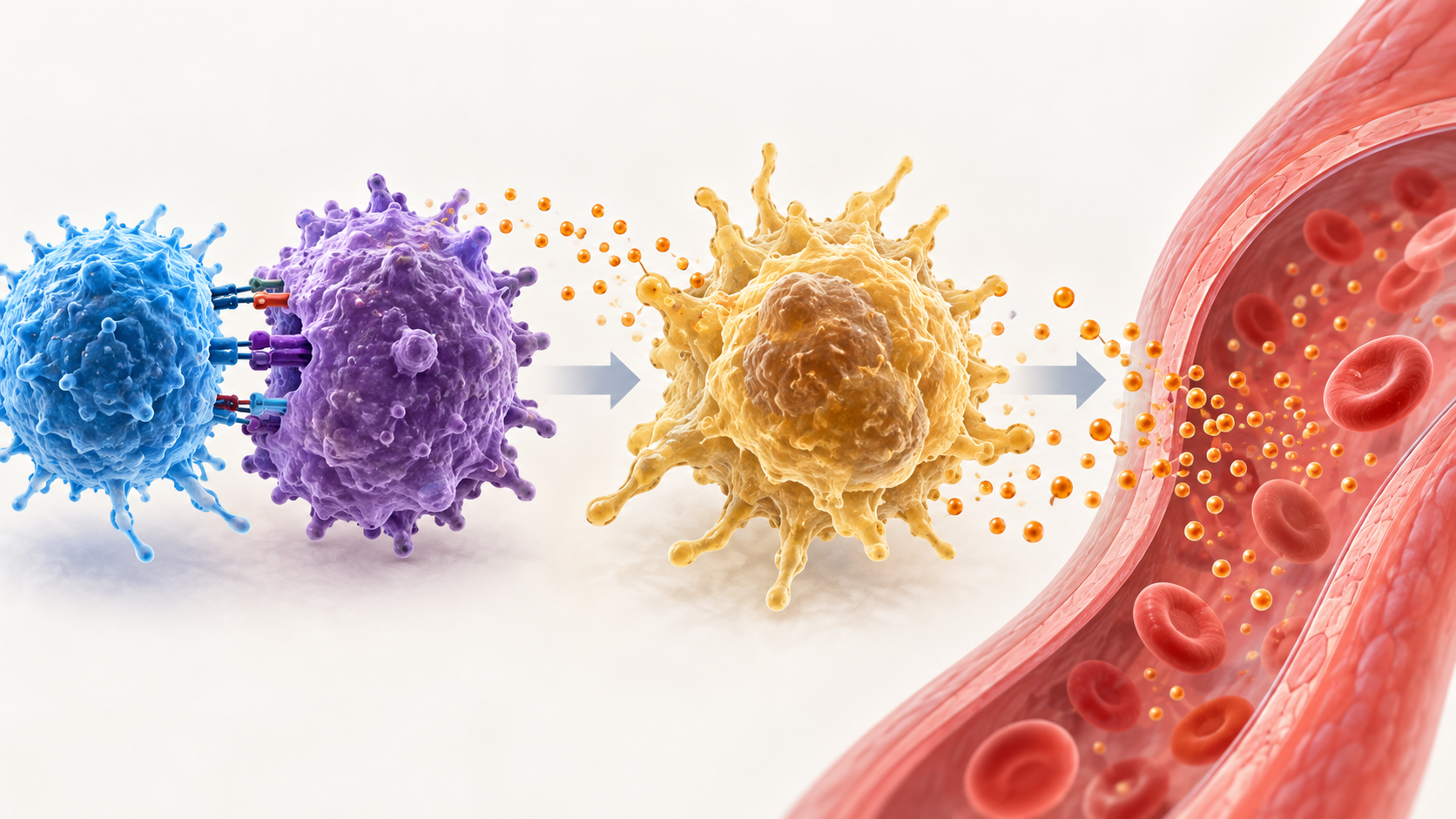 1. T-cell activation
2. Monocyte/macrophage activation
3. Cytokines spread
- What CRS and ICANS are, in three points
- What is happening: the mechanism
- The “yardstick” of severity: the ASTCT criteria and the assessment of ICANS
- A materials engineer's view (1): why laboratory values were left out of the criteria
- The same “Grade 3” counted on different yardsticks
- Where the treatment drug stands in its prescribing information: tocilizumab
- Occurrence with cell therapies and bispecific antibodies
- Risk management by regulation: boxed warnings, REMS and facility requirements
- Attempts to lower the risk through new designs
- A materials engineer's view (2): building the risk into the design
- Open problems and unconfirmed matters
- Glossary / References / Claim-to-source audit
Sourced = stated in a paper, prescribing information or material published by a regulator (link given)
Our calculation = a value this article derived from assumptions it states
Not yet confirmed = a research-stage item or plan that is not established
Structural readings and design interpretations are marked separately as Commentary.
This article is an explanation of mechanisms and regulation and not an instruction for diagnosis or treatment. It does not say which drug to choose, when to use it, at what dose or in what combination. If you have symptoms that may be CRS or ICANS, contact the medical institution treating you immediately. The contents of prescribing information and classification tables are presented as the shared language of research, reporting and regulation, not for decisions about individual patients. There is no intention to rank treatments or products against each other.
1. What CRS and ICANS are, in three points
- CRS: the consensus statement of ASTCT (the American Society for Transplantation and Cellular Therapy) defines CRS as “a supraphysiologic response following any immunotherapy that results in the activation or engagement of endogenous or infused T cells and/or other immune effector cells”. It typically begins with fever and, when severe, comes with hypotension and hypoxiaSourced
- ICANS: immune effector cell-associated neurotoxicity syndrome. It occurs during CRS or, more often, after it, and is treated as separate from CRS in both mechanism and timingSourced
- Regulation: the prescribing information of CAR-T cells and T cell-engaging bispecific antibodies lists CRS in a boxed warning. In the United States, a REMS (Risk Evaluation and Mitigation Strategy) has been imposed product by product, but the REMS for the six autologous CAR-T products was withdrawn in June 2025Sourced
The US prescribing information for tocilizumab, a drug for CRS, describes its efficacy against CAR-T-related CRS using a retrospective analysis of clinical trial data (45 patients, median age 12 years). Of the 45 patients, 31 (69%) were counted as “responders” under the defined criteriaSourced. When the indication was extended in Japan in 2023 to “CRS associated with the treatment of malignant tumours”, the main basis was also 15 patients who received tocilizumab in a domestic phase 1/2 trialSourced. A characteristic of this field is that the drugs for urgent side effects are positioned not by large controlled trials but by small datasets and the accumulation of clinical guidelines (our commentary).
2. What is happening: the mechanism
CRS was discovered by several routes. The ASTCT consensus statement says that the symptoms seen in early clinical trials of CD19-targeting CAR-T cells resembled those that occurred in a trial in which a low dose of a CD28 superagonist antibody (TGN1412) was given to healthy young male volunteers. In that trial all six volunteers needed intensive care because of the rapid onset of multi-organ failureSourced. In other words, CRS is not specific to CAR-T but a reaction common to treatments that strongly activate T cells and similar cells in general. The consensus statement notes that similar symptoms have been reported with blinatumomab (a bispecific antibody that targets CD19 and CD3)Sourced.
The “main players” revealed in mice
Research into the mechanism of CRS using animals advanced greatly in 2018. Giavridis and colleagues created a mouse model in which CRS appears two to three days after CAR-T cell infusion and responds to blockade of the IL-6 receptor. They reported that the severity of CRS is determined not by cytokines made by the CAR-T cells but by IL-6, IL-1 and nitric oxide (NO) made by the recipient's macrophagesSourced. Norelli and colleagues reported, in humanised mice, that human monocytes are the main source of IL-1 and IL-6, and that depleting monocytes or giving tocilizumab prevented CRS, whereas tocilizumab did not work against the delayed neurotoxicity (inflammation of the meninges). The IL-1 receptor antagonist anakinra suppressed both the CRS and the neurotoxicitySourced.
All of these are results in mice. How far they hold in humans must be checked separately, and a review (Morris and colleagues) sets out the current understanding of the pathophysiology and clinical picture, and the development of new treatments for prevention and managementSourced.
On the timing of CRS, the consensus statement says that “CRS can also occur late, but onset beyond 14 days after treatment is rare, and symptoms after that point should prompt a careful search for other causes”Sourced. In acute lymphoblastic leukaemia (ALL), the higher the tumour burden, the more frequent and severe CRS becomes (from the introduction of Giavridis and colleagues)Sourced.
3. The “yardstick” of severity: the ASTCT criteria and the assessment of ICANS
Grading systems for the severity of CRS used to differ from institution to institution and trial to trial. The consensus statement describes how CTCAE (Common Terminology Criteria for Adverse Events) v4.03 and v5.0, the Lee criteria, the University of Pennsylvania criteria (Penn criteria) and the CARTOX criteria were all in use side by side, which made it hard to compare safety between products and hard to build management strategiesSourced. In June 2018 experts met and proposed a unified, objective and easily applied set of criteria (the ASTCT criteria). The main points are as follows.
- CRS presupposes fever (38.0°C or above). Given that, the Grade is set by whichever is worse of hypotension and hypoxiaSourced
- Hypotension is divided by “whether vasopressors are needed, and how many”, and hypoxia by “how oxygen is being delivered”. Numbers that vary over time, such as the oxygen fraction (FiO₂), are not usedSourced
- Laboratory values (cytokines, CRP and so on) and organ dysfunction are not used to decide the GradeSourced
Assessing ICANS: the ICE score
For ICANS, a simple 10-point test (the ICE score) is combined with level of consciousness, seizures, motor findings and raised intracranial pressure or cerebral oedema, and the Grade is set by the most severe finding. The ICE score breaks down as follows: orientation (year, month, city, hospital) 4 points, naming three objects 3 points, following commands 1 point, writing a sentence 1 point, and counting backwards from 100 in tens 1 point (10 in total)Sourced.
| Domain | Grade 1 | Grade 2 | Grade 3 | Grade 4 |
|---|---|---|---|---|
| ICE score | 7-9 | 3-6 | 0-2 | 0 (cannot be roused, so the test cannot be done) |
| Level of consciousness | Wakes spontaneously | Wakes to voice | Wakes only to touch | Cannot be roused, or needs vigorous or repeated stimulus. Stupor or coma |
| Seizure | - | - | A clinical seizure that resolves quickly, or non-convulsive seizures on EEG that resolve with intervention | A life-threatening prolonged seizure (over 5 minutes), or repetitive seizures without return to baseline in between |
| Motor findings | - | - | - | Deep focal motor weakness such as hemiparesis or paraparesis |
| Raised intracranial pressure / cerebral oedema | - | - | Focal oedema on imaging | Diffuse cerebral oedema on imaging, decerebrate or decorticate posturing, cranial nerve VI palsy, papilloedema, or Cushing's triad |
All Sourced (a summary of the ASTCT consensus criteria for adults [Ref. 1]). Grade 5 is death. There are age-specific criteria, for example the CAPD (Cornell Assessment of Pediatric Delirium) is used in place of the ICE in children under 12.
The consensus statement also explains why neurotoxicity was removed from the definition of CRS. Neurotoxicity often appears after the typical symptoms of CRS have settled, usually does not respond to tocilizumab, and intravenous tocilizumab is thought not to reach adequate concentrations in the cerebrospinal fluidSourced. Even for toxicities arising from the same treatment, the current arrangement is that CRS and ICANS are treated as different in timing, in the molecules involved and in response to drugs (our summary).
4. A materials engineer's view (1): why laboratory values were left out of the criteria
CRS is a condition accompanied by a rise in inflammatory cytokines, yet the ASTCT criteria do not use laboratory values to decide severity. The consensus statement gives two reasons.
- At many institutions, cytokine measurement cannot be obtained in time to be used for judging severity or deciding the response.
- CRP, which is widely available, is inexpensive but not very specific, and in the authors' experience its changes lag behind clinical findings by at least 12 hours.
Both points are as stated in the consensus statementSourced. In other words, the current severity classification is decided not by the core of the pathology (the cytokines) but by the circulatory and respiratory state that appears as a result.
Read with the eyes of a materials and device engineer, what shows here is that being able to measure several cytokines at the bedside, in a short time is an unmet need that could change the classification. It is a field where the challenges of analytical materials (highly sensitive interfaces with little non-specific adsorption, compact flow-path devices that can hold reagents in advance, and so on) connect directly to the setting of clinical criteria (our commentary). However, whether such measurements will actually enter clinical criteria could not be confirmed in our surveyNot yet confirmed.
5. The same “Grade 3” counted on different yardsticks
The ASTCT criteria were proposed to solve the problem that “Grade 3” meant something different in each prescribing information. Traces of this remain in current labels. The table below sets out the criteria used when the prescribing information of CAR-T cells states the frequency of CRS.
| Product (prescribing information) | Criteria stated for CRS severity | Figures in the label (examples) | Caution when reading |
|---|---|---|---|
| YESCARTA | States the Lee grading system | CRS in 90% of 422 patients with non-Hodgkin lymphoma; grade 3 or higher in 9% | The target is non-Hodgkin lymphoma. Doses and patient background differ from the others |
| KYMRIAH | States the University of Pennsylvania criteria (Penn grading system) | Relapsed or refractory ALL (79 patients): CRS in 77%, grade 3 or higher in 48%. DLBCL (115 patients): CRS in 74%, grade 3 or higher in 23% | The meaning of Grade does not match between the Penn criteria and the Lee or ASTCT criteria |
| AUCATZYL | No criteria named in the main text that we could find (the references include the ASTCT criteria) | CRS in 75% of 100 patients; grade 3 in 3% | The target is adult ALL. The dosing design (split dosing) is also different |
| TECVAYLI | States that the management table is based on the ASTCT 2019 criteria | CRS in 64% of 448 patients; grade 3 in 0.2% | A bispecific antibody, not CAR-T. The target is multiple myeloma |
All Sourced (the prescribing information of each product [Ref. 11, 20-22]). The size of the figures cannot be compared to argue that one product is better than another. The criteria, target disease, patient background, dosing design and observation period are not aligned (our caution).
For example, even when figures such as 48% (KYMRIAH, ALL, Penn criteria) and 9% (YESCARTA, non-Hodgkin lymphoma, Lee criteria) for grade 3 or higher are set side by side, they cannot be read as a difference in safety. The consensus statement itself says that the ASTCT criteria were created out of the concern that differences in criteria make safety hard to compare between products and hinder the development of management strategiesSourced. When reading material on a new product, the basic step is first to check by which criteria, in which population and over how long a period the figures were obtained.
6. Where the treatment drug stands in its prescribing information: tocilizumab
The drug most commonly used for CRS is tocilizumab (trade name Actemra), a humanised antibody that binds the IL-6 receptor and blocks the action of IL-6. The review report of Japan's PMDA explains that this drug was created in a joint study between Osaka University and Chugai PharmaceuticalSourced. Here we set out only on what evidence, and within what range of indication, it appears in the prescribing information. We do not touch on how to use it or at what dose.
| Country / time | Position in the prescribing information and approval | What was described as the basis |
|---|---|---|
| United States (FDA prescribing information) | Severe or life-threatening CRS associated with CAR-T cells (adults and children aged 2 and over) is listed as one of the indications | A retrospective analysis of outcome data from clinical trials of CAR-T cell therapy. 45 patients were evaluated (24 male, 21 female; median age 12 years). A “responder” was defined as CRS resolving within 14 days, with no more than 2 doses, and no drugs other than tocilizumab and corticosteroids; 31 patients (69%, 95% confidence interval 53 to 82%) met this. In a separate, independent cohort of 15 patients, resolution within 14 days was also confirmed |
| Japan (March 2019) | Approved for “cytokine release syndrome associated with tumour-specific T cell infusion therapy” | We have not confirmed the basis of this approval (the timing follows the PMDA's 2023 review report) |
| Japan (25 September 2023) | The indication was widened to “cytokine release syndrome associated with the treatment of malignant tumours” (including CRS caused by antineoplastic drugs other than CAR-T) | Results in 15 patients who received tocilizumab for CRS in a domestic phase 1/2 trial (a trial of the bispecific antibody epcoritamab), together with a review of domestic and overseas clinical guidelines and 31 published papers |
All Sourced (FDA prescribing information on DailyMed [Ref. 7], PMDA review report [Ref. 8], PMDA approval information [Ref. 9]).
The figures given in the Japanese review report
The PMDA's 2023 review report (dated 7 August 2023) describes the results of the domestic phase 1/2 trial (the GCT3013-04 trial) as followsSourced.
- Of the 66 patients who received epcoritamab, 57 (86.4%) developed CRS: grade 1 in 56.1%, grade 2 in 22.7% and grade 3 in 7.6%
- Of the 57 patients who developed CRS, 18 (31.6%) received tocilizumab. The 15 patients remaining after excluding 3 whose lot number could not be identified formed the efficacy and safety analysis set
- CRS recovered in all 15 patients in the analysis set. The median time from the start of tocilizumab to recovery was 2.0 days. No deaths were observed within 90 days including the day of administration
- The primary endpoint of this trial was the response rate to epcoritamab; no primary endpoint was set for the efficacy of tocilizumab
- As of June 2023, no country or region had approved an indication of “CRS associated with the treatment of malignant tumours”, while the indication of CRS associated with CAR-T cell therapy had been approved in 15 countries and regions
We check the proportions and ratios from the figures in the prescribing information and the review reportOur calculation.
- US prescribing information: 31 ÷ 45 = 68.9% (the label says 69%)
- Domestic trial: 57 ÷ 66 = 86.4% (CRS occurred). 18 ÷ 57 = 31.6% (received tocilizumab). 15 ÷ 57 = 26.3% (analysis set)
- Breakdown by grade: 56.1% + 22.7% + 7.6% = 86.4% (matches the proportion with CRS)
Assumptions and limits: the 15 patients in the analysis set are about a quarter of the patients who developed CRS. The result excludes 3 patients whose lot number was unknown and is not a result that followed everyone. In addition, the review report records that no specific criteria for judging “recovery” were set in the trial protocol (the applicant explained that, because management followed the ASTCT criteria, assessments were unlikely to diverge between evaluators).
From the trial results and a review of domestic and overseas guidelines and published papers, the PMDA judged that for the treatment of CRS associated with the treatment of malignant tumours, “a certain efficacy has been shown and the drug can be positioned as one treatment option”, and that safety is acceptableSourced.
Commentary: CRS is a side effect that can become severe quickly, and trials that randomly assign patients to compare treatments are probably hard to organise. That the basis in the prescribing information is a “small, single-arm, retrospective” analysis may reflect these circumstances (our commentary). In its place, data are accumulated on a shared footing of criteria (ASTCT) and clinical guidelines.
7. Occurrence with cell therapies and bispecific antibodies
CRS occurs in common not only with CAR-T cells but with treatments whose mechanism draws in T cells. The table below summarises how CRS is handled in the prescribing information of representative T cell-engaging bispecific antibodies approved in the United States (antibodies that link CD3 on the T cell surface and an antigen on the cancer cell at the same time).
| Product | Target on the cancer cell | Boxed warning heading (how CRS and ICANS are handled) | Step-up dosing specified | REMS mentioned |
|---|---|---|---|---|
| TECVAYLI | BCMA | CRS and neurologic toxicity (including ICANS) | Yes | Yes (TECVAYLI and TALVEY REMS) |
| TALVEY | GPRC5D | CRS and neurologic toxicity (including ICANS) | Yes | Yes (TECVAYLI and TALVEY REMS) |
| ELREXFIO | BCMA | CRS and neurologic toxicity (including ICANS) | Yes | Yes (ELREXFIO REMS) |
| LYNOZYFIC | BCMA | CRS and neurologic toxicity (including ICANS) | Yes | Yes (LYNOZYFIC REMS) |
| COLUMVI | CD20 | CRS (premedication before each dose is also given in the warning box) | Yes | Not mentioned |
| EPKINLY | CD20 | CRS and ICANS | Yes | Not mentioned |
| LUNSUMIO | CD20 | CRS | Yes | Not mentioned |
| IMDELLTRA | DLL3 | CRS and neurologic toxicity (including ICANS) | Yes | Not mentioned |
| BLINCYTO | CD19 | CRS and neurologic toxicity (including ICANS) | The term does not appear | Not mentioned |
All Sourced (each prescribing information published on DailyMed [Ref. 11-19]; the versions we checked in 2026). “Not mentioned” means that the word REMS did not appear in the main text of the prescribing information we checked. For indications and the latest status, see each prescribing information.
The common feature is that CRS appears in the boxed warning, and nearly all products specify “step-up dosing”. The TECVAYLI prescribing information explains that step-up dosing is begun “to reduce the risk of CRS” and that premedication is also used “to reduce the risk of CRS”Sourced.
According to the TECVAYLI prescribing information, CRS occurred in 64% of 448 patients: grade 1 in 46%, grade 2 in 18% and grade 3 in 0.2%. The onset of CRS was concentrated in the period of the first step-up doses: 37% after step-up dose 1, 32% after step-up dose 2 and 20% after the first treatment dose. On the other hand, CRS occurring for the first time at a dose after the end of step-up dosing was seen in 2.5%. The median time to onset was 2 days from the most recent dose (range 1 to 9 days), and the median duration was 2 days (range 1 to 22 days)Sourced.
37% + 32% + 20% = 89%, which exceeds the overall CRS rate of 64%Our calculation. This can be read as double counting of people, because one patient may have CRS after several doses (the label gives “recurrent 27%”) (our commentary). Also, 46% + 18% + 0.2% = 64.2%, which matches the overall 64%. Assumptions and limits: the denominators and definitions of each proportion follow the wording of the label, and we have not interpreted them beyond the original text.
For CAR-T cells, CRS appears in the boxed warning of many prescribing information documents, and ICANS is handled as a separate item. The manufacturing and materials side of CAR-T cell products is covered in our explainer on CAR-T cells, and the handling of CRS with immune cells made from iPS cells in our explainer on iPS cell-derived immune cells.
8. Risk management by regulation: boxed warnings, REMS and facility requirements
Because CRS can become severe, regulators have managed not only the warnings in the prescribing information but also who may handle these products, where, and how. The US REMS (Risk Evaluation and Mitigation Strategy) is a mechanism the FDA requires for drugs with particularly serious safety concerns.
United States: withdrawal of the REMS for six autologous CAR-T products (June 2025)
The FDA announced that it was withdrawing the REMS for six autologous CAR-T cell therapies that target BCMA or CD19 (Abecma, Breyanzi, Carvykti, Kymriah, Tecartus and Yescarta) (June 2025)Sourced. According to the FDA's explanation, the REMS had required that hospitals and clinics handling the products be certified and have immediate access to tocilizumab. The reason given for withdrawal is that, thanks to “established management guidelines and the extensive experience of haematology and oncology clinicians”, the REMS was no longer “necessary to ensure that the benefits outweigh the risks”Sourced.
The prescribing information was revised at the same time, changing items such as the period of observation after dosing. The FDA states clearly that the obligation of manufacturers to carry out post-marketing observational studies including 15 years of long-term follow-up is unchangedSourced. The revision history of the KYMRIAH prescribing information records “REMS in Warnings and Precautions (5.3) removed in June 2025”Sourced.
United States: REMS for bispecific antibodies
On the other hand, in the 2026 prescribing information we checked, a REMS is still mentioned for four T cell-engaging bispecific antibodies for myeloma (TECVAYLI, TALVEY, ELREXFIO and LYNOZYFIC)Sourced. For example, the TECVAYLI prescribing information says that, because of the risk of CRS and ICANS, it is “available only through a restricted program (REMS)” and lists these main REMS requirementsSourced.
- Prescribing physicians enrol in the REMS, complete training and become certified
- Prescribers counsel patients on the risk of CRS and neurologic toxicity and give them a patient wallet card
- Pharmacies and healthcare settings that dispense the product are certified under the REMS and verify that the prescriber is certified
- Wholesalers distribute only to certified pharmacies and healthcare settings
For the other five bispecific antibodies (COLUMVI, EPKINLY, LUNSUMIO, IMDELLTRA and BLINCYTO), no mention of a REMS appears in the main text. It needs to be noted as a fact that the regulatory treatment differs from product to product. Why the FDA divides them this way cannot be explained from the material we checkedNot yet confirmed.
Japan: facility requirements in the optimal-use promotion guidelines
In Japan, facility requirements and the like are set by the Ministry of Health, Labour and Welfare's optimal-use promotion guidelines. The guideline for Kymriah (tisagenlecleucel) (drawn up in May 2019, in the version revised in August 2022) requires, as one facility requirement, that the facility can respond immediately to serious side effects under a 24-hour medical system and, in particular, secures a stock of tocilizumab before infusion in case of a CRS emergencySourced. This is close in thinking, in some respects, to the US REMS making immediate access to tocilizumab a condition of certification (our commentary).
9. Attempts to lower the risk through new designs
Efforts are under way, at several layers (molecule, dosing, setting and regulation), not only to treat CRS “after it occurs” but to design treatments so that it is less likely to occur. We list those for which we could confirm primary sources. Because targets and criteria differ, we do not compare the size of effects and instead look at what is being changed at which layer.
(1) Molecular design: “weakening” the CAR's binding
Ghorashian and colleagues made a CD19 CAR with lower affinity than the widely used high-affinity CD19-binding domain (FMC63) and tested it in 14 children with B-cell ALL (CARPALL, NCT02443831). They reported that 12 of the 14 reached molecular remission and that there was no severe CRSSourced. This rests on the hypothesis that affinity has “an upper limit beyond which raising it further may harm the T cell response”. It is a small single-arm study of 14 patients, and it is not at a stage where one can conclude that safety is better than with other CARsNot yet confirmed.
(2) Dosing design: step-up dosing and split dosing
For bispecific antibodies, as seen in Section 7, step-up dosing is the standard design. The AUCATZYL (a CD19 CAR-T cell product) prescribing information describes a design in which the total dose is split into two infusions on day 1 and day 10 (±2 days), with the dose decided by the percentage of blasts in the bone marrowSourced. These can be read as designs consistent with the finding that CRS tends to be more severe the greater the tumour burden (Giavridis and colleagues) (our commentary).
(3) Targeting IL-1: research stage
The mouse studies by Giavridis and colleagues and by Norelli and colleagues, described above, showed that blocking IL-1 (anakinra) suppresses both CRS and neurotoxicitySourced. The PMDA review report describes anakinra as a drug not approved in JapanSourced. Its position as a means of preventing or treating CRS or neurotoxicity in humans could not be confirmed in our surveyNot yet confirmed.
10. A materials engineer's view (2): building the risk into the design
The measures seen in this section can be read as follows in the language of materials and formulation (our commentary).
- Tuning the strength of binding (CAR affinity): a case showing that “the tighter the binding, the better” is not always true. In the design of protein binding, both how the effect appears and how side effects appear can change
- Starting from a low dose (step-up dosing): for TECVAYLI, the first dose written in the prescribing information (0.06 mg/kg) is one twenty-fifth of the first treatment dose (1.5 mg/kg)Our calculation (1.5 ÷ 0.06 = 25). One drug has to handle dose ranges that differ by orders of magnitude. The prescribing information lists single-dose vials at two concentrations, 10 mg/mL and 90 mg/mLSourced. Designing the concentrations, containers and preparation procedures to handle this range of doses safely becomes a challenge on the formulation side
- Giving in divided doses (AUCATZYL): a design that splits one product into two infusions and varies the dose by tumour burden presupposes splitting of manufacturing lots, two kinds of container (bag and syringe), and management of storage and shippingSourced (the prescribing information states that part of the dose is given by syringe and the rest from a bag)
Many of the measures that lower the risk of CRS look at first sight like matters of “how the drug is given”, but behind them stand material and formulation specifications such as multiple strengths at different concentrations, multiple containers and preparation procedures. That safety measures show up as complexity in manufacturing, supply and container specifications is a point of contact that is easily overlooked from the materials side.
11. Open problems and unconfirmed matters
(1) Figures that cannot be compared
As seen in Section 5, the frequency of CRS is not aligned across criteria, target populations and observation periods. The spread of the ASTCT criteria is improving this, but connecting with past material remains an open problem (our summary).
(2) A position resting on small datasets
That the position of tocilizumab rests on a retrospective analysis and a trial with few patients was seen in Section 6. Similar positions will need to be built up for new kinds of treatment (iPS cell-derived cells, new bispecific antibodies and so on)Not yet confirmed.
(3) A shifting regulatory landscape
The withdrawal of the REMS for autologous CAR-T (June 2025) and the continuation of the REMS for bispecific antibodies exist side by side. As understanding of each product's safety advances, the system may be reviewed, but this article does not predict in which directionNot yet confirmed.
(4) Understanding of neurotoxicity
The pathology of ICANS is less well understood than that of CRS, and the consensus statement itself says that the “pathophysiology is unclear”Sourced. There are mouse reports that IL-1 is involved, but applying them to humans has not been establishedNot yet confirmed.
- CRS is a reaction common to treatments that strongly activate T cells and similar cells. In mice, IL-6, IL-1 and NO made by the recipient's monocytes and macrophages have been reported to determine its severitySourced
- Severity is graded by the ASTCT criteria: given fever, by whichever of hypotension and hypoxia is worse. Laboratory values are not used. ICANS is assessed separately, using the ICE score and other itemsSourced
- The same Grade means something different if the criteria differ. Figures in prescribing information cannot be compared between productsSourced
- The position of tocilizumab rests on a 45-patient retrospective analysis in the United States (31 patients, 69%, responded) and 15 patients in a domestic trial in Japan, among other things. The PMDA judged it to be “one treatment option”Sourced
- Regulation differs by product group. The REMS for the six autologous CAR-T products was withdrawn in June 2025; the 2026 prescribing information for four myeloma bispecific antibodies still mentions a REMS; and in Japan the facility requirements for Kymriah include securing a tocilizumab stockSourced
- Measures to lower the risk are advancing at several layers: molecule, dosing, setting and regulation. Many are supported by formulation, container and preparation specifications (our commentary)
12. Glossary
- Cytokine release syndrome (CRS)
- A systemic reaction, ranging from fever to hypotension and hypoxia, that occurs after immunotherapy when immune cells are strongly activated.
- ICANS
- Immune effector cell-associated neurotoxicity syndrome. It is more common after CRS but is treated as a separate condition.
- ASTCT criteria
- The unified severity grading for CRS and ICANS presented in 2019 by the American Society for Transplantation and Cellular Therapy.
- ICE score
- A simple 10-point test used to assess ICANS. It consists of orientation, naming, commands, writing and counting.
- Boxed warning
- In US prescribing information, a boxed section that presents the most serious safety warning.
- REMS
- Risk Evaluation and Mitigation Strategy. A mechanism, required by the FDA for drugs with serious safety concerns, that restricts how they are handled.
- Optimal-use promotion guidelines
- In Japan, documents that set requirements for facilities and physicians so that costly or specialised drugs and regenerative medicine products are used appropriately.
- T cell-engaging bispecific antibody
- An antibody that binds CD3 on the T cell and an antigen on the cancer cell at the same time, drawing the T cell to the cancer cell.
- Step-up dosing
- A dosing design that starts at a low dose and raises it in stages to the treatment dose.
- Tocilizumab
- A humanised antibody that binds the IL-6 receptor and blocks the action of IL-6. CRS is a labelled indication.
- Anakinra
- An IL-1 receptor antagonist that binds the IL-1 receptor. This article deals only with the mouse reports and the statement that it is not approved in Japan.
- IL-6, IL-1
- Typical cytokines that intensify inflammatory responses. They are regarded as important in the pathway of CRS.
- TGN1412
- An antibody that strongly stimulates CD28. As a case that caused a severe systemic reaction in healthy volunteers, it shaped the understanding of CRS.
- University of Pennsylvania criteria (Penn criteria)
- One of the CRS severity grading systems used in CAR-T trials. Its definitions differ from the ASTCT criteria.
- Lee criteria
- A CRS severity grading proposed in 2014. One of the predecessors of the ASTCT criteria.
13. References (primary sources)
- Lee DW et al. (ASTCT) “ASTCT consensus grading for cytokine release syndrome and neurologic toxicity associated with immune effector cells”, Biol Blood Marrow Transplant 2019;25:625-638 (PubMed Central version) — pmc.ncbi.nlm.nih.gov
- Lee DW et al. “Current concepts in the diagnosis and management of cytokine release syndrome”, Blood 2014;124:188-195 — pubmed.ncbi.nlm.nih.gov
- Giavridis T et al. “CAR T cell-induced cytokine release syndrome is mediated by macrophages and abated by IL-1 blockade”, Nat Med 2018;24:731-738 — pubmed.ncbi.nlm.nih.gov
- Norelli M et al. “Monocyte-derived IL-1 and IL-6 are differentially required for cytokine-release syndrome and neurotoxicity due to CAR T cells”, Nat Med 2018;24:739-748 — pubmed.ncbi.nlm.nih.gov
- Morris EC et al. “Cytokine release syndrome and associated neurotoxicity in cancer immunotherapy”, Nat Rev Immunol 2022;22:85-96 — pubmed.ncbi.nlm.nih.gov
- Ghorashian S et al. “Enhanced CAR T cell expansion and prolonged persistence in pediatric patients with ALL treated with a low-affinity CD19 CAR”, Nat Med 2019;25:1408-1414 — pubmed.ncbi.nlm.nih.gov
- US FDA / DailyMed ACTEMRA (tocilizumab) prescribing information (version posted 19 December 2025) — dailymed.nlm.nih.gov
- Pharmaceuticals and Medical Devices Agency (PMDA) Review report on Actemra intravenous infusion (CRS), dated 7 August 2023 (PDF; in Japanese) — pmda.go.jp
- Pharmaceuticals and Medical Devices Agency (PMDA) Approval information page for tocilizumab (genetical recombination) (list of approval dates and review reports; in Japanese) — pmda.go.jp
- US FDA “FDA eliminates Risk Evaluation and Mitigation Strategies (REMS) for autologous chimeric antigen receptor (CAR) T cell immunotherapies” (June 2025) — fda.gov
- US FDA / DailyMed TECVAYLI (teclistamab-cqyv) prescribing information (version posted 22 April 2026) — dailymed.nlm.nih.gov
- US FDA / DailyMed TALVEY (talquetamab) prescribing information (version posted 17 November 2025) — dailymed.nlm.nih.gov
- US FDA / DailyMed ELREXFIO (elranatamab-bcmm) prescribing information (version posted 18 September 2026) — dailymed.nlm.nih.gov
- US FDA / DailyMed LYNOZYFIC (linvoseltamab-gcpt) prescribing information (version posted 16 July 2025) — dailymed.nlm.nih.gov
- US FDA / DailyMed COLUMVI (glofitamab) prescribing information (version posted 2 July 2026) — dailymed.nlm.nih.gov
- US FDA / DailyMed EPKINLY (epcoritamab-bysp) prescribing information (version posted 30 June 2026) — dailymed.nlm.nih.gov
- US FDA / DailyMed LUNSUMIO (mosunetuzumab) prescribing information (version posted 30 June 2026) — dailymed.nlm.nih.gov
- US FDA / DailyMed IMDELLTRA (tarlatamab-dlle) prescribing information (version posted 25 September 2026) — dailymed.nlm.nih.gov
- US FDA / DailyMed BLINCYTO (blinatumomab) prescribing information (version posted 22 April 2026) — dailymed.nlm.nih.gov
- US FDA / DailyMed YESCARTA (axicabtagene ciloleucel) prescribing information (version posted 17 August 2026) — dailymed.nlm.nih.gov
- US FDA / DailyMed KYMRIAH (tisagenlecleucel) prescribing information (version posted 22 December 2025) — dailymed.nlm.nih.gov
- US FDA / DailyMed AUCATZYL (obecabtagene autoleucel) prescribing information (version posted 6 July 2026) — dailymed.nlm.nih.gov
- Ministry of Health, Labour and Welfare (MHLW) Optimal-use promotion guideline for tisagenlecleucel (trade name: Kymriah intravenous infusion) (drawn up May 2019, revised August 2022; PDF; title translated; in Japanese) — mhlw.go.jp
14. Claim-to-source audit
| Claim in the text | Basis | Label |
|---|---|---|
| The definition of CRS (a supraphysiologic response following the activation or engagement of immune effector cells). That all six healthy young male volunteers in the TGN1412 trial needed intensive care. Similar symptoms with blinatumomab. That CRS does not usually appear beyond 14 days. The reasons neurotoxicity was removed from the definition of CRS (response to tocilizumab, concentration in cerebrospinal fluid, timing). The reasons laboratory values (cytokines, CRP) are not used to judge severity, and the authors' experience that CRP lags by 12 hours | Main text of the ASTCT consensus statement Reference 1 https://pmc.ncbi.nlm.nih.gov/articles/PMC12180426/ | Sourced |
| The ASTCT criteria for CRS severity (fever of 38.0°C or above as a prerequisite; decided by the worse of hypotension and hypoxia; definitions of Grades 1 to 4; Grade 5 is death). The breakdown of the ICE score (4+3+1+1+1 = 10 points) and the ICANS Grade definitions (ICE 7-9 / 3-6 / 0-2 / 0, level of consciousness, seizure, motor findings, raised intracranial pressure and cerebral oedema). Children (CAPD under 12) | Tables 2, 5, 6 and 8 of the ASTCT consensus statement Reference 1 https://pmc.ncbi.nlm.nih.gov/articles/PMC12180426/ | Sourced |
| That earlier classifications (CTCAE v4.03 and v5.0, Lee criteria, Penn criteria, CARTOX criteria) coexisted, making safety hard to compare between products | Introduction of the ASTCT consensus statement. The original source of the Lee criteria is Lee 2014 Reference 1 https://pmc.ncbi.nlm.nih.gov/articles/PMC12180426/Reference 2 https://pubmed.ncbi.nlm.nih.gov/24876563/ | Sourced |
| Mouse models: that the severity of CRS is determined not by cytokines from the CAR-T cells but by IL-6, IL-1 and NO made by the recipient's macrophages (Giavridis). That human monocytes are the main source of IL-1 and IL-6; that depleting monocytes or giving tocilizumab prevented CRS but did not work against delayed neurotoxicity, while anakinra suppressed both CRS and neurotoxicity (Norelli). That in ALL, the higher the tumour burden, the more frequent and severe the CRS | Abstracts of the papers. Results in mice Reference 3 https://pubmed.ncbi.nlm.nih.gov/29808005/Reference 4 https://pubmed.ncbi.nlm.nih.gov/29808007/ | Sourced |
| That a review paper covers the pathology and clinical picture of CRS and ICANS and the development of new treatments for prevention and management | Abstract of the paper Reference 5 https://pubmed.ncbi.nlm.nih.gov/34002066/ | Sourced |
| The US prescribing information for tocilizumab: the indication of severe or life-threatening CRS associated with CAR-T cells (age 2 and over). The retrospective analysis of 45 patients, median age 12 years, the definition of a responder, 31 patients (69%, 95% confidence interval 53 to 82%), and the independent cohort of 15 | FDA prescribing information (Sections 1.6 and 14.10) Reference 7 https://dailymed.nlm.nih.gov/dailymed/lookup.cfm?setid=2e5365ff-cb2a-4b16-b2c7-e35c6bf2de13 | Sourced |
| In Japan: approval in March 2019 for CRS associated with CAR-T cell therapy. Approval on 25 September 2023 of the new indication “cytokine release syndrome associated with the treatment of malignant tumours”. In the domestic phase 1/2 trial (GCT3013-04), CRS in 57 of 66 patients (86.4%), grade breakdown 56.1%, 22.7% and 7.6%, tocilizumab in 18 patients, all 15 in the analysis set recovered, median time to recovery 2.0 days, no deaths within 90 days. The primary endpoint was the response rate to epcoritamab. As of June 2023, no country or region had approved an indication for CRS associated with the treatment of malignant tumours, and 15 had approved CRS associated with CAR-T cell therapy. That anakinra is not approved in Japan. The PMDA's judgement that “a certain efficacy has been shown and it is one treatment option”. Created in a joint study between Osaka University and Chugai Pharmaceutical | PMDA review report and approval information page Reference 8 https://www.pmda.go.jp/drugs/2023/P20230915002/450045000_21900AMX01337_A100_1.pdfReference 9 https://www.pmda.go.jp/PmdaSearch/iyakuDetail/GeneralList/6399421A1 | Sourced |
| That the FDA withdrew the REMS for six autologous CAR-T products (Abecma, Breyanzi, Carvykti, Kymriah, Tecartus, Yescarta) in June 2025. The earlier REMS requirement (certified sites with immediate access to tocilizumab). The reason for withdrawal. That the obligation for 15 years of long-term follow-up is unchanged | FDA announcement Reference 10 https://www.fda.gov/vaccines-blood-biologics/safety-availability-biologics/fda-eliminates-risk-evaluation-and-mitigation-strategies-rems-autologous-chimeric-antigen-receptor | Sourced |
| That the KYMRIAH revision history says “REMS (5.3) removed in June 2025”. CRS of 77% with the Penn criteria (79 patients, ALL), grade 3 or higher 48%; DLBCL (115 patients) CRS 74%, grade 3 or higher 23% | KYMRIAH prescribing information (version posted 22 December 2025) Reference 21 https://dailymed.nlm.nih.gov/dailymed/lookup.cfm?setid=aad3ba54-dfd3-4cb3-9e2b-c5ef89559189 | Sourced |
| The YESCARTA prescribing information: CRS of 90% (379/422) with the Lee criteria, grade 3 or higher 9%. The boxed warning | YESCARTA prescribing information (version posted 17 August 2026) Reference 20 https://dailymed.nlm.nih.gov/dailymed/lookup.cfm?setid=9b70606e-b99c-4272-a0f1-b5523cce0c59 | Sourced |
| The AUCATZYL prescribing information: CRS of 75% (75/100), grade 3 in 3%. Split dosing of the total dose on day 1 and day 10 (±2 days), with the dose decided by the percentage of blasts in the bone marrow. That part of the dose is given by syringe and the rest from a bag. The ASTCT criteria in the references | AUCATZYL prescribing information (version posted 6 July 2026) Reference 22 https://dailymed.nlm.nih.gov/dailymed/lookup.cfm?setid=4fef6986-b988-45e4-8c20-b14f0ef1f538 | Sourced |
| The TECVAYLI prescribing information: CRS in 64% of 448 patients (grade 1 46%, grade 2 18%, grade 3 0.2%), recurrence 27%, step-up dose 1 37%, dose 2 32%, first treatment dose 20%, first onset at later doses 2.5%, median time to onset 2 days (1-9 days) and duration 2 days (1-22 days). Step-up dosing and premedication “to reduce the risk of CRS”. The REMS requirements (prescriber certification, patient wallet card, certification of pharmacies and healthcare settings, restriction on wholesaler distribution). The management table is based on the ASTCT criteria. First dose 0.06 mg/kg, first treatment dose 1.5 mg/kg, vials of 10 mg/mL and 90 mg/mL | TECVAYLI prescribing information (version posted 22 April 2026), Sections 5.1, 5.3, 2 and 3 Reference 11 https://dailymed.nlm.nih.gov/dailymed/lookup.cfm?setid=54e0f974-ccee-44ea-9254-40e9883cee1e | Sourced |
| For the nine bispecific antibodies: the target, the boxed warning heading, whether step-up dosing is specified, and whether a REMS is mentioned (a REMS is mentioned for TALVEY, ELREXFIO and LYNOZYFIC; the word REMS does not appear in the main text for COLUMVI, EPKINLY, LUNSUMIO, IMDELLTRA and BLINCYTO) | The prescribing information of each product, in the versions we checked in 2026 Reference 12 https://dailymed.nlm.nih.gov/dailymed/lookup.cfm?setid=9001355e-003d-4d4e-b4ce-337e0fd14952Reference 13 https://dailymed.nlm.nih.gov/dailymed/lookup.cfm?setid=f6fea598-ff58-4a20-b5e8-8a51f37d8bebReference 14 https://dailymed.nlm.nih.gov/dailymed/lookup.cfm?setid=e9fd0739-1b3f-4b8b-824a-1f0a902384d3Reference 15 https://dailymed.nlm.nih.gov/dailymed/lookup.cfm?setid=3516e753-f064-4d30-9bd5-e3f2e143f75dReference 16 https://dailymed.nlm.nih.gov/dailymed/lookup.cfm?setid=d7836711-b677-412d-bf2d-0f7c8444103aReference 17 https://dailymed.nlm.nih.gov/dailymed/lookup.cfm?setid=2ef0cf38-101c-4681-98fe-c05dc9ead443Reference 18 https://dailymed.nlm.nih.gov/dailymed/lookup.cfm?setid=1e7b6163-5d83-42ea-82c9-cf7620cdc782Reference 19 https://dailymed.nlm.nih.gov/dailymed/lookup.cfm?setid=38b482a8-960b-4591-9857-5031ecb830aa | Sourced |
| The Kymriah optimal-use promotion guideline: making it a facility requirement to secure a stock of tocilizumab before infusion in case of a CRS emergency | MHLW guideline (drawn up May 2019, revised August 2022) Reference 23 https://www.mhlw.go.jp/content/12404000/000989586.pdf | Sourced |
| The 14-patient trial of a low-affinity CD19 CAR (CARPALL, NCT02443831): 12 reached molecular remission and there was no severe CRS. The hypothesis that affinity has an upper limit | Abstract of the paper. A small single-arm trial Reference 6 https://pubmed.ncbi.nlm.nih.gov/31477906/ | Sourced |
| Checks of proportions: 31 ÷ 45 = 68.9%, 57 ÷ 66 = 86.4%, 18 ÷ 57 = 31.6%, 15 ÷ 57 = 26.3%, 56.1 + 22.7 + 7.6 = 86.4%. The TECVAYLI per-dose total 37 + 32 + 20 = 89% (above the overall 64%), 46 + 18 + 0.2 = 64.2%. The first dose of 0.06 mg/kg is one twenty-fifth of the first treatment dose of 1.5 mg/kg (1.5 ÷ 0.06 = 25) | Our calculation. Arithmetic only, on the figures in the prescribing information and the review report, with no added assumptions | Our calculation |
| The readings that “drugs for urgent side effects are positioned by the accumulation of small datasets and clinical guidelines”; “it may reflect the difficulty of organising trials”; “laboratory values being left out of the criteria shows a demand for rapid bedside measurement”; “safety measures are supported by formulation, container and preparation specifications”; and “the thinking behind the US REMS and the Japanese facility requirement is close” | Commentary (this article's own summary). An organisation of regulation and design, not clinical instructions | Commentary |
| The prospect that rapid bedside cytokine measurement will enter clinical criteria | We could not confirm this in our survey, so it is not given as a prospect | Commentary |
| The reason the US kept the REMS for myeloma bispecific antibodies but not for other bispecific antibodies or autologous CAR-T | It could not be explained from the material we checked, so it is not stated | Commentary |
| That Figs. 1, 2, 4 and 5 are explanatory drawings and not pathways in the body or clinical procedures; that Fig. 3 is a drawing that includes our calculation; and that the hero image is an AI-generated image | A note by this article | Commentary |
Last updated 1 October 2026. Sources are limited to primary material (an international consensus statement, peer-reviewed papers, FDA announcements and prescribing information, PMDA review reports, and Ministry of Health, Labour and Welfare guidelines). Market estimates from research firms are not used. This article is not an instruction for diagnosis or treatment but an explanation of mechanisms and regulation. It does not touch on how, how much or when to use any drug. Because the article includes structural readings and design interpretations, those are marked as Commentary and kept separate from sourced fact. The detailed pathology of CRS in humans, the position of IL-1 blockade in humans, whether rapid cytokine measurement will enter the criteria, and the reason for the way the US REMS is divided could not be confirmed within our survey and are not included. The figures in prescribing information are not used to compare products, because criteria, target populations and observation periods differ. All figures are concept diagrams for explanation. Figs. 1, 2, 4 and 5 are vector drawings, Fig. 3 includes our calculation, and the hero image is an AI-generated image; none of them shows the inside of the body or the condition of a patient.