TECHNOLOGY EXPLAINER
Genome-Edited Therapies for Blood Disorders
— the first approved case of switching fetal haemoglobin back on
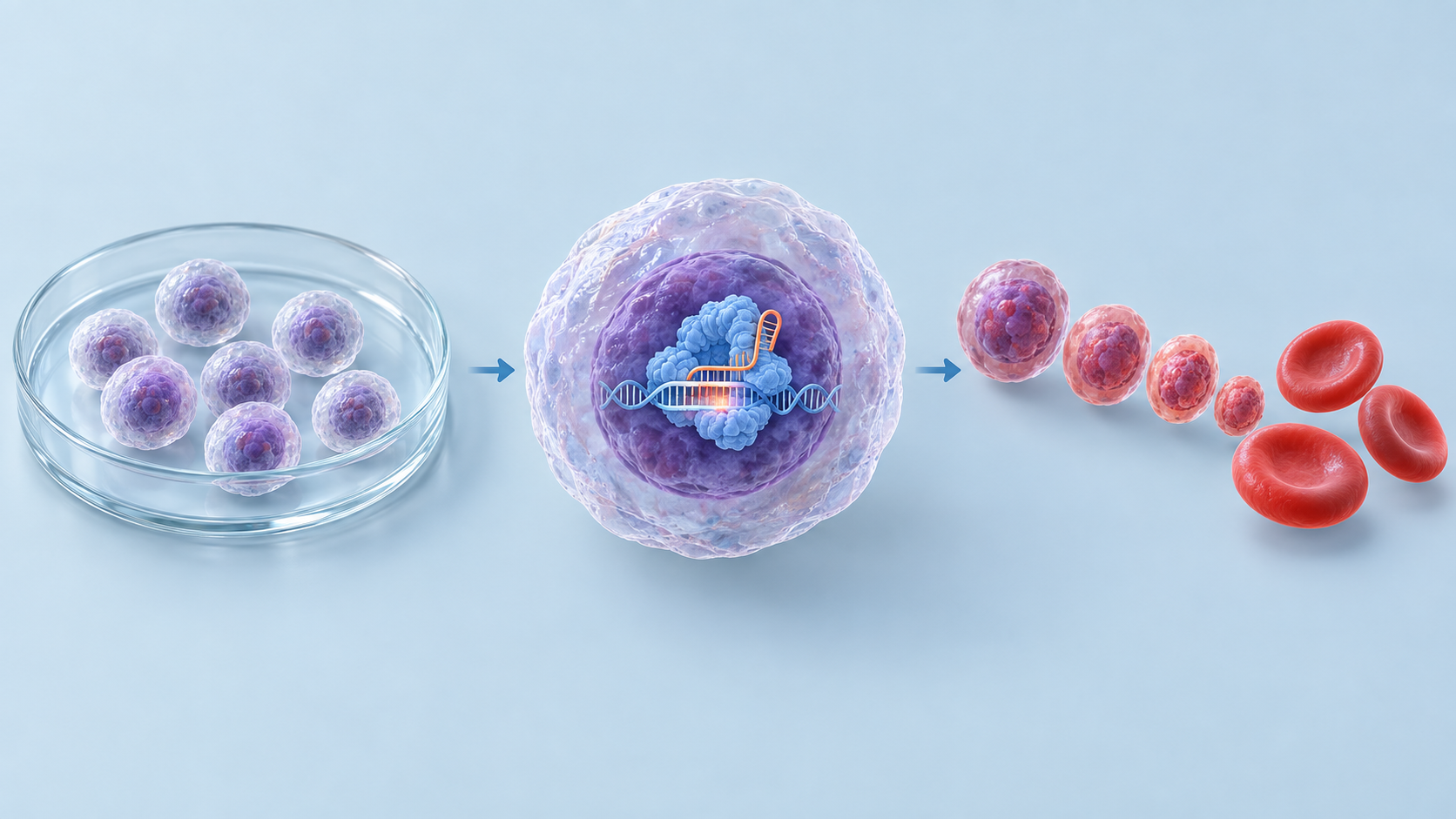
Sickle cell disease (SCD) and transfusion-dependent β-thalassaemia (TDT) are both caused by abnormalities in adult haemoglobin. CASGEVY takes a patient's own haematopoietic stem cells, uses CRISPR/Cas9 to disrupt the enhancer of BCL11A, the gene that suppresses fetal haemoglobin (HbF), and returns them to the patient. It was approved in the UK in November 2023, in the US in December of that year, and in the EU (conditionally) in February 2024Sourced. The therapy, however, is only one part of a long process of collecting cells, editing them, conditioning to clear the bone marrow (busulfan), and transplantation, and the burden of that process is its biggest problem.
- What the diseases are and what the therapy aims at, in three points
- The mechanism: the BCL11A and HbF switch
- The treatment flow: from collection to infusion
- Our calculation: how many cells are needed?
- A materials engineer's view: the product's physical form
- The path to approval, and the kinds of approval
- How to read the clinical trials: patient flow and the “denominator”
- The conditioning problem (busulfan)
- Open problems, and what is not yet settled
- Glossary / References / Claim-to-source audit
Sourced = stated in published material (link given)
Our calculation = a value this article derived from assumptions it states
Not yet confirmed = a plan or target with no confirmed track record
Structural arrangements and interpretations are marked separately as Commentary.
This article is an explanation of technology and development status. It is not information for patients or families, does not recommend any treatment, does not rank treatments against one another, and is not medical advice. Whether a treatment is appropriate is decided by a specialist physician according to the patient's condition. Facts on approval and trial figures are quoted only where they appear in published material from regulators and in peer-reviewed papers, together with the trial name, population and time of assessment. For the mechanism of genome editing see this series' article “Genome editing”, and for off-target effects see “Off-target effects and safety assessment”.
1. What the diseases are and what the therapy aims at, in three points
Haemoglobin is the protein in red blood cells that carries oxygen. The two diseases covered in this article are caused by “abnormalities in the genes for adult haemoglobin”.
- Sickle cell disease (SCD): according to the FDA review summary, it is caused by a point mutation in the β-globin gene that replaces glutamic acid with valine at codon 6, producing a mutant haemoglobin (HbS). In the deoxygenated state HbS polymerises into rigid fibres, causing vaso-occlusive crises (VOC) that block blood vessels, and haemolysisSourced
- Transfusion-dependent β-thalassaemia (TDT): a condition in which too little β-globin is made and regular red-cell transfusions are needed. The eligibility criterion for the clinical trial described in the FDA prescribing information was a need for red-cell transfusions of at least 100 mL/kg or 10 units a year over the previous 2 yearsSourced
- The aim: not to repair the adult gene, but to switch the γ-globin gene, which was active before birth, back on and increase fetal haemoglobin (HbF). The prescribing information explains the mechanism of action as follows: in SCD, HbF lowers the intracellular concentration of HbS, and in TDT, γ-globin improves the imbalance between α and non-α chainsSourced
The substance of this therapy is not “correcting a gene” but “switching a fetal gene back on”. A single edit (disrupting the GATA1 binding site within the erythroid enhancer of BCL11A) is designed so that one product works against two diseases with different causes, SCD and TDTSourced. And to return that edit to the body, the therapy needs what is in essence the framework of haematopoietic stem cell transplantation: collect the patient's stem cells, clear the bone marrow, then transplant (this article's framing).
2. The mechanism: the BCL11A and HbF switch
γ-globin is switched off in adult red blood cells because a transcription factor, BCL11A, represses it.
- Sankaran et al. (2008): showed that the amount of HbF affects disease severity, that HbF is strongly expressed in adult-type erythroid cells in which BCL11A is reduced, and that robust BCL11A expression is developmentally restricted to adult-type erythroid cells. They positioned BCL11A as “a therapeutic target for reactivating HbF in β-haemoglobin disorders”Sourced
- Bauer et al. (2013): traced genetic variants affecting HbF levels to an erythroid enhancer of BCL11A, and showed that this enhancer is required for BCL11A expression in erythroid cells but not in B lymphocytes. The authors proposed this enhancer as an attractive target for therapeutic genome editing in β-haemoglobin disordersSourced
- Wu et al. (2019): showed in patient-derived haematopoietic stem cells that cutting the GATA1 binding site of the BCL11A enhancer with a Cas9–sgRNA ribonucleoprotein (RNP) disrupts the motif at a high rate, lowers BCL11A expression and induces γ-globin. They call NHEJ-based editing a feasible therapeutic strategy for durable HbF inductionSourced
The key is that the repression is released only in the erythroid lineage; BCL11A itself is not shut off throughout the body. The prescribing information describes CASGEVY as a cell-based gene therapy consisting of “autologous CD34-positive haematopoietic stem cells edited by CRISPR/Cas9 technology at the erythroid-specific enhancer region of the BCL11A gene”Sourced.
3. The treatment flow: from collection to infusion
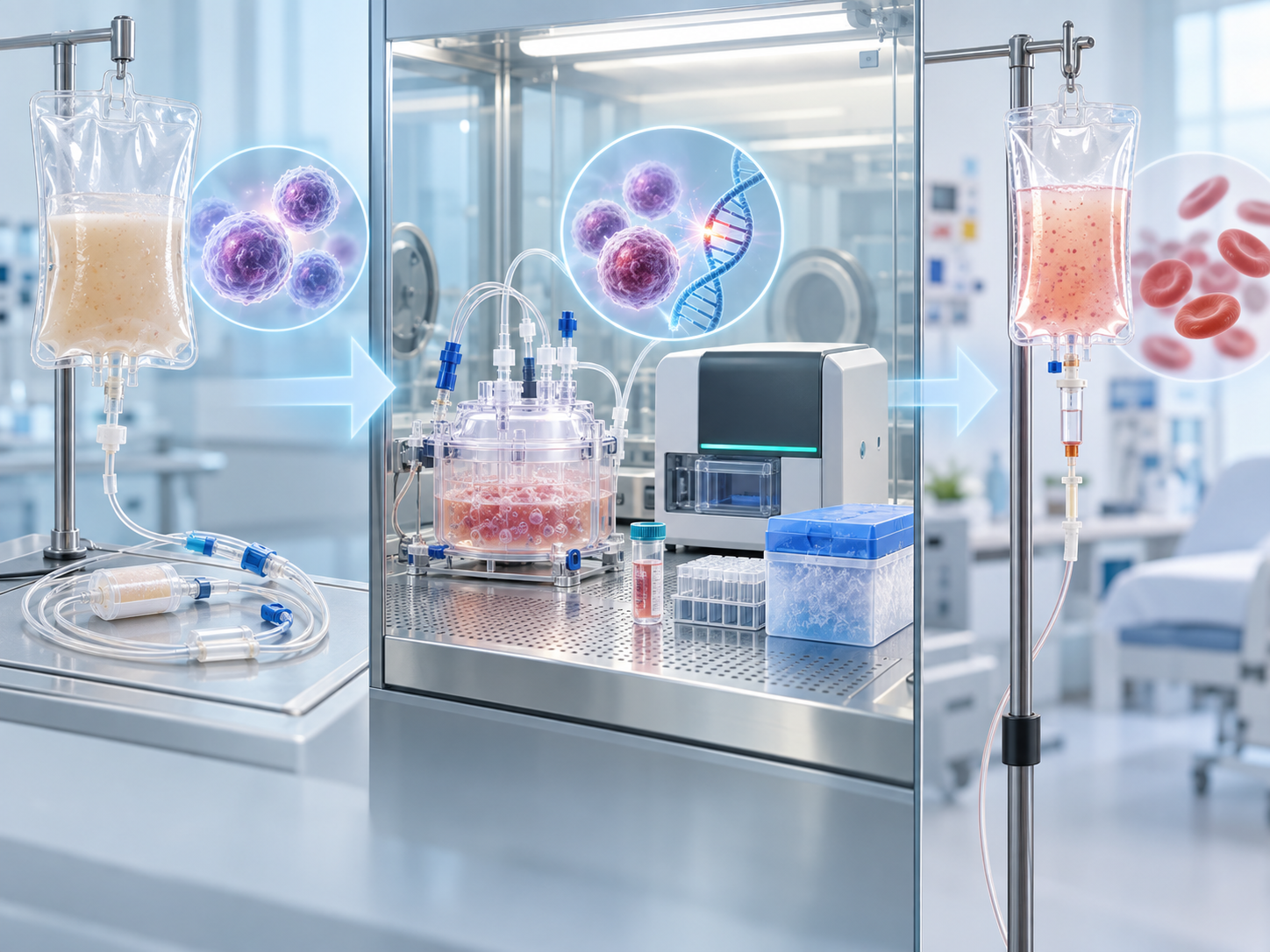
Because this therapy uses the patient's own cells (autologous), the process runs patient by patient (see this series' article on autologous and allogeneic approaches). We sort the main steps from the FDA prescribing information and the EMA public assessment report. All figures are as stated in the prescribing information.
| Step | What the prescribing information and other documents say |
|---|---|
| Confirming eligibility | Before infusion, confirm that autologous haematopoietic stem cell transplantation is appropriate. HIV-1, HIV-2, HBV, HCV and other infections are screened for before cell collection, and the product is not used if there is an active infection |
| Mobilisation (SCD) | Plerixafor 0.24 mg/kg/day by subcutaneous injection 2 to 3 hours before collection, for up to 3 days. G-CSF is not used for mobilisation (also stated under “drug interactions” in the prescribing information) |
| Mobilisation (TDT) | G-CSF for 5 to 6 days starting 4 days before plerixafor, with plerixafor added for up to 3 days |
| Collection | Up to 3 consecutive days per cycle. The collection target is at least 20×10⁶ CD34-positive cells/kg, but all cells collected are sent to manufacture even if the target is not reached. If the minimum dose (3×10⁶ cells/kg) is not reached, a further cycle is run (at least 14 days between cycles) |
| Backup cells | Before conditioning, at least 2×10⁶ unedited backup cells/kg are collected and stored frozen |
| Dose | Minimum recommended dose 3×10⁶ CD34-positive cells/kg. A single-use autologous product |
| Conditioning | Myeloablative conditioning (busulfan and others) is completed 48 hours to 7 days before infusion. Busulfan is given intravenously through a central venous catheter for 4 consecutive days, with the dose adjusted by serial blood sampling of drug levels. The cumulative exposure target for ages 12 and over is 82 mg·h/L (74 to 90) |
| Infusion | Vials are stored and shipped in the vapour phase of liquid nitrogen (at or below −135°C). Given as an intravenous bolus within 20 minutes of thawing. An in-line blood filter is not used |
All Sourced (FDA prescribing information [Ref. 2], revised July 2026). This does not indicate suitability for any individual patient or a judgement on dosing.
4. Our calculation: how many cells are needed?
We apply the prescribing information's figures to a patient weighing 60 kg and convert them to cell numbersOur calculation.
- Minimum dose: 3×10⁶ cells/kg × 60 kg = 1.8×10⁸ cells
- Collection target: 20×10⁶ cells/kg × 60 kg = 1.2×10⁹ cells. About 6.7 times the minimum dose (20 ÷ 3)
- Backup cells: 2×10⁶ cells/kg × 60 kg = 1.2×10⁸ cells (about 0.67 times the minimum dose)
- Median doses actually given (in the trials): SCD 4.0×10⁶ cells/kg → 2.4×10⁸ cells at 60 kg / TDT 7.5×10⁶ cells/kg → 4.5×10⁸ cells
Assumptions and limits: the 60 kg body weight is an assumption set by this article, and the dose varies with body weight. The figures above are meant to show the order of magnitude of the cell numbers and are not doses for any individual patient. Under “Dosage forms”, the prescribing information states that each vial holds cells at 4 to 13×10⁶ cells/mL in 1.5 to 20 mL of cryopreservation solution (one dose may be several vials)Sourced.
The collection target is set at about seven times the minimum dose, which can be read as meaning that not all the cells collected can be used after manufacture (this article's interpretation; the prescribing information does not state a reason). Indeed, in the SCD trial, about 10% of participants (6 people) could not receive the infusion because too few cells were collected (Section 7)Sourced.
5. A materials engineer's view: the product's physical form
Because the subject is a disease, this article does not stretch the materials perspective. Still, the prescribing information, review summary and public assessment report describe the physical form of this cell product in concrete terms, and it touches the interests of engineers in materials, containers and logistics.
- Cryopreservation solution: the formulation contains 5% dimethyl sulfoxide (DMSO) and dextran 40. The prescribing information says hypersensitivity reactions (including anaphylaxis) to DMSO or dextran 40 can occur, and asks for observation during and after infusionSourced. The EMA report names CryoStor CS5 (containing 5% DMSO) as the cell cryopreservation solutionSourced. A cryoprotectant is a material that protects the cells and, at the same time, an excipient that can cause reactions at the time of administration (our commentary)
- Vials and cell concentration: the FDA review summary states that 20 mL vials are filled with cells at 4 to 13×10⁶ cells/mL in 1.5 to 20 mL of cryopreservation solution. For this wide range of concentrations and fill volumes, the EMA report records that the applicant justified it by the large variation in the number of cells obtained from a single collection of autologous cellsSourced. A manufacturing characteristic follows: a lot is one patient's worth and the raw material (cell number) varies widely, so the fill cannot be fixed (our commentary)
- Transport and storage: the product is sent to the treatment centre in a liquid-nitrogen vapour-phase dry shipper and stored in the centre's liquid-nitrogen vapour phase (at or below −135°C). The lot information sheet is placed inside the lid of the shipperSourced
- Single-use parts for thawing and administration: the prescribing information tells users to prepare, as single-use items, a vial adapter (for needle-free withdrawal), an 18-micron stainless-steel filter, a 30 mL syringe and a saline syringe. Thawing is in a 37°C water bath for 10 to 15 minutes, the bath must not exceed 40°C, and the product is not washed, centrifuged or resuspended after thawing but given within 20 minutesSourced. The physical conditions that avoid damaging the cells (temperature, filter pore size, time) are written straight into the procedure
- Preventing mix-ups: the FDA review summary states that, because the manufacturing facility handles several products, the chain of identity / chain of custody (COI/COC) is maintained from collection to administration, and only one lot is manufactured in a manufacturing room at a time. Label identifiers are checked against the patient information and the vial / lot information sheet before thawingSourced
- Two raw materials for editing: Cas9 and the guide RNA (SPY101) are starting materials controlled under independent quality systems (see this series' article “Genome editing”). The review summary states that process validation demonstrated removal of theseSourced
On shelf life, at the time of review the FDA review summary gives 18 months in the vapour phase of liquid nitrogen (at or below −135°C) while the EMA report proposes 24 months for the final product, so the figures differ by source and time pointSourced. The current shelf life was not checked for this article.
6. The path to approval, and the kinds of approval
The kind and date of approval differ by region. Here we set out only the facts in regulators' official material (kinds and dates of approval were checked on 1 October 2026).
| Region | Date | Kind of approval and indication |
|---|---|---|
| UK MHRA | 16 November 2023 | Authorised for SCD and TDT in patients aged 12 and over. The MHRA described it as “the first medicine to use CRISPR”, and says it will monitor real-world safety data and safety studies by the marketing authorisation holder after launch |
| US FDA (SCD) | 8 December 2023 | BLA STN 125787. SCD with recurrent VOC, aged 12 and over. Priority review. Rare Pediatric Disease priority review voucher, and orphan, Fast Track and RMAT designations |
| US FDA (TDT) | 16 January 2024 | BLA STN 125785. Transfusion-dependent β-thalassaemia, aged 12 and over |
| European Union | 9 February 2024 | Conditional marketing authorisation. Aged 12 and over; for SCD with recurrent VOC, and for TDT, patients for whom “haematopoietic stem cell transplantation is appropriate and an HLA-matched related donor is not available”. The applicant first applied for a standard authorisation, but during the review, after concerns from the regulator, was asked to consider a conditional one |
| US FDA (age extension) | 1 July 2026 | Approval letter STN BL 125787/457. Indication extended to ages 2 to under 12 for SCD (recurrent VOC) and TDT. The trials relevant to the review are NCT05356195 and NCT05329649. The current prescribing information covers ages 2 and over, and use at ages 2 to under 5 is supported by extrapolation from the trials in ages 5 and over |
| Japan | — | Could not be confirmed within the scope of this article's search of official PMDA and Ministry of Health, Labour and Welfare information |
All Sourced (References 1, 2, 3, 4, 6, 7 and 8). The reason for the EU conditional authorisation is as stated in the EMA public assessment report.
The EMA public assessment report states that the applicant had originally applied for a standard marketing authorisation but switched to a conditional one during the review after concerns about the comprehensiveness of the data. For TDT, the report judges, in effect, that “longer follow-up is needed to confirm long-term durability, and even the final analysis at 24 months of follow-up (59 patients) cannot be called comprehensive”, and that a conditional authorisation is the appropriate regulatory instrumentSourced. After authorisation, specific obligations apply (deadlines for submitting the final study results, interim results of the long-term follow-up study and interim results of the registry-based study, among others)Sourced. The US FDA approval is under a BLA (biologics license application), a framework different from the EU's “conditional”. The FDA imposed mandatory post-marketing safety requirements (including a 15-year observational study) [Ref. 3]Sourced.
On the same day (8 December 2023), the FDA also approved a different gene therapy for the same disease (SCD), LYFGENIA (gene addition using a lentiviral vector)Sourced. For how vectors work, see this series' article on viral vectors. This article does not rank products against one another.
7. How to read the clinical trials: patient flow and the “denominator”
The basis for the approval of CASGEVY is multicentre, open-label, single-arm trials (there is no comparator arm)Sourced. In reading the figures, who is in the denominator matters. We set them out trial by trial from the prescribing information (revised July 2026).
| Trial (NCT) | Population | Enrolled to infused | Result for the primary endpoint |
|---|---|---|---|
| SCD trial 1 (NCT03745287) | Aged 12 and over. At least 2 severe vaso-occlusive crises a year in the previous 2 years | 63 enrolled → 58 started mobilisation → 44 infused. 31 evaluable with at least 16 months of follow-up | VF12 (no severe crisis for 12 consecutive months): 29/31 (93.5%). 98% one-sided confidence interval 77.9 to 100.0%. No crisis leading to hospitalisation (HF12): 30/30 (100%) |
| SCD trial 4 (NCT05329649) | Aged 5 to under 12 | 13 enrolled → 13 started mobilisation → 11 infused. 8 evaluable | VF12: 8/8 (100%) |
| TDT trial 2 (NCT03655678) | Aged 12 and over. Transfusions of at least 100 mL/kg or 10 units a year | 59 enrolled → 59 started mobilisation → 52 infused. 35 evaluable | TI12 (no transfusion for 12 consecutive months with a weighted mean Hb of 9 g/dL or more): 32/35 (91.4%). 98.3% one-sided confidence interval 75.7 to 100% |
| TDT trial 5 (NCT05356195) | Aged 5 to under 12 | 16 enrolled → 15 started mobilisation → 15 infused. 9 evaluable (including 1 who died after infusion) | TI12: 8/9 (89%) |
All Sourced (Section 14 of the FDA prescribing information [Ref. 2]; ClinicalTrials.gov registrations are References 15 to 18). All figures are from interim analyses; median follow-up is 26.0 months for trial 1 and 23.8 months for trial 2. For VF12 and TI12, assessment starts 60 days after the last transfusion.
The same trial, but different fractions in different sources
Set side by side, the published sources give different fractions for the primary endpoint of the same trial. This is because the data cut-off and the definition of who is evaluable differ; the result itself has not changed (this article's arrangement).
The prescribing information also describes patients who did not respond. The 3 patients in TDT trial 2 who did not reach TI12 had annual red-cell transfusion volumes reduced by 79.8%, 83.9% and 97.9%Sourced. On haemoglobin values, in trial 1 (SCD) the mean total haemoglobin at 6 months was 12.5 g/dL and the mean share of total haemoglobin that was HbF was 43.9%. In trial 2 (TDT), at 6 months the mean total haemoglobin was 12.2 g/dL and the mean HbF was 10.9 g/dLSourced. The first report by Frangoul and colleagues (2021), in two patients, one with SCD and one with TDT, reported high allelic editing, increased fetal haemoglobin, freedom from transfusion (TDT) and disappearance of vaso-occlusive crises (SCD) more than a year laterSourced.
8. The conditioning problem (busulfan)
To make the edited cells engraft in the bone marrow, this therapy requires myeloablative conditioning. The adverse events in the prescribing information are reported together as events related to both conditioning (busulfan) and CASGEVY, so their causes cannot be separatedSourced.
| Item | SCD trial 1 (N=44) | TDT trial 2 (N=52) |
|---|---|---|
| Grade 3 or 4 oral mucositis | 38 (86%) | 37 (71%) |
| Grade 3 or 4 febrile neutropenia | 21 (48%) | 28 (54%) |
| Grade 3 or 4 decreased appetite | 18 (41%) | 12 (23%) |
| Hepatic veno-occlusive disease (VOD) | 1 (2%) (note 1) | 5 (10%) (note 2) |
| Grade 3 or 4 neutropenia and thrombocytopenia | 100% and 100% | 100% and 100% |
| Share with serious adverse reactions | 45% | 33% |
| Days to platelet engraftment (median, aged 17 and over) | 32.5 days (23 to 126) | 40 days (24 to 200) |
| Days to neutrophil engraftment (median, aged 17 and over) | 26 days (15 to 38) | 29 days (12 to 40) |
All Sourced (Section 6 of the FDA prescribing information; events from Day 1 to Month 24, related to busulfan conditioning and CASGEVY). Figures are results in the trial populations (aged 12 and over). Note 1: the VOD in SCD trial 1 is listed in the prescribing information under “other clinically important adverse reactions, below 10% or including grades 1 to 2”. Note 2: the VOD in TDT trial 2 is listed in the table of grade 3 or 4 laboratory-type adverse reactions.
- Deaths: in SCD trial 1, 1 person (2%) died of COVID-19 infection and respiratory failure, recorded as unrelated to CASGEVY. In the paediatric TDT trial (trial 5), one patient who received busulfan conditioning and CASGEVY developed VOD and haemophagocytic lymphohistiocytosis (HLH) and died of pneumonia and multi-organ failureSourced
- Fertility: the prescribing information states that infertility has been observed with myeloablative conditioning and asks that fertility-preservation options be explained before treatment. There are no data on the effect of CASGEVY itself on human fertilitySourced
- Range of patients who can be treated: the prescribing information states that patients who have had a previous allogeneic or autologous haematopoietic stem cell transplant, patients over 65, and patients with renal or hepatic impairment have not been studiedSourced
- After engraftment: G-CSF is not recommended for 21 days after infusion. Observation for hypersensitivity to DMSO or dextran 40 is also neededSourced
In short, it can be read that the conditioning and transplantation framework needed to return the cells, rather than the editing itself, determines most of the cost and burden of this therapy (this article's interpretation). Whether research to reduce the burden of conditioning is progressing is outside what this article checked, so it is not covered.
9. Open problems, and what is not yet settled
(1) Enough cells cannot always be collected
According to the prescribing information, in SCD trial 1 mobilisation and collection took a mean of 2.3 cycles (median 2, range 1 to 6), and 6 people (10%) could not receive CASGEVY because too few cells were collected. In TDT trial 2 the mean was 1.3 cycles (median 1, range 1 to 4)Sourced. The same prescribing information says that in SCD patients under 12 kg may have difficulty reaching the minimum target cell number, and so recommends a weight of 12 kg or more before mobilisation startsSourced. The constraint that G-CSF cannot be used for mobilisation in SCD (Section 3) also bears on the yield (this article's arrangement).
(2) The burden of conditioning and transplantation
As Section 8 shows, the adverse effects of myeloablative conditioning are large, and an effect on fertility is also noted. The EU indication is limited to patients “for whom haematopoietic stem cell transplantation is appropriate”, and the prescribing information also requires confirmation that autologous haematopoietic stem cell transplantation is appropriateSourced. Apart from the efficacy of the therapy itself, the range of patients who can be treated is set by whether they can tolerate conditioning and transplantation (our commentary).
(3) Limits in trial design
The basis for approval is single-arm, open-label trials with no comparator, with a median follow-up of about two years. The EMA report lists as a methodological concern that the trial design was changed several times in the course of a single phase 1/2/3 study, but still judges the evidence of efficacy sufficient because freedom from transfusion and the rise in HbF cannot be explained by the natural course of the diseaseSourced. Confirming the durability of the effect is said to need longer follow-upSourced.
(4) Long-term safety, especially off-target effects
Section 5.4 of the prescribing information states that the risk of off-target editing due to genetic variants cannot be ruled out and its clinical significance is unknownSourced. At approval the FDA required an observational study following 250 SCD patients for 15 years and a bioinformatic study of the effect of genetic diversity (see this series' article “Off-target effects and safety assessment”)Sourced. A long-term follow-up study continuing from the trials (NCT04208529) is also registered on ClinicalTrials.govSourced. The results of these are still to comeNot yet confirmed.
(5) Manufacturing and logistics
The product is made from each patient's own cells, and one dose may consist of several vials and several lots. A mechanism of identification to prevent mix-ups (COI/COC) runs through manufacture, transport and administration. The number of days manufacture takes, and the number and geographic distribution of centres that can provide the treatment, could not be confirmed in the regulatory documents this article consulted.
(6) Relation to other approaches
For the same disease the FDA has also approved a product based on gene addition with a lentiviral vector (LYFGENIA)Sourced. In addition, base-edited autologous CD34-positive cells (BEAM-101) are in a phase 1/2 trial in SCD (NCT05456880), with a status on ClinicalTrials.gov of “Active, not recruiting”Sourced. Whether approaches still in development will be approved in future cannot be judged from the published materialNot yet confirmed.
(7) The situation in Japan
The approval and application status of CASGEVY in Japan could not be confirmed within the scope of this article from official PMDA and Ministry of Health, Labour and Welfare information.
- The aim is to reactivate fetal haemoglobin. CRISPR/Cas9 disrupts the GATA1 binding site within the erythroid enhancer of BCL11A, and the same product is used for both SCD and TDTSourced
- Treatment is a long process of “collect, manufacture, condition, return”. It proceeds through mobilisation, apheresis, backup cells, manufacture, myeloablative conditioning, infusion and engraftmentSourced
- The kind of approval differs by region. The UK (November 2023), the US (December 2023 and January 2024, extended to ages 2 and over in July 2026) and the EU (February 2024, conditional). Japan could not be confirmedSourced
- The trials are single-arm and open-label. VF12 in SCD trial 1 was 29/31 (93.5%) and TI12 in TDT trial 2 was 32/35 (91.4%), with different denominators in different sourcesSourced
- The burden of conditioning is the biggest problem. Grade 3 or 4 oral mucositis occurred in 86% and 71%, and hepatic VOD and a death are also recordedSourced
- The product is also a frozen shipment. 5% DMSO and dextran 40, the liquid-nitrogen vapour phase, single-use parts and an 18-micron filter are written into the procedureSourced
- The long-term effects are still to come. The clinical significance of off-target editing is unknown, and 15-year follow-up continuesNot yet confirmed
10. Glossary
- Sickle cell disease (SCD)
- A disease in which a mutation in the β-globin gene produces HbS, deforming red blood cells and blocking blood vessels.
- Transfusion-dependent β-thalassaemia (TDT)
- A disease in which β-globin is deficient and regular red-cell transfusions are needed.
- HbF (fetal haemoglobin)
- Haemoglobin made mainly before birth. It contains γ-globin.
- BCL11A
- A transcription factor that represses the γ-globin gene. Abundant in adult erythroid cells.
- Enhancer
- A regulatory region that strengthens the expression of a gene.
- GATA1
- An erythroid transcription factor. Here, its binding site within the BCL11A enhancer is the target of editing.
- CD34-positive cells
- A cell population, marked by CD34, that includes haematopoietic stem and progenitor cells.
- VOC
- Vaso-occlusive crisis. The main symptom of SCD.
- VF12 / TI12
- Achieving 12 consecutive months without a severe crisis (SCD) / without a transfusion (TDT).
- Mobilisation / apheresis
- A procedure that drives stem cells into the blood / a procedure that collects only certain cells from the blood.
- Myeloablative conditioning
- Treatment that clears the cells of the bone marrow so that transplanted cells can engraft more easily.
- Engraftment
- Transplanted cells settling in the bone marrow and starting to make blood cells.
- RNP
- A complex of Cas9 and guide RNA. It is introduced into cells by electroporation.
- Conditional marketing authorisation
- A kind of authorisation in the EU granted on condition that additional data are submitted.
- COI / COC
- Chain of identity / chain of custody. A system for tracking the identity and storage history of the patient and the cell product.
11. References (primary sources)
- US FDA “CASGEVY” product page (approval dates, indications, list of approval documents) — fda.gov
- US FDA “CASGEVY Prescribing Information”, revised July 2026 (PDF) — fda.gov
- US FDA CBER “Summary Basis for Regulatory Action — CASGEVY (BLA STN 125787)”, 8 December 2023 (PDF) — fda.gov
- US FDA “CASGEVY approval letter (STN BL 125787/457)”, 1 July 2026 (PDF) — fda.gov
- US FDA “FDA Approves First Gene Therapies to Treat Patients with Sickle Cell Disease”, 8 December 2023 — fda.gov
- EMA “Casgevy — European public assessment report (EPAR)” product page — ema.europa.eu
- EMA “Casgevy — EPAR Public assessment report”, EMA/6332/2024 (PDF) — ema.europa.eu
- UK MHRA “MHRA authorises world-first gene therapy that aims to cure sickle-cell disease and transfusion-dependent thalassemia”, 16 November 2023 — gov.uk
- Frangoul H et al. “Exagamglogene autotemcel for severe sickle cell disease”, N Engl J Med 390(18):1649-1662 (2024). doi:10.1056/NEJMoa2309676 — pubmed.ncbi.nlm.nih.gov
- Locatelli F et al. “Exagamglogene autotemcel for transfusion-dependent β-thalassemia”, N Engl J Med 390(18):1663-1676 (2024). doi:10.1056/NEJMoa2309673 — pubmed.ncbi.nlm.nih.gov
- Frangoul H et al. “CRISPR-Cas9 gene editing for sickle cell disease and β-thalassemia”, N Engl J Med 384(3):252-260 (2021). doi:10.1056/NEJMoa2031054 — pubmed.ncbi.nlm.nih.gov
- Sankaran VG et al. “Human fetal hemoglobin expression is regulated by the developmental stage-specific repressor BCL11A”, Science 322(5909):1839-1842 (2008). doi:10.1126/science.1165409 — pubmed.ncbi.nlm.nih.gov
- Bauer DE et al. “An erythroid enhancer of BCL11A subject to genetic variation determines fetal hemoglobin level”, Science 342(6155):253-257 (2013). doi:10.1126/science.1242088 — pubmed.ncbi.nlm.nih.gov
- Wu Y et al. “Highly efficient therapeutic gene editing of human hematopoietic stem cells”, Nat Med 25(5):776-783 (2019). doi:10.1038/s41591-019-0401-y — pubmed.ncbi.nlm.nih.gov
- ClinicalTrials.gov “CLIMB SCD-121 (NCT03745287)” — clinicaltrials.gov
- ClinicalTrials.gov “CLIMB THAL-111 (NCT03655678)” — clinicaltrials.gov
- ClinicalTrials.gov “CTX001 in pediatric participants with severe SCD (NCT05329649)” — clinicaltrials.gov
- ClinicalTrials.gov “CTX001 in pediatric participants with TDT (NCT05356195)” — clinicaltrials.gov
- ClinicalTrials.gov “A long-term follow-up study in participants who received CTX001 (NCT04208529)” — clinicaltrials.gov
- ClinicalTrials.gov “BEACON: BEAM-101 in patients with severe sickle cell disease (NCT05456880)” — clinicaltrials.gov
12. Claim-to-source audit
| Claim in the text | Basis | Label |
|---|---|---|
| The indication of CASGEVY (SCD and TDT, aged 2 and over); the mechanism of action (HbF lowers the intracellular concentration of HbS; γ-globin improves the imbalance of α and non-α chains); that the product is autologous CD34-positive cells edited by CRISPR/Cas9 at the erythroid enhancer region of BCL11A; editing by electroporation of an RNP; the formulation containing 5% DMSO and dextran 40; hypersensitivity to DMSO and dextran 40; mobilisation (plerixafor, no G-CSF in SCD, G-CSF added in TDT); conditioning (busulfan for 4 consecutive days, cumulative exposure target 82 mg·h/L); the conditions of infusion (48 hours to 7 days after conditioning, within 20 minutes of thawing); the collection target of 20×10⁶ cells/kg or more, minimum dose of 3×10⁶ cells/kg and backup cells of 2×10⁶ cells/kg or more; the cell concentration in vials (4 to 13×10⁶ cells/mL, 1.5 to 20 mL); the vapour phase of liquid nitrogen at or below −135°C; single-use parts (vial adapter, 18-micron filter, syringes); thawing (37°C water bath for 10 to 15 minutes); the clinical trial eligibility criteria; the numbers and primary-endpoint results for SCD trial 1, TDT trial 2 and the paediatric trials; the reduction in transfusion volume in non-responders; haemoglobin values; the adverse-event table; deaths; fertility; patient groups not studied; the handling of G-CSF; the number of collection cycles and the 6 people (10%) with too few cells collected; the off-target editing risk in Section 5.4; the recommendation of a weight of 12 kg or more | FDA prescribing information (revised July 2026). Reference 2 https://www.fda.gov/media/174615/download?attachment | Sourced |
| The cause of SCD (glutamic acid to valine at codon 6 of β-globin, HbS polymerisation, VOC); the FDA approval date (SCD, 8 December 2023, STN 125787); priority review; Rare Pediatric Disease priority review voucher, and orphan, Fast Track and RMAT designations; IND (27 April 2018), Fast Track (2 January 2019), RMAT (5 May 2020), orphan (11 May 2020), BLA submission (3 April 2023), advisory committee (31 October 2023); the 20 mL vial; COI/COC; one lot at a time in a manufacturing room; removal of Cas9 and SPY101; the shelf life of 18 months; the observational study of 250 people for 15 years; no REMS | FDA review summary (SBRA). Reference 3 https://www.fda.gov/media/175179/download?attachment | Sourced |
| The FDA approval dates and indications (SCD, 8 December 2023, STN 125787; TDT, 16 January 2024, STN 125785) and the list of approval documents | FDA CASGEVY product page. Reference 1 https://www.fda.gov/vaccines-blood-biologics/casgevy | Sourced |
| That on 1 July 2026 the indication for SCD and TDT was extended to ages 2 to under 12 (STN BL 125787/457; relevant trials NCT05356195 and NCT05329649) | FDA approval letter. Reference 4 https://www.fda.gov/media/193444/download?attachment | Sourced |
| That on the same day (8 December 2023) the FDA also approved LYFGENIA (lentiviral vector) | FDA announcement. Reference 5 https://www.fda.gov/news-events/press-announcements/fda-approves-first-gene-therapies-treat-patients-sickle-cell-disease | Sourced |
| The date of the EU conditional marketing authorisation (9 February 2024), and that as of the version updated on 19 February 2026 there is no mention of conversion to a standard authorisation or an extension of the age range | EMA CASGEVY product page. Reference 6 https://www.ema.europa.eu/en/medicines/human/EPAR/casgevy | Sourced |
| The EU indication (aged 12 and over; haematopoietic stem cell transplantation appropriate and no HLA-matched related donor available); the reason for the conditional authorisation (initially a standard application, switched over concerns about the comprehensiveness of data); the specific obligations; PRIME eligibility (17 September 2020); the CHMP positive opinion (14 December 2023); CryoStor CS5 and 5% DMSO; the justification of the range of fill volumes and concentrations; the proposed 24-month shelf life; the methodological concern and the judgement on efficacy; that longer follow-up is needed to confirm durability | EMA public assessment report EMA/6332/2024. Reference 7 https://www.ema.europa.eu/en/documents/assessment-report/casgevy-epar-public-assessment-report_en.pdf | Sourced |
| The UK MHRA approval date (16 November 2023), aged 12 and over, the description as the first medicine to use CRISPR, the interim-analysis figures (SCD 28/29, TDT 39/42, 45 and 54 patients infused), and post-marketing monitoring | MHRA announcement. Reference 8 https://www.gov.uk/government/news/mhra-authorises-world-first-gene-therapy-that-aims-to-cure-sickle-cell-disease-and-transfusion-dependent-thalassemia | Sourced |
| The figures in the NEJM papers (SCD: 44 treated, 29 of 30 evaluable, 97%; TDT: 52, 32 of 35 evaluable, 91%), and the first report in two patients | Frangoul et al. (2024). Reference 9 https://pubmed.ncbi.nlm.nih.gov/38661449/; Locatelli et al. (2024). Reference 10 https://pubmed.ncbi.nlm.nih.gov/38657265/; Frangoul et al. (2021). Reference 11 https://pubmed.ncbi.nlm.nih.gov/33283989/ | Sourced |
| That BCL11A is a factor that represses HbF and is abundant in adult erythroid cells; the erythroid enhancer; the editing of the GATA1 binding site and the use of NHEJ | Sankaran et al. (2008). Reference 12 https://pubmed.ncbi.nlm.nih.gov/19056937/; Bauer et al. (2013). Reference 13 https://pubmed.ncbi.nlm.nih.gov/24115442/; Wu et al. (2019). Reference 14 https://pubmed.ncbi.nlm.nih.gov/30911135/ | Sourced |
| The trial registrations (NCT03745287, NCT03655678, NCT05329649, NCT05356195), the long-term follow-up study (NCT04208529), and the phase 1/2 trial of base-edited autologous CD34-positive cells (NCT05456880, Active, not recruiting) | ClinicalTrials.gov. Reference 15 https://clinicaltrials.gov/study/NCT03745287; Reference 16 https://clinicaltrials.gov/study/NCT03655678; Reference 17 https://clinicaltrials.gov/study/NCT05329649; Reference 18 https://clinicaltrials.gov/study/NCT05356195; Reference 19 https://clinicaltrials.gov/study/NCT04208529; Reference 20 https://clinicaltrials.gov/study/NCT05456880 | Sourced |
| Whether approaches in development (BEAM-101 and others) will be approved in future, and the results of long-term follow-up and post-marketing studies | The registration status of the trials could be confirmed, but the prospect of approval and the results cannot be judged from published material and are not discussed in this article | Not yet confirmed |
| That the minimum dose, collection target and backup cells are 1.8×10⁸, 1.2×10⁹ and 1.2×10⁸ cells at 60 kg; that the collection target is about 6.7 times the minimum dose; that the median doses actually given are 2.4×10⁸ and 4.5×10⁸ cells; and that enrolled to infused is 44 ÷ 63 = about 70% | Our calculation. The 60 kg body weight is an assumption set by this article and does not show the dose for any individual patient. The figure of about 70% is not a published value | Our calculation |
| The approval and application status of CASGEVY in Japan, the number of days manufacture takes, the number of treatment centres, the state of research to reduce the burden of conditioning, and the current shelf life | Not stated in this article because no official information could be confirmed within its scope. This does not mean they do not exist | Commentary |
| Describing the substance of this therapy as re-switching. The need for a transplantation framework. The interpretation of why the collection target is about seven times the minimum dose. The reading of the cryoprotectant as an excipient that can also cause reactions at administration. The arrangement that different fractions between sources reflect different cut-off dates and definitions of who is evaluable. The interpretation that conditioning determines most of the burden. The arrangement that the range of treatable patients is set by tolerance of conditioning and transplantation | This article's own framing and commentary based on published content. Not views expressed by the institutions | Commentary |
| That Figs. 1, 2, 4, 5 and 6 are explanatory drawings, and that the hero image and Fig. 3 are AI-generated images | A note by this article | Commentary |
Last updated 1 October 2026. Sources are limited to primary material (published documents from regulators, public assessment reports, peer-reviewed papers and ClinicalTrials.gov). Parts that involve interpretation are marked as Commentary and kept separate from sourced fact. The approval and application status in Japan, the number of days manufacture takes, the number of centres, research to lighten conditioning, the current shelf life and the outlook for approaches in development are not asserted, because they could not be confirmed in published primary sources. The trial figures are results of the interim analyses stated in the prescribing information, and follow-up is still in progress. This article does not recommend any treatment. All figures are concept diagrams for explanation. Figs. 1, 2, 4, 5 and 6 are vector drawings; the hero image and Fig. 3 are AI-generated images, and none of them shows real red blood cells, a microscope image, a patient or an actual product.