TECHNOLOGY EXPLAINER
iPS Cell-Derived Immune Cells
— replacing “made from the patient” with “made from a cell line”
NK cells, T cells, iNKT cells and regulatory T cells: researchers are working on making these immune cells in the laboratory, starting from iPS cells, so that they can be kept in stock and used as a ready-made product. In Japan, investigator-initiated clinical trials in which iPS cell-derived immune cells were given to people began between 2020 and 2021, and several company-sponsored trials are running in the United States. However, no iPS cell-derived immune cell product appears on the US FDA's list of approved products (updated 17 September 2026).
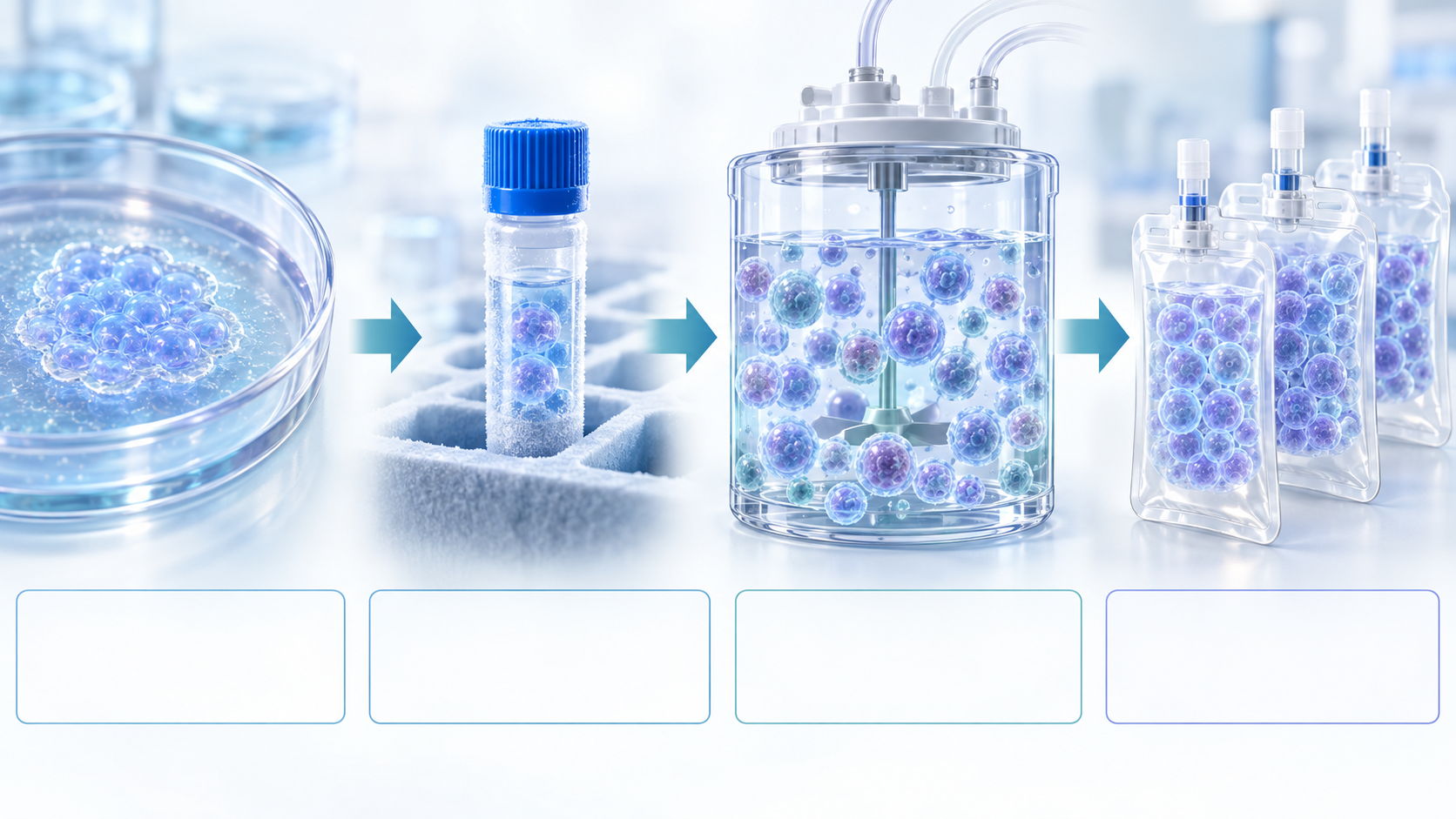
- What iPS cell-derived immune cells are, in three points
- Why start from iPS cells? Two routes compared
- Which cells are being made: NK cells, T cells, iNKT cells and regulatory T cells
- The T cell receptor (TCR) problem
- Differentiation and expansion: the process by day
- Our calculation: how many cells come out for each iPS cell put in?
- A materials engineer's view (1): feeder cells, serum and cytokines as “materials”
- Adding a CAR and going off-the-shelf: at which stage to edit
- Where clinical trials stand (check by NCT and jRCT number)
- A materials engineer's view (2): managing a cell line as a “material”
- Safety and open problems
- Glossary / References / Claim-to-source audit
Sourced = stated in a paper, a trial registry entry, or material published by a public body or company (link given)
Our calculation = a value this article derived from assumptions it states
Not yet confirmed = a plan or research-stage item with no confirmed approval or track record
Structural readings and interpretations from the materials and process side are marked separately as Commentary.
This article is a technical explainer from the standpoint of how cells are made, and of materials and manufacturing. It does not evaluate the efficacy or safety of any treatment and is not medical advice. The clinical results cited come from early-stage studies with limited patient groups, doses and assessment points. We do not rank trials against each other on efficacy. For any individual treatment, please consult a medical institution.
1. What iPS cell-derived immune cells are, in three points
- What they are: an attempt to make iPS cells differentiate into immune cells outside the body, expand them, and use them as a drug. Unlike methods that take the patient's own T cells and modify them (autologous CAR-T and the like), the aim is to make cells with the same properties again and again from a single iPS cell line (our commentary)
- How far it has come: a phase 1 trial of iPS cell-derived iNKT cells at Chiba University Hospital (10 patients treated) was reported in Nature Communications in 2025, and in the United States, Fate Therapeutics' FT819 and others are in clinical trialsSourced
- What has not yet been achieved: the FDA's list of approved products (updated 17 September 2026) contains no iPS cell-derived immune cell productSourced. The trials are early-stage studies in small numbers of patients, and the timing of practical use is not confirmedNot yet confirmed
For iNKT cells, Chiba University and RIKEN made 43 iPS cell lines from the iNKT cells of a healthy adult, and built a master cell bank from the one line that differentiated most reliablySourced. In a therapy made patient by patient, the “raw material” is different every time. With iPS cell-derived cells, the difference in manufacturing thinking is that the raw material is narrowed from 43 lines to one and then fixed (our commentary).
2. Why start from iPS cells? Two routes compared
In treatments that use the patient's own T cells, such as CAR-T cells, the time from collection to delivery of the product was a median of 15 to 35 days in the approval trials, and the proportion of manufacturing failures is stated in the prescribing information. We covered this in our explainers on CAR-T cells and on autologous versus allogeneic cells. iPS cell-derived immune cells are being studied as a way of changing this “one lot per patient” structure.
In terms of materials, this difference is about where the variability gets absorbed. In the autologous route, the process absorbs the variability of the raw material (the patient's cells). In the iPS route, the raw material is fixed to “one carefully selected cell line”, and in exchange the challenge becomes reproducing the long differentiation and expansion process identically every time (our commentary).
The starting point of research on making immune cells from iPS cells lies in papers from around 2013. Nishimura and colleagues turned antigen-specific CD8-positive T cells from an HIV-1-infected patient into iPS cells, and reported that the T cells re-differentiated from them had high proliferative capacity and long telomeres and showed the same TCR gene rearrangement pattern as the original T cell cloneSourced. In the same year, Vizcardo and colleagues made iPS cells from T cells specific for the melanoma antigen MART-1 and differentiated them back into CD8-positive T cellsSourced. Themeli and colleagues generated T cells with gamma-delta T cell-like properties from iPS cells carrying a CD19-targeting CAR, and reported that they suppressed tumour growth in a xenograft modelSourced. Knorr and colleagues demonstrated a system for making NK cells from human pluripotent stem cells without animal-derived stromal cells, and stated that one person's dose of cells can be obtained from fewer than 250,000 iPS or ES cellsSourced.
3. Which cells are being made: NK cells, T cells, iNKT cells and regulatory T cells
“Immune cells” is a broad term, and the cells being made from iPS cells have quite different characters. The table below sorts them out.
| Cell | Role in the body (outline) | Examples of iPS cell-derived research and development | Where it stands |
|---|---|---|---|
| NK cells | Cells of innate immunity. They can attack abnormal cells without recognising a specific antigen | CAR-expressing iPS cell-derived NK cells (Li 2018), anti-GPC3 CAR NK/ILC (Ueda 2020), FT500, FT596, FT576, CNTY-101 | Several phase 1 trials. None approved |
| T cells (CAR-T) | Cells of adaptive immunity that recognise targets through the TCR. Adding a CAR directs them to a chosen target | FT819 (CD19 CAR), Themeli 2013, Montel-Hagen 2019 | FT819 is in phase 1; phase 2 is registered |
| iNKT cells | A type of T cell that recognises lipid antigens. It combines NK cell-like killing with the ability to recruit other immune cells | iPS-NKT cells from Chiba University and RIKEN (Kitayama 2016, Iinuma 2025) | A paper on a phase 1 trial (10 patients treated) is available |
| Regulatory T cells (Treg) | Act to dampen immune responses. Their use is envisaged in autoimmune disease and graft-versus-host disease | Mouse iPS cell-derived (Haque 2012); human iPS cell-derived Treg-like cells (Yano 2024) | Animal-study stage. We could not find a clinical trial of iPS cell-derived Treg in our survey |
Sources by row: Li 2018 [Ref. 5], Ueda 2020 [Ref. 9], Themeli 2013 [Ref. 3], Montel-Hagen 2019 [Ref. 7], Kitayama 2016 [Ref. 8], Iinuma 2025 [Ref. 12], Haque 2012 [Ref. 28], Yano 2024 [Ref. 11], trial registry entries [Ref. 14-26]. The “Role in the body” column is a general description and our own summary.
Among cell products that include Tregs, “TREGZI” (listed as Allogeneic regulatory T cell immunotherapy with HSPC and T cells) appears on the FDA's list of approved productsSourced [Ref. 27]. No iPS cell-derived immune cell product appears on that list. On iPS cell-derived Tregs, Yano and colleagues reported that human iPS cell-derived CD4-positive T cells with high FOXP3 expression did not secrete inflammatory cytokines, and that those given a CAR targeting HLA-A2 suppressed xenogeneic graft-versus-host disease in NSG miceSourced. These are animal results.
4. The T cell receptor (TCR) problem
T cells recognise their targets through the T cell receptor (TCR) on their surface. The TCR is built by rearranging gene segments, so each T cell recognises a different partner. Even in a T cell that has been given a CAR, its original TCR remains on the cell surface (our commentary). When T cells are made from iPS cells, the handling of this TCR is a difficulty in two senses.
(1) The target the cell recognises can change along the way
If iPS cells are made from antigen-specific T cells (T-iPSCs) and turned back into T cells, cells carrying the original TCR are obtained. However, Minagawa and colleagues found that CD8 alpha-beta-positive T cells derived from human T-iPSCs rearrange the TCR alpha chain gene again at the CD4/CD8 double-positive stage and lose their antigen specificitySourced. They reported that when the gene for the recombination enzyme was disrupted with CRISPR, this extra rearrangement did not occur, and the regenerated CD8 alpha-beta-positive T cells, which kept their TCR stable, suppressed tumour growth in a xenograft modelSourced.
Montel-Hagen and colleagues used a three-dimensional “artificial thymic organoid” to generate naive CD8 alpha-beta-positive and CD4-positive T cells from human pluripotent stem cells. They reported that a diverse TCR repertoire was obtained, and that when an MHC class I-restricted TCR was introduced in advance, the endogenous TCR was not expressed and the cells became antigen-specific CD8 alpha-beta-positive T cellsSourced.
(2) In allogeneic use, the TCR itself becomes the problem
In allogeneic therapy, where another person's cells are given, a key issue is graft-versus-host disease (GVHD), in which the TCR carried by donor T cells attacks the patient's body. We covered this in our explainer on autologous versus allogeneic cells. For FT819, Fate Therapeutics explains a design that inserts the CAR into the TRAC locus and disrupts TRAC in both copies so that the TCR is no longer expressed, with the aim of removing the risk of GVHDSourced.
The design in ③ does two things at once at the same place (TRAC): the operation that breaks the TCR and the operation that writes in the CAR. When a CAR is introduced into a patient's T cells with a viral vector, where it lands in the genome differs from cell to cell. If cells are edited at the iPS stage and a clone is selected, one line with a uniform editing pattern can be put through quality tests before it is used (our commentary). In materials language, it is the idea of replacing a “variable reaction” with a “selected raw material”.
However, this is a statement about design. The safety assessment of an edited cell line (whether any unintended edits exist) is a separate requirement, and we will cover it in our explainer on off-target effects and safety assessment.
5. Differentiation and expansion: the process by day
iPS cells are pluripotent, and before they become immune cells they have to pass in turn through stages such as mesoderm, haematopoietic progenitors and lymphoid progenitors (our summary). The specific number of days and culture conditions are written in the methods sections of papers. Taking the manufacture of the Chiba University / RIKEN iNKT cells (used in the phase 1 trial) as an example, let us follow the days.
According to the methods section, colonies of the iNKT cell-derived iPS cells were first cultured on mouse-derived OP9 stromal cells (with Activin and VEGF added), harvested on day 13, and cultured further on OP9/DLL1 cells, which express a Notch ligand, with IL-7, Flt-3L and SCF added. On day 30 the immature iPS-iNKT cells were harvested and frozenSourced. After thawing, the frozen immature cells were cultured for 9 to 10 days in medium containing IL-7 and IL-15 (with 20% human AB serum), using a cell roller (5 rpm), and were transported to Chiba University at 37°CSourced.
What stands out is that the process is split into a first half that can be frozen and kept as stock, and a second half that is finished just before dosing. If the first 30 days or so are completed ahead of time as stock, the waiting time from the patient's side approaches the 9 to 10 days of the second half (our commentary). This is where the iPS-derived approach thinks about “waiting time” differently from autologous CAR-T, which starts from collection for each patient.
6. Our calculation: how many cells come out for each iPS cell put in?
Ueda and colleagues reported on the clinical-grade manufacture of anti-GPC3 CAR-expressing NK/ILC cells (iPS cell-derived) from the laboratory of Shin Kaneko at the Center for iPS Cell Research and Application (CiRA), Kyoto University: from 1.8 to 3.6 × 10⁶ iPS cells, 1.8 to 4.0 × 10⁹ cells were obtained within 7 weeksSourced. Knorr and colleagues state that enough NK cells for the treatment of one person can be made from fewer than 250,000 iPS or ES cellsSourced (2013, a different method).
We calculate the range of fold-expansion from Ueda and colleagues' figuresOur calculation.
- Range of the fold-expansion: with the largest input (3.6 × 10⁶) and the smallest output (1.8 × 10⁹), 1.8 × 10⁹ ÷ 3.6 × 106 = 500-fold. With the smallest input (1.8 × 10⁶) and the largest output (4.0 × 10⁹), it is about 2,200-fold. Because the report gives ranges, it is reasonable to look at a range of about 500 to 2,200-fold
- How many patients one run could cover (order of magnitude): the dosing plan of the phase 1 trial that the same research group is running with the National Cancer Center Hospital East (jRCT2033200431) is 1 × 10⁶ cells/kg once a week, up to 4 times [Ref. 26]. Assuming a body weight of 60 kg, 1 × 106 × 60 × 4 = 2.4 × 10⁸ cells per person (up to 4 doses). 1.8 × 10⁹ ÷ 2.4 × 108 = about 7.5 patients, and 4.0 × 10⁹ ÷ 2.4 × 10⁸ ≈ about 17 patients
Assumptions and limits: the body weight of 60 kg is our own assumption. The manufacturing scale in Ueda and colleagues (a preclinical report on the manufacturing method) is not the same as the manufacturing record in the actual trial. Yield, the portion used for quality tests, and losses in freezing and thawing are not taken into account. “Number of patients” is a conversion to get a feel for the order of magnitude from one run, and does not show actual supply capacity.
This is the strength of being able to make a lot at once. In autologous CAR-T, where one lot is made per patient, the lot size is always “one patient”. With iPS cell-derived cells, a single culture run may yield doses for several people, and to the same degree the impact is larger if the quality of one lot misses specification (our commentary).
7. A materials engineer's view (1): feeder cells, serum and cytokines as “materials”
Let us re-read the methods section of the Chiba University / RIKEN iNKT cells from Section 5 with a materials eyeSourced.
- Scaffold and feeder: mouse-derived OP9 cells and OP9/DLL1 cells (cells from the RIKEN BioResource Research Center). For each culture, a layer whose growth has been stopped with mitomycin C is laid down in the dish
- Serum: the OP9 medium contains 20% fetal bovine serum, and the culture after thawing 20% human AB serum
- Proteins and small molecules: Activin, VEGF, SCF, Flt-3L, IL-7, IL-15, Y-27632 (a ROCK inhibitor)
- Containers and transport: a cell roller (described in the paper as a FlexiRoll Cell Roller) for the culture after thawing, and transport at 37°C
Using living cells as a scaffold and using serum correspond, in a chemical process, to having “raw materials with no fixed specification”. Several materials that are prone to lot-to-lot differences are involved (our commentary). On the other hand, Ueda and colleagues reported that, for the method of the same research group, they achieved “stable feeder-free manufacture” at a scale and with materials that can be used clinicallySourced. Knorr and colleagues also showed a system that avoids animal-derived stromal cells and combines artificial antigen-presenting cells expressing membrane-bound IL-21 with defined conditionsSourced.
What can be read from this is that one of the main battlegrounds in manufacturing immune cells is replacing feeders and serum with materials of defined specification (defined media, cytokines and scaffolds) (our commentary). There are several points where materials makers could come in: scaffolds designed for culture, a stable supply and specification of cytokines, media free of animal-derived components, and insulated containers for temperature-controlled transport. However, which replacement has been realised in which product can be confirmed only to a limited extent from published material.
8. Adding a CAR and going off-the-shelf: at which stage to edit
“Off-the-shelf” means made in advance, held in stock, and ready to use when needed. The reason this works with iPS cell-derived immune cells is that gene editing can be done at the iPS cell stage. Because iPS cells can be expanded for a long time, one clone can be picked from the edited cells, its safety and properties checked, and cells can then keep being made from that line (our commentary).
| Example | Editing and design at the iPS stage (as published) | Source |
|---|---|---|
| FT819 | A 1XX-type CAR targeting CD19 is inserted into TRAC, and TRAC is disrupted in both copies (eliminating the TCR). The CAR combines a CD28 costimulatory domain with a modified CD3 zeta signalling domain | Fate Therapeutics poster at ASH 2022 [Ref. 13] |
| CAR-expressing iPS cell-derived NK cells | A CAR with the NKG2D transmembrane domain, a 2B4 costimulatory domain and a CD3 zeta signalling domain. iPS cell-derived NK cells showed higher antitumour activity than with a T cell CAR, it was reported (xenograft model) | Li et al. 2018 [Ref. 5] |
| Anti-GPC3 CAR NK/ILC | The anti-GPC3 CAR gene is introduced into the HLA-homozygous iPS cell line “QHJI01s04”, which is differentiated into ILC/NK cells | Press release from AMED and others [Ref. 26] |
| Hypoimmunogenic T cells (research) | CD20 CAR T cells made from iPS cells that lack beta-2 microglobulin, the class II MHC transactivator and the NK cell ligand CD155, and express single-chain MHC class I HLA-E (mouse model) | Wang et al. 2021 [Ref. 10] |
All Sourced. Each is a description of a design and does not show clinical efficacy or safety. The idea of editing to avoid rejection will be covered in detail in our explainer on MHC and universal donors.
Century Therapeutics explains that CNTY-101 (an iPS cell-derived, CD19-targeting CAR iNK cell) incorporates rejection-avoidance edits that the company calls “Allo-Evasion”Sourced [Ref. 15]. In March 2025 the company announced that it would end early its phase 1 trial in B-cell malignancies (ELiPSE-1), because the emerging data did not reach the level the company regards as “transformational”, and shifted its focus to the phase 1 trial in autoimmune disease (CALiPSO-1)Sourced. This records a company's strategic decision and does not discuss whether the cell therapy itself is viable.
9. Where clinical trials stand (check by NCT and jRCT number)
The table below lists the main trials of iPS cell-derived immune cells that we could confirm. It does not compare results between trials or rank them.
| Product / trial | Registry number | Target and phase | Status in the registry |
|---|---|---|---|
| FT500 (iPS cell-derived NK cells) | NCT03841110 | Advanced solid tumours, phase 1 | Completed (started February 2019, 37 enrolled) |
| FT596 (iPS cell-derived CAR-NK) | NCT04245722 | B-cell lymphoma and CLL, phase 1 | Terminated by the sponsor (98 enrolled) |
| FT576 (iPS cell-derived CAR-NK) | NCT05182073 | Multiple myeloma, phase 1 | Completed (31 enrolled) |
| FT819 (iPS cell-derived CAR-T) | NCT04629729 | B-cell malignancies, phase 1 | Active, not recruiting (54 enrolled) |
| FT819 | NCT06308978 | Autoimmune disease (SLE, lupus nephritis and others), phase 1 | Recruiting (244 planned) |
| FT819 | NCT07570862 | Lupus nephritis, phase 2 | Recruiting (started 27 July 2026, 53 planned) |
| CNTY-101 | NCT05336409 | B-cell malignancies, phase 1 (ELiPSE-1) | Terminated (reason: strategic decision; 28 enrolled) |
| CNTY-101 | NCT06255028 | Autoimmune disease, phase 1 (CALiPSO-1) | Active, not recruiting (6 enrolled) |
| iPS-NKT cells (Chiba University / RIKEN) | jRCT2033200116 | Recurrent or advanced head and neck cancer, phase 1 (investigator-initiated trial) | Recruitment closed. 10 patients treated; paper published |
| iCAR-ILC-N101 (Kyoto University CiRA / National Cancer Center Hospital East) | jRCT2033200431 | GPC3-positive ovarian clear cell carcinoma, phase 1 (investigator-initiated trial) | Recruiting as of the last jRCT update (27 September 2024). 18 planned |
All Sourced (ClinicalTrials.gov [Ref. 14-23, by registry number], jRCT [Ref. 24, 25]). The FT500, FT596 and FT576 registry entries showed no posted results at the time we checked. Registry statuses are updated over time, so please check each entry for the latest.
Results published in a paper: the Chiba University / RIKEN iPS-NKT cells
Iinuma and colleagues reported the results of a phase 1 trial in 10 patients with recurrent head and neck squamous cell carcinoma, in which iPS-iNKT cells made from the iNKT cells of a healthy adult were given by catheter into the artery feeding the tumour. The doses were 3 × 10⁷ cells/m2 and 1 × 10⁸ cells/m2, two weeks apart, up to three doses per patientSourced.
- Safety: the primary endpoint was the occurrence of dose-limiting toxicity (DLT). One patient developed a grade 3 generalised maculopapular rash, which was judged to be a DLT. There were no deaths and no symptoms of cytokine release syndrome. The rash was managed with systemic steroids, and the paper says that although antibiotics and contrast media were also suspected, a contribution from the cell infusion could not be ruled outSourced
- Observed effect: of the 8 patients who could be assessed by imaging, at the first dose level 1 had stable disease (SD) and 2 had progressive disease (PD); at the second dose level 4 had SD and 1 had PD. In the 2 patients with SD, the longest tumour diameter shrank by 11% or 12%. The paper describes this cautiously as a “possible slight reduction”Sourced
These results come from a single-arm phase 1 trial in 10 patients, designed mainly for dose finding. It is not large enough to judge whether the treatment works, and the paper itself stays within the range of “safe, with potential as an immunotherapy”.
Results published by a company: FT819
At the 2022 ASH annual meeting, Fate Therapeutics reported the first 15 patients (data as of 28 September 2022) in the phase 1 trial of FT819 in B-cell lymphoma. The company's poster states that cytokine release syndrome occurred in 20%, none grade 3 or higher, and no DLT, ICANS or GVHD was reportedSourced. The company then shifted its focus to autoimmune disease, and has disclosed that it received RMAT designation from the FDA in April 2025 for systemic lupus erythematosus (SLE), that as of 25 September 2025 it had dosed 10 patients (8 who received conditioning without fludarabine and 2 who received no conditioning), and that the doses were 360 million and 900 million cellsSourced [Ref. 14, 29]. The company says it is discussing the design with the FDA, aiming to start a registrational trial (one intended to support a marketing application) in 2026Not yet confirmed. ClinicalTrials.gov lists a phase 2 trial in lupus nephritis (NCT07570862) as starting on 27 July 2026Sourced. From what we were able to check, we cannot tell whether this trial is the registrational trial the company refers to.
All of this is what a company announced about its own product, not peer-reviewed papers. RMAT designation by the FDA is one of its expedited-development programmes and does not mean that efficacy or safety has been confirmed (we will cover these programmes in our explainer on expedited pathways for regenerative medicine).
10. A materials engineer's view (2): managing a cell line as a “material”
According to the Chiba University / RIKEN paper, 43 lines of iPS cells were made from iNKT cells. After examining the expression of pluripotency markers and the Vα24-Jα18 gene rearrangement, the line that differentiated most reliably was chosen, and a pre-master cell bank was made by GMP procedures. The paper states that the bank was assessed for viral safety in line with ICH Q5A and for tumorigenicity at a contract testing laboratory, was then confirmed as the master cell bank for the clinical trial, and that the specifications of the cell line and the final product were confirmed by the PMDA (Japan's Pharmaceuticals and Medical Devices Agency)Sourced.
Seen through a materials maker's eyes, this closely resembles the procedure of “choose a lot of raw material, set its specification, and from then on accept material to that specification”. It is a design that concentrates the reproducibility of manufacturing in the quality of a single raw material, the cell line (our commentary). In exchange, every change, such as switching the cell line or adding an edit, means the equivalence has to be shown again. We cover the thinking behind quality control in our explainer on QbD and CMC, and the storage and management of cell lines in our explainer on cell manufacturing and cell banks.
The difficulty of manufacturing remains, however. The same paper states that of the 12 patients enrolled, 2 did not receive the investigational product, for the reasons “disease progression” and “a problem with the investigational product”Sourced. The paper does not say what the “problem with the investigational product” was. It seems best to take this as a fact: in early studies with few patients, a manufacturing failure can also occur with some probability.
11. Safety and open problems
(1) How safety looks so far
In treatments that use immune cells, cytokine release syndrome (CRS) is an important side effect. There were no symptoms of CRS in the Chiba University / RIKEN trial [Ref. 12], and the company reports that in the first 15 patients with B-cell lymphoma treated with FT819 CRS occurred in 20%, none grade 3 or higher [Ref. 13]Sourced. Both are early data from small numbers of patients, with different routes of administration, conditioning and target diseases. It is not possible to set these beside autologous CAR-T and decide that something is “safe” or “not safe”. The mechanism and grading of CRS are covered in our explainer on cytokine release syndrome.
(2) Contamination by undifferentiated iPS cells, and tumorigenicity
A concern common to products made from iPS cells is that cells that failed to differentiate fully may remain. Ueda and colleagues report that in a nonclinical safety study, in which the final product and the iPS cells that might remain in it were given to immunodeficient mice, no acute systemic toxicity or tumorigenicity was seenSourced. For the Chiba University / RIKEN iNKT cells too, the tumorigenicity of the master cell bank was assessed [Ref. 12].
(3) Rejection and persistence
Another person's cells can be attacked by the patient's immune system, so they may stay in the body for a shorter time. Responses such as matching HLA or adding edits to avoid rejection are covered in our explainer on MHC and universal donors.
(4) Manufacturing and materials
As seen in Section 7, many steps involve feeder cells, serum and cytokines, so replacing them with materials of defined specification, and the variability in quality of a single lot, remain open problems (our commentary).
(5) Where development stands
No iPS cell-derived immune cell product appears on the FDA's list of approved products (updated 17 September 2026) [Ref. 27]Sourced. The focus of development has widened from cancer to autoimmune disease (FT819 in SLE, CNTY-101 in CALiPSO-1)Sourced, but all of it is at phase 1 or phase 2Not yet confirmed.
- iPS cell-derived immune cells are an attempt to replace “processing the patient's cells” with “making cells from a selected cell line”. NK cells, CAR-T cells, iNKT cells and regulatory T cells (at the animal-study stage) are being studiedSourced
- The T cell receptor (TCR) is the hard part. There is the problem of antigen specificity changing partway through differentiation, and the problem of GVHD in allogeneic use; some designs, such as FT819, insert the CAR into TRAC to eliminate the TCRSourced
- For the Chiba University / RIKEN iNKT cells, one line was chosen from 43 to make the master cell bank. Manufacture consists of a first half of about 30 days (freezable) and a second half of about 9 to 10 daysSourced (the total of about 39 to 40 days is Our calculation)
- From the report by Ueda and colleagues, we calculate that about 500 to 2,200 times as many cells are obtained as are put in. One run corresponds to about 7.5 to 17 patientsOur calculation
- Clinical development is centred on phase 1. The Chiba University iNKT cells were given to 10 patients, with a DLT in 1 patient and no CRSSourced. No iPS cell-derived immune cell yet appears on the FDA's list of approved productsSourced
- Points of contact on the materials side: replacing feeder cells and serum, cytokines, scaffolds, containers such as cell rollers, and insulated containers for temperature-controlled transport (our commentary)
12. Glossary
- iPS cells
- Pluripotent stem cells made by reprogramming body cells with specific factors. They can differentiate into almost any cell type.
- NK cells
- Natural killer cells. Cells of innate immunity that can attack abnormal cells without recognising a specific antigen.
- T cell receptor (TCR)
- The receptor on the surface of a T cell that recognises its target. It is built by rearranging gene segments.
- TRAC
- The locus that encodes the constant region of the TCR alpha chain. Disrupting it stops the TCR from being made.
- CAR
- Chimeric antigen receptor. An artificial receptor that joins an antibody-derived recognition part to a T cell signalling part.
- iNKT cells
- A type of T cell that recognises lipid antigens. It combines NK cell-like killing with an immune-regulating role.
- Regulatory T cells (Treg)
- T cells that act to dampen immune responses. FOXP3 is their hallmark marker.
- Off-the-shelf
- Made in advance and kept in stock, ready to use as soon as it is needed.
- Master cell bank
- A parent stock of cells made from one quality-checked cell line and kept frozen.
- Feeder cells
- Cells laid down underneath to support the growth or differentiation of other cells. They are used with their growth stopped.
- Artificial thymic organoid
- A three-dimensional culture system designed to promote T cell differentiation. It contains cells that provide Notch signals.
- GVHD
- Graft-versus-host disease. Donor immune cells in a graft attack the patient's body.
- Cytokine release syndrome (CRS)
- A reaction in which activated immune cells release large amounts of inflammatory substances. It is graded by severity.
- DLT
- Dose-limiting toxicity. A side effect used in phase 1 trials as a guide to whether the dose may be raised.
- RMAT designation
- The US FDA's Regenerative Medicine Advanced Therapy designation. A programme to speed up development and review; it does not mean efficacy has been confirmed.
- jRCT
- Japan Registry of Clinical Trials. The registry for clinical trials and studies in Japan.
13. References (primary sources)
- Nishimura T et al. “Generation of rejuvenated antigen-specific T cells by reprogramming to pluripotency and redifferentiation”, Cell Stem Cell 2013;12:114-126 — pubmed.ncbi.nlm.nih.gov
- Vizcardo R et al. “Regeneration of human tumor antigen-specific T cells from iPSCs derived from mature CD8+ T cells”, Cell Stem Cell 2013;12:31-36 — pubmed.ncbi.nlm.nih.gov
- Themeli M et al. “Generation of tumor-targeted human T lymphocytes from induced pluripotent stem cells for cancer therapy”, Nat Biotechnol 2013;31:928-933 — pubmed.ncbi.nlm.nih.gov
- Knorr DA et al. “Clinical-scale derivation of natural killer cells from human pluripotent stem cells for cancer therapy”, Stem Cells Transl Med 2013;2:274-283 — pubmed.ncbi.nlm.nih.gov
- Li Y et al. “Human iPSC-derived natural killer cells engineered with chimeric antigen receptors enhance anti-tumor activity”, Cell Stem Cell 2018;23:181-192 — pubmed.ncbi.nlm.nih.gov
- Minagawa A et al. “Enhancing T cell receptor stability in rejuvenated iPSC-derived T cells improves their use in cancer immunotherapy”, Cell Stem Cell 2018;23:850-858 — pubmed.ncbi.nlm.nih.gov
- Montel-Hagen A et al. “Organoid-induced differentiation of conventional T cells from human pluripotent stem cells”, Cell Stem Cell 2019;24:376-389 — pubmed.ncbi.nlm.nih.gov
- Kitayama S et al. “Cellular adjuvant properties, direct cytotoxicity of re-differentiated Vα24 invariant NKT-like cells from human induced pluripotent stem cells”, Stem Cell Reports 2016;6:213-227 — pubmed.ncbi.nlm.nih.gov
- Ueda T et al. “Non-clinical efficacy, safety and stable clinical cell processing of induced pluripotent stem cell-derived anti-glypican-3 chimeric antigen receptor-expressing natural killer/innate lymphoid cells”, Cancer Sci 2020;111:1478-1490 — pubmed.ncbi.nlm.nih.gov
- Wang B et al. “Generation of hypoimmunogenic T cells from genetically engineered allogeneic human induced pluripotent stem cells”, Nat Biomed Eng 2021;5:429-440 — pubmed.ncbi.nlm.nih.gov
- Yano H et al. “Human iPSC-derived CD4+ Treg-like cells engineered with chimeric antigen receptors control GvHD in a xenograft model”, Cell Stem Cell 2024;31:795-802 — pubmed.ncbi.nlm.nih.gov
- Iinuma T et al. “Allogeneic iPSC-derived iNKT cells in recurrent head and neck cancer: a phase 1 trial”, Nat Commun 2025;16:11666 (PubMed Central version) — pmc.ncbi.nlm.nih.gov
- Fate Therapeutics (Mehta A et al.) ASH 2022 poster on the phase 1 trial of FT819 in B-cell lymphoma (PDF hosted by the company) — fatetherapeutics.com
- Fate Therapeutics Second quarter 2025 financial results and corporate update (12 August 2025; SEC filing, Exhibit 99.1) — sec.gov
- Century Therapeutics Full-year 2024 financial results and business update (March 2025; SEC filing, Exhibit 99.1) — sec.gov
- ClinicalTrials.gov NCT04629729: FT819 in Subjects With B-cell Malignancies — clinicaltrials.gov
- ClinicalTrials.gov NCT06308978: A Phase 1 Study of FT819 in B-cell Mediated Autoimmune Disease — clinicaltrials.gov
- ClinicalTrials.gov NCT07570862: FT819 in Participants With Lupus Nephritis (phase 2) — clinicaltrials.gov
- ClinicalTrials.gov NCT03841110: FT500 as Monotherapy and in Combination With Immune Checkpoint Inhibitors — clinicaltrials.gov
- ClinicalTrials.gov NCT04245722: FT596 as a Monotherapy and in Combination With Anti-CD20 Monoclonal Antibodies — clinicaltrials.gov
- ClinicalTrials.gov NCT05182073: FT576 in Subjects With Multiple Myeloma — clinicaltrials.gov
- ClinicalTrials.gov NCT05336409: ELiPSE-1 Study of CNTY-101 — clinicaltrials.gov
- ClinicalTrials.gov NCT06255028: CALiPSO-1 Study of CNTY-101 — clinicaltrials.gov
- jRCT (Japan Registry of Clinical Trials) jRCT2033200116: Phase I trial of intra-arterial iPS-NKT cell therapy in patients with recurrent or advanced head and neck cancer (title translated; in Japanese) — jrct.mhlw.go.jp
- jRCT (Japan Registry of Clinical Trials) jRCT2033200431: Phase I clinical trial of intraperitoneal administration of anti-GPC3 CAR-expressing iPS cell-derived ILC/NK cells (title translated; in Japanese) — jrct.mhlw.go.jp
- AMED, Kyoto University Center for iPS Cell Research and Application (CiRA) and National Cancer Center Press release on the first patient treated in the clinical trial of ovarian cancer treatment using iPS cell-derived natural killer cells (11 November 2021; title translated; in Japanese) — amed.go.jp
- US FDA (CBER) Approved Cellular and Gene Therapy Products (updated 17 September 2026) — fda.gov
- Haque R et al. “Programming of regulatory T cells from pluripotent stem cells and prevention of autoimmunity”, J Immunol 2012;189:1228-1236 — pubmed.ncbi.nlm.nih.gov
- Fate Therapeutics SEC filing (Form 8-K, dated 26 October 2025): latest data from the FT819 SLE trial — sec.gov
14. Claim-to-source audit
| Claim in the text | Basis | Label |
|---|---|---|
| Early research on iPS cell-derived T cells: antigen-specific CD8-positive T cells from an HIV-1-infected patient were turned into iPS cells and re-differentiated, giving cells with high proliferative capacity, long telomeres and the same TCR rearrangement pattern as the original clone (Nishimura 2013); iPS cells were made from MART-1-specific T cells and CD8-positive T cells were regenerated (Vizcardo 2013); T cells resembling gamma-delta T cells were made from CAR-carrying iPS cells and suppressed tumour growth in a xenograft model (Themeli 2013) | Abstracts of the papers Reference 1 https://pubmed.ncbi.nlm.nih.gov/23290140/Reference 2 https://pubmed.ncbi.nlm.nih.gov/23290135/Reference 3 https://pubmed.ncbi.nlm.nih.gov/23934177/ | Sourced |
| A system for making NK cells from human pluripotent stem cells without animal-derived stromal cells, using artificial antigen-presenting cells expressing membrane-bound IL-21; one person's dose of NK cells from fewer than 250,000 iPS or ES cells (Knorr 2013) | Abstract of the paper Reference 4 https://pubmed.ncbi.nlm.nih.gov/23515118/ | Sourced |
| That iPS cell-derived NK cells given a CAR with the NKG2D transmembrane domain, 2B4 and CD3 zeta had higher antitumour activity in a xenograft model than those with a T cell CAR (Li 2018) | Abstract of the paper Reference 5 https://pubmed.ncbi.nlm.nih.gov/30082067/ | Sourced |
| That CD8 alpha-beta-positive T cells derived from human T-iPSCs rearrange the TCR alpha chain again at the double-positive stage and lose antigen specificity, and that this can be prevented by disrupting the recombination enzyme gene with CRISPR (Minagawa 2018); that an artificial thymic organoid yields naive CD8 alpha-beta-positive and CD4-positive T cells with diverse TCRs (Montel-Hagen 2019) | Abstracts of the papers Reference 6 https://pubmed.ncbi.nlm.nih.gov/30449714/Reference 7 https://pubmed.ncbi.nlm.nih.gov/30661959/ | Sourced |
| That iPS cell-derived Vα24 iNKT-like cells responded to alpha-galactosylceramide, induced maturation of dendritic cells and showed NK cell-like killing (Kitayama 2016) | Abstract of the paper Reference 8 https://pubmed.ncbi.nlm.nih.gov/26862702/ | Sourced |
| The manufacturing method for iPS cell-derived anti-GPC3 CAR NK/ILC: 1.8 to 4.0 × 10⁹ cells obtained within 7 weeks from 1.8 to 3.6 × 10⁶ iPS cells; manufacture without feeders at a scale and with materials usable clinically; no acute systemic toxicity or tumorigenicity in the nonclinical safety study | Abstract of the paper Reference 9 https://pubmed.ncbi.nlm.nih.gov/32133731/ | Sourced |
| That hypoimmunogenic iPS cell-derived T cells (lacking beta-2 microglobulin, the class II MHC transactivator and CD155, and expressing HLA-E) largely avoided recognition by allogeneic NK cells and T cells in a mouse model (Wang 2021) | Abstract of the paper Reference 10 https://pubmed.ncbi.nlm.nih.gov/34002062/ | Sourced |
| That human iPS cell-derived CD4-positive T cells with high FOXP3 expression (Treg-like cells) did not secrete inflammatory cytokines, and that those given an HLA-A2 CAR suppressed xenogeneic GVHD in NSG mice (Yano 2024); that mouse iPS cell-derived Tregs suppressed the immune response in an arthritis model (Haque 2012) | Abstracts of the papers. Results of animal studies Reference 11 https://pubmed.ncbi.nlm.nih.gov/38848686/Reference 28 https://pubmed.ncbi.nlm.nih.gov/22732595/ | Sourced |
| The Chiba University / RIKEN iPS-iNKT cells: one line chosen from 43 iPS cell lines to make the master cell bank; viral safety assessment in line with ICH Q5A and tumorigenicity assessment; confirmation of specifications by the PMDA; culture on OP9 / OP9-DLL1, freezing on day 30, culture for 9 to 10 days after thawing and transport at 37°C; medium additives (20% FBS, 20% human AB serum, various cytokines), mitomycin C-treated layers, FlexiRoll cell roller | Main text and methods of the paper Reference 12 https://pmc.ncbi.nlm.nih.gov/articles/PMC12749447/ | Sourced |
| The phase 1 trial: 10 patients treated by intra-arterial infusion (3 × 10⁷ and 1 × 10⁸ cells/m2, two weeks apart, up to three doses); DLT in 1 patient (grade 3 rash); no deaths and no symptoms of CRS; of 8 patients assessed by imaging, SD 1 and PD 2 at the first dose level, SD 4 and PD 1 at the second; longest diameter shrank by 11% or 12% in the 2 SD patients; of 12 enrolled, 2 did not receive the product because of “disease progression” and “a problem with the investigational product”. Trial registry number jRCT2033200116 | Main text of the paper, and jRCT Reference 12 https://pmc.ncbi.nlm.nih.gov/articles/PMC12749447/Reference 24 https://jrct.mhlw.go.jp/latest-detail/jRCT2033200116 | Sourced |
| The FT819 design (CD19-targeting 1XX-type CAR, insertion into TRAC, disruption of both TRAC alleles, aim of removing the risk of GVHD). In the first 15 patients with B-cell lymphoma (data of 28 September 2022), CRS in 20%, none grade 3 or higher, and no DLT, ICANS or GVHD reported | The company's poster. Not a peer-reviewed paper Reference 13 https://fatetherapeutics.com/wp-content/uploads/2022/12/2000-FT81989.pdf | Sourced |
| The FT819 SLE trial: RMAT designation in April 2025; 10 patients as of 25 September 2025 (8 in Regimen A with conditioning, 2 in Regimen B without conditioning); doses of 360 million and 900 million cells; a goal of starting a registrational trial in 2026. Trial registry number NCT06308978 | The company's disclosures and the trial registry. A company announcement Reference 14 https://www.sec.gov/Archives/edgar/data/1434316/000119312525178947/d452012dex991.htmReference 29 https://www.sec.gov/Archives/edgar/data/1434316/000119312525250674/d36426d8k.htmReference 17 https://clinicaltrials.gov/study/NCT06308978 | Sourced |
| The goal of starting a registrational trial, and the fact that a phase 2 trial has started according to the registry. Whether this trial is the registrational trial the company refers to is not known within the scope of our check | The company's goal is an outlook. NCT07570862 started on 27 July 2026 (actual date), 53 planned, primary endpoint complete renal response at week 26 Reference 14 https://www.sec.gov/Archives/edgar/data/1434316/000119312525178947/d452012dex991.htmReference 18 https://clinicaltrials.gov/study/NCT07570862 | Not yet confirmed |
| CNTY-101: a CD19-targeting CAR iNK cell; the company explains that it incorporates rejection-avoidance edits (Allo-Evasion). ELiPSE-1 ended early on a strategic decision, with the focus moved to CALiPSO-1 in autoimmune disease | The company's disclosures and the trial registry. The company's own explanation Reference 15 https://www.sec.gov/Archives/edgar/data/1850119/000110465925025559/tm259654d1_ex99-1.htmReference 22 https://clinicaltrials.gov/study/NCT05336409Reference 23 https://clinicaltrials.gov/study/NCT06255028 | Sourced |
| Status in the trial registries: FT500 (NCT03841110) completed, 37; FT596 (NCT04245722) terminated by the sponsor, 98; FT576 (NCT05182073) completed, 31; FT819 B-cell malignancies (NCT04629729) 54, recruitment closed; FT819 autoimmune (NCT06308978) recruiting, 244 planned; FT819 lupus nephritis phase 2 (NCT07570862); the two CNTY-101 trials (NCT05336409, NCT06255028) | Contents of the ClinicalTrials.gov entries (at the time of our check) Reference 16 https://clinicaltrials.gov/study/NCT04629729Reference 17 https://clinicaltrials.gov/study/NCT06308978Reference 18 https://clinicaltrials.gov/study/NCT07570862Reference 19 https://clinicaltrials.gov/study/NCT03841110Reference 20 https://clinicaltrials.gov/study/NCT04245722Reference 21 https://clinicaltrials.gov/study/NCT05182073Reference 22 https://clinicaltrials.gov/study/NCT05336409Reference 23 https://clinicaltrials.gov/study/NCT06255028 | Sourced |
| The trial of anti-GPC3 CAR NK/ILC (iCAR-ILC-N101): HLA-homozygous iPS cell line QHJI01s04, dosing of 1 × 10⁶ cells/kg once a week up to 4 times, started April 2021, first patient in September 2021, 18 planned, recruiting on jRCT as of the last update (27 September 2024). The Kyoto University iPS Cell Research Foundation was commissioned to manufacture the investigational product | jRCT, and a press release from AMED and others Reference 25 https://jrct.mhlw.go.jp/latest-detail/jRCT2033200431Reference 26 https://www.amed.go.jp/news/release_20211111.html | Sourced |
| That no iPS cell-derived immune cell product appears on the FDA's list of approved products (updated 17 September 2026), and that TREGZI is listed | Checked against the names listed. Whether a product is iPS cell-derived is judged from the listed name Reference 27 https://www.fda.gov/vaccines-blood-biologics/cellular-gene-therapy-products/approved-cellular-and-gene-therapy-products | Sourced |
| Range of the fold-expansion (500 to 2,200-fold): 1.8 × 10⁹ ÷ 3.6 × 106 = 500, 4.0 × 10⁹ ÷ 1.8 × 10⁶ ≈ 2,200. Patients per run: 1 × 10⁶ cells/kg × 60 kg × 4 doses = 2.4 × 10⁸ cells, 1.8 × 10⁹ ÷ 2.4 × 108 = 7.5, 4.0 × 10⁹ ÷ 2.4 × 10⁸ ≈ 17. Total manufacturing days: 30 days + 9 to 10 days = 39 to 40 days | Our calculation. The 60 kg body weight, the 4 doses and the exclusion of yield are assumptions of this article. It does not show actual supply capacity | Our calculation |
| The readings that “if the first half is done ahead as stock, the waiting time from the patient's side approaches the second half”; “in exchange for fixing the raw material to one selected line, reproducing differentiation and expansion identically every time becomes the challenge”; “editing at the iPS stage allows a clone to be selected”; “replacing feeders and serum with materials of defined specification is one of the main battlegrounds”; “accepting a cell line resembles incoming inspection of a raw material” | Commentary (this article's own summary). The actual process of each product can be confirmed only within the range of published material | Commentary |
| Clinical trials of iPS cell-derived regulatory T cells | We could not confirm one in our survey (a ClinicalTrials.gov search), so we do not assert that none exists. Described as being at the animal-study stage | Commentary |
| That Figs. 1, 2 and 5 are explanatory drawings and not actual manufacturing diagrams, chromosome structures or trial results; that Figs. 3 and 4 are drawings that include our calculation; and that the hero image is an AI-generated image | A note by this article | Commentary |
Last updated 1 October 2026. Sources are limited to primary material (peer-reviewed papers, trial registry entries on ClinicalTrials.gov and jRCT, and published documents from regulators, public bodies and companies). Market estimates from research firms are not used. Because the article includes structural readings and interpretations from the materials and process side, those are marked as Commentary and kept separate from sourced fact. Clinical trials of iPS cell-derived regulatory T cells, detailed efficacy data from each company trial, and peer-reviewed papers on company trials other than FT819 could not be confirmed within our survey and are not included. Company announcements (Fate Therapeutics, Century Therapeutics) are used only for facts about their own products. All figures are concept diagrams for explanation. Figs. 1 to 5 are vector drawings and the hero image is an AI-generated image; none of them shows real cells, manufacturing equipment or trial results.