TECHNOLOGY EXPLAINER
iPS-Derived Neurons and Parkinson's Disease
— how a “31-hour product” for the brain is made, and how it was reviewed
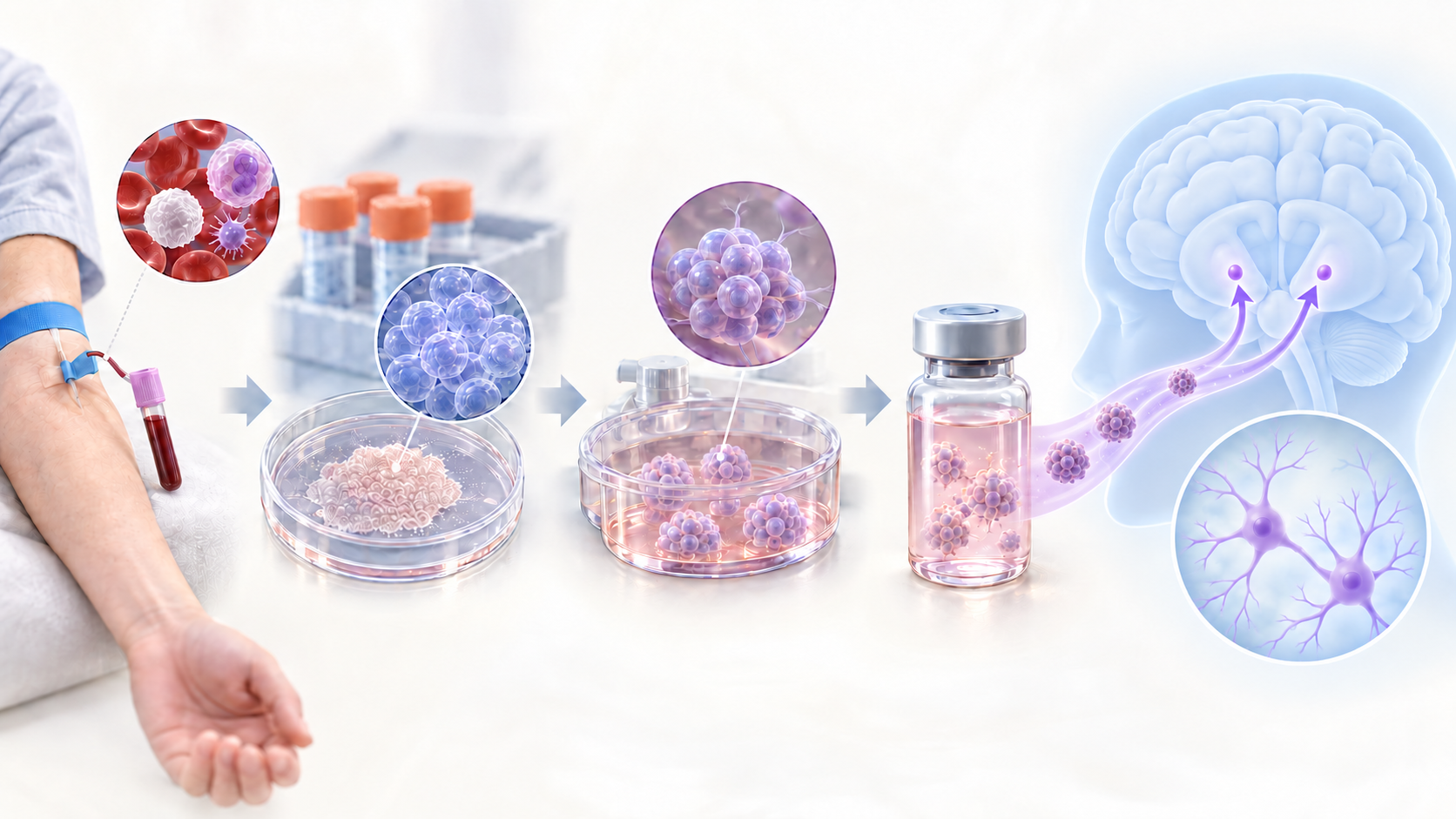
On 6 March 2026, Japan granted conditional and time-limited approval (a seven-year term) to Amchepry (generic name: raguneprocel), an iPS cell-derived dopaminergic neural progenitor cell product. It is never frozen: its shelf life is 31 hours from the start of washing, and a new batch is made for each operation. In the United States, meanwhile, a frozen ES cell-derived product has entered Phase 3. This article follows the primary sources through differentiation, purification, quality evaluation, transplantation, immunosuppression and regulatory review.
- Parkinson's disease and dopamine neurons (the short version)
- What is being replaced — progenitor cells and the transplant site
- How it is made — differentiation and purification with CORIN
- How quality is measured — purity and safety specifications
- A materials engineer's view (1): purity is not set by culture chemistry alone
- How it is transplanted — stereotactic surgery and cells per site
- Immunosuppression and HLA — the conditions for placing “someone else's cells” in the brain
- How to read the clinical trial results
- Japanese review and approval — what conditional and time-limited approval means
- Efforts abroad — ES cell-derived and autologous iPS cell-derived products
- A materials engineer's view (2): fresh cells versus frozen cells, two different designs
- Open questions / Glossary / Primary sources / Claim-to-source audit
Sourced = content stated in published material, papers or regulatory documents (link given)
Our calculation = a figure this article derived from stated assumptions
Not yet confirmed = a plan, a target or a matter under review, with no confirmed track record
Readings of the process and of materials design are marked separately as Commentary.
This article is a technical explainer from the standpoint of manufacturing, materials and regulation. It does not recommend any treatment, does not rank products or treatments by efficacy, and is not medical advice. Clinical trial figures are quoted only as stated in the papers and regulatory documents, together with the trial name, population and time point.
1. Parkinson's disease and dopamine neurons (the short version)
Cell transplantation for Parkinson's disease rests on one idea: replace the lost dopamine-producing neurons (dopaminergic neurons) from outside.
- What is lost: the Nature paper describes Parkinson's disease as a condition in which dopaminergic neurons in the substantia nigra of the midbrain are lost, producing motor symptoms such as slowness of movement, rigidity and resting tremorSourced
- Why drugs fall short: the same paper says drug therapy eases early symptoms, but long-term use brings complications such as motor fluctuations and drug-induced dyskinesia (involuntary movements)Sourced
- The history of cell transplantation: transplants of fetal midbrain tissue looked promising in early open-label trials, but double-blind placebo-controlled trials did not show sufficient efficacy, and graft-induced dyskinesia became a problem. Ethics and the difficulty of securing a stable supply were further barriers. Pluripotent stem cells have been explored as the alternativeSourced
The approved product is, in substance, “one tube (1 mL) holding one million cells, never frozen, with a 31-hour shelf life”. According to Sumitomo Pharma's announcement, one tube (1 mL) contains 1×10⁶ constituent cells and 1 mL of physiological saline as an excipient, and the product is in a non-frozen stateSourced. An MHLW document gives the shelf life as 31 hours and states that the product is “made for each operation”Sourced. This is not a product that waits on a shelf like a drug; it is made to match the day of surgery. That is where the manufacturing, logistics and materials difficulty in this field begins.
2. What is being replaced — progenitor cells and the transplant site
Dopamine is a neurotransmitter made inside dopaminergic neurons. Sumitomo Pharma explains that Amchepry consists of cells one step before they become dopaminergic neurons (dopaminergic neural progenitor cells)Sourced. The PMDA Optimal Use Promotion Guideline describes the mechanism of action as followsSourced.
- After transplantation into the putamen of the striatum, the cells differentiate and mature into dopaminergic neurons that synthesise and release dopamine
- As the lost dopaminergic neurons are replaced, the amount of dopamine near the transplant site increases
- The replenished neurons restore the capacity to take up and metabolise administered levodopa, which also raises dopamine levels
The final product is not “progenitor cells only”, however. The final product used in the Kyoto University trial was reported to be about 60% dopaminergic neural progenitor cells and about 40% dopaminergic neurons, with no cells expressing the serotonergic neuron marker (TPH2) detectedSourced.
A mature dopaminergic neuron is a fragile cell with long processes, poorly suited to being lifted off a culture dish and injected through a needle. So the design transplants cells at an intermediate stage of differentiation, as cell aggregates, and lets them mature inside the brain (our commentary). In animal studies, human iPS cell-derived dopaminergic progenitors were reported to engraft and function in a primate model of Parkinson's disease, and cells sorted with CORIN formed no tumours for at least two yearsSourced.
3. How it is made — differentiation and purification with CORIN
The manufacturing flow used in the Kyoto University trial is set out in the Methods of the Nature paperSourced.
| Stage | What was done (as described in the Nature paper) |
|---|---|
| Starting material | A clinical-grade iPS cell line established from the peripheral blood of a healthy individual. It is homozygous for the most common Japanese HLA haplotype (HLA-A 24:02, HLA-B 52:01, HLA-DRB1 15:02 and others) and matches 17% of Japanese people. A master cell bank was made, and one vial of it is thawed for each patient |
| Culture (days 0 to 11/13) | Seeded at 5.3×10⁵ cells/cm2 on plates coated with laminin 511-E8 fragment (day 0) and cultured for 11 to 13 days. The maintenance medium was StemFit AK03N (Ajinomoto) and the substrate was iMatrix (Matrixome) |
| Purification (days 11 to 13) | Cells positive for the floor plate marker CORIN are selected by fluorescence-activated cell sorting (FACS). The sorter varied by case (BD Influx, MACSQuant Tyto, GigaSort) |
| Aggregate formation (to day 30) | Sorted cells are placed in neural differentiation medium in 96-well plates and cultured as spherical aggregates (spheres) until day 30 |
| Final product | Fresh cells that meet the quality control criteria are used on the day of surgery |
All Sourced (Sawamoto et al., Nature 2025 [Reference 1]). The paper states that cells for cases 1 to 3 were made at Kyoto University and cells for cases 4 to 8 at Sumitomo Pharma.
The principle of purification with CORIN was set out in a 2014 paper. Differentiation from iPS cells yields a mixture that can include cells able to form tumours and cells that are not the intended type. That paper reported that sorting cells with the floor plate marker CORIN efficiently yields cells expressing markers of midbrain dopaminergic progenitors (FOXA2, LMX1A), and that when transplanted into rats they differentiated into dopaminergic neurons without forming tumours and improved motor behaviourSourced.
Commercial manufacturing is handled by S-RACMO, a joint venture of Sumitomo Pharma and Sumitomo Chemical. The company announced that production is planned at “SMaRT” (Suita, Osaka), described as the world's first commercial manufacturing facility dedicated to regenerative and cell medicines derived from non-autologous iPS cellsSourced (the company's own wording). The raw material is the iPS cell stock of the CiRA Foundation (Kyoto University iPS Cell Research Foundation), and part of the process is stated to use a cell purification technology owned by EisaiSourced.
4. How quality is measured — purity and safety specifications
For a cell product, “what to measure, by what method, and how far” is part of the product design itself. A 2020 preclinical paper publishes, as a table, the specifications and results of a pre-trial manufacturing run (25 vials from the master cell bank were used)Sourced.
| Item | Method | Criterion | Result (n = 25) |
|---|---|---|---|
| CORIN-positive rate (day 12) | Flow cytometry | Before sorting >10% / after sorting >90% | Before sorting 31.35 ± 12.72% / after sorting 93.15 ± 2.127% |
| Undifferentiated marker TRA-1-60 (day 12, before sorting) | Flow cytometry | <1% | 0.0% (n = 24) |
| Appearance | Microscopy | Spherical, no foreign matter | Conforms |
| Viability | Flow cytometry | >90% | 97.48 ± 1.608% |
| Dopaminergic progenitor marker FOXA2/TUJ1 | Flow cytometry | >80% | 92.29 ± 3.964% |
| Undifferentiated markers POU5F1, LIN28 | qPCR | Ratio to undifferentiated cells <1% | POU5F1 0.08 ± 0.15%, LIN28 0.14 ± 0.13% |
| Undifferentiated markers OCT3/4 and TRA-2-49 / early neural markers SOX1 and PAX6 | Flow cytometry | All <0.1% | All <0.1% |
| Sterility and mycoplasma | Japanese Pharmacopoeia 17 (membrane filter / PCR) | Negative | Negative |
| Endotoxin | Japanese Pharmacopoeia 17 (LAL turbidimetric method) | ≤1 EU/mL | Not analysed |
| Residual plasmid and mutations in cancer-related genes | qPCR, SNP array, whole-genome and whole-exome analysis | No residual transgene, no abnormality | None detected, no abnormality (n = 6) |
All Sourced (Table 1 of Doi et al., Nat Commun 2020 [Reference 3]). These are specifications and results for preclinical manufacturing batches, not the shipping-release specifications of the approved product itself.
On the approved product's side, MHLW explains that it confirmed at each stage of manufacture that there are no genomic mutations associated with tumour formation and no contamination by undifferentiated cells, and that it set a requirement for release that the proportion of undifferentiated iPS cells be “extremely low”Sourced (a specific figure could not be found in the material this article consulted). Non-clinical safety studies were run: a general toxicity study (26 weeks), a tumourigenicity study (39 weeks), a combined general toxicity and tumourigenicity study (52 weeks) and a teratoma formation study (26 weeks), and no toxicological change or tumourigenicity attributable to the cells was observedSourced (PMDA Optimal Use Promotion Guideline [Reference 11]).
From the mean CORIN-positive rate of 31.35% before sorting and 93.15% after, we work out the degree of enrichmentOur calculation.
- Enrichment: 93.15 ÷ 31.35 = about 2.97-fold (ratio of the means)
- Share that was not the target before sorting: 100 − 31.35 = about 68.7% (CORIN-negative cells)
Assumptions and limits: this is a ratio of means, not a ratio for any individual batch. The sorting yield (how much of the target population was recovered) cannot be read from the same table. The calculation only shows that the criteria (>10%, >90%) were exceeded; it does not show the shipping-release specifications of the approved product.
5. A materials engineer's view (1): purity is not set by culture chemistry alone
The purity of this product depends not only on the chemistry of how cells are differentiated but also on the materials used in the step that selects them. The preclinical paper states that under these manufacturing conditions all reagents, including the anti-CORIN antibody, were GMP grade, and that a clinical-grade cell sorter with a single-use flow path was used to reduce the risk of cross-contaminationSourced.
From this, the following points can be read on the materials and components side (our commentary).
- The antibody is a raw material: the antibody used for sorting may not remain in the final product, but it is a raw material that determines purity. Lot-to-lot differences in binding characteristics and grade control feed straight into the product specification
- The flow path is a single-use wetted material: when a product is made from one vial per patient, it matters more to make the path the cells touch single-use, to avoid contamination between batches. The material, extractables and cell adhesion become sources of quality variation
- Substrate and medium are chemically defined materials: the laminin 511-E8 fragment (a recombinant protein) and a defined medium free of animal-derived components (StemFit AK03N) were usedSourced. Avoiding animal-derived components matters both for lot reproducibility and for viral safety (our commentary)
- Even the freezing medium for the master cell bank is specified: the preclinical paper states that iPS cells were frozen in GMP-grade Stem Cell Banker (Takara Bio), cooled at 1 °C per minute to −80 °C in a programmable freezer, and stored in the vapour phase of liquid nitrogenSourced
Apart from the cells themselves, the materials of a cell product sit in places that are hard to see. The antibody, the single-use flow path, the substrate and the freezing medium are each, from a regulatory standpoint, controlled as “raw materials and materials used in manufacture” (our commentary). See our explainers on GMP, and on QbD and CMC, for the thinking on GMP and on building quality in.
6. How it is transplanted — stereotactic surgery and cells per site
The approved dosage, administration and method of use are as followsSourced (MHLW Chuikyo document [Reference 9]).
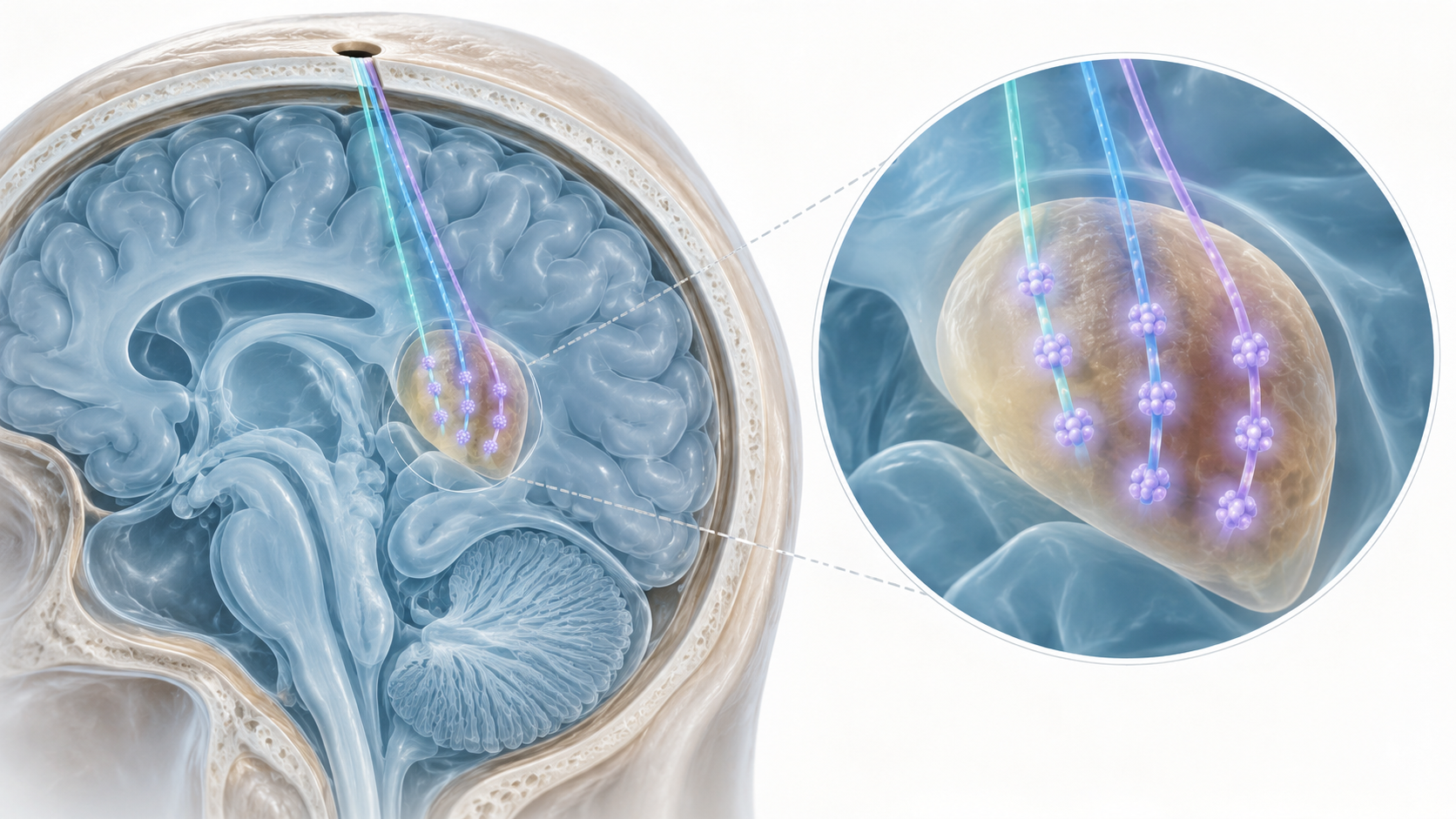
- With a target of 5.4×10⁶ cells per side, transplant into the putamen on both sides by stereotactic surgery
- Through one small hole in the skull, along three administration tracks, place about 1.8×10⁶ cells per track, divided over 6 to 9 sites at 1 to 2 mm intervals
- The injection rate is about 0.1 µL per second
The Nature paper gives more detail on the technique. It used a Leksell G frame and a dedicated injection needle (called TOP in the paper), confirmed injection sites with intraoperative cone-beam CT, and transplanted 2.1 to 5.5×10⁶ cells into one putamen using three tracks per hemisphere with 4 to 8 injections per trackSourced.
Converted from the dosage figuresOur calculation.
- Per site: about 1.8×10⁶ ÷ 9 = 2.0×10⁵ cells, and about 1.8×10⁶ ÷ 6 = 3.0×10⁵ cells. That is about 2 to 3×10⁵ cells
- Total target per patient: 5.4×106 × 2 = 1.08×10⁷ cells
- In terms of products: one tube (1 mL) holds 1×10⁶ cells, so the total target corresponds to about 11 tubes (1.08×10⁷ ÷ 1×106 = 10.8)
Assumptions and limits: concentration during preparation and the number of spare tubes could not be found in published sources, so “11 tubes” is simple division and does not show the number actually used. The injection volume per site (µL) is likewise not calculated, because the cell concentration at injection is unknown.
7. Immunosuppression and HLA — the conditions for placing “someone else's cells” in the brain
The approved product uses iPS cells made from the cells of a healthy adult (non-autologous), so the use of drugs that suppress the immune response is built into the directions for use. The dosage and administration section also sets out how tacrolimus hydrate is givenSourced (MHLW Chuikyo document [Reference 9]).
- Initially 0.03 to 0.15 mg/kg orally twice a day, starting on the morning of the transplant
- Target blood trough concentration 5 to 10 ng/mL, adjusted by monitoring blood levels; 10 to 20 ng/mL if rejection is observed
- As a guide, after one year from the start, taper over the following 12 weeks and stop (extended if necessary)
In the trial, tacrolimus was given for 52 weeks from the day of transplantation. One of the primary endpoints (trial IACT16049-02), the cumulative rate of suppression of rejection (rate of no rejection), was 100% (6/6 patients) at both 12 weeks and 12 months after transplantation, with all six patients in the efficacy analysis judged free of rejectionSourced (PMDA Optimal Use Promotion Guideline [Reference 11]). Adverse drug reactions to tacrolimus occurred in 3 of 7 patients (42.9%), including renal impairment in 2Sourced.
The cell line used is homozygous for the main types, including HLA-A, -B and -DRB1, and matches 17% of Japanese peopleSourced (Nature paper [Reference 1]). How matching HLA relates to whether immunosuppressants are needed is covered in our explainers on MHC and universal donors, and on autologous versus allogeneic cells.
| Trial / product | Source of cells | Immunosuppression described |
|---|---|---|
| Kyoto University trial / Amchepry | iPS cells from another person (a healthy adult). An HLA-homozygous cell line | Tacrolimus alone. Given for 52 weeks, then tapered over 12 weeks (in the Nature paper, halved at 12 months and stopped at 15 months) |
| bemdaneprocel Phase 1 trial | Human embryonic stem (ES) cells. Cryopreserved | Basiliximab, methylprednisolone then prednisone, and tacrolimus (target trough 4 to 7 ng/mL) for one year |
| Schweitzer et al. (2020) | iPS cells derived from the patient's own skin cells. One patient | Reported as transplanted without immunosuppression |
All Sourced (MHLW [Reference 9], Sawamoto et al. [Reference 1], Tabar et al. [Reference 2], Schweitzer et al. [Reference 6]). Because the cells come from different sources, the immunosuppression cannot be compared simply.
8. How to read the clinical trial results
(1) The Kyoto University trial (Phase I/II, jRCT2090220384)
According to the Nature paper, this was a single-centre, open-label Phase I/II trial in which seven patients (aged 50 to 69) received bilateral transplants at Kyoto University Hospital and were followed for 24 monthsSourced. Three received a low dose (2.1 to 2.6×10⁶ cells per side) and four a high dose (5.3 to 5.5×10⁶ cells per side). The first patient was transplanted one side at a time (eight months apart) as a safety check, so was included only in the safety evaluation; efficacy was assessed in the six patients transplanted on both sides at onceSourced.
| Item | Result (as described in the Nature paper) |
|---|---|
| Safety | No serious adverse events (hospitalisation or death). There were 73 adverse events (72 mild, 1 moderate dyskinesia). No tumour-like enlargement of the graft on MRI |
| Off-state motor symptoms (MDS-UPDRS Part III) | Improved in 4 of the 6 patients analysed. The mean change across the six was an improvement of 9.5 points (20.4%) |
| On-state motor symptoms | Improved in 5 patients. Mean improvement of 4.3 points (35.7%) |
| Hoehn and Yahr stage | Improved in 4 patients |
| F-DOPA PET (Ki value in the putamen) | Increased by 44.7%, with a larger increase in the high-dose group |
| Dyskinesia | The UDysRS total score rose at 24 months in 6 of all 7 patients, all except one (PD06). Antiparkinsonian drug doses were maintained except where therapeutic adjustment was needed, and an increase in dyskinesia was noted |
All Sourced (Sawamoto et al., Nature 2025 [Reference 1]). MDS-UPDRS Part III is a scale on which a physician rates motor symptoms; the off state is a rating taken when the effect of medication is minimal.
(2) The US Phase 1 trial (bemdaneprocel, NCT04802733)
The other paper published in Nature on the same day reports an open-label Phase 1 trial of an off-the-shelf, cryopreserved dopaminergic progenitor product derived from human ES cells. Twelve patients, split into a low-dose group (900,000 cells per putamen, 5 patients) and a high-dose group (2.7 million, 7 patients), received bilateral putamen transplants, and all had one year of immunosuppressionSourced. The trial met its primary aims of safety and tolerability, there were no adverse events related to the cell product, and putaminal F-DOPA PET uptake was reported to be increased 18 months after transplantation. The off-state MDS-UPDRS Part III fell by a mean of 8.6 points in the low-dose group and 23.0 points in the high-dose group at 18 months, and there was no graft-induced dyskinesiaSourced (Tabar et al. [Reference 2]).
They differ in cell source (iPS cells versus ES cells), cell state (fresh versus frozen), dose, time point, patient selection criteria and immunosuppression. Both are open-label, without a control group, and small. The two Nature papers themselves list the possibility of placebo effect and observer bias, and the small numbers, as limitationsSourced. The size of the numbers cannot be used to argue that one product is better than the other.
(3) What was actually judged in “approval”
An MHLW document explains the basis of the approval decision as followsSourced (Chuikyo document [Reference 10]).
- The trial was a single-centre, open-label, uncontrolled, small exploratory study not aimed at statistical verification, and no efficacy threshold had been set in advance
- The off-state MDS-UPDRS Part III improved in 4 of 6 patients, and in 3 of them the improvement far exceeded the largest improvement attributed to placebo in the literature
- In US natural history data (PPMI), patients with a similar background had a mean worsening of 5.2 points in the off-state MDS-UPDRS Part III over 24 months
- F-DOPA PET showed increased putaminal uptake (Ki value in 5 of 6 patients, putamen-to-caudate ratio in all 6), and engraftment was confirmed in every patient
- Taking all this together, it judged that even with as few as six patients the trial “meets certain criteria for estimating efficacy”
The same document also states plainly that the motor symptom measures are all subjective, and that the possibility of some placebo effect from the fact of having had surgery cannot be ruled outSourced. The trial's prespecified criterion defined “marked response” as an off-state score improvement of 5 points or more at 24 months, and “response” as an improvement of 0 to 4 points; 4 of the 6 patients were judged to have a marked responseSourced (PMDA guideline [Reference 11]). Of the two who did not, one had improved up to 18 months and then changed by +3 points at 24 months, and the other by +5 points.
9. Japanese review and approval — what conditional and time-limited approval means
The approval is a conditional and time-limited approval, a Japanese pathway for regenerative medicine products. As one example of what can be judged “presumed to have the efficacy, effect or performance” under this system, the MHLW document cites a progressive and irreversible disease in which, once the condition has advanced beyond a certain point, existing drugs are hard to expect to work, where clinically meaningful information has been obtained in some of the product's treatment group; it explains that it judged this product to fall within that caseSourced.
| Item | Content |
|---|---|
| Approval date and type | 6 March 2026, conditional and time-limited approval. The term is 7 years. A new regenerative medicine product (orphan regenerative medicine product). Subject to SAKIGAKE designation (Sakigake Shinsa (28 Sai) No. 2) |
| Efficacy, effect or performance | Improvement of motor symptoms in patients with Parkinson's disease who do not respond sufficiently to existing drug therapy, including levodopa-containing preparations |
| Application | 5 August 2025 |
| Form of the product | A mass of dopaminergic neural progenitor cells made by culturing iPS cells, produced by introducing genes with an episomal vector into peripheral blood mononuclear cells of a healthy adult, then differentiating and aggregating them |
| Conditions of approval | Until a new approval application is made after the term, conduct post-marketing surveillance covering all cases in which the product is used. Take measures such as training so that physicians acquire knowledge of clinical results and adverse events, and use the product at medical institutions with the necessary arrangements in place |
| Post-marketing clinical trial (planned) | Open-label, uncontrolled, multicentre. Main cohort of 30 patients aged 65 or younger and a secondary cohort of 5 patients over 65. 96 weeks after transplantation; the primary endpoint is the change from baseline in the total off-state MDS-UPDRS Part III score. 6 to 10 sites |
| Facility requirements (Optimal Use Promotion Guideline) | Designated advanced-treatment hospitals, university hospitals (where they have neurosurgery), or facilities accredited by the Japan Neurosurgical Society and the Japanese Society of Stereotactic and Functional Neurosurgery, among others, that meet requirements such as a stereotactic surgery set-up, MRI, specialist staffing and 24-hour care. Transport, cell preparation and surgery must all be completed within the shelf life (31 hours from the start of washing) |
All Sourced (PMDA list of products approved in FY2025 [Reference 12], MHLW Chuikyo documents [References 9 and 10], Optimal Use Promotion Guideline [Reference 11]).
On why the confirmatory evaluation of efficacy is limited to patients aged 65 or younger, the same document gives these reasons: from the mechanism of action, patients with prominent motor symptoms from non-dopaminergic neurodegeneration are likely not to respond sufficiently; age is a predictor of non-dopaminergic neurodegeneration; and one of the trial patients who did not show a marked response was olderSourced. The Optimal Use Promotion Guideline also asks for a more careful weighing of benefit and risk in patients over 70, since the trial had no experience of transplanting patients over 70Sourced.
On overseas approval status, the MHLW document says that as of March 2026 the product is not approved or marketed in any country or region, and that an investigator-initiated trial using the product is under way in the United States (the first patient was 7 months after transplantation)Sourced. The US FDA's list of “Approved Cellular and Gene Therapy Products” (updated 17 September 2026) likewise carries no product for Parkinson's diseaseSourced.
10. Efforts abroad — ES cell-derived and autologous iPS cell-derived products
Besides the Japanese iPS cell-derived product, several other efforts in cell transplantation for Parkinson's disease, differing in cell source and product form, have entered clinical trials. Using the entries on ClinicalTrials.gov, the table below sorts them by cell source and stage.
| Programme | Source of cells | Stage (registry information) | Registry number |
|---|---|---|---|
| bemdaneprocel (BlueRock Therapeutics) | Human ES cell-derived. A cryopreserved off-the-shelf product | Phase 1 completed (12 enrolled). Phase 3 (exPDite-2): randomised, sham-surgery-controlled, double-blind, about 102 patients, recruiting. The primary endpoint is the change in “ON time” without dyskinesia | NCT04802733 / NCT06944522 |
| ANPD001 (Aspen Neuroscience) | Derived from iPS cells made from the patient's own skin cells (autologous) | Phase 1/2a, enrolment by invitation (9 planned) | NCT06344026 |
| STEM-PD (Sweden and UK) | Human ES cell-derived | Phase 1, recruitment closed and under way (8 planned). Lund University, University of Cambridge and others | NCT05635409 |
| CT1-DAP001 (University of California, San Diego) | iPS cell-derived (the registry entry lists Kyoto University and Sumitomo Pharma as collaborators) | Phase I/II, investigator-initiated, recruiting (7 planned) | NCT06482268 |
All Sourced (ClinicalTrials.gov [References 13 to 17], registry information as of October 2026). Plans and status in the registry are updated over time. This table does not rank the programmes.
For STEM-PD, a 2023 paper reported quality testing of the GMP-manufactured product, a 39-week GLP safety study in rats (toxicity, tumourigenicity, biodistribution) and potency testing, and states that the product is being used in an eight-patient clinical trial begun in 2022Sourced (Kirkeby et al. [Reference 7]). A 2020 NEJM paper, in turn, reported a case in which dopaminergic progenitors made from the patient's own iPS cells were transplanted into one patient without immunosuppressionSourced.
11. A materials engineer's view (2): fresh cells versus frozen cells, two different designs
Products that share the same aim, “transplant dopaminergic progenitor cells into the brain”, divide into two broad designs.
| Design | Representative example | Manufacturing and logistics characteristics |
|---|---|---|
| Fresh cells (not frozen) | Amchepry | Made for each operation. Shelf life is 31 hours from the start of washing. After the cells are washed at the manufacturing site, transport, cell preparation and surgery all fit within that timeSourced |
| Frozen cells (off the shelf) | bemdaneprocel | Cryopreserved vials are thawed in the operating room and suspended in transplant medium, adjusted to 100,000 cells/µL. In a single operation, nine injections (3 tracks × 3 sites) are made per sideSourced |
This reads as freezing giving freedom in time, and fresh cells giving freedom from post-thaw loss (our commentary). Fresh cells, however, work within a tight time window and are tied to the distance between sites and the surgery schedule. The MHLW document also says that because manufacture starts from the differentiation induction stage of iPS cells for each operation, “supply has limits”Sourced (the source is also covered in our explainer on autologous versus allogeneic cells).
What actually supports this “time window” is materials and components. But the points below are ones for which published material gives no conditions, so they are things we could not confirm.
- Transport container and transport medium: the temperature, container and preservation solution specifications that keep the cell aggregates for 31 hours could not be confirmed in the published material this article consulted
- Injection needle and cannula: the Kyoto University trial used a dedicated injection needle (called TOP in the paper), and the bemdaneprocel trial used a modified cannula (Smart Flow, ClearPoint Neuro)Sourced. The 0.1 µL/s injection rate may be related to a design that limits the shear and clogging the aggregates experience inside the needle, but the published material gives no reason, and this is only an inference (our commentary)
- What is in one product: the composition table in Sumitomo Pharma's announcement lists the constituent cells (1×10⁶) and an excipient (1 mL of physiological saline)Sourced. Details of the preservation and transport solution that hold the aggregates together could not be confirmed
For a single transplant into the brain, where nothing can be done over, the product from “container to needle tip” becomes one continuous object of design (our commentary).
12. Open questions
(1) Verification of efficacy is still to come
The approval is at the stage where efficacy has been “presumed”. Within the seven-year term, efficacy must be verified in a post-marketing clinical trial (30 patients aged 65 or younger, among others) and a new application must be madeNot yet confirmed. Those results were not available at the time of this survey (October 2026).
(2) Results from controlled trials are unpublished
The bemdaneprocel Phase 3 trial (randomised, sham-surgery-controlled, double-blind) was recruiting as of October 2026, and primary completion is registered as March 2027 (planned)Not yet confirmed (NCT06944522). Aspen Neuroscience's autologous iPS cell-derived product is also at Phase 1/2aNot yet confirmed.
(3) Long-term safety and how to choose patients
The Nature paper lists as limitations that long-term survival of the transplanted cells, inflammation around the graft and tumourigenicity need histological analysis at autopsy, that the criteria for the best patients for cell transplantation are not yet defined, and that more cells may need to be transplanted over a wider areaSourced. The PMDA guideline also asks for regular MRI follow-up, because the theoretical risk of graft enlargement or tumour formation cannot be completely ruled outSourced.
(4) What this article could not confirm
- Specific figures in the shipping-release specifications of the approved product (such as the allowed proportion of undifferentiated cells)
- Commercial process conditions, and the specifications of the transport container and transport medium
- The content of the PMDA review report (it could not be checked when this article was prepared, so the details of the review discussion are limited to what the MHLW Chuikyo document and the Optimal Use Promotion Guideline say)
- Approval status in the EU (not independently checked here; only the MHLW document's statement as of March 2026 is cited)
- The approved product is a cell-aggregate product of “1 mL, one million cells, not frozen, 31-hour shelf life”, and it is made for each operationSourced
- Purity is raised by sorting CORIN-positive cells. In the preclinical study the share rose from 31.4% before sorting to 93.2% after, an enrichment of about 2.97-foldOur calculation
- The target is about 2 to 3×10⁵ cells per site and about 1.08×10⁷ cells in total per patientOur calculation
- The approval is conditional and time-limited (seven years). It was granted on the basis of an open-label, uncontrolled trial of seven patients, on the grounds that efficacy was presumedSourced
- The US ES cell-derived off-the-shelf product has moved to a Phase 3 trial with sham-surgery control, and its results are not yet confirmedNot yet confirmed
13. Glossary
- Parkinson's disease
- A disease in which dopaminergic neurons in the substantia nigra of the midbrain are lost, causing motor symptoms such as slowness of movement, rigidity and resting tremor.
- Dopamine
- A neurotransmitter, made inside dopaminergic neurons.
- Dopaminergic neural progenitor cell
- A cell one step before it becomes a dopaminergic neuron. The aim is for it to mature in the brain after transplantation.
- Substantia nigra, striatum, putamen
- The substantia nigra is a region of the midbrain. The striatum is the region that receives dopamine from it, and the putamen is part of the striatum. The transplant site is the putamen.
- Levodopa
- A drug converted to dopamine in the body. The mainstay of drug therapy for Parkinson's disease.
- Dyskinesia
- Involuntary body movements. Can become a problem with long-term drug use or after transplantation.
- CORIN
- A floor plate marker. Used as a tag to select midbrain dopaminergic progenitors from iPS cell-derived differentiated cells.
- FACS (fluorescence-activated cell sorting)
- A device and method that sorts fluorescently labelled cells one by one.
- Aggregate (sphere)
- A spherical mass formed by cells gathering together.
- MDS-UPDRS Part III
- A scale on which a physician rates motor symptoms. A higher score means more severe symptoms. The off state is a rating taken when the effect of medication is minimal.
- F-DOPA PET
- An imaging test of the capacity to synthesise dopamine. Putaminal uptake is used to examine the function of the graft.
- Stereotactic surgery
- Surgery that uses a coordinate system fixed to the head to advance a needle or similar accurately to a target in the brain.
- Tacrolimus
- A drug that suppresses the immune system. Used to suppress rejection of another person's cells.
- HLA homozygote
- A state in which the same HLA type was inherited from both parents. Cells are more likely to match many people.
- Conditional and time-limited approval
- A system for regenerative medicine products. A product whose efficacy is presumed and safety confirmed is approved with conditions and a time limit.
- Optimal Use Promotion Guideline
- An MHLW guideline setting out requirements so that a product with a new mechanism of action is used in appropriate patients and facilities.
14. Primary sources
- Sawamoto N, et al. "Phase I/II trial of iPS-cell-derived dopaminergic cells for Parkinson’s disease", Nature 641:971-977, 2025 (jRCT2090220384) — doi.org
- Tabar V, et al. "Phase I trial of hES cell-derived dopaminergic neurons for Parkinson’s disease", Nature 641:978-983, 2025 (NCT04802733) — doi.org
- Doi D, et al. "Pre-clinical study of induced pluripotent stem cell-derived dopaminergic progenitor cells for Parkinson’s disease", Nat Commun 11:3369, 2020 — doi.org
- Doi D, et al. "Isolation of Human Induced Pluripotent Stem Cell-Derived Dopaminergic Progenitors by Cell Sorting for Successful Transplantation", Stem Cell Reports 2(3):337-350, 2014 — doi.org
- Kikuchi T, et al. "Human iPS cell-derived dopaminergic neurons function in a primate Parkinson’s disease model", Nature 548:592-596, 2017 — doi.org
- Schweitzer JS, et al. "Personalized iPSC-Derived Dopamine Progenitor Cells for Parkinson’s Disease", N Engl J Med 382:1926-1932, 2020 — doi.org
- Kirkeby A, et al. "Preclinical quality, safety, and efficacy of a human embryonic stem cell-derived product for the treatment of Parkinson’s disease, STEM-PD", Cell Stem Cell 30:1299-1314, 2023 — doi.org
- Sumitomo Pharma "Notice of manufacturing and marketing approval in Japan for Amchepry, a non-autologous iPS cell-derived dopaminergic neural progenitor cell product", 6 March 2026 (Japanese-language release) — sumitomo-pharma.co.jp
- Ministry of Health, Labour and Welfare, Central Social Insurance Medical Council (Chuikyo) "Handling of regenerative medicine products (Amchepry)", Sou-11-4, 8 April 2026 (PDF, in Japanese) — mhlw.go.jp
- Ministry of Health, Labour and Welfare, Medical Device Evaluation Division "Conditional and time-limited approval of three regenerative medicine products", Chuikyo Sou-11 Reference 2, 8 April 2026 (PDF, in Japanese) — mhlw.go.jp
- Ministry of Health, Labour and Welfare "Optimal Use Promotion Guideline: raguneprocel (brand name: Amchepry)", May 2026 (PDF, in Japanese) — pmda.go.jp
- Pharmaceuticals and Medical Devices Agency (PMDA) "List of products approved in FY2025 (regenerative medicine products)" (PDF, in Japanese) — pmda.go.jp
- ClinicalTrials.gov NCT04802733 "Phase 1 Safety and Tolerability Study of MSK-DA01 Cell Therapy for Advanced Parkinson's Disease" — clinicaltrials.gov
- ClinicalTrials.gov NCT06944522 "exPDite-2: A Phase 3 Study to Assess the Efficacy and Safety of Midbrain Dopaminergic Neuronal Cell Therapy (Bemdaneprocel)" — clinicaltrials.gov
- ClinicalTrials.gov NCT06344026 "Phase 1/2a Study of ANPD001 in Parkinson Disease" — clinicaltrials.gov
- ClinicalTrials.gov NCT05635409 "STEM-PD Trial" — clinicaltrials.gov
- ClinicalTrials.gov NCT06482268 "Transplantation of Human iPS Cell-derived Dopaminergic Progenitors (CT1-DAP001) for Parkinson's Disease (Phase I/II)" — clinicaltrials.gov
- U.S. FDA "Approved Cellular and Gene Therapy Products" (updated 17 September 2026) — fda.gov
- jRCT (Japan Registry of Clinical Trials) jRCT2090220384 "Investigator-initiated clinical trial (Phase I/II) of cell transplantation of human iPS cell-derived dopaminergic neural progenitor cells for Parkinson's disease, examining safety and efficacy" (in Japanese) — jrct.mhlw.go.jp
15. Claim-to-source audit
| Claim in the text | Basis | Label |
|---|---|---|
| That Parkinson's disease produces motor symptoms through loss of dopaminergic neurons in the substantia nigra; that long-term drug therapy brings motor fluctuations and dyskinesia; and that fetal midbrain tissue transplants failed to show efficacy in double-blind trials and had problems of graft-induced dyskinesia, ethics and supply | Reference 1 https://doi.org/10.1038/s41586-025-08700-0 | Sourced |
| That Amchepry is 1×10⁶ cells per tube (1 mL) with 1 mL of physiological saline as excipient, in a non-frozen state; SAKIGAKE designation (February 2017), orphan designation (December 2025), application (5 August 2025) and approval (6 March 2026, conditional and time-limited approval); S-RACMO and SMaRT; use of the iPS cell stock; and use of Eisai's cell purification technology | Reference 8 https://www.sumitomo-pharma.co.jp/news/20260306.html | Sourced |
| The dosage and administration (5.4×10⁶ cells per side, 3 tracks, about 1.8×10⁶ cells per track over 6 to 9 sites, 1 to 2 mm spacing, about 0.1 µL/s); how tacrolimus is given; the conditions of approval; the approval date; the 31-hour shelf life and manufacture for each operation; 1×10⁶ cells per container; and derivation from peripheral blood mononuclear cells of a healthy adult | Reference 9 https://www.mhlw.go.jp/content/10808000/001687606.pdf | Sourced |
| The application category (new regenerative medicine product, orphan); the 7-year term; SAKIGAKE designation No. 28-Sai-2; not approved in Japan or abroad as of March 2026; the investigator-initiated trial in the United States (first patient at 7 months after transplantation). The reasons for the approval decision (no threshold set in advance, possible placebo effect, 5.2-point worsening over 24 months in PPMI natural history data, PET findings, "certain criteria for estimating efficacy"). The design of the post-marketing clinical trial (30 patients aged 65 or younger, 5 patients over 65, 96 weeks, 6 to 10 sites). The reason for limiting to 65 or younger. The release requirement on the proportion of undifferentiated iPS cells, and the handling of tumours and rejection | Reference 10 https://www.mhlw.go.jp/content/10808000/001687611.pdf | Sourced |
| The mechanism of action (differentiation and maturation into dopaminergic neurons in the putamen; restored capacity to take up and metabolise levodopa); the durations of the non-clinical safety studies (26, 39, 52 and 26 weeks) and their findings; the trial selection criteria; the per-patient off-state scores in Table 2 (baseline, 24 months, change); the definition of marked response (5 points or more); the cumulative rejection-suppression rate of 100% (6/6); the incidence of adverse events; tacrolimus adverse reactions of 42.9%; facility requirements and transport, preparation and surgery within the 31-hour shelf life; caution over age 70; and the theoretical risk of graft enlargement or tumour formation and MRI follow-up | Reference 11 https://www.pmda.go.jp/files/000280712.pdf | Sourced |
| Bilateral transplants in 7 patients (aged 50 to 69); the low dose (2.1 to 2.6×10⁶ cells per side) and high dose (5.3 to 5.5×10⁶); the first patient transplanted one side at a time; the HLA type of the cell line and its match to 17% of Japanese people. The manufacturing flow (seeding on day 0, 5.3×10⁵ cells/cm², laminin 511-E8 fragment, StemFit AK03N, iMatrix, sorting of CORIN-positive cells on days 11 to 13, the sorters, aggregate formation in 96-well plates up to day 30). The composition of the final product (about 60% progenitors, about 40% neurons, no TPH2 expression). 73 adverse events, MRI findings, UDysRS, mean changes in off- and on-state scores, Hoehn and Yahr stage, the 44.7% increase in the F-DOPA PET Ki value, tacrolimus at 0.06 mg/kg twice daily and halved at 12 months and stopped at 15 months, the Leksell G frame and dedicated needle, cone-beam CT, 3 tracks with 4 to 8 injections and 2.1 to 5.5×10⁶ cells. The stated limitations (autopsy, undefined best patients, possible need for more cells over a wider area) | Reference 1 https://doi.org/10.1038/s41586-025-08700-0 | Sourced |
| Bemdaneprocel (human ES cell-derived, cryopreserved off-the-shelf): 12 patients (low dose 900,000 cells, 5 patients; high dose 2.7 million, 7 patients); one year of immunosuppression (basiliximab, methylprednisolone then prednisone, tacrolimus with a target of 4 to 7 ng/mL); no adverse events related to the cell product; F-DOPA PET at 18 months; the fall in off-state scores (8.6 points low dose, 23.0 points high dose); no graft-induced dyskinesia. Thawing of frozen vials and adjustment to 100,000 cells/µL, the modified cannula (Smart Flow), and nine injections per putamen | Reference 2 https://doi.org/10.1038/s41586-025-08845-y | Sourced |
| The final-product specifications and results of the preclinical study (CORIN-positive rate, viability, FOXA2/TUJ1, undifferentiated markers, sterility, endotoxin, genome analysis). That reagents including the anti-CORIN antibody were GMP grade, the clinical-grade cell sorter with a single-use flow path, and freezing of the master cell bank (Stem Cell Banker GMP, 1 °C per minute to −80 °C, vapour phase of liquid nitrogen) | Reference 3 https://doi.org/10.1038/s41467-020-17165-w | Sourced |
| That CORIN-positive cells are midbrain dopaminergic progenitors expressing FOXA2 and LMX1A, and that on transplantation into rats they improved motor behaviour without forming tumours | Reference 4 https://doi.org/10.1016/j.stemcr.2014.01.013 | Sourced |
| That human iPS cell-derived dopaminergic progenitors functioned in a primate model, and that CORIN-sorted cells formed no tumours for at least two years | Reference 5 https://doi.org/10.1038/nature23664 | Sourced |
| A report of dopaminergic progenitors derived from a patient's own iPS cells transplanted into one patient without immunosuppression | Reference 6 https://doi.org/10.1056/NEJMoa1915872 | Sourced |
| GMP manufacture of the STEM-PD product, the 39-week GLP safety study, and the eight-patient clinical trial begun in 2022 | Reference 7 https://doi.org/10.1016/j.stem.2023.08.014 | Sourced |
| The form of Amchepry (a cell mass made by differentiating and aggregating iPS cells produced by introducing genes with an episomal vector into peripheral blood mononuclear cells), the approval date, conditional and time-limited approval, and the orphan and SAKIGAKE designation categories | Reference 12 https://www.pmda.go.jp/files/000280052.pdf | Sourced |
| Registration of the bemdaneprocel Phase 1 trial (12 patients, completed) | Reference 13 https://clinicaltrials.gov/study/NCT04802733 | Sourced |
| The bemdaneprocel Phase 3 trial (randomised, sham-surgery-controlled, double-blind, about 102 patients, recruiting, primary endpoint, completion planned for March 2027) | Reference 14 https://clinicaltrials.gov/study/NCT06944522 | Sourced |
| The ANPD001 Phase 1/2a trial (iPS cells from the patient's own skin cells, 9 planned) | Reference 15 https://clinicaltrials.gov/study/NCT06344026 | Sourced |
| The STEM-PD Phase 1 trial (human ES cell-derived, 8 planned, Sweden and UK) | Reference 16 https://clinicaltrials.gov/study/NCT05635409 | Sourced |
| The CT1-DAP001 Phase I/II trial (University of California, San Diego, 7 planned, Kyoto University and Sumitomo Pharma as collaborators) | Reference 17 https://clinicaltrials.gov/study/NCT06482268 | Sourced |
| That the FDA list of approved cellular and gene therapy products (updated 17 September 2026) carries no product for Parkinson's disease | Reference 18 https://www.fda.gov/vaccines-blood-biologics/cellular-gene-therapy-products/approved-cellular-and-gene-therapy-products | Sourced |
| That the Kyoto University Hospital trial (jRCT2090220384) is an investigator-initiated Phase I/II trial | Reference 19 https://jrct.mhlw.go.jp/latest-detail/jRCT2090220384 | Sourced |
| The enrichment before and after sorting (93.15 ÷ 31.35 = about 2.97-fold), the share of non-target cells before sorting (about 68.7%), cells per site (about 2 to 3×10⁵), the total target per patient (1.08×10⁷ cells), and the conversion into number of products (about 11 tubes) | Our calculation. The enrichment is a ratio of means, and the sorting yield is unknown. The cell-number conversions only divide and multiply the dosage figures and do not allow for concentration during preparation or spare tubes | Our calculation |
| Efficacy verification results after the trial, post-marketing clinical trial results, whether full approval is granted, and the results of the bemdaneprocel Phase 3 trial | Results had not been published as of this article's survey (October 2026), or the matter is to be decided in later review and trials | Not yet confirmed |
| Specific figures in the shipping-release specifications, commercial process conditions, specifications of the transport container and medium, the content of the PMDA review report, and approval status in the EU | Not stated because they could not be confirmed in the published material this article consulted (commentary) | Commentary |
| The reading that the antibody, single-use flow path, substrate and freezing medium are controlled as raw materials and materials; the explanation of why progenitor cells are transplanted; the contrast between fresh and frozen cell designs; the inference about the injection rate and shear inside the needle; and the framing of "container to needle tip" as one object of design | This article's own reading and commentary based on published content. Not views expressed by any company or institution | Commentary |
| That Figs. 1 to 4, 6 and 7 are explanatory drawings rather than real anatomical drawings, process diagrams or statistical charts of results, and that the hero image and Fig. 5 are AI-generated images | Our note in this article | Commentary |
Last updated 1 October 2026. Sources are limited to primary material (clinical trial papers in Nature, documents from PMDA and MHLW, regulators' lists, official company announcements and ClinicalTrials.gov). Because the article includes readings of the process and of materials design, those are marked as Commentary and kept separate from sourced fact. The figures in the approved product's shipping-release specifications, commercial process conditions, the specifications of the transport container and medium, the content of the PMDA review report and approval status in the EU are not stated, because they could not be confirmed in published primary sources. This article is a technical explainer from the standpoint of manufacturing, materials and regulation, and is not medical advice. All figures are explanatory concept graphics. Neither the vector drawings nor the AI-generated images show real anatomy, micrographs or an actual product.