TECHNOLOGY EXPLAINER
Mesenchymal Stem Cells (MSCs)
— more products are approved, but “why they work” is still unsettled
Mesenchymal stem cells are cells taken from bone marrow, fat, umbilical cord and other tissues and expanded by letting them attach to a culture dish. Products have been approved in Japan, the US, Europe and South Korea. Yet the prescribing information for a product approved in the US in December 2024 describes the mechanism of action as “unclear, but possibly related to immunomodulatory effects”. This article sorts out the definition, origins, culture difficulties, approval status and the debate over mechanism of action, from the viewpoint of materials and manufacturing.
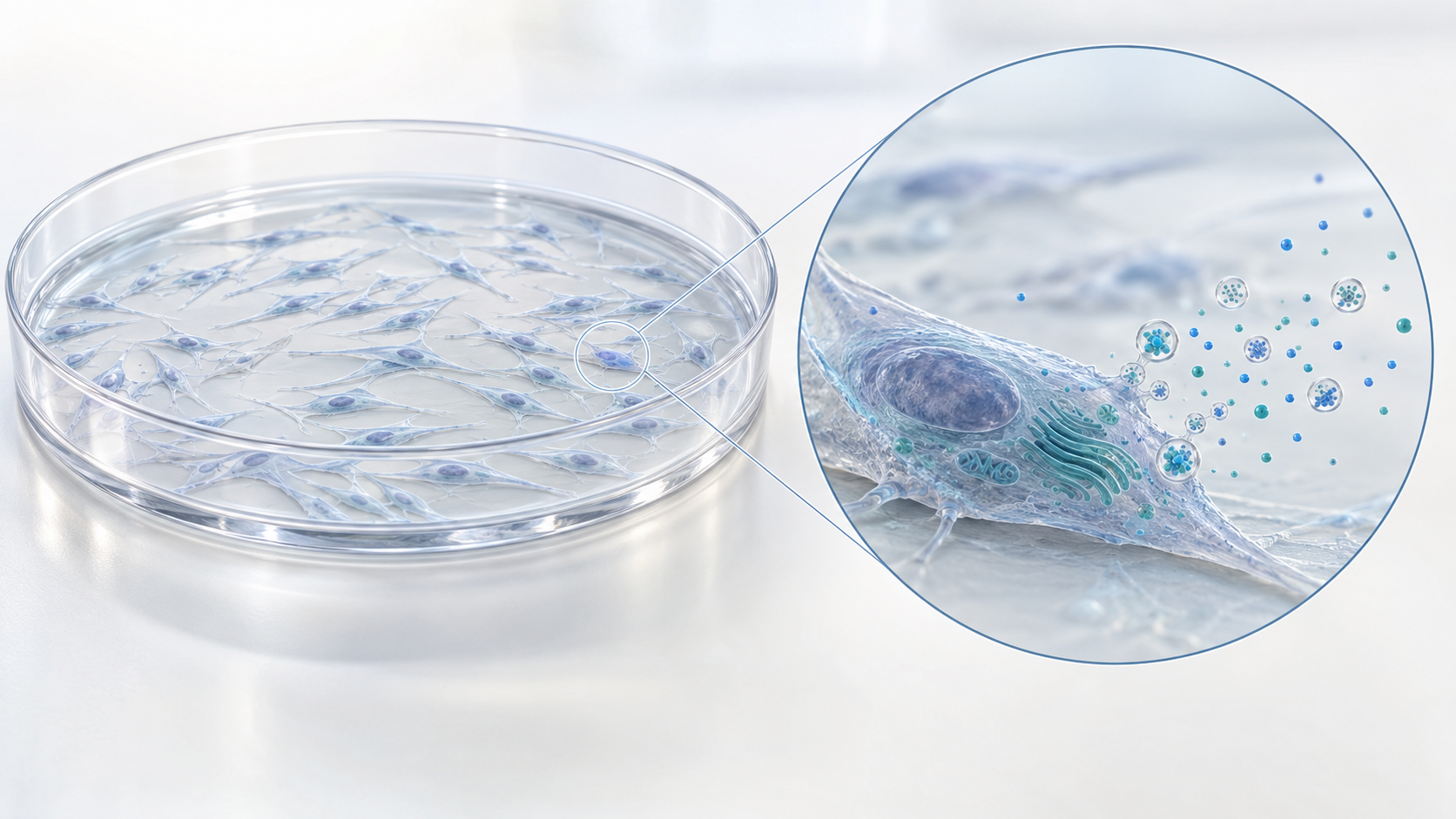
- What mesenchymal stem cells are, in three points
- Tissue of origin: how bone marrow, fat and umbilical cord differ
- Defining “MSC”: the ISCT minimal criteria and the debate over the name
- Culture and passaging: cells change the more they are expanded
- A materials engineer's view (1): choices of medium, substrate and freezing get into the cells' properties
- Approved products: Japan, the US, Europe and South Korea
- Our calculation: cells and DMSO in one dose of an approved product
- Why they work is not settled: three views
- A materials engineer's view (2): assay systems, and options that do not use cells
- iPS cell-derived MSCs
- Open problems, and what this article could not confirm
- Glossary / References / Claim-to-source audit
Sourced = stated in published material or a paper (link given)
Our calculation = a value this article derived from assumptions it states
Not yet confirmed = a research-stage matter, an application under review or an outlook, with no confirmed track record
Structural arrangements and interpretations from a materials or process standpoint are marked separately as Commentary.
This article is an explanation of materials technology and manufacturing technology. It does not evaluate the efficacy or safety of any treatment, recommend any product or treatment, and is not medical advice. Product names, approval dates and trial results are quoted only where they appear in regulators' documents or papers, and there is no intention to compare products with one another.
1. What mesenchymal stem cells are, in three points
Mesenchymal stem cells (MSCs) are “a group of cells with similar properties, taken from tissues such as bone marrow or fat and expanded by letting them attach to the surface of a culture dish”. In research they are also called “mesenchymal stromal cells”, and there is no single agreed name (Section 3).
- Where they are taken from: bone marrow, adipose tissue and umbilical cord blood are the typical sources. The source tissue changes how readily the cells expand and their tendency to differentiateSourced
- How they are defined: in 2006 the International Society for Cell & Gene Therapy (ISCT) proposed three minimal criteria: “adhere to plastic”, “carry defined surface markers” and “differentiate into bone, fat and cartilage cells”Sourced
- What is difficult: the cells change the more they are expanded, their function can fall after freezing and thawing, and how they act in the body has not been settledSourced
Being approved and understanding the mechanism of action are two different things. The prescribing information for Ryoncil, approved in the US in December 2024, describes the mechanism of action as “unclear, but possibly related to immunomodulatory effects”Sourced. For a materials engineer this means that “which quality attributes must be controlled to keep the effect” cannot be written down as a settled specification (our commentary).
2. Tissue of origin: how bone marrow, fat and umbilical cord differ
MSCs were first found in bone marrow, but they are now isolated from many tissues, including adipose tissue, umbilical cord blood and synovium. In 2006, Kern and colleagues compared MSCs obtained from bone marrow (BM), umbilical cord blood (UCB) and adipose tissue (AT) from the same standpointSourced.
The abstract of Kern and colleagues states that bone marrow collection is invasive and that the number and differentiation capacity of MSCs can fall with age, that fat has the highest frequency of MSCs, and that cord blood shows high proliferative capacitySourced. Even with the same “MSC”, where the cells are taken from is a design choice that affects their number, how readily they expand and their tendency to differentiate (our commentary).
The source also bears on how the cells behave when put into blood. Moll and colleagues point out that MSC products differ in the amount of tissue factor (TF), which has a strong pro-coagulant effect, and can trigger the “instant blood-mediated inflammatory reaction (IBMIR)” that occurs on contact with blood [Ref. 5]Sourced. The summary is that the safety of intravenous bone-marrow MSCs has been studied, but whether the same holds for newer products derived from fat or perinatal tissues is not knownSourced.
3. Defining “MSC”: the ISCT minimal criteria and the debate over the name
If each researcher isolates, cultures and evaluates cells differently, results cannot be compared. In 2006 the Mesenchymal and Tissue Stem Cell Committee of the ISCT proposed minimal criteria for defining human MSCsSourced.
The 2006 proposal itself says that it “will need revising as new knowledge emerges”Sourced. Indeed, in 2019 the ISCT MSC committee issued a statement on naming. While supporting the abbreviation “MSC”, it recommended (i) giving the tissue of origin alongside it, (ii) using the term in the sense of “stromal” rather than “stem” cells unless rigorous evidence can be shown, and (iii) demonstrating the cells not by general properties but by a set of functional assays matched to the intended therapeutic mode of actionSourced.
On the name, Caplan proposed in 2017 renaming MSCs “Medicinal Signaling Cells”. His argument is that MSCs gather at sites of injury and act like “a drug factory on the spot”, secreting factors that promote immunomodulation and tissue repair, while it is the patient's own tissue stem cells that build new tissueSourced. Whether that view is right is taken up in Section 8.
The first of the ISCT minimal criteria is “adhere to plastic under standard culture conditions”Sourced. So part of the definition of an MSC depends on a material property, the surface of the culture vessel. It can be read that differences in surface treatment (such as hydrophilisation), the stiffness of the substrate and the presence of a coating could themselves become the selection conditions for “cells that attach and grow” (our commentary). For makers of cell culture vessels and substrates, the MSC is a cell that “touches materials by definition”.
4. Culture and passaging: cells change the more they are expanded
Few MSCs can be taken from the body, so for treatment and for research alike expansion in culture is the premise. But the expansion process itself moves the cells' properties.
Passaging: ageing starts from the first passage
Wagner and colleagues reported in 2008 that when human MSCs are kept in culture, abnormal shape, cell enlargement and falling surface-marker expression appear within 43 to 77 days (7 to 12 passages), and growth finally stopsSourced. Adipogenic differentiation capacity fell, and the tendency to differentiate into bone rose. They conclude that changes in gene expression are not a late-stage phenomenon but build up continuously with each passage, beginning at the first passageSourced.
So it is not only cells just before growth arrest that are a problem: “which passage the cells are from” is part of quality (our commentary).
Medium: from serum to substitutes
For clinical-scale manufacture, human serum and platelet-derived components have been considered in place of animal-derived fetal bovine serum (FBS). In 2009 Bieback and colleagues compared FBS, human serum, platelet releasate and pooled human platelet lysate (pHPL) for bone marrow MSCs, and reported that pHPL sped up proliferation most and reached clinically relevant numbers within the first two passagesSourced. Surface markers, differentiation capacity and immunosuppressive activity were similar whichever medium the cells were grown in. No spontaneous cell transformation was seen under any conditionSourced.
Freezing: the price of making it ahead
Allogeneic MSC products are envisaged as “made ahead”, frozen and thawed when needed. In 2014, Moll and colleagues reported that freeze-thawed MSCs had weaker immunomodulatory and haemocompatibility properties, and stronger complement activation, than cells taken from continuous cultureSourced. When exposed to serum for one hour, thawed cells were lysed twice as efficiently. They also describe, as an observation in a small number of patients, a response rate of 100% in the group given fresh, low-passage cells and 50% in the group given frozen, high-passage cells. This was a small comparison and reported as a trendSourced.
The reports so far show that even MSCs meeting the ISCT criteria differ in properties by passage, medium, freezing and source. In 2018 Galipeau and colleagues argued, from an analysis of the biological and pharmacological gaps between preclinical and clinical work and of the failures of advanced clinical trials, that a rational path to approval needs to be consideredSourced.
5. A materials engineer's view (1): choices of medium, substrate and freezing get into the cells' properties
Reading the reports of Section 4 from the materials side shows the following points of contact (our commentary).
- The culture surface: the first line of the definition is “adheres to plastic” (Section 3). Surface treatment and substrate stiffness are conditions that bear on the selection of cells that attach and grow. That substrate stiffness changes the direction of MSC differentiation was covered in this series' article on hydrogels
- Medium components: moving from serum to platelet lysate sped up proliferationSourced. On the other hand, the FDA prescribing information states that Ryoncil is manufactured using reagents of human, porcine and bovine origin and that hypersensitivity to trace amounts of porcine and bovine proteins is possibleSourced. How far the origin of raw materials can be restricted shows up directly in the product's precautions
- Cryopreservation solution and container: Ryoncil is a formulation of 70% electrolyte infusion solution (Plasma-Lyte A), 20% human serum albumin solution (25%) and 10% DMSO (all by volume), stored in the vapour phase of liquid nitrogen at or below −135°C, and it must be given within 5 hours of the start of thawingSourced. DMSO is named in the prescribing information as one cause of hypersensitivity. The composition of the cryopreservation solution, the material and cold resistance of the vial, and the uniformity of thawing are all matters of materials
- Parts in the administration route: the prescribing information instructs the use of an infusion pump and a blood filter with a pore size of 40 to 260 µmSourced. The material and surface of the flow path the cells pass through are part of the conditions under which blood and cells meet
In short, it can be read that changing the materials of the medium, container, storage solution or flow path can come under review as “a change to the cell product”. This point is covered in more detail in this series' articles on GMP and on QbD and CMC.
6. Approved products: Japan, the US, Europe and South Korea
Products with MSCs as the active ingredient have been approved by regulators in several countries and regions. The kinds and dates of approval given here are those that could be confirmed in the regulators' documents.
| Region / regulator | Product (cells) | Indication (as stated by the regulator) | Kind and date of approval |
|---|---|---|---|
| US FDA | Ryoncil (remestemcel-L-rknd) Allogeneic bone marrow-derived MSCs | Steroid-refractory acute graft-versus-host disease (SR-aGVHD) in children aged 2 months and over | Approved 18 December 2024. Orphan, Fast Track and priority review designations. The FDA described it as the first MSC therapy approved by the FDASourced |
| Japan | Temcell HS Inj. Allogeneic bone marrow-derived MSCs | Acute GVHD after haematopoietic stem cell transplantation | Approved 18 September 2015 (orphan regenerative medicine product)Sourced |
| Japan | Stemirac Inj. Autologous bone marrow-derived MSCs | Improvement of neurological symptoms and functional impairment associated with spinal cord injury (traumatic, limited to patients with ASIA impairment scale A, B or C) | Conditional and time-limited approval on 28 December 2018 (SAKIGAKE designation). The approval period is 7 years, and an application for full approval was made on 14 November 2025. A full approval has not been confirmed within the scope of this articleSourcedNot yet confirmed |
| Japan | Alofisel Inj. Allogeneic adipose-derived MSCs | Complex perianal fistulas associated with Crohn's disease | Approved 27 September 2021 (orphan regenerative medicine product)Sourced |
| Japan | Akuugo Inj. for intracerebral implantation (vandefitemcel) Allogeneic bone marrow-derived MSCs into which a plasmid vector encoding the intracellular domain of Notch-1 has been introduced | Improvement of chronic-phase motor paralysis associated with traumatic brain injury | Conditional and time-limited approval on 31 July 2024 (orphan and SAKIGAKE designations). In a partial change on 8 December 2025, the approval condition that the product not be shipped until a partial-change approval based on the results of a quality comparability assessment was judged to have been “addressed” and was deletedSourced |
| Japan | Allostem Sheet (nivadostrocel) A sheet of allogeneic adipose-derived MSCs | Refractory, recurrent erosions and ulcers in epidermolysis bullosa (dystrophic, junctional and simplex types; severe generalised forms) | Approved 3 April 2026 (orphan regenerative medicine product)Sourced |
| Japan | Seibiscus Inj. Autologous synovium-derived MSCs | Administration to the site of a meniscus injury sutured under arthroscopy (meniscus injury for which meniscectomy is indicated) | Approved 8 May 2026Sourced |
| Europe EC/EMA | Alofisel (darvadstrocel) Allogeneic adipose-derived MSCs | Complex perianal fistulas associated with Crohn's disease in adults | Approved 23 March 2018. On 13 December 2024, at the request of the marketing authorisation holder (Takeda), the authorisation was withdrawn and sales in the EU ended permanentlySourced |
| Korea MFDS | Cellgram (autologous bone marrow-derived MSCs) Cupistem (autologous adipose-derived MSCs) | Cellgram: acute myocardial infarction. Cupistem: fistulas in Crohn's disease | Cellgram in July 2011 and Cupistem in January 2012 (company statements on pages of the MFDS English site)Sourced |
| Korea MFDS | Cartistem (allogeneic cord blood-derived MSCs) Neuronata-R (autologous bone marrow-derived MSCs) | Cartistem: knee cartilage defects. Neuronata-R: amyotrophic lateral sclerosis | A review gives 2012 and 2014 respectively. Not confirmed against the MFDS originalNot yet confirmed |
Japan: PMDA lists of approved products [Refs. 9 to 14]; US: FDA [Refs. 6 to 8]; Europe: EMA [Ref. 16]; Korea: MFDS pages [Refs. 18 to 20] and a review [Ref. 21]. The table gives representative examples and is not a complete list of approved products.
Ryoncil: what the prescribing information says
The efficacy of Ryoncil was evaluated in a multicentre, single-arm trial in children with SR-aGVHD (MSB-GVHD001, NCT02336230)Sourced. According to the prescribing information, of 55 enrolled, 54 received treatment, and the overall response rate at day 28 was 70% (38 patients, 95% confidence interval 56.4 to 82.0), with complete response in 30% (16 patients) and partial response in 41% (22 patients)Sourced. It was a single-arm trial without a control group, and the results cannot be compared directly with those of other treatments or products (a note by this article). At the time of approval the FDA described the mechanism of action as “unclear, but possibly related to immunomodulatory effects”Sourced.
What Alofisel in Europe showed
Alofisel was approved in Europe in 2018 and in Japan in 2021Sourced. Takeda then announced in October 2023 that the confirmatory phase 3 trial ADMIRE-CD II did not meet its primary endpointSourced. Sales in Europe ended in December 2024. It is an example of an approved product whose results can diverge in a later trial (our commentary).
7. Our calculation: cells and DMSO in one dose of an approved product
Using figures from the Ryoncil prescribing information, we do a calculation to get a feel for the scale of manufacturing and logistics. It does not show a treatment dose; it is purely an arithmetic example.
We assume a child weighing 20 kg and apply the dose in the prescribing information (2×10⁶ cells/kg, twice a week for 4 weeks, 8 doses in all)Our calculation.
- Cells per dose: 2×10⁶ × 20 = 4×10⁷ cells
- Amount per vial: the prescribing information states about 25×10⁶ cells. So 4×10⁷ ÷ 2.5×10⁷ = 1.6 vials' worth. Because the remainder cannot be reused (the label says not to store a partly used vial), we assume that 2 vials are thawed per dose
- For 8 doses: cells given are 4×10⁷ × 8 = 3.2×10⁸ cells. Vials thawed are 2 × 8 = 16 (nominally 4.0×10⁸ cells). The share used is 3.2 ÷ 4.0 = 80%
- Amount of DMSO: the formulation is 10% DMSO (by volume) and the vial volume is 3.8 mL (as stated under “Description” in the prescribing information). Per vial that is 3.8 × 0.10 = 0.38 mL. For 16 vials, 0.38 × 16 = about 6.1 mL (before dilution in the infusion fluid)
Assumptions and limits: the 20 kg body weight is an assumption of this article. The prescribing information also gives a different description of the same vial as a “6 mL cryovial”, so the volume is expressed differently in different editions and places. Actual numbers of vials and their use depend on the prescribing information and the treating institution, and this calculation is only to get the order of magnitude.
8. Why they work is not settled: three views
From the name “stem cell”, one tends to imagine that MSCs turn into the cells of a tissue in the body and replace damaged parts. This view, however, is becoming less mainstream. The present debate can be sorted into three broad views.
View 1: engraft and replace — poorly supported by experiments
In 2012 Eggenhofer and colleagues gave 500,000 MSCs expressing red fluorescent protein into the tail vein of mice and examined the organs from 5 minutes to 72 hours later. They report that most of the radiolabel was in the lungs 1 hour after administration and in the liver at 24 hours. Live MSCs were in the lungs up to 24 hours and then disappeared, and were never found in other organs at any time pointSourced. The authors conclude that intravenously given MSCs are short-lived and cannot pass beyond the lungs, so that long-term immunomodulatory and regenerative effects must be mediated through other cellsSourced. The FDA's Ryoncil prescribing information also states that no pharmacokinetic studies were performedSourced.
View 2: secretions do the work — the basis for “cell-free” products
As in Section 3, Caplan takes the position that MSCs secrete factors at injury sites that promote immunomodulation and tissue repairSourced. In 2010, Lai and colleagues purified vesicles 50 to 100 nm in diameter (carrying exosome-associated proteins) from the culture supernatant of human embryonic stem cell-derived MSCs and reported that these purified exosomes reduced infarct size in mouse myocardial ischaemia-reperfusion injurySourced. In a 2017 review, Phinney and colleagues state that the contents of MSC-derived exosomes vary with the MSCs' tissue of origin, activity and surrounding cells, and that whether cell-free therapy is realistic depends, as with cell products, on controlling quality, reproducibility and potencySourced. The manufacture and regulation of exosomes themselves will be covered in this series' article on exosomes.
View 3: dead cells do the work — perhaps “the cells that arrive are the ones that work” is wrong
In 2017, Galleu and colleagues reported in a mouse GVHD model that MSCs were killed (apoptosis) by the recipient's cytotoxic cells, and that this process was needed for the start of immunosuppression. In GVHD patients too, they say only those with high cytotoxic activity against MSCs responded, and those with low activity did notSourced. They state that giving apoptotic MSCs made in vitro could substitute for the recipient's cytotoxic activity, and that production of IDO by the cells that engulfed them was needed for immunosuppressionSourced. If this view is right, conditions on the recipient's side, rather than “the number of cells that arrive alive” or “viability after thawing”, decide the result (our commentary).
The basis for the three views is experiments in mice and observations in small numbers of patients. Which is the main mechanism in human treatment has not been settled within the scope of this articleNot yet confirmed. It may also differ with the disease and the route of administration.
9. A materials engineer's view (2): assay systems, and options that do not use cells
In pharmaceutical manufacture, specifications tied to efficacy, such as the content and purity of the active ingredient, are set. But as Section 8 shows, what makes MSCs work has not been settled. The ISCT's 2019 statement likewise says that the set of functional assays is not generally fixed but should be chosen to match the intended therapeutic mode of actionSourced (our reading).
- The assay system is itself part of the product: test methods that serve as proxies for potency are needed, such as co-culture systems that measure immunosuppression and systems that measure haemocompatibility (tissue factor, complement). Where the standardisation of reference cells, media and containers has not advanced, there is a point of contact for companies in analysis, measurement and reference materials
- Manufacturing conditions move the “effect”: properties change with passage number, medium and whether the cells have been frozen (Section 4), so fixing the conditions and controlling changes become the centre of the specification
- An option without cells: if secretions (exosomes and so on) are the main actors, there is a route of making the vesicles, not the cells, the product. In that case, however, a different set of materials and analytical problems appears: separation, purification and quantification (see the exosome article)
10. iPS cell-derived MSCs
MSCs taken from donors vary from donor to donor and can be expanded by passaging only a limited number of times. Because iPS cells can be expanded without limit, there is the idea that MSCs made from iPS cells could provide a large quantity of a uniform product from the same starting point. Jung and colleagues, in a 2012 review, set out this idea and the issues to be overcome before clinical useSourced.
In 2020, Bloor and colleagues reported the results of a phase 1 trial (NCT02923375) in which iPS cell-derived MSCs (CYP-001) were given to patients with steroid-resistant acute GVHDSourced.
- Design: a multicentre, open-label, dose-escalation, single-arm trial. 16 were enrolled and one withdrew before dosing, so 15 were analysed. Given intravenously on day 0 and day 7, at 1×10⁶ or 2×10⁶ cells/kgSourced
- Primary objective: safety and tolerability. CYP-001 was “safe and well tolerated”, and there were no serious adverse events assessed as related to itSourced
- Secondary assessments: overall response, complete response and overall survival at day 100 were 86.7%, 53.3% and 86.7% respectivelySourced
This was a phase 1 trial of about 15 people without a control group, and these are secondary-endpoint figures. They cannot be compared with the results of other products or treatments and do not show efficacy (a note by this article). The authors state that “no clinical trial of iPS cell-derived cells had been completed until now”Sourced.
For how iPS cells themselves are made, their quality and the thinking about banks, see this series' articles on iPS cells and on autologous and allogeneic approaches. Within the scope of this article, no iPS cell-derived MSC product approved by a regulator could be confirmed (checked on the FDA list of approved products [Ref. 8] and the PMDA list of approved products for fiscal 2026 [Ref. 14])Not yet confirmed.
11. Open problems, and what this article could not confirm
(1) The mechanism of action is not settled
As Section 8 shows, even the FDA prescribing information describes the mechanism of action as “unclear”Sourced. Turning mechanism-based potency testing into specifications is a task for the future.
(2) The design of the trials behind approval
The efficacy of Ryoncil was evaluated in a single-arm trialSourced. Japan's Stemirac is at the stage where an application for full approval has been filed within the period of its conditional and time-limited approval, and the outcome is not settledNot yet confirmed. There are also cases like Alofisel, where the result of a confirmatory trial differed from the outlook at approvalSourced.
(3) Properties change with passage, medium, freezing and source
As in Section 4. The effect of changes in manufacturing conditions on quality needs to be confirmed product by product (our commentary).
(4) What this article could not confirm
- The specific cut-off values for positive and negative surface markers in the ISCT minimal criteria (the original text was not checked)
- Confirmation of the approval years of Korea's Cartistem and Neuronata-R in the MFDS originals, and confirmation of the Prochymal approvals in Canada and New Zealand in regulators' documents
- Whether Stemirac will receive full approval (the outcome after the application of November 2025)
- Details of how each MSC product is manufactured (medium, number of passages, whether bioreactors are used). Not given, because the published information for each product is limited
- Sales and market size of approved products (not covered, since the policy is not to use market research firms' estimates)
- The definition of an MSC is three conditions: “adheres to plastic”, “three surface markers” and “differentiation into three lineages” (2006), and a 2019 statement calls for naming the tissue of origin and for functional assessmentSourced
- Tissue of origin changes isolation success, ease of expansion and the tendency to differentiate. A comparison of bone marrow, fat and cord blood has been reportedSourced
- Passaging, medium and freezing change the cells' properties. Growth stops at 43 to 77 days (7 to 12 passages), and weaker immunomodulatory properties after freeze-thawing have been reportedSourced
- Products are approved in Japan, the US, Europe and South Korea. The US product Ryoncil was approved on 18 December 2024, and sales of Alofisel in Europe ended in December 2024Sourced
- The Ryoncil prescribing information describes the mechanism of action as “unclear”. The engraftment, secretion and dead-cell views are debatedSourced
- For 8 doses at an assumed 20 kg, 16 vials are thawed and 80% of the cells are used: that is the scale involvedOur calculation
12. Glossary
- Mesenchymal stem cell (MSC)
- A cell population isolated from bone marrow, fat and other tissues that grows attached to a culture dish. Also called mesenchymal stromal cells.
- ISCT
- The International Society for Cell & Gene Therapy. It proposed the minimal criteria for MSCs.
- CD105, CD73, CD90
- Surface markers that MSCs are said to express.
- Passage
- Moving expanded cells to a new vessel and continuing culture. The number of passages expresses the “age” of the cells.
- Replicative senescence
- The phenomenon in which cells stop growing after repeated divisions.
- pHPL
- Pooled human platelet lysate. A component added to the medium in place of FBS.
- DMSO
- Dimethyl sulfoxide. A cryoprotectant used in cell freezing solutions.
- Tissue factor (TF)
- A factor that starts blood coagulation. When present on a cell surface it promotes clotting on contact with blood.
- IBMIR
- Instant blood-mediated inflammatory reaction. A reaction of the complement and coagulation systems to cells that meet blood.
- GVHD
- Graft-versus-host disease. A condition in which transplanted cells attack the recipient's tissues.
- Paracrine
- Action of a substance released by a cell on other cells nearby.
- Exosome
- A membrane vesicle, tens to a little over a hundred nm in diameter, released by cells. A kind of extracellular vesicle.
- Conditional and time-limited approval
- A Japanese system for regenerative medicine products. If efficacy can be presumed in a limited number of cases, the product is approved early with conditions and a time limit, and verified after launch.
- Single-arm trial
- A trial design with no comparison control group, evaluating only the group that received the treatment.
13. References (primary sources)
- Dominici M et al. (ISCT) “Minimal criteria for defining multipotent mesenchymal stromal cells”, Cytotherapy 8:315 (2006) — doi.org
- Viswanathan S et al. (ISCT) “Mesenchymal stem versus stromal cells: ISCT MSC committee position statement on nomenclature”, Cytotherapy 21:1019 (2019) — doi.org
- Kern S et al. “Comparative analysis of mesenchymal stem cells from bone marrow, umbilical cord blood, or adipose tissue”, Stem Cells 24:1294 (2006) — doi.org
- Caplan AI “Mesenchymal Stem Cells: Time to Change the Name!”, Stem Cells Transl Med 6:1445 (2017) (PMC) — pmc.ncbi.nlm.nih.gov
- Moll G et al. “Intravascular Mesenchymal Stromal/Stem Cell Therapy Product Diversification: Time for New Clinical Guidelines”, Trends Mol Med 25:149 (2019) — doi.org
- US FDA “RYONCIL Prescribing Information” — fda.gov
- US FDA “FDA Approves First Mesenchymal Stromal Cell Therapy to Treat Steroid-refractory Acute Graft-versus-host Disease”, 18 December 2024 — fda.gov
- US FDA “Approved Cellular and Gene Therapy Products” (updated 17 September 2026) — fda.gov
- Pharmaceuticals and Medical Devices Agency (PMDA) “List of products approved in fiscal 2015 (regenerative medical products)” (in Japanese; PDF) — pmda.go.jp
- Pharmaceuticals and Medical Devices Agency (PMDA) “List of products approved in fiscal 2018 (regenerative medical products)” (in Japanese; PDF) — pmda.go.jp
- Pharmaceuticals and Medical Devices Agency (PMDA) “List of products approved in fiscal 2021 (regenerative medical products)” (in Japanese; PDF) — pmda.go.jp
- Pharmaceuticals and Medical Devices Agency (PMDA) “List of products approved in fiscal 2024 (regenerative medical products)” (in Japanese; PDF) — pmda.go.jp
- Pharmaceuticals and Medical Devices Agency (PMDA) “List of products approved in fiscal 2025 (regenerative medical products)” (in Japanese; PDF) — pmda.go.jp
- Pharmaceuticals and Medical Devices Agency (PMDA) “List of products approved in fiscal 2026 (regenerative medical products)” (in Japanese; PDF) — pmda.go.jp
- Nipro Corporation “Application for full approval of Stemirac Inj.” (in Japanese), November 2025 — kyodonewsprwire.jp
- European Medicines Agency (EMA) “Alofisel” EPAR page — ema.europa.eu
- Takeda “Takeda Announces Topline Results of Phase 3 ADMIRE CD II Trial of Alofisel”, October 2023 — takeda.com
- Ministry of Food and Drug Safety (MFDS), Korea English site, “Biological Products (Cell therapy products) Pharmicell Co., Ltd.” (Cellgram) — mfds.go.kr
- Ministry of Food and Drug Safety (MFDS), Korea English site, “Biological Products (Cell therapy products) ANTEROGEN” (Cupistem) — mfds.go.kr
- Ministry of Food and Drug Safety (MFDS), Korea English site, “Biological Products (Cell therapy products) Corestem, Inc.” (Neuronata-R) — mfds.go.kr
- Wright A, Arthaud-Day ML, Weiss ML “Therapeutic Use of Mesenchymal Stromal Cells: The Need for Inclusive Characterization Guidelines to Accommodate All Tissue Sources and Species”, Front Cell Dev Biol 9:632717 (2021) (PMC) — pmc.ncbi.nlm.nih.gov
- Wagner W et al. “Replicative senescence of mesenchymal stem cells: a continuous and organized process”, PLoS One 3:e2213 (2008) — doi.org
- Bieback K et al. “Human alternatives to fetal bovine serum for the expansion of mesenchymal stromal cells from bone marrow”, Stem Cells 27:2331 (2009) — doi.org
- Moll G et al. “Do cryopreserved mesenchymal stromal cells display impaired immunomodulatory and therapeutic properties?”, Stem Cells 32:2430 (2014) — doi.org
- Galipeau J, Sensébé L “Mesenchymal Stromal Cells: Clinical Challenges and Therapeutic Opportunities”, Cell Stem Cell 22:824 (2018) (PMC) — pmc.ncbi.nlm.nih.gov
- Eggenhofer E et al. “Mesenchymal stem cells are short-lived and do not migrate beyond the lungs after intravenous infusion”, Front Immunol 3:297 (2012) (PMC) — pmc.ncbi.nlm.nih.gov
- Galleu A et al. “Apoptosis in mesenchymal stromal cells induces in vivo recipient-mediated immunomodulation”, Sci Transl Med 9:eaam7828 (2017) — doi.org
- Lai RC et al. “Exosome secreted by MSC reduces myocardial ischemia/reperfusion injury”, Stem Cell Res 4:214 (2010) — doi.org
- Phinney DG, Pittenger MF “Concise Review: MSC-Derived Exosomes for Cell-Free Therapy”, Stem Cells 35:851 (2017) — doi.org
- Bloor AJC et al. “Production, safety and efficacy of iPSC-derived mesenchymal stromal cells in acute steroid-resistant graft versus host disease: a phase I, multicenter, open-label, dose-escalation study”, Nat Med 26:1720 (2020) — doi.org
- Jung Y, Bauer G, Nolta JA “Concise review: Induced pluripotent stem cell-derived mesenchymal stem cells: progress toward safe clinical products”, Stem Cells 30:42 (2012) (PMC) — pmc.ncbi.nlm.nih.gov
- ClinicalTrials.gov “NCT02336230: A Prospective Study of Remestemcel-L ...” — clinicaltrials.gov
- ClinicalTrials.gov “NCT02923375: A Study of CYP-001 for the Treatment of Steroid-Resistant Acute Graft Versus Host Disease” — clinicaltrials.gov
14. Claim-to-source audit
| Claim in the text | Basis | Label |
|---|---|---|
| That the minimal criteria for MSCs are three conditions: adherence to plastic under standard culture conditions; expression of CD105, CD73 and CD90 and non-expression of CD45, CD34, CD14 or CD11b, CD79α or CD19, and HLA-DR; and in vitro differentiation into osteoblasts, adipocytes and chondroblasts. That this was a 2006 proposal | Reference 1 https://doi.org/10.1080/14653240600855905 | Sourced |
| That the 2019 statement of the ISCT MSC committee supports the abbreviation MSC while recommending naming the tissue of origin, using the term in the sense of stromal rather than stem cells unless rigorous evidence exists, and a set of functional assays matched to the therapeutic mode of action | Reference 2 https://doi.org/10.1016/j.jcyt.2019.08.002 | Sourced |
| The comparison of MSCs from bone marrow, cord blood and adipose tissue (isolation success 100% for marrow and fat and 63% for cord blood; colony frequency highest in fat and lowest in cord blood; culture time longest and proliferation highest in cord blood, shortest and lowest in marrow; no adipogenic differentiation in cord blood). That bone marrow collection is invasive and numbers and differentiation capacity can fall with age | Reference 3 https://doi.org/10.1634/stemcells.2005-0342 | Sourced |
| That Caplan proposed renaming MSCs “Medicinal Signaling Cells”, holding that MSCs gather at injury sites and secrete immunomodulatory and trophic factors, while it is the patient's own tissue-specific stem cells that build new tissue | Reference 4 https://pmc.ncbi.nlm.nih.gov/articles/PMC5689741/ | Sourced |
| That the amount of tissue factor differs between MSC products and can cause IBMIR. That the safety of intravenous bone marrow MSCs has been studied, but whether it applies to products derived from fat or perinatal tissues is unknown | Reference 5 https://doi.org/10.1016/j.molmed.2018.12.006 | Sourced |
| That human MSCs reach abnormal shape, enlargement, falling surface-marker expression and growth arrest at 43 to 77 days (7 to 12 passages); the fall in adipogenic capacity and rise in the tendency toward bone; and that the changes proceed continuously from the first passage | Reference 22 https://doi.org/10.1371/journal.pone.0002213 | Sourced |
| That in bone marrow MSC culture pooled platelet lysate accelerated growth most and reached clinical numbers in the first 2 passages; that surface markers, differentiation and immunosuppression were similar in every medium; and that no spontaneous transformation was seen | Reference 23 https://doi.org/10.1002/stem.139 | Sourced |
| That freeze-thawed MSCs have weaker immunomodulatory and haemocompatibility properties and stronger complement activation than cells from continuous culture; that lysis after 1 hour of serum exposure was twice as efficient; and the trend in a small number of patients of a 100% response rate for fresh, low-passage cells and 50% for frozen, high-passage cells | Reference 24 https://doi.org/10.1002/stem.1729 | Sourced |
| That there are biological and pharmacological gaps between preclinical and clinical work, and that advanced clinical trials fell short of expectations | Reference 25 https://pmc.ncbi.nlm.nih.gov/articles/PMC6434696/ | Sourced |
| That Ryoncil is indicated for SR-aGVHD in children aged 2 months and over, using allogeneic bone marrow-derived MSCs. The dose of 2×10⁶ cells/kg twice a week for 4 weeks, 8 doses in all. The vial of about 25×10⁶ cells (both 3.8 mL and 6 mL are stated). The formulation of 70% Plasma-Lyte A, 20% human serum albumin solution (25%) and 10% DMSO (by volume). Dry shipper and vapour phase of liquid nitrogen at or below −135°C. Administration within 5 hours of the start of thawing, a 40 to 260 µm blood filter and an infusion pump. Hypersensitivity to DMSO and to porcine and bovine proteins as a contraindication. Manufacture using reagents of human, porcine and bovine origin. The mechanism of action as “unclear, but possibly related to immunomodulatory effects”. No pharmacokinetic studies. Not storing a partly used vial | Reference 6 https://www.fda.gov/media/184603/download | Sourced |
| That the MSB-GVHD001 trial (NCT02336230) was multicentre, prospective and single-arm, with 55 enrolled and 54 treated, an overall response rate at day 28 of 70% (38 patients, 95% confidence interval 56.4 to 82.0), complete response 30% (16 patients) and partial response 41% (22 patients) | Reference 6 https://www.fda.gov/media/184603/download and Reference 32 https://clinicaltrials.gov/study/NCT02336230 | Sourced |
| That the FDA approval of Ryoncil was on 18 December 2024, with orphan, Fast Track and priority review designations, and that the FDA described it as the first MSC therapy approved by the FDA | Reference 7 https://www.fda.gov/news-events/press-announcements/fda-approves-first-mesenchymal-stromal-cell-therapy-treat-steroid-refractory-acute-graft-versus-host | Sourced |
| That Ryoncil is listed on the FDA list of approved cellular and gene therapy products (updated 17 September 2026) | Reference 8 https://www.fda.gov/vaccines-blood-biologics/cellular-gene-therapy-products/approved-cellular-and-gene-therapy-products | Sourced |
| That Temcell HS Inj. was approved on 18 September 2015 (orphan), is made from allogeneic bone marrow-derived MSCs and is for acute GVHD after haematopoietic stem cell transplantation | Reference 9 https://www.pmda.go.jp/files/000228179.pdf | Sourced |
| That Stemirac Inj. received conditional and time-limited approval on 28 December 2018 (SAKIGAKE designation), uses autologous bone marrow-derived MSCs, and is for spinal cord injury (traumatic, ASIA A, B or C) | Reference 10 https://www.pmda.go.jp/files/000231456.pdf | Sourced |
| That Alofisel Inj. was approved on 27 September 2021 (orphan), uses allogeneic adipose-derived MSCs, and is for complex perianal fistulas associated with Crohn's disease | Reference 11 https://www.pmda.go.jp/files/000246141.pdf | Sourced |
| That Akuugo Inj. for intracerebral implantation received conditional and time-limited approval on 31 July 2024 (orphan and SAKIGAKE designations), is allogeneic bone marrow-derived MSCs with a plasmid vector for the Notch-1 intracellular domain introduced, and is for chronic-phase motor paralysis associated with traumatic brain injury | Reference 12 https://www.pmda.go.jp/files/000274840.pdf | Sourced |
| That in the partial change of 8 December 2025 for Akuugo, the approval condition on quality comparability was judged to have been addressed and was deleted | Reference 13 https://www.pmda.go.jp/files/000280052.pdf | Sourced |
| That Allostem Sheet (nivadostrocel; approved 3 April 2026, orphan) is a sheet of allogeneic adipose-derived MSCs for epidermolysis bullosa. That Seibiscus Inj. (approved 8 May 2026) uses autologous synovium-derived MSCs for meniscus injury | Reference 14 https://www.pmda.go.jp/files/000282058.pdf | Sourced |
| That an application for full approval of Stemirac was filed on 14 November 2025, that the approval period is 7 years, and that a comparative survey of post-marketing results was carried out | Reference 15 https://kyodonewsprwire.jp/release/202511139038 | Sourced |
| That Alofisel was approved on 23 March 2018, and that on 13 December 2024 the authorisation was withdrawn at the request of the marketing authorisation holder and sales in the EU ended permanently | Reference 16 https://www.ema.europa.eu/en/medicines/human/EPAR/alofisel | Sourced |
| That Takeda announced in October 2023 that the ADMIRE-CD II trial did not meet its primary endpoint. That Alofisel is approved in Europe, Israel, Switzerland, Serbia, the UK and Japan | Reference 17 https://www.takeda.com/newsroom/newsreleases/2023/Takeda-Announces-Topline-Results-of-Phase-3-ADMIRE-CD-II-Trial-of-Alofisel-darvadstrocel-in-Complex-Crohns-Perianal-Fistulas/ | Sourced |
| That the company statements on the MFDS English site give approval of Cellgram (autologous bone marrow-derived MSCs) in July 2011 and Cupistem (autologous adipose-derived MSCs) in January 2012. That Neuronata-R is autologous bone marrow-derived MSCs intended for ALS | Reference 18 https://mfds.go.kr/eng/brd/m_30/view.do?seq=70957; Reference 19 https://mfds.go.kr/eng/brd/m_30/view.do?seq=71337; Reference 20 https://mfds.go.kr/eng/brd/m_30/view.do?seq=70956 | Sourced |
| That a table in a review lists Cartistem (allogeneic cord blood-derived MSCs, knee cartilage defects, 2012), Neuronata-R (2014) and Prochymal (Canada and New Zealand, 2012). That the review table's statement of the source of Cupistem (bone marrow) differs from the MFDS page (fat) and was not adopted | Reference 21 https://pmc.ncbi.nlm.nih.gov/articles/PMC7921162/ | Not yet confirmed |
| That in mice given MSCs intravenously, most of the radiolabel was in the lungs at 1 hour and in the liver at 24 hours, and that live MSCs were found in the lungs up to 24 hours and in no other organ | Reference 26 https://pmc.ncbi.nlm.nih.gov/articles/PMC3458305/ | Sourced |
| That in a mouse GVHD model, MSCs being killed by the recipient's cytotoxic cells was needed for the start of immunosuppression; that only GVHD patients with high cytotoxic activity responded; and that giving apoptotic MSCs in vitro could substitute, with IDO production by the cells that engulfed them required | Reference 27 https://doi.org/10.1126/scitranslmed.aam7828 | Sourced |
| That vesicles of 50 to 100 nm (exosomes) purified from the culture supernatant of human ES cell-derived MSCs reduced infarct size in mouse myocardial ischaemia-reperfusion injury | Reference 28 https://doi.org/10.1016/j.scr.2009.12.003 | Sourced |
| That the contents of MSC-derived exosomes vary with the MSCs' tissue of origin, activity and surrounding cells, and that control of quality, reproducibility and potency is important for cell-free therapy | Reference 29 https://doi.org/10.1002/stem.2575 | Sourced |
| That the phase 1 trial of iPS cell-derived MSCs (CYP-001) (NCT02923375) enrolled 16 and analysed 15, gave 1×10⁶ or 2×10⁶ cells/kg on days 0 and 7, had safety and tolerability as its primary objective with no related serious adverse events, had overall response, complete response and overall survival at day 100 of 86.7%, 53.3% and 86.7%, and was described as the first completed clinical trial of iPS cell-derived cells | Reference 30 https://doi.org/10.1038/s41591-020-1050-x and Reference 33 https://clinicaltrials.gov/study/NCT02923375 | Sourced |
| The summary of the idea of iPS cell-derived MSCs and the issues before clinical use | Reference 31 https://pmc.ncbi.nlm.nih.gov/articles/PMC3784250/ | Sourced |
| At an assumed 20 kg child: 4×10⁷ cells per dose, 3.2×10⁸ cells over 8 doses, 16 vials with 2 thawed per dose, a usage share of 80%, and about 6.1 mL of DMSO (0.38 mL × 16). The conversion of 1.6 vials' worth | Our calculation. The 20 kg body weight, thawing 2 vials per dose and not reusing the remainder are assumptions of this article. The vial volume of 3.8 mL was adopted. It does not show a treatment dose or number of vials | Our calculation |
| Whether Stemirac will receive full approval; the specific cut-off values for surface markers in the ISCT minimal criteria; confirmation of the approval years of Korea's Cartistem and Neuronata-R in MFDS originals; confirmation of the Prochymal approvals in Canada and New Zealand in regulators' documents; details of how each product is manufactured | Primary information could not be confirmed within the scope of this article, so these are not stated or are treated as not yet confirmed | Not yet confirmed |
| Which of the three views of the mechanism of action (engraft and replace, secretions do the work, dead cells do the work) is the main one in human treatment | Conditions differ between studies and this has not been settled within the scope of this article. The sorting into three is this article's | Not yet confirmed |
| Whether any product approved as an iPS cell-derived MSC exists | Checked by this article: product names and nonproprietary names on the FDA list of approved products and the PMDA list of approved products for fiscal 2026 were checked, and no iPS cell-derived MSC product was found. Lists from other regulators and other years were not covered exhaustively | Not yet confirmed |
| The reading that the first line of the MSC definition depends on the surface of the culture vessel. The reading that changing the materials of medium, container, storage solution or flow path can come under review as a change to the cell product. The points of contact with assay systems and reference materials. Arranging the manufacturing process in five steps. Sorting the mechanism into three. Setting out the kinds of approval (standard and conditional and time-limited approval) side by side | This article's own framing and commentary based on published content. Not views expressed by the authors or institutions | Commentary |
| That Figs. 1, 2, 3, 4, 5 and 6 are explanatory drawings (Fig. 5 includes our calculation), and that the hero image is an AI-generated image | A note by this article | Commentary |
Last updated 1 October 2026. Sources are limited to primary material (regulators' documents, peer-reviewed papers, society statements and companies' official announcements). No estimates of market size or share are used. Because the article includes structural readings and interpretations from a materials-design standpoint, those are marked as Commentary and kept separate from sourced fact. The specific cut-off values of the ISCT minimal criteria, confirmation of the approval years of some Korean products against the originals, whether Stemirac will receive full approval, settlement of the mechanism of action, and whether any iPS cell-derived MSC product is approved could not be confirmed in published primary sources, and are not stated or are treated as not yet confirmed. All figures are for explanation. Figs. 1, 2, 3, 4 and 6 are concept diagrams (vector drawings), Fig. 5 is a drawing that includes our calculation (vector drawing), and the hero image is an AI-generated image; none of them shows real cells, a microscope image or an actual product. This article explains technology. It is not medical advice and does not recommend any product.