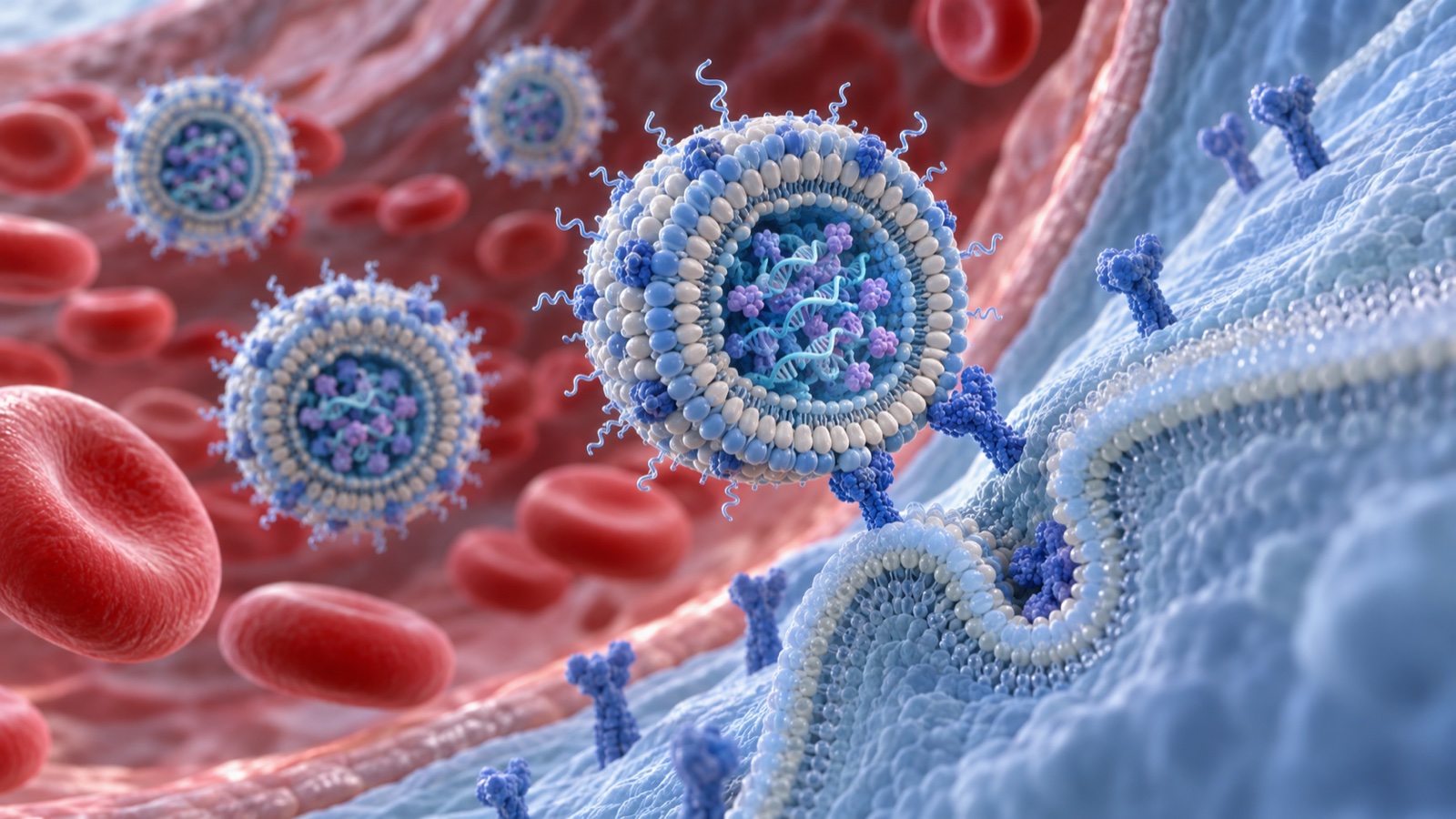
DDS controls where drugs travel and how they are released. The 0.7% median from an animal-study review highlights a delivery constraint, while approved formulations demonstrate the importance of carrier materials.
Drug Delivery Systems and Targeting — Materials, Surfaces and Delivery Limits
Based on regulatory documents and peer-reviewed primary sources / text-source review: September 2026 / illustration and English editorial revision: October 2026.
- What is DDS?
- Four nanocarrier classes
- Passive targeting and EPR: the 1986 report
- The EPR debate: relevance to human tumors
- Author calculations: interpreting 0.7%
- Materials viewpoint: surfaces and clearance
- Active targeting: accumulation versus uptake
- Small ligand–drug conjugates
- Release control and payload state
- Carrier-to-drug mass ratios
- Materials viewpoint: requirements for generic liposomes
- Challenges and unresolved questions
- Glossary / references / source audit
Facts are statements in cited publications. Author calculations use explicitly stated assumptions. Unresolved/future items have not been confirmed as established outcomes. Interpretations are this article’s organization and reading of materials and process design, not statements by the cited authors. Source fact Author calculation Unresolved / future
This is an explanation of materials and formulation technology, not an assessment or comparison of treatment efficacy or safety, and not medical advice. Product composition and approval dates are taken from regulatory documents. Animal-study findings must not be treated as human outcomes.
1. What is DDS?
- DDS changes distribution and release by encapsulating, conjugating or embedding a drug. It is a delivery technology, distinct from the drug modality, and can be used with different modalities.
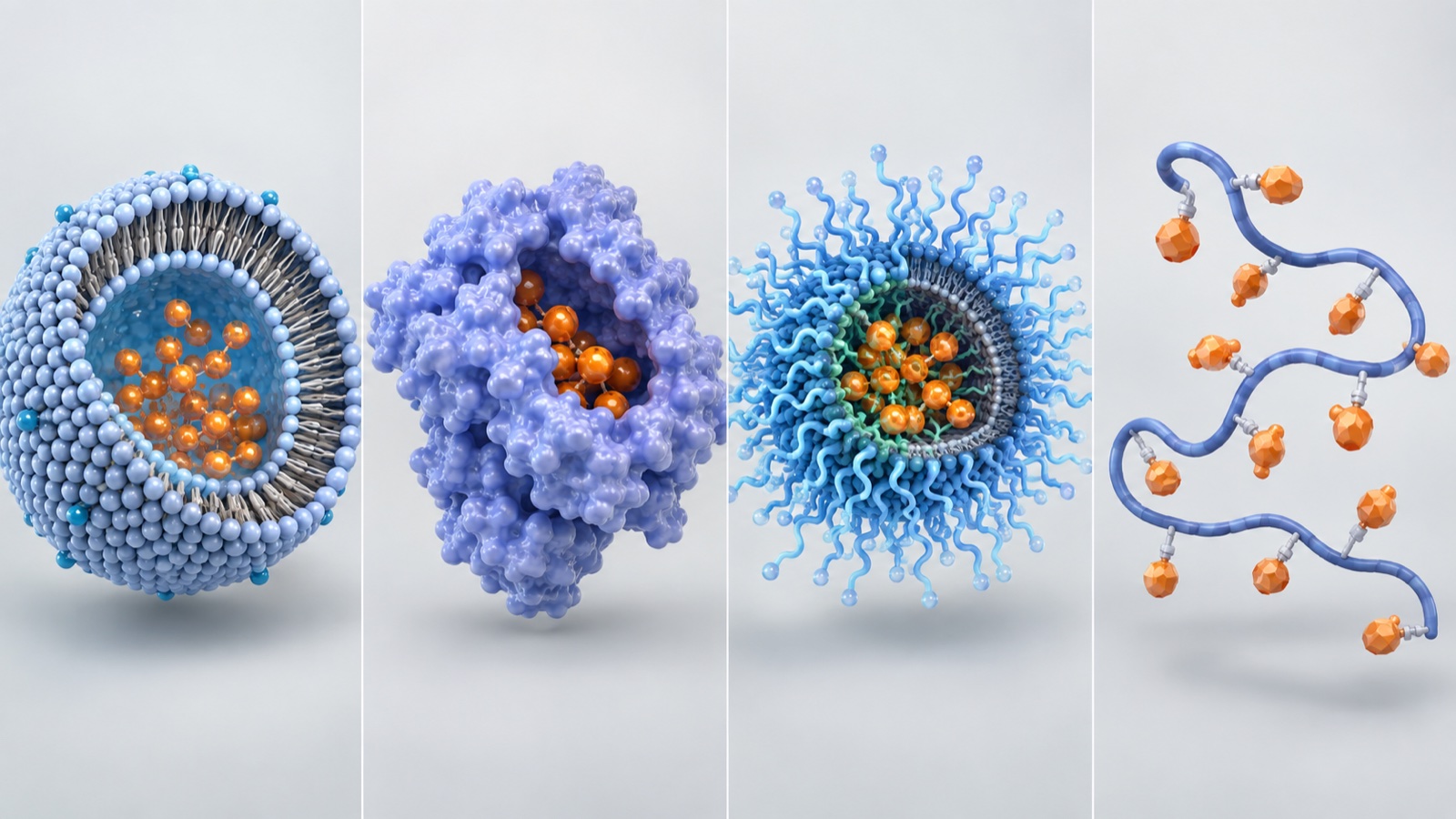
- Duncan describes polymer therapeutics in the 5–100 nm range: polymer–drug conjugates, polymer–protein conjugates, micelles with covalently bound drugs, and DNA-delivery polyplexes. Liposomes and albumin particles are additional carrier classes.
- Wilhelm et al. found a median of 0.7% of the administered nanoparticle dose reaching solid tumors in a review of ten years of preclinical studies. Delivery to the intended site is a major constraint. Source fact
Targeting does not automatically mean greater nanoparticle accumulation in the target tissue. Animal studies report that ligand attachment changed cancer-cell uptake without substantially changing total tumor accumulation. Separately, calculations from the compositions of approved products give carrier-material masses about 2–9 times the drug mass. This article interprets these observations as evidence that carrier design and manufacture matter alongside the drug itself. Source fact Author calculation
2. Four nanocarrier classes
Nanocarriers have several different structures. Rosenblum et al. list clinical examples of passive targeting: Doxil, Abraxane, Marqibo, DaunoXome and Onivyde in the United States; Myocet and Mepact in Europe; Genexol-PM in Korea; and SMANCS in Japan. These are examples discussed in their 2018 paper, not a newly verified comprehensive approval list. Source fact
View the original schematic and source annotations
Figure 1. Original vector schematic. Product examples: Rosenblum (2018) [3]; compositions: FDA labels [16–20]; carrier classifications: Duncan (2003) [12] and Cabral (2018) [13]. The four classes are organized here for explanation, not an exhaustive taxonomy. Molecular shapes, sizes and payload positions are schematic.
| Type | FDA-approved example | Composition in the label | Initial U.S. approval |
|---|---|---|---|
| PEGylated liposome | DOXIL (doxorubicin hydrochloride) | STEALTH liposomes: cholesterol 3.19 mg/mL, HSPC 9.58 mg/mL, MPEG-DSPE 3.19 mg/mL. More than 90% of drug is encapsulated. | November 17, 1995 |
| PEGylated liposome | ONIVYDE (irinotecan) | Approximately 110 nm unilamellar liposomes: DSPC 6.81 mg/mL, cholesterol 2.22 mg/mL, MPEG-2000-DSPE 0.12 mg/mL. Irinotecan sucrose-octasulfate salt forms a gel or precipitate. | October 22, 2015 |
| Two-drug liposome | VYXEOS (daunorubicin/cytarabine) | Drug molar ratio 1:5; DSPC/DSPG/cholesterol molar ratio 7:2:1. Per vial: lipid 618 mg, copper gluconate 100 mg and sucrose 2,054 mg. | 2017 |
| Albumin-bound particles | ABRAXANE (paclitaxel) | Mean size approximately 130 nm; amorphous paclitaxel. Per vial: paclitaxel 100 mg and approximately 900 mg human albumin. Solvent-free formulation. | 2005 |
| Polymer–protein conjugate | ONCASPAR (pegaspargase) | Four 34.5 kDa enzyme subunits with 69–82 mPEG chains of approximately 5 kDa. | 1994 |
Sources: FDA labels [References 16–20], Drugs@FDA [References 24 and 26], and Initial U.S. Approval dates in the labels. Anselmo and Mitragotri describe VYXEOS as a 100 nm bilamellar liposome [Reference 15]. The table concerns formulation composition, not efficacy or clinical outcomes. Source fact
Cabral et al. describe polymeric micelles assembled from block copolymers through multicomponent interactions with drugs, proteins and nucleic acids. Interaction types and block-copolymer chemistry are central to design. The materials-engineering interpretation here is that self-assembly is used to incorporate the payload. Source fact
3. Passive targeting and EPR: the 1986 report
The idea of tumor nanocarriers has roots in Japanese research. Yasuhiro Matsumura and Hiroshi Maeda reported their findings in Cancer Research in 1986. Source fact
The initial observation was that SMANCS, a polymer conjugate of the anticancer protein neocarzinostatin, accumulated in tumor tissue more than the unmodified protein. Radiolabeled proteins with molecular weights of 12,000–160,000 were examined; many accumulated progressively, reaching tumor-to-blood concentration ratios of 5 within 19–72 hours. Source fact
By contrast, neocarzinostatin, a small protein with a molecular weight of 12,000, did not reach tumor-to-blood ratios of either 1 or 5. Source fact
The authors proposed abundant tumor vasculature, increased permeability to macromolecules, and limited retrieval through blood vessels and lymphatics as contributing factors. Source fact
This is the enhanced permeability and retention (EPR) effect. Rosenblum et al. attribute the original 1986 description to Matsumura and Maeda. Preferential retention of larger conjugates provided a rationale for passive targeting with nanocarriers. Source fact
Larger is not always better. Very small constructs may undergo renal clearance, while larger ones face other transport and clearance constraints.
At the small-size end, Choi et al. reported rapid urinary elimination of quantum dots with final hydrodynamic diameters below 5.5 nm in rodents. Zwitterionic or neutral coatings prevented serum-protein adsorption; adsorption increased hydrodynamic size beyond 15 nm and prevented renal clearance. Surface-bound proteins can therefore change the effective size seen in the body. Source fact
Charrois and Allen compared 82, 101, 154 and 241 nm liposomes in mice. The three smaller sizes showed similar tumor accumulation, each significantly higher than the 241 nm particles. Source fact
4. The EPR debate: relevance to human tumors
The EPR effect underpinned nanomedicine design for decades, but papers since the late 2010s have questioned its implications. The following comparison presents different published positions rather than declaring one side the winner.
| Publication | Reported argument / findings | Position summarized by this article |
|---|---|---|
| Wilhelm et al. (2016) | Median solid-tumor delivery was 0.7% of injected nanoparticle dose in a ten-year preclinical review, with implications for manufacture, cost, toxicity, imaging and therapeutic outcomes. | Highlights low delivery |
| Danhier (2016) | Argues that EPR observed in rodents does not translate effectively to human tumors and that improved efficacy should not simply be attributed to EPR. | Critical of EPR-based translation |
| Rosenblum et al. (2018) | Despite low absolute delivery, discusses relative advantage over conventional drugs; one preclinical paclitaxel example is 0.6%ID for a nanocarrier versus 0.2%ID for free drug. | Potential relative advantage despite low absolute values |
| Sindhwani et al. (2020) | Reports that endothelial gaps, previously described up to 2,000 nm, did not explain transport; up to 97% entered via active endothelial-cell processes in the studied models. | Questions the gap-leakage mechanism |
Sources: Wilhelm et al. [Reference 2], Danhier [4], Rosenblum et al. [3], and Sindhwani et al. [5]. The position column is this article’s summary, not an outcome directly measured by all four authors. Source fact
Rosenblum et al. discuss PET/CT imaging of copper-64-labeled liposomes in 19 patients with HER2-positive metastatic breast cancer. Uptake peaked at 24–48 hours, with potential stratification by accumulation. Their review also describes animal studies showing heterogeneity within and between tumors. Source fact
The disagreement concerns reproducibility and applicability across tumors, not merely whether accumulation can occur. Patient-to-patient variation motivates discussion of imaging-based selection. The analogy with a coating whose adhesion depends on the substrate is this article’s interpretation.
5. Author calculations: interpreting 0.7%
The following arithmetic uses published values with stated assumptions; the resulting ratios are author calculations. Author calculation
- Assumption: 0.7% median tumor delivery in Wilhelm et al.’s animal-study review. Source fact
- Outside the tumor: 100 − 0.7 = 99.3%.
- Outside/tumor ratio: 99.3 ÷ 0.7 ≈ 142.
- One preclinical relative-delivery example: 0.6% ÷ 0.2% = 3.
Limitations: 0.7% is a median from animal studies, mainly mice, not a human delivery value. The fraction outside the tumor includes liver and spleen uptake, renal elimination and material still circulating; the arithmetic does not separate these destinations. The threefold ratio comes from one specific preclinical comparison.
6. Materials viewpoint: surfaces and clearance
Rosenblum et al. discuss removal by the mononuclear phagocyte system (MPS), trapping in liver sinusoids, and uptake by hepatocytes and Kupffer cells. Adsorbed serum proteins and opsonins form a protein corona that can influence targeting. Source fact
The interpretation here is that cells encounter the adsorbed protein layer rather than only the engineered bare particle surface. Choi et al. showed that protein adsorption can increase hydrodynamic size beyond 15 nm, while zwitterionic or neutral coatings can prevent it. Surface chemistry is therefore a design variable. Source fact
PEG surface modification is familiar to materials engineers. FDA doxorubicin-liposome guidance describes an MPEG coating that protects liposomes from MPS clearance and prolongs circulation. It estimates a thermodynamically limited PEG-layer thickness of a few nanometers. Source fact
A nanometer-scale polymer brush can affect distribution in the body. The analogy with dispersion stabilizers and antifouling coatings is this article’s interpretation; the evaluation environment here contains thousands of plasma proteins rather than a simple contaminant.
7. Active targeting: accumulation versus uptake
Active targeting attaches affinity ligands to a carrier to promote local accumulation, retention or uptake by selected cells. Rosenblum et al. discuss targets including HER2, folate receptors and CD44. Source fact
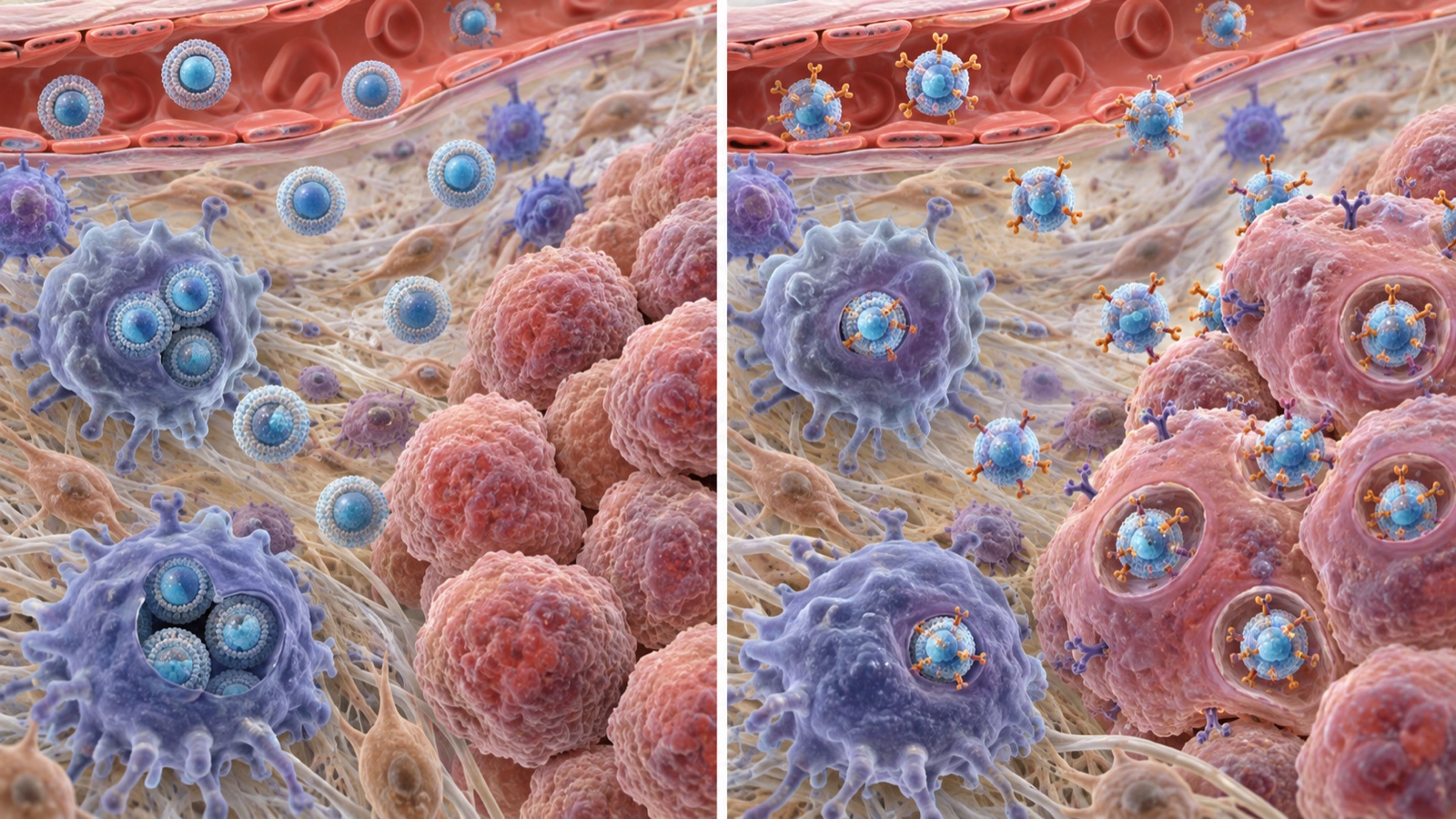
The same review stresses that an actively targeted carrier must first reach the target site: effective passive delivery remains a prerequisite. A ligand does not pull a particle through the body to the tumor. The next two studies illustrate this distinction. Source fact
| Study | Comparison | Tumor accumulation | Cellular distribution and uptake |
|---|---|---|---|
| Kirpotin et al. (2006) | PEG-terminal anti-HER2 Fab′/scFv liposomes versus untargeted liposomes in HER2-overexpressing human breast-cancer xenograft mice. | Both 7–8%ID/g; antibody attachment did not change overall biodistribution or prolonged circulation. | Targeted particles entered cancer cells; untargeted particles remained mainly in stroma/macrophages. Cancer-cell uptake up to sixfold higher. |
| Moreira et al. (2001) | Antagonist-G peptide-bearing stealth liposomes versus untargeted liposomes in human small-cell-lung-cancer xenograft mice. | Size-dependent, not ligand-dependent; up to 2–4%ID/g. | Binding to tumor-derived cells increased 30–44-fold. |
Sources: Kirpotin et al. [Reference 6] and Moreira et al. [7]. Both used mouse models. %ID/g denotes the percentage of injected dose per gram of tissue. Source fact
View the original schematic and source annotations
Figure 4. Original vector schematic of Kirpotin (2006) [6]. Tumor accumulation, distribution and uptake values are from mouse experiments. Particle counts and positions are illustrative; the concluding interpretation is this article’s. These findings do not establish identical behavior in humans.
In their 2018 review, Rosenblum et al. reported 15 approved passive-targeting nanocarriers, while active-targeting carriers had not progressed beyond clinical trials. Two Phase II trials of the PSMA-targeted docetaxel nanoparticle BIND-014 missed their primary endpoints. The review discusses tumor penetration, heterogeneity, hypoxia and endosomal escape, along with regulatory and manufacturing-scale-up complexity. This is a dated report, not a claim about the complete approval landscape in 2026. Source fact
Moreira et al. studied post-insertion of peptide ligands from PEG-lipid micelles into preformed liposomes. Up to about 0.3 µg ligand per µmol phospholipid produced cytotoxicity similar to conventional conjugation. The paper stresses scalable manufacture for clinical application. Separating particle formation from ligand attachment is the process-engineering question highlighted here. Source fact
8. Small ligand–drug conjugates
Ligand targeting has not universally failed. Approved products also exist in which the ligand is conjugated directly to a drug rather than attached to a nanoparticle.
| Product | Targeting component | Payload / conjugation | Initial U.S. approval |
|---|---|---|---|
| GIVLAARI (givosiran) | Three N-acetylgalactosamine (GalNAc) residues target hepatocytes. | Covalently conjugated siRNA. | 2019 |
| PLUVICTO (lutetium Lu 177 vipivotide tetraxetan) | PSMA-binding ligand. | Lutetium-177 radiolabeled through a chelator; whole-compound molecular weight approximately 1,216. | 2022 |
| Antibody–drug conjugate (ADC) | Antibody. | Drug linked to an antibody; see the separate ADC article. | See the ADC article. |
GIVLAARI and PLUVICTO data come from FDA labels [References 22 and 23], including Initial U.S. Approval dates. The table does not compare clinical efficacy. GalNAc nucleic-acid medicines are discussed separately in this series. Source fact
The animal studies above distinguish delivery of the particle to a tumor from ligand-mediated uptake after arrival. A smaller carrier or conjugate may have a different distribution regime; GalNAc-siRNA, around 16 kDa, is unlike a 100 nm liposome. However, no direct primary-source comparison establishing why one approach succeeded clinically was found in this article’s survey. This is an interpretation of separate observations, not causal proof. Source fact
9. Release control and payload state
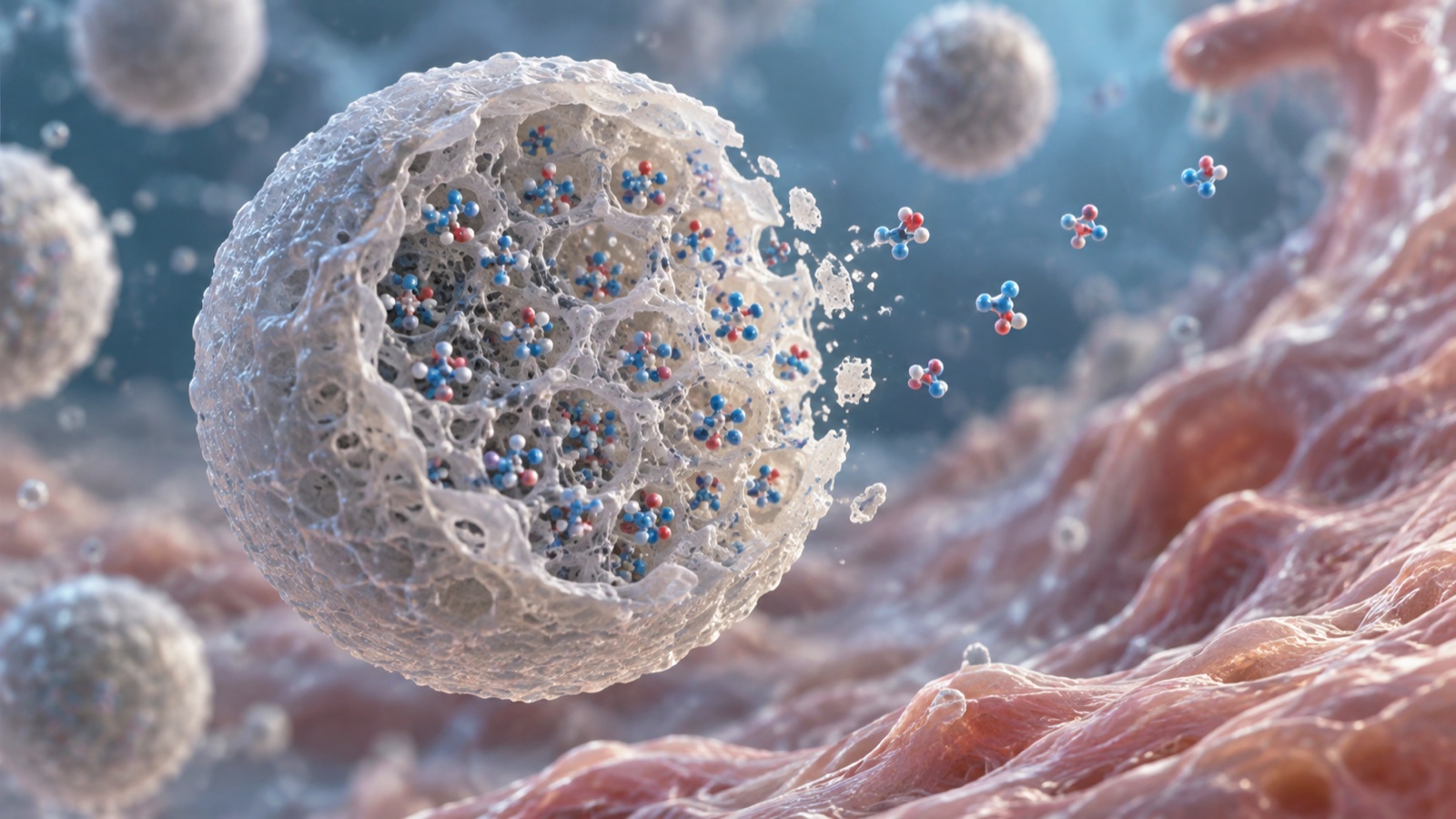
Release control is another pillar of DDS. Regulatory labels and papers show that the physical state of an encapsulated drug varies substantially among formulations.
(1) Crystals and salts in liposomes
Barenholz organizes DOXIL around three independent principles: Source fact
- PEGylated nanoliposomes prolong circulation and reduce reticuloendothelial-system clearance.
- An ammonium-sulfate gradient drives remote loading, stable doxorubicin retention and subsequent release.
- High-transition-temperature phosphatidylcholine (53°C) with cholesterol produces a liquid-ordered lipid bilayer.
FDA guidance describes doxorubicin-sulfate crystals inside liposomes. ONIVYDE contains irinotecan as sucrose-octasulfate salt in a gel or precipitated state. The interpretation here is that controlling a solid-like internal state can limit leakage and influence release. Source fact
(2) Embedding in biodegradable microspheres
LUPRON DEPOT 3.75 mg is a lyophilized microsphere powder containing leuprolide acetate 3.75 mg, purified gelatin 0.65 mg, PLGA 33.1 mg and D-mannitol 6.6 mg. It is a monthly formulation. Drugs@FDA records approval of NDA 019732 on January 26, 1989. Source fact
Fredenberg et al. describe PLGA as the most widely used biodegradable polymer for controlled release of encapsulated drugs. Its release mechanisms are complex, making generalization and prediction difficult. Source fact
(3) Conjugation changes molecular size
ONCASPAR conjugates an enzyme with 69–82 mPEG chains of approximately 5 kDa. Increasing macromolecular size to alter clearance is the interpretation here. SMANCS is also a polymer–protein conjugate. Source fact
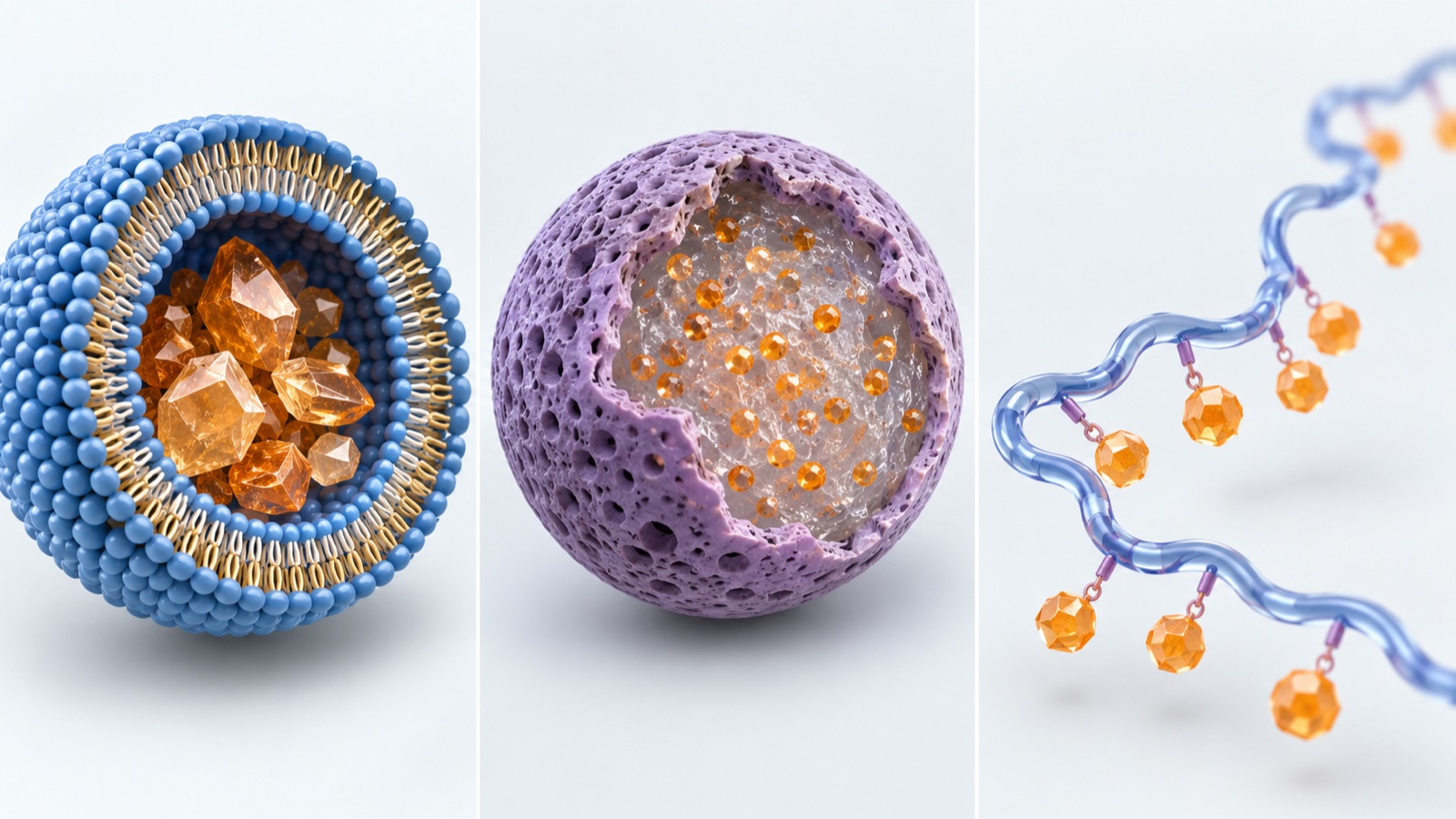
View the original schematic and source annotations
Figure 6. Original vector schematic. Vesicle loading: Barenholz (2012) [11], FDA guidance [28] and ONIVYDE label [17]; polymer microspheres: LUPRON DEPOT label [21] and Fredenberg (2011) [14]; conjugates: ONCASPAR label [20] and Matsumura and Maeda (1986) [1]. The three explanatory classes do not show actual dimensions or molecular structures.
10. Carrier-to-drug mass ratios
- DOXIL per mL: doxorubicin hydrochloride 2 mg; cholesterol 3.19 mg; HSPC 9.58 mg; MPEG-DSPE 3.19 mg; sucrose 94 mg. Source fact
- ONIVYDE per mL: irinotecan free base 4.3 mg; DSPC 6.81 mg; cholesterol 2.22 mg; MPEG-2000-DSPE 0.12 mg. Source fact
- VYXEOS per vial: daunorubicin 44 mg; cytarabine 100 mg; DSPC 454 mg; DSPG 132 mg; cholesterol 32 mg; sucrose 2,054 mg. Source fact
- ABRAXANE per vial: paclitaxel 100 mg and approximately 900 mg human albumin. Source fact
- LUPRON DEPOT 3.75 mg: leuprolide acetate 3.75 mg and PLGA 33.1 mg. Source fact
- ONCASPAR: four 34.5 kDa enzyme subunits conjugated with 69–82 mPEG chains of approximately 5 kDa. Source fact
The following calculations compare carrier-material mass with drug mass using the published compositions. Author calculation
- DOXIL: total lipid 3.19 + 9.58 + 3.19 = 15.96 mg; lipid/drug ≈ 8.0; PEG lipid 3.19 ÷ 15.96 ≈ 20% of lipid mass.
- ONIVYDE: total lipid 6.81 + 2.22 + 0.12 = 9.15 mg; lipid/drug ≈ 2.1; PEG lipid 0.12 ÷ 9.15 ≈ 1.3% of lipid mass.
- VYXEOS: lipid 454 + 132 + 32 = 618 mg; drugs 44 + 100 = 144 mg; lipid/drug ≈ 4.3.
- ABRAXANE: 900 ÷ 100 ≈ 9 (albumin/paclitaxel).
- LUPRON DEPOT: 33.1 ÷ 3.75 ≈ 8.8 (PLGA/drug).
- ONCASPAR: enzyme 34.5 × 4 = 138 kDa; PEG 5 × (69–82) = 345–410 kDa. PEG contributes approximately 71–75% of conjugate mass.
Limitations: DOXIL uses a hydrochloride-salt mass, whereas ONIVYDE uses free-base mass; these bases are not normalized. ABRAXANE’s approximately 900 mg albumin is a label approximation that includes sodium caprylate and sodium acetyltryptophanate. ONCASPAR estimates simply add enzyme-subunit and mPEG molecular weights. These are materials-composition comparisons, not comparisons of efficacy or safety.
11. Materials viewpoint: requirements for generic liposomes
Drugs@FDA records DOXIL (NDA 050718) approval on November 17, 1995, and the first generic, Sun Pharma ANDA 203263, on February 4, 2013. The interval is approximately 17 years and two months, calculated here. Barenholz’s 2012 review noted the absence of a generic two years after relevant patent expiry. Source fact Author calculation
FDA’s product-specific doxorubicin-liposome guidance, revised as a draft in May 2022, sets out material and process requirements for subsequent products. These requirements help explain the engineering challenge but do not establish the cause of the approval interval. Source fact
- Composition: qualitatively the same excipients (Q1), with concentrations within ±5% (Q2).
- Process: ammonium-sulfate-gradient active loading; liposome formation with ammonium sulfate, size reduction, gradient formation, then active drug loading.
- Lipid raw materials: match the reference product’s natural/synthetic route category and compare molecular-species distributions, not only specification compliance.
- Properties: composition, doxorubicin-sulfate crystal state, internal volume/pH/ion concentrations, morphology and lamellarity, bilayer phase transitions, size distribution, PEG-layer thickness, surface potential and leakage under multiple conditions.
- Size distribution: measure D10, D50 and D90; compare D50 and SPAN = (D90−D10)/D50 using at least 30 vials of each product.
Matching the ingredient list is not enough: internal structure and interfaces also matter. Crystal state, bilayer phase behavior, PEG-layer thickness and size distribution depend on processing. The guidance recommends identifying critical process parameters and material attributes by assessing liposome-property sensitivity. Source fact
For lipid suppliers, the comparison can extend to molecular-species distributions and whether raw materials arise from natural or synthetic routes. This materials interpretation connects with the separate discussion of equivalence in the biosimilars article.
12. Challenges and unresolved questions
(1) Unresolved EPR implications
The significance of EPR remains debated. Sindhwani et al. suggest that understanding active transport through endothelial cells could open delivery strategies. This article’s September 2026 survey did not confirm a clinical product exploiting that pathway; this remains unresolved here. Source fact Unresolved / future
(2) Clinical value of particle-bound ligands
Rosenblum et al.’s statement about active-targeting approval was made in 2018. This article did not comprehensively verify whether such nanocarriers had subsequently received FDA approval as of September 2026; current approval status is unresolved, not evidence of nonapproval. Source fact Unresolved / future
(3) Imaging-based patient selection
Rosenblum et al. discuss imaging-based patient selection. This article’s survey did not confirm primary evidence that the approach had become a standard clinical procedure. Source fact Unresolved / future
- DDS is delivery engineering. Liposomes, albumin particles, polymeric micelles and polymer conjugates include clinical-product examples. Source fact
- EPR was reported in 1986; tumor/blood protein concentration ratios reached 5 in 19–72 hours in the reported experiments. Source fact
- Median nanoparticle tumor delivery was 0.7% in the animal-study review; the outside/tumor ratio is approximately 142 by author calculation. Author calculation
- Mouse studies distinguish ligand-mediated cellular uptake from total tumor accumulation. Source fact
- Calculated carrier/drug mass ratios in the examples are approximately 2–9. Author calculation
- Subsequent liposomal products must address internal structure and interfaces, not only ingredients. The first DOXIL generic approval came approximately 17 years and two months later. Author calculation
13. Glossary
- DDS
- Drug delivery systems: control of drug distribution and release.
- Nanocarrier
- Nanoscale particle or macromolecule that encapsulates or conjugates a payload.
- Liposome
- A lipid-bilayer vesicle with an aqueous interior and membrane that can carry drugs.
- Polymeric micelle
- A self-assembled block-copolymer particle with core and shell.
- Polymer conjugate
- Drug or protein covalently attached to a polymer chain.
- Passive targeting
- Distribution influenced by carrier size and surface properties.
- Active targeting
- Ligand-mediated binding or uptake by cells bearing a selected receptor.
- EPR effect
- Enhanced permeability and retention of macromolecules or particles in tumors; reported by Matsumura and Maeda in 1986.
- Ligand
- A selectively binding component, such as an antibody, peptide or sugar.
- Protein corona
- Adsorbed protein layer that changes a particle’s effective biological properties.
- MPS
- Mononuclear phagocyte system involved in removal of foreign material, including in liver and spleen.
- PEGylation
- Attachment of polyethylene glycol to alter aggregation and clearance.
- %ID/g
- Percentage of injected dose per gram of tissue.
- Remote loading
- Loading into preformed liposomes driven by an ion gradient across the membrane.
- PLGA
- Biodegradable copolymer of lactic and glycolic acids used for controlled release.
- Q1/Q2
- In this guidance, qualitatively matched excipients and concentrations within ±5%.
- SPAN
- Distribution-width metric: (D90−D10)/D50.
14. Primary references
- Matsumura, Y., Maeda, H.“A new concept for macromolecular therapeutics in cancer chemotherapy: mechanism of tumoritropic accumulation of proteins and the antitumor agent smancs”Cancer Research 46(12 Pt 1), 6387–6392 (1986). PMID 2946403 — pubmed.ncbi.nlm.nih.gov
- Wilhelm, S. et al.“Analysis of nanoparticle delivery to tumours”Nature Reviews Materials 1, 16014 (2016). doi:10.1038/natrevmats.2016.14 — nature.com
- Rosenblum, D., Joshi, N., Tao, W., Karp, J.M., Peer, D.“Progress and challenges towards targeted delivery of cancer therapeutics”Nature Communications 9, 1410 (2018). doi:10.1038/s41467-018-03705-y — nature.com
- Danhier, F.“To exploit the tumor microenvironment: Since the EPR effect fails in the clinic, what is the future of nanomedicine?”Journal of Controlled Release 244(Pt A), 108–121 (2016). doi:10.1016/j.jconrel.2016.11.015 — pubmed.ncbi.nlm.nih.gov
- Sindhwani, S. et al.“The entry of nanoparticles into solid tumours”Nature Materials 19(5), 566–575 (2020). doi:10.1038/s41563-019-0566-2 — pubmed.ncbi.nlm.nih.gov
- Kirpotin, D.B. et al.“Antibody targeting of long-circulating lipidic nanoparticles does not increase tumor localization but does increase internalization in animal models”Cancer Research 66(13), 6732–6740 (2006). doi:10.1158/0008-5472.CAN-05-4199 — pubmed.ncbi.nlm.nih.gov
- Moreira, J.N., Gaspar, R., Allen, T.M.“Targeting Stealth liposomes in a murine model of human small cell lung cancer”Biochimica et Biophysica Acta 1515(2), 167–176 (2001). doi:10.1016/s0005-2736(01)00411-4 — pubmed.ncbi.nlm.nih.gov
- Moreira, J.N., Ishida, T., Gaspar, R., Allen, T.M.“Use of the post-insertion technique to insert peptide ligands into pre-formed stealth liposomes with retention of binding activity and cytotoxicity”Pharmaceutical Research 19(3), 265–269 (2002). doi:10.1023/a:1014434732752 — pubmed.ncbi.nlm.nih.gov
- Choi, H.S. et al.“Renal clearance of quantum dots”Nature Biotechnology 25(10), 1165–1170 (2007). doi:10.1038/nbt1340 — pubmed.ncbi.nlm.nih.gov
- Charrois, G.J., Allen, T.M.“Rate of biodistribution of STEALTH liposomes to tumor and skin: influence of liposome diameter and implications for toxicity and therapeutic activity”Biochimica et Biophysica Acta 1609(1), 102–108 (2003). doi:10.1016/s0005-2736(02)00661-2 — pubmed.ncbi.nlm.nih.gov
- Barenholz, Y.“Doxil® — The first FDA-approved nano-drug: Lessons learned”Journal of Controlled Release 160(2), 117–134 (2012). doi:10.1016/j.jconrel.2012.03.020 — pubmed.ncbi.nlm.nih.gov
- Duncan, R.“The dawning era of polymer therapeutics”Nature Reviews Drug Discovery 2(5), 347–360 (2003). doi:10.1038/nrd1088 — pubmed.ncbi.nlm.nih.gov
- Cabral, H., Miyata, K., Osada, K., Kataoka, K.“Block Copolymer Micelles in Nanomedicine Applications”Chemical Reviews 118(14), 6844–6892 (2018). doi:10.1021/acs.chemrev.8b00199 — pubmed.ncbi.nlm.nih.gov
- Fredenberg, S., Wahlgren, M., Reslow, M., Axelsson, A.“The mechanisms of drug release in poly(lactic-co-glycolic acid)-based drug delivery systems — a review”International Journal of Pharmaceutics 415(1-2), 34–52 (2011). doi:10.1016/j.ijpharm.2011.05.049 — pubmed.ncbi.nlm.nih.gov
- Anselmo, A.C., Mitragotri, S.“Nanoparticles in the clinic: An update”Bioengineering & Translational Medicine 4(3), e10143 (2019). doi:10.1002/btm2.10143 — pmc.ncbi.nlm.nih.gov
- FDA/NLM DailyMed“DOXIL (doxorubicin hydrochloride liposome injection) prescribing information” — dailymed.nlm.nih.gov
- FDA/NLM DailyMed“ONIVYDE (irinotecan liposome injection) prescribing information” — dailymed.nlm.nih.gov
- FDA/NLM DailyMed“ABRAXANE (paclitaxel protein-bound particles) prescribing information” — dailymed.nlm.nih.gov
- FDA/NLM DailyMed“VYXEOS (daunorubicin and cytarabine liposome) prescribing information” — dailymed.nlm.nih.gov
- FDA/NLM DailyMed“ONCASPAR (pegaspargase) prescribing information” — dailymed.nlm.nih.gov
- FDA/NLM DailyMed“LUPRON DEPOT 3.75 mg (leuprolide acetate for depot suspension) prescribing information” — dailymed.nlm.nih.gov
- FDA/NLM DailyMed“GIVLAARI (givosiran) prescribing information” — dailymed.nlm.nih.gov
- FDA/NLM DailyMed“PLUVICTO (lutetium Lu 177 vipivotide tetraxetan) prescribing information” — dailymed.nlm.nih.gov
- FDA Drugs@FDA“NDA 050718 DOXIL (LIPOSOMAL)”approval history — accessdata.fda.gov
- FDA Drugs@FDA“ANDA 203263 Doxorubicin Hydrochloride (liposomal), Sun Pharma”approval history — accessdata.fda.gov
- FDA Drugs@FDA“NDA 207793 ONIVYDE”approval history — accessdata.fda.gov
- FDA Drugs@FDA“NDA 019732 LUPRON DEPOT”approval history — accessdata.fda.gov
- FDA“Draft Guidance on Doxorubicin Hydrochloride(Injectable, liposomal)”product-specific draft guidance, revised May 2022(PDF) — accessdata.fda.gov
15. Claim–source correspondence (audit)
| Claim in this article | Evidence / limitations | Classification |
|---|---|---|
| The initial observation was that SMANCS, a polymer conjugate of the anticancer protein neocarzinostatin, accumulated in tumor tissue more than the unmodified protein. Radiolabeled proteins with molecular weights of 12,000–160,000 were examined; many accumulated progressively, reaching tumor-to-blood concentration ratios of 5 within 19–72 hours. By contrast, neocarzinostatin, a small protein with a molecular weight of 12,000, did not reach tumor-to-blood ratios of either 1 or 5. The authors proposed abundant tumor vasculature, increased permeability to macromolecules, and limited retrieval through blood vessels and lymphatics as contributing factors. | Matsumura and Maeda (1986) [Reference 1] https://pubmed.ncbi.nlm.nih.gov/2946403/ | Source fact Source fact |
| Wilhelm et al. found a median of 0.7% of the administered nanoparticle dose reaching solid tumors in a review of ten years of preclinical studies. Delivery to the intended site is a major constraint. The review discusses implications for manufacture, cost, toxicity, imaging and therapy. | Wilhelm et al. (2016) [Reference 2] https://www.nature.com/articles/natrevmats201614 | Source fact Source fact |
| Nanocarriers have several different structures. Rosenblum et al. list clinical examples of passive targeting: Doxil, Abraxane, Marqibo, DaunoXome and Onivyde in the United States; Myocet and Mepact in Europe; Genexol-PM in Korea; and SMANCS in Japan. These are examples discussed in their 2018 paper, not a newly verified comprehensive approval list. This is the enhanced permeability and retention (EPR) effect. Rosenblum et al. attribute the original 1986 description to Matsumura and Maeda. Preferential retention of larger conjugates provided a rationale for passive targeting with nanocarriers. Rosenblum et al. discuss PET/CT imaging of copper-64-labeled liposomes in 19 patients with HER2-positive metastatic breast cancer. Uptake peaked at 24–48 hours, with potential stratification by accumulation. Their review also describes animal studies showing heterogeneity within and between tumors. Rosenblum et al. discuss removal by the mononuclear phagocyte system (MPS), trapping in liver sinusoids, and uptake by hepatocytes and Kupffer cells. Adsorbed serum proteins and opsonins form a protein corona that can influence targeting. Active targeting attaches affinity ligands to a carrier to promote local accumulation, retention or uptake by selected cells. Rosenblum et al. discuss targets including HER2, folate receptors and CD44. The same review stresses that an actively targeted carrier must first reach the target site: effective passive delivery remains a prerequisite. A ligand does not pull a particle through the body to the tumor. The next two studies illustrate this distinction. In their 2018 review, Rosenblum et al. reported 15 approved passive-targeting nanocarriers, while active-targeting carriers had not progressed beyond clinical trials. Two Phase II trials of the PSMA-targeted docetaxel nanoparticle BIND-014 missed their primary endpoints. The review discusses tumor penetration, heterogeneity, hypoxia and endosomal escape, along with regulatory and manufacturing-scale-up complexity. This is a dated report, not a claim about the complete approval landscape in 2026. Rosenblum et al. discuss imaging-based patient selection. This article’s survey did not confirm primary evidence that the approach had become a standard clinical procedure. The review contrasts 0.6%ID nanocarrier with 0.2%ID free-drug delivery in one preclinical example and discusses heterogeneous accumulation. | Rosenblum et al. (2018) [Reference 3] https://www.nature.com/articles/s41467-018-03705-y | Source fact Source fact |
| Argues that EPR observed in rodents does not translate effectively to human tumors and that improved efficacy should not simply be attributed to EPR. | Danhier (2016) [Reference 4] https://pubmed.ncbi.nlm.nih.gov/27871992/ | Source fact Source fact |
| Reports that endothelial gaps, previously described up to 2,000 nm, did not explain transport; up to 97% entered via active endothelial-cell processes in the studied models. | Sindhwani et al. (2020) [Reference 5] https://pubmed.ncbi.nlm.nih.gov/31932672/ | Source fact Source fact |
| PEG-terminal anti-HER2 Fab′/scFv liposomes versus untargeted liposomes in HER2-overexpressing human breast-cancer xenograft mice. Both 7–8%ID/g; antibody attachment did not change overall biodistribution or prolonged circulation. Targeted particles entered cancer cells; untargeted particles remained mainly in stroma/macrophages. Cancer-cell uptake up to sixfold higher. | Kirpotin et al. (2006) [Reference 6] https://pubmed.ncbi.nlm.nih.gov/16818648/ | Source fact Source fact |
| Antagonist-G peptide-bearing stealth liposomes versus untargeted liposomes in human small-cell-lung-cancer xenograft mice. Size-dependent, not ligand-dependent; up to 2–4%ID/g. Binding to tumor-derived cells increased 30–44-fold. | Moreira et al. (2001) [Reference 7] https://pubmed.ncbi.nlm.nih.gov/11718672/ | Source fact Source fact |
| Moreira et al. studied post-insertion of peptide ligands from PEG-lipid micelles into preformed liposomes. Up to about 0.3 µg ligand per µmol phospholipid produced cytotoxicity similar to conventional conjugation. The paper stresses scalable manufacture for clinical application. Separating particle formation from ligand attachment is the process-engineering question highlighted here. | Moreira et al. (2002) [Reference 8] https://pubmed.ncbi.nlm.nih.gov/11934232/ | Source fact Source fact |
| At the small-size end, Choi et al. reported rapid urinary elimination of quantum dots with final hydrodynamic diameters below 5.5 nm in rodents. Zwitterionic or neutral coatings prevented serum-protein adsorption; adsorption increased hydrodynamic size beyond 15 nm and prevented renal clearance. Surface-bound proteins can therefore change the effective size seen in the body. | Choi et al. (2007) [Reference 9] https://pubmed.ncbi.nlm.nih.gov/17891134/ | Source fact Source fact |
| Charrois and Allen compared 82, 101, 154 and 241 nm liposomes in mice. The three smaller sizes showed similar tumor accumulation, each significantly higher than the 241 nm particles. | Charrois and Allen (2003) [Reference 10] https://pubmed.ncbi.nlm.nih.gov/12507764/ | Source fact Source fact |
| Barenholz organizes DOXIL around three independent principles: PEGylated nanoliposomes prolong circulation and reduce reticuloendothelial-system clearance. An ammonium-sulfate gradient drives remote loading, stable doxorubicin retention and subsequent release. High-transition-temperature phosphatidylcholine (53°C) with cholesterol produces a liquid-ordered lipid bilayer. | Barenholz (2012) [Reference 11] https://pubmed.ncbi.nlm.nih.gov/22484195/ | Source fact Source fact |
| Duncan describes polymer therapeutics in the 5–100 nm range: polymer–drug conjugates, polymer–protein conjugates, micelles with covalently bound drugs, and DNA-delivery polyplexes. Liposomes and albumin particles are additional carrier classes. | Duncan (2003) [Reference 12] https://pubmed.ncbi.nlm.nih.gov/12750738/ | Source fact Source fact |
| Cabral et al. describe polymeric micelles assembled from block copolymers through multicomponent interactions with drugs, proteins and nucleic acids. Interaction types and block-copolymer chemistry are central to design. The materials-engineering interpretation here is that self-assembly is used to incorporate the payload. | Cabral et al. (2018) [Reference 13] https://pubmed.ncbi.nlm.nih.gov/29957926/ | Source fact Source fact |
| Fredenberg et al. describe PLGA as the most widely used biodegradable polymer for controlled release of encapsulated drugs. Its release mechanisms are complex, making generalization and prediction difficult. | Fredenberg et al. (2011) [Reference 14] https://pubmed.ncbi.nlm.nih.gov/21640806/ | Source fact Source fact |
| VYXEOS described as a 100 nm bilamellar liposome; the paper summarizes approved nanomedicine examples. | Anselmo and Mitragotri (2019) [Reference 15] https://pmc.ncbi.nlm.nih.gov/articles/PMC6764803/ | Source fact Source fact |
| DOXIL per mL: doxorubicin hydrochloride 2 mg; cholesterol 3.19 mg; HSPC 9.58 mg; MPEG-DSPE 3.19 mg; sucrose 94 mg. More than 90% drug encapsulation; label indicates 1995 initial approval. | DOXIL label [Reference 16] https://dailymed.nlm.nih.gov/dailymed/drugInfo.cfm?setid=1c153e9e-4cf2-4ac7-9cf9-16f9b48d7dce | Source fact Source fact |
| ONIVYDE per mL: irinotecan free base 4.3 mg; DSPC 6.81 mg; cholesterol 2.22 mg; MPEG-2000-DSPE 0.12 mg. Approximately 110 nm unilamellar vesicles containing irinotecan sucrose-octasulfate gel/precipitate; 2015 initial approval. | ONIVYDE label [Reference 17] https://dailymed.nlm.nih.gov/dailymed/drugInfo.cfm?setid=c8b58efa-1820-48a4-b70d-62918fc4abfc | Source fact Source fact |
| ABRAXANE per vial: paclitaxel 100 mg and approximately 900 mg human albumin. Approximately 130 nm particles, amorphous paclitaxel, solvent-free formulation; 2005 initial approval. | ABRAXANE label [Reference 18] https://dailymed.nlm.nih.gov/dailymed/drugInfo.cfm?setid=24d10449-2936-4cd3-b7db-a7683db721e4 | Source fact Source fact |
| VYXEOS per vial: daunorubicin 44 mg; cytarabine 100 mg; DSPC 454 mg; DSPG 132 mg; cholesterol 32 mg; sucrose 2,054 mg. DSPC/DSPG/cholesterol molar ratio 7:2:1; copper gluconate 100 mg; drug molar ratio 1:5; 2017 initial approval. | VYXEOS label [Reference 19] https://dailymed.nlm.nih.gov/dailymed/drugInfo.cfm?setid=7ea701ce-e7d3-4349-a9c2-642a501d45c8 | Source fact Source fact |
| ONCASPAR: four 34.5 kDa enzyme subunits conjugated with 69–82 mPEG chains of approximately 5 kDa. 1994 initial approval. | ONCASPAR label [Reference 20] https://dailymed.nlm.nih.gov/dailymed/drugInfo.cfm?setid=ac7b6a6f-6ddb-48c6-8088-d8a8e3fea6ce | Source fact Source fact |
| LUPRON DEPOT 3.75 mg is a lyophilized microsphere powder containing leuprolide acetate 3.75 mg, purified gelatin 0.65 mg, PLGA 33.1 mg and D-mannitol 6.6 mg. It is a monthly formulation. Drugs@FDA records approval of NDA 019732 on January 26, 1989. | LUPRON DEPOT label [Reference 21] https://dailymed.nlm.nih.gov/dailymed/drugInfo.cfm?setid=00c486b0-bd7b-4898-834d-8c656e5e73cb | Source fact Source fact |
| GIVLAARI: GalNAc three-residue ligand conjugated to siRNA, molecular weight approximately 16,000; 2019 initial approval. | GIVLAARI label [Reference 22] https://dailymed.nlm.nih.gov/dailymed/drugInfo.cfm?setid=167e663c-11e1-497b-a3fc-951d65d58eaa | Source fact Source fact |
| PLUVICTO: PSMA ligand radiolabeled with lutetium-177 through a chelator; whole-compound molecular weight approximately 1,216; 2022 initial approval. | PLUVICTO label [Reference 23] https://dailymed.nlm.nih.gov/dailymed/drugInfo.cfm?setid=14908037-2892-4d98-a053-253ce35afb1a | Source fact Source fact |
| DOXIL NDA 050718 approved November 17, 1995. | Drugs@FDA [Reference 24] https://www.accessdata.fda.gov/scripts/cder/daf/index.cfm?event=overview.process&ApplNo=050718 | Source fact Source fact |
| Sun Pharma generic ANDA 203263 approved February 4, 2013. | Drugs@FDA [Reference 25] https://www.accessdata.fda.gov/scripts/cder/daf/index.cfm?event=overview.process&ApplNo=203263 | Source fact Source fact |
| ONIVYDE NDA 207793 approved October 22, 2015. | Drugs@FDA [Reference 26] https://www.accessdata.fda.gov/scripts/cder/daf/index.cfm?event=overview.process&ApplNo=207793 | Source fact Source fact |
| LUPRON DEPOT NDA 019732 approved January 26, 1989. | Drugs@FDA [Reference 27] https://www.accessdata.fda.gov/scripts/cder/daf/index.cfm?event=overview.process&ApplNo=019732 | Source fact Source fact |
| Composition: qualitatively the same excipients (Q1), with concentrations within ±5% (Q2). Process: ammonium-sulfate-gradient active loading; liposome formation with ammonium sulfate, size reduction, gradient formation, then active drug loading. Lipid raw materials: match the reference product’s natural/synthetic route category and compare molecular-species distributions, not only specification compliance. Properties: composition, doxorubicin-sulfate crystal state, internal volume/pH/ion concentrations, morphology and lamellarity, bilayer phase transitions, size distribution, PEG-layer thickness, surface potential and leakage under multiple conditions. Size distribution: measure D10, D50 and D90; compare D50 and SPAN = (D90−D10)/D50 using at least 30 vials of each product. PEG surface modification is familiar to materials engineers. FDA doxorubicin-liposome guidance describes an MPEG coating that protects liposomes from MPS clearance and prolongs circulation. It estimates a thermodynamically limited PEG-layer thickness of a few nanometers. Matching the ingredient list is not enough: internal structure and interfaces also matter. Crystal state, bilayer phase behavior, PEG-layer thickness and size distribution depend on processing. The guidance recommends identifying critical process parameters and material attributes by assessing liposome-property sensitivity. Guidance revised as a draft in May 2022. | FDA doxorubicin-liposome product-specific draft guidance [Reference 28] https://www.accessdata.fda.gov/drugsatfda_docs/psg/PSG_050718.pdf | Source fact Source fact |
| Outside the tumor: 100 − 0.7 = 99.3%. Outside/tumor ratio: 99.3 ÷ 0.7 ≈ 142. One preclinical relative-delivery example: 0.6% ÷ 0.2% = 3. DOXIL: total lipid 3.19 + 9.58 + 3.19 = 15.96 mg; lipid/drug ≈ 8.0; PEG lipid 3.19 ÷ 15.96 ≈ 20% of lipid mass. ONIVYDE: total lipid 6.81 + 2.22 + 0.12 = 9.15 mg; lipid/drug ≈ 2.1; PEG lipid 0.12 ÷ 9.15 ≈ 1.3% of lipid mass. VYXEOS: lipid 454 + 132 + 32 = 618 mg; drugs 44 + 100 = 144 mg; lipid/drug ≈ 4.3. ABRAXANE: 900 ÷ 100 ≈ 9 (albumin/paclitaxel). LUPRON DEPOT: 33.1 ÷ 3.75 ≈ 8.8 (PLGA/drug). ONCASPAR: enzyme 34.5 × 4 = 138 kDa; PEG 5 × (69–82) = 345–410 kDa. PEG contributes approximately 71–75% of conjugate mass. Carrier/drug ratios approximately 2–9. ONCASPAR PEG/enzyme mass approximately 2.5–3.0. DOXIL-to-first-generic interval approximately 17 years and two months. | Limitations: DOXIL uses a hydrochloride-salt mass, whereas ONIVYDE uses free-base mass; these bases are not normalized. ABRAXANE’s approximately 900 mg albumin is a label approximation that includes sodium caprylate and sodium acetyltryptophanate. ONCASPAR estimates simply add enzyme-subunit and mPEG molecular weights. These are materials-composition comparisons, not comparisons of efficacy or safety. | Author calculation Author calculation |
| Clinical products exploiting active endothelial transport, post-2018 active-targeting FDA approvals, and established imaging-based patient selection were not confirmed comprehensively in the September 2026 survey. | Rosenblum et al.’s statement about active-targeting approval was made in 2018. This article did not comprehensively verify whether such nanocarriers had subsequently received FDA approval as of September 2026; current approval status is unresolved, not evidence of nonapproval. | Unresolved / future Unresolved / future |
| The animal studies above distinguish delivery of the particle to a tumor from ligand-mediated uptake after arrival. A smaller carrier or conjugate may have a different distribution regime; GalNAc-siRNA, around 16 kDa, is unlike a 100 nm liposome. However, no direct primary-source comparison establishing why one approach succeeded clinically was found in this article’s survey. This is an interpretation of separate observations, not causal proof. | No direct comparative primary study was confirmed; the discussion is an interpretation of separate published observations. | Interpretation / scope note |
| Author organization of DDS as delivery engineering, carrier classes, the EPR debate, surface/protein-corona effects, PEG analogies, post-arrival ligand effects, payload-state and release-control categories, internal-structure/interface equivalence, and separation of carrier formation from ligand attachment for scale-up. | Author interpretation based on published material; not a position of the cited authors or regulators. | Interpretation / scope note |
| This is an explanation of materials and formulation technology, not an assessment or comparison of treatment efficacy or safety, and not medical advice. Product composition and approval dates are taken from regulatory documents. Animal-study findings must not be treated as human outcomes. | Author interpretation based on published material; not a position of the cited authors or regulators. | Interpretation / scope note |
| Educational ImageGen illustrations and vector schematics are distinguished from real specimens and measured data. | Author interpretation based on published material; not a position of the cited authors or regulators. | Interpretation / scope note |
Text-source review: September 26, 2026. Sources include regulatory labels, Drugs@FDA, FDA guidance and peer-reviewed literature. Author interpretations and calculations are distinguished from source facts. Animal-study values, including 0.7% and %ID/g, are not human clinical outcomes. The EPR debate, subsequent active-targeting approvals and imaging-based selection remain unresolved in the stated survey. This is an explanation of materials and formulation technology, not an assessment or comparison of treatment efficacy or safety, and not medical advice. Product composition and approval dates are taken from regulatory documents. Animal-study findings must not be treated as human outcomes. ImageGen illustrations are educational models, not photographs, micrographs or measured data; original quantitative schematics are retained.