INSTITUTION PROFILE / NEXT-GEN ENERGY STORAGE
Ministry of Economy, Trade and Industry (METI)
The Japanese ministry that steers storage batteries through industrial policy, power-market design and electrical safety
METI is a central government ministry of Japan. It does not make batteries or conduct research itself. For storage batteries it sets the industrial strategy, certifies domestic manufacturing plans and subsidizes them, designs subsidies for installation, designs the rules of the power market (the Long-Term Decarbonization Power Source Auction), and sets the safety and business rules for storage facilities under the Electricity Business Act. By contrast, fire prevention under the Fire Service Act belongs to the Fire and Disaster Management Agency (FDMA) of the Ministry of Internal Affairs and Communications, research funding is distributed by NEDO, and standards and certification are the work of private and international bodies; none of these is METI's jurisdiction. This profile looks at one question: how far METI's influence over next-generation energy storage actually reaches.
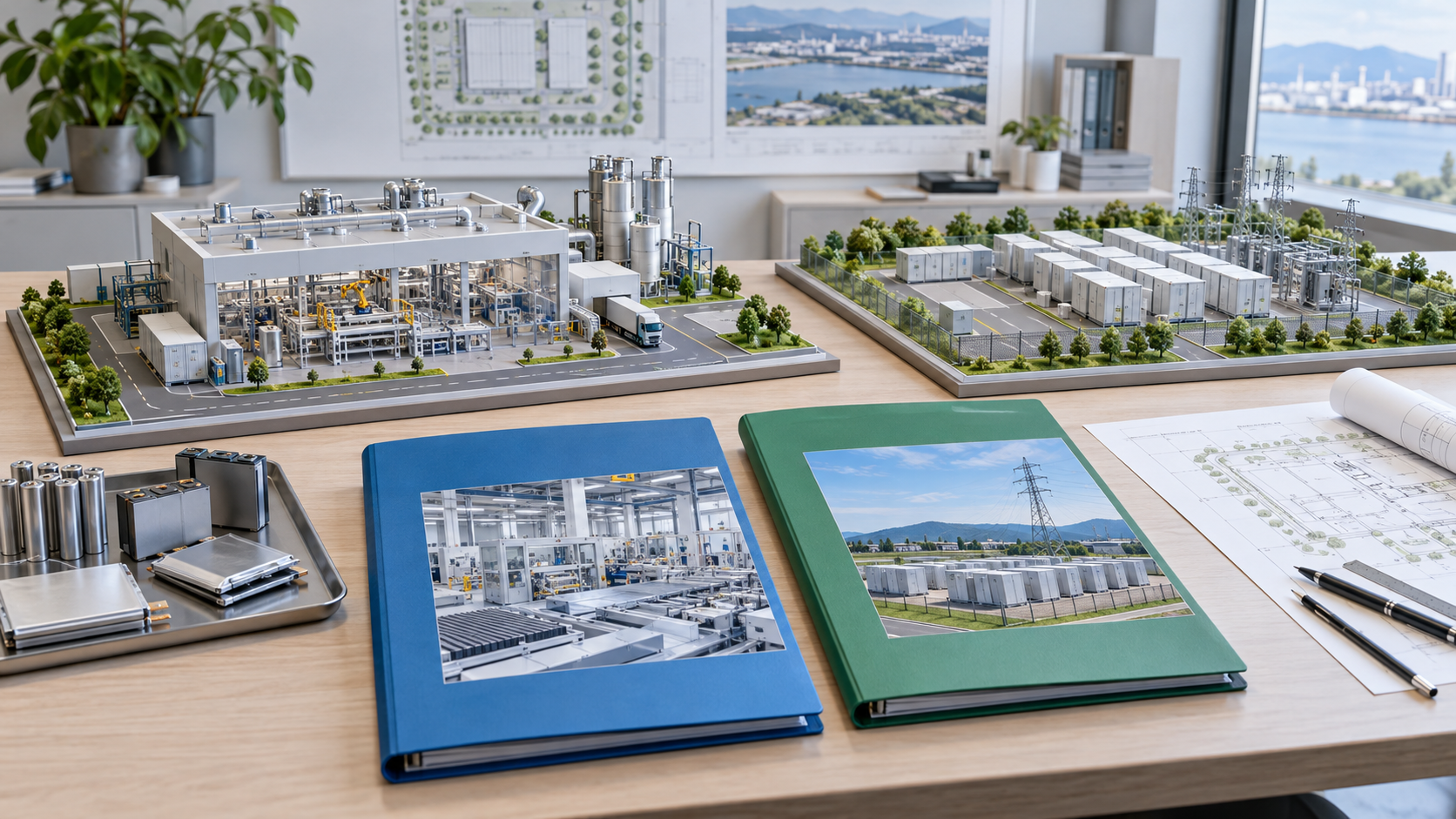
- METI in 30 seconds
- What kind of body it is: the four types of influence
- What it does for energy storage
- How far its influence reaches (powers and geography)
- Policy tools and the division of roles with other bodies
- Outlook
- Glossary, references and claim-to-source audit
1. METI in 30 seconds
METI holds three levers: who gets to build storage batteries in Japan, how they are connected to the grid and operated, and how they are regulated for electrical safety. The installation rules that protect against fire, by contrast, are set by the FDMA and by municipal fire-prevention ordinances. The FDMA reviewed the regulation of storage battery facilities in 2022-2023, and in the Tokyo Fire Department's amended ordinance the unit of regulation changed from ampere-hour cells to kilowatt-hours, with notification required for facilities above 20 kWh Sourced. So even the single word "safety" is split across ministries: electrical safety sits with METI and fire prevention with the FDMA.
2. What kind of body it is: the four types of influence
The institutions that appear in energy storage coverage do not make batteries themselves, unlike companies. They can be grouped into four types by the route through which they influence the industry.
3. What it does for energy storage
METI's involvement with storage batteries falls into five parts Sourced.
| Tool | Timing and scale | Content |
|---|---|---|
| Industrial strategy Battery and Power Source Industry Strategy | The Battery Industry Strategy was drawn up in August 2022 and revised on 2 June 2026 | The three revised goals are: (1) establish a domestic manufacturing base of 150 GWh a year between 2030 and the mid-2030s; (2) triple Japanese companies' global battery-related sales between 2025 and 2035; (3) bring all-solid-state batteries into full-scale practical use around 2030 and, looking toward the mid-2030s, build a manufacturing base matched to demand. The background cited is oversupply in the global market, supply-chain risk, and the need to respond to AI data centers and to the advanced electrical control required in medical care and disaster prevention. The policy is to build a manufacturing base across the whole power-source system centred on batteries |
| Manufacturing subsidies Economic Security Promotion Act, "specified critical material: storage batteries" | The Act was promulgated on 18 May 2022. Storage batteries are a specified critical material under Article 1, item 7 of the Cabinet Order. Plans were certified in six rounds from April 2023 to February 2026 | When a business drafts a supply plan and the Minister certifies it, the business can receive support. METI's page lists 45 plans in total, three of which have been revoked. The maximum subsidies of the remaining 42 sum to about JPY 668 billion (adding up each plan's "approximately" figure) Our calculation. An application window is currently open from 6 October to 20 November 2026 |
| Subsidies for installation | A supplementary-budget project for fiscal 2025. The call for the subsidy's executing organization ran from 24 December 2025 to 22 January 2026 | The Agency for Natural Resources and Energy invited an executing organization for a project that subsidizes part of the installation cost of grid-connected storage batteries, batteries co-located with renewable power sources, batteries on the customer side, and long-duration energy storage (LDES). A briefing on a related project to support home storage systems (to build up demand-response resources) was scheduled at the same time. The budget amount could not be confirmed in a primary source |
| Power-market design Long-Term Decarbonization Power Source Auction | Three rounds since the fiscal 2023 bidding year. METI's advisory council designs the scheme; OCCTO runs it | A bidding scheme, part of the capacity market, that gives new decarbonized power sources capacity revenue, in principle for 20 years. Battery results: in the fiscal 2023 bidding year, 1.669 million kW for batteries and pumped hydro together; in fiscal 2024, 961,000 kW (3 to under 6 hours) and 769,000 kW (6 hours or more); in fiscal 2025, 819,000 kW for lithium-ion batteries and pumped hydro (excluding new builds) and 886,000 kW for other batteries, new pumped hydro and LDES. In fiscal 2025, batteries bid 1.251 million kW and 46% was awarded. Cell-producing countries or regions other than Japan are each limited to less than 30% of the awarded capacity |
| Electrical safety and business rules Electricity Business Act | The definition of storage-type electrical facilities comes from Act No. 46 of 2022 (in principle in force from 1 April 2023) | "Power generation and storage electrical facilities" are defined as generation facilities plus storage facilities, and a business that generates or discharges electricity counts as a power generation business. A generation business notification must state the location, output and capacity of any storage facility. A facility counts as a generation business when it has an output of 1,000 kW or more and its grid-connection capacity serving retail and similar businesses totals more than 10,000 kW, among other requirements (ministerial ordinance). Self-use storage facilities of 1,000 kW or more must be notified when connected to the grid. The technical standard ordinance defines a "storage station" and puts safety provisions such as access restriction and lightning arresters alongside those for power stations and substations |
For battery material suppliers, the most direct way METI's influence arrives is through the certified plans for the specified critical material "storage batteries". The certified businesses on METI's page include, besides battery makers, many materials and chemical companies, such as Asahi Kasei Battery Separator, Tokai Carbon, Nippon Shokubai, Toagosei, Mitsubishi Chemical and Zeon Sourced. The other lever is the auction's rule that any one cell-producing country or region other than Japan must stay below 30%. It is designed to spread the sourcing of cells for grid batteries installed in Japan, and so it bears indirectly on choices in the cell and materials supply chain Our calculation. Judging battery safety (thermal runaway and propagation), meanwhile, rests not on METI but on US UL standards, international standards and FDMA criteria.
4. How far its influence reaches (powers and geography)
| Dimension | What METI has | What METI does not have |
|---|---|---|
| Powers | Drafting and revising the strategy. Certifying and subsidizing manufacturing plans (Economic Security Promotion Act). Designing installation subsidies. Designing power-market rules in its advisory councils. Regulating the business and safety of storage facilities through the Electricity Business Act and its ordinances | The practical distribution of research funds (NEDO's role). Fire-prevention standards under the Fire Service Act (the FDMA and municipal ordinances). Battery standards and certification (JIS, IEC, UL, NFPA and others). Any power to compel a company to mass-produce a particular battery |
| Geography | Japan only: domestic manufacturing plans, batteries connected to the domestic grid, domestic auctions. The auction's "below 30% per cell-producing country" condition reaches foreign cell makers indirectly | Policy of other countries, or direct power over factories abroad |
| Kind of force | Notifications and safety rules under the Electricity Business Act are legal obligations. Subsidies, certification and the auction are voluntary frameworks whose conditions bind only those who take part | Any obligation on businesses that take no subsidy or certification to manufacture or procure in a given way |
| Duration | The strategy is revised over time (August 2022 to June 2026). Applications for certification open in set windows, currently 6 October to 20 November 2026. Auction capacity revenue runs, in principle, for 20 years | Certification once the budget runs out (the page states that plans cannot be certified once the remaining budget is exhausted) |
| Scale | 8,068 authorized positions (all fields, including external agencies). 42 certified battery plans, maximum subsidies of about JPY 668 billion in total (our calculation) | The headcount of the battery division and a battery-only budget (could not be confirmed) |
The figure of about JPY 668 billion is the sum of the maximum subsidy for each certified plan, not the amount actually paid. Revocations and amendments to certifications continue, so the total changes with time (this article uses the page as displayed in October 2026). In some auction years the awarded capacity combines batteries and pumped hydro, and a battery-only awarded capacity cannot simply be extracted from the OCCTO documents Sourced.
5. Policy tools and the division of roles with other bodies
| Organisation | Relationship to METI (as stated in primary sources) |
|---|---|
| NEDO | A separate body that distributes research funding; see our NEDO profile (all-solid-state batteries). Which body acts as the "stable supply assistance corporation" (Article 31 of the Act) for storage-battery plan subsidies could not be confirmed for this profile |
| Organization for Cross-regional Coordination of Transmission Operators (OCCTO) | Runs the Long-Term Decarbonization Power Source Auction and publishes the results. OCCTO's document credits the scheme diagram to materials of the System Design Working Group of METI's Subcommittee on Basic Policy for Electricity and Gas. Corrections to bid prices reflect the findings of the Electricity and Gas Market Surveillance Commission |
| Fire and Disaster Management Agency (FDMA) and municipalities | Set the fire-prevention standards for storage battery facilities. The FDMA studied risk-based fire safety measures in 2022-2023 and revised its model fire-prevention ordinance and related rules. The Tokyo Fire Department amended its ordinance to use kilowatt-hours as the unit of regulation. The policy of easing hazardous-materials rules for indoor storage of lithium-ion batteries appears in the FDMA's announcement of 15 February 2023 |
| Private and international bodies (UL, NFPA, IEC and others) | Provide standards and certification. See our profiles of UL Solutions, NFPA and IEC |
6. Outlook
| What can be read | Primary source behind it | Type |
|---|---|---|
| The strategy was revised in June 2026 to build the manufacturing base across the whole power-source system centred on batteries | METI news release (2 June 2026) | Sourced |
| The next window for certification of battery manufacturing plans is 6 October to 20 November 2026. Whether further windows follow is to be announced | METI's battery page | Sourced Not yet confirmed |
| Support is likely to broaden from making batteries on their own to the whole power-source system, including output and long-duration discharge, and to the installation side such as grid batteries | The background of the revised strategy (oversupply, AI data centers, medical and disaster-prevention needs), the auction's LDES category, and installation subsidies covering grid-connected, co-located, customer-side and LDES systems | Inference |
| Conditions like the auction's "below 30% per cell-producing country" may continue to be used as a way to spread domestic battery sourcing | The glossary of terms in the fiscal 2025 auction results | Inference |
7. Glossary
- Specified critical material
- Under the Economic Security Promotion Act, a material essential to people's survival and economic activity whose stable supply needs particular protection. Storage batteries are one.
- Supply plan
- A plan for building production capacity for a specified critical material. A business drafts it, and certification by the competent minister makes it eligible for subsidy.
- Long-Term Decarbonization Power Source Auction
- Part of the capacity market. A bidding scheme that promises capacity revenue, in principle for 20 years, to new investment in decarbonized power sources.
- LDES
- Long-duration energy storage. Storage able to discharge over long periods.
- Storage station
- In Japan's electrical equipment technical standards, a place that stores power received from outside the premises in storage equipment and sends it out again at the same voltage and frequency.
- Fire-prevention ordinance
- A municipal ordinance on fire prevention, drawn up on the basis of the model ordinance the FDMA publishes.
8. References
- METI News release, "The Battery Industry Strategy has been revised as the Battery and Power Source Industry Strategy" (2 June 2026; in Japanese). Background and the three goals; responsible division. https://www.meti.go.jp/press/2026/06/20260602001/20260602001.html
- METI "Storage batteries" (economic security policy; in Japanese). How supply plans are certified, the list of certified plans and their maximum subsidies, the application window (6 October to 20 November 2026), revocations. https://www.meti.go.jp/policy/economy/economic_security/battery/index.html
- e-Gov Law Search Act on Promotion of Economic Security by Integrated Implementation of Economic Measures (Act No. 43 of 2022; in Japanese). Article 7 (designation of specified critical materials), Article 9 (certification of supply plans), Article 31 (stable supply assistance corporations). https://laws.e-gov.go.jp/law/504AC0000000043
- e-Gov Law Search Order for Enforcement of the same Act (Cabinet Order No. 394 of 2022; in Japanese). Article 1, item 7: storage batteries. https://laws.e-gov.go.jp/law/504CO0000000394
- Agency for Natural Resources and Energy Call for an executing organization for the fiscal 2025 supplementary-budget "Renewable Energy Expansion and Grid Storage Battery Power Storage System Installation Support Project Subsidy" (24 December 2025; in Japanese). https://www.enecho.meti.go.jp/appli/public_offer/2025/1224_03.html
- OCCTO Capacity Market: Long-Term Decarbonization Power Source Auction results (bidding year: fiscal 2025; 13 May 2026; in Japanese). Outline of the scheme, results, battery bid capacity and award rate, limit on cell-producing countries and regions. https://www.occto.or.jp/assets/various/capacity-market/jitsujukyukanren/2025_boshuyoukou_long/260513_longauction_youryouyakujokekka_kouhyou_ousatsu2025.pdf
- OCCTO Same, bidding year fiscal 2024 (published 28 April 2025; in Japanese). Awarded capacity for batteries and pumped hydro. https://www.occto.or.jp/assets/market-board/market/oshirase/2025/files/250428_longauction_youryouyakujokekka_kouhyou_ousatsu2024.pdf
- OCCTO Same, bidding year fiscal 2023 (published 26 April 2024; in Japanese). Awarded capacity for batteries and pumped hydro. https://www.occto.or.jp/assets/market-board/market/oshirase/2024/files/240426_longauction_youryouyakujokekka_kouhyou_ousatsu2023.pdf
- e-Gov Law Search Electricity Business Act (Act No. 170 of 1964; in Japanese). Article 2 (power generation and storage electrical facilities; generation business), Article 27-27 (notification), Article 28-3, and the supplementary provisions of Act No. 46 of 2022. https://laws.e-gov.go.jp/law/339AC0000000170
- e-Gov Law Search Ordinance for Enforcement of the Electricity Business Act (in Japanese). Article 3-4 (requirements for a generation business), Article 45-27 (specified self-use electrical facilities), and provisions on storage stations. https://laws.e-gov.go.jp/law/407M50000400077
- e-Gov Law Search Ministerial Ordinance Establishing Technical Standards for Electrical Equipment (in Japanese). Article 1, item 4 (definition of a storage station), Articles 23, 44 and 49. https://laws.e-gov.go.jp/law/409M50000400052
- Fire and Disaster Management Agency Results of the study group on fire-prevention safety measures for lithium-ion batteries, and next steps (15 February 2023; in Japanese). https://www.soumu.go.jp/main_content/000861553.pdf
- Fire and Disaster Management Agency Working group on risk-based fire safety measures for storage battery facilities, Document 3-1, "Review of the regulation of storage battery facilities" (July 2022; in Japanese). https://www.fdma.go.jp/singi_kento/kento/items/post-116/01/shiryou3-1.pdf
- Tokyo Fire Department Partial amendment of the fire-prevention ordinance (review of standards for storage battery facilities; in Japanese). Unit of regulation, notification threshold, and the revisions to the FDMA ordinance and model ordinance. https://www.tfd.metro.tokyo.lg.jp/content/000026241.pdf
- e-Gov Law Search Cabinet Order on the Number of Staff of Administrative Organs (Cabinet Order No. 121 of 1969; in Japanese). METI's 8,068 positions and the interim 8,146 until 30 September 2026. https://laws.e-gov.go.jp/law/344CO0000000121
- e-Gov Law Search Act for Establishment of the Ministry of Economy, Trade and Industry (Act No. 99 of 1999; in Japanese). In force 6 January 2001; external agencies. https://laws.e-gov.go.jp/law/411AC0000000099
9. Claim-to-source audit
| Claim in the text | Type | Reference |
|---|---|---|
| Strategy revision of 2 June 2026, the three revised goals, the background, the responsible division | Sourced | Reference 1 https://www.meti.go.jp/press/2026/06/20260602001/20260602001.html |
| The list of certified plans (45 in total, 3 revoked), maximum subsidies, certification dates (six rounds from 28 April 2023 to 17 February 2026), the application window (6 October to 20 November 2026), the note on exhausted budget, names of certified businesses | Sourced | Reference 2 https://www.meti.go.jp/policy/economy/economic_security/battery/index.html |
| Promulgation date of the Act (18 May 2022); the mechanisms for designating critical materials, certifying supply plans and stable supply assistance corporations | Sourced | Reference 3 https://laws.e-gov.go.jp/law/504AC0000000043 |
| Storage batteries as a specified critical material (Order, Article 1, item 7) | Sourced | Reference 4 https://laws.e-gov.go.jp/law/504CO0000000394 |
| Installation subsidy coverage (grid-connected, co-located, customer-side, LDES), the call period for the executing organization, the briefing on the home storage system project | Sourced | Reference 5 https://www.enecho.meti.go.jp/appli/public_offer/2025/1224_03.html |
| How the auction works; fiscal 2025 results (battery bid capacity 1.251 million kW, award rate 46%); the limit of under 30% per cell-producing country or region; the diagram credited to working group materials | Sourced | Reference 6 https://www.occto.or.jp/assets/various/capacity-market/jitsujukyukanren/2025_boshuyoukou_long/260513_longauction_youryouyakujokekka_kouhyou_ousatsu2025.pdf |
| Fiscal 2024 awarded capacity for batteries and pumped hydro (961,000 kW and 769,000 kW) | Sourced | Reference 7 https://www.occto.or.jp/assets/market-board/market/oshirase/2025/files/250428_longauction_youryouyakujokekka_kouhyou_ousatsu2024.pdf |
| Fiscal 2023 awarded capacity for batteries and pumped hydro (1.669 million kW) | Sourced | Reference 8 https://www.occto.or.jp/assets/market-board/market/oshirase/2024/files/240426_longauction_youryouyakujokekka_kouhyou_ousatsu2023.pdf |
| Definitions of storage electrical facilities and generation business, notifications, and the effective date of Act No. 46 of 2022 (in principle 1 April 2023) | Sourced | Reference 9 https://laws.e-gov.go.jp/law/339AC0000000170 |
| Requirements for a generation business (output of 1,000 kW or more; connection capacity totalling more than 10,000 kW) and specified self-use facilities (1,000 kW or more) | Sourced | Reference 10 https://laws.e-gov.go.jp/law/407M50000400077 |
| The definition of a "storage station" and the access-restriction and lightning-arrester standards | Sourced | Reference 11 https://laws.e-gov.go.jp/law/409M50000400052 |
| The FDMA's findings on lithium-ion batteries and the policy of easing hazardous-materials rules (15 February 2023) | Sourced | Reference 12 https://www.soumu.go.jp/main_content/000861553.pdf |
| The FDMA's review of storage battery facility regulation (July 2022 document) | Sourced | Reference 13 https://www.fdma.go.jp/singi_kento/kento/items/post-116/01/shiryou3-1.pdf |
| The Tokyo Fire Department's ordinance amendment (kilowatt-hour unit; notification above 20 kWh) and the FDMA's revisions to its ordinance and model ordinance | Sourced | Reference 14 https://www.tfd.metro.tokyo.lg.jp/content/000026241.pdf |
| 8,068 authorized positions, and 8,146 interim until 30 September 2026 | Sourced | Reference 15 https://laws.e-gov.go.jp/law/344CO0000000121 |
| Establishment (in force 6 January 2001), external agencies | Sourced | Reference 16 https://laws.e-gov.go.jp/law/411AC0000000099 |
| 42 certified plans and about JPY 668 billion in maximum subsidies, the four-type grouping, the division of roles in Fig. 2 and the materials engineer's reading | Our calculation | This article's synthesis (summing the maximum subsidies in Reference 2, excluding revoked plans) |
| The budget for installation subsidies, the battery division's headcount and budget, the stable supply assistance corporation for batteries, the next auction round, and the dates of the FDMA's ordinance revisions | Not yet confirmed | Not stated in References 1-16, or could not be confirmed. This article does not estimate them |
| The two items in the Outlook marked as inferences (broader support; continued use of cell-origin conditions) | Inference | This article's reading of References 1, 5 and 6 |
Last updated October 2026 / Troy Technical
Figures and dates come from published materials of METI, the Agency for Natural Resources and Energy, OCCTO, the Fire and Disaster Management Agency and the Tokyo Fire Department, and from statutes on e-Gov. Items marked "Inference" are this article's reading of the primary sources.