COMPANY PROFILE / OPTICAL COMMUNICATIONS & PHOTONICS
Marvell Technology
An optical DSP company that paid about US$3.5 billion for Celestial AI, betting on optical links between AI chips
Marvell is a chip company that appears in optical communications as a leading supplier of optical DSPs, the chips that clean up signals inside optical modules. In December 2025 it announced the acquisition of Celestial AI, a start-up whose "Photonic Fabric" technology links AI chips with light, and the deal closed on 2 February 2026. According to its quarterly report (10-Q) to the U.S. SEC, the total purchase consideration was about US$3.5 billion. In March 2026 it then received a US$2 billion investment from NVIDIA, and in April it also acquired Polariton, a Swiss optical device start-up. This profile keeps the company-wide figures brief and sets out what Marvell has done, and what it is aiming for, in four areas: optical DSPs, silicon photonics, CPO and Photonic Fabric, using only the company's SEC filings and official releases.
- Marvell in 30 seconds, and where it stands in optical communications and photonics
- The logo and how the name is written
- Where the company sits in optical communications and photonics
- Scale
- Resources committed to optical communications and photonics
- Track record so far
- Plans ahead
- What the company is aiming for in optical communications and photonics
- Partnership map
- Technologies, products and services
- The risks this company carries
- Glossary, references and claim-to-source audit
1. Marvell in 30 seconds, and where it stands in optical communications and photonics
Delaware, U.S.Press releases are datelined Santa Clara, California
(fabless designer)From inside the data centre to long-haul networks
Companies involved in optical communications fall into three broad types: optical components & modules, chips & foundries, and network systems & carriers. Marvell is a chip company, a fabless designer with no factories of its own Sourced. But its own product range covers the DSPs, drivers and transimpedance amplifiers (TIAs) that go into optical modules, silicon photonics chips, and even long-reach optical modules (COLORZ), making it one of the chip companies closest to being an optical component maker.
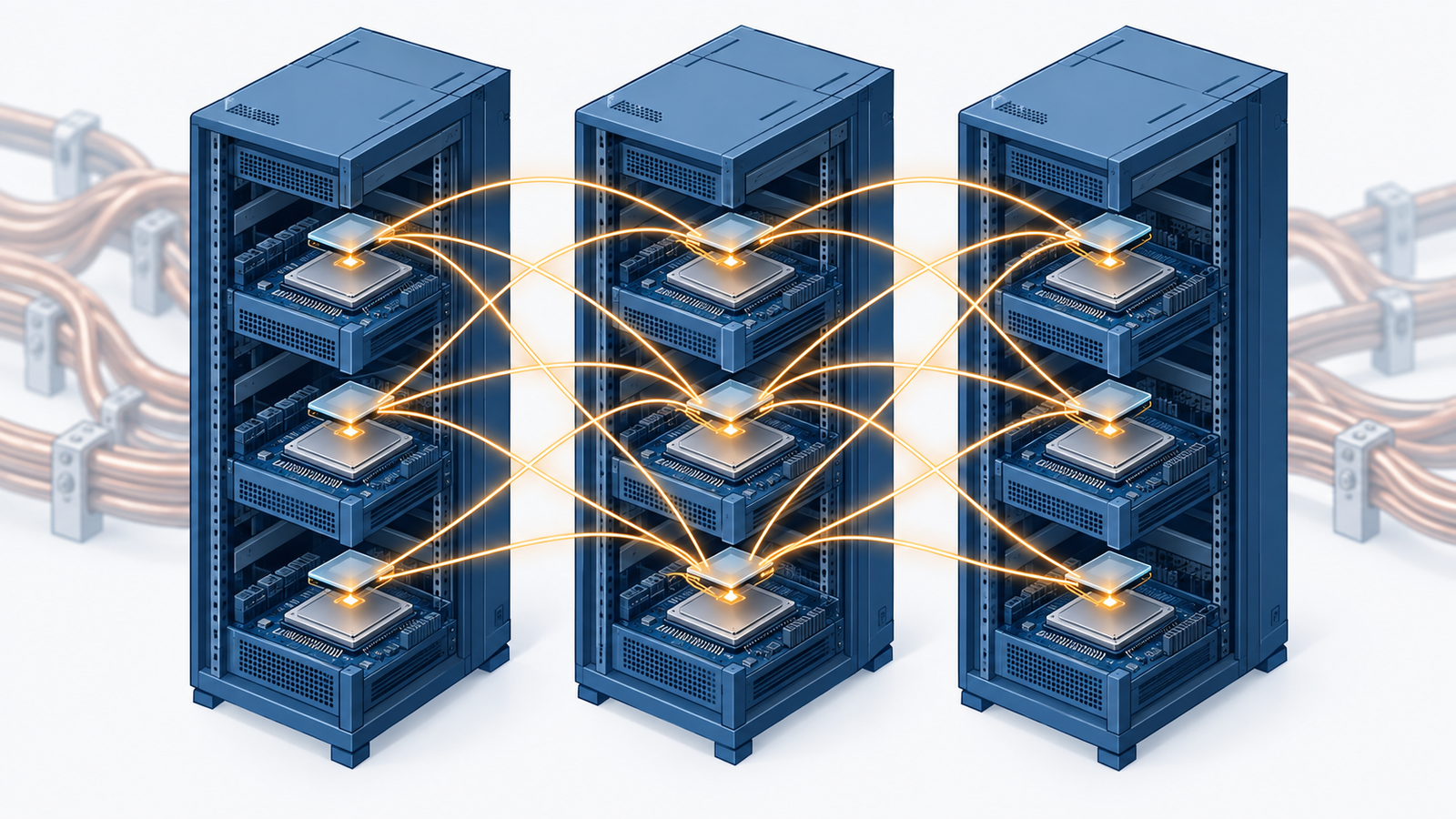
The Celestial AI acquisition was announced on 2 December 2025 and closed on 2 February 2026. The closing is recorded in the company's official release, in the 10-K filed in March 2026 and in the 10-Q filed in August 2026 Sourced. The aim of the deal is to replace the copper wiring that has linked AI chips to each other (scale-up) with optics. Where Marvell stands today is this: a company that made its name with optical DSPs for links "between racks" has stepped into optics "inside the rack and inside the package".
2. The logo and how the name is written

The Marvell logo is a trademark of the company. We have not recreated it with generated imagery;
the image is the logo used in the header of Marvell's official website, placed here as img/marvell_logo.svg.
A note on names: the current legal name is Marvell Technology, Inc. The former name, Marvell Technology Group Ltd., also appears in the 10-K's exhibit index. This series files the company under the short form of its current name, "Marvell Technology", and calls it "Marvell" in the text.
Official site: https://www.marvell.com/3. Where the company sits in optical communications and photonics
In terms of which parts of optics it touches, Marvell covers the widest range of any chip company in this series Sourced. According to the 10-K, its PAM4 DSPs serve optical links inside the data centre, its "coherent-lite" DSPs serve campus-style links between data centres up to 20 km apart, its coherent DSPs, drivers and TIAs serve carrier networks spanning hundreds to thousands of kilometres, and its COLORZ optical modules serve direct data centre interconnect (DCI). Celestial AI's Photonic Fabric now extends that reach inside the rack and inside the package.
4. Scale
We note the company's size and its revenue from the "data centre" end market, the category closest to optics Sourced.
| Measure (US$ million) | FY2024 (year to Jan 2024) | FY2025 (year to Jan 2025) | FY2026 (year to Jan 2026) |
|---|---|---|---|
| Revenue (company-wide) | 5,507.7 | 5,767.3 | 8,194.6 |
| of which data centre | 2,216.7 | 4,164.2 | 6,100.3 |
| of which communications and other | 3,291.0 | 1,603.1 | 2,094.3 |
| R&D expense (company-wide) | 1,896.2 | 1,950.4 | 2,075.2 |
The fiscal year ends around 31 January (for example, FY2026 ran from February 2025 to 31 January 2026).
In the latest quarter, May to July 2026 (the quarter ended 1 August 2026), revenue was US$2,739.3 million, of which data centre accounted for US$2,171.5 million (79%). On FY2026 growth, the 10-K says revenue from the data centre market was driven by "AI-related demand for our custom products and electro-optics portfolio" Sourced.
Besides electro-optics products such as optical DSPs, "data centre" also includes custom AI chips, Ethernet switches and storage products. Marvell does not disclose revenue for optical products alone Not yet confirmed. We also could not find a company-wide headcount in the 10-K, and staffing in optics is not disclosed either.
5. Resources committed to optical communications and photonics
What stands out about Marvell's investment in optics is that it is more visible in acquisitions than in in-house development.
| Resource | Details | Status |
|---|---|---|
| People (dedicated teams and staff) | Celestial AI's technology and staff were folded into the Data Center Group. Optical DSPs sit in the Connectivity Business Unit, and silicon photonics has a chief technology officer for "Optical Platforms" (all from job titles in releases). The 10-K says it has a core team of engineers experienced in electro-optics and silicon photonics. Headcount is not disclosed | Organisation confirmed; headcount not disclosed |
| Money (R&D) | Company-wide R&D expense was US$2,075.2 million in FY2026, with no optics breakdown. The company says the Celestial AI acquisition is expected to add about US$50 million a year in (non-GAAP) operating expenses | Company-wide only |
| Acquisitions | Celestial AI (closed February 2026; total purchase consideration about US$3,533.7 million) and Polariton Technologies (April 2026; price not disclosed; plasmonic optical modulation technology). Going further back, a merger agreement with Inphi (29 October 2020, in the 10-K exhibit index) | Confirmed |
| Outside investment | NVIDIA acquired US$2 billion of convertible preferred stock on 31 March 2026 (convertible into up to about 21.8 million common shares at about US$91.84 a share) | Confirmed |
| Equity ties with customers | Alongside the Celestial AI deal, Marvell issued Amazon a warrant for up to 1,045,171 shares. Vesting is tied to Amazon's purchases of Photonic Fabric products through the end of 2030 | Confirmed |
| Manufacturing | No factories of its own; production is outsourced to foundries. The 10-K says it has capacity reservation agreements with some foundries and substrate suppliers | Confirmed (no optical fab of its own) |
| Universities, research institutes, public funding | The 10-K, 10-Q and releases say nothing about optics-related joint research with universities or awards of public funding such as the CHIPS Act (the 10-K's discussion of government incentives centres on preferential tax rates, with no mention of optics-related grants) | Could not be confirmed |
In announcing the Celestial AI acquisition, the technical feature Marvell stressed most was thermal stability Sourced. The release says Photonic Fabric enables "reliable operation in the extreme thermal environments created by large, multi-kilowatt XPUs and switches", so the photonics can be stacked vertically in a 3D package right on top of the AI chip, making the optical connection directly to the chip rather than from the die edge. Freeing up the die edge, the company argues, lets more HBM (high-bandwidth memory) be placed there.
Heat matters because the refractive index of optical modulators and waveguides changes with temperature, shifting their operating point. In general, the smaller and more efficient the device, such as a silicon micro-ring modulator, the more sensitive it is to temperature, and the more it needs heaters to keep it tuned. The top of an AI chip is one of the hottest places in a data centre. Whether optics can sit there is decided by the device structure and the temperature coefficients of its materials. Which devices and materials Celestial AI uses to achieve this is stated neither in the release nor in the 10-K Not yet confirmed.
6. Track record so far
| When | What happened | What it means |
|---|---|---|
| 2017 onward | Ships silicon photonics devices in volume to major cloud operators (as described in the January 2025 release). COLORZ DCI optical modules have more than eight years of shipments and over 10 billion cumulative operating hours | The base of its volume experience in optics |
| 29 October 2020 | Merger agreement with Inphi Corporation (10-K exhibit index) | The substance of the deal was not examined in the primary sources reviewed for this article |
| 2023 | "Nova", a 5 nm 1.6T DSP (200G per lane) | Its first product of the 1.6T generation (as described in the September 2026 release) |
| 2024 | "Ara", a 3 nm 1.6T optical DSP. First showing of a 200G-capable 3D SiPho engine at OFC 2024 | DSPs and silicon photonics now advance side by side |
| 6 January 2025 | Announces a CPO architecture for custom XPUs, placing a 6.4T 3D SiPho engine (32 channels of 200G) on the same substrate as the AI chip. Several customers are evaluating it | A plan to widen AI chip links from dozens over copper to hundreds across several racks over optics |
| 14 August 2025 | Sells its automotive Ethernet business to Infineon for US$2.5 billion | Part of a shift in focus towards the data centre |
| 2 December 2025 | Announces an agreement to acquire Celestial AI. Upfront consideration worth about US$3.25 billion (US$1 billion in cash plus about 27.2 million shares), plus up to about US$2.25 billion in additional shares depending on revenue targets. Issues a warrant to Amazon the same day | Enters optical scale-up interconnect in earnest |
| 2 February 2026 | Completes the Celestial AI acquisition. According to the 10-Q, total purchase consideration was US$3,533.7 million (US$3,230.9 million net of cash acquired) | Photonic Fabric becomes a Marvell product |
| 12 and 16 March 2026 | At OFC 2026, shows the "Ara T" 1.6T transmit-retimed DSP and Photonic Fabric. Demonstrates interoperability between Lumentum's optical circuit switch (R300) and Marvell's optical DSPs and COLORZ modules | Shows it can team up with an optical switch company too |
| 31 March 2026 | NVIDIA invests US$2 billion. The two announce collaboration on silicon photonics as well as the NVLink Fusion partnership | A capital tie to the largest GPU maker |
| 22 April 2026 | Acquires Polariton Technologies (Switzerland), gaining plasmonic optical modulation technology and staff. Price not disclosed | Strengthens modulation technology for long-reach and DCI links at 3.2T and beyond |
| 20 September 2026 | Ahead of ECOC 2026, announces demonstrations including 2 nm 400G-per-lane PAM4 and 2 nm 800G ZR/ZR+ (with MACsec). Also demonstrates a 102.4T CPO platform (200G-per-lane silicon photonics) | DSPs move to 2 nm; CPO shown at switch-class capacity |
7. Plans ahead
The revenue expectations above are forecasts the company itself gave in its acquisition and closing releases, not results Not yet confirmed. Because Marvell's fiscal year ends around 31 January, "Q4 of FY2028" corresponds roughly to November 2027 to January 2028 Our calculation. The release expects Photonic Fabric chiplets to be co-packaged with both custom XPUs and scale-up switches, enabling what it calls "the industry's first large-scale commercial deployment of optical interconnect for scale-up connectivity".
None of the following appears in the primary sources reviewed for this article Not yet confirmed.
The names of customers adopting Photonic Fabric (Amazon is named as the warrant holder, but the scale of any adoption or orders is not disclosed) / the start of volume production and shipment volumes for CPO (the September 2026 CPO was a "demonstration") / revenue and unit shipments of optical DSPs and optical modules / the price paid for Polariton / the specific products and timing of the silicon photonics collaboration with NVIDIA. A research firm's CPO market forecast quoted in a release (port counts for 2029 and so on) is not the company's own figure, so this article does not use it.
8. What the company is aiming for in optical communications and photonics
This section includes things the company does not say directly. We set them out as inferences within what the primary sources support, with the evidence for each.
| What the evidence suggests | Primary information it rests on | Category |
|---|---|---|
| As a company, it is betting that links between AI chips (scale-up) will move from copper to optics | The acquisition announcement states that "scale-up becomes the next frontier in AI infrastructure" and that "every connection point in the data center must move from copper to optical", and the company paid consideration on the order of US$3.5 billion | Sourced |
| Its policy is to assemble optical technology through acquisitions rather than in-house development | Within less than six months it acquired two core optical technologies, Celestial AI (optical scale-up interconnect) and Polariton (plasmonic modulators). The Polariton announcement also speaks of investing across multiple technology approaches | Inference |
| It has Amazon in mind as its first large customer | Vesting of the Amazon warrant is tied to purchases of Photonic Fabric products, and the acquisition announcement includes a comment from an AWS executive | Inference |
| It wants to be able to sell optics to both the NVIDIA camp and the custom-chip camp | It has taken investment from NVIDIA and partnered on NVLink Fusion, while offering CPO for custom XPUs and Photonic Fabric to hyperscalers | Inference |
| Photonic Fabric is still being turned into a product | In the 10-Q, all US$951 million of intangible assets acquired from Celestial AI is classified as in-process research and development (IPR&D), with no developed technology. Revenue is expected to start in the second half of FY2028 | Sourced |
The way the Celestial AI deal is structured says a lot about the company's thinking. The upfront payment is worth about US$3.25 billion, but on top of that up to about US$2.25 billion in additional consideration is tied to cumulative revenue through the end of FY2029 (a third at US$500 million or more, all of it above US$2 billion) Sourced. On the same day, it issued Amazon a warrant that vests according to the volume of Photonic Fabric products purchased. In other words, through "we pay if it sells" and "you get shares if you buy", the interests of both the sellers and a customer are tied to the ramp of this technology. We read this as a contract design in which the company, while confident in the technology itself, acknowledges that uncertainty remains over when it will take off Not yet confirmed. In the 10-Q, the fair value of the contingent consideration liability rose from US$315.8 million at acquisition to US$749.5 million, which implies the company now judges the targets more likely to be met than at the time of the deal; this is, however, an accounting valuation that also reflects share-price movements.
9. Partnership map
10. Technologies, products and services
| Product or technology | Published specifications | Stage |
|---|---|---|
| Ara (optical DSP) | 3 nm 1.6T PAM4 optical DSP with 200 Gb/s electrical and optical interfaces. For links between racks (scale-out) | Announced 2024. Production status not disclosed in detail |
| Ara T | 1.6T PAM4 DSP (8 x 200G) that retimes only the transmit side (TRO). The company says it uses less power than fully retimed designs | Shown in March 2026 |
| Coherent and coherent-lite DSPs | Aquila (1.6T coherent-lite), Libra (2 nm, 800G) and others. From campus links of up to 20 km to networks spanning thousands of kilometres | Some were "demonstrations" as of September 2026 |
| COLORZ optical modules | 800G ZR/ZR+ (C and L bands) for direct links between data centres. Built with silicon photonics, with more than eight years of shipments | On sale |
| 3D SiPho engine | 6.4T, 32 channels of 200G. Integrates hundreds of components, including modulators, photodetectors, drivers and TIAs, into one device. Claims twice the bandwidth and 30% lower power per bit than 100G parts | First shown 2024. Being evaluated by several customers (as of January 2025) |
| CPO for custom XPUs | AI chip, HBM and 3D SiPho engine on the same substrate. Claims links 100 times longer than copper | Available for customers' next-generation designs (January 2025) |
| 102.4T CPO platform | 102.4 Tb/s with 200G-per-lane silicon photonics | Demonstrated in September 2026 |
| Photonic Fabric chiplet (first generation) | 16 Tb/s per chiplet (which the company says is ten times a 1.6T port). Integrates drivers, TIAs, SerDes, modulators, photodetectors and waveguides. Claims more than twice the power efficiency of copper interconnect and nanosecond-class latency | Revenue expected to start in the second half of FY2028 |
| LPO chipset | TIAs and laser drivers for designs that drop the DSP from the optical module | Listed as a product in the 10-K |
"Industry first", "more than twice the power efficiency of copper", "100 times the reach" and "16 Tb/s" are all phrases from the company's announcements, not third-party measurements Not yet confirmed. The primary sources reviewed for this article do not state Photonic Fabric's power efficiency in pJ/bit, or which modulation scheme and which device materials it uses. Nor could we find a clear statement in those sources about compliance with IEEE 802.3, OIF or other standards.
Polariton, acquired in April 2026, makes optical modulators based on plasmonics Sourced. Plasmonics exploits "surface plasmons", hybrid waves of light and electrons that travel along the boundary between a metal and a dielectric. Because they can confine light to regions far smaller than its wavelength, they could make devices extremely small and fast. Marvell's release likewise describes the technology as denser than conventional silicon photonics, with extremely low energy per bit.
Metals, however, generally absorb light, so the weakness is high propagation loss. In practice, designs keep the active device very short to limit the loss and combine it with low-loss silicon waveguides. Polariton's own description likewise speaks of combining an established silicon photonics platform with plasmonic active devices. Ensuring the stability of the interface between the metal and the electro-optic material, and long-term reliability, is a major challenge on the materials side, and the acquisition announcement specifies the target application as coherent communications for long-reach links and DCI (ZR and ZR+) Not yet confirmed.
11. The risks this company carries
| Risk | Details | Category |
|---|---|---|
| Celestial AI's technology is unfinished | All US$951 million of the intangible assets acquired is in-process R&D. The company expects revenue to start in the second half of FY2028 | Sourced |
| Swings in contingent consideration hit earnings | An increase in the fair value of the contingent consideration liability led to a US$433.7 million loss in the six months from February to July 2026. The company has also entered into a forward contract (US$300 million) to hedge share-price movements | Sourced |
| Customer concentration | In FY2026 the top ten customers accounted for 82% of revenue, and two customers each accounted for 10% or more | Sourced |
| High share of revenue from China | 36% of FY2026 revenue went to China by shipment destination (the 10-K notes this is not necessarily where end customers are located) | Sourced |
| Dilution and reduced cash from acquisitions | The 10-K lists as risks that shares were issued for Celestial AI, that more may be issued through FY2029, and that the cash paid reduced its liquidity | Sourced |
| Dependence on outside manufacturing | No factories of its own; production is outsourced to foundries and substrate suppliers. The same applies to its photonic chips | Sourced |
| Will scale-up really move to optics? | The company believes it will, but none of the primary sources from any company, NVIDIA and Broadcom included, gives a timeline for moving scale-up to optics | Inference |
12. Glossary
- Optical DSP
- The digital signal processing chip inside an optical module that cleans up distorted signals.
- PAM4
- A modulation scheme that uses four signal levels per symbol to send two bits. The mainstream choice inside data centres.
- Coherent communications
- A scheme that also carries information on the phase and polarisation of light. Used in long-haul networks.
- DCI
- Data centre interconnect: optical links between data centres.
- Scale-up
- Linking AI chips tightly enough that they behave like one large computer. Today this mostly uses copper wiring.
- Photonic Fabric
- Celestial AI's name for its technology for linking AI chips with light, now a Marvell product.
- CPO
- Placing the optical transmit and receive functions in the same package as the chip.
- TIA
- Transimpedance amplifier: a circuit that converts the tiny current from a photodetector into a voltage and amplifies it.
- Plasmonics
- Technology that uses waves of light and electrons travelling along a metal surface (surface plasmons). It allows very small devices.
- Earn-out
- An arrangement under which the buyer pays the sellers additional consideration if post-acquisition performance targets are met.
13. References
- Marvell Technology, Inc. Form 10-K for the fiscal year ended January 31, 2026 (filed with the U.S. SEC on 11 March 2026). Headquarters and fiscal year, business description (optical DSPs, silicon photonics, CPO, LPO, DCI, Photonic Fabric), revenue by end market and region, R&D expense, outsourced manufacturing, customer concentration, sale of the automotive Ethernet business, completion of the Celestial AI acquisition, the warrant, and the Inphi merger agreement (exhibit index). https://www.sec.gov/Archives/edgar/data/1835632/000183563226000011/mrvl-20260131.htm
- Marvell Technology, Inc. Form 10-Q for the quarterly period ended August 1, 2026 (filed with the U.S. SEC on 28 August 2026). Breakdown of the Celestial AI purchase consideration, in-process R&D, the contingent consideration liability and changes in its fair value, the forward contract, issuance of convertible preferred stock to NVIDIA, and revenue by end market for the latest quarter. https://www.sec.gov/Archives/edgar/data/1835632/000183563226000025/mrvl-20260801.htm
- Marvell Technology, Inc. Press release, "Marvell to Acquire Celestial AI, Accelerating Scale-up Connectivity for Next-Generation Data Centers" (2 December 2025; Form 8-K, Exhibit 99.1). Rationale for the deal, features of Photonic Fabric (thermal stability, 16 Tb/s, more than twice the power efficiency of copper), revenue expectations, deal terms and earn-out, and a comment from an AWS executive. https://www.sec.gov/Archives/edgar/data/1835632/000119312525305289/d34367dex991.htm
- Marvell Technology, Inc. Form 8-K (filed with the U.S. SEC on 2 December 2025). The transaction agreement with Amazon and the warrant tied to purchases of Photonic Fabric products (up to 1,045,171 shares, exercise price US$87.0029). https://www.sec.gov/Archives/edgar/data/1835632/000119312525305271/d81371d8k.htm
- Marvell Technology, Inc. Press release, "Marvell Completes Acquisition of Celestial AI" (2 February 2026). Completion of the deal, integration into the Data Center Group, revenue expectations and the expected increase in operating expenses. https://www.marvell.com/company/newsroom/marvell-completes-acquisition-of-celestial-ai.html
- Marvell Technology, Inc. Press release, "Marvell Announces Breakthrough Co-Packaged Optics Architecture for Custom AI Accelerators" (6 January 2025). CPO for custom XPUs, the 6.4T 3D SiPho engine, volume production of silicon photonics since 2017, and the COLORZ track record (over 10 billion hours). https://www.marvell.com/company/newsroom/marvell-co-packaged-optics-architecture-custom-ai-accelerators.html
- Marvell Technology, Inc. Press release, "Marvell to Showcase Industry-leading, End-to-End Connectivity Solutions for AI Data Center Infrastructure at OFC 2026" (12 March 2026). Exhibits of Ara T, Ara, Photonic Fabric and COLORZ 800G ZR/ZR+. https://www.marvell.com/company/newsroom/marvell-ai-data-center-connectivity-ofc-2026.html
- Marvell Technology, Inc. / Lumentum Holdings Inc. Press release, "Marvell and Lumentum to Demonstrate Optical Circuit Switching for Next-generation AI Scale-up Infrastructure" (16 March 2026). Demonstration of interoperability between the Lumentum R300 and Marvell's optical DSPs and COLORZ. https://investor.marvell.com/news-events/press-releases/detail/1015/marvell-and-lumentum-to-demonstrate-optical-circuit-switching-for-next-generation-ai-scale-up-infrastructure
- Marvell Technology, Inc. Press release, "Marvell Acquires Polariton Technologies, Advancing Optical Performance Scaling to 3.2T and Beyond" (22 April 2026). Acquisition of plasmonic optical modulation technology and staff, target applications (coherent, DCI) and undisclosed price. https://www.marvell.com/company/newsroom/marvell-acquires-polariton-advancing-future-of-optical-connectivity.html
- Marvell Technology, Inc. Press release, "Marvell to Showcase Industry-First 2nm Optical Technology Demos for AI Data Center Infrastructure at ECOC 2026" (20 September 2026). The history of Nova (2023), Ara (2024) and Libra (2026), demonstrations including 2 nm 400G-per-lane PAM4, and the 102.4T CPO platform. https://www.marvell.com/company/newsroom/marvell-industry-first-2nm-optical-technology-ai-data-center-infrastructure-ecoc-2026.html
- NVIDIA Corporation Press release, "NVIDIA AI Ecosystem Expands as Marvell Joins Forces Through NVLink Fusion" (31 March 2026). NVIDIA's US$2 billion investment and collaboration on silicon photonics. https://nvidianews.nvidia.com/news/nvidia-ai-ecosystem-expands-as-marvell-joins-forces-through-nvlink-fusion
- Marvell Technology, Inc. Official website (source of the company name style and the logo image). https://www.marvell.com/
14. Claim-to-source audit
| Claim in the article | Category | Source |
|---|---|---|
| Legal name, registered head office, listing venue, fiscal year, fabless model | Sourced | Reference 1 https://www.sec.gov/Archives/edgar/data/1835632/000183563226000011/mrvl-20260131.htm |
| Revenue, revenue by end market and R&D expense (FY2024 to FY2026), and the reasons for growth | Sourced | Reference 1 https://www.sec.gov/Archives/edgar/data/1835632/000183563226000011/mrvl-20260131.htm |
| Optical product range (PAM4, coherent-lite and coherent DSPs, COLORZ, CPO, LPO, Photonic Fabric) and reach | Sourced | Reference 1 https://www.sec.gov/Archives/edgar/data/1835632/000183563226000011/mrvl-20260131.htm |
| Customer concentration (top ten 82%), 36% to China, sale of the automotive Ethernet business, acquisition-related risks | Sourced | Reference 1 https://www.sec.gov/Archives/edgar/data/1835632/000183563226000011/mrvl-20260131.htm |
| Agreement to acquire Celestial AI (2 December 2025), deal terms, earn-out, features of Photonic Fabric, revenue expectations | Sourced | Reference 3 https://www.sec.gov/Archives/edgar/data/1835632/000119312525305289/d34367dex991.htm |
| Warrant issued to Amazon (tied to purchases of Photonic Fabric products) | Sourced | Reference 4 https://www.sec.gov/Archives/edgar/data/1835632/000119312525305271/d81371d8k.htm |
| Completion of the Celestial AI acquisition (2 February 2026), integration into the Data Center Group, expected increase in operating expenses | Sourced | References 5 and 1 https://www.marvell.com/company/newsroom/marvell-completes-acquisition-of-celestial-ai.html |
| Total purchase consideration of US$3,533.7 million, in-process R&D of US$951 million, changes in the contingent consideration liability, the forward contract | Sourced | Reference 2 https://www.sec.gov/Archives/edgar/data/1835632/000183563226000025/mrvl-20260801.htm |
| NVIDIA's purchase of US$2 billion of convertible preferred stock and the conversion terms | Sourced | References 2 and 11 https://www.sec.gov/Archives/edgar/data/1835632/000183563226000025/mrvl-20260801.htm |
| CPO for custom XPUs, 3D SiPho engine specifications, volume production since 2017, COLORZ track record | Sourced | Reference 6 https://www.marvell.com/company/newsroom/marvell-co-packaged-optics-architecture-custom-ai-accelerators.html |
| Exhibits at OFC 2026 (Ara T, Ara, Photonic Fabric, COLORZ) | Sourced | Reference 7 https://www.marvell.com/company/newsroom/marvell-ai-data-center-connectivity-ofc-2026.html |
| Demonstration of interoperability with Lumentum's optical circuit switch | Sourced | Reference 8 https://investor.marvell.com/news-events/press-releases/detail/1015/marvell-and-lumentum-to-demonstrate-optical-circuit-switching-for-next-generation-ai-scale-up-infrastructure |
| Acquisition of Polariton (22 April 2026), plasmonics, target applications, undisclosed price | Sourced | Reference 9 https://www.marvell.com/company/newsroom/marvell-acquires-polariton-advancing-future-of-optical-connectivity.html |
| History of Nova, Ara and Libra, the 2 nm demonstrations, the 102.4T CPO platform demonstration | Sourced | Reference 10 https://www.marvell.com/company/newsroom/marvell-industry-first-2nm-optical-technology-ai-data-center-infrastructure-ecoc-2026.html |
| "Q4 of FY2028" corresponding roughly to November 2027 to January 2028 | Our calculation | Converted by this article from the fiscal year definition in reference 1 |
| The three types of optical communications company (optical components & modules / chips & foundries / network systems & carriers) | Our calculation | Our own classification. Example companies drawn from those covered in this series |
| Expected Celestial AI revenue (US$500 million and US$1 billion annualised) | Not yet confirmed | Company forecasts in references 3 and 5, not results https://www.marvell.com/company/newsroom/marvell-completes-acquisition-of-celestial-ai.html |
| Optical product revenue and unit shipments, optics headcount, Photonic Fabric customer names and order sizes, Polariton price, CPO volume production timing | Not yet confirmed | Not stated in references 1 to 11. Figures from press reports are not used https://www.sec.gov/Archives/edgar/data/1835632/000183563226000025/mrvl-20260801.htm |
| A research firm's CPO market forecast | Not yet confirmed | Quoted in reference 6, but not the company's own figure, so this article does not use it https://www.marvell.com/company/newsroom/marvell-co-packaged-optics-architecture-custom-ai-accelerators.html |
| Optics-related joint research with universities, public funding | Not yet confirmed | Not stated in references 1 to 11. This article does not conclude that they do not exist either https://www.sec.gov/Archives/edgar/data/1835632/000183563226000011/mrvl-20260131.htm |
| The reading that its policy is to assemble optical technology through acquisitions rather than in-house development | Inference | This article's interpretation of the acquisition history in references 1, 3 and 9 |
| The reading that it has Amazon in mind as its first large customer | Inference | This article's interpretation of the warrant and comments in references 3 and 4. The company has not named customers |
| The reading that it wants to sell to both the NVIDIA camp and the custom-chip camp | Inference | This article's interpretation of references 6 and 11 |
| Reading the deal terms as "a design in which the company acknowledges uncertainty over the ramp" | Inference | This article's interpretation of the terms in references 2, 3 and 4 |
| Materials commentary on thermal stability and plasmonics; the risk over whether scale-up will move to optics | Inference | This article's commentary based on the statements in references 3 and 9 |
Last updated 26 September 2026 / Troy Technical
Every figure in this article comes from the statutory filings Marvell Technology, Inc. has made with the U.S. Securities and Exchange Commission (SEC) and from official press releases by Marvell and NVIDIA. No research-firm estimates or press-based figures have been used. Performance figures and revenue expectations are the company's claims and forecasts and have not been independently verified. Passages marked "Inference" are this article's interpretation of the primary sources, not statements made by the company.