TECHNOLOGY EXPLAINER
Bioplastics
— "plant-based" and "biodegradable" are separate properties. What you see when you read them apart
The word "bioplastic" lumps together two entirely different properties: the raw material is biomass (plants and the like), and the plastic can be broken down by microorganisms after use. There are plant-based resins that do not degrade (bio-PE), and oil-based resins that do (PBAT). This article sorts out PLA, PHA, bio-PE / bio-PET, cellulosics and lignin from a materials engineer's point of view, in the order of molecules and processing, standards and test conditions, and sustainability of the feedstock.
- What bioplastics are (the short version)
- Two axes — feedstock (biomass) and end of life (biodegradation)
- The main materials side by side — PLA, PHA, bio-PE / bio-PET, cellulosics, lignin
- A materials engineer's view (1): PLA properties and processing — reading manufacturers' stated values
- PHA — polyesters made by microorganisms
- Bio-PE and bio-PET — "drop-in", and how bio-based content is measured
- A materials engineer's view (2): reading the "bio-based content" figure from the molecule
- Biodegradation and composting — conditions and standards
- A materials engineer's view (3): biodegradation is a system property of material + environment + time
- Sustainability of the feedstock (biomass)
- How to read scale, and policy developments
- Open problems, and what we could not confirm
- Glossary / References / Claim-to-source audit
Sourced = content stated by a public body, industry association, standards body, manufacturer or peer-reviewed paper (link given)
Our calculation = a figure this article derived from stated assumptions
Not yet confirmed = a plan, target or statutory deadline with no confirmed outcome yet
General explanations of polymer chemistry and materials design are marked separately as Commentary. Property values are manufacturers' stated (typical) values, and we do not rank grades by setting values for different grades side by side. Statements on environmental impact rest on what regulators and peer-reviewed papers say, and we separate established knowledge from points still under debate. No market estimates from research firms are used.
1. What bioplastics are (the short version)
- Bioplastics is the collective name for plastics that are bio-based, biodegradable, or both. European Bioplastics defines them as plastics that are bio-based, biodegradable or have both properties (our paraphrase)Sourced.
- The two properties are independent. The European Commission sets out that some bio-based plastics biodegrade and some do not, and that biodegradable plastics can be either bio-based or fossil-basedSourced.
- Biodegradation is not decided by the material alone. The European Commission treats biodegradation as a "system property": material, environmental conditions and time count equallySourced. It is a mistake to read from the prefix "bio" that a plastic degrades naturally in the environment.
Our explainer on plastic recycling covered how to read recycled-content figures. Bioplastics have the same kind of pitfall. Figures such as what percentage is plant-derived and under what conditions it degrades mean something only together with how they were measured and under what conditions. For the basics of polyesters, read this alongside our explainer on polyesters and PET, and for polyolefins, our explainer on polyolefins.
2. Two axes — feedstock (biomass) and end of life (biodegradation)
European Bioplastics divides bioplastic materials into three main groupsSourced.
- Bio-based (including partly bio-based) and not biodegradable: bio-PE, bio-PP, bio-PET and the like (the so-called drop-ins), and bio-based performance polymers such as PTT and TPC-ET.
- Bio-based and biodegradable: PLA, PHA, PBS and others.
- Fossil-based and biodegradable: PBAT and others.
The two axes are independent because origin of the feedstock is a matter of where the carbon atoms came from, whereas biodegradability is a matter of the polymer's chemical structure (what follows includes a general account of polymer chemistry and is Commentary).
- Bio-PE: if ethylene obtained from plant-derived ethanol is polymerised, the backbone is the same carbon-carbon bond as in conventional PE. The feedstock has changed but the molecule is the same, so it does not become biodegradable. European Bioplastics likewise says bio-based PE, PET and PVC have properties identical to the conventional productsSourced.
- PLA, PHA and PBAT: these are aliphatic polyesters with ester bonds in the backbone that hydrolysis or enzymes can cut. Biodegradability comes from the type of bond and the structure, and whether the feedstock is a plant or oil does not matter. European Bioplastics too says biodegradability does not depend on the origin of the resource but is tied directly to the polymer's chemical structure (our paraphrase)Sourced.
However, having ester bonds is no guarantee of natural degradation in the environment. Enzymes and water must get in, and conditions and time in which microorganisms can work are needed (Sections 8 and 9).
3. The main materials side by side — PLA, PHA, bio-PE / bio-PET, cellulosics, lignin
| Material | Feedstock and how it is made | Key characteristics | Basis (type) |
|---|---|---|---|
| PLA (polylactic acid) | An aliphatic polyester made from lactic acid obtained by fermenting sugars and the like (the typical bio-based and biodegradable plastic) | Transparent and stiff. Not highly heat resistant. Sensitive to moisture, so drying and processing conditions need managing (Section 4) | Manufacturer's technical data; peer-reviewed review |
| PHA (PHB, PHBV, PHBH and others) | Aliphatic polyesters that microorganisms store inside their cells. Kaneka's PHBH is produced by microorganisms from plant oils and the like | Grades exist that degrade in soil and seawater. The rate, however, differs with the environment (Section 5) | Peer-reviewed review; manufacturer's announcement |
| Bio-PE, bio-PP | Polymerised from monomers obtained from plant-derived ethanol and the like | The molecule is identical to the conventional product. Not biodegradable. Can ride on existing recycling streams | European Bioplastics |
| Bio-PET (partly bio-based) | PET in which part of the raw material (for example the ethylene glycol side) is bio-derived | Properties identical to conventional PET. The "bio-based content" changes with how it is measured (Sections 6 and 7) | European Bioplastics; standards |
| Cellulosics and starch-based | Made from, or consisting mainly of, cellulose or starch | Cited as examples of materials with new functions (compostability and, in some cases, improved barrier properties) | European Bioplastics |
| Lignin | A component of plant cell walls, obtained as a by-product of biorefining | At the stage of discussion of possible new uses in engineering plastics, thermoplastic elastomers, foams and so on | Peer-reviewed paper (Ragauskas et al.) |
All Sourced (European Bioplastics [1], Farah et al. [4], Chen [5], Ragauskas et al. [6], Kaneka [8]). The account of PLA's feedstock includes a general chemical explanation (Commentary). The descriptions of properties are qualitative, and no numerical comparisons are made.
4. A materials engineer's view (1): PLA properties and processing — reading manufacturers' stated values
PLA is the most widely used bio-based biodegradable resin, but its properties and processing conditions differ considerably from general-purpose resins. Here we read the technical data sheet for Ingeo 2003D, an extrusion and thermoforming grade from NatureWorks. The company describes this grade as a high-molecular-weight, transparent, general-purpose extrusion grade for fresh food packaging and foodservice ware, and states clearly that the values given are typical values, not specifications (our paraphrase)Sourced. The figures below are the manufacturer's stated typical values, and cannot be set beside values for other grades or other resins to argue which is better.
Our calculation To prevent a loss of viscosity, the sheet recommends keeping moisture below 0.025% (250 ppm)Sourced. Converting that to weight:
- Per tonne of resin (1,000,000 g): 1,000,000 g x 0.00025 = 250 g
- Per 25 kg bag: 25,000 g x 0.00025 = 6.25 g
Premises and limits: 0.025% is the sheet's recommendation, and the appropriate value changes with the grade, the application and the requirements of the final product. A very small amount of moisture matters to molecular weight because PLA has ester bonds in its backbone and undergoes hydrolysis at melt temperature (Commentary).
The following statements from the sheet capture PLA's character from the processing sideSourced.
- Drying is essential: before extrusion, dry crystallised pellets for 2 hours at 90 °C, or to a dew point of -40 °C. Uncrystallised regrind must first be crystallised and then dried.
- Incompatible with other commodity resins: because it is incompatible with a wide range of commodity resins, the sheet calls for a dedicated purge procedure using polystyrene or polypropylene at start-up and shut-down.
- Sensitive to thermal history: the main decomposition product is acetaldehyde (a substance also formed in the thermal degradation of PET), and long residence at temperatures above the melting point (for example over 24 hours at 175 °C) causes marked decomposition.
These three have almost the same shape as PET processing knowledge (see our explainer on polyesters and PET). The mechanical properties, on the other hand, show another face. The tensile modulus is high at 3.5 GPa, but elongation at break is small at 6.0%, notched Izod impact is small at 16 J/m, and the heat distortion temperature (ASTM E2092) is 55 °CSourced (typical values for 2003D). In short, the character is stiff and transparent, but prone to cracking and low in heat resistance (Commentary by this article). Hot drinks, high-temperature transport and dishwashers are conditions to check as constraints at the very start of design.
It is known that PLA's properties change greatly with crystallinity, molecular weight, plasticisers and blending. The review by Farah and co-authors sets out the physical and mechanical properties that affect PLA's stability, processability, degradation, incompatibility with other polymers, ageing and recyclability, and the means of improving them (blending of components and plasticisers, addition of nucleating agents, modification of PLA, nanocomposites and so on)Sourced (the gist of the abstract).
5. PHA — polyesters made by microorganisms
PHA (polyhydroxyalkanoate) is a biopolyester that many bacteria store inside their cells. The review by Chen (2009) summarises PHA's applications as bioplastics, fine chemicals, implant materials, medicines and biofuels, and notes that it forms an industrial value chain spanning fermentation, materials, energy and medicineSourced (the gist of the abstract).
| Item | What Kaneka (Green Planet®, PHBH) published |
|---|---|
| Material | The brand name for PHBH (a copolymer of 3-hydroxybutyrate and 3-hydroxyhexanoate) |
| Feedstock and production | A polymer produced by microorganisms from plant oils and the like. The company says it was the first in the world to succeed in mass-producing PHBH (our paraphrase) |
| Explanation of biodegradation | Biodegraded by many microorganisms found in nature, finally becoming carbon dioxide and water. The company says it has achieved biodegradation not only in soil but in seawater (our paraphrase) |
| Certification | In 2017 obtained the "OK Biodegradable MARINE" certification for biodegradation in seawater (for some product grades). In 2019 became usable in all food-contact applications in the European Union |
| Caveats | The company notes that the rate of biodegradation differs with the environment, such as seawater temperature, and that the data are in-house data and do not guarantee degradation in seawater (our paraphrase) |
| Examples of uses (as listed by the company) | Straws, cutlery, shopping bags, food packaging, cosmetics containers and so on |
All Sourced (Kaneka's Green Planet introduction page [Reference 8]). These are the company's own statements, not third-party evaluations. The rate and conditions of degradation differ with the product grade and the environment.
It is an important clue that Kaneka itself writes that the rate of degradation in seawater differs with the environment and that the data are in-house and not a guaranteeSourced. The certification, too, was obtained for "some grades". Biodegradability is determined, as discussed below, by the combination of material, environment and time (Section 9).
In terms of materials design, it matters that PHBH is a copolymer of two monomers (Commentary by this article). In PHAs generally, homopolymers (PHB and the like) are highly crystalline and hard to process, whereas copolymerising a monomer with a longer side chain lowers crystallinity and increases flexibility and processability; that is the design approach taken. Where PLA imposes "constraints on the processing side", PHA has challenges of cost and productivity on the production (fermentation) side, and expansion of capacity is the focus. Kaneka has announced that it decided on a large capacity expansion in February 2022Sourced (we confirmed only the headline; we have not confirmed the content).
6. Bio-PE and bio-PET — "drop-in", and how bio-based content is measured
For bio-based or partly bio-based PE, PET, PVC and the like, European Bioplastics explains that their properties are identical to the conventional ones, that they are technically equivalent to fossil-based material, and that they can be mechanically recycled in existing recycling streams (our paraphrase)Sourced. Because the molecule is the same, the only difference from the fossil-based product is "which carbon it was made from".
That makes a way of checking by analysis of the product "how much of it is bio-derived" important.
- The radiocarbon (14C) method: European Bioplastics names the 14C method (EU standard: CEN/TS 16137; US standard: ASTM D6866) as the established way to measure bio-based carbon contentSourced. ASTM titles D6866 as a standard test method for determining the bio-based content of solid, liquid and gaseous samples using radiocarbon analysisSourced.
- Content by mass: European Bioplastics says content can also be stated as "bio-based mass content", which counts oxygen, nitrogen and hydrogen as well as carbon and is therefore complementary to the 14C methodSourced. ISO 16620-1:2015 is a standard that sets out the general principles and calculation of bio-based content on the basis of carbon mass or the mass of each constituentSourced.
- The two figures differ: European Bioplastics cautions that "bio-based carbon content" and "bio-based mass content" have different units, so their typical values also differ and this must be taken into account when comparing (our paraphrase)Sourced.
7. A materials engineer's view (2): reading the "bio-based content" figure from the molecule
Let us check, using the repeat unit of PET, why the two "bio-based content" figures differ for the same material.
Our calculation The premises are as follows.
- The PET repeat unit is C10H8O4, made up of a terephthalic acid residue (C8H4O2) and an ethylene glycol residue (C2H4O2).
- Atomic weights are C = 12.011, H = 1.008, O = 15.999. The terephthalic acid residue is therefore 132.12, the ethylene glycol residue 60.05, and the total 192.17.
- Assumption: only the ethylene glycol side is bio-derived, and the terephthalic acid side is fossil-derived.
Calculation
- Bio-based carbon content (equivalent to the 14C method): 2 of the 10 carbons are bio-derived, so 2 / 10 = 20%
- Bio-based mass content: 60.05 / 192.17 = about 31%
So the same material can be called both "20%" and "31%" bio-based. Premises and limits: the feedstock composition and published values of real partly bio-based PET need not match this assumption. The ISO 16620-1 calculation also has provisions on how mass is taken, which are simplified here.
The European Commission's policy framework says the following on bio-based contentSourced (our paraphrase).
- Measurement should favour the radiocarbon method, because its results are robust and widely accepted.
- Be careful with mass balance: recording the use of biomass in a chain of custody and attributing a share to the final product by mass balance is not considered appropriate as a way of confirming actual bio-based content. It should be used only where there is a high degree of transparency and accountability, backed by agreed standards.
- Make claims specific: general claims such as "bioplastic" or "bio-based" should not be made; claims should be limited to an accurate, measurable percentage, as in "the product contains 50% bio-based plastic". The Commission also says there is currently no mandatory minimum content or harmonised certification and labelling.
The Japan BioPlastics Association (JBPA) also states plainly in its domestic market estimate that it does not include plastics to which biomass-derived characteristics have been assigned by the mass balance methodSourced (our paraphrase). As with mass balance in chemical recycling (see our explainer on chemical recycling), whether it is right to handle on paper what cannot be told apart as molecules is again the issue here (Commentary by this article).
For a materials engineer, the first step is, on seeing a figure, to check "is this the 14C method, mass, or an allocation on paper?"
8. Biodegradation and composting — conditions and standards
European Bioplastics describes biodegradation as a chemical process by which microorganisms in the environment turn a material into natural substances such as water, carbon dioxide and compost, and says that claiming only "biodegradable" without a standard to back it up is misleading (our paraphrase). Anyone making the claim should state the time frame, the degree of biodegradation and the surrounding conditions required, and, where possible, limit the claim to the more specific one of "compostability" and cite the standardSourced.
| Standard / scheme | What it sets (as described on the catalogue page) | Points to note |
|---|---|---|
| ISO 17088:2021 Plastics — Organic recycling — Specifications for compostable plastics | Procedures and requirements for plastics suited to organic recycling. Four aspects: (1) disintegration during composting, (2) ultimate aerobic biodegradation, (3) no adverse effect of the compost on terrestrial organisms, (4) control of constituents | It evaluates effects on an "industrial composting process". It does not include requirements for biodegradation of litter in the environment, and does not apply to small-scale biological treatment at home |
| ISO 14855-1:2012 Determination of the ultimate aerobic biodegradability of plastic materials under controlled composting conditions — Method by analysis of evolved carbon dioxide — Part 1: General method | Determines the ultimate aerobic biodegradation of plastics from the amount of CO2 evolved and the degree of disintegration at the end of the test. The test simulates the composting of the organic fraction of municipal solid waste, with temperature, aeration and humidity controlled | The test conditions are artificially controlled |
| ISO 16929:2021 Degree of disintegration in a pilot-scale composting test | Determines the degree of disintegration in a pilot-scale aerobic composting test. Part of the ISO 17088 evaluation system | States explicitly that it cannot be used to determine the degree of aerobic biodegradation |
| ISO 16636:2025 Disintegration field test of plastics under water environmental conditions | A method of determining the disintegration of samples suspended in water, in a natural environment (water at depths of 1.5 to 3 m) | States explicitly that it is a disintegration test, not a biodegradation test, and cannot be used for an unqualified claim such as "biodegradable in the sea" |
| ASTM D6400 Specification for labeling of plastics designed to be aerobically composted | Sets requirements for plastics designed to be composted in municipal or industrial aerobic composting facilities | The catalogue page showed a historical edition when we checked (a newer edition may exist) |
| EN 13432 and others | European Bioplastics lists these as standards for industrial compostability (ISO 17088, EN 13432 / 14995, ASTM D6400 / 6868) | We have not confirmed their titles and texts |
| ISO 16620-1:2015 / ASTM D6866 | Calculation of bio-based content (ISO 16620-1) and radiocarbon analysis (ASTM D6866) | These measure a different property from biodegradability (the origin of the feedstock) (Section 6) |
All Sourced (catalogue pages of ISO and ASTM [References 14 to 20], European Bioplastics [9, 11]). The texts of the standards are paid, so we limit ourselves to titles and statements of scope.
What happens in the natural environment — Napper and Thompson (2019)
Napper and Thompson followed carrier bags of biodegradable, oxo-biodegradable, compostable and conventional HDPE types for three years in open air, soil and seawater and under controlled laboratory conditions. The results were as followsSourced.
- Seawater: the compostable bag disappeared completely within 3 months.
- Soil: the same bag was still there after 27 months, but in a state where it tore when asked to carry a load.
- Open air: after 9 months, all the bags had fragmented.
- Conclusion: the authors say that no bag showed reliable, significant deterioration over the 3 years in any environment, and that it is unclear whether oxo-biodegradable or biodegradable formulations offer enough advantage over conventional bags in reducing marine litter.
Regulatory developments — the EU and Japan
- EU: the Single-Use Plastics Directive bans oxo-degradable plastics. The European Commission gives as the reason that they have no proven environmental benefit, do not fully biodegrade and harm the recycling of conventional plastics (our paraphrase)Sourced.
- EU: Article 9 of the PPWR provides that by 12 February 2028 certain packaging (Article 3(1), point (1)(f)) and adhesive labels on fruit and vegetables must conform to the standards for industrial composting. Member states may, once conditions are met, also require very lightweight carrier bags and the like to be compostable packaging. Other packaging, including packaging of biodegradable plastics, must be designed for recycling (Article 9(3))Sourced. Article 9(6) provides that the European Commission is to ask the European standardisation bodies by 12 February 2026 to draw up harmonised standards, including for home composting, but we could not confirm how that has been carried out.
- Japan: the JBPA runs three identification and labelling schemes, for biodegradable plastics, biomass plastics and marine-biodegradable plastics (the marine-biodegradable scheme began in July 2023). The JBPA states that, in connection with "measure orders" (corrective orders) that the Consumer Affairs Agency issued on 23 December 2022 to 10 companies making and selling biodegradable plastic products, it is sending a request to member companiesSourced (we have not confirmed the content of the orders).
- International standards: in 2025 a test method for disintegration in real sea areas was published as ISO 16636, but the standard itself states that it is a disintegration test and cannot be used to prove biodegradationSourced.
9. A materials engineer's view (3): biodegradation is a system property of material + environment + time
The European Commission's policy framework makes the following clearSourced (our paraphrase).
- A system property: biodegradation should be thought of as a system property in which material-related and environment-related factors are equally important.
- The receiving environment: a plastic that biodegrades in soil may be carried by wind or runoff into rivers or the sea, an environment in which it does not degrade.
- Time: the time scale of biodegradation must be short enough not to harm ecosystems or marine life (for example through ingestion).
- Limits of testing: biodegradation tests are often run in artificial environments for reproducibility, and observation under real conditions in the natural environment is needed. Setting standards for the marine environment is especially difficult.
- Additives: the additives in biodegradable plastics should also biodegrade. It has been pointed out that their toxicity can be similar to that in conventional plastics and that they might release additives into the environment faster.
- Use: the scientific advisers called for plastics that biodegrade in the environment to be limited to specific uses where reduction, reuse and recycling are not realistic, and said they should not be seen as a solution to poor waste management or littering. Agricultural mulch film is given as an example of a suitable use where it meets the appropriate standards.
Applied to design variables on the material side, the "material" term of the system property can be read as follows (Commentary by this article).
- Molecular structure: density of ester bonds, side-chain length, crystallinity. It is generally explained that crystalline regions are hard for hydrolysis and enzymes to penetrate, so degradation tends to start from the amorphous regions.
- Shape: wall thickness and specific surface area. The time needed to degrade differs greatly between a film and a thick moulding, even in the same resin.
- Additives and blends: plasticisers, fillers and blends with other resins also affect degradability (the European Commission asks for additives to be degradable and disclosed).
That is why a design must not be decided on the single word "biodegradable". You have to design at the same time the conditions on the waste management side: which environment the product goes to (industrial composting, home composting, soil, sea, the recycling stream), and whether it actually reaches it. This is why the European Commission says that industrially compostable plastics should be used only where their environmental benefit is higher than the alternatives, there is no adverse effect on compost quality, and a suitable bio-waste collection and treatment system exists (our paraphrase)Sourced.
10. Sustainability of the feedstock (biomass)
On bio-based plastics, the European Commission's policy framework says that producing biomass feedstock normally requires land, water and chemicals such as fertilisers and pesticides, and that through direct or indirect land-use change it can lead to loss of biodiversity, degradation of ecosystems, deforestation, water scarcity and competition with food crops (our paraphrase)Sourced. The same document sets out the following order of prioritySourced.
- Organic waste and by-products first: minimise the use of primary biomass and avoid major environmental impacts. Where primary biomass is used, it should be environmentally sustainable and not harm biodiversity.
- Cascading use: use biomass for higher-value uses. Give materials (including plastics) priority over energy, and long-lived products priority over short-lived ones.
- A caution on carbon storage: only bio-based products that are long-lived and not incinerated can have a carbon storage effect. For short-lived products such as single-use packaging, the carbon taken up from the atmosphere is released again quickly.
- LCA methodology is still developing: the methods for comparing bio-based and fossil-based plastics are "under development", and the most harmonised is the European Commission Joint Research Centre's "Plastics LCA method". It says further scientific progress is needed on the accounting of biogenic carbon uptake and release.
European Bioplastics publishes that global bioplastics production capacity in 2024 of 2.47 Mt corresponds to about 624,000 hectares, which is 0.013% of the world's agricultural land (4.8 billion hectares)Sourced (a claim by an industry association). From the published values we check the following relationshipsOur calculation.
- 0.624 million ha / 4,800 million ha = 0.000130 = 0.013% (matches the published value)
- 2.47 Mt / 0.624 million ha = about 4.0 t/ha (the published material does not show how the conversion from feedstock to resin is set in this figure)
Premises and limits: the published material does not detail the premises of the area conversion (type of feedstock, yield, treatment of by-products). This is also a share at today's scale. What the European Commission's framework worries about is what happens if scale grows, and the quality of land-use change (where, and with which crops); this figure neither refutes nor supports that concern.
European Bioplastics says that today's bio-based plastics are made mainly from carbohydrate-rich crops such as maize, wheat and sugar beet, and that it wants to broaden the feedstock to lignocellulose (agricultural by-products and residues, forestry by-products: straw, bagasse, wood pulp, bark, lignin and so on) and bio-wasteSourced. On lignin, Ragauskas and co-authors argue that using lignin, a by-product of biorefining, could enable low-cost carbon fibre, engineering plastics, thermoplastic elastomers and polymer foams and the likeSourced (the gist of the abstract; a discussion at the research and development stage).
For a materials engineer, a change of feedstock means a change of process and properties. Feedstock from by-products and waste brings new challenges: variation in composition, impurities (ash, colour, odour) and stability of supply (Commentary by this article). Certification that shows a feedstock is "sustainable" (the European Commission asks for conformity with the RED II sustainability criteria) and the quality as a molecule need to be managed separately.
11. How to read scale, and policy developments
Figures for the scale of bioplastics cover different ranges depending on the body. We set two published ones side by side.
Our calculation The premises are as in Fig. 7, and each is a simple division of published values.
- World (European Bioplastics, 2025): production 1.67 Mt / production capacity 2.31 Mt = about 72% (matches the published value). 1.67 Mt / 431 Mt = about 0.39%. In terms of capacity, 2.31 / 431 = about 0.54% (the published figure is "about 0.5%")
- Japan (JBPA, 2024): biomass plastics 118,600 t + biodegradable plastics 85,900 t = 204,500 t (matches the published value)
- Against the Japanese strategy's target (to introduce about 2 Mt of biomass plastics by 2030), the domestic biomass plastics market of 118,600 t / 2 Mt = about 5.9%
Premises and limits: European Bioplastics' figures are market data prepared with nova-Institute, and production "capacity" is different from actual production (actual production is 72% of capacity). The JBPA estimate is the quantity of plastics registered on its positive list, calculated on the whole quantity regardless of each plastic's biomass content, and does not include allocation by mass balance. The Japanese government's target of 2 Mt is a target for "introduction" and its definition may differ from the JBPA's market size. This 5.9% is only a rough guide to orders of magnitude. European Bioplastics' own pages also update and revise their figures (for example, another page states a 2024 capacity of 2.47 Mt), so be aware that the range and date of aggregation change.
Japan's design guidelines and bioplastics
In the design guidelines under the Plastic Resource Circulation Act from the Ministry of the Environment and METI that we saw in our explainer on plastic recycling, "use of bioplastics" is one of the material items, and the guidelines say, in line with the Bioplastics Introduction Roadmap, to use biomass plastics and to use biodegradable plastics (our paraphrase)Sourced. At the same time, the guidelines note that these items can trade off against one another and call for assessing environmental impact across the whole product life cycleSourced (see our explainer on plastic recycling).
12. Open problems, and what we could not confirm
(1) The word "bio" mixes two properties
The European Commission says that bio-based, biodegradable and compostable plastics are widely perceived as "more environmentally friendly than conventional plastics", while there is growing scientific evidence that many conditions must be met for them to be beneficial overallSourced (our paraphrase). The starting point for a materials engineer is not to base design or procurement decisions on the reasons "it is plant-based" or "it is biodegradable" alone.
(2) Properties, processing and the recycling stream
A resin that is incompatible with existing commodity resins, such as PLA, risks lowering the quality of the recycling stream if it gets mixed in (Commentary). Article 9(3) of the PPWR requires packaging containing biodegradable plastics to be designed for recycling by 12 February 2028Sourced, and consistency with sorting and collection systems is a task for the future.
(3) What we could not confirm
- Property values for materials other than PLA: specific values for PHA (PHB, PHBV, PHBH), cellulosics, starch-based plastics, bio-PE and others are not given, because setting values for different grades side by side would mislead.
- Titles and texts of standards such as EN 13432: we name them only as standards that European Bioplastics lists; their titles and required values are unconfirmed. ASTM's catalogue pages show historical editions and newer ones may exist.
- Numerical values such as composting test temperatures: not given, because the ISO catalogue pages do not state them.
- The content of the Consumer Affairs Agency's measure orders: we confirmed only their existence from the JBPA's statement; the target and reasons are unconfirmed.
- Comparisons of life-cycle environmental impact between materials: as the European Commission says, the methodology is still developing, so we draw no conclusion here. The way of thinking about such comparison is covered in our explainer on microplastics and life cycle assessment.
- The scale of commercial use of lignin and cellulosics: we found only discussions and listings, and did not confirm production results.
What is established: being bio-derived and being biodegradable are different properties. Bio-PE and bio-PET are molecularly identical to conventional products and can ride on the recycling stream. Biodegradation depends on composting and environmental conditions. Oxo-degradable plastics are banned in the EUSourced.
What is still debated: the climate impact of bio-based plastics (LCA methodology, treatment of carbon storage), land use for feedstock, the allocation of bio-based content by mass balance, how to assess biodegradation in the environment (especially the marine environment), and whether biodegradable plastics are effective as a response to waste management and marine litter. This article recommends or criticises no particular material or company, and sticks to what public documents and peer-reviewed papers state.
- Read bioplastics on two axes: feedstock (biomass) and end of life (biodegradation). Bio-PE is plant-derived but does not degrade; PBAT is oil-derived but degradesSourced.
- PLA is stiff and transparent but prone to cracking, weak to heat, and sensitive to moisture and thermal history. The typical values for Ingeo 2003D are a modulus of 3.5 GPa, elongation at break of 6.0%, a heat distortion temperature of 55 °C, and a processing recommendation of moisture below 250 ppmSourced (manufacturer's stated values).
- "Bio-based content" changes with how it is measured. For a PET in which only the ethylene glycol side is bio-derived, it is 20% by carbon and about 31% by massOur calculation.
- Biodegradation is a system property of material, environment and time. A compostable bag disappeared within 3 months in seawater, yet was still present after 27 months in soilSourced.
- On the sustainability of the feedstock, the issues are priority for by-products and waste, cascading use and avoiding land-use change, and LCA methodology is still developingSourced.
13. Glossary
- Bioplastics
- The collective name for plastics that are biomass-derived, biodegradable, or both (European Bioplastics' definition).
- Bio-based
- Having some or all of its feedstock derived from biomass (plants and the like).
- Biodegradation
- The chemical process by which microorganisms turn a material into water, carbon dioxide, compost and so on. Depends on environment and time.
- Compostable
- Confirmed by a standard to biodegrade under industrial composting conditions.
- Drop-in
- A bio-based resin whose molecule is identical to the conventional one, usable as it is in existing equipment and applications.
- PLA
- Polylactic acid. An aliphatic polyester made from lactic acid.
- PHA / PHBH
- The collective name for polyesters that microorganisms store / a copolymer of 3-hydroxybutyrate and 3-hydroxyhexanoate.
- PBAT / PBS
- A biodegradable aliphatic-aromatic polyester (PBAT, fossil-based) / polybutylene succinate.
- 14C method
- A method that measures radiocarbon to find what share of the carbon is derived from biomass.
- Bio-based carbon content / mass content
- The share on a carbon basis / the share on a mass basis that also counts elements other than carbon. The figures differ even for the same material.
- System property
- A property determined by both the material and the environmental conditions. The European Commission treats biodegradation this way.
- Oxo-degradable
- A plastic with additives that promote fragmentation. Unlike biodegradation, it is banned in the EU under the Single-Use Plastics Directive.
14. References
- European Bioplastics "Bioplastic materials" — european-bioplastics.org
- European Commission "EU policy framework on biobased, biodegradable and compostable plastics", COM(2022) 682 final, 30 November 2022 — eur-lex.europa.eu
- NatureWorks "Ingeo Biopolymer 2003D Technical Data Sheet" (PDF) — natureworksllc.com
- Farah, Anderson, Langer “Physical and mechanical properties of PLA, and their functions in widespread applications — A comprehensive review”, Advanced Drug Delivery Reviews 107, 367–392 (2016). DOI 10.1016/j.addr.2016.06.012 — doi.org
- Chen “A microbial polyhydroxyalkanoates (PHA) based bio- and materials industry”, Chemical Society Reviews 38, 2434 (2009). DOI 10.1039/B812677C — doi.org
- Ragauskas et al. “Lignin valorization: improving lignin processing in the biorefinery”, Science 344, 1246843 (2014). DOI 10.1126/science.1246843 — doi.org
- Napper, Thompson “Environmental deterioration of biodegradable, oxo-biodegradable, compostable, and conventional plastic carrier bags in the sea, soil, and open-air over a 3-year period”, Environmental Science & Technology 53, 4775–4783 (2019). DOI 10.1021/acs.est.8b06984 — doi.org
- Kaneka "Kaneka biodegradable biopolymer Green Planet®" (in Japanese) — kaneka.co.jp
- European Bioplastics "What are bioplastics?" — european-bioplastics.org
- European Bioplastics "Biobased plastics" — european-bioplastics.org
- European Bioplastics "Biodegradable plastics" — european-bioplastics.org
- European Bioplastics "Renewable feedstock" — european-bioplastics.org
- European Bioplastics "Market" (Bioplastics market development update 2025, prepared with nova-Institute) — european-bioplastics.org
- ISO ISO 17088:2021 “Plastics — Organic recycling — Specifications for compostable plastics” — iso.org
- ISO ISO 14855-1:2012 “Determination of the ultimate aerobic biodegradability of plastic materials under controlled composting conditions — Method by analysis of evolved carbon dioxide — Part 1: General method” — iso.org
- ISO ISO 16929:2021 “Plastics — Determination of the degree of disintegration of plastic materials under defined composting conditions in a pilot-scale test” — iso.org
- ISO ISO 16636:2025 “Plastics — Disintegration field test of plastics under water environmental conditions” — iso.org
- ISO ISO 16620-1:2015 “Plastics — Biobased content — Part 1: General principles” — iso.org
- ASTM International ASTM D6866 “Standard Test Methods for Determining the Biobased Content of Solid, Liquid, and Gaseous Samples Using Radiocarbon Analysis” — store.astm.org
- ASTM International ASTM D6400 “Standard Specification for Labeling of Plastics Designed to be Aerobically Composted in Municipal or Industrial Facilities” — store.astm.org
- European Parliament and Council Regulation (EU) 2025/40 on packaging and packaging waste (Article 9, compostable packaging) — eur-lex.europa.eu
- Japan BioPlastics Association (JBPA) Top page (estimates of the domestic market, identification and labelling schemes, the publication of ISO 16636, notice on the measure orders; in Japanese) — jbpaweb.net
- Ministry of Economy, Trade and Industry (METI) and Ministry of the Environment "About the Act on Promotion of Resource Circulation for Plastics" (pamphlet, PDF, in Japanese; includes the milestones of the Plastic Resource Circulation Strategy and the design guidelines) — plastic-circulation.env.go.jp
15. Claim-to-source audit
| Claim in the text | Basis | Label |
|---|---|---|
| The definition of bioplastics as plastics that are bio-based, biodegradable, or both. Bio-based as derived (in part) from biomass; biodegradation as a chemical process by which microorganisms in the environment turn a material into natural substances such as water, CO2 and compost | European Bioplastics, "What are bioplastics?", Reference 9https://www.european-bioplastics.org/bioplastics/ | Sourced |
| The three main groups (bio-based and non-biodegradable: bio-PE, PP, PET, and PTT and TPC-ET; bio-based and biodegradable: PLA, PHA, PBS; fossil-based and biodegradable: PBAT). That bio-based PE, PP, PET and PVC have properties identical to conventional products and can be mechanically recycled in existing streams. That PLA, PHA, cellulose and starch-based plastics are cited as examples with new functions (compostability and, in some cases, improved barrier properties) | European Bioplastics, "Bioplastic materials", Reference 1https://www.european-bioplastics.org/bioplastics/materials/ | Sourced |
| Statements in COM(2022) 682 final (30 November 2022): that bio-based plastics include some that biodegrade and some that do not, and biodegradable plastics include bio-based and fossil-based ones. That compostable is a subset of biodegradable. That there are European standards for industrial composting but none for home composting. That biodegradation is a "system property". Movement between receiving environments, time scale, the need for observation in the natural environment as well as artificial test environments, the difficulty of marine standards, toxicity and release of additives, the scientific advisers' opinion (limit to specific uses; not a solution to poor waste management), and labelling requirements. The ban on oxo-degradable plastics. The conditions for the use of industrially compostable plastics. Land-use risk of biomass feedstock, priority for organic waste and by-products, cascading use, the RED II criteria, LCA methodology still developing with the Plastics LCA method, and re-release of carbon from short-lived products. On bio-based content: preference for the radiocarbon method, cautious treatment of mass balance, the ban on general claims, and the absence of a mandatory minimum content or harmonised certification | European Commission, COM(2022) 682 final, Reference 2https://eur-lex.europa.eu/legal-content/EN/TXT/HTML/?uri=CELEX:52022DC0682 | Sourced |
| Typical values for Ingeo 2003D (specific gravity 1.24, MFR 6 g/10 min (210 °C, 2.16 kg), melting point 140-155 °C, tensile yield strength 60 MPa, tensile modulus 3.5 GPa, elongation at break 6.0%, notched Izod 16 J/m, heat distortion temperature 55 °C) and the test methods. The recommendation of moisture below 0.025% (250 ppm), drying for 2 h at 90 °C (crystallised pellets) or to a -40 °C dew point, crystallising regrind first, incompatibility with a wide range of commodity resins and purging with PS or PP, acetaldehyde as the main decomposition product, marked decomposition after over 24 h at 175 °C, and "typical values, not specifications" | NatureWorks Ingeo 2003D technical data sheet, Reference 3https://natureworksllc.com/getContentAsset/c6e20928-e3c4-4cc7-b47a-75e57eb9fd27/53ffd608-340f-457b-b656-6b8cc0000bd4/TechnicalDataSheet_2003D_FFP-FSW.pdf?language=en | Sourced |
| The gist of the PLA review (physical and mechanical properties; stability, processability, degradation, incompatibility, ageing, recyclability; remedies: blending, nucleating agents, modification, nanocomposites) | Farah et al. (2016), abstract, Reference 4https://doi.org/10.1016/j.addr.2016.06.012 | Sourced |
| That PHA is a biopolyester made by bacteria, applied to bioplastics and other uses, and forms an industrial value chain spanning fermentation, materials, energy and medicine | Chen (2009), abstract, Reference 5https://doi.org/10.1039/B812677C | Sourced |
| That the use of lignin could enable low-cost carbon fibre, engineering plastics, thermoplastic elastomers, polymer foams and the like | Ragauskas et al. (2014), abstract, Reference 6https://doi.org/10.1126/science.1246843 | Sourced |
| The results of the 3-year experiment (compostable bag gone within 3 months in seawater; still present after 27 months in soil and tearing under load; fragmented after 9 months in open air; no bag showed reliable, significant deterioration over 3 years; benefit unclear) | Napper and Thompson (2019), abstract, Reference 7https://doi.org/10.1021/acs.est.8b06984 | Sourced |
| Kaneka Green Planet® (PHBH): a copolymer of 3-hydroxybutyrate and 3-hydroxyhexanoate; produced by microorganisms from plant oils and the like; the explanation that it was the first in the world to be mass-produced; the explanation that it biodegrades in seawater too; the 2017 "OK Biodegradable MARINE" certification (some grades); use in all EU food-contact applications from 2019; the note that the rate differs with the environment such as seawater temperature and that the data are in-house and not a guarantee; examples of adoption; the decision on a large capacity expansion in February 2022 | Kaneka Green Planet® introduction page, Reference 8https://www.kaneka.co.jp/solutions/phbh/ | Sourced |
| The difference in units between bio-based carbon content and bio-based mass content and the caution when comparing; the 14C method (CEN/TS 16137, ASTM D6866); that mass-based methods are complementary | European Bioplastics, "Biobased plastics", Reference 10https://www.european-bioplastics.org/bioplastics/materials/biobased/ | Sourced |
| That biodegradability does not depend on the origin of the resource but is tied directly to chemical structure. That claiming "biodegradable" without a standard to back it up is misleading, that time frame, degree and conditions should be stated, and that it recommends narrowing to compostability and citing the standard (ISO 17088, EN 13432 / 14995, ASTM D6400 / 6868). That oxo-degradation is fragmentation, not biodegradation | European Bioplastics, "Biodegradable plastics", Reference 11https://www.european-bioplastics.org/bioplastics/materials/biodegradable/ | Sourced |
| Examples of feedstock (maize, wheat, sugar beet; lignocellulose, forestry by-products, lignin, bio-waste). The claim that 2024 global production capacity of 2.47 Mt corresponds to about 0.624 million hectares, or 0.013% of the world's 4.8 billion hectares of agricultural land | European Bioplastics, "Renewable feedstock", Reference 12https://www.european-bioplastics.org/bioplastics/feedstock/ | Sourced |
| 2025 production capacity of 2.31 Mt, production of 1.67 Mt (72% of capacity), about 0.5% of world plastics production of 431 Mt (2024, Plastics Europe), prepared with nova-Institute | European Bioplastics, "Market", Reference 13https://www.european-bioplastics.org/market/ | Sourced |
| The title and scope of ISO 17088:2021 (four aspects; small-scale home treatment excluded; requirements for biodegradability in litter environments not covered) | ISO 17088:2021 catalogue page, Reference 14https://www.iso.org/standard/74994.html | Sourced |
| The title and scope of ISO 14855-1:2012 (CO2 evolved and degree of disintegration; simulating composting of the organic fraction of municipal solid waste) | ISO 14855-1:2012 catalogue page, Reference 15https://www.iso.org/standard/57902.html | Sourced |
| The title and scope of ISO 16929:2021 (disintegration in a pilot-scale test; part of ISO 17088; cannot be used to determine the degree of biodegradation) | ISO 16929:2021 catalogue page, Reference 16https://www.iso.org/standard/80302.html | Sourced |
| The title and scope of ISO 16636:2025 (field disintegration test at depths of 1.5 to 3 m; not a biodegradation test; cannot be used for a claim of "biodegradable in the sea"); published April 2025 | ISO 16636:2025 catalogue page, Reference 17https://www.iso.org/standard/84746.html | Sourced |
| The title and scope of ISO 16620-1:2015 (calculation of bio-based content from carbon mass or the mass of each constituent) | ISO 16620-1:2015 catalogue page, Reference 18https://www.iso.org/standard/63766.html | Sourced |
| The title of ASTM D6866 (standard test methods for bio-based content by radiocarbon analysis). The catalogue page shows a historical edition | ASTM D6866 catalogue page, Reference 19https://store.astm.org/d6866-24.html | Sourced |
| The title and scope of ASTM D6400 (labelling of plastics designed to be composted in municipal or industrial aerobic composting facilities). The catalogue page shows a historical edition | ASTM D6400 catalogue page, Reference 20https://store.astm.org/d6400-23.html | Sourced |
| PPWR Article 9 (by 12 February 2028 certain packaging and adhesive labels on fruit and vegetables to conform to industrial composting standards; member states may require lightweight carrier bags and the like; other packaging, including biodegradable plastics, designed for recycling; request for harmonised standards by 12 February 2026) | Regulation (EU) 2025/40, Reference 21https://eur-lex.europa.eu/eli/reg/2025/40/oj/eng | Sourced |
| The JBPA domestic market estimate (2024: 204,500 t, biomass plastics 118,600 t, biodegradable 85,900 t, of which those containing a biomass component 15,900 t; covers positive-list registered products; excludes mass balance allocation). The three identification and labelling schemes, the start of the marine-biodegradable scheme in July 2023, the publication of ISO 16636, and the reference to the Consumer Affairs Agency's measure orders of 23 December 2022 (10 companies) | Japan BioPlastics Association top page, Reference 22https://www.jbpaweb.net/ | Sourced |
| The milestone of the Plastic Resource Circulation Strategy (introduce about 2 Mt of biomass plastics by 2030). The design guideline item "use of bioplastics" (use of biomass plastics, use of biodegradable plastics) and the reference to trade-offs | METI and Ministry of the Environment pamphlet, Reference 23https://plastic-circulation.env.go.jp/wp-content/themes/plastic/assets/pdf/pamphlet.pdf | Sourced |
| The Japanese government's target of introducing about 2 Mt of biomass plastics by 2030. The PPWR Article 9 deadline of 12 February 2028 | A government target and a statutory deadline, not resultshttps://plastic-circulation.env.go.jp/wp-content/themes/plastic/assets/pdf/pamphlet.pdf (Reference 23) | Not yet confirmed |
| 6.25 g per 25 kg bag of PLA and 250 g per tonne. The masses of the PET repeat unit (132.12, 60.05 and 192.17 from C = 12.011, H = 1.008, O = 15.999) and bio-based carbon of 20% and mass of about 31% (assuming only the ethylene glycol side is bio-derived). 0.624 million ha / 4,800 million ha = 0.013%, 2.47 Mt / 0.624 million ha = about 4.0 t/ha. 1.67 / 2.31 = about 72%, 1.67 / 431 = about 0.39%, 2.31 / 431 = about 0.54%, 118,600 t / 2 Mt = about 5.9% | Our calculation. Each is a simple calculation from published values or atomic weights. The PET example is an assumption and not a published value for any real product. The premises of the land-use conversion cannot be read from the published material. The JBPA market size and the government target may be defined differently | Our calculation |
| Hydrolysis of the ester bonds in PLA, the similarity to PET processing knowledge, control of crystallinity in PHA by copolymerisation, the production route and molecular identity of bio-PE, the molecular-structure factors in biodegradability (ester bonds, crystallinity, side chains, wall thickness, specific surface area), the process and property challenges that come with a change of feedstock, and the effect of mixed-in material on recycling quality | General explanation of polymer chemistry and materials design, and this article's framing based on published content. Not views stated by the bodies or companies concerned | Commentary |
| Property values for materials other than PLA, the titles and texts of standards such as EN 13432, composting test temperatures and other values, the content of the Consumer Affairs Agency's measure orders, material-by-material LCA comparisons, and the scale of commercial use of lignin and cellulosics | Not given because they could not be confirmed from published primary sources within the scope of this article, or are paid or out of scope | Commentary |
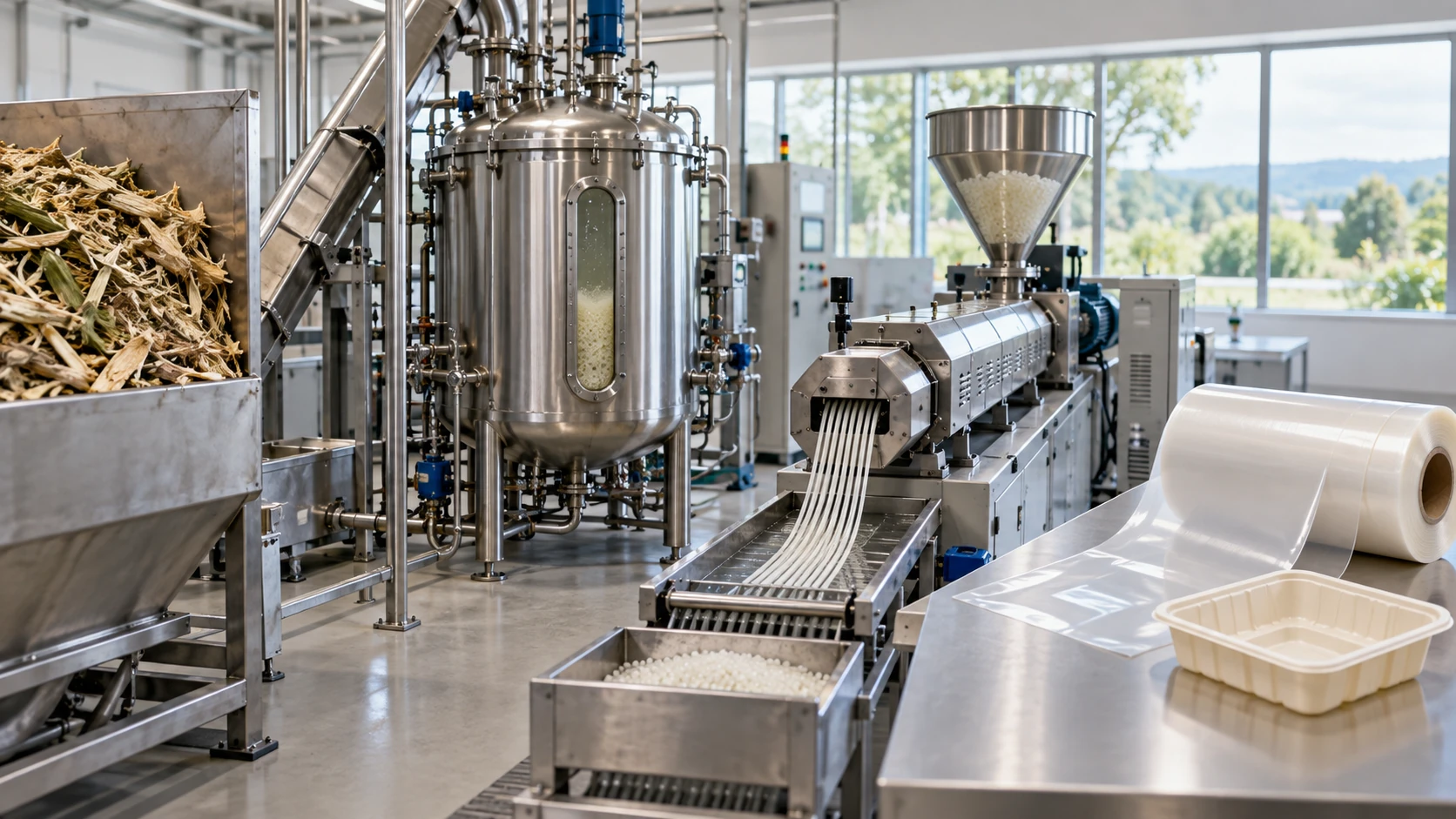
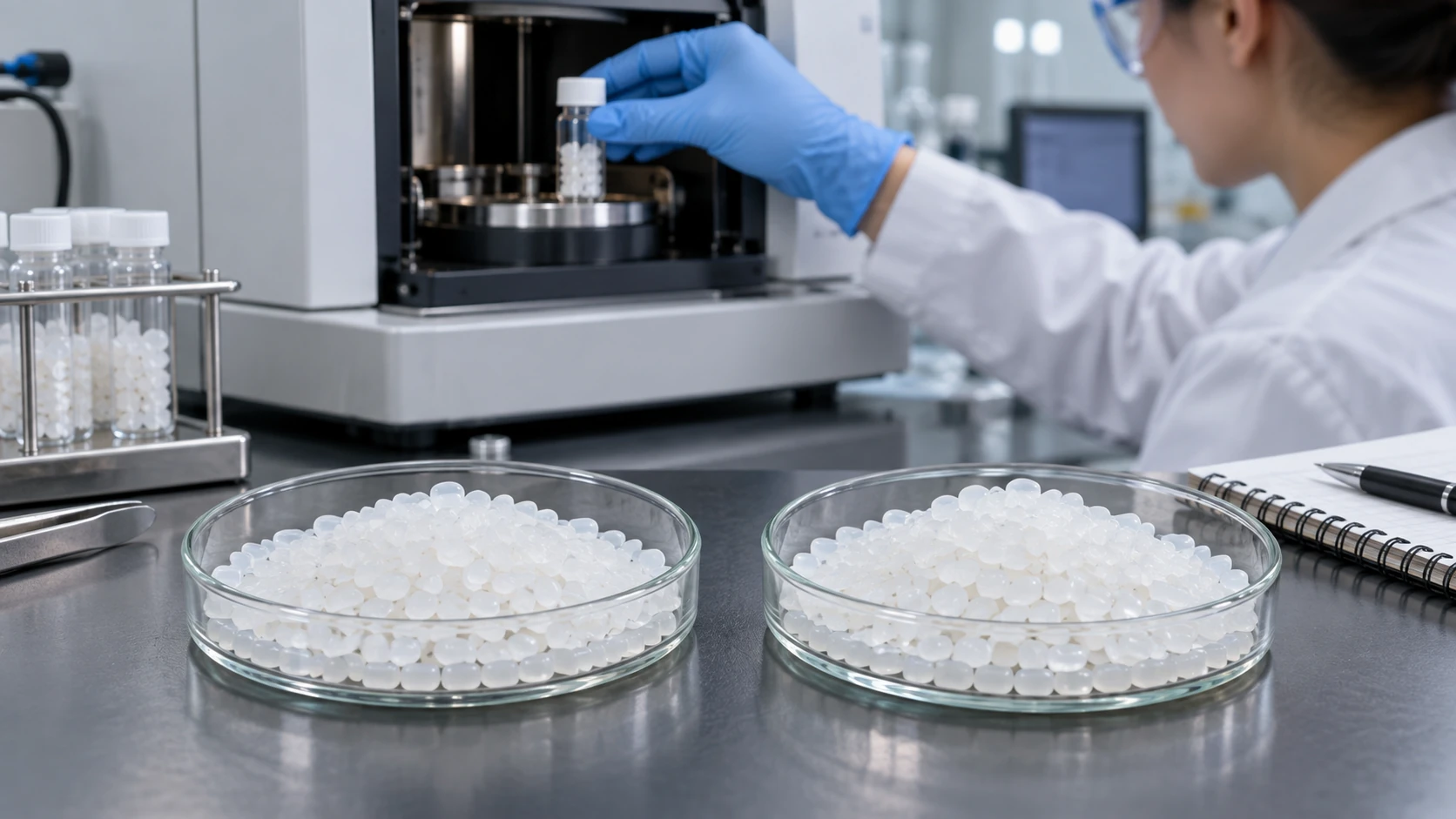
| That Figs. 1, 2, 4, 5, 6 and 7 are explanatory drawings rather than original measured data or product drawings, and that the hero image and Fig. 3 are AI-generated images | Our note | Commentary |
Last updated 2 October 2026. Sources are limited to primary material (European Commission policy documents and legislation, industry association publications, catalogue pages of standards bodies, manufacturers' technical data and announcements, and peer-reviewed papers). No market estimates from research firms are used. Property values are manufacturers' stated typical values, and values for different grades are not set side by side to argue which is better. Statements on environmental impact rest on what regulators and peer-reviewed papers say, with established points kept apart from points under debate. This article recommends or criticises no particular material or company. Property values for materials other than PLA, the texts of standards such as EN 13432, composting test values, the content of the Consumer Affairs Agency's measure orders, and material-by-material LCA comparisons are not stated here because they could not be confirmed. Figs. 1, 2 and 4 to 7 are vector drawings; the hero image and Fig. 3 are AI-generated images. None of them shows a real product, measured data or the progress of degradation.