COMPANY PROFILE / SPACE INDUSTRY
BAE Systems
The part of a British defence major that holds radiation-hardened space electronics and spacecraft. Space revenue is not disclosed
BAE Systems is a large British defence and aerospace company, and the business of the group as a whole is outside the scope of this profile. It covers only two space-related parts of the company. One is radiation-hardened electronics used inside satellites and probes (computers, memory and custom chips, made at a site in Manassas, Virginia). The other is spacecraft, telescopes and ground systems, carried by Ball Aerospace (now Space & Mission Systems), which BAE acquired in 2024. Space revenue is handled as part of the Electronic Systems sector and is not disclosed on its own. The profile does not cover defence in general, and sets out the space facts that published materials confirm.
- BAE Systems in 30 seconds, and where it stands in the space industry
- The logo and how the name is written
- Where the company sits in the space industry
- Scale (the whole group in brief; space is not disclosed)
- Resources committed to space
- What it has done so far
- What comes next
- What the company is aiming for in space
- Map of space-industry partnerships
- Technology, products and services
- The risks this company carries
- Glossary, references and claim-to-source audit
1. BAE Systems in 30 seconds, and where it stands in the space industry
Satellites and manufacturing (secondary)It holds both radiation-hardened electronics and spacecraft
BAE Systems is a large company with wide defence interests including ships, aircraft, land vehicles and cyber, and space is one part of it. The company places its space activities inside the Electronic Systems sector Sourced. The annual report says that sector comprises the US- and UK-based Electronic Systems business and the US-based Space & Mission Systems business.
In space there are two pillars: (1) radiation-hardened electronics (computers such as the RAD750, which the company says go back to the Apollo 11 era) and (2) the spacecraft and telescopes themselves (the former Ball Aerospace, bought in 2024 for about US$5.5 billion). Revenue and headcount for space alone are not disclosed, so this article makes no estimate of its scale Not yet confirmed.
2. The logo and how the name is written

A note on names: the legal entity is BAE Systems plc, a British public company. Its U.S. subsidiary is BAE Systems, Inc. (the website uses labels such as "Electronic Systems (Inc.)"). The old name of the spacecraft and telescope business is Ball Aerospace (a subsidiary of Ball Corporation). BAE Systems, Inc. acquired it in 2024, and it became a new business unit, Space & Mission Systems (the history page on the website). This article uses only the forms found in the company's official materials.
Official site: https://www.baesystems.com/enThe logo is the image used in the header of the official website. Retrieved 17 October 2026.
3. Where the company sits in the space industry
Space radiation gradually damages the materials of electronic parts, lowers their performance and sometimes destroys them. The website says electronic parts in space must keep working across temperatures from -55 to 125 °C over missions of more than 15 years Sourced. Parts that are made resistant to radiation through the chip's materials, design and packaging are called "rad-hard".
Our series explainers on radiation and electronic parts, space-grade semiconductors and COTS, and orbital computing cover this in detail.
4. Scale (the whole group in brief; space is not disclosed)
The table shows the scale of the group and of the sector that contains space (Electronic Systems). Revenue and headcount for space alone are not disclosed Sourced. "Sales" is a measure the company uses (it includes the share of sales of equity-accounted investments) and differs from IFRS revenue.
| Indicator | Year to Dec 2024 | Year to Dec 2025 |
|---|---|---|
| Group sales (£ million) | 28,335 | 30,662 |
| Electronic Systems sales (£ million) | 7,189 | 7,528 |
| Sector order intake (£ billion) | 7.3 | 8.7 |
| Sector order backlog (£ billion) | 12.7 | 13.6 |
| More detail | What it is | Category |
|---|---|---|
| Group employees | 111,400 (31 December 2025, including equity-accounted investments) | Sourced |
| Electronic Systems employees | 22,400 (31 December 2025); 23,300 on 30 June 2026 | Sourced |
| Electronic Systems, first half of 2026 | Sales £3,866 million (£3,599 million a year earlier, up 11% at constant currency). Order intake £4.8 billion and backlog £14.4 billion (end of June 2026) | Sourced |
| What Electronic Systems includes | Electronic warfare, navigation, electro-optical sensors, military and commercial avionics and communications, plus space electronics, spacecraft, and ground and tactical systems | Sourced |
| Space-only revenue, headcount and R&D spending | Not disclosed | Not disclosed |
The figures above are for the whole group and for a sector that includes more than space. They do not show the scale of the space business. The results announcements have no separate space heading and mention space only in the text about the sector Not yet confirmed.
The 2026 half-yearly report says that one business within Electronic Systems grew 29% at constant currency over the same period of 2025, with more activity across "military and national space programmes". The words naming that business could not be read in the text of the document that this article obtained, but from the annual report's classification it appears to refer to Space & Mission Systems Not yet confirmed (Inference).
5. Resources committed to space
The tables show four items (people, money, outside investments and acquisitions, and contracts with public bodies) and the status of main products and missions, as far as primary sources confirm them. "Not in the record" is itself a finding.
| Type of resource | What it is | Category |
|---|---|---|
| People | Headcount for space alone is not disclosed. The Electronic Systems sector had 22,400 (end 2025) and 23,300 (end June 2026). Radiation-hardened electronics are made by the Space Systems group at a site in Manassas, Virginia | Not disclosed / Sourced |
| Money | Space-only R&D and capital expenditure are not disclosed. Group capital expenditure was £957 million (2025). In September 2026 the U.S. government provided US$16 million (Defense Production Act Title III) to qualify RH45 technology | Not disclosed / Sourced |
| Outside investments, acquisitions, joint ventures, divestments | Acquired Ball Aerospace in 2024 (US$5.5 billion, or £4.4 billion; net assets acquired £2,845 million, goodwill £1,507 million). No material acquisitions in 2025. The first-half 2026 report refers to costs of integrating the acquisition | Sourced |
| Contracts or ties with public bodies | Funding from the U.S. Space Force, NASA, NOAA and the U.S. Department of Defense. Kinds of amount are separated in the table below | Sourced |
| Ties with private companies | GlobalFoundries (manufacturing 45 nm SOI for RH45 and Endura), Northrop Grumman (two payloads for the OPIR program, jointly, per the website), Vantor (an agreement signed in the first half of 2026 to build imaging satellites) | Sourced |
Public funding and contracts (reading the kind of amount)
| Item | Amount | Kind of amount | Status |
|---|---|---|---|
| U.S. Space Force Resilient Missile Warning & Tracking (RMWT) MEO Epoch 2 (a constellation of satellites and a ground system) | $1.2 billion (£0.9 billion) | Value of the prime contract (May 2025) | A further $373 million (£277 million) of incremental funding in the first half of 2026. Preliminary Design Review completed less than nine months after award |
| Spacecraft bus for NOAA's Space Weather Next L1 Series mission | $230 million (£171 to 174 million) | Contract value | In development. Described as an upcoming mission |
| U.S. Space Force FORGE C2 (ground system for missile-warning satellites) | $151 million (£114 million) | Contract value | Development of the ground system |
| Demonstrating and qualifying RH45 technology (Defense Production Act Title III funding) | $16 million | Funding provided (announced 16 September 2026) | Demonstration and qualification are still to come |
| U.S. Space Force Space Systems Command (SSC) ultra-compact RF terminals | No amount stated | A contract (announced 15 October 2026) | Design and demonstration. The amount could not be confirmed |
Status of the main products and missions (company's stated values; checked 17 October 2026)
| Product or mission | Type | Main specifications (company's stated values) | Record and status | Stage and date | Source |
|---|---|---|---|---|---|
| RAD750 single-board computer | Radiation-hardened computer | The company says it is on more than 100 satellites, and that it took part in the GPS III navigation payload and in generations of NASA's Mars missions | The results announcement says it is also aboard NASA's SPHEREx (launched 11 March 2025) | In operation | References 1, 6 and 11 |
| RAD5545 SpaceVPX multi-core SBC | Radiation-hardened computer | The company says one board can replace several older-generation cards | Numerical specifications could not be confirmed | Product | Reference 6 |
| Endura SoC (RAD510-based) and SBC | Radiation-hardened processor | RH45 (45 nm) technology made on GlobalFoundries' commercial SOI platform. For high-reliability Class A missions and for Class C/D missions with lighter assurance | On 25 June 2026 the company announced it had demonstrated operation in natural and strategic radiation environments. It is taking orders for software development units | Test and demonstration stage | References 6 and 8 |
| RH45 ASIC Storefront | Platform for custom radiation-hardened chips | Customers design their own ICs using a library of building blocks. Made at GlobalFoundries' fab in Malta, New York | Demonstration and qualification funded with $16 million (16 September 2026) | Qualification still to come | Reference 7 |
| Rad-hard standard parts | Memory, FPGAs and others | SRAM, C-RAM (a chalcogenide non-volatile memory, QML-qualified), anti-fuse PROM, FPGAs | The Manassas site holds QML Class V and Q qualification and is a Department of Defense Category 1A Trusted Source | In supply | Reference 6 |
| Spacecraft (Elevation and Ascent) | Spacecraft product lines | Elevation has common components and defined configurations; its Trek bus variant was chosen for Epoch 2. Ascent now augments Elevation (first half of 2026) | Epoch 2 completed its Preliminary Design Review. NOAA bus; NASA's SPHEREx (spacecraft bus and telescope) | Development and operation | References 1, 2, 3 and 11 |
| NASA space telescopes | Science satellites | The website's history says the former Ball Aerospace built the optical technology and lightweight mirror system of the James Webb Space Telescope (2021). NASA shows 30 August 2026 as the launch date of the Roman Space Telescope | NASA's page has a commissioning section for Roman. BAE Systems' role in it could not be confirmed from the documents obtained | In operation / commissioning | References 5 and 12 |
The website says space radiation speeds up the ageing of electronic parts and materials, and it lists as standard parts C-RAM, a chalcogenide non-volatile memory, anti-fuse PROM built from stacked oxide, nitride and oxide layers, and radiation-hardened SRAM, among others Sourced (the company's account). The combination of materials is itself the tool that gives radiation hardness.
The newer generation of radiation-hardened chips (RH45 and Endura), by contrast, is made on a commercial 45 nm SOI (silicon-on-insulator) platform at GlobalFoundries' U.S. fab. The company's announcements do not explain why SOI helps against radiation, so this article does not either. The company says that building on a commercial platform allows a smaller, lower-power and lower-cost part (the company's claim).
6. What it has done so far
| When | What happened | What it means |
|---|---|---|
| 1956 to 2021 | The former Ball Aerospace (founded 1956) built NASA's first spacecraft OSO-1 (1962), the cameras of Voyager 1 (1977), Deep Impact (2005), Kepler (2009), the New Horizons camera (2015), NOAA-20 (2017), and the optical technology and lightweight mirror of the James Webb Space Telescope (2021), among others (the company's history) | The history of today's Space & Mission Systems |
| From the Apollo 11 era | The company says it has supplied radiation-hardened electronics from Apollo 11 to four generations of Mars rovers and landers (including InSight and Perseverance) | The electronics side's history (the company's account) |
| 2024 | Acquired Ball Aerospace (US$5.5 billion, or £4.4 billion) and made Space & Mission Systems a new business unit | Brought spacecraft and sensors in-house |
| 11 March 2025 | NASA's SPHEREx launched. The results announcement says it carries a BAE-built spacecraft bus, telescope and RAD750, and mentions first-light images | An example of delivery to a science mission |
| May 2025 | Won the prime contract for the U.S. Space Force's RMWT MEO Epoch 2 (US$1.2 billion). The Trek bus variant of the new Elevation line was chosen | A large government space procurement |
| 25 June 2026 | Announced that the Endura SoC had demonstrated operation in natural and strategic radiation environments | A new generation of radiation-hardened processor |
| 30 July 2026 | Half-yearly report: Epoch 2 Preliminary Design Review completed in under nine months; an agreement signed to build Vantor imaging satellites | Progress in the spacecraft business |
| 30 August 2026 | The launch date of NASA's Roman Space Telescope as shown by NASA. The half-yearly report said it was preparing to support the launch | A commissioning phase follows launch |
| 16 September 2026 | US$16 million of U.S. government funding to qualify RH45 technology | Stresses a domestic semiconductor supply chain |
| 15 October 2026 | A Space Force SSC contract to design and demonstrate ultra-compact RF terminals for a space data layer | The latest contract |
7. What comes next
All four items are plans or matters in development, not things that have been achieved Not yet confirmed. The company cautions in its results announcements that forward-looking matters may differ from actual outcomes.
None of the following appears in the primary sources checked for this article Not yet confirmed.
Space-only revenue, headcount and R&D spending / the launch timing of the Epoch 2 satellites and amounts paid so far / the completion timing of RH45 and Endura qualification / the specifications of the RAD5545 / BAE Systems' role in the Roman Space Telescope / the amount of the Vantor contract. Technical details of military use are outside the scope of this article.
8. What the company is aiming for in space
This section includes things the company has not said directly. They are inferences within what the primary sources support, given with their grounds.
| What can be read from the record | Primary-source basis | Category |
|---|---|---|
| It treats space as a growth area and sees demand for its military space business growing rapidly | The half-yearly report: demand for space capabilities is growing rapidly and it is one of the leaders; it says it is building momentum in military space | Sourced (company's account) |
| The centre of space growth is U.S. government procurement | Epoch 2 ($1.2 billion), FORGE C2 ($151 million), the SSC terminals, NOAA ($230 million) and the $16 million for RH45 are all U.S. government orders or funding | Inference |
| It sells the fact that it can make radiation-hardened chips domestically (in the U.S.) | The RH45 announcement (strengthening the domestic supply chain, GlobalFoundries' U.S. fab) and the Trusted Source accreditation of the Manassas site | Sourced (company's account) |
| It aims to widen its price range from high-reliability to lighter-assurance uses using a low-cost commercial platform | The Endura announcement says it will offer Class A (high-reliability) and Class C/D (lighter assurance) products at corresponding price points, built on commercial 45 nm SOI | Inference |
| The scale of its space business will stay hard to check from outside | Space is part of the Electronic Systems sector, with no separate revenue or headcount | Inference |
The June 2026 Endura announcement says the Endura SoC is built with commercial foundry technology (GlobalFoundries' 45 nm SOI) and offers a "smaller, lower-power and more cost-effective solution" Sourced. It also says the company will keep providing products for Class A (high-reliability) missions and, with corresponding price points, for Class C/D (lower mission assurance) missions.
This article reads that as an effort to build parts with higher and lower assurance from the same semiconductor technology, so as to serve cost-sensitive customers such as mass-produced low-orbit satellites as well Not yet confirmed. No prices and no New Space customers are named.
9. Map of space-industry partnerships
10. Technology, products and services
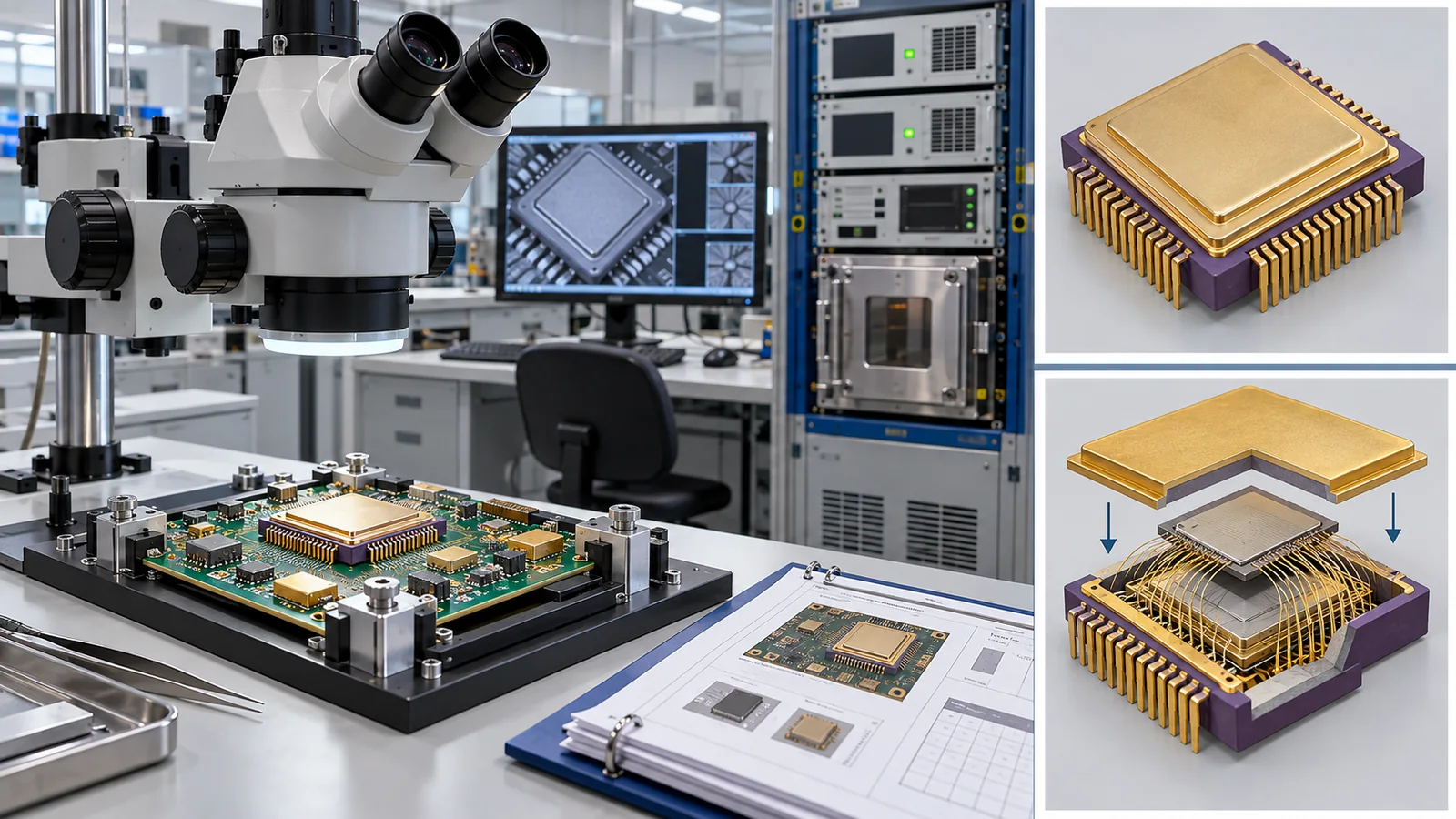
Space products are easiest to follow in two groups: electronics (Space Systems) and spacecraft, sensors and ground systems (Space & Mission Systems) (the website's own grouping).
| Group | Example products and services | The company's description | Category |
|---|---|---|---|
| Electronics: computers | RAD750, RAD5545, Endura (RAD510 SoC) | Single-board computers (SBCs). The RAD750 is said to be on more than 100 satellites | Sourced |
| Electronics: custom chips | The RH45 and RH12 ASIC Storefronts | A platform for designing radiation-hardened custom ICs from a library of building blocks | Sourced |
| Electronics: standard parts | SRAM, C-RAM, PROM, FPGAs, ASSPs | High-reliability parts for space and missile defence. QML-qualified | Sourced |
| Spacecraft | Elevation, Ascent, former Ball science and weather satellites | Spacecraft built from common parts. For NASA, NOAA and the Space Force | Sourced |
| Sensors and optics | Telescopes, infrared and hyperspectral payloads | The JWST optical technology and lightweight mirror, and SPHEREx's telescope | Sourced |
| Ground systems | FORGE C2, Resilient Ground Systems | Software and ground equipment for mission operations and management | Sourced |
A spacecraft must be light to keep launch costs down, yet withstand the temperature swings and radiation of space. The website says BAE Systems' electronic parts are designed for -55 to 125 °C and missions of more than 15 years Sourced. The history page says the former Ball Aerospace built the lightweight mirror system of the James Webb Space Telescope (the mirror material itself is not given in the documents obtained).
The basics of materials and structure are in our series explainers on lightweight structural materials, spacecraft thermal control, and radiation and electronic parts.
11. The risks this company carries
| Risk | What it is | Category |
|---|---|---|
| The scale of space business cannot be seen from outside | Space-only revenue, headcount and R&D spending are not disclosed, so there is no way to check profitability from outside | Sourced |
| Dependence on the U.S. government | The main space contracts and funding come from U.S. government orders. The contract value and the funding actually provided are different things: for Epoch 2, $373 million was provided as incremental funding in the first half of 2026 | Sourced |
| Waiting for qualification and demonstration | Endura and RH45 are still being demonstrated and qualified, and the $16 million is for that work. Completion timing is not announced | Sourced |
| Reliance on outside chip manufacturing | RH45 and Endura are made at GlobalFoundries' fab in New York State | Sourced |
| Integrating an acquisition | The costs of integrating Ball Aerospace were included in the first-half 2025 costs | Sourced |
| Dependence on launch and customer schedules | Launch dates of science satellites such as Roman are set by the customer (NASA) and can change | Sourced |
| Cost and lead time | High-reliability parts take time to qualify. In widening to lower price points, users need to understand where quality lines are drawn | Inference |
12. Glossary
- Rad-hard
- Electronic parts whose materials, design and manufacture are made to resist malfunction and degradation from space radiation.
- RAD750
- BAE Systems' radiation-hardened computer. The company says it is on more than 100 satellites.
- SBC (single-board computer)
- A computer whose functions are gathered on one circuit board.
- SoC and ASIC
- An SoC puts many functions on one chip. An ASIC is a custom chip designed for a specific use.
- QML Class V and Q
- A qualification scheme for high-reliability parts managed by the U.S. Defense Logistics Agency (DLA). V is the highest level.
- Category 1A Trusted Source
- A U.S. Department of Defense designation for a trusted semiconductor supplier, covering design, assembly, test and similar services.
- SOI
- Silicon-on-insulator: silicon laid on an insulating layer.
- Epoch 2
- The second phase of a U.S. Space Force satellite program. Its details belong to defence, so this article covers only the contract value and progress.
- Defense Production Act Title III
- A framework under U.S. law in which the government funds work to strengthen critical technology and industrial capacity.
- Sales (company measure)
- The company's sales measure, including its share of the sales of equity-accounted investments. It differs from IFRS revenue.
13. References
- BAE Systems FY2025 Preliminary Results Announcement (published February 2026, PDF). Group and sector sales and orders, the Electronic Systems description, and the Ball Aerospace acquisition. https://investors.baesystems.com/dam/jcr:430d3195-c990-4bd5-ac85-ec5588380dbf/FY-2025-Preliminary-Results-Announcements-FINAL.2026-02-18-09-10-25.pdf
- BAE Systems Half-yearly Report 2026 (published 30 July 2026, PDF). First-half 2026 results and space-related events. https://investors.baesystems.com/dam/jcr:f84dc82f-4530-419c-b993-74ebb562bf97/HY-2026-Half-Yearly-Report-Final.pdf
- BAE Systems Annual Report 2025 (summary page). Business overview, sales and employees by sector, and the US$1.2 billion US Space Force contract of May 2025. https://annualreport.baesystems.com/2025
- BAE Systems Official website (U.S.), "Space & Mission Systems". The scope of the space business and its product categories. Checked 17 October 2026. https://www.baesystems.com/en-us/who-we-are/space-and-mission-systems
- BAE Systems Official website, "History of Space & Mission Systems". The history of Ball Aerospace, the 2024 acquisition and past missions. https://www.baesystems.com/en-us/who-we-are/space-and-mission-systems/history-of-space-and-mission-systems
- BAE Systems Official website, "Radiation-hardened electronics". Rad-hard electronics (RAD750, RAD5545, Endura, ASICs, memory), QML qualification and the Manassas site. https://www.baesystems.com/en-us/product/radiation-hardened-electronics
- BAE Systems News release, "BAE Systems receives $16 million to qualify RH45 technology for radiation-hardened space missions" (16 September 2026). https://www.baesystems.com/en-us/article/bae-systems-receives-16-million-to-qualify-rh45-technology-for-radiation-hardened-space-missions
- BAE Systems News release, "BAE Systems' Endura processor demonstrates strategic radiation-hardened capability for space missions" (25 June 2026). https://www.baesystems.com/en-us/article/bae-systems-endura-processor-demonstrates-strategic-radiation-hardened-capability-for-space-missions
- BAE Systems News release, "BAE Systems awarded U.S. Space Force contract for space resilient satellite communications terminals" (15 October 2026). https://www.baesystems.com/en-us/article/bae-systems-awarded-u-s-space-force-contract-for-space-resilient-satellite-communications-terminals
- BAE Systems Product page, "Missile Warning & Missile Tracking". RMWT MEO Epoch 2, FORGE C2 and OPIR-related entries. https://www.baesystems.com/en-us/product/missile-warning-and-missile-track
- NASA (JPL) Mission page, "SPHEREx". The launch on 11 March 2025 and the company that supplied the spacecraft. https://www.jpl.nasa.gov/missions/spherex/
- NASA Mission page, "Nancy Grace Roman Space Telescope". The launch date shown and the commissioning pages. Checked 17 October 2026. https://science.nasa.gov/mission/roman-space-telescope/
14. Claim-to-source audit
| Claim in the article | Category | Source |
|---|---|---|
| Legal name, registered office and number, group sales (2024 and 2025), Electronic Systems sales, orders, backlog and employees | Sourced | References 1 and 3 https://investors.baesystems.com/dam/jcr:430d3195-c990-4bd5-ac85-ec5588380dbf/FY-2025-Preliminary-Results-Announcements-FINAL.2026-02-18-09-10-25.pdf https://annualreport.baesystems.com/2025 |
| Group employees of 111,400, the sector structure, and what Electronic Systems includes (space electronics, spacecraft and so on) | Sourced | References 3 and 1 https://annualreport.baesystems.com/2025 https://investors.baesystems.com/dam/jcr:430d3195-c990-4bd5-ac85-ec5588380dbf/FY-2025-Preliminary-Results-Announcements-FINAL.2026-02-18-09-10-25.pdf |
| First half of 2026 Electronic Systems (sales £3,866 million, orders £4.8 billion, backlog £14.4 billion, 23,300 employees) | Sourced | Reference 2 https://investors.baesystems.com/dam/jcr:f84dc82f-4530-419c-b993-74ebb562bf97/HY-2026-Half-Yearly-Report-Final.pdf |
| The acquisition of Ball Aerospace (2024, $5.5 billion or £4.4 billion, net assets £2,845 million, goodwill £1,507 million); no material acquisitions in 2025 | Sourced | Reference 1 https://investors.baesystems.com/dam/jcr:430d3195-c990-4bd5-ac85-ec5588380dbf/FY-2025-Preliminary-Results-Announcements-FINAL.2026-02-18-09-10-25.pdf |
| Integration costs of the acquisition included in the previous first-half costs | Sourced | Reference 2 https://investors.baesystems.com/dam/jcr:f84dc82f-4530-419c-b993-74ebb562bf97/HY-2026-Half-Yearly-Report-Final.pdf |
| RMWT MEO Epoch 2: prime contract $1.2 billion (May 2025), $373 million incremental funding in the first half of 2026, Preliminary Design Review completed | Sourced | References 3 and 2 https://annualreport.baesystems.com/2025 https://investors.baesystems.com/dam/jcr:f84dc82f-4530-419c-b993-74ebb562bf97/HY-2026-Half-Yearly-Report-Final.pdf |
| SPHEREx: spacecraft bus, telescope and RAD750; launch (11 March 2025) and the company that supplied the spacecraft | Sourced | References 1 and 11 https://investors.baesystems.com/dam/jcr:430d3195-c990-4bd5-ac85-ec5588380dbf/FY-2025-Preliminary-Results-Announcements-FINAL.2026-02-18-09-10-25.pdf https://www.jpl.nasa.gov/missions/spherex/ |
| NOAA Space Weather Next L1 spacecraft bus ($230 million) and FORGE C2 ($151 million) | Sourced | References 1 and 10 https://investors.baesystems.com/dam/jcr:430d3195-c990-4bd5-ac85-ec5588380dbf/FY-2025-Preliminary-Results-Announcements-FINAL.2026-02-18-09-10-25.pdf https://www.baesystems.com/en-us/product/missile-warning-and-missile-track |
| The Vantor imaging-satellite build agreement and the addition of the Ascent spacecraft (first half of 2026) | Sourced | Reference 2 https://investors.baesystems.com/dam/jcr:f84dc82f-4530-419c-b993-74ebb562bf97/HY-2026-Half-Yearly-Report-Final.pdf |
| The scope and product categories of Space & Mission Systems | Sourced | Reference 4 https://www.baesystems.com/en-us/who-we-are/space-and-mission-systems |
| The history of the former Ball Aerospace, the 2024 acquisition, the JWST optics and lightweight mirror, and past missions | Sourced | Reference 5 https://www.baesystems.com/en-us/who-we-are/space-and-mission-systems/history-of-space-and-mission-systems |
| Rad-hard electronics: RAD750 (more than 100 satellites), RAD5545, Endura, C-RAM, SRAM, PROM and FPGAs, QML Class V and Q, Category 1A, the Manassas site, -55 to 125 °C and over 15 years | Sourced | Reference 6 https://www.baesystems.com/en-us/product/radiation-hardened-electronics |
| RH45: $16 million (Defense Production Act Title III), GlobalFoundries' Malta fab, integration into the Endura SBC (16 September 2026) | Sourced | Reference 7 https://www.baesystems.com/en-us/article/bae-systems-receives-16-million-to-qualify-rh45-technology-for-radiation-hardened-space-missions |
| Endura SoC: demonstration in natural and strategic radiation environments, commercial 45 nm SOI, Class A and Class C/D, orders for software development units (25 June 2026) | Sourced | Reference 8 https://www.baesystems.com/en-us/article/bae-systems-endura-processor-demonstrates-strategic-radiation-hardened-capability-for-space-missions |
| The Space Force SSC ultra-compact RF terminal contract (15 October 2026). No amount stated | Sourced | Reference 9 https://www.baesystems.com/en-us/article/bae-systems-awarded-u-s-space-force-contract-for-space-resilient-satellite-communications-terminals |
| Joint development with Northrop Grumman of two OPIR payloads, and the Epoch 2 and FORGE C2 entries | Sourced | Reference 10 https://www.baesystems.com/en-us/product/missile-warning-and-missile-track |
| The Roman Space Telescope launch date shown (30 August 2026) and the commissioning section | Sourced | Reference 12 https://science.nasa.gov/mission/roman-space-telescope/ |
| The reading that the business growing 29% in the first half of 2026 is Space & Mission Systems, though the name could not be read | Inference | This article's interpretation from the annual report's classification, since the words naming the business could not be read |
| Space business scale (revenue, headcount, R&D), Epoch 2 launch timing, RH45 and Endura qualification timing, RAD5545 specifications, the Roman role, and the Vantor amount | Not yet confirmed | Could not be confirmed. This article uses neither estimates nor outside figures |
| Integration of RH45 into SBCs, RH45 qualification, progress on Epoch 2, and the terminal and imaging-satellite plans | Not yet confirmed | References 7, 8 and 2 https://www.baesystems.com/en-us/article/bae-systems-receives-16-million-to-qualify-rh45-technology-for-radiation-hardened-space-missions https://www.baesystems.com/en-us/article/bae-systems-endura-processor-demonstrates-strategic-radiation-hardened-capability-for-space-missions https://investors.baesystems.com/dam/jcr:f84dc82f-4530-419c-b993-74ebb562bf97/HY-2026-Half-Yearly-Report-Final.pdf |
| The four types of space company and BAE Systems' position | Our calculation | Our own classification. Companies shown are examples from this series |
| The two pillars of BAE Systems' space business (illustration) | Our calculation | Our own arrangement. Each item rests on references 4 to 6 |
| The readings that space growth centres on U.S. government procurement, that it is widening its price range, and that its space scale will stay hard to check | Inference | This article's interpretation of the make-up of customers, the Endura announcement and the scope of disclosure |
Last updated 17 October 2026 / Troy Technical
Figures in this article come from BAE Systems' results announcements and annual report, its website and news releases, and NASA's publications. No research-firm market estimates, press-based figures, share prices or company valuations have been used. Passages marked "Inference" are this article's interpretation of primary sources, not statements made by the company. Defence in general and technical details of military use are not covered. Plans and dates may change.