Editas Medicine– tag –
-

CRISPR Cancer Therapy 2026: 32 Clinical Trials Underway, Gene-Edited T-Cells Face Efficacy and Off-Target Challenges
Hirschfeld Oncology USA Overview As of 2026, 32 clinical trials are investigating CRISPR-edited immunotherapies for cancer, predominantly focusing on ex vivo gene-edited immune cells. While these therapies generally demonstrate favorable... -
University of Wisconsin-Madison Researchers Develop Platform to Identify Host Genes Hindering CRISPR Editing Efficiency, Paving Way for Enhanced Gene Therapy Efficacy
News-Medical.Net USA Overview A research team at the University of Wisconsin-Madison has developed an innovative platform to systematically identify specific host genes that impede the efficiency of CRISPR gene editing. This study provid... -
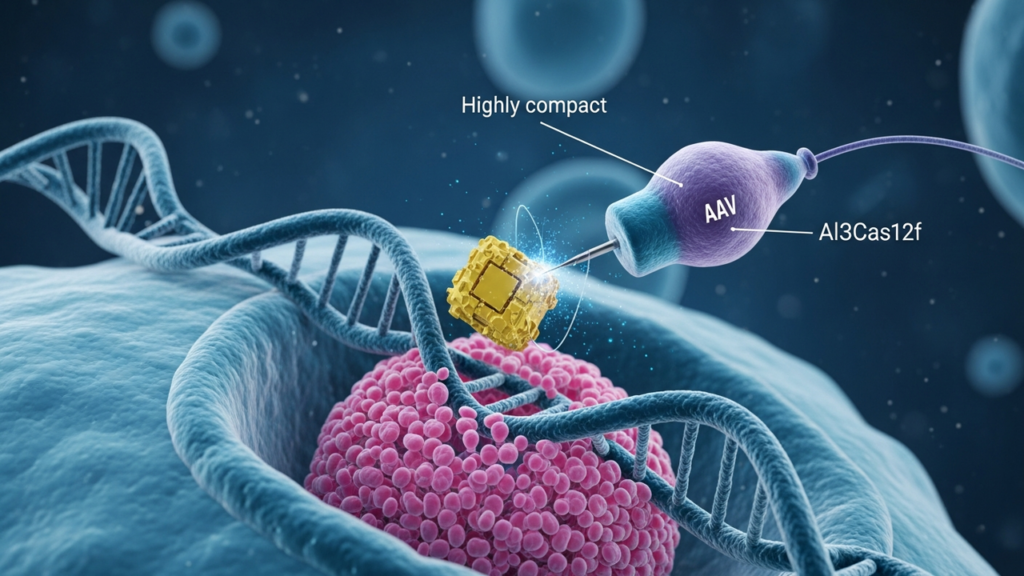
NIH-Funded Team Discovers Miniaturized Al3Cas12f CRISPR Enzyme, Dramatically Enhancing In Vivo Precision Delivery and Solving a Major Gene Therapy Bottleneck
National Institutes of Health (NIH) (News Release) USA Overview An NIH-funded research team has discovered an improved CRISPR gene-editing system enabling precise in vivo gene delivery. This breakthrough involves identifying the naturall... -
Editas Medicine’s CRISPR Candidate EDIT-401 Achieves Over 90% Reduction in LDL Cholesterol in Non-Human Primates, Suggesting Long-Term Durability for Dyslipidemia
Editas Medicine USA Overview Editas Medicine announced updated preclinical data for EDIT-401, a CRISPR-based investigational drug for dyslipidemia, showing highly promising results. A single dose of EDIT-401 in non-human primate models a... -
CRISPR Gene Editing Therapies Limited to Ex Vivo Approvals for Sickle Cell and Beta-Thalassemia in 2026; In Vivo Candidates Show 87% Attack Reduction and 62% Cholesterol Decrease
DeepDNA USA Overview As of August 2026, the only globally approved CRISPR gene-editing therapies are ex vivo treatments for sickle cell disease and transfusion-dependent beta-thalassemia. However, in vivo therapies are demonstrating sign... -
Gene Editing Startup Race Intensifies: CRISPR Therapeutics Leads in Commercialization, Intellia Advances In Vivo Phase 3, Beam Demonstrates Base Editing Versatility Across Human Therapies
New Market Pitch USA Overview A New Market Pitch analysis reveals CRISPR Therapeutics leads in commercialization with approved therapies, while Intellia Therapeutics shows significant progress in Phase 3 in vivo gene editing trials. Beam... -
NIH-Funded Team Discovers Miniaturized CRISPR Enzyme Al3Cas12f, Enabling Precision In Vivo Gene Delivery via AAV Vectors
National Institutes of Health (NIH) USA Overview An NIH-funded research team has discovered a novel, enhanced miniaturized CRISPR gene-editing system, a natural enzyme named 'Al3Cas12f,' capable of targeted in vivo delivery. This enzyme ... -
CRISPR Gene Therapies Expand in 2026: EDIT-101 for Retinitis Pigmentosa Gains FDA Accelerated Approval, Following Casgevy for Sickle Cell Disease
Ubie Doctor's Note Japan Overview By 2026, CRISPR-based gene therapies are rapidly expanding, with EDIT-101 for retinitis pigmentosa receiving FDA accelerated approval in late 2025, building on the 2023 approval of Casgevy for sickle cel... -
CRISPR Gene Therapies Expand Beyond Initial FDA Approvals, Advancing to Late-Stage Trials for Diverse Indications
Ubie Doctor's Note USA Overview As of mid-2026, two CRISPR gene therapies, Casgevy (for sickle cell disease and beta-thalassemia) and EDIT-101 (for Leber congenital amaurosis type 10), have received FDA approval, establishing foundationa... -
Fate Therapeutics’ iPSC-Derived CAR-T FT836 Shows Early Phase 1 Data Suggesting Colorectal Tumor Shrinkage with Nine Engineered Edits
CRISPR Medicine News USA Overview Fate Therapeutics has announced initial Phase 1 data for FT836, an iPSC-derived, off-the-shelf CAR-T cell therapy. In a trial involving nine colorectal cancer patients, reductions in target lesion size a...