Simulation– tag –
-

Pauli Charges Dramatically Enhance Accuracy and High-Pressure, High-Temperature Stability of Machine-Learned Interatomic Potentials
ChemRxiv International Overview This research significantly improves machine-learned interatomic potentials (MLIPs) by integrating Pauli repulsion into a combination of machine-learned pair potentials and short-range atomic neural networ... -
UniFFBench Reveals Critical Role of System-Specific Fine-Tuning for Universal ML Force Fields via Rigorous Experimental Benchmarking of 6 EGraFF Algorithms
ResearchGate International Overview The UniFFBench study rigorously evaluates universal machine learning interatomic potentials (uMLIPs) from six prominent EGraFF algorithms—NequIP, Allegro, BOTNet, MACE, Equiformer, and TorchMDNet—again... -
Machine Learning Accelerates Lead-Free Dual-Absorber Perovskite Solar Cell Design, Paving Way for 32.5% Efficiency
MDPI (Materials journal) Switzerland Overview A new study published in MDPI's Materials journal introduces an automated optimization framework integrating SCAPS-1D simulation with machine learning to accelerate the design of lead-free du... -
GPUMD 4.0 Achieves High-Performance Versatile Materials Simulations with Integrated Machine-Learned Potentials
Materials Genome Engineering Advances Global Overview The high-performance molecular dynamics package GPUMD 4.0 has been released, integrating advanced machine-learning potentials (MLPs) based on the NeuroEvolution Potential (NEP) framew... -
D-Wave Unveils Superconducting Gate-Model Quantum Computing Platform to Accelerate Quantum Chemistry and Materials Science
D-Wave Canada Overview D-Wave announced the development of a gate-model quantum computing platform to complement its annealing systems, aiming to expand the range of complex problems solvable. Based on a superconducting architecture, thi... -
arXiv: New ML Potential ‘TWIN’ Achieves Ab Initio Accuracy and Transferability in Biomolecular Simulations
arXiv Global Overview A new arXiv preprint introduces TWIN (Transferable Water Implicit Network), a highly transferable implicit solvent machine-learning potential (MLP) for biomolecular systems. TWIN, trained solely on ab initio and exp... -
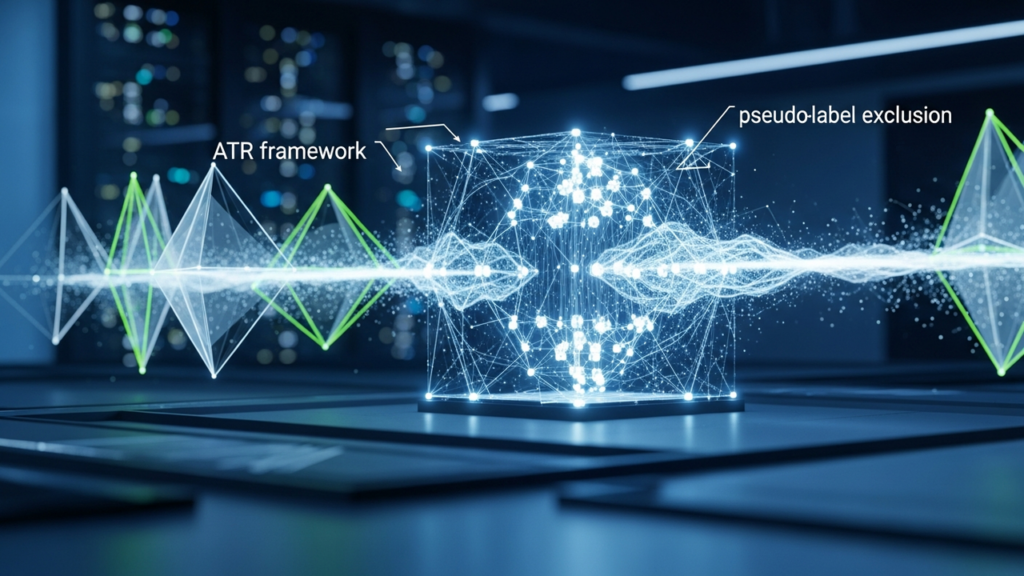
arXiv: New ‘ATR’ Framework Enhances Dynamic Stability of MLIPs by Actively Rejecting Pseudo-Labels
arXiv Global Overview A new arXiv preprint introduces the 'Adaptive Multi-Teacher Routing (ATR)' framework, which significantly improves the reliability and generalization capability of universal machine-learning interatomic potentials (... -
IBM and ORNL Pioneer Hybrid Quantum-AI Simulation for Fusion Reactor Tritium Generation Material
Live Science USA Overview Scientists from IBM and Oak Ridge National Laboratory (ORNL) have successfully conducted the world's first simulation of tritium generation, a rare hydrogen isotope critical for fusion reactors, using a hybrid q... -
ACS Publications Proposes Physics-Driven Computational Paradigm with AI-Assisted Multiscale Simulation for Low-Temperature Flexible Organic Crystals
ACS Publications USA Overview This research proposes a physics-driven computational paradigm for elucidating the properties of low-temperature flexible organic crystals. Combining AI-assisted multiscale simulation and machine-learning fo... -
MLIP Studio Launches Free Web App ‘MLIP Studio,’ Accelerating Molecular and Materials Simulations with Over 60 Universal MLPs
MLIP Studio Blog Unknown Overview MLIP Studio has released 'MLIP Studio,' a free web application enabling atomic calculations for molecules and materials using universal machine-learning interatomic potentials (MLIPs). This application i...