Key Findings
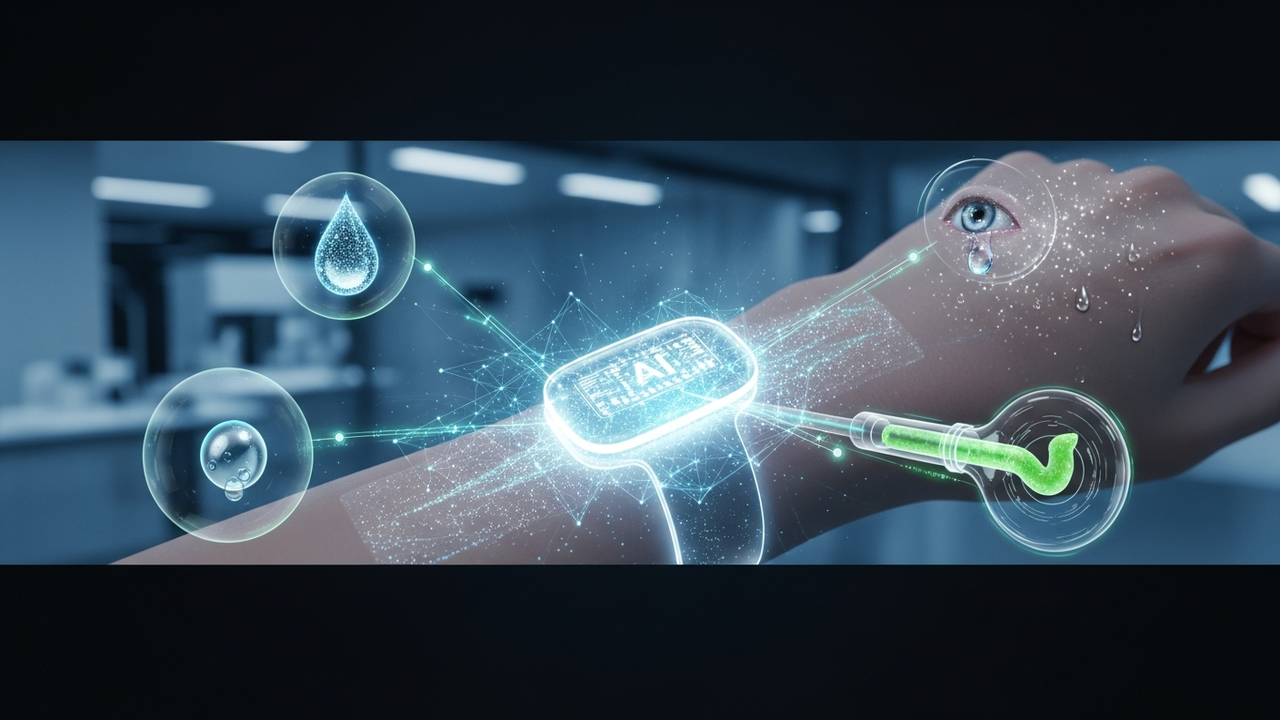
The integration of wearable sensors and artificial intelligence (AI) is ushering in a new era for precision healthcare, enabling continuous and non-invasive monitoring of a wide array of biochemical biomarkers from various bodily fluids. This review emphasizes the significant strides made in electrochemical and optical biosensors designed to detect metabolites, bacteria, and hormones in real-time from biofluids such as sweat, tears, saliva, and interstitial fluid.
Technical / Clinical Details
Electrochemical biosensors operate by measuring changes in electrical signals (current or voltage) resulting from interactions with target molecules, while optical biosensors detect the presence of molecules via changes in fluorescence, absorbance, or surface plasmon resonance. Both types of sensors are continuously improving in sensitivity and selectivity, allowing for the accurate detection of even minute quantities of biomarkers. AI plays a crucial role in processing and interpreting the vast amounts of time-series data generated by these sensors. Machine learning algorithms, including multivariate analysis and deep learning, are instrumental in noise reduction, pattern recognition, anomaly detection, and the construction of predictive disease models. This enables a more comprehensive and accurate assessment of complex health states by integrating multiple biomarker inputs, surpassing the limitations of single-marker diagnostics. Applications span continuous glucose monitoring for diabetics, inflammatory markers for infectious diseases, and hormonal indicators for stress levels.
Background & Context
The paradigm shift in modern medicine from reactive treatment to proactive prevention and personalized care positions wearable technology as a critical enabler. However, conventional wearables have largely been limited to physical metrics such as activity levels and heart rate. The evolution of biofluid-based biosensors bridges this gap by providing access to biochemical information, empowering individuals to obtain medical-grade data in their daily lives. The integration of AI enhances the interpretability of sensor data, allowing healthcare providers to continuously assess remote patients’ health status and facilitate early interventions, thereby becoming indispensable for the advancement of telemedicine and personalized treatment strategies.
Strategic Significance & Outlook
Further integration of multimodal wearable sensors with advanced AI is expected to make future healthcare more predictive, preventive, and personalized. This technology promises broad applications, including continuous monitoring of chronic diseases, early detection of infectious diseases, optimization of athletic performance, and elder care. Challenges such as miniaturization, extended battery life, improved biocompatibility, and ensuring data privacy and security remain, but rapid technological advancements are steadily overcoming these hurdles. Ultimately, AI-powered wearable biosensors are poised to become powerful tools for individuals to better manage their health and for healthcare providers to deliver more tailored and effective care.