Key Findings
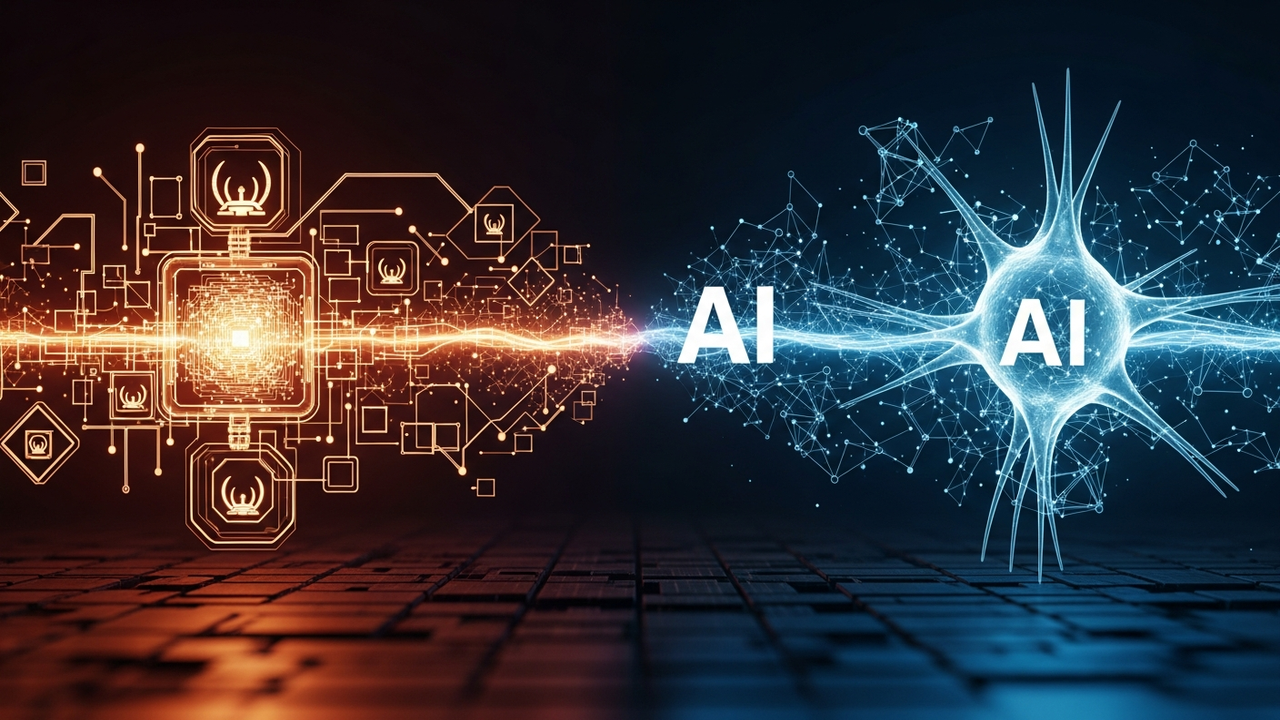
A recent article from Coursera elucidates the fundamental principles and application potential of Quantum Machine Learning (QML). QML represents an emerging field that leverages quantum devices to exponentially enhance and accelerate classical machine learning programs. By utilizing the unique properties of qubits, such as superposition and entanglement, QML can process vast amounts of complex information that are intractable for traditional computers. This is expected to enable faster and more accurate decision-making and problem-solving across diverse sectors, including drug discovery, financial modeling, and materials science.
Technical / Clinical Details
- Core Concepts of QML: QML employs quantum computers as the backend for machine learning algorithms, accelerating tasks such as data processing, feature extraction, pattern recognition, classification, and optimization. The exponential information representation capacity of qubits allows for exploring significantly larger data spaces and potentially discovering more complex correlations than classical computers.
- Utilization of Quantum Devices: QML relies on various quantum devices, including superconducting qubits, ion traps, and photonic quantum circuits. These devices execute quantum algorithms that enable computations otherwise impossible for classical computers.
- Quantum-Enhanced Reinforcement Learning: Reinforcement learning is a crucial area in AI. QML can enable “quantum-enhanced reinforcement learning,” allowing agents to learn optimal behavioral strategies more efficiently. This has applications in decision-making within complex environments and robotics.
- Improvements to AI Models and Neural Networks: Quantum computing possesses the potential to accelerate the training of deep learning models and enhance the expressive power of neural networks. This is expected to lead to the development of more advanced AI systems, overcoming current AI limitations.
Background & Industry Context
Machine learning is a primary driver of modern technological innovation. However, with the advent of big data and the demands of complex AI models, classical computing power is beginning to face its limitations. Quantum computing has emerged as a next-generation technology capable of breaking through this computational barrier, making its application to AI a natural progression. While QML is still in its early research phases, its theoretical potential is exceptionally high, attracting substantial investment from research institutions, corporations, and governments. This convergence is considered key for AI to achieve its next series of breakthroughs.
Strategic Significance & Outlook
As QML technology matures, it is expected to lead to innovative applications in fields such as drug discovery (e.g., simulating novel molecules), financial market analysis (e.g., risk assessment and portfolio optimization), materials science (e.g., designing new materials), and general AI (e.g., more advanced image recognition and natural language processing). Particularly, with increased qubit counts and reduced error rates leading to fault-tolerant quantum computers, QML is highly likely to establish “quantum advantage,” exponentially outperforming current classical ML algorithms. Educational platforms like Coursera explaining QML play a vital role in broadening understanding of this field and fostering future expertise.
Source: https://www.coursera.org/articles/quantum-machine-learning









Comments