Key Findings
A recent report emphasizes the critical role of degassing in the manufacturing process of solid-state batteries (SSBs), stating that the efficient removal of trapped gases and volatile compounds is paramount for achieving optimal battery performance and safety. These entrapped substances can lead to increased internal resistance, shortened cycle life, and compromised safety, making effective removal indispensable.
Technical / Clinical Details
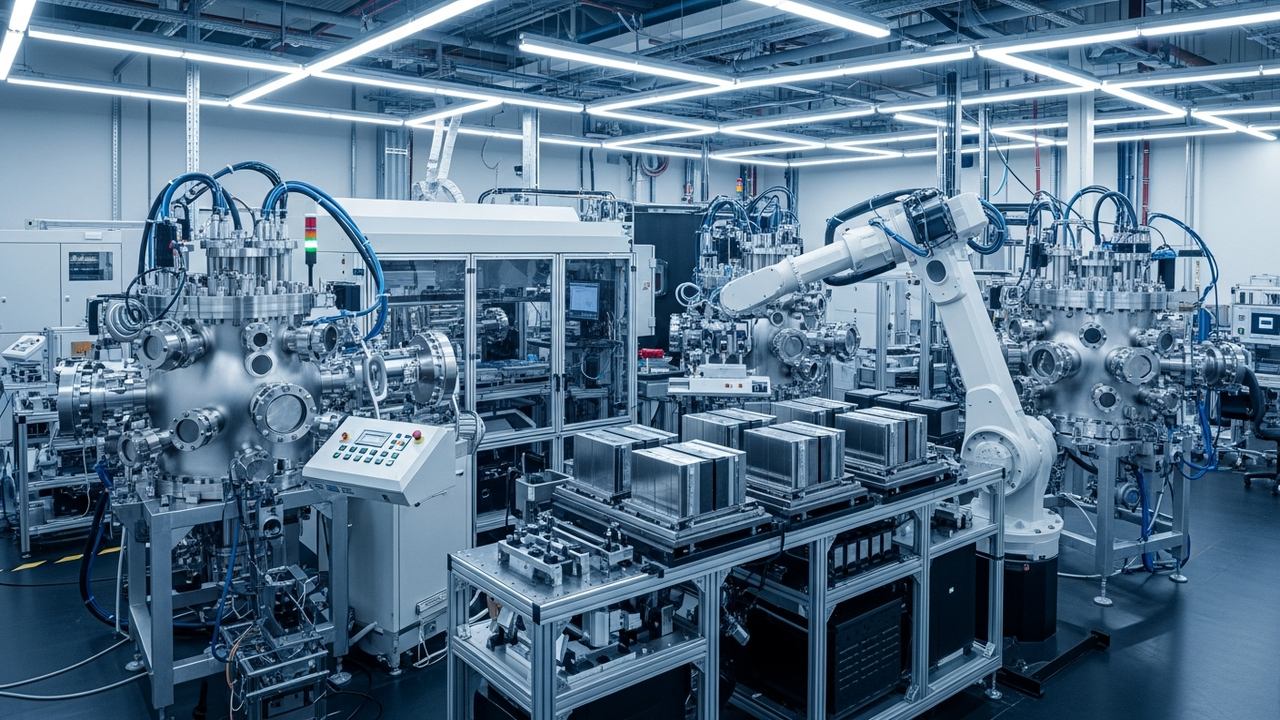
Degassing techniques are primarily applied during electrode preparation, solid electrolyte integration, and the final cell assembly stages. Specifically, vacuum degassing is being thoroughly investigated for its ability to efficiently extract impurities during these processes. For instance, gases generated during high-temperature sintering can expand within the battery, potentially damaging the structural integrity of electrodes and electrolytes. Leading companies like LG Energy Solution have developed multi-stage degassing technologies, including controlled atmosphere processing and vacuum-assisted manufacturing, which are being integrated with dry coating processes to effectively eliminate moisture and volatile compounds. This marks a critical step towards the commercial viability of SSBs aiming for high energy density and extended cycle life.
Background & Context
SSBs are heralded as the next-generation battery technology due to their superior safety and energy density compared to conventional liquid electrolyte lithium-ion batteries. However, their manufacturing processes are complex, requiring the resolution of intricate technical challenges to ensure quality and stability. Degassing is one such challenge, directly impacting manufacturing costs and yield, thus necessitating cost-effective optimization for industrial-scale deployment.
Strategic Significance & Outlook
The development and implementation of efficient degassing technologies are crucial for improving the reliability and mass production capabilities of SSBs. Moving forward, combining advanced degassing with sophisticated online monitoring systems and AI-driven process control is expected to enhance precision and efficiency, thereby accelerating SSB commercialization. This will enable the widespread adoption of solid-state batteries in electric vehicles, portable electronic devices, and stationary energy storage systems, among other applications.
Source: https://eureka.patsnap.com/report-how-to-choose-the-best-degassing-method-for-solid-state-batteries