Key Findings
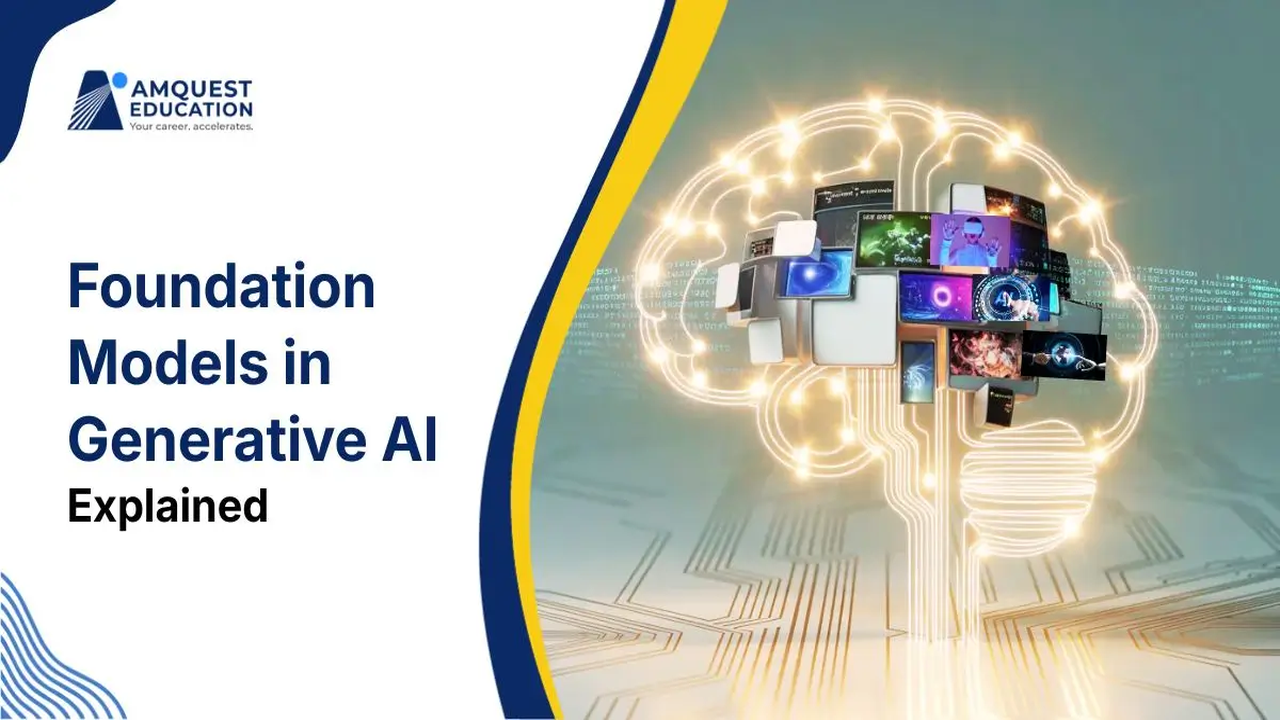
As of mid-2026, the landscape of generative AI foundation models has seen further evolution, expanding both performance and application scope. Google DeepMind has launched its latest models, Gemini 3.5 Flash and Gemini 3.1 Pro, demonstrating native multimodal capabilities that position them competitively against GPT-5 class models. Concurrently, Anthropic, through its Claude Opus 4.8 and Claude 4 series, maintains a strong market presence, particularly distinguished by its unwavering focus on AI safety and ethical considerations. These foundation models, pre-trained on broad datasets, exhibit remarkable versatility for adaptation to diverse tasks.
Technical / Clinical Details
Foundation models are large-scale AI models pre-trained on vast and diverse datasets, making them adaptable to numerous downstream tasks through fine-tuning. Google’s Gemini 3.5 Flash and Gemini 3.1 Pro excel in simultaneously understanding and generating information across multiple modalities—text, images, audio, and video. This enables more complex, human-like interactions and content generation. Anthropic’s Claude Opus 4.8 is particularly acclaimed for its high safety standards and robust mechanisms designed to mitigate harmful outputs. This safety-first approach is gaining significant traction, especially among enterprises and government agencies where ethical considerations for AI deployment are paramount. Continuous improvements in internal architecture, expansion of training datasets, and optimization of learning algorithms underpin the ongoing enhancements in reasoning capabilities, factual accuracy, and efficiency of these models.
Background & Context
The generative AI market is experiencing rapid growth, with tech giants like Google, OpenAI, and Anthropic driving innovation. These companies are in a fierce competition to develop more powerful and versatile foundation models, aiming to create new applications and business models. The enhancement of multimodal capabilities is a crucial step for AI to understand the real world more richly and perform human-like reasoning. Furthermore, as attention to AI ethics and safety grows, Anthropic’s ‘safety-first’ approach sets a vital direction for the responsible integration of AI technology into society. These models hold the potential to transform various industries, including content creation, software development, data analysis, and customer service.
Strategic Significance & Outlook
The introduction of the latest foundation models, such as the Gemini and Claude series, pushes the boundaries of generative AI capabilities and fosters new opportunities for innovation. Multimodal AI will enable more complex problem-solving and natural human-AI interactions, impacting fields like virtual assistance, education, healthcare, and entertainment. A continued focus on safe AI development is essential for building the foundational trust necessary for widespread societal acceptance of these technologies. In the future, these foundation models are expected to evolve further, becoming indispensable as the backbone for more specialized and customized AI solutions across business and research domains. This evolution promises to accelerate global technological progress while ensuring responsible deployment.
Source: https://amquesteducation.com/blog/foundation-models-in-generative-ai/








Comments