Key Findings
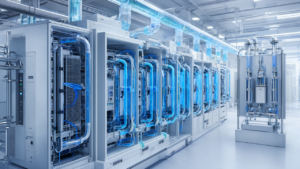
AI data centers are undergoing a fundamental shift in cooling strategy, moving from conventional air cooling to a hybrid approach incorporating both air and liquid solutions. This transition is driven by the soaring power and cooling demands associated with AI training and inference workloads. Significantly, the rapid proliferation of AI has spurred the development of specialized liquid cooling solutions, such as cooling distribution units (CDUs), which have demonstrated the capability to scale to multi-megawatt levels, dramatically enhancing both the sustainability and efficiency of modern data centers.
Technical / Clinical Details
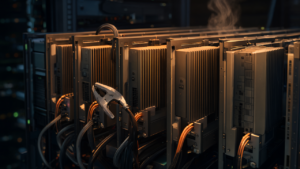
AI workloads, powered by densely packed GPU servers, generate extremely high power densities, pushing traditional air cooling systems beyond their physical limits. Liquid cooling technologies offer superior heat dissipation due to liquids having significantly higher thermal capacity and conductivity than air. Purpose-built cooling distribution units (CDUs) are central to these systems, delivering chilled liquid to server racks and then collecting the heated liquid for re-cooling. These CDUs are designed for flexible scalability, from individual racks to multi-megawatt data center installations, enabling ‘just-in-time’ deployment of cooling capacity. This approach optimizes initial capital expenditures while ensuring robust scalability to meet unforeseen surges in future AI workloads.
Background & Context
The widespread adoption of AI technologies has dramatically increased data center power consumption and heat generation, making energy efficiency and operational cost optimization critical challenges. Amidst growing calls for sustainability, data center operators are under immense pressure to reduce their carbon footprint and improve Power Usage Effectiveness (PUE). Liquid cooling, with its approximate 1,000x greater heat removal efficiency compared to air, is recognized as a breakthrough solution for high-density AI racks. This technology is crucial for addressing the energy and environmental challenges faced by AI-era data centers.
Strategic Significance & Outlook
The adoption of hybrid cooling strategies in AI data centers is expected to accelerate further. This will allow data centers to maximize the utilization of high-performance AI hardware, reduce operational costs, and minimize environmental impact. The evolution of multi-megawatt liquid cooling solutions is not only pushing the boundaries of AI computational capabilities but also establishing new standards for data center design and operation. Building sustainable and scalable AI infrastructure is indispensable for the long-term advancement and societal implementation of AI technology, with liquid cooling set to remain a core enabling technology in this critical evolution.
Get our weekly technology intelligence — free
Receive an infographic that lets you judge at a glance whether each field’s analysis report is worth reading.
Subscribe Free — Weekly Tech Intelligence
By subscribing, you’ll receive Troy-Technical’s weekly technology intelligence newsletter.
- Your email and selected fields are used only to deliver the newsletter.
- We never share your information with third parties.
- You can unsubscribe anytime via the link in each email.
See our Privacy Policy for details.
Takes about a minute · Unsubscribe anytime