Key Findings
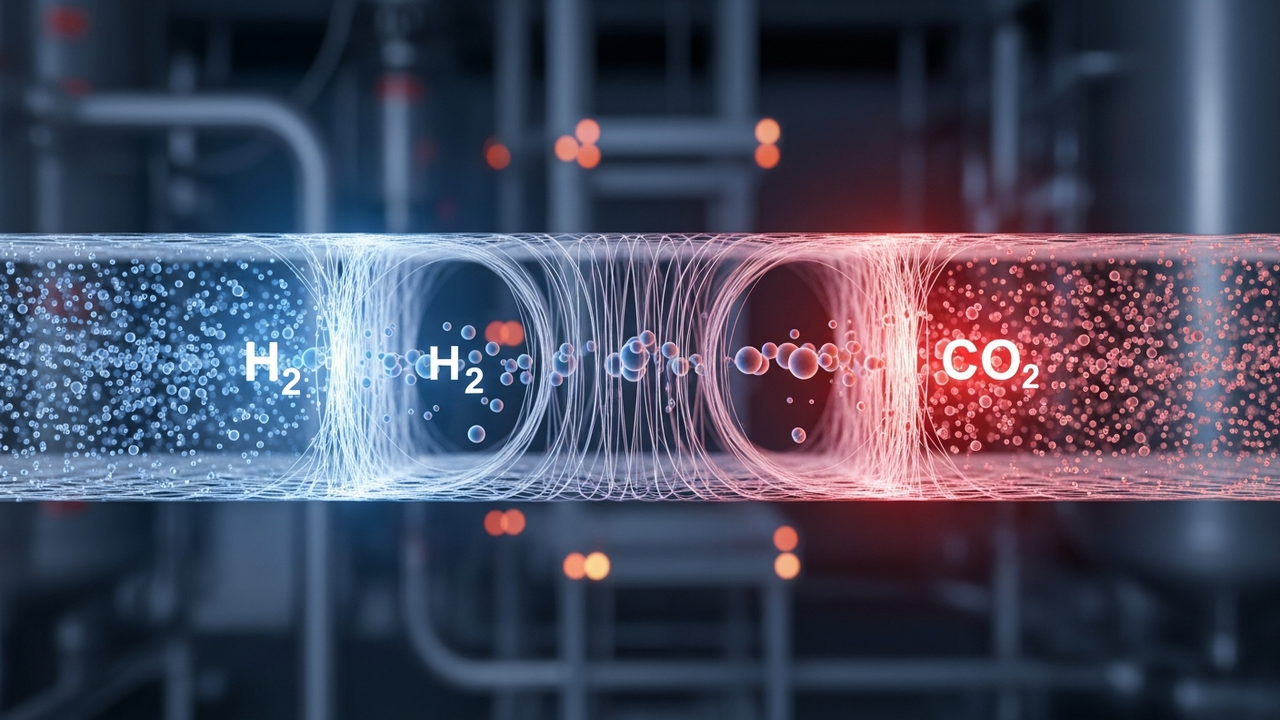
Research published in *ChemComm* reports a significant breakthrough with CALF-15 membranes, characterized by ultrathin properties and narrow nanopores, demonstrating exceptional performance in hydrogen (H2)/carbon dioxide (CO2) separation. This innovative polymeric membrane not only achieves dramatically enhanced H2 selectivity but also ultrahigh H2 permeance, effectively overcoming the long-standing “permeability-selectivity trade-off” limitation in the field of gas separation membranes.
Technical / Clinical Details
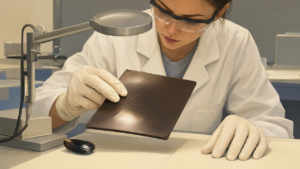
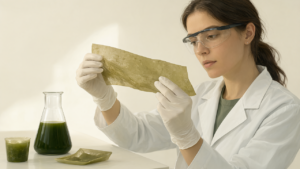
CALF-15 membranes (amorphous materials derived from Co-MOF-74) feature an intrinsically narrow and highly uniform pore structure. The research team precisely fabricated these materials into ultrathin membranes, optimizing the diffusion pathways for gas molecules. Since H2 molecules are smaller than CO2 molecules, they can permeate through narrow pores more efficiently. The CALF-15 membrane, owing to its unique structural properties, excels at distinguishing between the sizes of H2 and CO2 with high precision, selectively allowing H2 to pass while blocking CO2. Measurements revealed a remarkable improvement in both permeability and selectivity for H2/CO2 separation compared to existing high-performance membranes, demonstrating a significant leap in gas separation efficiency.
Background & Context
H2/CO2 separation is critically important for clean energy technologies, particularly in hydrogen production, carbon capture from fossil fuels, and the purification of industrial off-gases. Currently, these separation processes heavily rely on energy-intensive cryogenic distillation or absorption technologies, which pose challenges due to high operating costs and significant environmental footprints. Membrane separation technology has been viewed as a more energy-efficient and environmentally friendly alternative. However, balancing high performance (both high permeability and high selectivity) with manufacturing costs has consistently been a hurdle. This research successfully addresses this challenge, making a substantial contribution to the realization of practical gas separation membranes.
Strategic Significance & Outlook
This breakthrough in CALF-15 membranes represents a crucial step towards the development of a hydrogen energy economy and the reduction of carbon emissions. It has the potential to directly contribute to the low-cost production of high-purity hydrogen and significantly improve the efficiency of large-scale CO2 capture plants. Future efforts will focus on evaluating the commercial scalability, long-term stability, and performance across various gas mixtures for this membrane technology. This innovative polymeric membrane is expected to accelerate the development of clean energy technologies and become an indispensable component in achieving a sustainable society, enhancing global efforts towards a greener future.
Source: https://pubs.rsc.org/en/content/articlepdf/2026/cc/d6cc03274e?page=search
Get our weekly technology intelligence — free
Receive an infographic that lets you judge at a glance whether each field’s analysis report is worth reading.
Subscribe Free — Weekly Tech Intelligence
By subscribing, you’ll receive Troy-Technical’s weekly technology intelligence newsletter.
- Your email and selected fields are used only to deliver the newsletter.
- We never share your information with third parties.
- You can unsubscribe anytime via the link in each email.
See our Privacy Policy for details.
Takes about a minute · Unsubscribe anytime