Key Findings
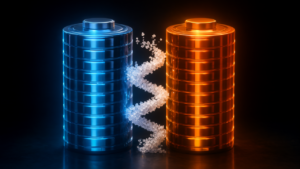
Major industry players such as CATL and BYD are significantly accelerating the commercialization of sodium-ion batteries (NaIBs) for electric vehicle (EV) applications. These companies are prioritizing the development of competitive NaIB-powered EV models by focusing on enhancing cost-effectiveness, safety characteristics, and critically, low-temperature performance, addressing key market demands.
Technical & Market Details
This review article, published in Energy Research & Social Science, highlights the rapid emergence of NaIBs as a viable alternative to lithium-ion batteries in the EV market. CATL has already introduced EV models equipped with NaIBs, demonstrating leading capabilities in mass production and cost competitiveness. BYD is similarly committed to developing vehicles integrating its proprietary NaIB technology, particularly targeting the entry-level EV segment. Both companies are leveraging NaIBs’ inherent advantages, including superior thermal stability, which translates to enhanced safety, and the use of abundant, lower-cost sodium resources compared to lithium. Furthermore, significant research and development efforts are directed towards improving charging/discharging efficiency and capacity retention in cold climates through optimization of electrolytes and electrode materials, a crucial factor for EV adoption in northern regions.
Background & Context
The burgeoning global demand for EVs has exacerbated concerns over lithium resource scarcity and price volatility. In this context, NaIBs, independent of lithium, have rapidly gained prominence as a next-generation power source for EVs. Chinese battery manufacturers, driven by national strategic initiatives, are at the forefront of NaIB development and commercialization, exerting considerable influence on the global EV industry. The proliferation of NaIBs is expected to diversify supply chains, stabilize raw material costs, and ultimately lower the retail price of EVs, thereby fostering broader market penetration.
Strategic Significance & Outlook
Over the next few years, an increasing number of automakers are anticipated to launch EV models featuring NaIBs. Their adoption is likely to be particularly strong in segments where cost and safety are prioritized over maximum range, such as compact EVs, urban mobility solutions, and stationary energy storage systems. Continued technological advancements promise to extend NaIB applicability to mid-range EVs. This will allow NaIBs to coexist with, and in some cases, replace lithium-ion batteries, playing an indispensable role in the global energy transition.
Source: https://www.sciencedirect.com/science/article/pii/S221462962600213X
Get our weekly technology intelligence — free
Receive an infographic that lets you judge at a glance whether each field’s analysis report is worth reading.
Subscribe Free — Weekly Tech Intelligence
By subscribing, you’ll receive Troy-Technical’s weekly technology intelligence newsletter.
- Your email and selected fields are used only to deliver the newsletter.
- We never share your information with third parties.
- You can unsubscribe anytime via the link in each email.
See our Privacy Policy for details.
Takes about a minute · Unsubscribe anytime