Key Findings
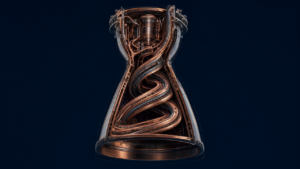
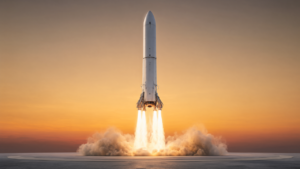
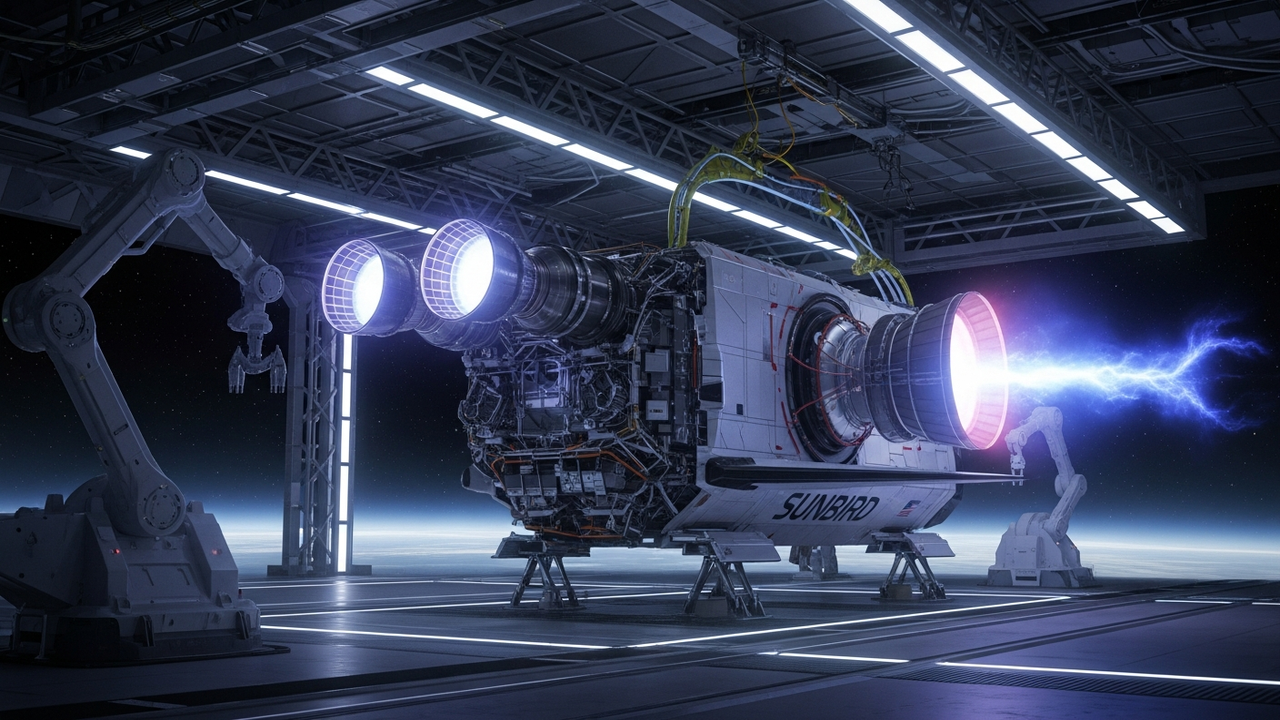
NASA is making significant strides in nuclear fusion propulsion systems, with Pulsar Fusion’s Dual Direct Fusion Drive (DDFD) powering the ‘Sunbird’ spacecraft. This advanced technology promises to deliver exceptionally high specific impulse and power, enabling dramatically faster transit times across the solar system. Concurrently, NASA’s Perseverance Rover has successfully completed the first Mars rover drives autonomously planned by artificial intelligence, utilizing generative AI models.
Technical / Clinical Details
Pulsar Fusion’s DDFD technology harnesses controlled nuclear fusion to generate powerful plasma jets for thrust. This system is designed to provide unprecedented levels of specific impulse—a measure of propulsion efficiency—and high power output, allowing spacecraft to achieve much greater velocities than conventional chemical or current electric propulsion systems. Current development involves rigorous testing of plasma confinement mechanisms and in-depth studies of neutron radiation effects on spacecraft components, crucial steps for realizing the technology’s full potential. In a separate but equally significant development, the Perseverance Rover’s successful AI-driven drives on Mars demonstrate the robust capabilities of generative AI in complex autonomous navigation and mission planning, enhancing operational efficiency and reducing reliance on Earth-based command cycles.
Background & Context
The pursuit of faster and more efficient space propulsion is critical for humanity’s ambitions in deep-space exploration and intra-solar system resource utilization. Current propulsion technologies impose severe limitations on mission durations, payload capacity, and crew exposure to space radiation. Nuclear fusion propulsion offers a potential solution to these challenges, promising a new era of rapid transit and exploration. The integration of advanced AI into mission operations, as demonstrated by the Perseverance Rover, reflects a broader trend toward increasing autonomy and sophistication in space missions, leveraging computational power to optimize complex tasks.
Strategic Significance & Outlook
The practical implementation of nuclear fusion propulsion systems like Sunbird could transform solar system travel, potentially reducing human mission transit times to Mars from months to weeks. This would dramatically expand the scope for scientific exploration, resource development, and eventually, off-world colonization. The ongoing research into fusion power also holds implications for future energy solutions beyond propulsion. Meanwhile, the successful application of generative AI in rover navigation underscores the growing importance of artificial intelligence in enhancing the efficiency and capabilities of future robotic and human space missions, setting a precedent for more autonomous and intelligent space operations.
Source: https://www.techbriefs.com/component/content/article/55397-doc-9941
Get our weekly technology intelligence — free
Receive an infographic that lets you judge at a glance whether each field’s analysis report is worth reading.
Subscribe Free — Weekly Tech Intelligence
By subscribing, you’ll receive Troy-Technical’s weekly technology intelligence newsletter.
- Your email and selected fields are used only to deliver the newsletter.
- We never share your information with third parties.
- You can unsubscribe anytime via the link in each email.
See our Privacy Policy for details.
Takes about a minute · Unsubscribe anytime