Key Findings
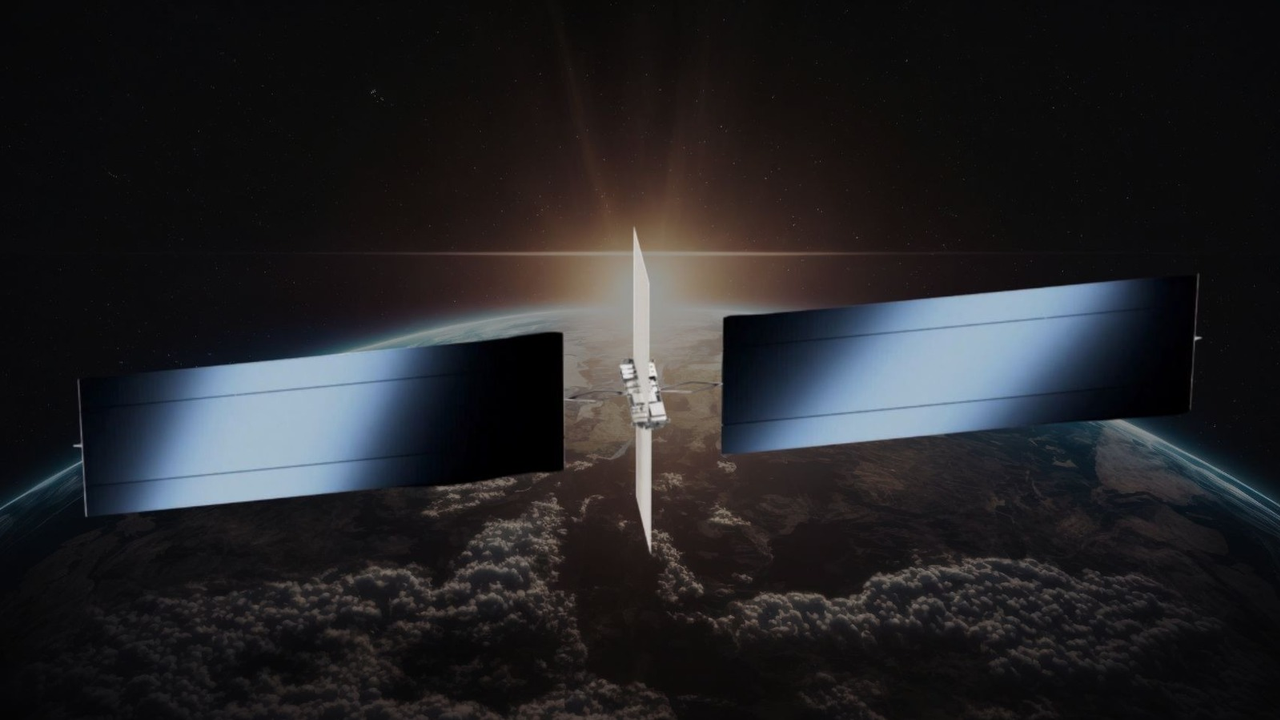
SpaceX has announced plans for ‘AI1,’ the world’s first orbital data center satellite, marking a significant leap in space infrastructure designed to perform artificial intelligence (AI) computation directly in orbit. This innovative satellite will feature modular, swappable compute payloads and a substantial 150-kilowatt solar array for robust power supply. The AI1 satellite aims to address the inherent physical space, resource constraints, and thermal management challenges faced by terrestrial data centers, potentially revolutionizing how AI processing is conducted on a global scale.
Technical / Clinical Details
CEO Elon Musk detailed the ambitious strategy, outlining the integration of dedicated compute racks, high-efficiency solar panels, advanced heat sinks, and inter-satellite laser links into the next generation of Starlink V3 satellites. This approach aims to create a vast constellation comprising up to one million AI-enabled satellites, each possessing significant processing power. This network would deliver ultra-fast, low-latency AI computation services globally, enabling real-time data analysis for Earth observation, climate modeling, autonomous systems, and advanced military applications. The laser links will facilitate direct data transfer between satellites, reducing reliance on terrestrial network infrastructure and enhancing resilience.
Background & Context
The burgeoning demand for AI computation is rapidly outstripping the capacity of conventional Earth-based data centers, which are constrained by physical footprint, immense power consumption, and complex cooling requirements. SpaceX’s orbital data center concept offers a radical solution by moving these operations into space. The microgravity environment presents new opportunities for thermal management, while the vacuum of space acts as a natural heat sink. Furthermore, space-based data processing could provide resilient infrastructure unaffected by terrestrial disasters or geopolitical interference. U.S. lawmakers have also expressed keen interest, advocating for the Department of Defense to explore commercial orbital data centers for national security and technological superiority, indicating growing governmental support for this nascent industry.
Strategic Significance & Outlook
The deployment of such an extensive AI satellite constellation by SpaceX promises to dramatically enhance global data processing capabilities and accelerate AI adoption across various sectors. Potential applications range from real-time environmental monitoring and vastly improved weather forecasting to global support for autonomous vehicles and enhanced autonomy for deep-space exploration missions. However, the sheer scale of this constellation will also introduce challenges related to space traffic management, orbital debris mitigation, and light pollution. Despite these complexities, SpaceX aims to establish a new core pillar of the space economy, building a next-generation digital infrastructure in orbit that could fundamentally transform how humanity leverages AI for scientific, commercial, and strategic purposes.
Source: https://www.bgr.com/2192402/spacex-first-ever-orbital-data-center-craft-powerful-payload/
Get our weekly technology intelligence — free
Receive an infographic that lets you judge at a glance whether each field’s analysis report is worth reading.
Subscribe Free — Weekly Tech Intelligence
By subscribing, you’ll receive Troy-Technical’s weekly technology intelligence newsletter.
- Your email and selected fields are used only to deliver the newsletter.
- We never share your information with third parties.
- You can unsubscribe anytime via the link in each email.
See our Privacy Policy for details.
Takes about a minute · Unsubscribe anytime