Key Findings
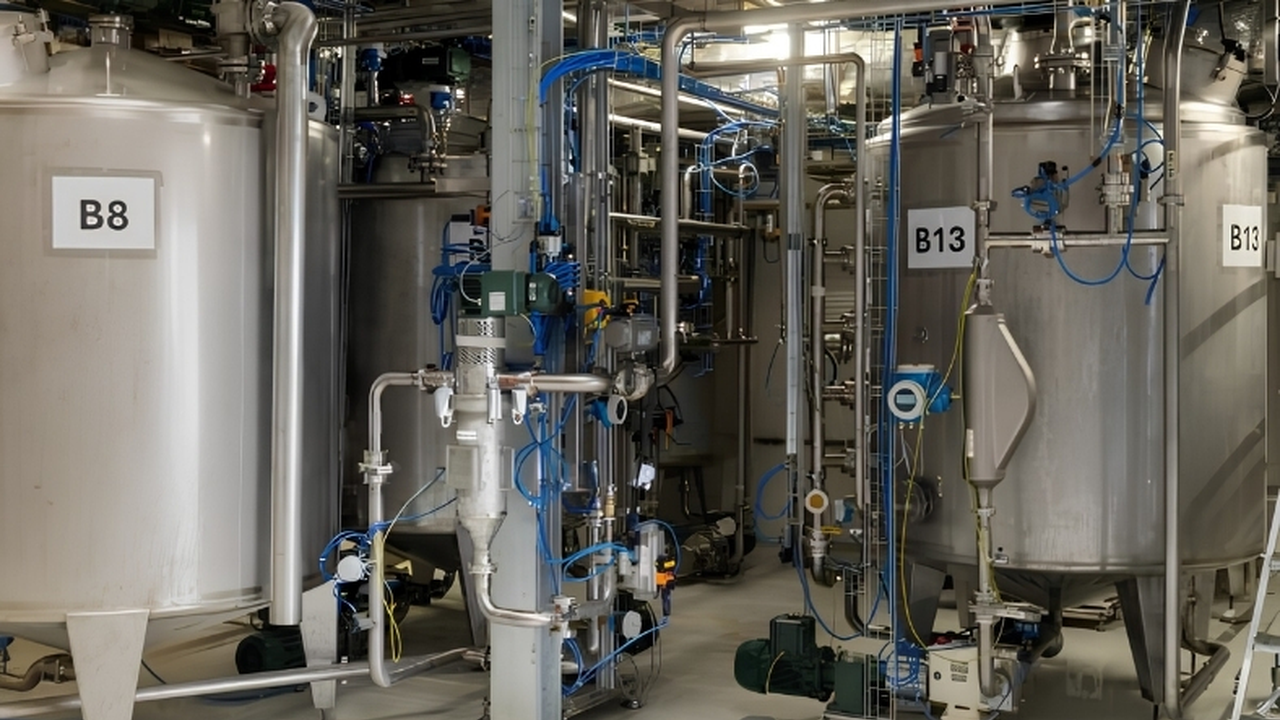
Traceless has officially launched industrial production of its novel bio-based, home-compostable plastic material at a new facility in Hamburg, Germany. With an initial annual capacity of 3,000 tons, this breakthrough represents a significant step towards commercializing truly sustainable alternatives to conventional fossil-derived plastics. The company has already secured major customers, including packaging giant Mondi, leading retailer OTTO, and chemical distributor Biesterfeld, underscoring strong market confidence and demand for its eco-friendly solution.
Technical / Clinical Details
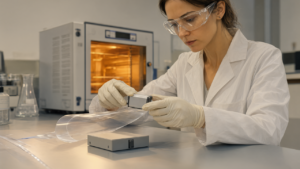
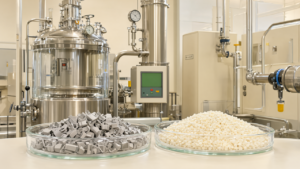
The Traceless material is a proprietary polymer developed through a unique extraction process from agricultural residues, transforming what would typically be waste into a valuable resource. Its core innovation lies in its complete biodegradability and certification for home composting, which sets it apart from many existing bioplastics that often require industrial composting facilities. This feature offers consumers and businesses a convenient, low-barrier solution to plastic waste. The manufacturing process is designed to be highly resource-efficient, leading to a significantly reduced carbon footprint compared to traditional plastic production methods. The versatility of the material allows for application across various product categories, from packaging films to molded goods, enabling a broad impact on reducing plastic pollution.
Background & Context
The global urgency to address plastic pollution and climate change has intensified the search for sustainable material solutions. While the bioplastics market has seen growth, challenges such as limited compostability, performance trade-offs, and infrastructure requirements have hindered widespread adoption. Traceless addresses these critical gaps by offering a high-performance material that is genuinely home-compostable, simplifying end-of-life management and reducing reliance on specialized facilities. This commercial rollout signals a maturing market for bio-based materials and a strong industry commitment to transitioning towards more circular supply chains. The utilization of agricultural residues also aligns with principles of resource efficiency and waste valorization, adding further environmental and economic benefits.
Strategic Significance & Outlook
The commencement of industrial production by Traceless marks a pivotal moment for the bioplastics sector. This scaling up of manufacturing capabilities is crucial for meeting the growing demand for sustainable materials and demonstrates the feasibility of bringing advanced bio-based solutions to market. The company plans further expansion to increase its production volume and broaden its application scope across various industries. Such innovations are instrumental in driving systemic change within the plastics economy, fostering a shift away from linear “take-make-dispose” models towards more regenerative and circular approaches. The success of Traceless will likely encourage further investment and development in next-generation sustainable polymers, impacting global efforts to achieve environmental targets and create a more sustainable future.
Get our weekly technology intelligence — free
Receive an infographic that lets you judge at a glance whether each field’s analysis report is worth reading.
Subscribe Free — Weekly Tech Intelligence
By subscribing, you’ll receive Troy-Technical’s weekly technology intelligence newsletter.
- Your email and selected fields are used only to deliver the newsletter.
- We never share your information with third parties.
- You can unsubscribe anytime via the link in each email.
See our Privacy Policy for details.
Takes about a minute · Unsubscribe anytime