Key Findings
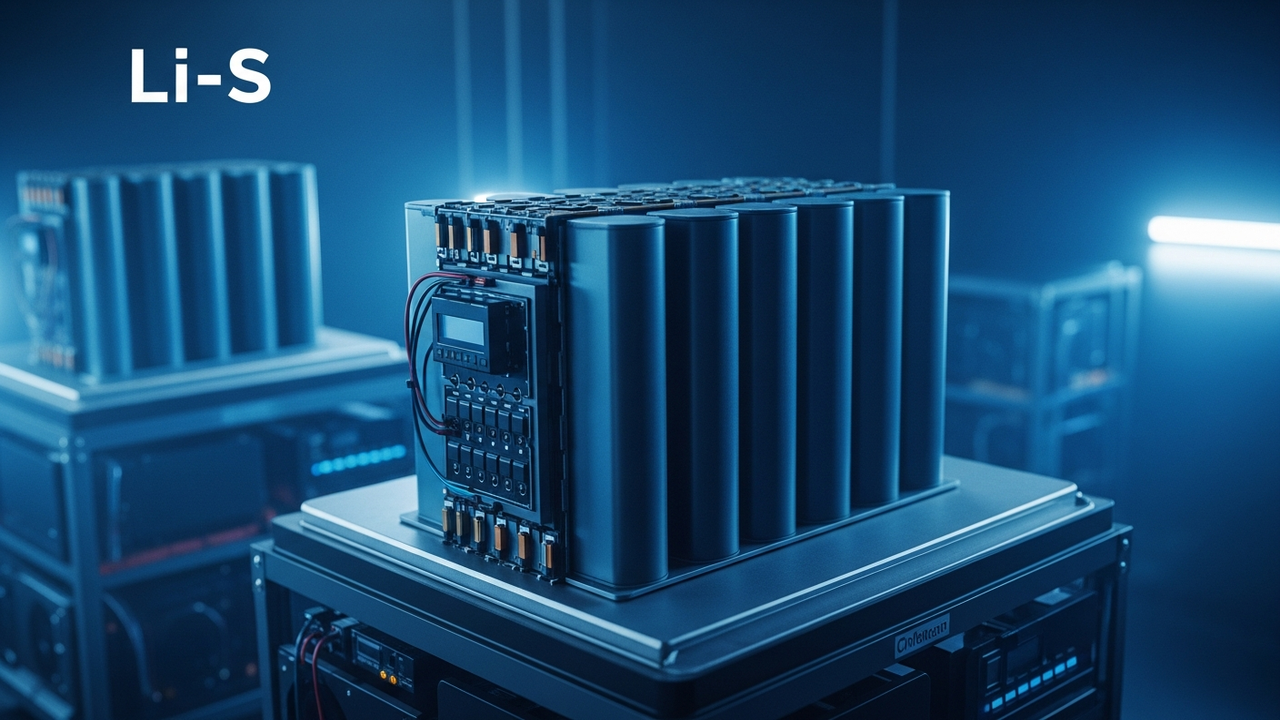
Lithium-sulfur (Li-S) batteries are rapidly advancing for drone applications, poised to dramatically extend flight endurance beyond the limitations of traditional lithium-ion batteries. This technology theoretically offers an astonishing energy density of up to 2,600 Wh/kg, significantly outperforming current conventional battery systems.
Technical & Clinical Details
The primary appeal of Li-S batteries lies in their exceptionally high theoretical energy density. However, practical implementation has faced challenges such as capacity degradation due to the polysulfide shuttle effect and volume changes in electrode materials. Leading companies like LG Energy Solution are employing innovative approaches to overcome these hurdles. For instance, advanced cathode designs, including carbon nanotube-sulfur composite cathodes, coupled with optimized electrolytes, effectively suppress the polysulfide dissolution. These efforts have enabled practical Li-S cells to achieve energy densities of 400-500 Wh/kg, roughly twice that of current lithium-ion batteries. This high energy density translates into significantly extended flight times for drones, enabling longer-range missions and the transport of heavier payloads.
Background & Industry Context
The drone market is experiencing rapid growth across diverse sectors, including logistics, surveillance, agriculture, and defense. However, battery energy density has consistently acted as a bottleneck, limiting flight duration and payload capacity, which in turn has hampered further widespread adoption and utilization of drones. While lithium-ion batteries are ubiquitous, their energy density limits have become apparent. Li-S batteries also offer strategic advantages by utilizing abundant sulfur as a cathode material, leading to reduced raw material costs and decreasing dependence on critical and often scarce metals like cobalt and nickel, which are essential for lithium-ion batteries.
Strategic Significance & Outlook
The commercialization of Li-S batteries holds the potential to revolutionize the drone industry. Extended flight times will lead to more efficient operations, foster the creation of new applications, and enhance the economic value of drone services. While research continues to improve cycle life and further stability, practical achievements by companies like LG Energy Solution are strongly pushing for early commercialization in specific high-performance applications such as aerospace, defense, and High-Altitude Pseudo-Satellites (HAPS). Li-S batteries are emerging as a crucial key to realizing next-generation aerial mobility.
Get our weekly technology intelligence — free
Receive an infographic that lets you judge at a glance whether each field’s analysis report is worth reading.
Subscribe Free — Weekly Tech Intelligence
By subscribing, you’ll receive Troy-Technical’s weekly technology intelligence newsletter.
- Your email and selected fields are used only to deliver the newsletter.
- We never share your information with third parties.
- You can unsubscribe anytime via the link in each email.
See our Privacy Policy for details.
Takes about a minute · Unsubscribe anytime