Key Findings
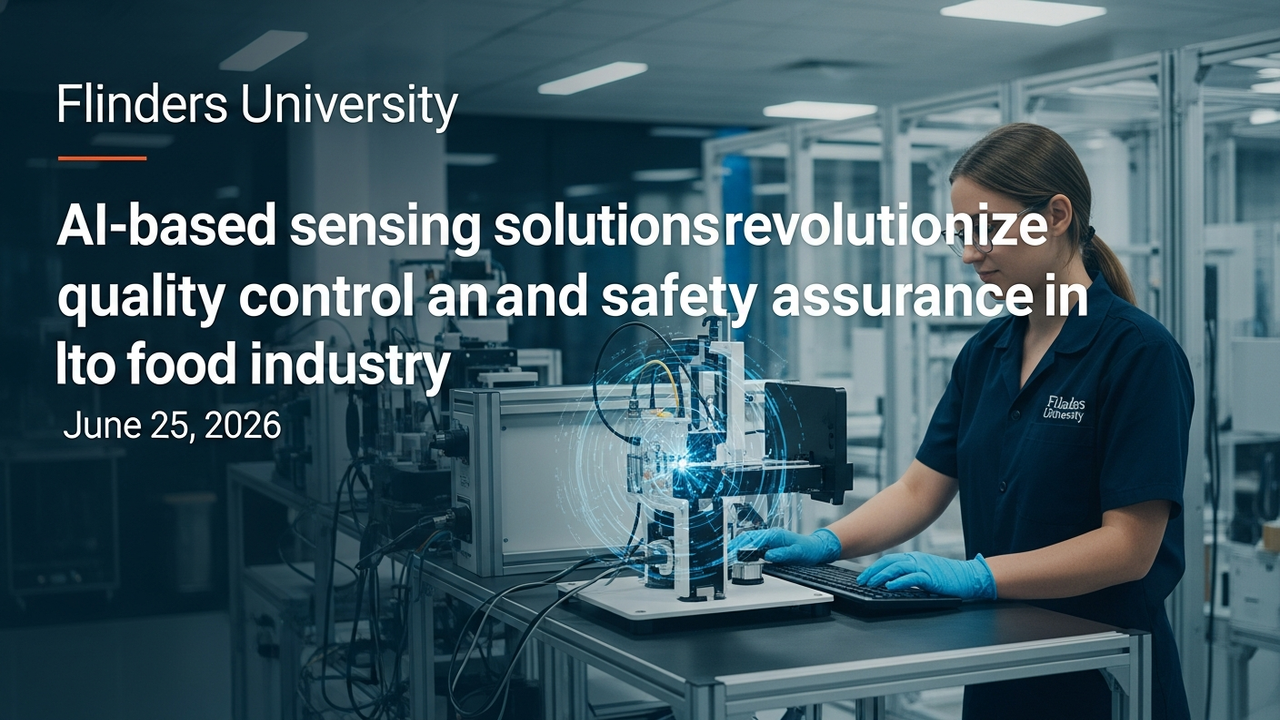
As research from Flinders University highlights, Artificial Intelligence (AI)-based sensing solutions are fundamentally transforming real-time quality control and proactive safety assurance in the food industry. This technology integrates low-cost, non-invasive sensors with advanced machine learning algorithms, enabling unprecedented levels of monitoring and optimization for food quality and safety.
Technical/Clinical Details
At the core of AI-based sensing solutions is the synergy between advanced sensing technologies and sophisticated AI models. For instance, electrochemical, optical, and acoustic sensors are used to detect specific biomarkers indicative of microbial growth, freshness, or contaminant presence. These sensors collect data non-invasively or with minimal intrusion directly from food products. The vast amounts of collected data are analyzed in real-time by machine learning algorithms, which instantly identify quality degradation, contamination, or anomalous patterns. This automated analysis is significantly faster and more accurate than human-driven methods, optimizing real-time decision-making across diverse applications such as food quality monitoring, smart packaging, and supply chain tracking. This leads to reduced product waste and enhanced consumer safety.
Background & Context
The food industry faces increasing demands from consumers and regulatory bodies regarding safety, quality, and sustainability. Traditional quality control methods often rely on sampling and time-consuming laboratory analyses, making real-time intervention difficult. The globalization of food supply chains further heightens the need for traceability and rapid problem detection. AI-based sensing is a critical technology addressing these challenges, offering more efficient and reliable quality assurance systems.
Strategic Significance & Outlook
Flinders University’s research demonstrates the immense potential that AI-based sensing solutions bring to the food industry. In the future, these technologies are expected to evolve further, with advanced predictive analytics, autonomous quality control, and integration with blockchain technology, further enhancing the transparency and efficiency of the entire food supply chain. This will lead to reduced food waste, improved resource efficiency, and the provision of safer, higher-quality food to consumers, accelerating the transition to a sustainable food system. Applications to other industrial sectors are also within sight.
Source: https://researchnow.flinders.edu.au/files/229408216/Zhan_AI-based_P2026.pdf
Get our weekly technology intelligence — free
Receive an infographic that lets you judge at a glance whether each field’s analysis report is worth reading.
Subscribe Free — Weekly Tech Intelligence
By subscribing, you’ll receive Troy-Technical’s weekly technology intelligence newsletter.
- Your email and selected fields are used only to deliver the newsletter.
- We never share your information with third parties.
- You can unsubscribe anytime via the link in each email.
See our Privacy Policy for details.
Takes about a minute · Unsubscribe anytime