
Background
Diagnostic technologies are pivotal for early disease detection and advancing personalized medicine. Since its isolation in 2004, graphene has been lauded as a ‘wonder material,’ with its unparalleled properties accelerating applied research across numerous sectors. Within the biosensor field, graphene is poised to overcome conventional material limitations, paving the way for superior device performance. Furthermore, escalating environmental concerns and more stringent food safety regulations are fueling demand for sophisticated, high-performance sensor technologies.
Key Findings
A recent bibliometric analysis underscores the rapid expansion of graphene and its derivatives within biotechnology. The study specifically highlights that graphene-based materials are instrumental in creating biosensors with unprecedented sensitivity and selectivity, critically impacting clinical diagnostics, environmental monitoring, and food safety applications.
Technical Details
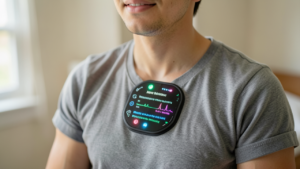
Graphene’s exceptional electrical, mechanical, and optical properties make it an ideal foundational material for advanced biosensors. Its integration with nanometals, such as gold nanoparticles, and sophisticated 3D architectures like porous graphene, significantly enhances sensor surface area and conductivity. This synergistic approach dramatically boosts biomolecule immobilization efficiency and signal amplification, enabling highly sensitive detection of analytes even at extremely low concentrations, thereby substantially improving detection limits over conventional methods. An exciting emerging trend is the development of portable, non-invasive diagnostic technologies, illustrated by portable biosensors designed for breath acetone detection to aid in pre-diabetes diagnosis. Such innovations not only enhance patient convenience but also broaden access to crucial early diagnostic insights.
Strategic Outlook
The future for graphene derivative-based biosensors is exceptionally promising. Continued research and development are anticipated to yield smaller, more multifunctional devices. These next-generation sensors are expected to be integrated into wearable and implantable technologies, facilitating continuous, real-time health monitoring and environmental surveillance. This trajectory will significantly advance preventive medicine, telemedicine, and the pursuit of a sustainable society, simultaneously catalyzing the creation of new industrial opportunities.
Source: https://revistas.ug.edu.ec/index.php/easi/es/article/view/2980/6246
Get our weekly technology intelligence — free
Receive an infographic that lets you judge at a glance whether each field’s analysis report is worth reading.
Subscribe Free — Weekly Tech Intelligence
By subscribing, you’ll receive Troy-Technical’s weekly technology intelligence newsletter.
- Your email and selected fields are used only to deliver the newsletter.
- We never share your information with third parties.
- You can unsubscribe anytime via the link in each email.
See our Privacy Policy for details.
Takes about a minute · Unsubscribe anytime







Comments