Key Findings
The National Centre of Competence in Research (NCCR) MARVEL, led by EPFL in Switzerland, has played a pivotal role in advancing AI-driven materials discovery, contributing to the creation of four startups that have collectively secured over $800 million in early-stage funding. MARVEL championed a paradigm shift by deeply integrating physics, chemistry, computer science, and machine learning, leading to the development of numerous AI models now widely utilized across the field.
Technical / Clinical Details
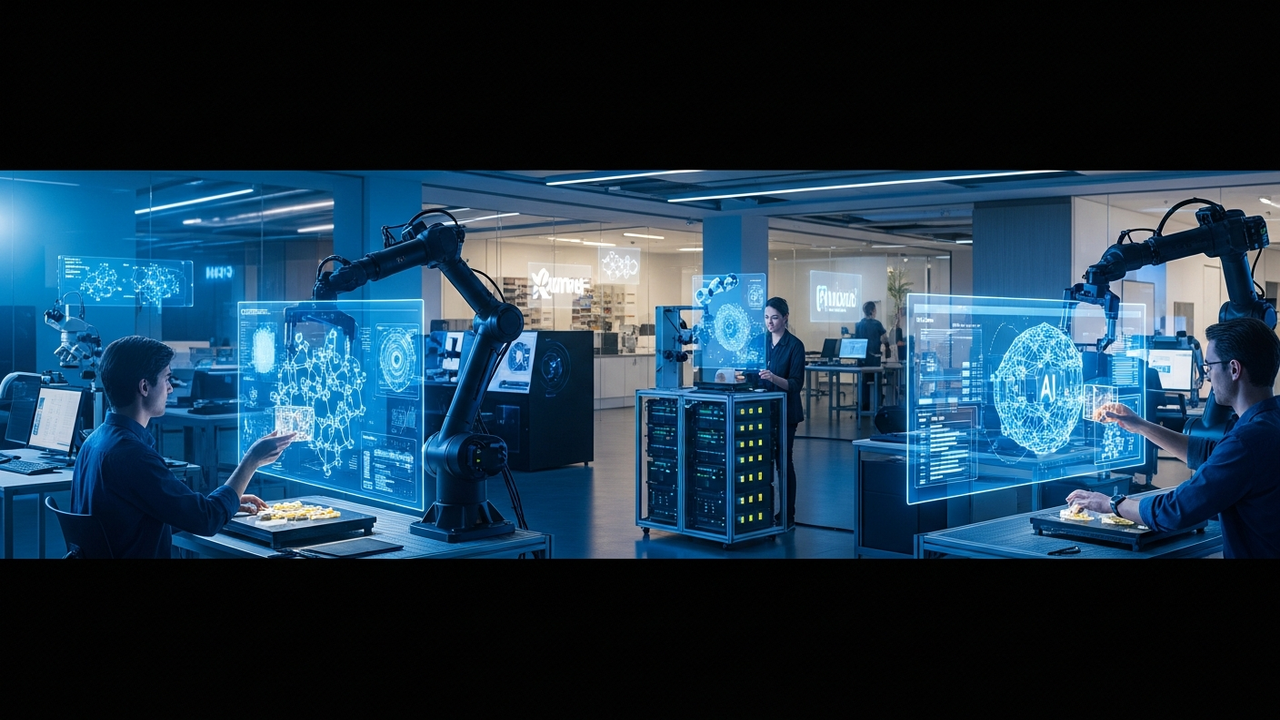
MARVEL pioneered a data-driven approach in material science, combining computational methods such as first-principles calculations, density functional theory (DFT), and molecular dynamics simulations with advanced machine learning algorithms. This integration accelerated the prediction of new material properties, optimization of structures, and exploration of synthesis pathways. This holistic approach enables a comprehensive understanding of materials from atomic-level behavior to macroscopic properties, facilitating more efficient material design.
Specific application areas that have benefited include:
- Renewable Energy Materials: Discovery of new, more efficient materials for solar cells and catalysts.
- Advanced Batteries: Development of next-generation battery materials with improved energy density, charging speed, and safety.
- High-Performance Manufacturing: Creation of lightweight, high-strength, and heat-resistant materials for aerospace, automotive, and semiconductor industries.
Many of the AI models and software tools developed by MARVEL have been open-sourced, enabling their adoption by research institutions and companies globally, thereby fostering innovation across the wider materials discovery community. This fusion of computational materials science and AI has enabled discoveries that would have been unattainable through purely experimental approaches.
Background & Context
The discovery and development of new materials represent a significant bottleneck for innovation and are crucial for enhancing product performance and sustainability across many industries. However, this process is historically time-consuming and expensive. Research hubs like MARVEL aim to address this bottleneck by fostering interdisciplinary collaborations and applying cutting-edge technologies like AI to material science. Switzerland, with its strong academic institutions and precision manufacturing industry, demonstrates how a robust digital innovation ecosystem can yield significant results in materials science.
Strategic Significance & Outlook
The success of the MARVEL hub demonstrates that AI-driven material discovery can generate substantial economic value, not only in academic research but also through practical industrial applications. Moving forward, this model is expected to inspire and facilitate the adoption of AI in other scientific domains, serving as a blueprint for the transfer of knowledge and technology from fundamental research to startups and ultimately to industry. Switzerland’s digital ecosystem is poised to continue advancing AI in materials science, strengthening its position in global technological competition and potentially leading to a continuous stream of groundbreaking material solutions for a sustainable future.
Source: https://quantumzeitgeist.com/marvel-hub-materials-startup-funding-helped/
Get our weekly technology intelligence — free
Receive an infographic that lets you judge at a glance whether each field’s analysis report is worth reading.
Subscribe Free — Weekly Tech Intelligence
By subscribing, you’ll receive Troy-Technical’s weekly technology intelligence newsletter.
- Your email and selected fields are used only to deliver the newsletter.
- We never share your information with third parties.
- You can unsubscribe anytime via the link in each email.
See our Privacy Policy for details.
Takes about a minute · Unsubscribe anytime