
Key Findings
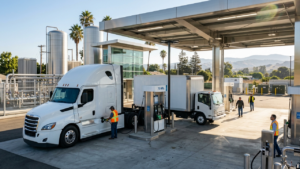
The 2026 Strategic Roadmap for fleet transitions to alternative fuels highlights the burgeoning traction of Hydrogen Fuel Cell Electric Vehicles (FCEVs) in long-haul trucking. FCEVs offer a critical advantage over battery-electric vehicles (BEVs) by maintaining higher energy-to-weight ratios, which directly translates to preserving valuable cargo capacity—a paramount consideration for commercial freight operations.
Technical / Clinical Details
- Energy-to-Weight Ratio: Unlike heavy battery packs, hydrogen fuel cell systems provide comparable energy storage with significantly less weight, enabling trucks to carry more payload over longer distances. This technical attribute positions FCEVs as a compelling solution for heavy-duty applications where weight and range are critical performance indicators.
- Operational Efficiency Focus: The report advocates for a strategic pivot in fleet management, urging a move away from dependency on federal subsidies towards an emphasis on intrinsic operational efficiencies and robust long-term financial strategies. This approach fosters a more sustainable and economically viable pathway for fleet decarbonization.
Background & Context
Despite global green hydrogen production surpassing 3 gigawatts (GW), the report identifies a persistent challenge: refueling infrastructure remains highly concentrated in specific regions. This imbalance represents a significant barrier to the widespread adoption of hydrogen FCEVs, underscoring the necessity for coordinated investments in infrastructure development from both government and industry stakeholders.
Strategic Significance & Outlook
The advancements in FCEV technology, coupled with the strategic shift towards operational and financial planning, are crucial for accelerating the decarbonization of fleet transport. However, the geographical disparity in refueling infrastructure could continue to bottleneck market expansion. Bridging this gap through international collaboration and targeted investment will be key to unlocking the full potential of hydrogen mobility in the coming years.
Source: #
Get our weekly technology intelligence — free
Receive an infographic that lets you judge at a glance whether each field’s analysis report is worth reading.
Subscribe Free — Weekly Tech Intelligence
By subscribing, you’ll receive Troy-Technical’s weekly technology intelligence newsletter.
- Your email and selected fields are used only to deliver the newsletter.
- We never share your information with third parties.
- You can unsubscribe anytime via the link in each email.
See our Privacy Policy for details.
Takes about a minute · Unsubscribe anytime








Comments