Key Findings
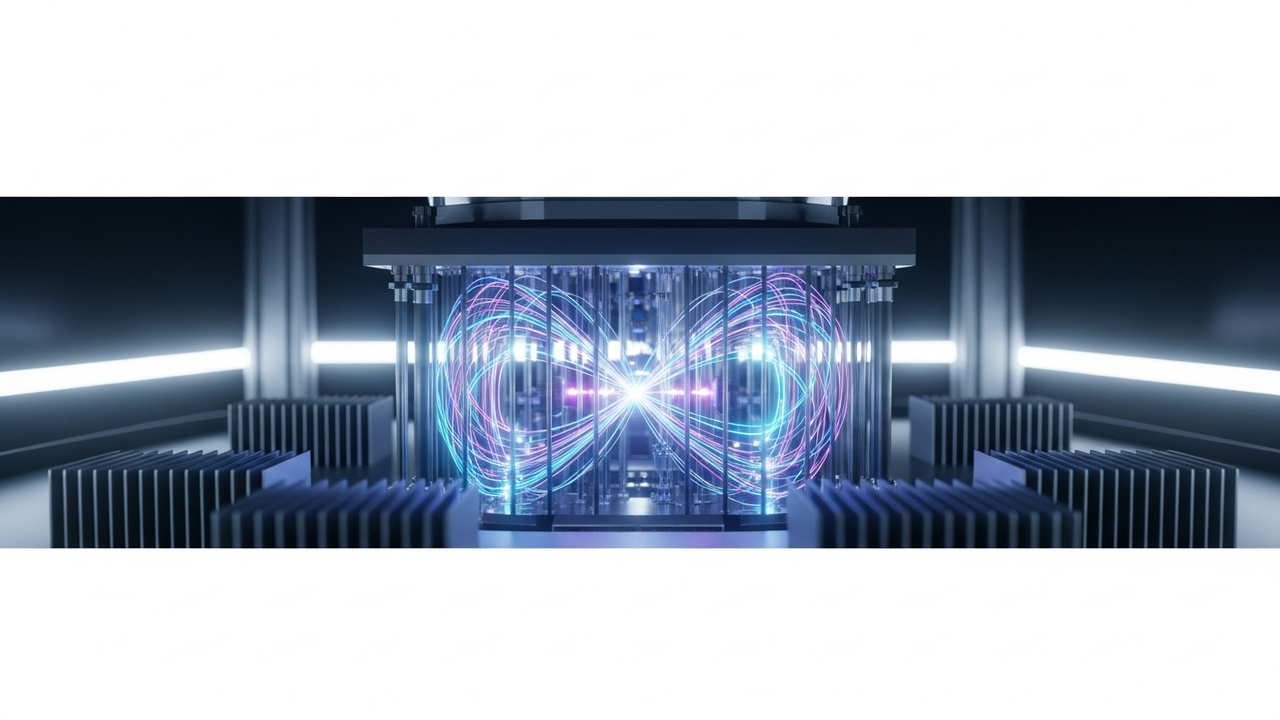
A comprehensive review paper published in Applied Physics Reviews by AIP Publishing asserts that optical quantum computing stands as one of the most promising and leading approaches among the various physical platforms for quantum computation. The paper meticulously details the unique advantages photons (light particles) possess, including stable operation at room temperature, resilience to extremely low-noise environments, and inherent scalability.
Technical Details
Optical quantum computing leverages photons as qubits, encoding quantum information within their properties such as polarization, path, or temporal frequency. The paper identifies three primary functional blocks that constitute a photonic quantum computer. First, highly efficient and pure ‘photon generation’ sources are required, typically achieved using single-photon emitters or non-linear optical crystals. Second, ‘photon manipulation’ components are crucial for altering quantum states and executing logic gate operations, often involving integrated photonic chips with waveguides, beam splitters, phase shifters, and optical switches. Third, high-efficiency ‘photon detection’ is indispensable for reading out the results of quantum computations, usually implemented with advanced devices like superconducting nanowire single-photon detectors (SNSPDs). Because photons are chargeless, they are less susceptible to electromagnetic interference and are relatively robust against decoherence (the breakdown of quantum states). Furthermore, their ease of long-distance transmission via optical fibers or integrated waveguides makes them well-suited for building large-scale quantum networks.
Background & Context
Quantum computing is expected to solve certain types of problems intractable for current classical computers, promising innovations in fields like drug discovery, materials science, finance, and artificial intelligence. However, building practical quantum computers involves significant challenges: generating and maintaining stable qubits, error correction, and scalability. Other major physical platforms, such as superconducting qubits or ion traps, often require cryogenic environments or complex electromagnetic control systems, imposing limitations on scalability and operational costs. Optical quantum computing is increasingly establishing its technical superiority as a promising alternative to these challenges.
Strategic Significance & Outlook
This review paper suggests that optical quantum computing will play a crucial role in transitioning from laboratory-based proof-of-concept demonstrations to larger-scale, practical applications. Further advancements in photon source, manipulation, and detection technologies, coupled with the integration of error correction codes, represent the next steps toward realizing fault-tolerant photonic quantum computers. Through integration with technologies like silicon photonics, optical quantum computers can leverage existing semiconductor manufacturing infrastructure, becoming a powerful driving force for the widespread adoption and commercialization of future quantum technologies.
Source: https://pubs.aip.org/aip/apr/article/13/3/031306/3397854/Optical-quantum-computing
Get our weekly technology intelligence — free
Receive an infographic that lets you judge at a glance whether each field’s analysis report is worth reading.
Subscribe Free — Weekly Tech Intelligence
By subscribing, you’ll receive Troy-Technical’s weekly technology intelligence newsletter.
- Your email and selected fields are used only to deliver the newsletter.
- We never share your information with third parties.
- You can unsubscribe anytime via the link in each email.
See our Privacy Policy for details.
Takes about a minute · Unsubscribe anytime








Comments